
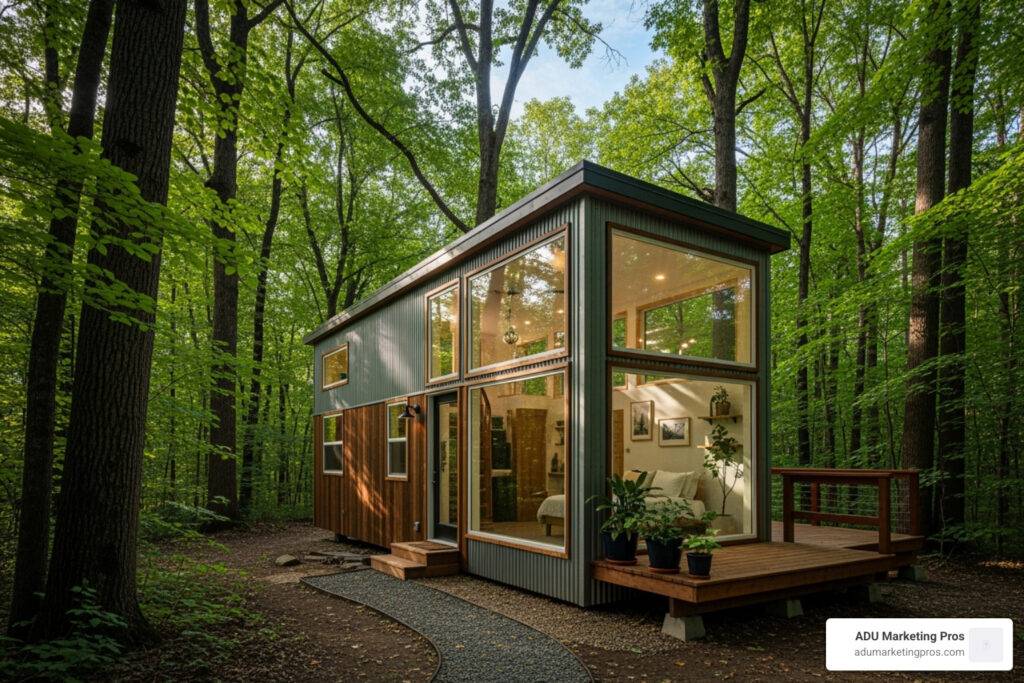
Why Tiny Houses Are Changing How We Think About Home
A tiny house is more than just a small dwelling; it’s a conscious choice and a powerful statement in a world that often equates size with success. Typically defined as a home between 100 and 400 square feet, these compact structures are at the heart of a growing movement. People from all walks of life are embracing tiny living not just to downsize their space, but to upsize their lives—seeking financial freedom, a simpler and more intentional lifestyle, and a sustainable way of living that treads lightly on the earth.
This shift is a direct response to modern pressures. With the median price of a traditional home soaring and crushing student loan debt delaying major life purchases for millions, the dream of homeownership has become increasingly elusive. The tiny house offers a viable, alternative path. It’s a rejection of the 30-year mortgage and the culture of consumerism, prioritizing experiences over possessions and community over consumption. The movement champions the idea that a fulfilling life doesn’t require a large footprint.
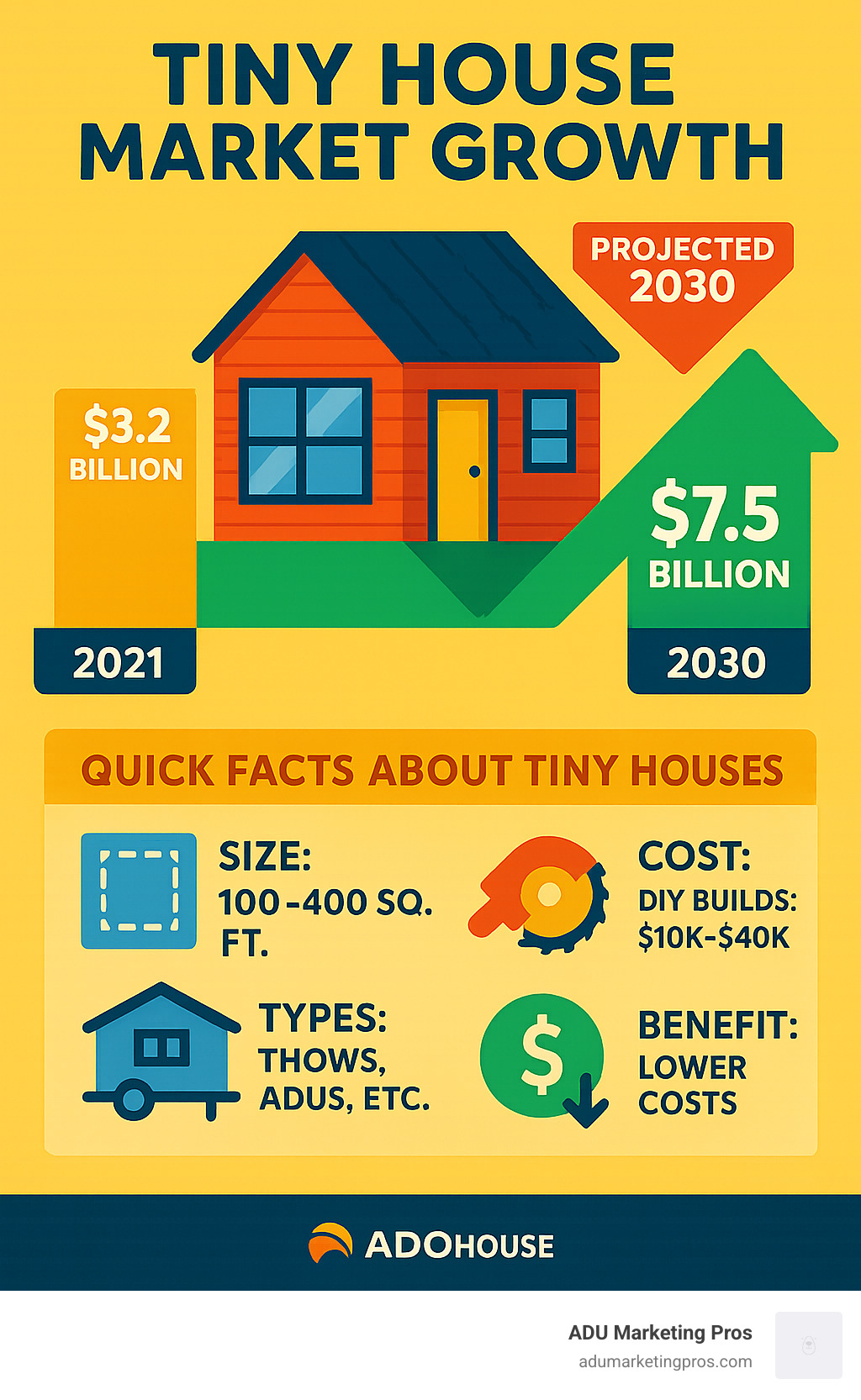
Quick Facts About Tiny Houses:
- Size: Generally 100-400 square feet. Some definitions extend up to 600 sq ft, and the International Residential Code defines them as 400 sq ft or less (excluding lofts).
- Average Cost: DIY builds can range from $10,000 to $40,000, depending heavily on salvaged materials and labor. Professional builds typically cost between $60,000 and $150,000+, with high-end custom models exceeding this.
- Ownership Demographics: Over half of tiny home owners are women. Additionally, tiny home owners are twice as likely to have a master’s degree compared to traditional homeowners.
- Common Types: The two main categories are Tiny Houses on Wheels (THOWs), legally considered RVs, and foundation-based homes, which can be primary residences or Accessory Dwelling Units (ADUs).
- Core Benefits: Drastically lower housing costs, significant reduction or elimination of debt, increased mobility (for THOWs), and a substantially smaller environmental footprint.
- Primary Challenges: Navigating complex and often restrictive local zoning laws, securing financing, and adapting to the practical realities of limited space.
The numbers confirm this is more than a niche trend. The global tiny house market was valued at approximately $3.2 billion in 2021 and is projected to grow to $7.5 billion by 2030. From innovative solutions for urban housing shortages and homelessness to luxury vacation rentals and disaster relief shelters, the humble tiny house is proving its versatility and challenging the very definition of home.
However, the journey to tiny living is paved with practical considerations. Before you trade your mortgage for a minimalist lifestyle, it’s crucial to understand the legal problems, financial planning, and profound lifestyle adjustments required. This guide will explore every facet of the tiny house movement, from design and construction to the laws that govern where you can place your small dream home.
Tiny house word roundup:
- architects in southern california who design tiny houses
- land for sale in southern california for tiny houses
- places in southern california that allow tiny houses
The Allure of the Tiny House Movement
There’s an undeniable magic to a well-designed tiny house. The ingenious use of every square inch, the clever integration of form and function, and the cozy, intimate atmosphere make these compact spaces feel surprisingly inviting and expansive. The tiny house movement is far more than an architectural trend; it’s a socio-economic and philosophical shift. It represents a fundamental rethinking of what a home is for, prioritizing financial and personal freedom over the accumulation of debt and possessions.
Defining the Tiny House
What officially qualifies a house as “tiny”? While there’s some flexibility, the general consensus points to a dwelling between 100 and 400 square feet. To bring standardization to the industry, the International Residential Code (IRC) created Appendix Q, which formally defines a tiny house as a dwelling of 400 square feet or less of floor area, excluding lofts. But size is only part of the story. A true tiny house is defined by its intentionality. Every element is chosen with purpose, maximizing utility and comfort through smart, multi-functional design. It’s not just a small box; it’s a highly efficient living machine.
You’ll find two primary categories of tiny homes, each with distinct advantages:
- Tiny Houses on Wheels (THOWs): Built on a trailer chassis, THOWs are the most iconic representation of the movement. They offer unparalleled mobility, giving owners the freedom to travel or relocate without leaving their homes behind. Legally, they are often classified as recreational vehicles (RVs), which can simplify permitting in some areas but complicate it in others.
- Foundation-based Tiny Houses: These are permanent structures built on a concrete slab or foundation, just like traditional homes. They offer more stability and can be more easily connected to municipal utilities. This category includes standalone micro-homes and, increasingly, Accessory Dwelling Units (ADUs)—small secondary homes built on the same lot as a primary residence.
The Many Benefits of Living Small
The motivations for going tiny are as diverse as the people who do it, but several powerful benefits consistently rise to the top.
- Financial Freedom: This is arguably the biggest driver. With DIY builds starting around $10,000 and professional builds averaging $60,000-$150,000, the cost is a small fraction of a traditional home. A staggering 68% of tiny home owners have no mortgage, compared to just 29% of all U.S. homeowners. This financial liberation can be life-altering.
- Reduced Debt and Expenses: Beyond the mortgage, the savings continue. Property taxes are lower, utility bills for heating and cooling a small space are minimal, and maintenance costs are significantly reduced. This frees up income for travel, savings, or pursuing a passion project.
- Intentional Simplicity: Less space inherently means fewer possessions. This forced decluttering, often guided by minimalist principles, leads to less time spent cleaning and organizing, reduced stress, and a greater focus on relationships, hobbies, and experiences.
- Best Mobility: For THOW owners, the ability to pull up stakes and move your entire home is a game-changer. This is especially appealing for digital nomads, travel nurses, retirees, and anyone whose career or lifestyle involves frequent relocation.
- Smaller Environmental Footprint: A tiny home is an inherently green choice. It requires fewer building materials, consumes a fraction of the energy for heating and cooling, and generates less waste. Many owners take this further, incorporating off-grid technologies like solar panels, rainwater catchment, and composting toilets to become almost entirely self-sufficient.
Not Just a Box on Wheels: Types of Tiny Homes
The creativity within the tiny house community is boundless. Builders and DIYers are constantly pushing the limits of design, resulting in a stunning variety of small-footprint dwellings.
- Tiny Houses on Wheels (THOWs): The classic choice, prized for flexibility. They must adhere to road-legal dimensions (typically 8.5 feet wide and 13.5 feet high) but offer endless style possibilities, from rustic cabins to ultra-modern designs.
- Foundation Homes: These offer the permanence and feel of a traditional house. They are an excellent option for those who love the tiny ethos but don’t need mobility, and they are often easier to integrate into existing neighborhoods, especially as ADUs.
- Accessory Dwelling Units (ADUs): Gaining immense popularity, especially in states like California and Oregon with friendly legislation. ADUs can provide rental income, house aging family members, or serve as a home office, adding density to suburban lots.
- Skoolies (Converted School Buses): A favorite among DIY enthusiasts, skoolies offer more square footage than many THOWs and a durable, ready-made steel frame. The conversion process is a labor of love, resulting in unique, personalized homes on wheels with a nostalgic charm.
- Container Homes: Built from repurposed steel shipping containers, these homes are incredibly durable, weather-resistant, and have a distinct industrial-modern aesthetic. They can be used individually or combined and stacked to create larger, modular living spaces.
- A-frame Tiny Houses: This iconic architectural style, with its steeply sloped roofline that forms the walls, is both visually dramatic and structurally efficient. It’s particularly well-suited for snowy climates and creates a cozy, cabin-like interior.
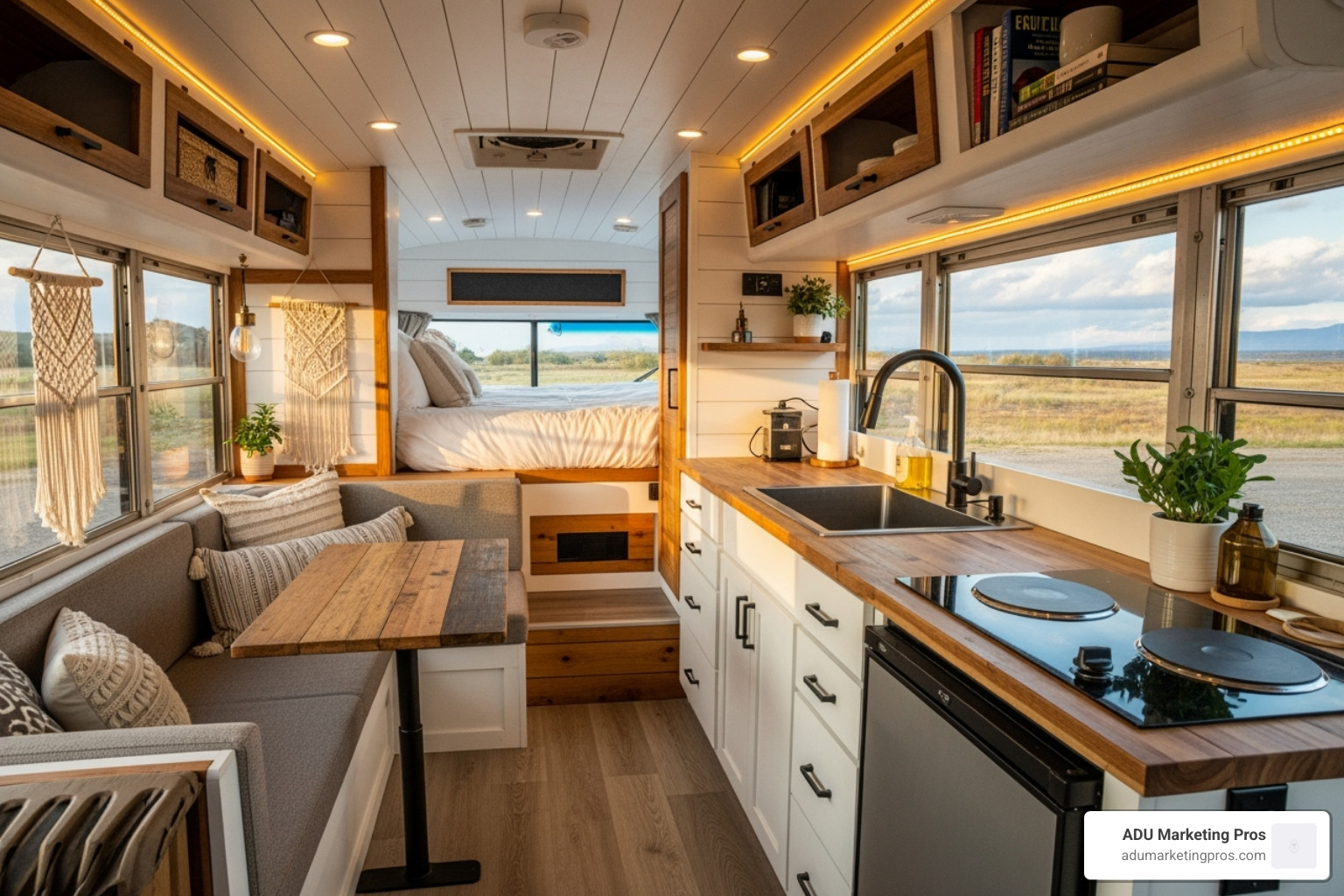
The innovation doesn’t stop there. People have transformed grain silos, vardo wagons, yurts, and even houseboats into beautiful and functional tiny homes, often using salvaged and reclaimed materials to create one-of-a-kind, sustainable dwellings.
Making It Happen: Costs, Laws, and Financing
While the dream of a tiny house is compelling, turning that vision into a physical reality requires a pragmatic approach to budgeting, legal research, and financial planning. This is where the journey gets real, but with careful preparation, thousands have successfully steerd this path.
The Price of Simplicity: The Cost of a Tiny House
What does a tiny house truly cost? The final price tag is a tale of two paths: building it yourself or hiring a professional.
- DIY Builds: For those with the skills, time, and determination, a DIY tiny house is the most affordable route, with costs typically ranging from $10,000 to $40,000. The final cost depends on the size, complexity, and your ability to source affordable or reclaimed materials. This path offers maximum savings and personalization but demands significant “sweat equity” and project management skills.
- Sample DIY Budget Breakdown: Trailer ($5,000-$10,000), Lumber & Framing ($4,000-$8,000), Windows & Doors ($2,000-$5,000), Roofing & Siding ($2,000-$4,000), Insulation ($1,000-$2,000), Interior Finishes ($3,000-$7,000), Plumbing & Electrical ($2,000-$5,000), Appliances ($1,000-$4,000).
- Professional Builds: If you prefer a turnkey solution, a professionally built tiny house from a reputable builder generally costs between $60,000 and $150,000, with luxury custom models easily surpassing that. These homes are often certified, which can simplify financing and insurance, and are built to high standards by experienced craftspeople. The build process typically takes 3-6 months.
Remember to account for hidden costs. The land to put your house on is often the single largest expense, whether you buy a small parcel or lease a spot in a community. Other costs include transportation of the home, building permits (for foundation homes), utility hookups (water, sewer, electricity), and landscaping. While the cost per square foot can seem high due to specialized compact appliances and high-quality materials needed for durability, the all-in price remains a fraction of a conventional home.
Navigating the Maze: Zoning, Codes, and Legality
This is frequently the most challenging and frustrating aspect of the tiny house journey. Most municipal regulations were written long before tiny homes were conceived, creating a complex legal gray area.
- Zoning Laws: These local ordinances dictate land use, including minimum square footage requirements for dwellings. Many cities have rules requiring homes to be 1,000 sq ft or more, effectively outlawing tiny houses as primary residences. This is the single biggest hurdle for foundation-based homes.
- Building Codes: These are standards for construction, ensuring safety (e.g., structural integrity, fire safety). Foundation homes must meet these codes. For THOWs, the situation is more complex. Some jurisdictions treat them as RVs, requiring RVIA certification. Others don’t have a category for them at all.
Fortunately, the landscape is slowly changing. The adoption of Appendix Q Tiny Houses into the International Residential Code was a landmark achievement. It provides a legal framework for building and inspecting tiny homes on foundations, covering critical safety aspects like loft access, stairs, and emergency egress. More and more cities and counties are adopting it.
Several states and cities have become leaders in tiny living:
- California: Has passed progressive ADU laws, making it one of the easiest states to build a foundation-based tiny home in a backyard.
- Colorado: Cities like Walsenburg and El Paso County have created zoning regulations specifically for tiny homes.
- Florida: Has passed legislation that prevents local governments from banning tiny homes outright, promoting them as a form of affordable housing.
- Texas: Home to several tiny house communities, including the famous Spur, which declared itself the first “tiny-house-friendly” town in America.
Organizations like the Tiny Home Industry Association (THIA) are actively working with local governments to advocate for updated regulations. The key takeaway is to do exhaustive research on your specific city and county regulations before you buy or build.
Funding Your Tiny Dream: Financing Options
Because tiny homes don’t fit the traditional real estate model, securing a conventional mortgage is often impossible. However, a growing ecosystem of financing options has emerged.
- RV Loans: This is the most common financing route for certified THOWs. Lenders like credit unions and banks that offer RV loans can finance a tiny house. Terms are typically shorter (5-15 years) and interest rates are slightly higher than a mortgage, but it’s a well-established path.
- Personal Loans / Unsecured Loans: Offered by banks and online lenders like LightStream or SoFi, these loans don’t require collateral. This makes them easier to qualify for, but they usually come with higher interest rates and shorter repayment periods (3-7 years). They are a good option for smaller loan amounts or for financing a DIY build in stages.
- Builder Financing: A growing number of tiny house builders now offer in-house financing or have partnerships with specific lenders who understand the product. This can be a streamlined, one-stop-shop solution. Some builders advertise monthly payments as low as $809 for a fully finished home.
- Cash Savings: The ideal and most common method. Many tiny dwellers save for a few years to buy their home outright, allowing them to live completely debt-free from day one.
- Home Equity Loans/HELOCs: If you already own a traditional home, you can leverage its equity to finance the construction of a tiny ADU or a second home. This often provides favorable interest rates.
Living Large in a Small Space: Design and Innovation
The true genius of tiny house living isn’t about sacrifice; it’s about brilliant, intentional design. The constraints of a small footprint force a level of creativity and innovation that can make 400 square feet feel more functional, comfortable, and beautiful than a space four times its size.
Smart and Stylish: Creative Space-Saving Solutions
Designing a functional tiny house is like solving an intricate, three-dimensional puzzle. Every decision must serve multiple purposes, and every inch of space is valuable real estate.
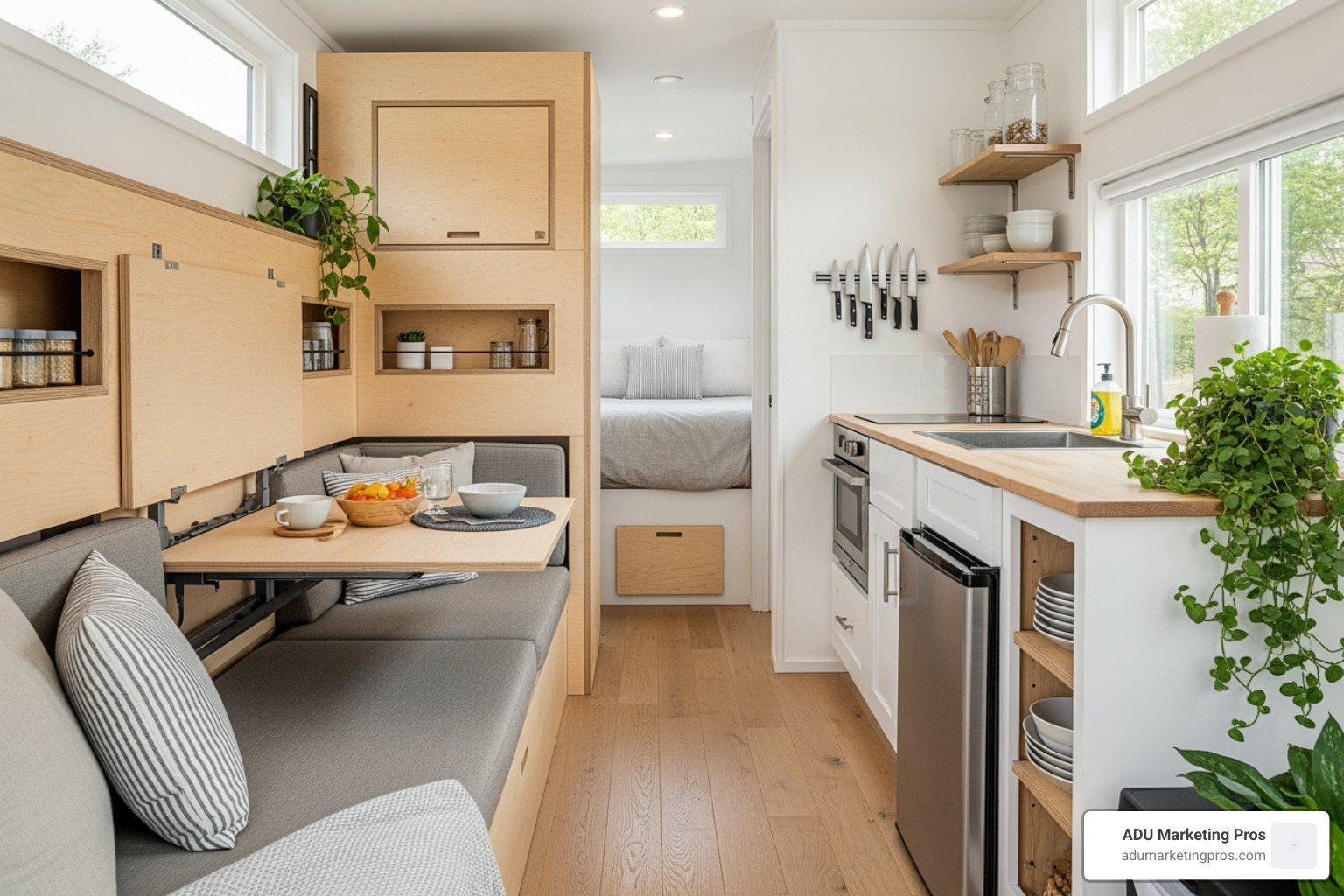
Multi-functional furniture is the undisputed king of tiny design. This goes far beyond a simple sofa bed. Imagine a dining table that folds out from a shallow wall cabinet, a coffee table that rises to become a work desk, or modular seating with integrated storage ottomans. The space under the stairs is a classic example, transformed from a void into a pantry, a series of pull-out drawers, a dog kennel, or even a compact home office nook.
Vertical space is the next frontier. Sleeping lofts are a hallmark of tiny homes, freeing up the entire main floor for living, cooking, and working. But it also means using wall space effectively with floor-to-ceiling shelving, magnetic knife strips, and wall-mounted planters. Even the toe-kick space under kitchen cabinets can be converted into shallow drawers for storing baking sheets or linens.
Designers also employ clever visual tricks to improve the perception of space. A light, neutral color palette on the walls and ceiling makes the interior feel airy and bright. Large, strategically placed windows and glass doors not only flood the space with natural light but also draw the eye outward, blurring the line between inside and out. Mirrors are used to reflect light and create an illusion of depth. A consistent flooring material used throughout the space can also make it feel larger and more cohesive.
Inspiring by Example: Real-Life Tiny Homes
The most powerful testament to the viability of tiny house living comes from the stories of the people who have acceptd it. Their homes are not just structures; they are enablers of their dreams.
- The Digital Nomad’s Office on Wheels: Consider Jenna, a web developer who grew tired of paying exorbitant rent in a major city. She invested her savings into a $70,000 professionally built THOW. Her home features a dedicated workspace with a fold-down desk and a signal booster for reliable internet. She now travels the American West, parking her home in scenic locations for months at a time. Her housing costs are a fraction of what they were, and her backyard changes with the seasons.
- The Multi-Generational Solution: The Garcia family in San Jose, CA, needed a solution for their aging grandmother. Instead of a costly nursing home, they used a home equity loan to build a $120,000, 400-square-foot ADU in their backyard. The tiny home is fully accessible, with a single-level floor plan and a walk-in shower. It allows their grandmother to live independently with dignity, while still having family support just steps away.
- The Social Impact Innovator: Perhaps the most profound application is in addressing homelessness. Communities like Community First! Village in Austin, Texas, have built entire villages of micro-homes (140-200 sq ft). These are not just shelters; they are part of a supportive community with access to medical services, job training, and communal gardens. This model provides stability and dignity, proving to be a more effective and humane solution than traditional shelters.
- The Off-Grid Homesteader: A young couple in rural Oregon took the DIY route, building their tiny house for under $25,000 using mostly reclaimed materials. Their home is completely off-grid, powered by a robust solar panel array and battery bank. They collect rainwater in large cisterns and use a composting toilet, eliminating their utility bills entirely. Their tiny home has allowed them to live a modern homesteader’s life, focused on sustainability and self-reliance.
The Bigger Picture: Impact, Challenges, and the Future
The tiny house movement’s influence extends far beyond the lives of individual owners. It is a catalyst for broader conversations about housing affordability, sustainable development, and the very nature of community. While the promise is immense, the path forward is not without significant challenges.
A Lighter Footprint: The Environmental Impact
The environmental benefits of going tiny are substantial and quantifiable. A standard-sized new American house is responsible for significant resource consumption and carbon emissions. In contrast, a tiny house dramatically reduces environmental impact across its entire lifecycle.
- Reduced Energy Consumption: The most significant saving comes from heating and cooling. An average-sized house releases nearly 16,000 pounds of CO2 annually from energy use, while a tiny house produces just over 1,100 pounds. This massive reduction is a direct result of the smaller volume of air to heat and cool.
- Fewer Building Materials: A tiny home uses a fraction of the lumber, concrete, drywall, and other materials required for a conventional build. This conserves natural resources and reduces the embodied carbon associated with manufacturing and transporting those materials.
- Sustainable Material Choices: The tiny house community has long been a champion of green building practices. Builders frequently incorporate sustainable materials like reclaimed barn wood, recycled denim insulation, bamboo flooring, and low-VOC paints. The smaller scale makes it more financially feasible to invest in higher-quality, eco-friendly options.
Innovation in off-grid technology is central to the movement’s green ethos. Solar panels are practically standard issue, often paired with battery storage systems to provide power day and night. Rainwater harvesting systems with filtration can provide all the water a household needs, while composting toilets eliminate the need for a septic or sewer connection and turn waste into a valuable resource. As confirmed by research like the study Small House, Big Impact: The Effect of Tiny Houses on Community and Environment, these individual choices create a powerful collective impact.
The Not-So-Tiny Challenges
Despite its many benefits, tiny house living is not a utopian solution. Prospective owners must be clear-eyed about the practical and logistical difficulties they may face.
- Space and Lifestyle Limitations: Living gracefully in 100-400 square feet is a skill. It requires constant tidiness, ruthless decluttering, and making tough choices about possessions. Hobbies that require significant space or equipment can be challenging. Hosting more than one or two guests can be a logistical puzzle. Relationships can also be tested by the lack of personal space.
- Persistent Legal Gray Areas: As detailed earlier, navigating the patchwork of zoning laws and building codes remains the primary obstacle. Finding a legal, long-term place to park a THOW can be a constant source of stress and uncertainty. The fear of the “knock on the door” from a code enforcement officer is a real concern for many.
- Insurance and Resale Value: Insuring a tiny home, especially a DIY THOW, can be difficult. Many standard insurance companies don’t have a product for them. Specialized insurers exist, but policies can be more expensive. The resale market is also still maturing. While the demand is growing, the pool of potential buyers is smaller than for a traditional home, which can affect how quickly you can sell and at what price.
- Social and Psychological Adjustments: Downsizing is a profound mental shift. It requires confronting one’s relationship with materialism and consumer culture. While many find this liberating, it can also be a difficult process. Furthermore, unless you are part of a dedicated community, living in a tiny house in a remote location can sometimes lead to social isolation.
What’s Next for the Tiny House Movement?
The future of tiny houses is bright, with the movement evolving from a fringe counter-culture into a recognized and innovative segment of the housing market.
- Mainstream Acceptance and Legalization: The trend is moving towards greater legal acceptance. As more cities and states adopt Appendix Q and create tiny-house-friendly zoning, the legal problems will slowly diminish. This will make tiny living a more stable and secure option.
- Prefab and Modular Innovation: Prefabricated and modular construction methods are making tiny homes faster to build, more affordable, and more consistent in quality. Companies are developing flat-pack tiny house kits and factory-built modules that can be assembled on-site in a matter of days.
- Expanding Applications: We will see tiny homes used in ever more creative ways. They are being explored as affordable student housing on university campuses, rapidly deployable disaster relief shelters, and unique vacation rentals (glamping). The rise of tiny house villages for the homeless is a powerful model that is being replicated across the country.
- Technological Advancements: Emerging technologies like 3D printing hold the potential to revolutionize tiny home construction, allowing for complex, custom designs to be built quickly and with minimal waste. Smart home technology is also being integrated to make tiny spaces even more efficient and comfortable.
Conclusion: Is the Tiny Life Your Big Dream?
The tiny house movement is a powerful and inspiring reimagining of the modern home. It presents a tangible path toward financial freedom, a drastically smaller environmental footprint, and a more intentional, simplified way of life. Throughout this guide, we’ve explored the core principles of the movement, from the ingenious designs that make small spaces livable to the diverse ways these homes are being used to fund personal dreams, provide dignified housing for the elderly, and offer innovative solutions to homelessness.
However, we have also seen that the tiny life is not without its significant challenges. The journey requires diligent research, patience, and resilience. Navigating the complex web of zoning laws, securing non-traditional financing, and adapting to a minimalist lifestyle in a compact space are problems that demand a clear understanding of your personal priorities and a commitment to the philosophy of intentional living. The critical question remains: are you prepared to trade square footage for financial independence, and the accumulation of things for an abundance of experiences?
With the market projected for substantial growth and municipalities slowly adapting their regulations, the tiny house is solidifying its place as a viable housing option. For those who feel burdened by the traditional model of homeownership, it offers a refreshing and empowering alternative. Before you make the leap, arm yourself with knowledge: investigate your local laws, explore the full range of financing options, and honestly assess whether this unique lifestyle truly aligns with your long-term goals and values.
For firms that build custom ADUs and tiny homes in California, this expanding market represents a remarkable opportunity. The key to success is not just in building beautiful structures, but in connecting with a specific type of client—one who isn’t merely seeking a cheaper house, but who deeply resonates with the philosophy of simplified, high-quality, and intentional living.
At ADU Marketing Pros, we specialize in bridging that gap. We help builders, designers, and architects in the San Jose, CA area, as well as throughout Southern California and the Bay Area, connect with these ideal clients. We understand the unique motivations and values of the tiny house and ADU buyer, and we craft marketing strategies that communicate your expertise, craftsmanship, and innovative design effectively.
If you’re ready to grow your ADU or tiny house business by attracting clients who are a perfect fit for your brand, we can help you stand out in a crowded market. Learn more about our marketing services for builders and find how we can help turn more tiny house dreams into your next successful project.