
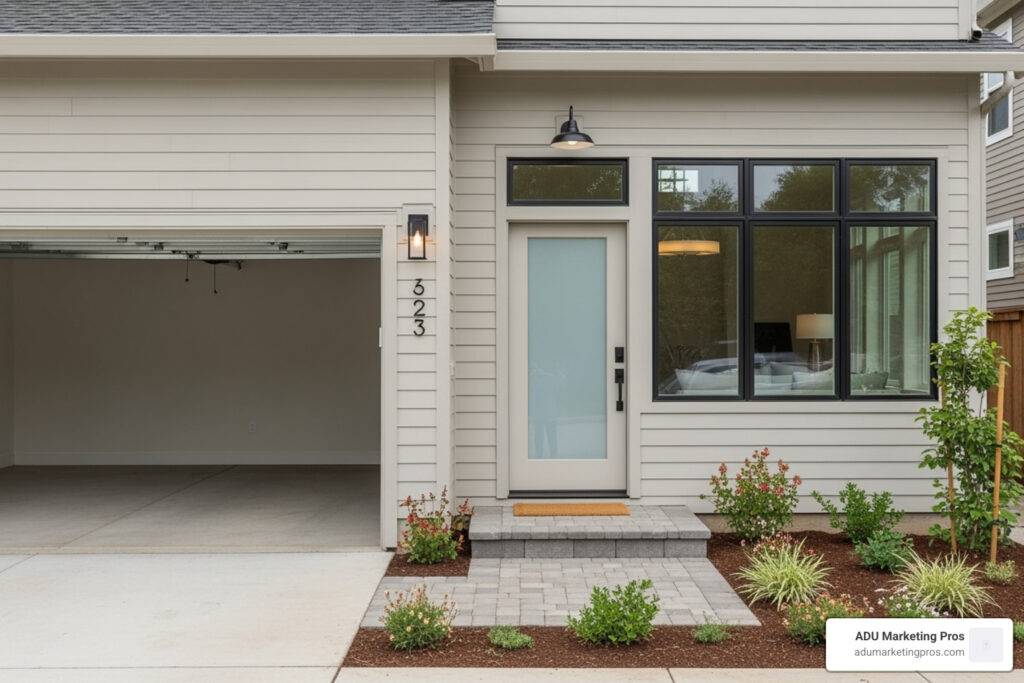
Why ADU Garage Conversions Are California’s Smart Housing Solution
ADU garage conversions are one of the most popular ways for California homeowners to add living space, generate rental income, and increase property value. In a state struggling with a severe housing deficit, these projects transform underused garages into fully functional, independent homes. They represent a cost-effective, sustainable, and efficient solution to housing needs, leveraging existing structures to create new inventory without contributing to urban sprawl.
This trend has been boostd by a series of state laws, such as AB 68 and SB 9, designed to remove local barriers and streamline the approval process. As a result, what was once a complex and often prohibited endeavor is now a viable and encouraged option for millions of property owners.
Quick Answer: What You Need to Know About ADU Garage Conversions
- Average Cost: $80,000 – $200,000. This wide range depends heavily on the garage’s condition, location, and the quality of finishes chosen.
- Timeline: 4-8 months total. This includes 1-2 months for design, 2-4 months for permitting, and 3-6 months for construction.
- Key Requirements: A building permit is mandatory. The conversion must meet all residential building codes, including structural, electrical, plumbing, and California’s Title 24 energy efficiency standards.
- Primary Benefits: Creates a source of passive rental income, significantly boosts property resale value, and provides flexible living space for family, guests, or a home office.
- Biggest Challenges: The loss of covered parking and storage is the main trade-off. Unexpected costs can arise from fixing a poor foundation or upgrading utilities, and navigating the permit process requires expertise.
While a garage conversion can cost significantly less than building a new detached ADU, it’s far from a simple DIY project. Success requires careful planning, proper permits, and a team of professionals to steer structural, electrical, and plumbing requirements. This guide breaks down the process into five key steps to help you make informed decisions.
Fortunately, California’s ADU laws have made these conversions more feasible than ever. Many existing garages benefit from grandfathered setbacks, meaning they are built closer to property lines than new construction would allow. This unique advantage lets you build a legal ADU in a location that might otherwise be off-limits, maximizing your property’s potential.
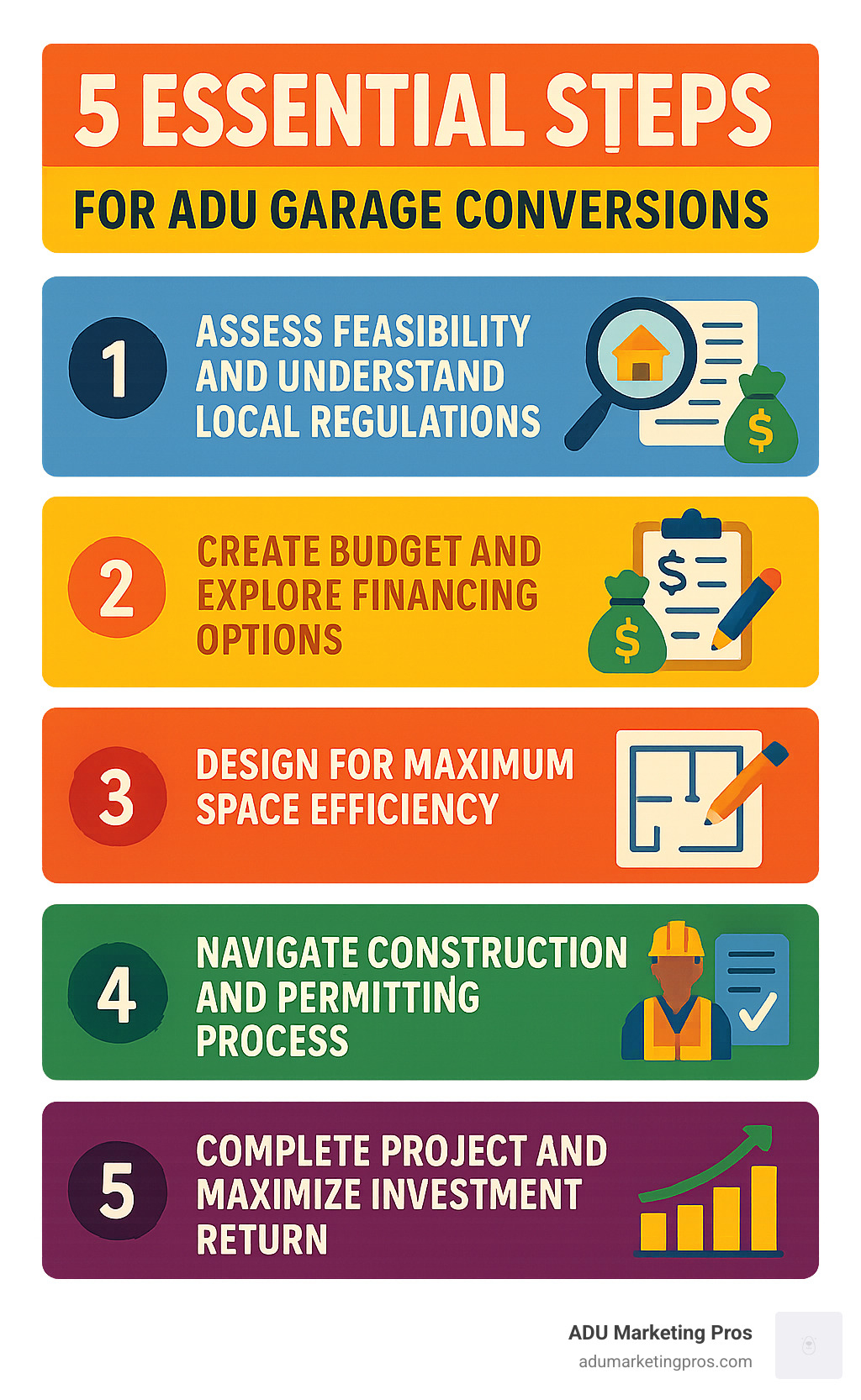
Step 1: Assess Feasibility and Understand Regulations
Before starting any ADU garage conversions project, the first step is a crucial reality check. You must assess your garage’s suitability and understand the web of regulations that govern turning a storage space into a legal, habitable dwelling. This initial due diligence is the single most important factor in preventing costly surprises and ensuring a successful outcome.

Primary Benefits of Converting Your Garage
California homeowners are converting their garages for several compelling reasons:
- Flexible Living Space: A converted garage can serve many purposes over its lifetime. It can be a home for a recent college graduate, a comfortable “in-law suite” for aging parents, a dedicated home office, an art studio, or a personal gym. This flexibility adds immense long-term value.
- Passive Rental Income: In California’s competitive housing market, a well-designed ADU can generate significant monthly income. In high-demand areas like Los Angeles or the Bay Area, a studio or one-bedroom ADU can rent for $1,800 to $3,000+, often helping to cover the property’s mortgage payments.
- Increased Property Value: Properties with permitted ADUs consistently sell for more money. A professionally converted garage is a major selling point, attracting buyers looking for multi-generational living options or a built-in income stream. The return on investment can be substantial.
- Cost-Effective & Sustainable: Starting with an existing foundation, walls, and a roof can lead to substantial savings compared to new construction. It’s also a sustainable practice that gives new life to an existing structure, reduces construction waste, and promotes efficient land use by increasing density on a single-family lot.
Potential Downsides and Considerations
It’s equally important to consider the trade-offs:
- Loss of Parking and Storage: The most immediate impact is the loss of vehicle parking and storage space. You’ll need a new plan for your cars, tools, bikes, and holiday decorations. This may involve building a new shed, installing overhead storage in another area, or simply decluttering.
- Unforeseen Structural Issues: Garages were not built to residential standards. You may find issues like a cracked or unlevel foundation, an inadequate electrical system, dry rot in the framing, or a roof that needs reinforcement. These findies can add significant, unplanned costs to your budget.
- Neighborhood Impact: Consider how increased density and parking pressure might affect your neighbors. While state law often prevents cities from requiring replacement parking, being a good neighbor is still important. Clear communication and thoughtful design can help prevent conflicts.
- Construction Disruption: A conversion project involves months of noise, dust, and workers on your property. This can be a significant disruption to your daily life and requires patience.
Zoning, Permits, and Building Codes
Navigating the rules is non-negotiable. While state laws have streamlined the process, you must comply with a hierarchy of local and state regulations.
- Local and State Laws: California’s state ADU laws override many restrictive local ordinances, and your garage may benefit from “grandfathered” setbacks (meaning it can remain in its existing location even if it’s closer to the property line than a new building would be allowed). However, you must still check with your local planning department for specific size, height, and design standards. For an example, you can review San Diego’s municipal code.
- Permits: Converting a garage into a living space always requires building permits. This is not optional. You’ll need a full set of architectural and structural plans covering floor layouts, structural changes, utility diagrams, and energy compliance reports to submit for review.
- Safety and Energy Codes: Your ADU must meet the same building standards as any new home, based on the International Residential Code (IRC) and California’s amendments. This includes strict fire safety standards, such as smoke detectors, carbon monoxide detectors, and proper emergency exits (egress windows). It must also comply with California’s Title 24 energy code, which mandates high-performance insulation, energy-efficient windows, and efficient appliances to ensure the unit is safe, comfortable, and valuable.
Step 2: Create a Budget and Explore Financing
With feasibility confirmed, the next step is tackling the finances. A realistic budget and solid financing plan are critical for a smooth ADU garage conversions project. This is where many homeowners get their first true sense of what these projects cost beyond the initial estimates.
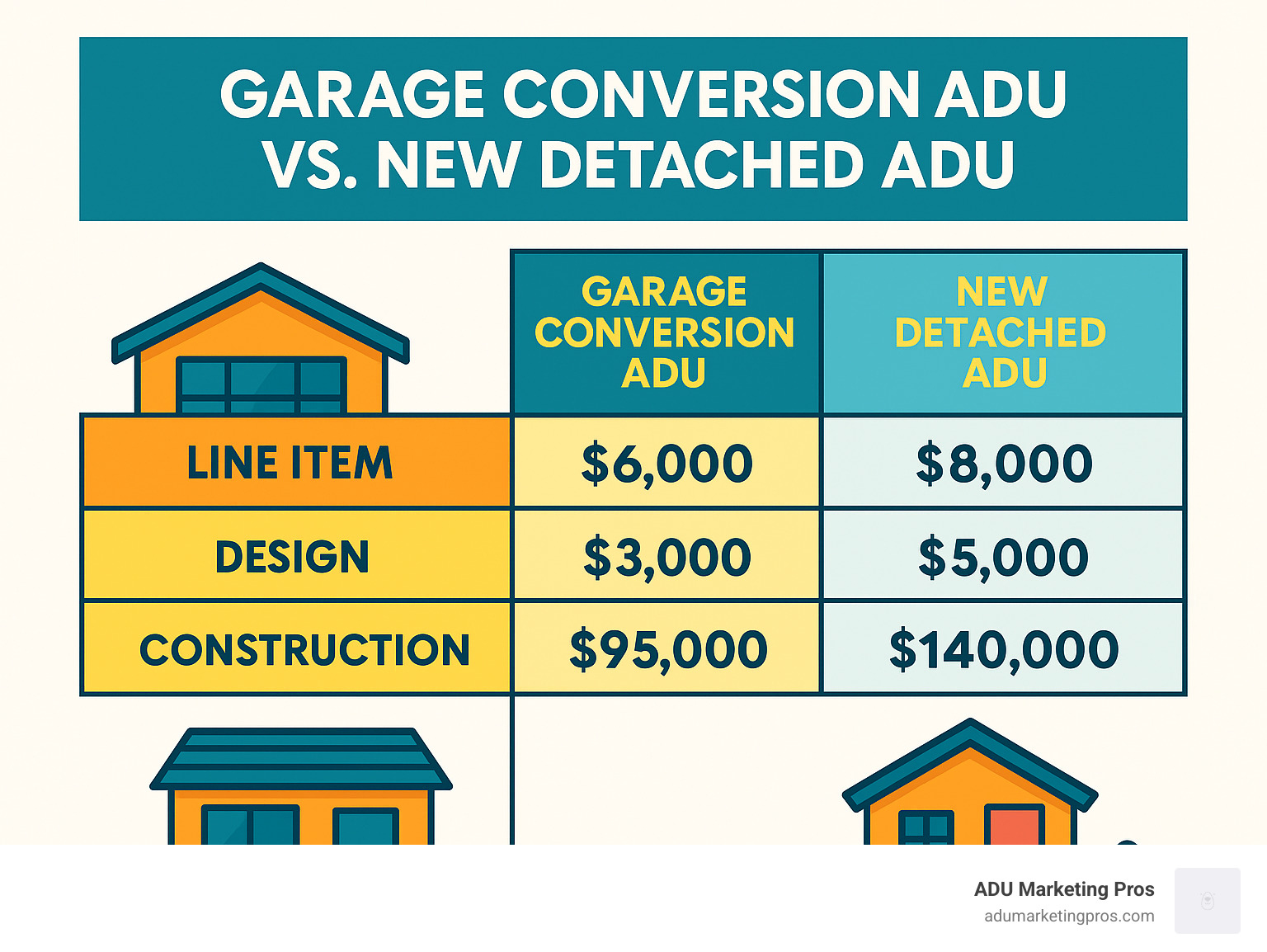
Understanding the Costs of ADU Garage Conversions
The cost of converting a garage varies widely based on location, size, existing conditions, and your choice of finishes. The average cost range is typically $80,000 to $200,000. A project can fall below this range if the garage is in excellent shape and requires minimal utility work, or exceed it if significant structural repairs and high-end finishes are involved. Key cost categories include:
- Soft Costs (10-15%): Fees for architects, designers, structural engineers, and permit processing with the city.
- Structural Work (15-25%): Repairing or replacing the concrete slab, reinforcing the foundation, framing new walls (especially for the old garage door opening), and strengthening roof rafters.
- Utility Upgrades (15-25%): This is a major, often underestimated expense. It includes upgrading the main electrical panel, trenching across your yard to run new water and sewer lines, installing a new gas line, and adding a dedicated HVAC system.
- Exterior Finishes (10-20%): New siding, roofing repairs or replacement, energy-efficient windows, entry doors, paint, and any landscaping or hardscaping for a private entrance.
- Interior Finishes (25-40%): This is the largest category and where you have the most control. It includes insulation, drywall, flooring, paint, lighting fixtures, kitchen cabinetry and countertops, appliances, and all bathroom fixtures (toilet, shower, vanity).
- Contingency Fund (10-15%): Always budget an extra 10-15% of the total construction cost for unforeseen issues, like finding asbestos or needing more extensive foundation work than anticipated.
How Costs Compare to a New Build ADU
Many assume garage conversions are dramatically cheaper than new builds, but this isn’t always true. While you save on building a new foundation and structure, renovating an existing space has its own costs. A garage’s concrete slab may need significant repairs, grinding, or a full replacement to meet residential code for moisture and insulation. Existing walls may need to be thickened to accommodate proper insulation and meet structural requirements. These renovations can be labor-intensive and offset some of the initial savings.
For comparison, a new detached ADU (or “garden suite”) typically costs between $150,000 and $300,000+. The primary savings in a conversion come from the existing shell, but bringing that shell up to modern living standards is where the real cost lies.
Financing Your Garage Conversion Project
Fortunately, several financing options are available to fund your project:
- Personal Loans: Unsecured loans that are quick to fund but often come with higher interest rates. Best for smaller budgets or homeowners with limited home equity.
- Home Equity Loans and HELOCs: These use your home’s equity as collateral, resulting in lower interest rates. A home equity loan provides a lump sum upfront, which is great for a fixed-budget project. A Home Equity Line of Credit (HELOC) works like a credit card, allowing you to draw funds as needed, which is ideal for managing construction payments.
- Cash-Out Refinancing: You refinance your existing mortgage for a larger amount than you currently owe and take the difference in cash. This is a powerful option if you can secure a lower overall interest rate than your current one, but it does reset your mortgage term.
- Construction Loans: Short-term loans designed specifically for building projects. Funds are disbursed in stages (draws) after an inspector verifies that work has been completed. These are more complex but are custom to the construction process.
- State Grant Programs: The California Housing Finance Agency (CalHFA) offers grants of up to $40,000 to help low- and moderate-income homeowners with pre-construction and non-recurring closing costs. Explore these valuable programs at the CalHFA website.
Step 3: Design for Maximum Space and Functionality
With feasibility confirmed and a budget in place, it’s time for the creative part of your ADU garage conversions journey: designing a space that feels like a home. This step is about turning every square foot into something functional, comfortable, and beautiful. Thoughtful design is what separates a basic converted box from a highly desirable living unit.
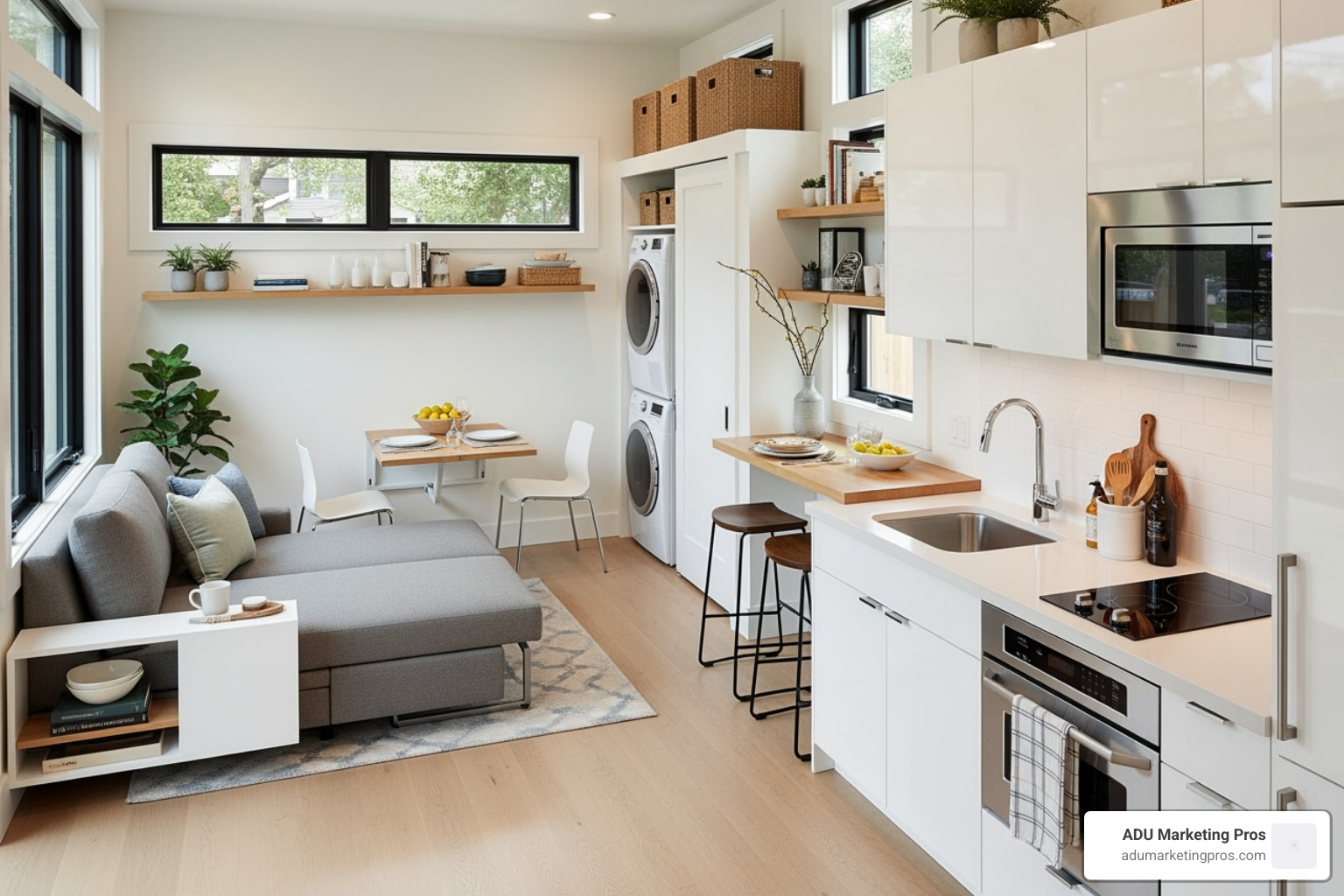
How to Maximize a Small Footprint
Working with a typical 400-square-foot garage means every inch counts. The key is to create an open, airy feel that defies the small dimensions. An open floor plan is essential, removing unnecessary walls to improve flow and let natural light penetrate deep into the space. To maximize usability, incorporate multi-functional furniture like a Murphy bed that folds into a cabinet, a sofa with hidden storage, or a dining table that collapses against the wall. Think vertically with floor-to-ceiling built-in storage and floating shelves to keep the floor clear and draw the eye upward. Finally, use a light color palette on walls, ceilings, and floors to reflect light and make the space feel larger and brighter.
Best Practices for Design and Furnishing
A successful ADU is more than just a functional box; it’s an inviting home.
- Flooring: Choose durable flooring like luxury vinyl plank (LVP) or polished concrete. These materials are resilient, easy to clean, and can handle the wear and tear of a small, high-traffic space.
- Lighting: A layered lighting plan is crucial. Use ambient lighting (recessed cans or a central fixture) for overall illumination, task lighting (under-cabinet strips in the kitchen, a reading lamp by the bed) for specific activities, and accent lighting (a single sconce or track light) to highlight art or architectural features.
- Appliances: Select space-saving appliances. An 18-inch dishwasher, a 24-inch refrigerator, and a two-burner induction cooktop can provide full functionality while maximizing precious counter space.
- Windows and Doors: Carefully place windows to maximize light while considering privacy for both the ADU and the main house. Clerestory or frosted glass windows are excellent options. Use pocket doors or barn doors instead of swinging doors to save floor space.
- Zoning: Even in an open plan, you can use area rugs, furniture grouping, or a decorative screen to create separate zones for living, sleeping, and cooking, giving the space a more organized and intentional feel.
Creating a Floor Plan
The layout will depend on your garage’s dimensions and intended use. For a standard two-car garage (roughly 20’x20′ or 400 sq. ft.), a studio layout is often most efficient. This places the bathroom and kitchenette along one wall to consolidate plumbing, leaving a large, flexible L-shaped space for living and sleeping. A one-bedroom layout is also possible by partitioning off a small bedroom (at least 70 sq. ft. by code) with a wall and a space-saving door. The kitchenette can range from a simple setup with a mini-fridge and microwave to a more complete kitchen. Bathrooms should be compact (around 35-40 sq. ft.), often featuring a space-saving corner shower or a walk-in shower instead of a tub. Don’t forget to incorporate clever closet space and a small workspace nook to make the ADU a truly complete and livable home.
Exterior Design and Curb Appeal
The exterior of your ADU garage conversion should look intentional and attractive. Replace the large garage door with a new wall that incorporates an entry door and large windows to match the main house. Use siding, stucco, and paint colors that create a cohesive style with the primary residence. Consider adding a small porch, an awning, or a pergola over the entrance to define the space. Thoughtful landscaping, a dedicated walkway, and a small, private patio area can give the ADU its own distinct identity and improve its appeal to renters or family members.
Step 4: Navigating the ADU Garage Conversions Process
Once your design is finalized, you move into the permitting and construction phases. This is where the vision for your ADU garage conversions project becomes a physical reality. Understanding the sequence of events and the critical technical requirements is essential for a project that stays on schedule and on budget.
The Typical Project Timeline
Setting realistic expectations for the timeline is key. While a garage conversion can be faster than a new build, it’s a significant project with several distinct phases:
- Phase 1: Planning and Design (1-2 months): This involves hiring your team (architect/designer), conducting a site survey, developing schematic designs, refining them into detailed construction documents, and getting structural engineering calculations.
- Phase 2: Permitting (2-4 months): Your completed plans are submitted to the local building department. This phase involves a formal review process called “plan check,” where officials ensure your project complies with all zoning, building, and safety codes. You may receive comments back that require revisions before the permit is issued. This is often the most unpredictable part of the timeline.
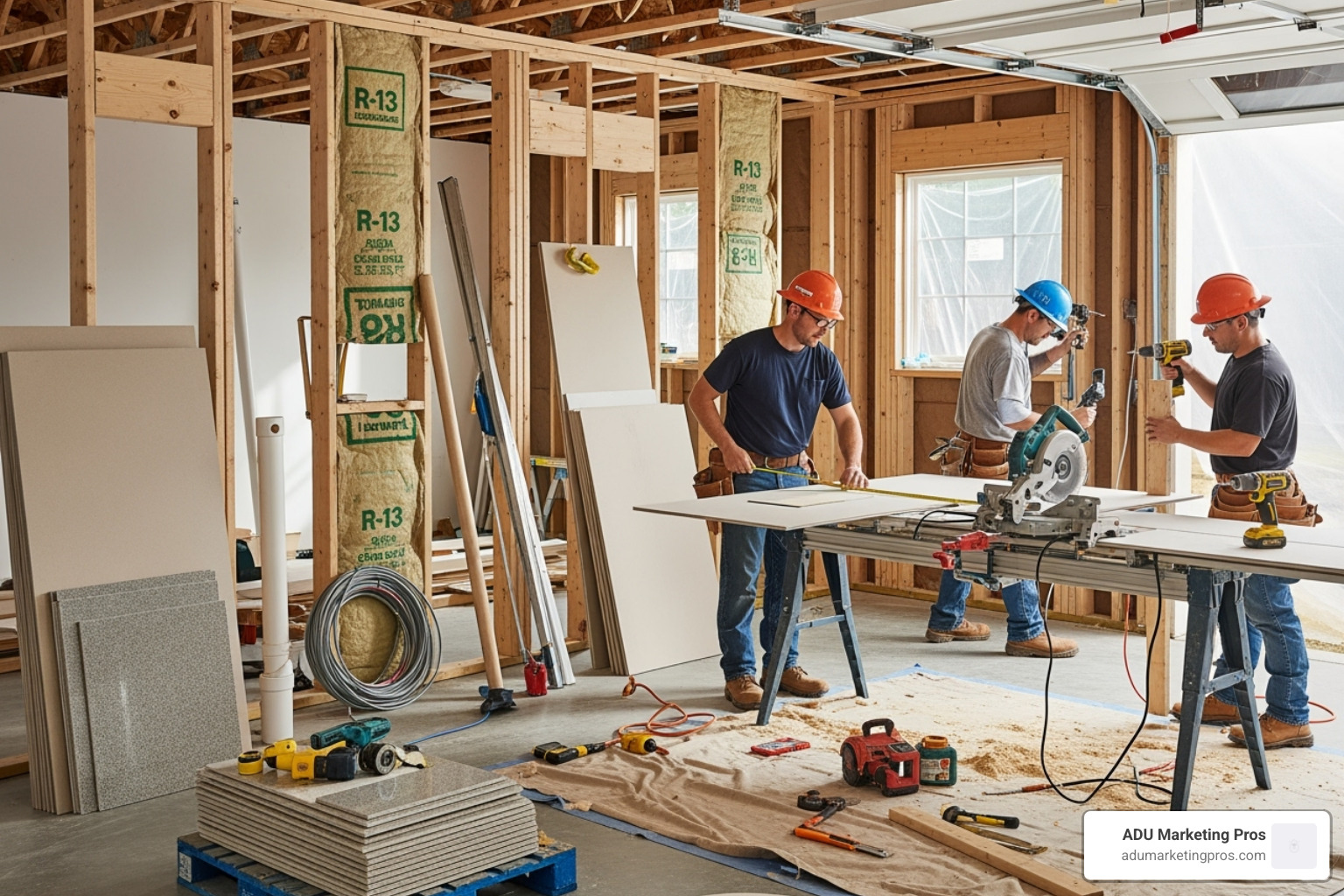
- Phase 3: Construction (3-6 months): This is the physical build-out. It follows a specific sequence: demolition and site prep, foundation work (if needed), framing new walls, rough-in of plumbing, electrical, and HVAC systems, a series of city inspections, insulation, drywall, exterior and interior finishes, and final inspections before a Certificate of Occupancy is granted.
Key Structural Considerations for ADU Garage Conversions
Garages were not designed for human habitation, so a thorough structural assessment and upgrade are critical. An engineer must evaluate the foundation to ensure the concrete slab is level, uncracked, and thick enough to support a living space. It may need to be ground down, repaired, or have a new “floating slab” poured over it with a vapor barrier. The walls and roof must be inspected for rot or damage, and the framing may need reinforcement to meet residential building codes. For seismic safety in California, this often involves adding shear walls (plywood-braced wall sections) to resist earthquake forces. The large garage door opening must be infilled with a new wall, which requires a properly sized header (a structural beam) to carry the roof load above it.
Essential Utility Upgrades
Bringing utilities up to residential standards is a major part of the conversion. The electrical system will require a new subpanel for the ADU, and the home’s main panel may need a capacity upgrade. New plumbing lines must be installed for the kitchen and bathroom. This often requires cutting into the concrete slab and trenching across the yard to connect to the main house’s water supply and sewer lateral, which can be a significant cost. A dedicated HVAC system, like an energy-efficient ductless mini-split, is needed for heating and cooling. Finally, the ADU will require its own water heater, often a compact and efficient tankless or heat pump model to meet California’s energy standards.
The Role of Insulation and Ventilation
To create a comfortable, healthy, and energy-efficient ADU, proper insulation and ventilation are non-negotiable. The project must meet California’s Title 24 energy codes. This requires high levels of insulation in the walls (e.g., R-15 or R-21 batts), ceiling (e.g., R-38 blown-in), and potentially below the slab. Common types include fiberglass batts, mineral wool, or spray foam for higher performance. Proper ventilation is also mandated, including powerful exhaust fans in the kitchen and bathroom that vent to the exterior to control moisture and maintain good indoor air quality. Using energy-efficient, properly sealed windows and doors is also crucial to prevent air leaks, reduce energy bills, and create a truly livable space.
Frequently Asked Questions About Garage-Conversion ADUs
Even after doing your research, a few questions usually remain. Here are concise, detailed answers to the most common concerns about ADU garage conversions.
1. Is converting a garage always cheaper than building a new ADU?
Not necessarily. While you save on the cost of a new foundation and basic framing (potentially $30,000-$50,000), surprise expenses can narrow the price gap significantly. For example, if the existing concrete slab is badly cracked and unlevel, it may need to be completely demolished and re-poured, costing $10,000-$20,000. Similarly, long or complicated trenching for utilities can add another $5,000-$15,000. A conversion is typically 20-30% cheaper, but a project with significant structural or utility challenges can approach the cost of a simple new build.
2. Can I tackle the project as a DIY job?
It’s highly discouraged for anyone but a licensed contractor. A legal ADU requires permitted work involving structural engineering, electrical, and plumbing systems—all of which have serious safety implications if done incorrectly. Most homeowners act as an “owner-builder,” which makes them legally responsible for the project. However, they still hire licensed subcontractors for critical trades. A full DIY approach is unrealistic for meeting code and passing inspections.
3. Do I really need permits?
Yes, absolutely. Converting a non-habitable space like a garage into a legal living unit requires a building permit. Attempting to do so without one is creating an illegal unit. The consequences are severe: your city can issue steep fines, force you to demolish the work, and place a lien on your property. An unpermitted unit cannot be legally rented, is not covered by homeowner’s insurance, and creates a major liability and disclosure problem when you try to sell your home.
4. What if my garage was converted years ago without permits—can I legalize it?
Often, yes, but it can be a challenging and expensive process. You will need to:
- Hire an architect or designer to create as-built plans that document the existing conditions.
- Have them create a new set of plans showing what needs to be done to bring the entire structure up to current building codes. This may involve opening up walls to inspect framing, upgrading electrical wiring, adding insulation, and installing proper egress windows.
- Submit these plans for permits and pay all associated fees, which may include penalties for the unpermitted work. It is often more costly than building the ADU correctly from the start.
5. How will a garage ADU affect my property taxes and resale value?
A permitted ADU will trigger a property tax reassessment, but it’s a “blended” reassessment. Your existing home’s value is not re-evaluated. Only the value of the newly created ADU is added to your tax basis. This results in a modest, predictable increase. In return, data from the California Association of Realtors shows that homes with legal ADUs sell for a significant premium and attract more buyers, making it a very positive long-term investment.
6. Will I lose too much parking?
This is a valid lifestyle concern, but not a legal one. State law prevents cities from requiring you to replace the parking spaces when you convert an existing garage or carport into an ADU. You will lose the covered parking, but you are not obligated to build a new spot. To maintain peace with neighbors and for your own convenience, many homeowners create a new parking area using driveway space, a new concrete pad, or permeable pavers.
Conclusion
Changing an under-used garage into a code-compliant ADU can open up substantial rental income, boost resale value and provide flexible space for family or guests. Success, however, hinges on solid planning, realistic budgeting and strict adherence to California’s ADU regulations.
With streamlined state laws and financing programs like the CalHFA ADU Grant, there has never been a better time for homeowners to explore this opportunity. Every well-executed conversion not only benefits the owner but also adds sorely needed housing to the community.
At ADU Marketing Pros, we work with vetted design-build teams in the Bay Area, Los Angeles and San Diego who specialize in garage conversions. If you’re ready to start, review your local guidelines—San Diego’s Municipal Code §13.01.04 is a good example—then consult professionals to turn your garage into a profitable, comfortable living space.
Armed with the insights from this guide, you are prepared to decide whether a garage conversion ADU is the right move for your property. The next wave of California housing might be waiting in your driveway.