

Why Local SEO is Essential for Modern Architects
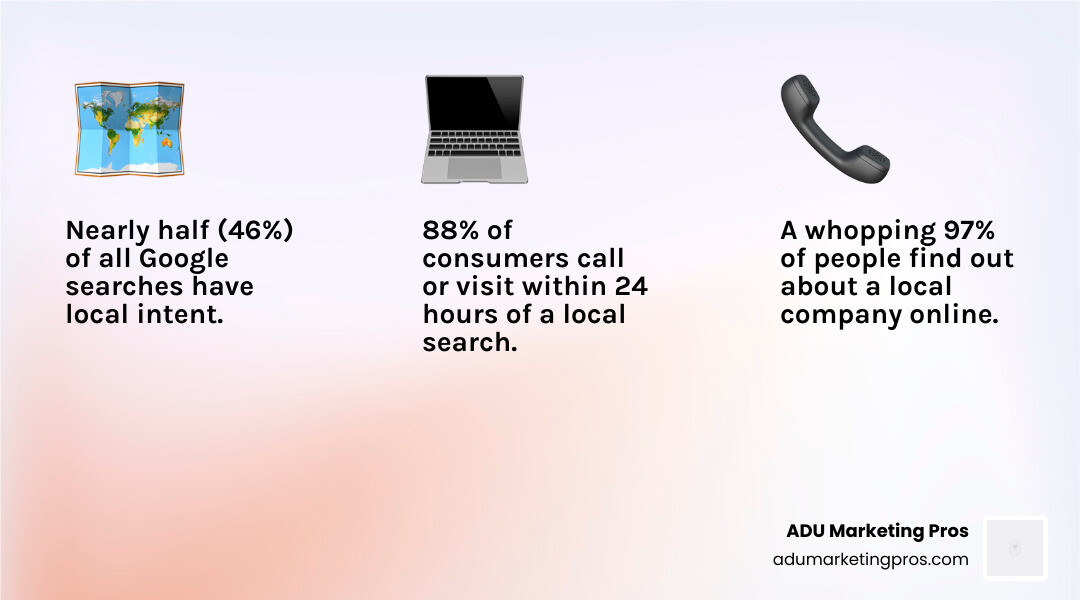
In today’s digital-first world, the path a potential client takes to find an architect has fundamentally changed. Gone are the days when a firm could thrive solely on word-of-mouth referrals and a listing in the phone book. Now, the journey begins with a search engine. This is where local SEO for architects becomes not just a marketing tactic, but a critical business strategy. It is the practice of meticulously optimizing your online presence to attract high-value clients within your specific geographic service area. With 97% of people now finding local companies online, failing to appear in local search results is akin to having an unlisted phone number.
Quick Answer: Local SEO for Architects
- Optimize Google Business Profile with complete and accurate NAP (Name, Address, Phone) information, services, and high-resolution photos.
- Target location-specific keywords like “commercial architect in [city]” or “sustainable residential architect [neighborhood].”
- Build local citations on authoritative directories like Houzz, Yelp, the AIA directory, and local Chamber of Commerce sites.
- Create location-based content that showcases local projects, demonstrates knowledge of local building codes, and answers community-specific questions.
- Systematically encourage client reviews and respond to all feedback promptly and professionally to build social proof and trust.
- Ensure a mobile-first website with lightning-fast loading speeds and an intuitive user experience.
Consider the data: nearly half (46%) of all Google searches have local intent. This means when a homeowner, developer, or business owner needs an architect, they are not just browsing; they are actively looking for a local professional. They are typing queries like “architects near me” or “best firm for a home extension in [Your Town].” The firms that have invested in local SEO are the ones that appear in the coveted Google Map Pack and at the top of the search results, capturing the lead. This is crucial, as a staggering 88% of consumers call or visit a local business within 24 hours of searching on a mobile device. Your firm’s digital presence is your new storefront, your interactive portfolio, and your public reputation. Local SEO is the key that unlocks the door for clients who are actively searching for your services.
The Blueprint: Understanding Why Local SEO is Crucial for Architects

When a potential client in your city needs an architect for their dream home or a new commercial space, their first action is almost always a Google search for “architects near me” or a similar local query. This simple, reflexive action is precisely why local SEO for architects is the cornerstone of sustainable growth in the modern era. It’s your most direct and efficient path to connecting with clients who are not just interested, but are actively looking to hire an architectural professional in your community.
Unlike broad, expensive advertising campaigns that cast a wide net, local SEO is a highly targeted strategy. It puts your firm directly in front of people with high commercial intent. A search for “residential architect San Jose” isn’t casual browsing—it’s a clear signal from someone ready to begin a project and invest in professional services. Your goal is to be the first and best answer Google provides.
What is Local SEO and Why Does it Matter?
Local SEO is a specialized subset of search engine optimization that focuses on making your firm highly visible for searches performed in specific geographic areas. While general SEO might target a broad term like “modern home design,” local SEO helps you rank for the money-making phrase, “modern home architect in Sacramento.” This distinction is critical because nearly half (46%) of all Google searches have local intent. For architects, whose work is intrinsically tied to specific locations, building codes, and community standards, this is an incredibly powerful advantage.
These local searches often carry a sense of urgency. The ultimate prize in local SEO is securing a spot in Google’s Local Pack (or Map Pack)—the block of the top three business listings that appears with a map, directly below the search bar. This prime digital real estate can dramatically increase your visibility, phone calls, and website traffic. When potential clients see your firm listed there, complete with a high star rating and positive reviews, you instantly gain a significant competitive edge. This visibility builds brand authority in your service area, positioning you as the trusted, go-to expert. For more on building a comprehensive online presence, explore our guide on Online Marketing for Architects.
Key Benefits for Your Architectural Firm
Effective local SEO for architects delivers tangible, measurable results that can fundamentally transform how you attract and win projects.
-
Higher Quality Leads: Local search doesn’t just bring visitors; it brings pre-qualified prospects to your website. These are individuals and businesses in your service area who have already identified a need for architectural services. Your marketing focus shifts from convincing them they need an architect to proving your firm is the best choice for the job, leading to a shorter sales cycle and higher conversion rates.
-
Better Project Opportunities: By ranking for specific, expertise-driven keywords (e.g., “historic preservation architect Boston” or “LEED certified commercial architect Denver”), you attract clients seeking your unique skills. This allows you to compete on local expertise and community knowledge, rather than just on price, leading to projects that better align with your firm’s vision, passion, and strengths.
-
Improved Brand Credibility and Trust: Consistent visibility in local search results, especially when paired with a wealth of positive client reviews, establishes your firm as a trustworthy and established leader in the community. This social proof is often the deciding factor for clients making a significant financial and emotional investment in a building project.
-
Cost-Effective Marketing & Superior ROI: Unlike paid advertising (PPC), which stops the moment you stop paying, local SEO is an investment that builds equity over time. Once you achieve strong local rankings, your firm can continue to attract a steady stream of qualified leads without the recurring cost per click. This creates a sustainable marketing engine with an exceptional return on investment. This foundation is amplified by a strong brand, a topic we cover in Branding for Architecture Firms.
By strategically combining targeted local SEO with thoughtful branding, your firm becomes the clear and obvious choice for discerning clients who value deep local expertise and proven results.
Foundation First: Optimizing Your Digital Presence for Local Search

Your online presence is the digital foundation upon which all your local SEO efforts are built. Before you can effectively create content or build authoritative links, you must ensure your digital storefront—your website and key online listings—is structurally sound, accurate, and optimized for both users and search engines. A poorly constructed foundation will inevitably undermine your rankings and send a steady stream of qualified leads directly to your competitors.
Why Your Google Business Profile is Key to Local SEO for Architects
Your Google Business Profile (GBP) is the single most important tool for local SEO for architects, acting as your control center for appearing in local search and on Google Maps. A fully optimized, active, and engaging profile is often the primary factor that separates firms that land new projects from those that remain invisible to potential clients.
Essential optimization steps include:
- Claim and Verify: The first step is to claim and verify your profile at Google Business Profile. This proves you own the business and gives you control over its information.
- NAP Consistency: Ensure your firm’s Name, Address, and Phone number (NAP) are 100% identical across your website and all other online platforms. This is a critical trust signal for Google.
- Correct Categories: Select “Architect” as your primary category. Then, add relevant secondary categories like “Architectural Designer,” “Building Design Company,” or specialties like “Landscape Architect” to capture a wider range of searches.
- Define Service Areas: Precisely specify the cities, zip codes, and neighborhoods you serve. This tells Google exactly where to show your profile to relevant searchers.
- Upload High-Quality Photos & Videos: In architecture, visuals are paramount. Regularly upload high-resolution photos of completed projects (exteriors and interiors), 3D renderings, your office, and your team. Geotagging these images with location data can provide an extra local signal.
- Utilize Google Posts: Share regular updates about new projects, firm news, blog articles, and achievements. Posts show that your business is active and engaged, which Google rewards.
- Leverage the Q&A Feature: Proactively populate the Questions & Answers section by asking and answering common client questions (e.g., “What is your design process?” “Do you work on small renovations?”). This demonstrates expertise and helps clients overcome initial hurdles.
- Generate and Respond to Reviews: Positive reviews are a massive ranking factor and the ultimate form of social proof. Create a simple process to encourage satisfied clients to leave reviews and make it a policy to respond to every single one—positive or negative—to show you value client feedback.
Building a High-Performance Website
Your website is your digital portfolio and primary conversion tool. It must be both aesthetically beautiful and technically flawless. Search engines, particularly Google, heavily prioritize user experience in their rankings.
- Mobile-First Design: With the majority of local searches happening on smartphones, your site must be designed for mobile first, not as an afterthought. It needs to be easy to navigate and read on a small screen.
- Fast Page Speed: A site that takes more than three seconds to load will lose a significant portion of its visitors. Optimize images, leverage browser caching, and invest in quality hosting to ensure your site is fast.
- Intuitive User Experience (UX): Your site architecture should be logical. Ensure your portfolio is easy to browse, your services are clearly explained, and you have strong, visible calls-to-action (CTAs) like “Schedule a Consultation” on every page to guide visitors toward contacting you.
- HTTPS Security: An SSL certificate (which gives you the
https://prefix) is a confirmed, non-negotiable ranking factor. It encrypts data between the user and your server, which builds trust and is a basic requirement for modern websites. - Optimized Visuals: Use descriptive, keyword-rich file names (
modern-adu-design-san-jose.jpginstead ofIMG_1234.jpg) and write detailed alt text for all images. This helps search engines understand your visual content and can help your images rank in Google Image Search. For more on this, see our guide to Architecture Web Design.
The Power of Local Citations and Reviews
Local citations are mentions of your business’s NAP information on other websites across the web. They act as digital references that verify your firm’s existence, location, and legitimacy to search engines. Consistency is absolutely critical; even minor discrepancies like “St.” vs. “Street” or “Inc.” vs. “Incorporated” can confuse search engines and harm your local rankings.
Focus on getting listed in high-quality, relevant directories for architects. Start with the essentials like Houzz, Yelp, and HomeAdvisor. Then, move on to industry-specific platforms like the American Institute of Architects (AIA) directory and local directories such as your local Chamber of Commerce.
Customer reviews are doubly important. First, a high quantity of recent, positive reviews is a known local ranking factor. Second, and perhaps more importantly, they provide the social proof necessary to win the trust of clients who are about to make one of the most significant investments of their lives. Actively encourage satisfied clients to leave reviews on Google and other key platforms, and respond professionally to all feedback to demonstrate your unwavering commitment to client satisfaction.
Designing Your Content Strategy for Local SEO for Architects

Strategic content is the bridge that connects your firm with potential clients. It works by answering their most pressing questions, addressing their pain points, and showcasing your unique local expertise. Effective content marketing for architects isn’t about trying to game the system; it’s about a genuine commitment to becoming the most helpful, authoritative, and relevant resource for anyone seeking architectural services in your specific market.
Conducting Local Keyword Research
Keyword research is the foundational process of understanding the exact words and phrases your future clients are typing into Google. The most critical element to grasp is searcher intent—the “why” behind the search. Someone searching for “architectural design ideas” has informational intent and is likely in the early, browsing stage. In contrast, someone searching for “architect for home renovation San Francisco” has high commercial intent and is ready to hire.
Your secret weapon in capturing this high-intent traffic is long-tail keywords. While a broad term like “architect” is incredibly competitive, a more specific phrase like “sustainable residential architect in Berkeley” or “ADU design specialist San Jose” attracts highly qualified leads who are much further down the buying funnel. These are often combined with location modifiers (“in [city],” “[neighborhood],” “near me”) to capture valuable local searches.
Use free tools like Google Keyword Planner to get ideas, but also leverage tools like Ahrefs or SEMrush for more in-depth competitive analysis. A simple but powerful technique is to type your core services into Google and see what “People Also Ask” and “Related Searches” appear. These are direct insights into what your audience wants to know. This local focus is a cornerstone of effective SEO for Construction Companies.
Creating Content That Dominates Local SEO for Architects
Once you have a clear understanding of what people are searching for, you can create targeted content that meets their needs and is perfectly optimized for search engines.
-
Mastering On-Page SEO: This is the practice of optimizing individual web pages. Craft compelling title tags (e.g., “Award-Winning Residential Architect in Los Angeles | Modern Home Design”) and meta descriptions that act as a mini-advertisement in the search results to earn clicks. Use a logical structure of header tags (one H1 per page, followed by H2s and H3s) to organize your content for both human readers and search engine crawlers.
-
Dedicated Service & Location Pages: A single, generic “Services” page is a missed opportunity. Create dedicated, in-depth pages for each of your core offerings, such as “Custom Home Architecture,” “Commercial Tenant Improvements,” or “ADU Design Services.” If you serve multiple distinct cities, you must build unique, location-specific landing pages (e.g., a page for Palo Alto, another for San Jose). These pages should feature local project photos, testimonials from clients in that area, discussions of local zoning nuances, and a map of your service area. This geographic specificity is central to our Local SEO for Architects California approach.
-
Blogging for Local Relevance and Authority: A blog is your most powerful tool for demonstrating expertise and ranking for long-tail keywords. Go beyond generic design tips and create content with a strong local angle. Write detailed project case studies that walk through a project in a specific neighborhood, from initial concept to completion. Create pillar posts that answer common client questions in-depth (e.g., “The Complete Guide to the ADU Approval Process in San Jose”). Discuss local issues like new zoning laws, sustainable building initiatives in your city, or regional design trends to firmly establish your firm as a true local authority.
Advanced Strategies: Building Authority and Measuring Success

With a solid technical foundation and a strategic content plan in place, the next phase is to actively build your firm’s authority and meticulously track your progress. These advanced strategies are what separate firms with good local SEO from those with exceptional, lead-generating results. They create a powerful compound effect where each individual effort strengthens the entire digital marketing ecosystem.
Effective Link Building for Local Authority
Backlinks (links from other websites to yours) are digital votes of confidence. When a reputable, relevant website links to your firm’s site, it signals to search engines that you are a trustworthy authority. For architects, the guiding principle must always be quality over quantity. A single, editorially given link from a respected local design publication is exponentially more valuable than dozens of low-quality links from irrelevant directories.
Effective and ethical link-building strategies include:
- Guest Posting: Write insightful articles for local design blogs, real estate publications, or home improvement websites. This showcases your expertise to a new audience and earns a valuable backlink.
- Local Partnerships: Collaborate with complementary local businesses like high-end builders, realtors specializing in luxury properties, and interior designers. Offer to cross-promote on your respective websites and in newsletters.
- Community Engagement and Sponsorships: Sponsoring a local design event, a community charity, or a youth sports team often results in a valuable link from their website, strengthening your local ties.
- Digital PR: When your firm wins an award, completes a notable project, or has an expert opinion on a local development issue, create a press release and distribute it to local news outlets and bloggers. The resulting media coverage can generate powerful backlinks.
- Authoritative Directories: Beyond the basics, ensure you are listed with your local Chamber of Commerce, the Better Business Bureau (BBB), and other credible business organizations.
Building these strategic partnerships is a core part of our comprehensive strategy for Lead Generation for Architects.
Using Social Media to Amplify Local Signals
While social media activity is not a direct ranking factor, it plays a crucial supporting role in a holistic local SEO strategy. It drives traffic to your website, helps get your content in front of more people (which can lead to links), and sends positive brand signals to search engines.
- Visual Platforms: Instagram and Pinterest are non-negotiable for architects. Use them to create a stunning visual portfolio of your work. Use location tags for every project, and research relevant local hashtags (e.g., #[city]homes, #[neighborhood]design) to help local users discover your work.
- Professional Networking: Use LinkedIn to connect with industry peers, developers, and potential commercial clients. Share insightful articles about local building trends, zoning updates, and your firm’s thought leadership to establish professional authority.
- Community Engagement: Actively participate in local conversations. Follow and engage with local business improvement districts, community leaders, and news outlets online to weave your firm into the fabric of the local conversation.
By consistently sharing your blog content and project updates on social media, you drive qualified traffic back to your site and amplify the reach of your SEO efforts. This synergy is a key component of integrated marketing strategies like Facebook Ads for Architects.
Tracking Your SEO Performance
To ensure your investment of time and resources is generating a positive ROI, you must track your performance. Data-driven decision-making is key. Turn raw data into actionable insights by consistently monitoring key performance indicators (KPIs):
- Organic Traffic: The number of visitors finding your website through non-paid search results. Is it growing month-over-month?
- Keyword Rankings: Your firm’s position in search results for your most important target keywords, like “architect in San Jose.” Use a rank tracking tool to monitor progress.
- Local Pack Visibility: How often your Google Business Profile appears in the top 3 map results for key searches.
- Leads and Conversions: The ultimate measure of success. Track the number of contact form submissions, phone calls (using call tracking), and consultation requests that originate from organic search.
Use free, powerful tools like Google Analytics and Google Search Console to monitor these metrics. Setting clear, specific, and measurable goals (e.g., “generate five new qualified leads per month from local search within six months”) allows you to accurately measure success and continuously refine your strategy for maximum impact.
Common Pitfalls and Staying Ahead of the Curve
Even with a well-structured plan, it’s easy to make critical mistakes that can undermine your local SEO for architects strategy and stall your progress. By understanding what to watch for, you can avoid these common pitfalls and ensure your efforts yield the best possible results.
-
Inconsistent NAP Information: This is the cardinal sin of local SEO. Your firm’s Name, Address, and Phone number must be 100% identical everywhere it appears online. Even minor variations like “St.” vs. “Street” or including/excluding “Inc.” can create duplicate listings, confuse search engines, and severely dilute your local ranking authority. Solution: Perform a thorough audit of your existing citations and use a tool or service to standardize them.
-
Ignoring Negative Reviews: A negative review is not a disaster; it’s an opportunity. Unaddressed criticism looks terrible to potential clients and signals to search engines that you may not be trustworthy. Solution: Respond promptly and professionally to all reviews. Thank positive reviewers and address negative feedback by taking the conversation offline to resolve the issue. This demonstrates your commitment to client satisfaction.
-
Keyword Stuffing: In a misguided attempt to rank, some will force keywords unnaturally into their content, making it unreadable and spammy. This outdated tactic is easily detected by Google’s algorithms and can lead to penalties. Solution: Write for humans first, search engines second. Focus on creating high-quality, valuable content that naturally incorporates your target keywords in a way that is helpful to the reader.
-
Poor Mobile Experience: The vast majority of local searches happen on a mobile device, often when someone is on the go. A website that is slow, difficult to read, or has buttons that are too small to tap will cause potential clients to leave instantly. Solution: Adopt a mobile-first design philosophy. Regularly test your site on various devices to ensure it is fast, responsive, and easy to use.
-
Neglecting Your Google Business Profile: Your GBP is not a “set it and forget it” tool. An inactive profile signals to Google that your business may be less relevant than a competitor who is actively engaged. Solution: Schedule time each week to add new photos, create Google Posts, and answer new questions or reviews. Treat it like any other active social media profile.
-
Failing to Showcase E-A-T: Google wants to rank sites that demonstrate Expertise, Authoritativeness, and Trustworthiness (E-A-T). For architects, this is crucial. Solution: Showcase your credentials, awards, and licenses prominently. Feature detailed project case studies, publish insightful articles, and secure mentions in reputable publications to build your authority.
The digital marketing landscape is in a constant state of flux. To stay ahead of the curve, you must remain a student of the game. Keep up with Google’s algorithm updates by following authoritative SEO resources like Moz’s algorithm update history and Search Engine Land. Ultimately, a resilient and future-proof SEO strategy is one that prioritizes providing genuine value to users through high-quality content and a superior user experience. This approach will withstand algorithm changes and build a lasting competitive advantage.
Conclusion
Mastering local SEO for architects is no longer an optional marketing tactic—it is an essential business imperative for positioning your firm as the go-to expert in your community. By systematically implementing the foundational, content, and authority-building strategies outlined in this guide, you can transform your online presence from a passive brochure into an active, indispensable lead generation machine.
Think of local SEO as the digital foundation for your firm’s long-term growth and success. By meticulously optimizing your Google Business Profile, creating a library of location-specific content that answers client questions, and proactively building your local authority through reviews and backlinks, you create a sustainable marketing engine that works for you around the clock. Unlike the fleeting nature of paid ads, a well-executed SEO strategy delivers compounding ROI, attracting a steady stream of highly qualified leads for months and years to come.
Your architectural expertise and unique design vision deserve to be seen by the right clients. When a homeowner, developer, or business owner in your area searches for “architect near me,” your firm should be the first and most credible one they find. This top-of-mind visibility translates directly into more qualified consultations, better project opportunities, and a stronger, more resilient business.
At ADU Marketing Pros, we specialize in helping architectural practices navigate the unique challenges and opportunities of their local market. We understand that your firm isn’t a one-size-fits-all commodity, and neither are our digital marketing solutions. We craft bespoke strategies that align with your specific goals and brand identity.
Your ideal clients are searching for you right now. Don’t let them find your competitors first. Take the next step to dominate your local market by exploring our specialized Local SEO services for California architects. Let’s build your firm’s digital success story together.