
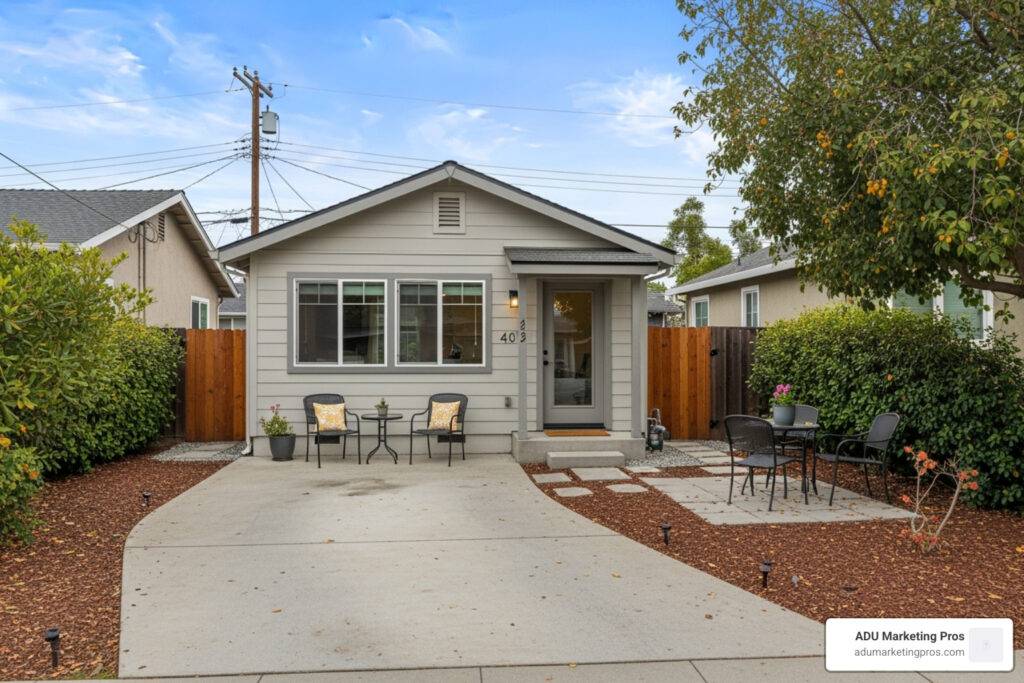
Why Converting Your Single Garage Opens Up Property Potential
Convert single garage to granny flat projects are rapidly reshaping how California homeowners perceive and utilize their property’s unused space. In an era defined by soaring housing costs and a cultural shift towards multigenerational living, that dusty, underutilized garage is no longer just for storage—it could be your property’s most valuable hidden asset. A garage conversion offers a uniquely cost-effective method for adding essential living space by leveraging the existing foundation, walls, and roof, which form the most expensive parts of any new construction.
This approach is not just a trend; it’s a practical solution to the statewide housing shortage. By transforming an existing structure, you bypass many of the costs and complexities associated with building from the ground up. This makes it an accessible entry point for homeowners looking to generate rental income, accommodate family members, or simply expand their living area without the expense of a full-scale home addition.
Quick Planning Guide for Single Garage Conversions:
- Size & Layout: A standard single garage (typically 200-250 sq ft) is ideal for a studio or junior one-bedroom layout. Success hinges on intelligent, space-saving design.
- Permits & Legality: A full suite of permits is non-negotiable. This includes building, electrical, and plumbing permits to ensure the space is safe and habitable.
- Cost Spectrum: The investment can range from $30,000-$80,000 for a basic, functional conversion to $90,000-$120,000+ for a high-end unit with premium finishes and complex utility work.
- Project Timeline: While the physical construction may take only 4-12 weeks, the entire process from initial design to final inspection typically spans 5-10 months, with permitting being the most variable stage.
- Essential Code Requirements: Key must-haves include a minimum interior ceiling height of 7 feet 6 inches (2.4m), a separate exterior entrance, proper insulation (walls and ceiling), adequate natural light and ventilation, and fire-rated separation from the main house if attached.
These projects provide a versatile answer to a multitude of modern needs. Whether you’re creating a private haven for aging parents, giving an adult child a financial foothold, establishing a dedicated home office to escape the main house’s distractions, or generating a new stream of rental income, a converted garage delivers a level of flexibility that traditional home additions can’t match. On average, this strategy costs 40-60% less than constructing a new detached ADU. However, it’s crucial to acknowledge that older garages often present challenges, requiring significant upgrades to meet today’s stringent building codes for moisture barriers, seismic stability, energy efficiency, and utility connections.
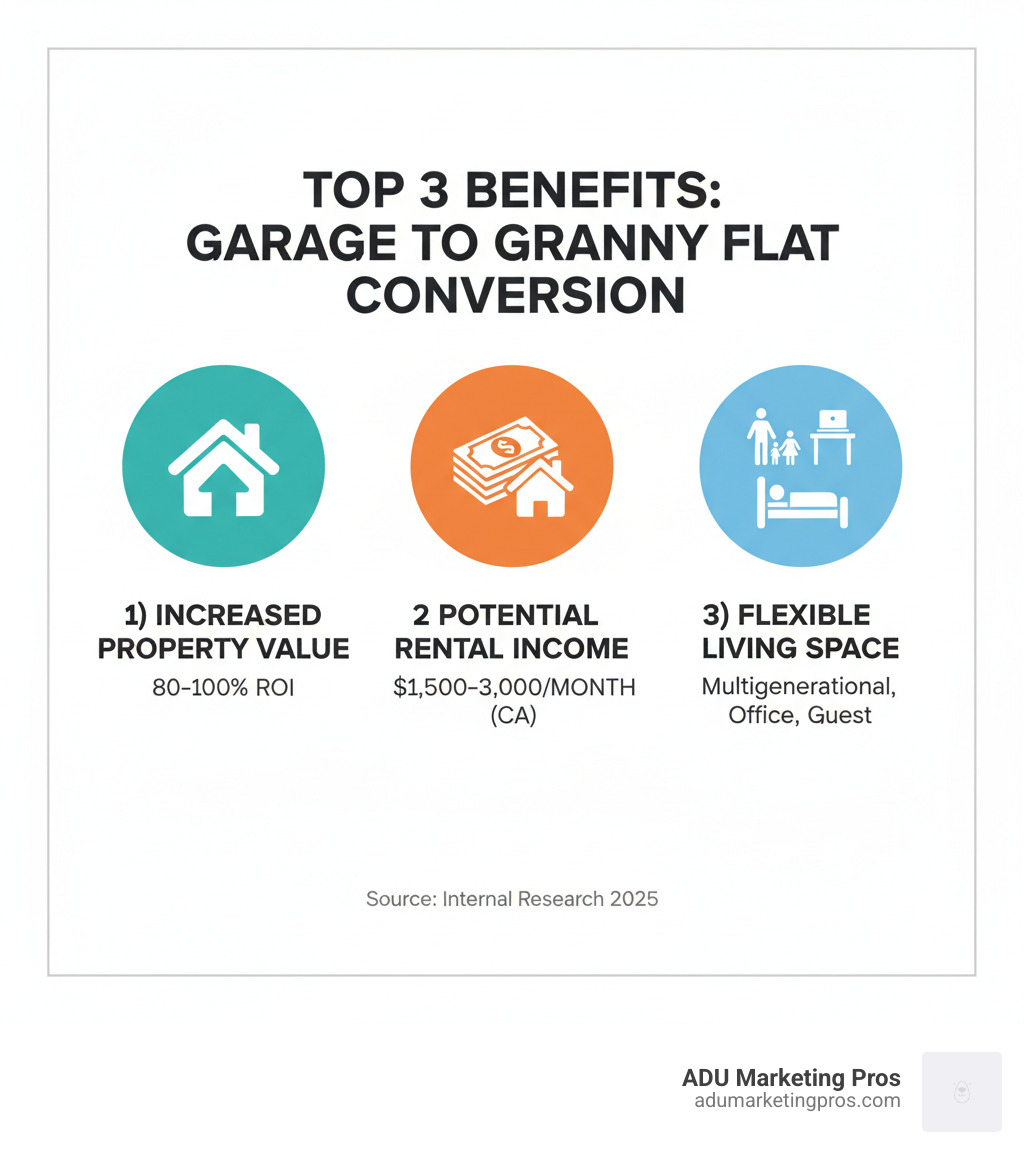
The “Why”: Unpacking the Benefits of a Garage to Granny Flat Conversion
The decision to convert single garage to granny flat is more than a home improvement project; it’s a strategic investment that creates a wealth of opportunities capable of transforming your lifestyle and financial outlook.
Financial benefits are often the most compelling driver. In high-demand California markets like San Jose, Los Angeles, or San Diego, a well-designed granny flat can generate $1,500 to $3,000 per month in rental income. This consistent cash flow can significantly offset your mortgage, accelerate your path to financial independence, or fund other life goals. Our in-depth research on ADU Rental Income demonstrates a clear pattern: homeowners are successfully turning these underused spaces into reliable, passive income generators that outperform many traditional investments.
Beyond direct rental income, the rise of multigenerational living makes these conversions more relevant than ever. According to AARP, the number of Americans in multigenerational households has quadrupled in the last 50 years, a trend accelerated by economic pressures and a desire for closer family ties. Your converted garage becomes a perfect bridge between independence and togetherness. Aging parents can live with dignity and privacy while remaining close for daily support and care. Simultaneously, adult children struggling with high housing costs can find an affordable, comfortable home while they save for their own future. This arrangement fosters family connection without sacrificing personal space, as detailed in studies on the benefits of multigenerational housing arrangements.
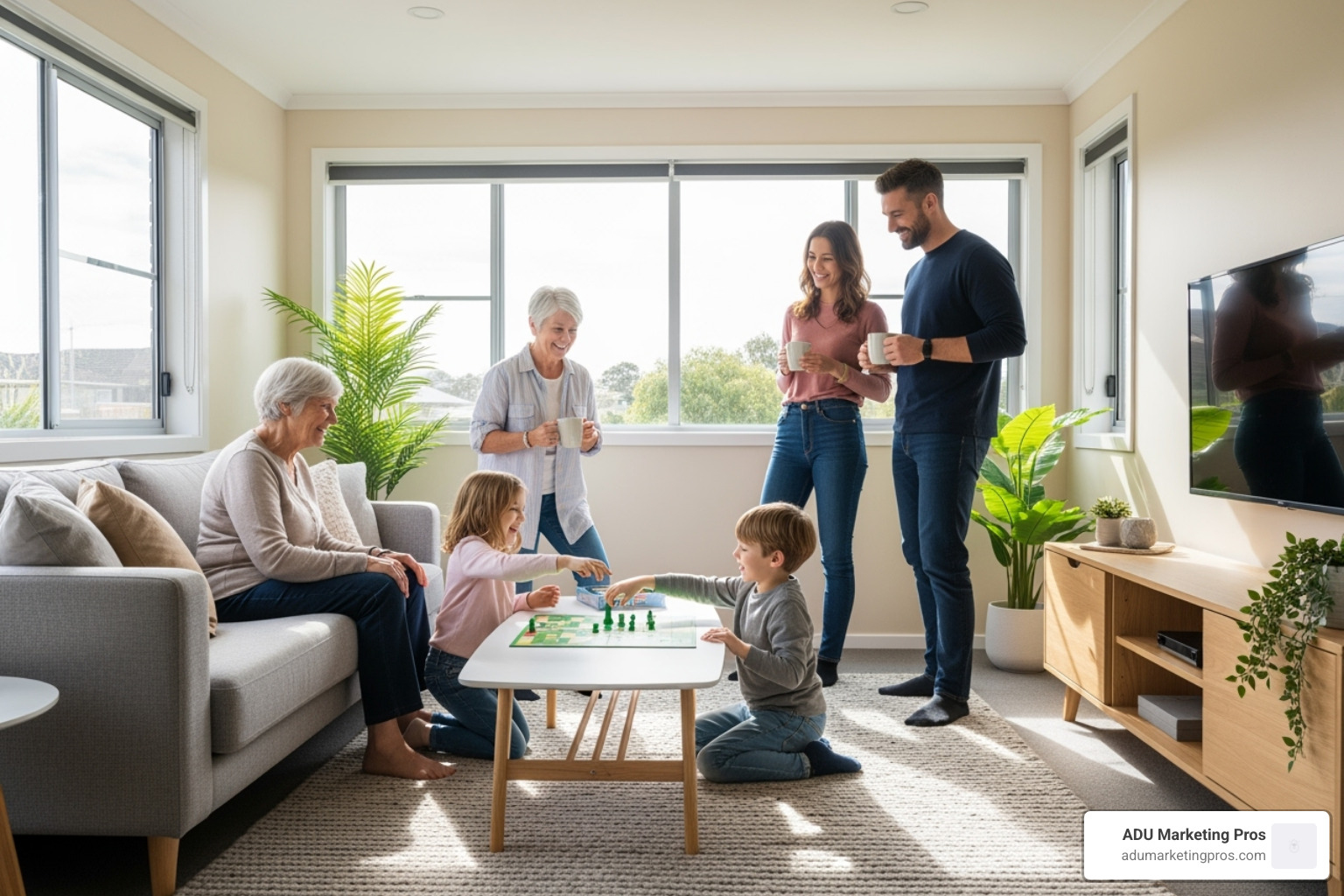
The flexibility of a converted garage is invaluable in today’s dynamic world. With remote work becoming a permanent fixture for many, the need for a quiet, dedicated home office space is critical. A granny flat provides a professional environment completely separate from the main home’s daily activities. It can also serve as a creative studio for artists, a home gym, a music room, or a comfortable and private guest suite that makes visitors feel truly welcome.
Finally, the increase in property value provides a compelling long-term benefit. Adding permitted, livable square footage to your property is one of the most reliable ways to boost its market value. Appraisers are increasingly recognizing ADUs as significant assets. Garage conversions often yield an impressive return, with many homeowners recouping 80-100% or more of their investment upon the sale of the property. This strong ADU Return on Investment solidifies the project not just as an expense, but as a strategic investment that pays dividends both now and in the future.
The Pre-Construction Playbook: Planning, Permits, and Legal Problems
Before you start picking out paint colors and dreaming of rental income, a thorough and disciplined planning phase for your convert single garage to granny flat project is absolutely critical. This pre-construction playbook is where you lay the groundwork for a smooth, legal, and successful build.
First, you must conduct a comprehensive feasibility study. This begins with a realistic assessment of your existing garage. Look for major red flags: large cracks in the concrete slab, evidence of water intrusion or mold, or a sagging roofline. Next, dive deep into your local municipality’s zoning laws. These regulations are the ultimate authority on what you can build. Pay close attention to setback requirements (the mandatory distance your structure must be from property lines, fences, and other buildings), lot coverage limitations, and any specific parking rules. You must also ensure your plans can meet the state and local building codes for habitable space. These include a minimum ceiling height (typically 7 feet 6 inches), specific dimensions for egress windows in sleeping areas for fire safety, and requirements for insulation and ventilation. Getting familiar with the official California ADU Regulations and local ADU Zoning Laws early in the process will prevent costly redesigns and delays down the road.
The Permit Gauntlet: What You Need for Approval
The permit process, while often frustrating, is a crucial step that ensures your conversion is safe, legal, and insurable. Navigating this bureaucracy requires a complete set of plans and documents. You will need separate building permits for structural changes, electrical permits for all new wiring and the subpanel, and plumbing permits for water supply and drainage systems. Your application package, submitted to your local city planning department, must include detailed architectural drawings, structural calculations, and often an energy compliance report (known as Title 24 in California). Hiring an architect or designer who specializes in ADUs is one of the best investments you can make. They not only create compliant and beautiful ADU Building Plans but also act as your expert guide, navigating the complex submission and review process. The timeline for permit approval can range from a few weeks in an efficient city to several months in a backlogged one, so it’s vital to factor this waiting period into your overall schedule. Our detailed guide to the ADU Permit Process can help you anticipate and avoid common pitfalls.
Granny Flat vs. Studio: Understanding the Difference
It’s important to understand that not all garage conversions are created equal. The legal classification of your unit has significant implications for its use and value. A true Accessory Dwelling Unit (ADU), or granny flat, is legally defined as a complete, self-contained home. This means it must have its own full kitchen, a bathroom, and a separate entrance. The kitchen requirements (typically including a sink, cooking appliance, and refrigerator) are what legally distinguish it as an independent dwelling, allowing it to be rented out long-term.
A studio conversion is a more ambiguous term. If it lacks a full kitchen (e.g., it only has a wet bar), it may not be classified as a legal ADU. This makes it suitable as a home office, gym, or guest room, but may restrict your ability to rent it as a separate unit. A Junior Accessory Dwelling Unit (JADU) is a specific California designation for a unit no larger than 500 sq ft created within the walls of the primary residence. A JADU requires an efficiency kitchen and may share a bathroom with the main house, but it must have an internal connection to the home as well as a separate external entrance. Always check your local ADU Size Restrictions to ensure your planned conversion aligns with the correct legal category.
Budgeting Your Build: The Real Cost to Convert Single Garage to Granny Flat
Let’s get down to the numbers. The most pressing question for nearly every homeowner is, “How much does it really cost to convert single garage to granny flat?” While the final figure depends heavily on your location, the condition of your garage, and your taste in finishes, we can provide clear, realistic cost ranges to help you plan effectively.
For a standard single-car garage (200-250 sq ft), a basic conversion using budget-friendly finishes can range from $30,000 to $80,000. A more common, mid-range project with better quality materials and some custom touches will likely fall between $90,000 and $120,000. For a premium conversion featuring high-end finishes, custom cabinetry, and significant structural or utility upgrades, the cost can easily exceed $120,000. Even at the high end, this is substantially more affordable than a new-build ADU, which often starts at $160,000 and can climb well over $300,000.
Key factors that will influence your final price include:
- Structural Integrity: An older garage may need costly foundation repairs, a new roof, or seismic retrofitting to meet current codes.
- Utility Work: The distance and difficulty of trenching to bring new plumbing, electrical, and gas lines to the garage is a major cost variable.
- Quality of Finishes: Your choices in flooring (vinyl vs. hardwood), countertops (laminate vs. quartz), appliances, and fixtures can swing the budget by tens of thousands of dollars.
- Permit & Design Fees: These administrative costs can total $5,000-$15,000 depending on your city and the complexity of the project. See our guide on ADU Permit Cost California.
- Labor Costs: Labor rates vary significantly across California and depend on the availability and expertise of qualified contractors.
For a more granular look at expenses, our guide on ADU Building Costs offers a detailed breakdown.
How to finance your single garage to granny flat conversion
Financing a six-figure project requires a solid plan. Fortunately, several excellent options are available for homeowners:
- Home Equity Line of Credit (HELOC): This popular option functions like a credit card, allowing you to borrow against your home’s equity as needed. It offers flexibility, which is great for managing construction payments.
- Cash-Out Refinance: This involves replacing your current mortgage with a new, larger one and taking the difference in cash. It can be a good choice if current interest rates are low, allowing you to lock in a fixed rate for the entire amount.
- Construction Loan: This is a short-term loan specifically designed for building projects. The funds are disbursed in stages as work is completed, and it’s typically converted into a traditional mortgage upon completion.
We can help you explore these ADU Financing Options and compare current ADU Loan Rates to find the best fit for your financial situation.
Using a Cost Calculator for an Accurate Estimate
To move from ballpark figures to a more personalized estimate, use our interactive Garage Conversion Cost Calculator. When building your budget, always get at least three detailed quotes from licensed contractors to compare not just the price, but the scope of work included. While it’s tempting to save money with DIY, reserve your efforts for cosmetic tasks like painting. The core structural, electrical, and plumbing work must be done by licensed professionals to pass inspections and ensure safety. Most importantly, always build a 10-20% contingency fund into your budget. This is not optional; it’s essential for covering the inevitable “hidden costs” like rotted framing discovered during demolition or unexpected soil conditions that require costlier foundation work.
The Conversion Blueprint: From Concrete Box to Cozy Home
The construction phase is where the vision for your granny flat becomes a reality. This transformation from a concrete box into a cozy, habitable home typically takes four to twelve weeks of active work. However, it’s crucial to remember that the entire journey, from the first architectural sketch to the final city inspection, will likely span five to ten months. The construction process itself is a carefully orchestrated sequence of events, beginning with heavy structural work and utility rough-ins, and culminating in the fine details of flooring, painting, and fixture installation. For a comprehensive overview of each step, refer to our ADU Building Process guide.
Essential Design Tricks for a Small Space
With a single garage’s compact footprint of 200-250 square feet, every design choice matters. The goal is to create a space that feels open, functional, and comfortable, not cramped. Here are some professional design strategies:
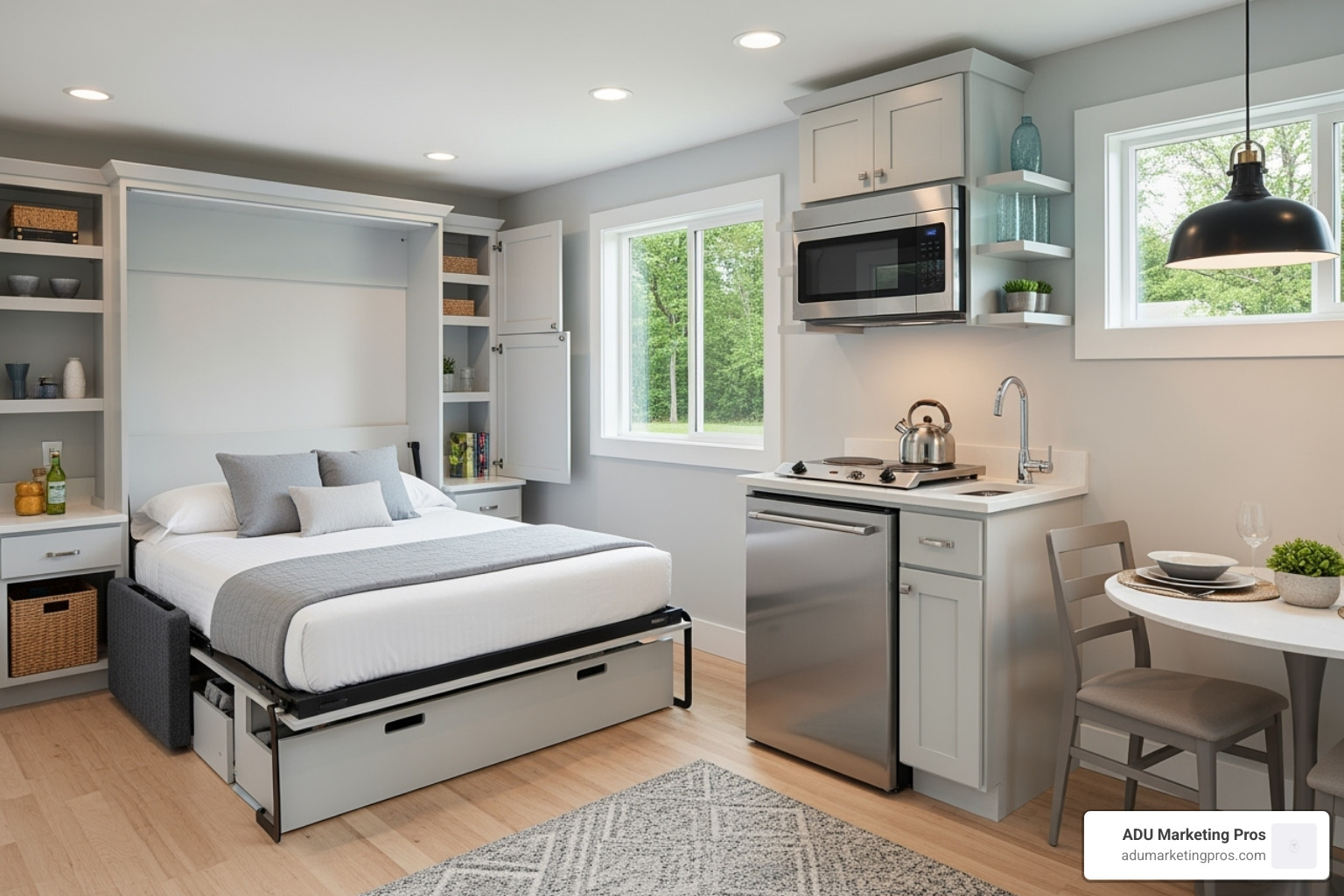
- Embrace an Open-Concept Layout: Avoid interior walls wherever possible. This creates an uninterrupted line of sight, making the entire area feel larger. Use furniture, area rugs, or lighting to visually define different zones like sleeping, living, and cooking.
- Invest in Multi-Functional Furniture: This is the key to maximizing a small space. A Murphy bed that folds into the wall frees up immense floor space during the day. A dining table can fold down from the wall, and storage ottomans can hide clutter while providing extra seating.
- Go Vertical with Storage: Utilize the full height of the room. Built-in, floor-to-ceiling shelving or cabinetry draws the eye upward, creating a sense of height, and provides ample storage without consuming valuable floor space.
- Maximize Natural Light: Light is your best friend in a small space. Enlarge existing window openings or add new ones. Skylights are particularly effective, bathing the space in natural light without sacrificing wall space. Also, using light colors for walls to create an illusion of space is a time-tested and highly effective trick.
- Use Mirrors Strategically: A large, well-placed mirror can instantly make a room feel twice as big by reflecting light and the view.
For more visual inspiration, explore our galleries of ADU Interior Design Ideas and clever ADU Kitchen Ideas.
Key Structural Modifications for a Garage Conversion
Transforming a structure built for cars into a legal, safe living space requires several critical modifications that must be handled by licensed professionals.
- Foundation Assessment & Preparation: A structural engineer may need to verify the existing concrete slab can support a residential load. The slab itself will require a new damp-proofing moisture barrier and often self-leveling compound to create a smooth, dry base for flooring.
- Wall Insulation and Framing: Garage walls are typically uninsulated. New interior stud walls will be built, creating a cavity for high-R-value insulation to meet modern energy efficiency standards.
- Replacing the Garage Door: This is a major structural step. The large opening must be framed in with a new wall, incorporating a properly sized header to carry the roof load above. This new wall will house the main entry door and windows.
- Windows and Doors: All new windows must provide adequate natural light and ventilation. Any designated sleeping area must have an egress window that meets specific size and operational requirements for emergency escape.
- Roof Integrity and Ventilation: The roof must be inspected for leaks and structural soundness. Proper insulation and ventilation in the new ceiling are crucial for energy efficiency and preventing moisture buildup.
- Fire Separation Walls: If the garage is attached, the shared wall and ceiling connecting to the main house must be heavily fortified with specific fire-resistant drywall (Type X) and other construction methods to create a one-hour fire barrier, a non-negotiable life-safety requirement.
How to convert a single garage to a granny flat with full utilities
Bringing full utilities to your convert single garage to granny flat project is what officially turns it into a home.
- Plumbing: This is often the most invasive and costly utility task. It involves cutting into the concrete slab or trenching outside to run new hot and cold water supply lines and, more significantly, new sewer/drainage lines for the kitchen and bathroom. These must connect to your property’s existing sewer lateral or septic system.
- Electrical: The single circuit powering your garage is grossly inadequate. A licensed electrician must run a new, heavy-gauge feeder line from your main electrical panel to a new subpanel inside the ADU. This subpanel will then power multiple new circuits for lights, outlets, and dedicated appliances like a stove or microwave.
- HVAC (Heating, Ventilation, and Air Conditioning): The most efficient and popular solution for ADUs is a ductless mini-split system. These units have an outdoor compressor and one or more indoor air handlers, providing both heating and cooling without the need for bulky and expensive ductwork.
- Ventilation: Building codes mandate mechanical ventilation. This means installing proper exhaust fans in the kitchen (range hood) and bathroom to control moisture and maintain healthy air quality, aligning with standards that prioritize occupant health and safety.
Navigating Common Challenges and Roadblocks
While the end result is incredibly rewarding, no construction project is without its hurdles. A convert single garage to granny flat project has its own unique set of potential problems. Being aware of these common challenges from the outset allows you to plan for them, both financially and mentally, ensuring a smoother process.
One of the most frequent issues is encountering unexpected structural problems. When demolition begins, you might uncover hidden termite damage in the wall studs, a severely cracked foundation that requires expensive repairs, or outdated and unsafe wiring that necessitates a complete overhaul. These discoveries almost always lead to budget overruns, which is precisely why a contingency fund of 10-20% is not just a recommendation, but a necessity. In booming markets like San Jose and the Bay Area, finding qualified contractors with specific ADU conversion experience can be a challenge in itself, often leading to long wait times and higher labor costs. It’s crucial to vet potential builders thoroughly by checking their license, insurance, and references from past ADU projects.
Project delays are another common frustration. These can stem from a variety of sources: slow plan-check and permit approvals at the city office, waiting for inspectors to become available, or global supply chain issues causing shortages of windows, doors, or appliances. Don’t forget about neighbor considerations. A months-long construction project involves noise, dust, and extra vehicles. Proactive and considerate communication with your neighbors—sharing your timeline, providing contact information for the project manager, and adhering to local work hours—can prevent complaints and maintain good relationships. Finally, you must be aware of parking replacement rules. While recent California state laws have eliminated parking requirements for most ADUs (especially those near transit), some cities may still have specific ordinances that require you to create a new off-street parking space to replace the one you’re converting.
Attached vs. Detached Garage Conversions: Key Differences
The type of garage you have—whether it shares a wall with your main house or stands alone—significantly impacts the project’s cost, logistics, and final feel.
- Privacy and Noise: A detached garage conversion inherently offers superior privacy and acoustic separation for both the ADU occupant and those in the main house. An attached conversion, while convenient, means dealing with potential noise transfer through the shared wall.
- Construction Disruption: Work on an attached garage is far more disruptive to your daily life. You’ll experience more noise, dust, and foot traffic directly connected to your living space. A detached project contains the disruption to a separate part of your property.
- Utility Access and Cost: This is a major differentiator. Attached garages often have easier (though not necessarily cheap) access to the main house’s plumbing and electrical systems. Detached garages almost always require extensive and costly trenching across your yard to run new utility lines from the main house or the street.
- Fire-Rated Separation: This is a significant cost factor unique to attached conversions. Building codes mandate that the wall and ceiling separating the ADU from the main house be constructed as a one-hour fire-rated assembly, which involves specialized materials and construction techniques.
- Cost Differences: The costs tend to balance out in surprising ways. The higher utility costs for a detached unit are often offset by the expensive fire separation requirements of an attached unit. The final cost difference is often less than homeowners expect.
Both attached and detached conversions are excellent investments that add significant value. Our dedicated resource on ADU Garage Conversions explores these differences in greater detail to help you understand the specific implications for your property.
Frequently Asked Questions
We’ve helped countless homeowners plan to convert single garage to granny flat. Over time, we’ve found that the same important questions come up again and again. Here are detailed answers to the most common inquiries.
Is a single garage (around 200-250 sq ft) big enough for a granny flat?
Absolutely. While 200-250 square feet is undeniably compact, it is more than enough space for a highly functional and comfortable home when smart design principles are applied. The key is to think like a designer of a tiny home or a luxury yacht. An open floor plan is essential to create a sense of spaciousness. Instead of walls, use furniture placement or different flooring to delineate zones. Multifunctional furniture is your most powerful tool: a Murphy bed transforms a bedroom into a living room in seconds, a gateleg table can be a console table or a dining table for four, and a storage ottoman provides seating and hides clutter. With a well-planned layout, clever storage solutions, and an emphasis on natural light, a single garage can be transformed into a complete studio apartment that feels surprisingly roomy and meets all local ADU size regulations.
How does a garage conversion affect my property taxes and insurance?
Yes, both will be affected, and it’s important to plan for these new recurring costs. Your property taxes will increase. When the project is complete and receives its final inspection, the county assessor’s office will perform a reassessment. In California, thanks to Proposition 13, they will not reassess your entire property’s value. Instead, they will establish a new, blended assessment that adds the value of the new construction to your property’s existing assessed value. This increase is almost always far less than the rental income the unit can generate or the equity it adds.
You must also update your homeowner’s insurance policy. A standard policy does not cover a separate rental unit. Inform your insurance provider about the conversion as soon as you begin planning. You will need to add coverage for the new structure and, crucially, if you plan to rent the unit, you will need landlord or rental property insurance. This provides liability coverage for your tenants and protects your investment.
How long does a typical single garage conversion take from start to finish?
While the on-site construction is relatively quick, the entire process requires patience. A realistic total timeline is 5 to 10 months, and sometimes longer. This breaks down into three distinct phases:
- Phase 1: Planning and Design (1-3 months): This involves feasibility studies, hiring a designer or architect, and developing a full set of architectural and structural drawings.
- Phase 2: Permitting (2-4 months): This is often the longest and most unpredictable phase. Your plans are submitted to the city for review by multiple departments (planning, building, fire). Delays can occur due to city backlog, requests for corrections, or resubmissions.
- Phase 3: Construction (2-3 months): Once you have the permit in hand, the actual build-out can begin. This includes demolition, foundation work, framing, utility rough-ins, inspections, and all the finishing touches.
Can I do the conversion myself (DIY)?
While the DIY spirit is admirable for saving money, a garage conversion is a complex project that is not suitable for a complete DIY approach. You may be able to handle cosmetic tasks like painting, installing laminate flooring, or assembling cabinets. However, any work involving structural changes (framing, foundation), electrical wiring, or plumbing must be performed by licensed professionals. This is not only for your safety but also because this work requires permits and must be inspected and approved by the city. Attempting to DIY this work will almost certainly lead to failed inspections, costly rework, and potential legal and insurance nightmares.
Do I need an architect to convert my garage?
While not always legally required for a simple conversion, hiring an architect or an experienced ADU designer is highly recommended and is one of the smartest investments you can make. They do much more than just draw plans. They are experts in navigating complex local building codes, maximizing small spaces with creative layouts, and preparing the detailed documents required by the city’s plan checkers. Their expertise can save you thousands of dollars and months of delays by getting the plans approved correctly the first time.
Conclusion: Your Next Step Towards a Granny Flat
The journey to convert single garage to granny flat is one of the most impactful and financially savvy decisions a California homeowner can make today. It is a strategic investment in your property, your financial freedom, and your family’s future. This project offers a uniquely cost-effective path to generating substantial rental income, creating truly flexible space for multigenerational living or a home office, and significantly boosting your home’s long-term value and marketability.
While the process is detailed and involves careful planning, navigating permits, and diligent budgeting, the transformation of a 200-250 square foot concrete box into a beautiful, functional, and income-producing home is an achievable and rewarding goal. The key challenges—from uncovering structural surprises in an old garage to managing the complexities of local building codes—are entirely manageable with a professional team and a well-thought-out plan.
Success in the competitive California market, whether you’re in a bustling metro like San Jose or a quiet suburb of Los Angeles, hinges on expertise. Partnering with experienced designers, architects, and builders who specialize in ADU conversions is not just a good idea; it is the essential ingredient for a compliant, on-budget, and beautiful result that will stand the test of time.
Ready to unlock the hidden potential sitting in your garage? The first step is to move from a vague idea to a concrete plan by understanding the numbers involved.
Use our Garage Conversion Cost Calculator to get a detailed, personalized estimate for your project! This powerful tool will provide the financial clarity you need to confidently move from dreaming to building.