
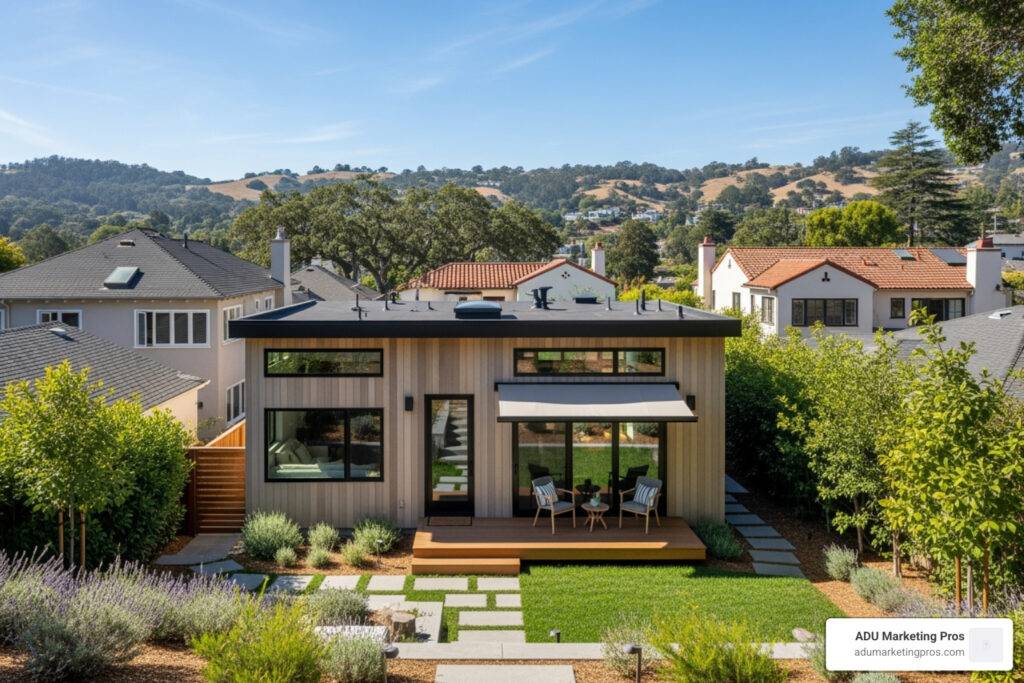
Navigating the Investment of a Bay Area ADU
ADU cost bay area ranges from $225,000 to over $515,000, making it a significant home investment. The most affordable options are garage conversions ($80,000 – $200,000) and JADUs ($60,000 – $150,000), while a typical 650 sq ft ADU averages around $350,000.
The Bay Area’s housing crisis has made ADUs a popular solution for homeowners looking to add value, generate rental income, or house family members. This wide cost range reflects the complexity of building in one of the nation’s most expensive markets, driven by high local labor rates, strict building codes, site-specific challenges, and material costs.
Despite the investment, ADUs often pay off, typically increasing property values by 20-30% in the Bay Area, which can translate to $200,000-$500,000 in added value.
The Average ADU Cost Bay Area: A Numbers Deep Dive
When it comes to ADU cost Bay Area, the total cost to build typically ranges from $225,000 to $515,000 or more. This reflects our region’s unique market, with construction costs between $350 to $800 per square foot—notably higher than other parts of California due to high labor costs and complex permitting.
The type of ADU you choose significantly impacts your final bill:
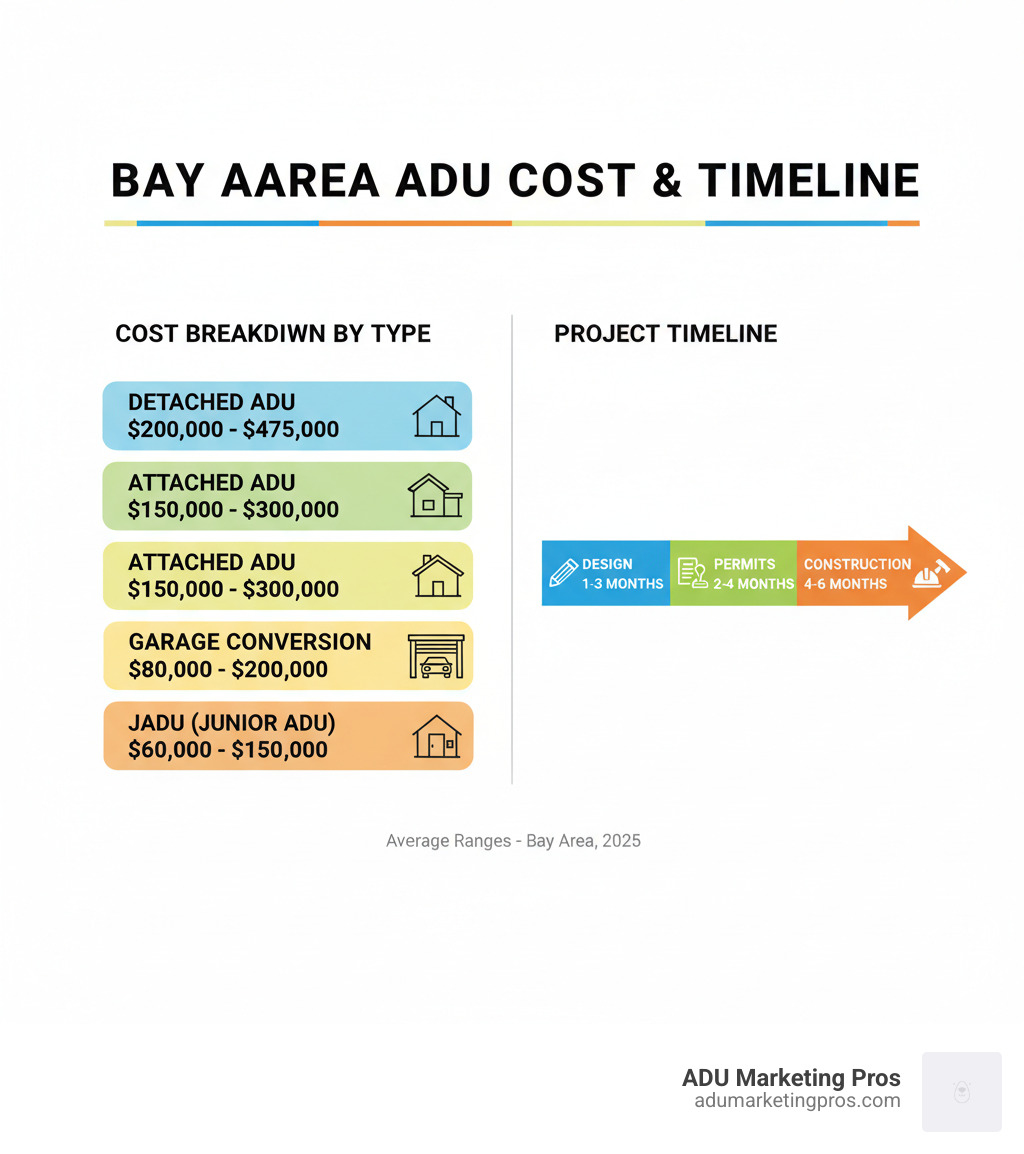
- Junior ADUs (JADUs): At $60,000 to $150,000, these units (up to 500 sq ft) are the most affordable, as they are built within your home’s existing footprint.
- Garage Conversions: Your next most budget-friendly option, typically running $80,000 to $200,000 by utilizing an existing structure.
- Attached ADUs: These fall in the middle range at $150,000 to $300,000, connecting to your main house to reduce some construction costs.
- Detached ADUs: As new standalone structures, these command the highest prices, from $200,000 to $475,000, requiring a full foundation and separate utility connections.
For a size perspective, a 350-square-foot ADU will likely cost around $225,000, while a more spacious 650-square-foot unit averages around $350,000. These ranges reflect the difference between a basic, functional unit and one with high-end finishes.
Deconstructing Your ADU Budget: A Line-by-Line Cost Breakdown
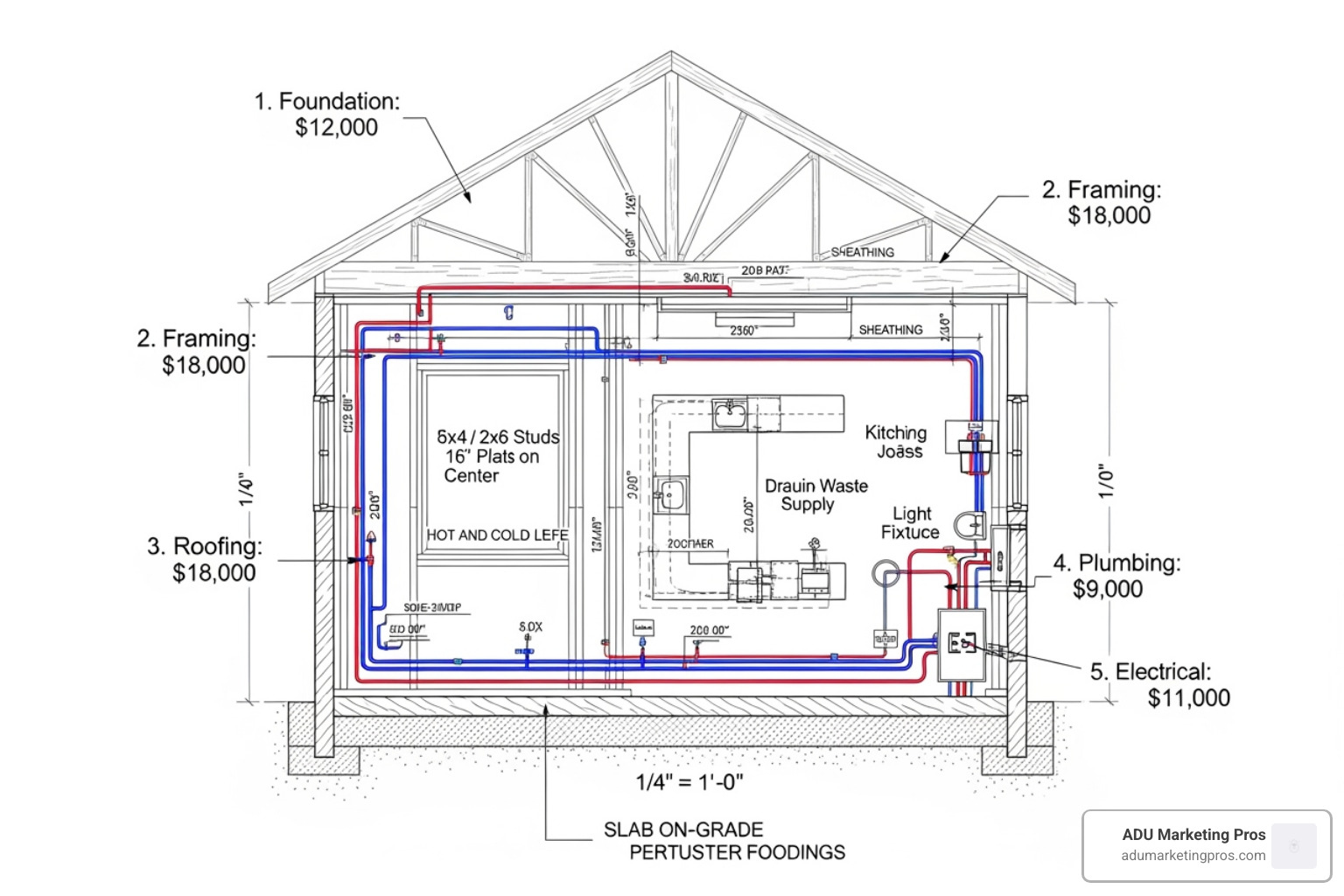
Understanding where your money goes is crucial. An ADU budget has three main parts: soft costs (planning), hard costs (building), and finishing costs. Always include a contingency fund of 10-20% for unexpected expenses.
Soft Costs: Design, Engineering, and Permit Fees
These pre-construction costs cover planning and approvals.
- Design & Engineering: Architectural blueprints and engineering (structural, civil) can range from $3,000 to $45,000+ combined, depending on complexity. A simple, flat-lot design will be on the lower end, while a complex project on a hillside will require additional geotechnical engineering for soil stability analysis, adding several thousand dollars to the soft costs.
- Bay Area Permit Fees: A significant expense, permits can range from $8,000 to $30,000. Costs vary widely by city. For example, a new ADU in San Jose could have over $17,000 in fees, while smaller units in Redwood City might be closer to $3,000-$4,000. In cities like Berkeley or Oakland, fees can also be substantial, often falling in the $15,000-$25,000 range depending on the project’s scope and required public works inspections.
- Impact Fees: Good news! State law waives these fees for ADUs under 750 square feet. For larger units, they can exceed $10,000.
Hard Costs: Site Prep, Construction, and Utilities
These are the tangible costs of building the structure.
- Site Preparation: Demolition, grading, and excavation typically cost $10,000 to $15,000.
- Foundation: A standard concrete foundation can run $5-$40 per square foot, totaling $2,400-$30,000 for an average-sized ADU.
- Utility Connections: Connecting water, sewer, and electricity is a major expense, often $3,400-$11,400. This involves trenching from the main house to the ADU site, which can be complicated by concrete, landscaping, or difficult access. Upgrades to existing systems (electrical panel, septic) can add thousands more. A main panel upgrade alone is often a non-negotiable requirement to handle the additional electrical load and can cost $4,000-$12,000.
- Materials & Labor: These are the biggest budget items. Materials account for 45%-50% of the total project cost, while high Bay Area labor rates mean a general contractor’s fee (10%-20% of the budget) can be $18,000-$83,000 or more. This fee covers project management, scheduling subcontractors, and ensuring quality control. It does not include the direct cost of skilled labor like electricians, plumbers, and framers, whose high hourly rates are a primary driver of the overall cost.
Finishing Costs: Interiors, Landscaping, and Final Touches
These costs make the ADU livable.
- Interiors & Appliances: Finishes like drywall, paint, flooring, cabinetry, and fixtures can range from $10-$60/sq ft. The lower end includes vinyl flooring, laminate countertops, and basic lighting. The higher end involves hardwood floors, stone countertops, custom tile work, and designer fixtures. A full set of basic appliances can add another $2,400-$7,300, while high-end, energy-efficient models can easily double that cost.
- Landscaping & Cleanup: Basic landscaping costs $4-$12/sq ft. Don’t forget post-construction cleanup and dumpster rentals, which can cost $300-$800/week.
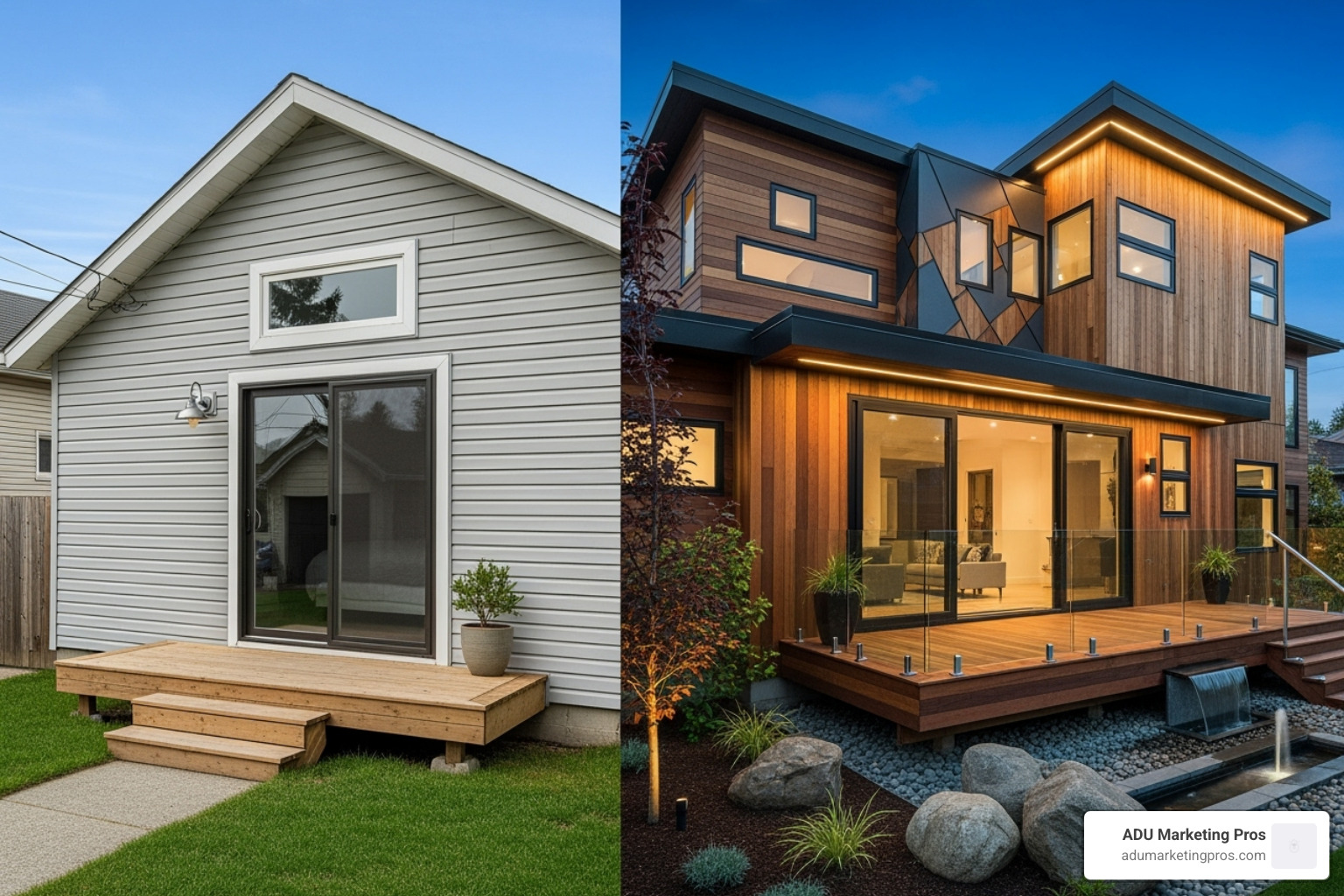
Key Factors That Influence Your Bay Area ADU Cost
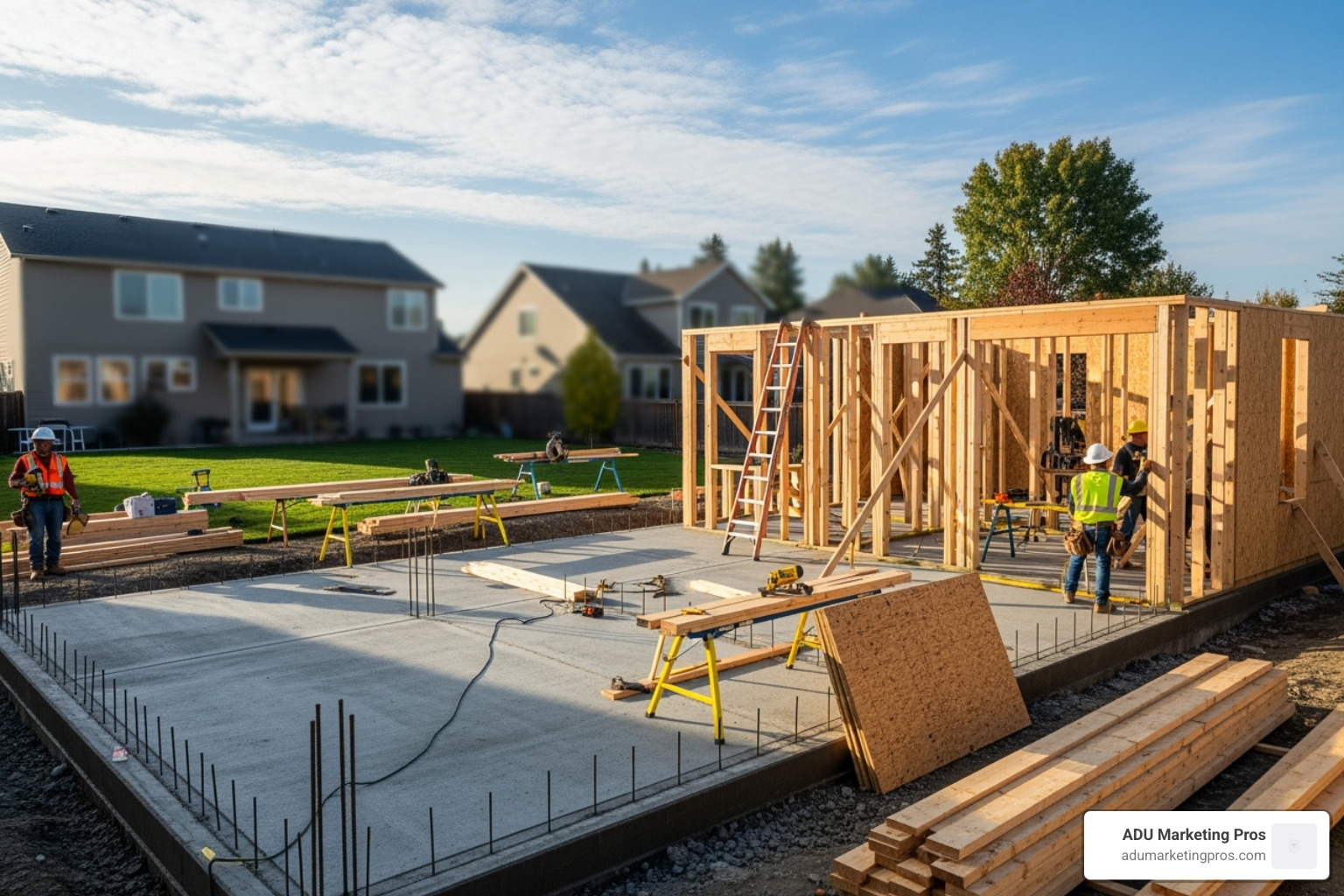
The difference between a $150,000 garage conversion and a $500,000 custom unit comes down to several key factors that shape your ADU cost Bay Area project.
Site Conditions and Location Specifics
Your property’s unique characteristics directly impact the budget.
- Topography and Soil: A sloped lot can increase construction costs by 10-20% due to complex excavation and foundation needs. Poor soil conditions may also require costly engineering solutions. The Bay Area’s seismic activity also means that foundation engineering is more rigorous and expensive than in other regions. If your property has mature trees that need to be removed or protected during construction, this can add thousands in arborist fees and removal costs.
- Accessibility and Utilities: If large equipment can’t easily reach your backyard, labor costs will rise. Likewise, upgrading your home’s existing electrical panel ($4,000-$12,000) or water lines ($3,000-$8,000) to support the ADU adds significant expense. Furthermore, the distance of the ADU from the main utility connections (sewer, water, electrical) directly impacts cost, as longer trenching distances mean higher labor and material expenses.
- Local Factors: High Bay Area labor rates and city-specific interpretations of California ADU regulations and guidelines also drive up costs.
Prefab vs. Custom-Built: A Cost and Timeline Comparison
This choice balances cost, speed, and personalization.
- Prefab ADUs ($100,000-$300,000): Built off-site in a factory, these units offer cost savings and excellent quality control. The timeline is a major advantage, with completion possible in as little as seven months and on-site assembly taking just days. However, it’s a misconception that prefab units bypass all site work. You will still incur significant costs for foundation, utility connections, and crane rental for placement, which can sometimes be complex in dense Bay Area neighborhoods.
- Custom-Built ADUs ($150,000-$475,000): Built entirely on-site, these offer unlimited design flexibility to match your home or meet specific needs. The trade-off is a longer timeline (6-12 months) and higher cost, but it provides complete control over the final product. This is ideal for maximizing challenging lots, matching unique architectural styles, or incorporating specific accessibility features for family members.
Design Complexity and Finish Levels
Your taste in design and materials is a primary cost driver. The quality of finishes can easily double your cost per square foot. Architectural features like cantilevered sections, floor-to-ceiling glass walls, or complex rooflines require more advanced engineering and skilled labor, directly increasing hard costs.
- Basic ($200-$300/sq ft): Features builder-grade finishes, standard appliances, and simple designs.
- Mid-Range ($300-$400/sq ft): Includes upgraded finishes like quartz countertops, hardwood floors, and some custom touches.
- High-End ($400+/sq ft): Showcases luxury materials, custom cabinetry, premium appliances, and architectural details like vaulted ceilings. These custom features require additional engineering and materials, pushing costs toward the upper end of the spectrum.
Financing, Timelines, and ROI: The Bigger Picture
Building an ADU involves more than just construction; it requires a solid plan for funding, timelines, and understanding the long-term financial benefits.
Funding Your Project: ADU Financing Options and Incentives
Most homeowners leverage their home’s equity to fund an ADU cost Bay Area project.
- Financing Options: Popular choices include Home Equity Loans (HELOCs), cash-out refinancing, and construction loans that disburse funds at project milestones. Some builders also offer in-house financing.
- Grants and Incentives: Look for programs like the CalHFA ADU Grant Program, which has previously offered up to $40,000 for pre-development costs. Many Bay Area cities also offer local incentives like fee reductions or expedited permitting.
Project Timeline: From Design to Move-In
Patience is key. A custom-built ADU in the Bay Area typically takes 6-12 months from start to finish.
- Design Phase: 1-3 months for architectural drawings and engineering.
- Permitting Phase: 2-4 months for city approval. This is often the most unpredictable stage.
- Construction Phase: 4-6 months for building, from foundation to finishing touches.
Prefab ADUs can shorten the total timeline to around 7 months. Be aware that material shortages or unexpected site conditions can cause delays for any project type.
The Return on Investment: Property Value and Rental Income
In the Bay Area, the ROI on an ADU is exceptional.
- Property Value: An ADU typically increases property value by 20-30%, which can mean $200,000-$500,000 in added equity. This appreciation often exceeds the construction cost.
- Rental Income: A studio or one-bedroom ADU can generate $2,000-$2,500 monthly, while two-bedroom units can command $3,000 or more. This income can cover loan payments and build long-term wealth.
- Family Flexibility: Beyond finances, ADUs provide invaluable space for multigenerational living, offering a cost-effective alternative to assisted living for aging parents or providing affordable housing for adult children.
Avoiding Pitfalls: Hidden Costs and Hiring the Right Team
An ADU project can be a dream, but avoiding common pitfalls is key to a smooth process. Most problems are preventable with foresight and the right professional team.
Common Budget Mistakes and Hidden ADU Costs in the Bay Area
Unexpected expenses can derail even the best-laid plans. Watch out for these common budget-busters:
- Underestimating Permits: City fees can be complex and costly. Budgeting for the higher end of the $8,000-$30,000 permit range is a safe bet.
- Unplanned Utility Upgrades: An ADU may require a new electrical panel ($4,000-$12,000), water line improvements ($3,000-$8,000), or major septic system upgrades ($8,000-$25,000).
- Ignoring Pre-Construction Due Diligence: Before you even design, you may need a soil report ($2,000-$5,000) or a topographical survey ($1,500-$3,000), especially for sloped or tricky lots.
- Forgetting Construction Insurance: Your standard homeowner’s policy may not cover a major construction project. You’ll likely need a ‘course of construction’ insurance policy to protect against theft, damage, and liability, which can add $1,000-$4,000 to your budget.
- Inadequate Contingency Fund: A 10-20% buffer is not optional; it’s essential insurance against unexpected issues like price hikes or finding old foundation problems.
- Scope Creep: Small upgrades add up. Deciding to add vaulted ceilings or high-end appliances mid-project can quickly inflate your ADU cost Bay Area budget.
How to Hire the Right Bay Area ADU Contractor
Your contractor is your most important partner. A poor choice can lead to disaster, while a great one ensures a successful build.
- Vet Thoroughly: Verify every potential contractor has a valid license with California’s Contractors State License Board (CSLB) and carries full insurance. Ask for references from recent, local ADU projects and call them.
- Ask Key Questions: Inquire about their experience with projects like yours, how they handle the permit process, and their communication style. Crucially, ask how they manage unexpected costs and issues. How do you formalize change orders and their costs? What is your payment schedule tied to (e.g., project milestones)? Who is the dedicated project manager I will be communicating with daily?
- Watch for Red Flags: Be wary of contractors demanding large upfront payments (California law limits down payments to 10% of the contract price or $1,000, whichever is less), offering unusually low bids, or only accepting cash. A professional will have a verifiable business presence, a professional email address, and a portfolio of completed projects. High-pressure tactics to get you to sign a contract immediately are also a major warning sign. Taking your time to find the right partner is the best investment you can make.
Frequently Asked Questions about Bay Area ADU Costs
Navigating ADU costs can be confusing. Here are answers to the most common questions we hear from Bay Area homeowners.
What’s the cheapest type of ADU to build in the Bay Area?
Leveraging existing structures is the key to affordability.
- Garage conversions are the most cost-effective option, typically costing $80,000-$200,000. You already have a foundation, walls, and a roof, which saves significantly on labor and materials.
- Junior ADUs (JADUs) are also highly budget-friendly, running $60,000-$150,000. These units (up to 500 sq ft) are created within your home’s existing footprint, avoiding major structural and site prep costs.
Both options usually involve faster permitting and construction timelines, allowing you to use the space sooner.
How does the adu cost bay area compare to Los Angeles or Sacramento?
The Bay Area is consistently the most expensive place in California to build an ADU. This is primarily due to three factors:
- Labor Costs: Our region has some of the highest wages for skilled trade workers in the nation.
- Material Costs: High demand and logistical challenges drive up the price of construction materials.
- Regulatory Complexity: While state laws have helped, local city requirements can add time and expense.
A quick comparison of average construction costs:
- Bay Area: $150,000 – $475,000+
- Los Angeles: $100,000 – $400,000
- Sacramento: $100,000 – $300,000
The upside is that the Bay Area’s high property values and rental rates often mean the return on investment is still excellent.
How much will an ADU increase my property taxes?
This is a common concern, but the increase is often more manageable than homeowners fear. Thanks to California’s Proposition 13, your existing home’s assessed value will not be changed. Instead, the county assessor will create a “blended assessment.”
Here’s how it works: The value of the new ADU construction is added to your property’s existing assessed value. Your new property tax bill is calculated based on this new, combined value. It is NOT based on the new, higher market value of your entire property.
For example, if your home’s current assessed value is $400,000 and you build an ADU for $350,000, your new assessed value would be $750,000. Assuming a 1.25% tax rate, your annual property tax would increase by approximately $4,375 ($350,000 * 1.25%). This is far less than if your entire property were reassessed at its new market value of, say, $1.8 million.
Can I build an ADU without adding a new parking space?
Yes, in most cases. Recent state laws have removed parking requirements for many ADU projects to encourage housing development. You are generally exempt from adding a parking space if your property is:
- Within a half-mile walking distance of public transit (bus, BART, Caltrain).
- Located in a designated historic district.
- Part of a project to convert an existing structure, like a garage.
- Near a dedicated car-share vehicle location.
These exemptions recognize modern living patterns in dense urban areas. However, always confirm the specific rules with your local city’s planning department.
Conclusion: Making Your Bay Area ADU a Reality
Building an ADU in the Bay Area is a major investment, with costs ranging from $60,000 for a simple JADU to over $500,000 for a luxury custom unit. This range reflects the diverse options available, from an affordable garage conversion ($80,000-$200,000) to a new detached cottage ($300,000-$475,000).
Success hinges on realistic planning. Homeowners who budget for a 10-20% contingency fund, research local permit requirements, and hire experienced contractors are best positioned for a smooth project. The financial returns justify the effort, with potential property value increases of $200,000-$500,000 and monthly rental income of $2,000-$3,000+.
More than just an investment, ADUs provide flexible solutions for Bay Area families—whether for aging parents, adult children, or a dedicated home office. In a region with a persistent housing crisis, an ADU is a smart, valuable addition to your property.
At ADU Marketing Pros, we understand the complexities of the ADU cost Bay Area market. With the right guidance, your ADU dream can become a reality that serves your family and improves your property’s value for decades.
Ready to take the next step? Learn more about Bay Area ADU costs and find how we can help guide you through every phase of your ADU journey.