
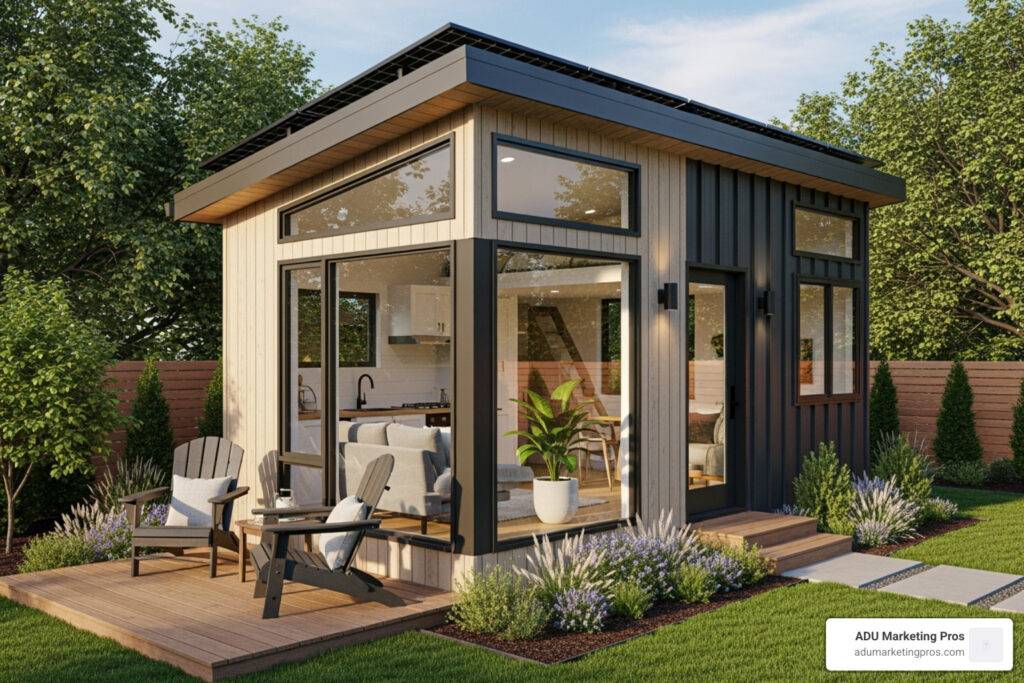
Why the “Home Small Home” Movement is Changing Modern Living
Home small home is more than a catchy phrase—it’s a growing movement reshaping how we think about housing, sustainability, and living well. Understanding the benefits of small home living can help you make smarter decisions about your space and lifestyle.
Quick Answer: Small Home Living Essentials
- Size: Typically under 2,000 square feet, with tiny homes under 600 square feet.
- Benefits: Lower costs, easier maintenance, and a smaller environmental footprint.
- Types: Cabins, A-frames, studios, ADUs, and tiny homes on wheels.
- Uses: Primary residences, guest houses, rental properties, and downsizing solutions.
- Design: Open-concept layouts, smart storage, and strong indoor-outdoor connections.
The appeal of small homes is clear: small house plans (under 2,000 square feet) are generally less costly to build, easier to maintain, and environmentally friendlier than larger homes. While purists define a tiny house as under 600 square feet, a more relaxed definition extends to 1,200 square feet.
But small doesn’t mean sacrificing style. Thoughtful design can deliver both beauty and function, with real-world examples showing families thriving in spaces from 635 to 1,000 square feet by using clever layouts and multi-functional furniture.
The financial benefits are equally compelling. Beyond lower construction costs, small homes offer reduced utility bills, minimal maintenance, and often no mortgage, freeing up resources for experiences over square footage.
For ADU construction and architecture firms, this shift is a major market opportunity. Homeowners across California are seeking smaller, smarter living solutions for primary residences, multi-generational living, home offices, or rental income. Understanding this movement is key to capturing growing demand.
Exploring the World of Small Homes: Types and Styles
The beauty of home small home living lies in its incredible diversity. From weathered beach cottages to sleek modern prefabs, there’s a compact living style for everyone, whether you prefer rustic charm or contemporary minimalism.
The Classic Cabin & Cottage
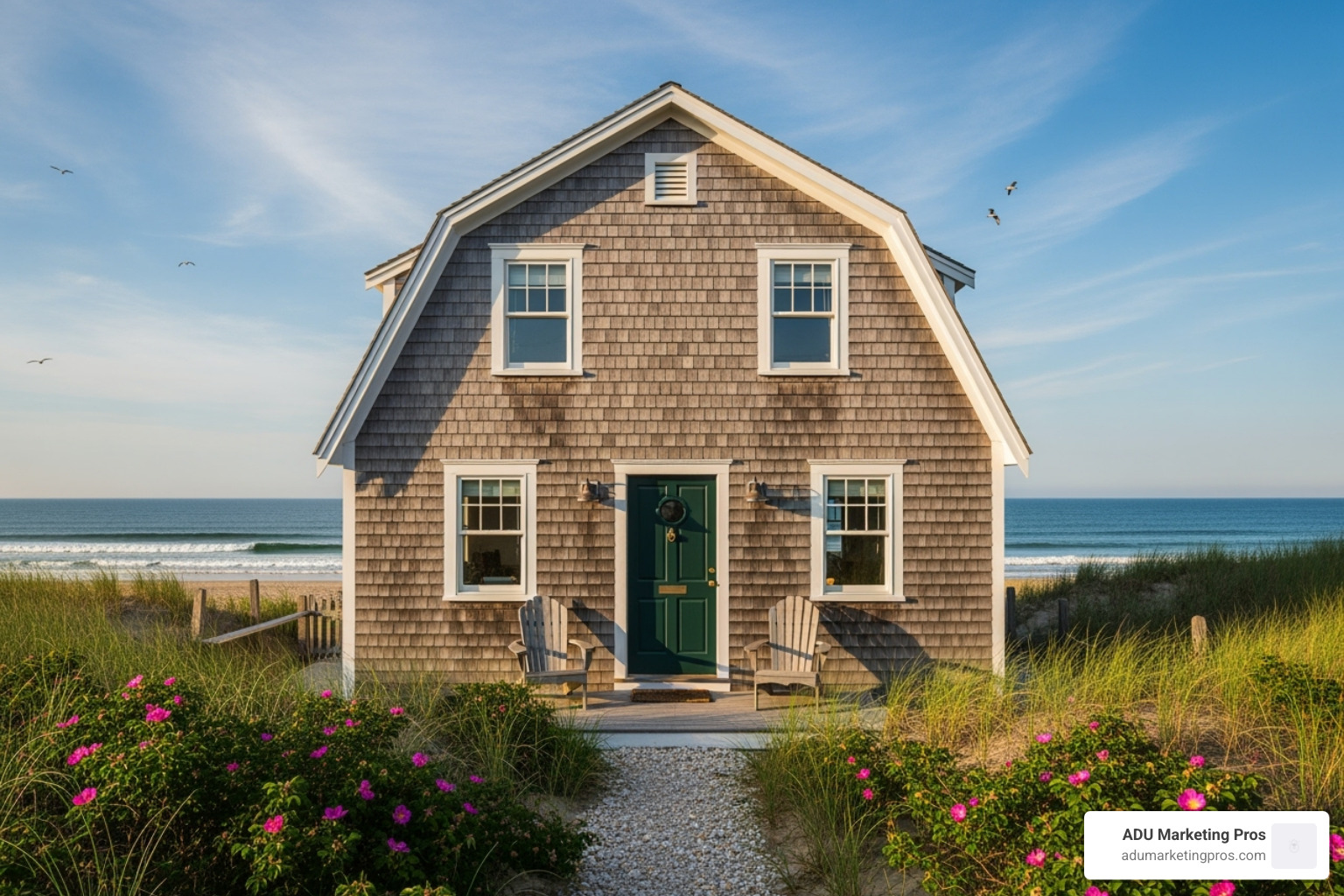
Classic cabins and cottages offer rustic charm and a cozy retreat feel, using natural materials like wood and stone. Exteriors often feature shingled siding or clapboard that weathers beautifully. For example, “Daffodil Cottage,” a 700-square-foot beach cottage on Cape Cod, has a simple, charming coastal aesthetic. Another example is Landon McAfee’s restored 800-square-foot cottage in Tennessee, where a fresh coat of Bunker Hill Green by Benjamin Moore on the trim brings the home to life. For more inspiration, explore our collection of Small Houses.
The Modern A-Frame & Prefab
For contemporary tastes, the A-frame and prefabricated home offer sleek lines and efficient construction. A-frames are known for their steep rooflines and large windows, which create surprisingly open interiors with high ceilings. They are popular as vacation homes and mountain retreats.
Prefabricated options, often influenced by Scandinavian design, prioritize functionality and minimalist aesthetics. Built in a factory, they are transported to your site for quick assembly, reducing waste and often resulting in more energy-efficient buildings. If you’re drawn to clean lines and efficient layouts, Modern Prefab Granny Flats might be your perfect home small home solution.
The Versatile Studio & Backyard Office
Sometimes the perfect home small home is a versatile addition to an existing property. Studios and backyard offices are single open-plan spaces ideal for multi-functional living, serving as a guest suite, art studio, or quiet workspace. Many of these structures are built as an Accessory Dwelling Unit (ADU). The ADU Home Office concept is increasingly popular, offering a clear boundary between work and home life. Browsing Studio ADU Floor Plans can help you visualize the possibilities.
The Mobile Tiny Home on Wheels (THOW)
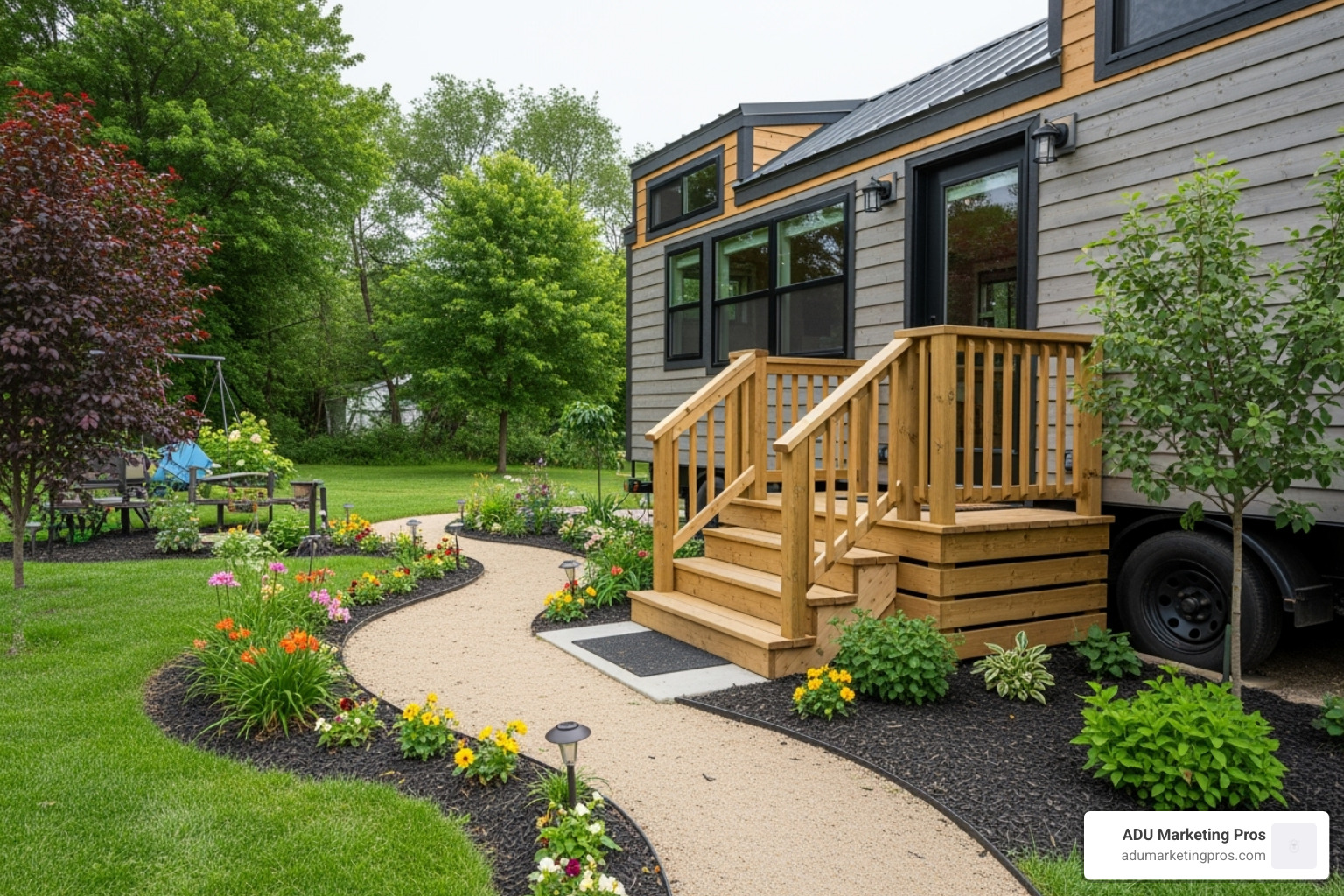
For those who crave freedom and mobility, the tiny home on wheels (THOW) is a portable dwelling that lets you take your home small home anywhere. THOWs embody downsizing and often have significant off-grid potential with solar panels and composting toilets.
Jewel Pearson’s downsizing journey led her to a stylish 28-foot-long home that proves small can be comfortable. She extended her living area with an outdoor entertaining space, complete with a porch and fire pit. You can view a video of the interior to see its thoughtful design. If this lifestyle appeals to you, our network includes experienced Tiny House Builders in Southern California.
Unconventional & Creative Conversions
The home small home movement also celebrates creative reuse and unique architecture. Unconventional conversions transform existing structures into beautiful living spaces, often using salvaged materials that add character. For instance, antiques dealer Amy Kleinwachter turned a 14-foot-round grain silo into a 1,000-square-foot guesthouse, featured on Amy Kleinwachter’s website.
Designers from Madcap Cottage converted an 1840s schoolhouse into a vibrant 858-square-foot home filled with color and antiques. And proving that homes don’t have to be on land, Lyndsay Caleo Karol of The Brooklyn Home Company turned a 49-foot tugboat into her floating home. These examples show that a small home can be anything you imagine.
Designing Your Dream: Features of a Great Home Small Home
Smart design is key to unlocking the full potential of a small footprint. This section covers the essential features that make a small home feel spacious, functional, and beautiful.
Maximizing Space with Open-Concept Layouts
The secret to making a home small home feel generous is an open-concept layout. By removing unnecessary interior walls, a kitchen, dining area, and living room can flow into one another, creating a single, continuous, and much larger-feeling space. Designer Gary McBournie’s 880-square-foot boathouse, featured on his website, masterfully employs space-saving tactics like wall sconces instead of floor lamps and built-in banquettes to maximize floor area.
Multi-functional furniture is the cornerstone of small-space design. Think beyond a simple dining table that doubles as a desk. Consider a coffee table that lifts to dining height, an ottoman with hidden storage, or a Murphy bed that folds away to reveal a sofa or workspace. Utilizing vertical space is equally critical. Floor-to-ceiling shelving, ladder-style bookcases, and high-mounted cabinets draw the eye upward, creating an illusion of height and providing ample storage without cluttering the floor. Finally, a cohesive palette of light paint colors and strategic, layered lighting (ambient, task, and accent) can make a room feel brighter and more expansive, while also helping to define different zones without physical barriers. For more ideas, explore our guide to ADU Interior Design Ideas.

Connecting with the Outdoors
One of the most powerful strategies for a home small home is to blur the lines between inside and outside. A strong connection to the outdoors expands your living space experientially, making a small footprint feel boundless.
Large windows, skylights, and glass doors are essential for flooding interiors with natural light, which makes them feel open and airy while borrowing the view from the surrounding landscape. Consider installing folding or sliding glass walls that can completely open up a room to a patio or garden. A 1,000-square-foot Texas farmhouse, for example, uses a generous front porch as an entire outdoor room, complete with seating and dining areas. This indoor-outdoor flow is both beautiful and functional. Porches, decks, and screened doors become true extensions of your living area, perfect for entertaining or quiet relaxation. This approach not only enhances your lifestyle but also aligns with the principles of biophilic design and Sustainable ADU Designs. For more inspiration, see our collection of ADU Backyard Ideas.
Practical Additions for Your Home Small Home
While simplicity is key, certain practical additions can dramatically improve the function of your home small home. These aren’t about adding square footage, but about making every space work smarter.
Garages provide valuable storage for seasonal items and tools, and can even house a workshop. Our guide to ADU Plans with Garage shows how to integrate one effectively.
Basements and lofts expand usable space without increasing the home’s footprint. A basement can house utilities and storage, while a loft can create a cozy sleeping area or office. Flexible spaces are also crucial—a room that can shift from a gym to a guest room as needed ensures your home adapts with you.
Finally, smart storage solutions are essential. Think built-in cabinets, under-stair storage, and furniture with hidden compartments. A 1000 Sq Ft ADU can incorporate many of these features, and Detached ADU Plans offer maximum flexibility.
From Blueprint to Build: A Practical Guide
Bringing your home small home vision to life requires careful planning and the right team. Breaking the journey down into manageable steps makes the process much more approachable.
Assessing Feasibility and Budgeting Your Project
Before falling in love with a floor plan, you must determine if your project is feasible. This foundational step involves a thorough investigation of legal, logistical, and financial factors.
If building an ADU, you must verify that your property complies with all local regulations. Understanding local ADU Zoning Laws is essential, as rules for setbacks, height limits, lot coverage, and parking requirements vary dramatically by city and even neighborhood. Navigating the ADU Permit Process is the next hurdle; a clear understanding of the required documents, review timelines, and associated fees will save significant time and frustration.
Construction costs are a major variable and depend heavily on location, materials, and site-specific challenges. A sloped lot may require expensive foundation work, while connecting to distant utility lines can add thousands to your budget. Getting a realistic, line-item estimate of the ADU Construction Cost early on is crucial for securing financing. Speaking of which, explore various financing options, such as a home equity line of credit (HELOC), a cash-out refinance, or a construction loan, as traditional mortgages may not apply. Some companies offer planning packages to help assess feasibility and budget before you commit significant resources. Securing your land and financing before preconstruction services leads to a much smoother process.
Finding and Customizing Small Home Plans
Once you have a feasible project and a realistic budget, you can find and customize your home small home plans. Pre-designed plans are an excellent starting point, saving time and money compared to starting from scratch. Many companies offer building packages with complete construction documents, starting around $1,999.
Even with a pre-designed plan, customization options are usually available to modify layouts, windows, and materials. Online design platforms have revolutionized this process, letting you see changes in real-time. You can check out an interactive demo to see how they work. Whether you prefer Modern ADU Floor Plans or something more traditional, there are many ADU Building Plans available.
The Role of Local Professionals
Even with detailed plans, local professionals are indispensable. Local architects and engineers are essential for plan stamping—certifying that your plans comply with all local building codes. This is a critical safety and legal step, as regulations are unique to each jurisdiction.
General contractors with small home experience are also crucial. They understand how to maximize a compact footprint and can anticipate problems before they arise. Finding vetted, qualified builders makes all the difference. Connecting with professionals like ADU Architects Los Angeles or Custom ADU Builders who understand the nuances of small-scale projects ensures your vision is executed to the highest standard.
Small Homes, Big Opportunities
A home small home can serve many purposes beyond a primary residence, offering solutions for family needs, financial goals, and lifestyle changes. This versatility is a key driver of the movement’s popularity.
The Perfect Guest House or “Granny Pod”
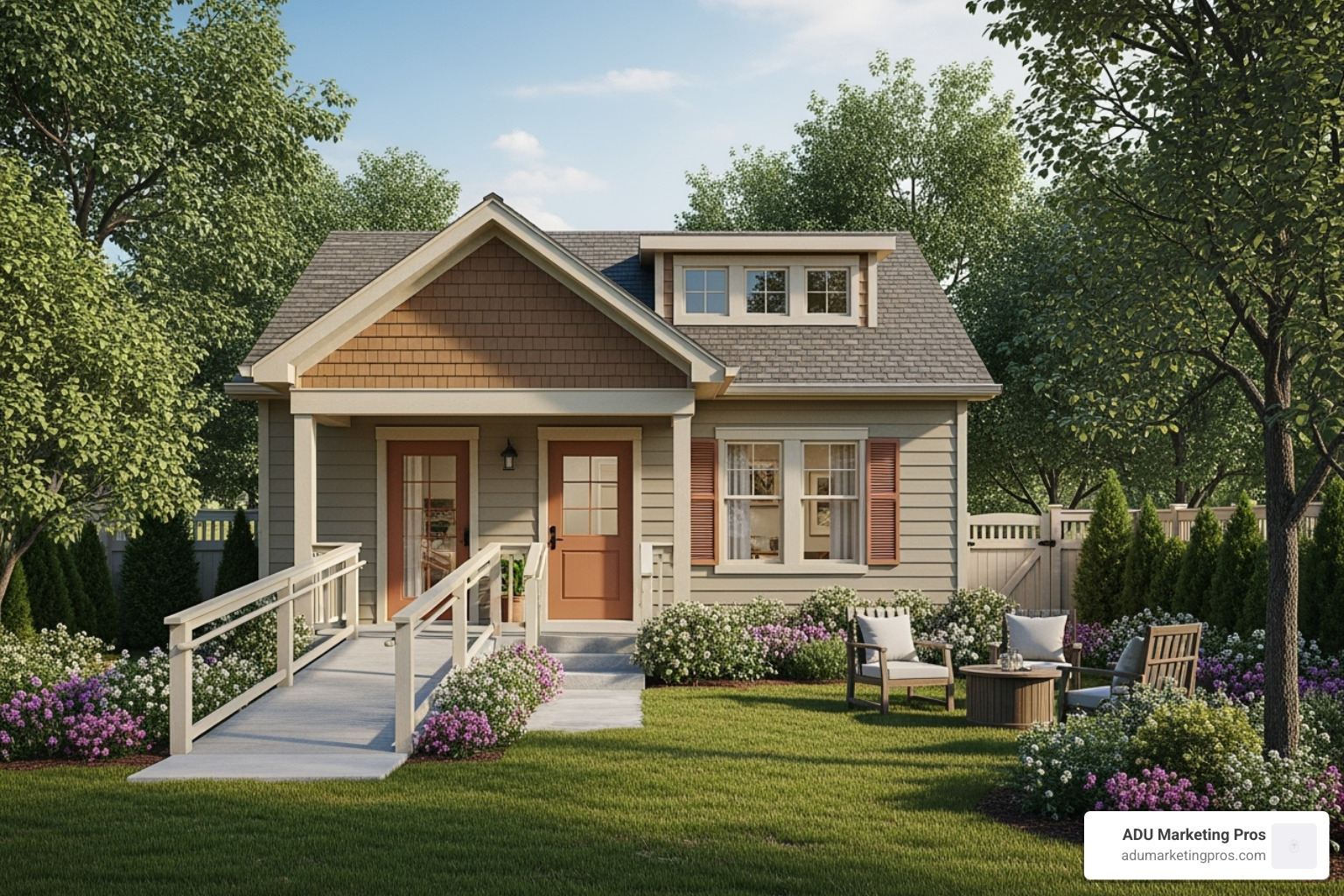
One of the most popular uses for a small home is as a guest house or “granny pod.” These spaces keep loved ones close while preserving everyone’s independence, a wonderful solution for multi-generational living. We often see families building a Multi-Generational ADU designed for aging in place.
These in-law cottages can be customized with accessibility features like wider doorways and zero-step entries. It’s about creating a safe, comfortable environment that allows aging parents to thrive. For families considering this, our guide on ADU for Aging Parents offers detailed insights.
Generating Rental Income
For many homeowners, a home small home is a smart investment that can generate steady rental income, either through short-term rentals or a long-term tenant. The financial benefits can be substantial. In many California markets, a well-designed ADU can generate enough income to cover a significant portion of your mortgage.
Consider the “Sea Roost” cottage, a restored 1,000-square-foot beach cottage that’s available for rent. You can check rental rates to see how such a property can perform. To maximize your investment, it’s important to understand both the potential ADU Rental Income and the ADU Return on Investment.
The Art of Downsizing
For many, the home small home movement is a conscious decision to live more deliberately. Downsizing means trading excess square footage for financial freedom, less maintenance, and more time for what matters. Jewel Pearson’s journey to a 28-foot-long tiny house illustrates this desire to live with intention, not out of necessity.
The practical benefits are immediate: lower utility bills, less cleaning, and a smaller environmental footprint. Choosing an Eco-Friendly Small Home amplifies these benefits. Downsizing isn’t about deprivation; it’s about intention, where every item and every square foot serves a purpose.
Frequently Asked Questions about Small Home Living
Considering a home small home brings up many questions. Here are the answers to the ones we hear most often.
What is the difference between a tiny house and an ADU?
This is a common and important question. A tiny house is often defined by its mobility (typically built on wheels) and small size (usually under 600 square feet). Think of a home designed to move with you.
An Accessory Dwelling Unit (ADU), however, is a secondary housing unit on a permanent foundation on a residential lot. ADUs are subject to local zoning and building codes, requiring permits. Regulations for tiny homes can vary significantly depending on whether they are on wheels and where you plan to place them. Our ADU vs. Tiny House guide breaks down all the nuances.
How much does it cost to build a small home?
The honest answer is: it depends. The cost of your home small home project varies widely based on several key factors.
- Location: Labor and permit costs differ greatly between, for example, San Jose, CA, and rural Texas.
- Size: A 600-square-foot home costs less than a 1,200-square-foot one, but not necessarily half as much due to fixed costs.
- Materials & Finishes: Custom builds offer flexibility but can be more expensive than prefab options, which are built efficiently in a factory.
- Other Costs: Don’t forget land acquisition, permit fees, utility connections, and site preparation. For a detailed breakdown, explore our analysis of ADU Cost Per Square Foot.
Can I really live comfortably in under 1,000 square feet?
Absolutely. Comfortable, even luxurious, living in a small space is entirely possible with smart design. The examples throughout this article, like the 880-square-foot boathouse and 700-square-foot cottage, prove that small spaces can feel intentional and cozy, not cramped.
The secret lies in key design elements: open layouts to create visual flow, multi-functional furniture to maximize every inch, ample natural light to open up interiors, and a strong connection to outdoor spaces to extend your living area. Many who downsize to under 1,000 square feet feel liberated, with less to clean and maintain. Check out our examples of a 1000 Sq Ft ADU to see how spacious these homes can be.
What are the biggest challenges of small home living?
While the benefits are numerous, small home living does present unique challenges. Storage is a constant consideration; you must be intentional about what you own and develop clever organization systems. Lack of privacy can be an issue, especially for couples or families, making open layouts a trade-off that requires careful thought. Entertaining large groups indoors can be difficult, which is why a strong indoor-outdoor connection is so important. Finally, the zoning and placement of tiny homes on wheels (THOWs) can be a significant legal hurdle in many areas, requiring thorough research into local regulations. Overcoming these challenges is part of the lifestyle, encouraging creativity, intentionality, and a focus on what truly matters.
Conclusion
The home small home philosophy is more than a trend—it’s a thoughtful, sustainable, and stylish response to modern living. We’ve explored the diversity of small homes, from rustic cabins to modern prefabs, and seen how smart design transforms compact footprints into sanctuaries. These versatile structures can be primary residences, guest houses, rental properties, or peaceful retreats.
The movement’s appeal lies in its promise of freedom: financial freedom from high costs and maintenance, and freedom to focus on experiences over possessions. Whether you’re downsizing, accommodating family, or seeking your first home, small homes offer a practical and inspiring path forward. The examples we’ve shared prove that you don’t need thousands of square feet to live well.
For builders and architects, this represents a significant opportunity. Homeowners across California are actively seeking professionals who understand small home design and can steer local regulations. At ADU Marketing Pros, we help ADU construction and architecture firms connect with these motivated clients through targeted marketing strategies designed for this growing market.
The possibilities with home small home living are as big as your imagination. Ready to find a professional for your project? Explore our network of expert Tiny House Builders in California and take the first step toward making your small home dreams a reality.