
Why Accessory Dwelling Units Are Changing Los Angeles County
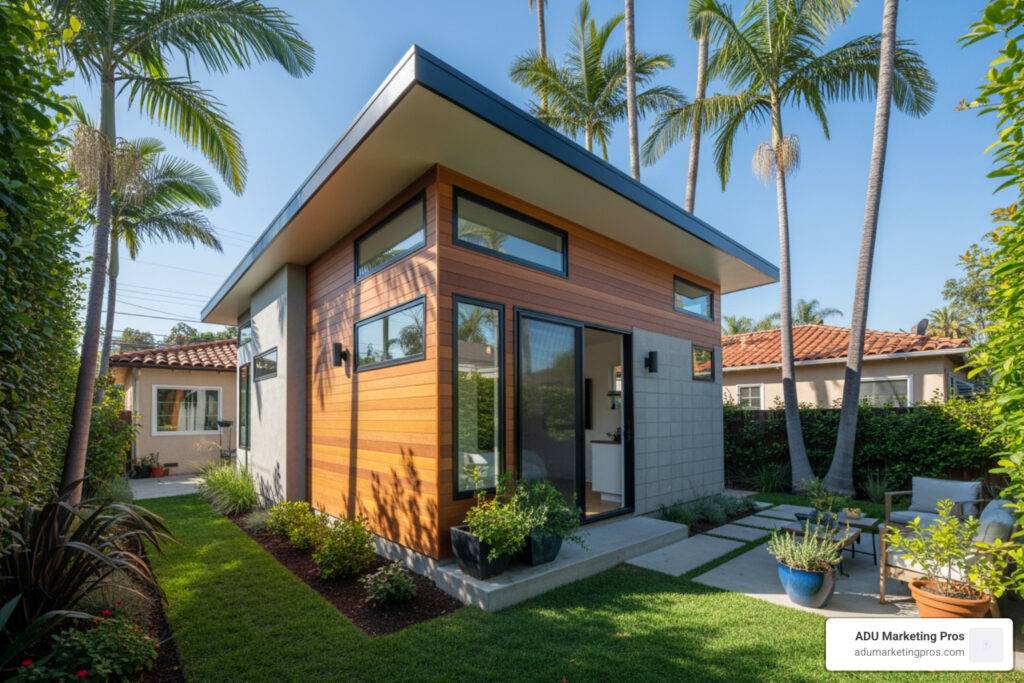
Accessory dwelling unit los angeles county projects have surged as homeowners seek practical solutions to California’s housing crisis while creating powerful new income streams. These secondary homes—also known as granny flats or in-law units—offer a tangible way to navigate one of the nation’s most expensive real estate markets and add significant, lasting value to your property.
The numbers tell a compelling story. In the unincorporated community of Altadena alone, 458 granny flats were approved between 2017 and 2022, a dramatic increase driven by a series of streamlined state laws. These laws have made ADU construction faster and more affordable by requiring permits to be decided within 60 days and eliminating parking requirements for most units. This has unlocked new potential, allowing homeowners to add up to one attached ADU, one detached ADU, and one Junior ADU (JADU) on many single-family lots.
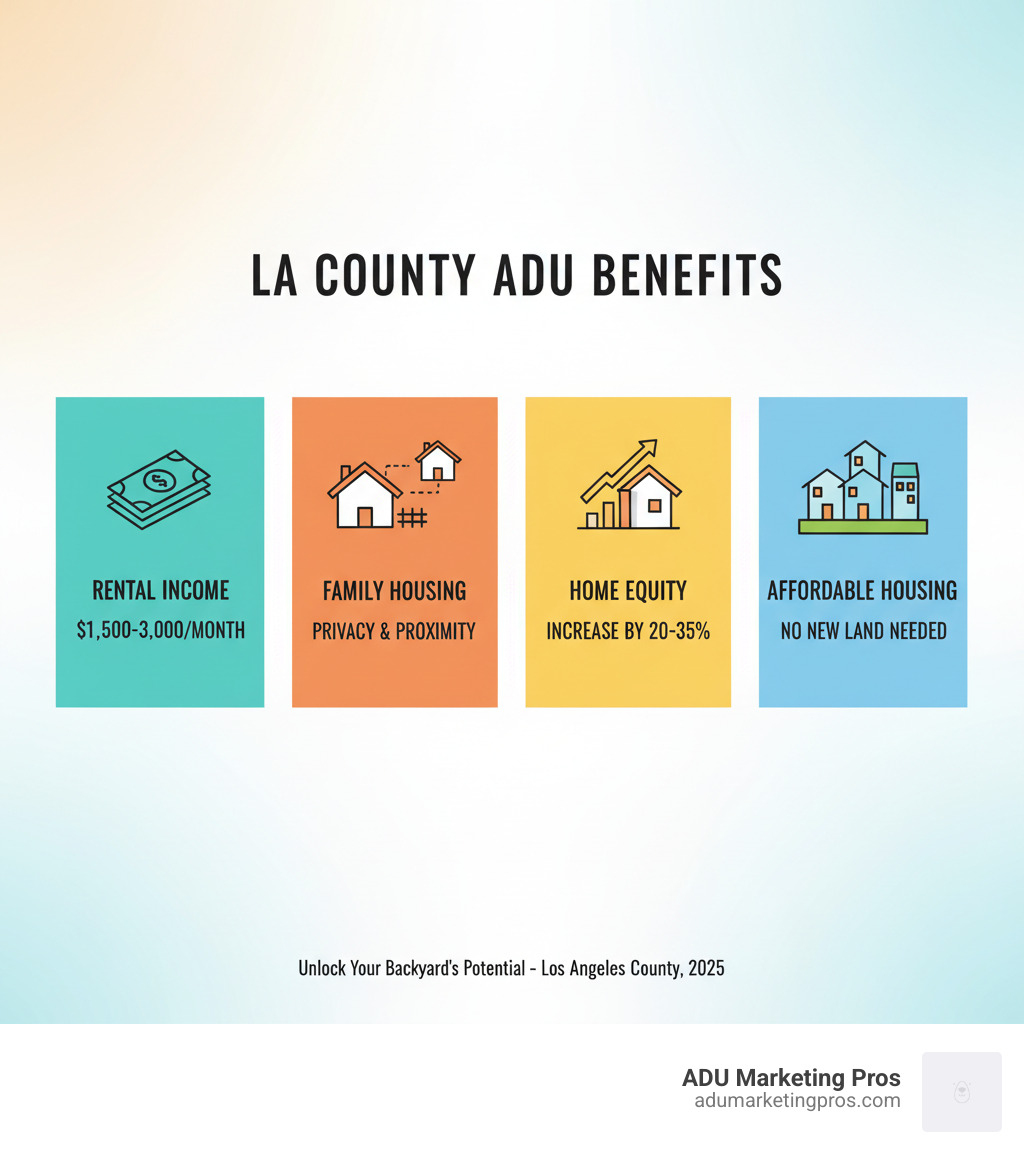
These units provide reliable rental income that can offset mortgage payments, create private living space for family members, and increase home equity. However, navigating the web of regulations can be complex. Los Angeles County has specific rules for size, setbacks, and fire safety, which differ from ordinances in the City of Los Angeles and the other 87 incorporated cities. This guide breaks down everything you need to know, from understanding the permitting process with LA County Planning and the Department of Building and Safety to accessing financial aid like the CalHFA grant, which offers up to $40,000 for pre-development costs.
What Are ADUs and JADUs? Understanding the Basics
Before planning your project, it’s essential to understand the two main types of secondary units in Los Angeles County: Accessory Dwelling Units (ADUs) and Junior Accessory Dwelling Units (JADUs). They serve different purposes and have distinct requirements that will shape your project’s scope and budget.
Defining the Accessory Dwelling Unit (ADU)
An ADU is a complete, independent home on your property with its own kitchen, bathroom, and living space. This autonomy makes them highly flexible. ADUs can be built in several ways:
- Attached ADU: Shares a wall with the main house, often as a new addition.
- Detached ADU: A standalone backyard structure offering maximum privacy for both occupants and homeowners, making it ideal for rentals.
- Conversion ADU: Transforms an existing space like a garage, basement, or pool house into a livable unit. This is often the most cost-effective option. Our guide on garage conversion Los Angeles details this popular choice.
- New Construction: A custom-built unit designed from scratch, offering the most design freedom.
Whether it’s a studio for rental income or a two-bedroom home for family, ADUs are versatile solutions. For a deeper dive, see our resource on the Accessory Dwelling Unit Los Angeles.
Introducing the Junior Accessory Dwelling Unit (JADU)
A JADU is a smaller living unit created entirely within the existing footprint of a single-family home or its attached garage. At a maximum of 500 square feet, a JADU is a more integrated and often more affordable option for adding space.
Key JADU requirements include:
- An efficiency kitchen (a small sink, cooking appliance, counter space, and compact fridge).
- A separate exterior entrance.
- The bathroom may be shared with the main house, which can save on construction costs.
- Owner-occupancy is required: The property owner must live in either the primary residence or the JADU. This rule ensures JADUs support homeowners directly.
JADUs are perfect for adding a small apartment for a student, caregiver, or relative without undertaking major new construction.
ADU vs. JADU: A Side-by-Side Comparison
The differences between ADUs and JADUs are critical for planning. Here’s a clear breakdown to help you decide:
| Feature | Accessory Dwelling Unit (ADU) | Junior Accessory Dwelling Unit (JADU) |
|---|---|---|
| Maximum Size | Up to 1,200 sq. ft. (detached), or 50% of primary home’s area (attached). Minimum 800 sq. ft. state-mandated. | Up to 500 sq. ft. |
| Bathroom | Full, private bathroom required | Can be private or shared with the primary dwelling |
| Kitchen | Full kitchen required (sink, cooking facilities, refrigeration) | Efficiency kitchen required (sink, cooking appliance, small fridge) |
| Location | Attached to, detached from, or within primary residence/garage | Must be contained entirely within a single-family home or attached garage |
| Owner Occupancy | Not required for ADUs permitted after 2020 (homeowner can rent out both units) | Required (homeowner must live in either the primary dwelling or JADU) |
| Separate Utilities | Optional (can have separate meter or sub-meter) | Not allowed (cannot have separate utility meter or address) |
Choosing between an ADU and a JADU is the first major decision in a successful accessory dwelling unit los angeles county project. An ADU offers more independence and rental potential, while a JADU is a simpler, more affordable way to add functional living space.
The Comprehensive Permitting Process for an Accessory Dwelling Unit in Los Angeles County
Building an accessory dwelling unit los angeles county requires navigating a structured permitting process. While it may seem daunting, state laws have streamlined approvals, making it faster and more predictable than ever. Here’s what to expect.
Step 1: Planning and Design
This initial phase transforms your vision into buildable plans. You’ll need to hire a qualified team, including an architect or designer specializing in ADUs and a structural engineer. They will create a complete set of plans, which must include:
- Architectural and Structural Plans: Detailed drawings of the layout, dimensions, foundation, framing, and materials.
- Title 24 Energy Calculations: A report proving your ADU meets California’s energy efficiency standards.
- Site Plan: A map showing the ADU’s location on your property, ensuring it meets all setback requirements.
For professional help, see our guide to ADU Architects Los Angeles. For design ideas, browse our ADU Floor Plans Los Angeles.
Step 2: Navigating Agency Approvals

Once your plans are ready, they must be approved by several agencies. The two primary reviewers are:
- LA County Planning (or local city Planning): Verifies zoning compliance, including height, setbacks, lot coverage, and size.
- Department of Building and Safety: Reviews plans for compliance with building codes and structural safety, from the foundation to electrical and plumbing systems. Visit their Building and Safety ADU website for more information.
Depending on your location, you may also need approvals from the Fire Department (for fire hazard zones), Public Works (for sewer connections), or your local water company.
Step 3: Submitting Your Application and Plan Check
ADU applications undergo a ministerial review, meaning they must be approved if they meet objective, published standards. State law mandates that agencies decide on complete applications within 60 days. You’ll submit your plans through an online portal (like EPIC-LA for unincorporated LA County or ePlanLA for the City of LA).
It’s common to receive plan check corrections. This is a normal part of the process. Simply have your design team address the comments and resubmit. Once all agencies provide their sign-off, your plans will be approved. Our guide to the ADU Permit Process offers more detail on this stage.
Step 4: Construction and Inspections
With approved plans and issued permits, construction can begin. Throughout the build, inspectors will visit the site at key milestones (e.g., foundation, framing, rough electrical/plumbing) to ensure work is done correctly and to code. After all work is finished and every inspection is passed, a final inspection is conducted. Upon approval, you’ll receive a Certificate of Occupancy—the official document declaring your ADU is legal and ready for move-in. This certificate marks the successful completion of your accessory dwelling unit los angeles county project.
Decoding LA County’s ADU Zoning and Development Standards
Regulations for an accessory dwelling unit los angeles county project vary depending on whether you’re in an unincorporated area or an incorporated city. Understanding these core rules is essential for planning.
General Development Standards
California law allows ADUs on properties zoned for single-family or multi-family use, provided a primary residence exists. Key standards include:
- Number of Units: On a single-family lot, you can typically build one attached ADU, one detached ADU, and one JADU. Multi-family lots have different rules, often allowing conversions of non-livable space and up to two new detached ADUs.
- Setbacks: Newly constructed detached ADUs require only a 4-foot setback from side and rear property lines. Converted structures can maintain their existing (even non-conforming) setbacks.
- Height: Limits generally range from 16 to 20 feet, depending on your zone and proximity to the main house.
- Size: While JADUs are capped at 500 sq. ft., detached ADUs can be up to 1,200 sq. ft. State law also guarantees you can build an ADU of at least 800 sq. ft., regardless of other local limits like lot coverage or floor-area ratio.
For a complete overview, visit our Los Angeles ADU Regulations page.
Parking Requirements: What You Need to Know
Parking rules have been significantly relaxed to encourage ADU construction. In most cases, no additional parking is required for an ADU or JADU. This is especially true if your property is:
- Within a half-mile walking distance of public transit (bus stop or rail station).
- Part of an existing structure (like a garage conversion).
- Located in a historic district.
If you convert your garage, you are not required to replace the parking spaces.
Special Regulations: Fire Hazard Zones and Rent Control
If your property is in a Very High Fire Hazard Severity Zone (VHFHSZ), stricter rules apply. You’ll need to use fire-resistant building materials (e.g., non-combustible siding, dual-paned windows), manage vegetation (fuel modification), and possibly install automatic fire sprinklers. Emergency vehicle access is also a key consideration.
In the City of Los Angeles, the Rent Stabilization Ordinance (RSO) and Just Cause Ordinance (JCO) may affect your rental plans. Newly constructed, detached ADUs are typically exempt from RSO rent caps, but conversions of older spaces can be subject to it. All rental units are subject to JCO eviction protections. Importantly, short-term rentals (like Airbnb) are not allowed in RSO units. Check the LA Housing Department website for specifics.
LA County vs. LA City: Key Regulatory Differences
It is crucial to know your jurisdiction. Unincorporated LA County and incorporated cities (like Los Angeles, Pasadena, or Santa Monica) operate under different local ordinances, although all must follow state law. The City of Los Angeles adopted Ordinance 186,481, while the County has its own set of development standards. Before starting, use a tool like ZIMAS to verify your property’s jurisdiction and consult the correct local planning department. The ADU page on the Los Angeles Department of Building and Safety website is a key resource for City of LA projects.
Essential Resources and Financial Assistance for Your ADU Project
Building an accessory dwelling unit los angeles county is a major investment, but you don’t have to go it alone. Both the state and county offer resources to make the process more affordable and manageable.
Official Guides and Pre-Approved Plans
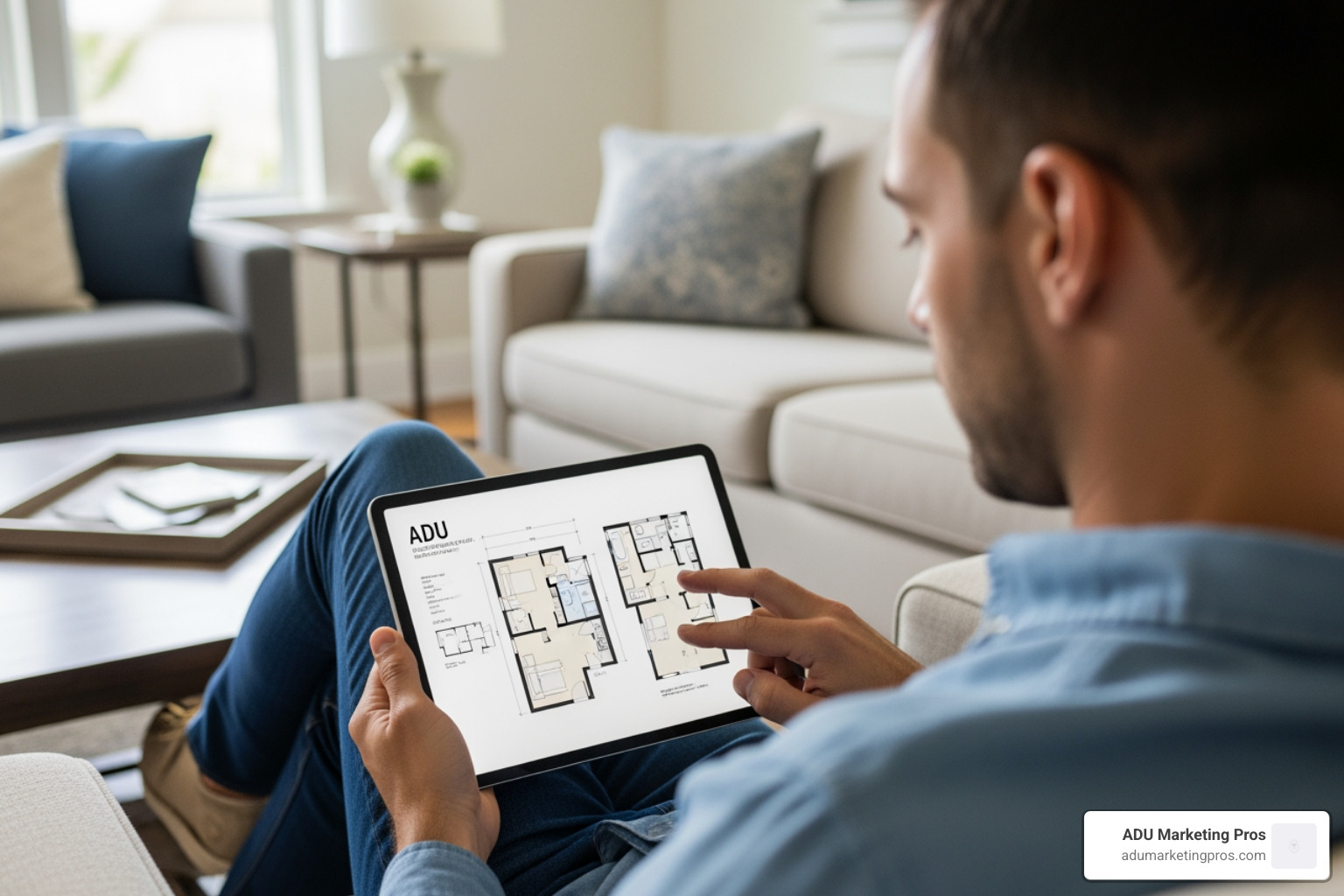
To save time and money, consider using pre-approved ADU plans. Both LA County and the City of Los Angeles offer catalogs of designs that have already been vetted for code compliance, which can significantly speed up the permitting process.
The LA County Standard ADU Plans Program provides free, ready-to-use plans as well as a catalog of designs from private architects. You can browse these options at LA County Planning ADU Resources. Using these plans can cut months off your timeline and save thousands in architectural fees, though they offer less customization. For more ideas, explore our collection of Pre-Approved ADU Plans Los Angeles.
Securing Financial Aid and Grants
ADU construction can be costly, but financial assistance is available. The CalHFA ADU Grant Program is a standout resource, providing grants of up to $40,000 to qualified lower- to moderate-income homeowners. This is not a loan—it’s free money to cover pre-development costs like design, permits, and site prep.
To qualify, you must be an owner-occupant and meet certain income limits. The program reopened for applications on December 11, 2023, but funds are limited. Learn more and apply at the CalHFA ADU Grant Program website. Organizations like Neighborhood Housing Services of LA County (NHS) can also help you steer the application process.
Beyond grants, options like home equity loans, cash-out refinancing, and construction loans can fund your project. Our guide to ADU Financing Options breaks down the pros and cons of each.
Finding Official Ordinances and Documents
For authoritative information, always refer to official sources. For projects in the City of Los Angeles, the governing law is Ordinance 186,481. For unincorporated LA County, the County Planning Department provides summaries and checklists. These documents are updated as regulations change, so check them regularly.
Common Challenges and Technical Requirements
Even with streamlined rules, building an accessory dwelling unit los angeles county has its technical problems. Understanding these common challenges upfront can save you time and money.
Tackling Garage Conversions
Converting a garage is a popular and cost-effective ADU strategy, but it comes with unique issues since garages aren’t built to be living spaces.
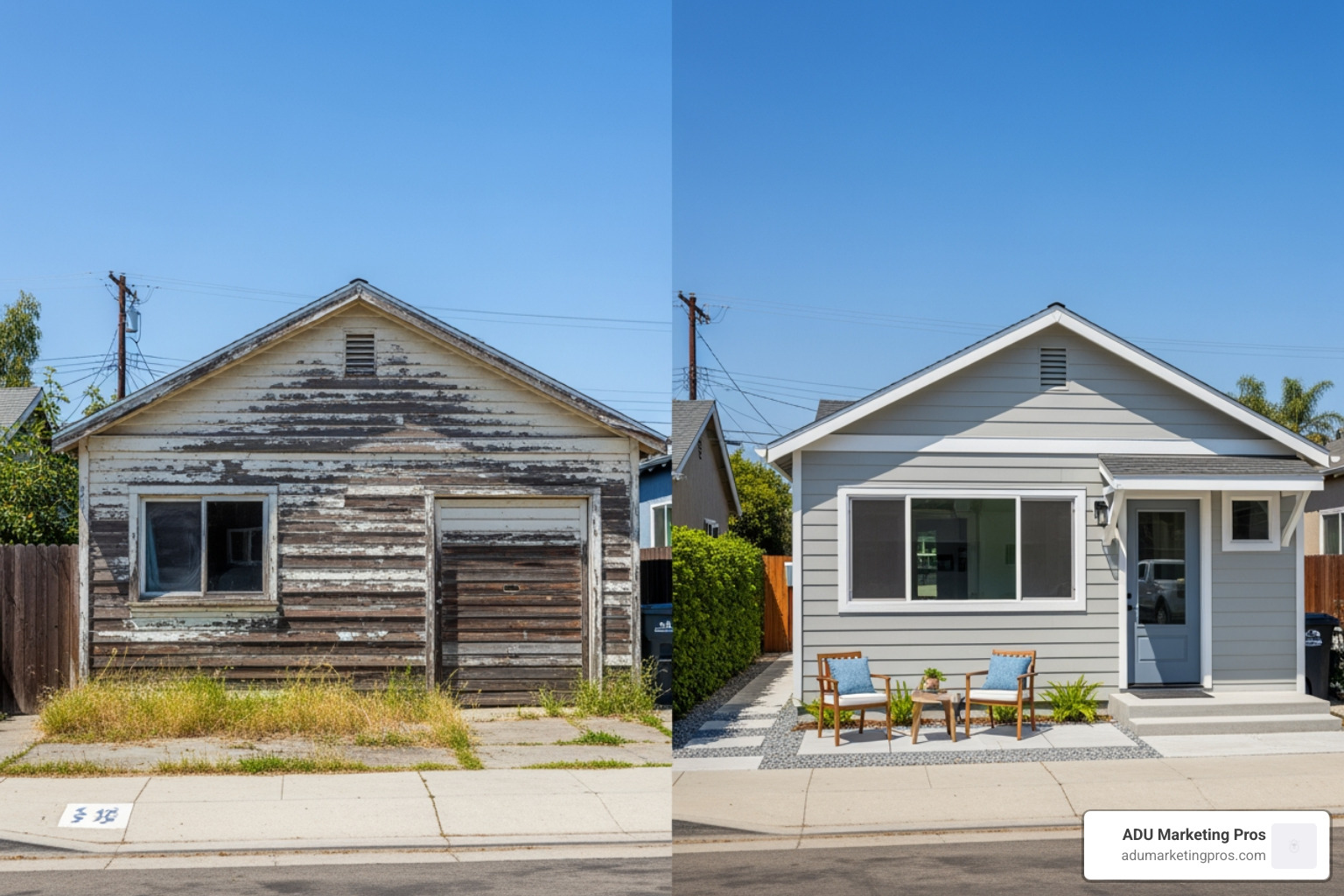
Common challenges include:
- Structural Integrity: The existing foundation and framing may need significant upgrades to support a habitable space and meet current seismic codes. This can include pouring a new slab or reinforcing walls.
- Unpermitted Structures: If the original garage was built without permits, the entire structure must be brought up to today’s standards, which can be costly and time-consuming.
- Fire-Rating: Walls close to property lines or attached to the main house require special one-hour fire-resistant construction and materials.
- New Footings: When replacing the garage door with a wall, new continuous footings are often required underneath to support the new structure.
Our Garage Conversion Los Angeles guide explores these issues in greater detail.
Essential Utility and Safety Codes
Your ADU must comply with strict building codes to ensure it is safe and livable. These are not optional and are critical for passing inspections.
- Electrical: You may need to upgrade your main electrical panel to handle the extra load. The ADU will need its own subpanel and must have modern safety features like AFCI/GFCI protection and dedicated circuits.
- Plumbing: Sewer lines must be connected properly, often by trenching and tying into the main house’s line. If the ADU is below the sewer line, an ejector pump may be needed. All fixtures must be low-flow to meet water conservation standards.
- Fire Safety: Smoke and carbon monoxide detectors are mandatory. In Very High Fire Hazard Severity Zones, automatic fire sprinklers and fire-resistant exterior materials are often required. Creating “defensible space” by clearing flammable vegetation is also crucial in these areas.
These technical requirements underscore the importance of working with experienced professionals. For more details, review our page on ADU Building Requirements.
Frequently Asked Questions about ADUs in Los Angeles County
As you consider an accessory dwelling unit los angeles county, you likely have questions. Here are answers to some of the most common inquiries.
How much does it cost to build an ADU in Los Angeles County?
Building an ADU is typically more affordable than buying a new property because you already own the land. However, costs vary widely. In Los Angeles County, ADUs generally range from $100,000 to $400,000 or more.
Key factors influencing the final price include:
- Type and Size: A small garage conversion will cost less than a large, new detached unit.
- Finishes: High-end, custom materials increase costs compared to standard finishes.
- Site Conditions: Difficult terrain, poor soil, or the need for extensive utility upgrades can add significantly to the budget.
- Soft Costs: Don’t forget fees for architects, engineers, permits, and surveys, which can be 15-25% of the total cost. A major saving is that impact fees are waived for ADUs under 750 sq. ft.
Despite the upfront investment, ADUs offer a strong return through rental income (often $1,500-$3,000/month) and a significant boost to your property value. For a detailed cost analysis, see our guides on Los Angeles ADU Cost and ADU Building Costs.
Can I rent my ADU out on a short-term basis (like Airbnb)?
This is a critical question, and the answer is generally no, especially in the City of Los Angeles. The city’s Rent Stabilization Ordinance (RSO) prohibits short-term rentals (fewer than 30 days) in any unit subject to RSO. Since many ADUs (especially conversions of older structures) can fall under these rules, platforms like Airbnb are not a legal option.
The state’s goal for ADUs is to increase the long-term housing supply, not create vacation rentals. Most jurisdictions across LA County encourage or mandate rental terms of 30 days or longer. Always check with your local housing department for the specific rules in your area before making financial projections.
How long does the entire ADU process take from start to finish?
Building an ADU is a marathon, not a sprint. From start to finish, the entire process typically takes 9 to 18 months. Here is a general timeline:
- Design & Planning (2-4 months): Work with your architect and engineer to create plans. Using pre-approved plans can shorten this phase.
- Permitting (2-5 months): Submit plans for review. While the law requires a 60-day decision, corrections and multi-agency reviews can extend this.
- Construction (6-12 months): The actual build, from foundation to final finishes. The timeline depends on the project’s complexity, contractor availability, and inspection schedules.
Realistic expectations and a good team are key to navigating this journey successfully.
Conclusion: Taking the Next Step on Your ADU Journey
The rise of Accessory Dwelling Units in Los Angeles County offers a powerful opportunity for homeowners. Whether you’re building a full ADU or a compact JADU, these units can generate rental income, increase property equity, and provide flexible housing for family.
While navigating regulations from LA County and the City of Los Angeles can be complex, resources like the CalHFA grant and pre-approved plans make the process more accessible than ever. Building an accessory dwelling unit los angeles county is a significant investment, but it’s one that pays dividends for your family and your community.
Working with experienced professionals is the key to a successful project. Ready to unlock your property’s potential? We connect homeowners with top ADU firms. Explore our complete guide to Accessory Dwelling Units in Los Angeles to take the next step.