
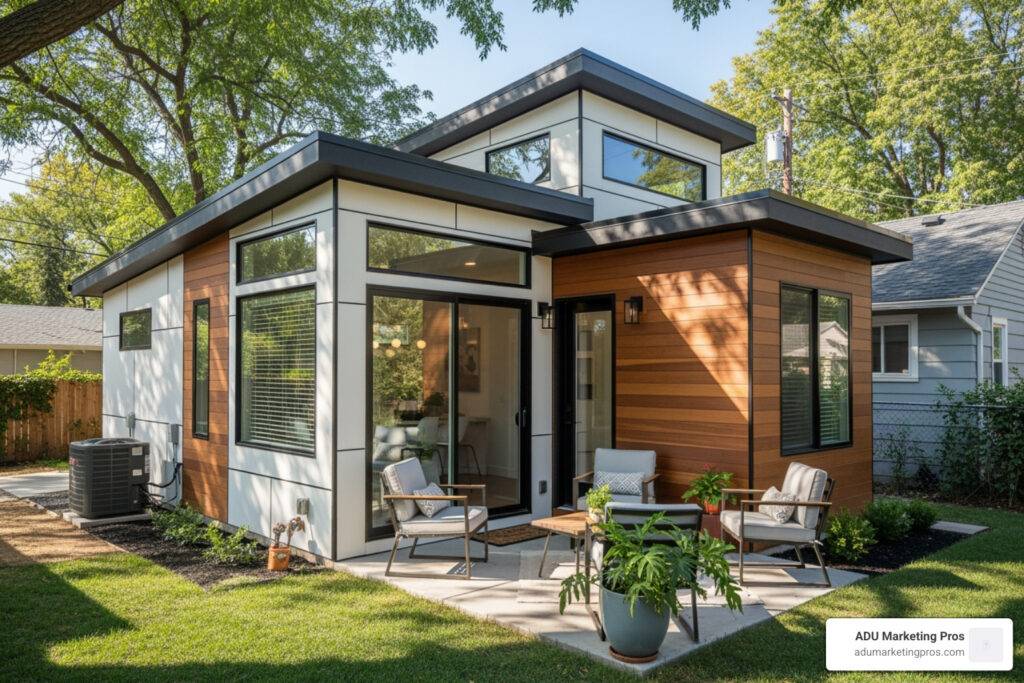
Why Granny Flats Are Changing American Housing
A granny flat is a self-contained, independent living unit located on the same property as a single-family home. These compact dwellings include their own kitchen, bathroom, living space, and separate entrance, making them ideal for housing family members, generating rental income, or creating flexible living arrangements. Once a niche concept, the granny flat has surged into the mainstream, becoming a cornerstone of modern housing strategy in response to evolving family structures, affordability crises, and a desire for more sustainable communities.
Quick Answer: What You Need to Know About Granny Flats
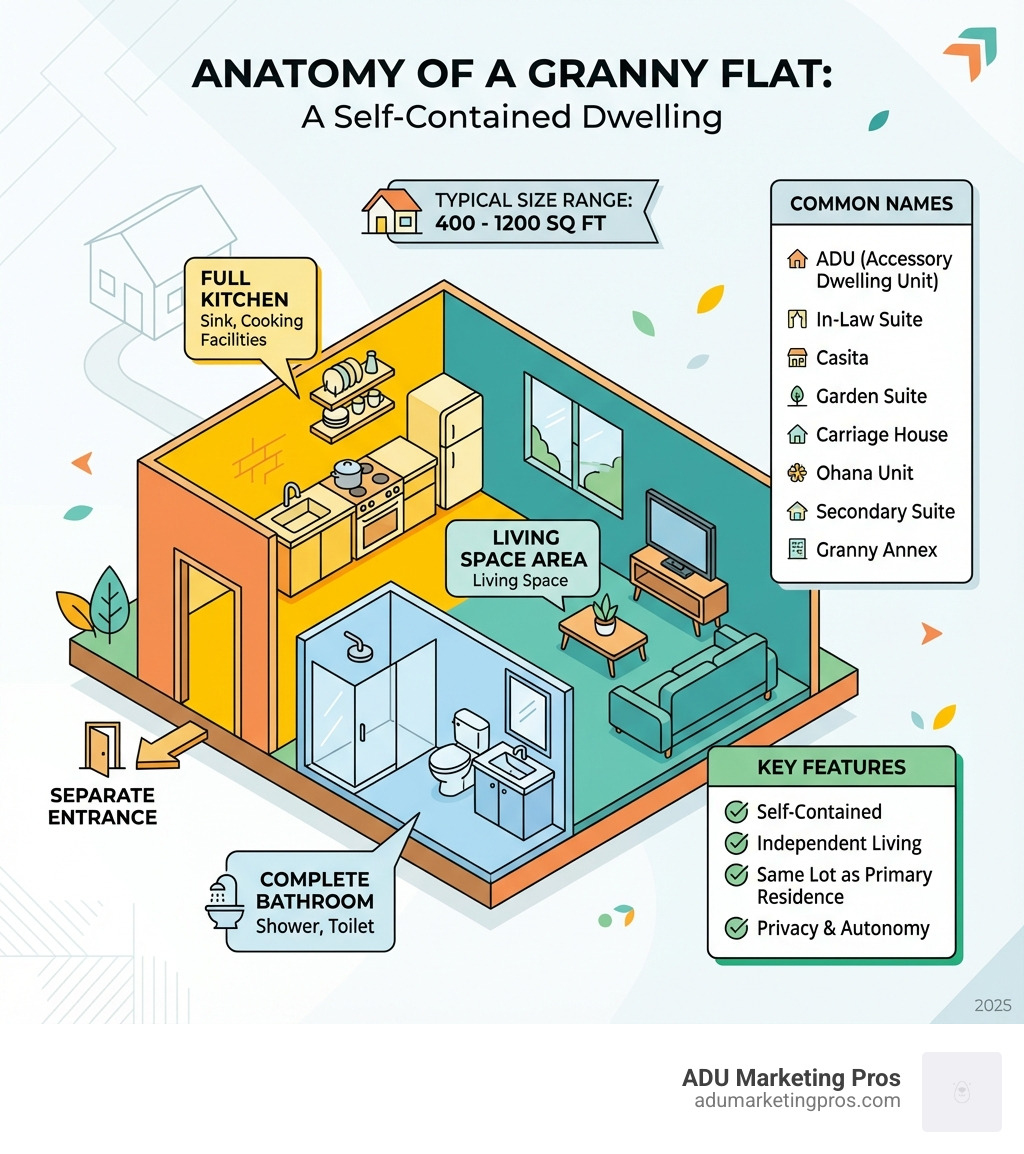
- Definition: A secondary, self-contained dwelling unit (typically 400-1,200 sq ft) with its own kitchen, bath, and entrance on a single-family residential lot.
- Common Names: ADU (Accessory Dwelling Unit), in-law suite, casita, garden cottage, ohana unit, secondary suite, carriage house.
- Primary Uses: Multigenerational living (for aging parents or adult children), long-term rental income, aging-in-place solutions, private guest housing, or a dedicated home office.
- Key Benefits: Increases property value, creates affordable housing options, keeps family close while maintaining privacy, and generates passive income.
- Typical Cost: $100,000-$400,000+, highly dependent on size, location, level of finish, and construction type (conversion vs. new build).
- Legal Status: Increasingly permitted and encouraged across California and other states due to sweeping zoning reforms designed to combat the housing shortage.
The housing landscape is changing rapidly. In California alone, ADU permitting exploded from under 10,000 units in 2017 to over 83,000 in 2022, now accounting for approximately 19% of all new housing development in the state. This dramatic shift reflects both regulatory changes and a growing recognition that granny flats address multiple housing challenges simultaneously. This trend isn’t limited to the Golden State; cities from Portland, Oregon, to Austin, Texas, are embracing ADUs as a vital tool for gentle densification.
Whether you’re a homeowner exploring options to house aging parents, an investor seeking reliable rental income, or a construction professional serving this booming market, understanding granny flats is essential. These versatile structures offer solutions for affordable housing, multigenerational living, and efficient land use—all while potentially increasing your property value by 20-35%.
This comprehensive guide covers everything from basic definitions and terminology to construction methods, financing options, and regulatory requirements. We’ll explore the financial implications, design considerations, and real-world benefits that make granny flats one of the most practical and impactful housing solutions available today.
Granny flat definitions:
What is a Granny Flat? A Comprehensive Definition
At its heart, a granny flat represents a flexible and practical approach to housing. It’s more than just a small house; it’s a solution that caters to diverse needs within a single property, transforming underutilized space into a valuable asset.
What is a granny flat and what are its other common names?
A granny flat is formally defined as a separate, self-contained housing unit, typically located on the same property as a single-family home. It includes all the essentials for independent living: a kitchen, a bathroom, a living area, and a separate entrance. While the term “granny flat” colloquially refers to its original purpose of housing elderly relatives, the official and more encompassing term in the building and planning industry is an Accessory Dwelling Unit, or ADU.
Beyond ADU, these versatile units are known by many names, reflecting their various uses and styles. You might hear them called an in-law suite, mother-in-law unit, casita, or garden suite. The term “secondary suite” is also common, particularly in official planning documents. Each name points to a similar concept: a smaller, independent living space that adds value and flexibility to a primary residence. If you’re curious about the rich vocabulary surrounding these dwellings, you can explore a guide to ADU terminology.
The etymology of “granny flat” stems directly from its initial use: providing a convenient, nearby home for an aging parent or grandparent, allowing them to maintain independence while remaining close to family. This concept remains a core function, but the utility of these units has expanded dramatically. It’s important to distinguish a legally permitted ADU from other structures like a pool house or a tiny home on wheels (THOW), as ADUs are built on a permanent foundation and must meet local building codes for full-time occupancy.
The Core Purpose of a Granny Flat
The primary purposes of building a granny flat are as varied as the families and individuals who choose to build them. We see homeowners in California utilizing these units for a multitude of reasons, each adding a unique layer of value to their property and lives.
-
Multigenerational Living: This is perhaps the most traditional and enduring purpose. A granny flat allows aging parents to “age-in-place,” remaining in their familiar neighborhood and close to their loved ones, while maintaining their privacy and independence. It offers a powerful alternative to assisted living facilities, fostering family connection and providing peace of mind. It’s a beautiful way to keep families connected across generations.
-
Housing for Adult Children: As housing costs rise, particularly in areas like the San Francisco Bay Area, Los Angeles, and San Diego, granny flats offer an affordable stepping stone for adult children. It allows recent graduates or young professionals to live independently while saving for a down payment, paying off student loans, or simply getting established in their careers, all without the financial strain of market-rate rent.
-
Rental Income: For many homeowners, a granny flat is a smart financial investment. It can provide a steady stream of rental income, helping to offset mortgage payments, cover property taxes, or build wealth. In high-demand rental markets across California, a well-appointed ADU can generate significant monthly cash flow, turning a backyard into a revenue-producing asset.
-
Guest Housing: For those who frequently host visitors, a granny flat serves as a private and comfortable guest house. It offers far more amenities and privacy than a spare bedroom, giving guests their own space to relax and feel at home, making extended stays more comfortable for everyone.
-
Home Office Space: With the rise of remote work, the need for a dedicated, quiet workspace has become paramount. A granny flat can be transformed into an ideal, distraction-free home office or creative studio, completely separate from the main living space. This separation helps maintain a healthy work-life balance.
-
Caregiver Quarters: For families requiring live-in assistance for children or elderly relatives, a granny flat provides dedicated and private accommodation for a nanny, caregiver, or other household staff. This ensures they have a comfortable, independent living space while remaining on-site and available when needed.
The flexibility and adaptability of a granny flat make it a truly multifunctional asset for any property owner in our service areas of Los Angeles, San Diego, San Francisco Bay Area, San Jose, Sunnyvale, Palo Alto, Mountain View, and Menlo Park.
The Primary Benefits: Why Build a Granny Flat?
Building a granny flat is more than just adding square footage; it’s a strategic investment in your financial future, family well-being, and the health of your community. We’ve seen firsthand how these units transform properties and lives across California.
Financial Advantages for Homeowners
For homeowners, the financial incentives of a granny flat are compelling and multifaceted:
-
Powerful Rental Income Stream: One of the most significant benefits is the potential for generating substantial passive income. A granny flat can be rented out on a long-term basis, providing a reliable income stream that can cover mortgage payments, fund retirement, or simply provide extra cash flow. In California’s competitive rental markets, a one-bedroom ADU can often fetch rents comparable to a one-bedroom apartment, offering a strong return on investment.
-
Significant Increase in Property Value: A well-designed and legally permitted granny flat is a major value-add. Studies have shown that properties with ADUs can see a value increase of 20-35%. This makes your home more attractive to a wider range of buyers, including those looking for multigenerational living options or built-in rental income. It’s an investment that pays dividends both in monthly income and in long-term equity.
-
Accelerated Mortgage Payments and Shared Costs: The rental income generated can be used to make extra payments on your primary mortgage, helping you build equity faster and become debt-free sooner. Furthermore, if family members occupy the granny flat, sharing costs for utilities, property taxes, and maintenance can lead to significant overall savings for the entire household.
-
Favorable Tax Implications: While we always recommend consulting with a tax professional, building and renting a granny flat can offer tax advantages. A portion of your property taxes, mortgage interest, and insurance may become deductible as a business expense. Additionally, the cost of the ADU itself can be depreciated over time, creating a valuable tax shield against your rental income.
Lifestyle and Family Benefits
Beyond the financial gains, granny flats offer profound lifestyle and family advantages that are often priceless:
-
Dignified Aging-in-Place for Seniors: This is a powerful benefit. Granny flats provide safe, accessible, and affordable homes where seniors can downsize in their own neighborhood, maintaining their independence and social connections. It allows for proximity to family for support and care, offering peace of mind for everyone involved and often proving to be a more desirable and cost-effective solution than institutional care.
-
Keeping Family Close Across Generations: As housing costs continue to climb in California, providing a separate, affordable living space for adult children allows them to stay close to home while fostering their independence. It supports diverse and multigenerational households, enabling families to share their lives and support one another while maintaining individual privacy and autonomy.
-
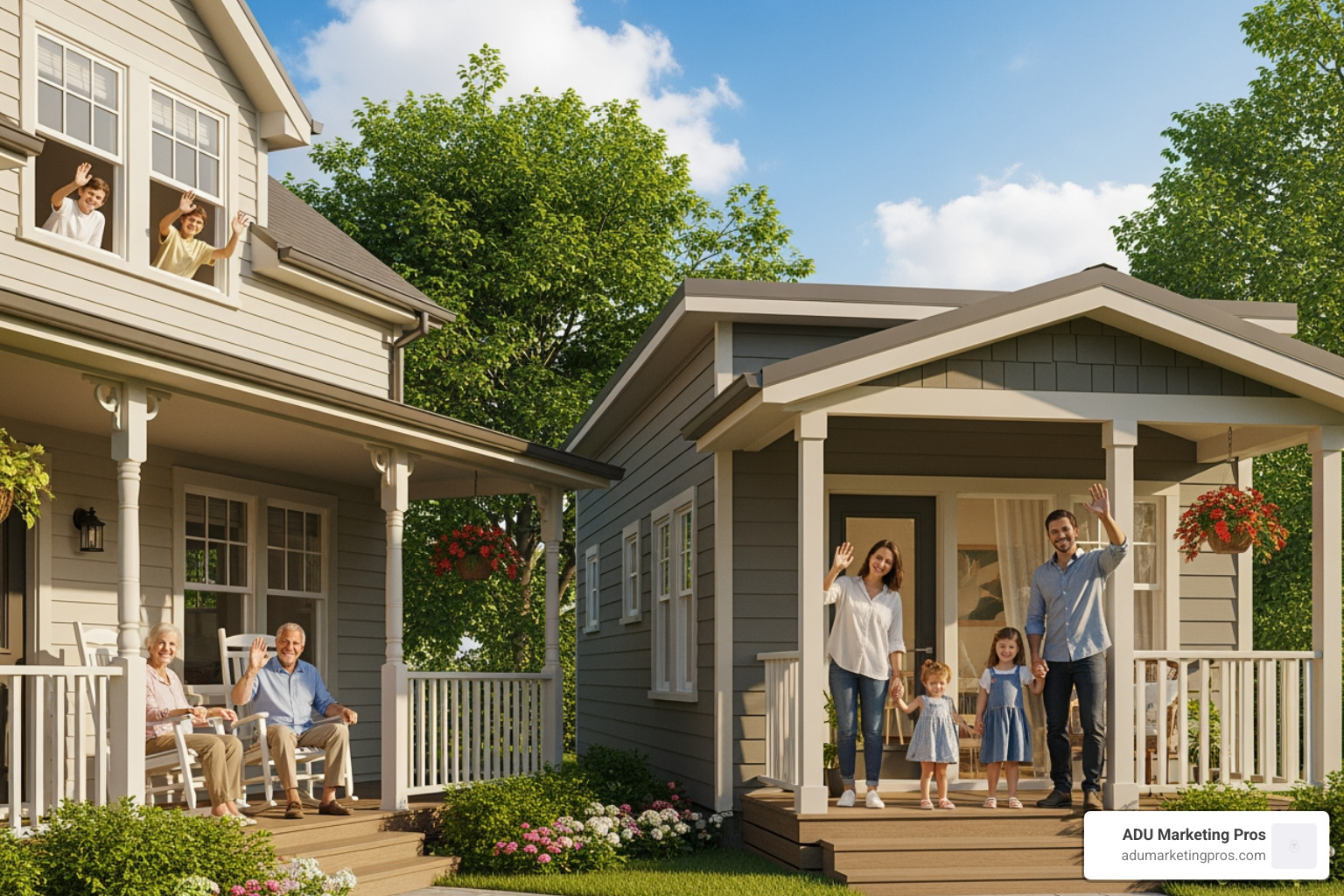
The Perfect Balance of Privacy and Proximity: One of the unique aspects of a granny flat is its ability to offer both connection and separation. Residents enjoy their own private space, separate entrance, kitchen, and bathroom, ensuring independence while still being just steps away from family support, shared meals, or babysitting help.
-
Dedicated Space for Caregivers or Staff: For families requiring live-in help, a granny flat provides a comfortable and private residence for nannies, au pairs, caregivers, or other support staff. This professional arrangement ensures their well-being and convenience while respecting the privacy of both the family and the employee.
Contribution to Housing Supply and Affordability
Granny flats are emerging as a critical component in addressing California’s pressing housing challenges:
-
Creating “Gentle Density”: These units add what planners call “gentle density” to existing neighborhoods. Instead of large, disruptive apartment complexes, granny flats integrate seamlessly into the fabric of single-family zones, making more efficient use of existing land and infrastructure without drastically changing the character of the community.
-
Boosting Workforce Housing: By creating smaller, more affordable rental units in desirable neighborhoods, granny flats contribute to the supply of workforce housing. This allows essential workers like teachers, firefighters, and nurses to live closer to their jobs in expensive areas like the San Francisco Bay Area and Los Angeles, reducing commute times and improving quality of life.
-
Market-Driven Affordable Rental Options: Granny flats are typically smaller and don’t require new land acquisition, making them inherently more affordable to build and, consequently, more affordable to rent than newly constructed apartments. They represent a flexible, free-market housing solution that organically increases the supply of affordable homes.
-
Efficient Land Use and Infrastructure: Cities like Los Angeles and San Diego have identified ADUs as important tools in addressing the lack of affordable housing. By utilizing existing residential lots, cities can increase their housing stock without the massive expense of new infrastructure development, making it a highly efficient growth strategy.
-
Proven Impact Through California ADU Statistics: The impact is undeniable. In California, ADU permitting increased dramatically from under 10,000 in 2017 to over 83,000 in 2022. This means that ADUs now account for around 19% of new housing developments across the state, a testament to their growing importance in our housing strategy.
The benefits of granny flats extend far beyond individual property lines, helping to create more diverse, resilient, and livable communities. To learn more about how ADUs contribute to livable communities, you can consult AARP research on ADUs and livable communities.
Types, Designs, and Construction Methods
The beauty of a granny flat lies in its incredible versatility. There’s no one-size-fits-all solution, allowing homeowners to choose the type, design, and construction method that best suits their property, budget, and long-term goals.
Different Types of Granny Flats
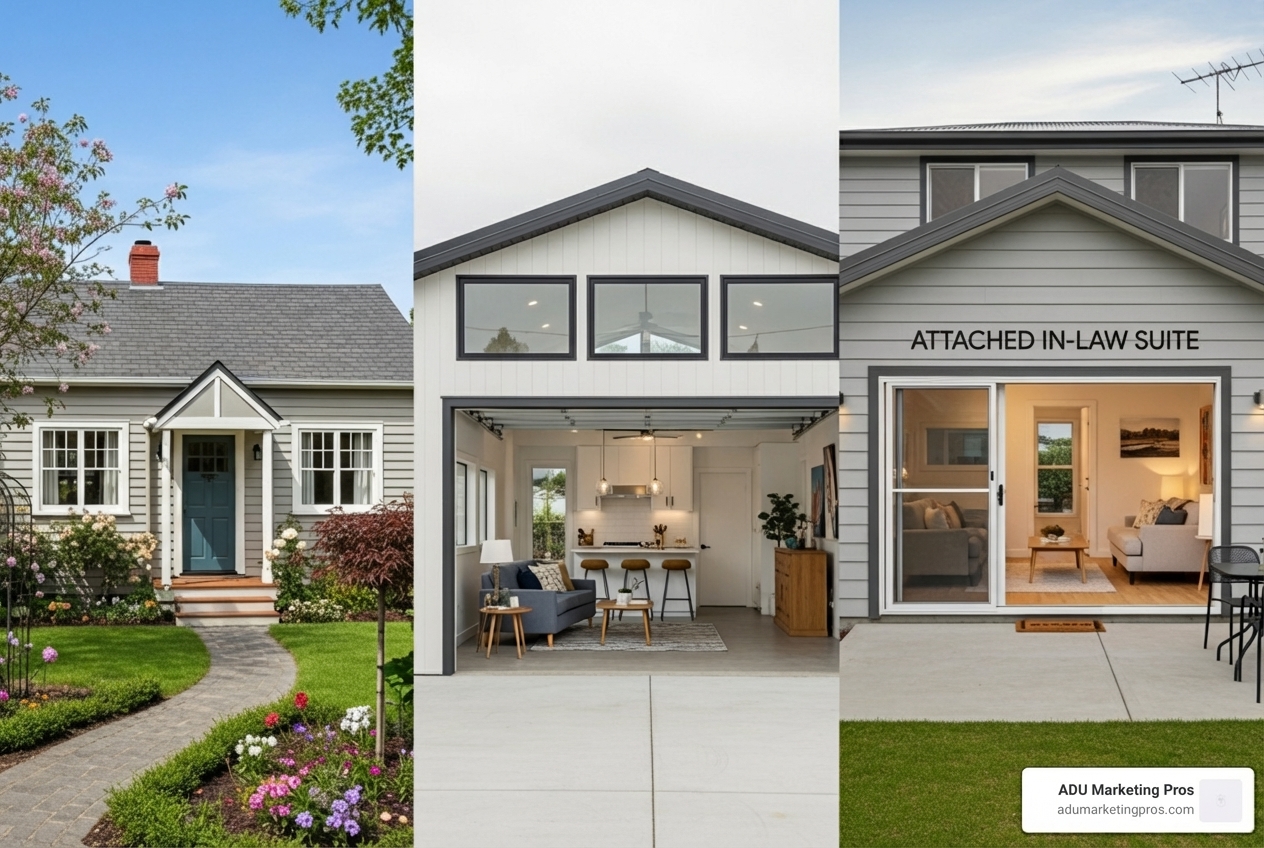
When we talk about granny flats, we’re often referring to a range of accessory dwelling units, each with its own characteristics, costs, and benefits:
- Detached ADU (DADU): This is a standalone structure, completely separate from the main house, typically located in the backyard. It offers maximum privacy for both the main home residents and the ADU occupants. While often the most expensive to build due to the need for a new foundation and utility lines, it also commands the highest property value increase and rental income.
- Attached ADU: An attached ADU shares at least one wall with the main house but has its own separate entrance, kitchen, and bath. This can be a more cost-effective option as it can leverage the home’s existing foundation and utility connections. It’s an excellent way to create an in-law suite that feels connected yet private.
- Garage Conversion: Converting an existing garage into a living space is one of the most popular and often cost-efficient ways to create a granny flat in California. It reuses an existing structure, which can save significantly on foundation and framing costs. The main challenges often involve upgrading the slab, insulation, and bringing in sufficient light and ventilation.
- Basement or Over-the-Garage Conversion: If your home has an unfinished basement or space above a garage, converting it into a separate living unit can be an excellent way to add a granny flat. These “interior” ADUs make use of existing square footage, but may require complex work like adding egress windows, soundproofing, and separate entrances.
- Junior Accessory Dwelling Unit (JADU): Unique to California, a JADU is a smaller ADU, no larger than 500 square feet, created within the existing walls of a single-family home. It must have its own separate entrance and an efficiency kitchen. It can, however, share a bathroom with the main dwelling. JADUs are the most affordable type of ADU to create and can often be permitted in addition to a full-size ADU on the same property.
Popular Granny Flat Designs and Layouts
The design possibilities for granny flats are extensive, allowing for customization to fit specific needs, architectural styles, and aesthetics:
- Studio Layouts: Ideal for single occupants, students, or short-term guests, studio granny flats combine the living, sleeping, and kitchen areas into one efficient, open space. This layout maximizes the feeling of spaciousness in a smaller footprint.
- One-Bedroom Plans: Offering a separate bedroom for added privacy, these layouts are the most popular choice for rental units and couples. They provide a clear distinction between public and private spaces, making the unit feel more like a traditional home.
- Two-Bedroom Options: Larger granny flats (where local zoning allows) can feature two bedrooms, accommodating small families, roommates, or providing a dedicated home office or hobby room in addition to a bedroom.
- Universal Design for Accessibility: A growing trend is to incorporate universal design principles, ensuring the granny flat is accessible for all ages and abilities. This includes features like no-step entries, wider doorways, roll-in showers, and accessible kitchens. This not only makes the unit perfect for aging relatives but also increases its appeal to a wider range of potential renters.
For more inspiration on how these versatile spaces can be configured, explore various Granny Flat Designs.
Construction: Prefab, Modular, and Custom Builds
When it comes to building your granny flat, you have several construction methods to choose from, each with its own advantages:
- Prefabricated (Prefab) and Modular Construction: These units are largely built off-site in a factory-controlled environment and then transported to your property for final assembly. This method can significantly reduce on-site construction time, minimize neighborhood disruption, and offer predictable costs. Quality control is high, and many companies offer stylish, modern designs. You can learn more about these innovative solutions at Modern Prefab Granny Flats and Modular Granny Flats California.
- Traditional Stick-Built Construction: This is the conventional method where the granny flat is built from the ground up on your property by a general contractor. It offers the highest degree of customization, allowing you to create a unique design that perfectly matches the architecture of your main home or fulfills a specific vision. While it can take longer and be subject to weather delays, it provides ultimate flexibility.
To help you decide which construction method is right for you, here’s a quick comparison:
| Feature | Prefab/Modular Build | Custom Stick-Built |
|---|---|---|
| Cost | Often more predictable; can be lower due to efficiency | Generally higher; more variables and potential for overruns |
| Timeline | Faster overall, with less on-site construction time | Slower, subject to weather, site conditions, and scheduling |
| Customization | Good, with many selectable options and layouts | Highest, allowing for completely unique architectural designs |
| Quality Control | Excellent, as construction occurs in a controlled factory | Dependent on contractor skill and on-site supervision |
| Site Disruption | Minimal, as assembly is quicker and less intrusive | More extensive and prolonged, with more noise and traffic |
| Financing | Can sometimes be more complex to finance | Standard construction loans are readily available |
The Financial and Legal Roadmap to Building Your Granny Flat
Embarking on a granny flat project requires careful financial and legal planning. Understanding the full scope of costs, securing the right financing, and navigating the complex landscape of zoning laws and permits are critical steps to ensure a smooth and successful build.
Understanding Costs and Financing
Building a granny flat is a significant investment, but one that can offer substantial returns. A clear budget is your most important tool.
- A Detailed Look at Costs: The total cost can vary widely, often falling between $100,000 and $400,000 or more. It’s helpful to break costs into two categories:
- Soft Costs (10-20% of budget): These are the pre-construction expenses, including architectural and engineering plans, soil reports, structural engineering, energy calculations (Title 24 in California), and city/county permit and impact fees.
- Hard Costs (80-90% of budget): These are the direct construction expenses. This includes site preparation (grading, excavation), foundation, utility trenching and hookups (a major variable), framing, roofing, plumbing, electrical, insulation, drywall, flooring, paint, windows, doors, cabinetry, countertops, appliances, and fixtures.
-
Don’t Forget Contingency: It is crucial to include a contingency fund of 10-15% of your total budget to cover unexpected costs, such as discovering poor soil conditions or needing to upgrade an electrical panel.
-
Financing Your Granny Flat: Most homeowners don’t pay for an ADU in cash. Several excellent financing options are available:
- Cash-Out Refinance: This involves replacing your current mortgage with a new, larger one, and taking the difference in cash to fund your project. It’s often a good option if interest rates are favorable.
- Home Equity Line of Credit (HELOC): This functions like a credit card secured by your home’s equity. You can draw funds as needed during the construction process, which is ideal for managing cash flow. Interest rates are variable.
- Home Equity Loan: This is a second mortgage that provides a lump-sum payment with a fixed interest rate. It’s a predictable option if you have a firm quote from your builder.
- Construction or Renovation Loans: These loans are specifically designed for building projects. Funds are disbursed in stages (draws) as construction milestones are met and verified by the lender. They often convert to a traditional mortgage upon project completion.
- Grant and Special Loan Programs: Some jurisdictions offer programs to encourage ADU construction. For example, the CalHome Program provides grants to local public agencies and nonprofits to assist homeowners. It’s worth checking with your local city or county housing department for available incentives.
Navigating Zoning, Regulations, and Permits
The regulatory landscape for granny flats in California has improved dramatically, but it remains complex and location-specific.
-
The Shift from Prohibition to Promotion: Historically, restrictive local zoning laws, such as large minimum lot sizes, excessive setback requirements, and mandatory extra parking, made building granny flats nearly impossible. Recognizing the housing crisis, the state of California has enacted a series of powerful laws to override these local barriers.
-
Key California ADU Law Changes: A wave of legislation has streamlined the ADU process. For comprehensive and official information, the California Department of Housing and Community Development (HCD) ADU page is an essential resource. Key reforms include:
- Mandatory Approval: Cities must approve ADUs and JADUs that meet state criteria. They can no longer impose subjective standards.
- Reduced Setbacks: Setbacks can be as little as four feet for side and rear yards, opening up possibilities on smaller lots.
- Parking Waivers: No replacement parking is needed for a garage conversion, and no parking is required at all if the property is within a half-mile of public transit.
- Fee Limitations: Impact fees are waived for ADUs under 750 square feet and are proportional for larger units.
- Faster Processing: Cities must approve or deny a permit application within 60 days.
- New Ownership Models: Recent laws like AB 1033 (2023) allow homeowners to sell their ADUs separately from the primary residence, similar to a condominium, creating new pathways to homeownership.
-
The Permitting Process: Despite state laws, you will still work directly with your local city or county planning and building departments. The process generally involves submitting detailed construction plans for review. Because local interpretations can vary, working with an experienced architect, designer, or design-build firm who is an expert in your specific jurisdiction is invaluable. They can help you avoid common pitfalls and ensure your project complies with all state and local codes from the start.
Navigating these regulations is manageable with the right team. For specific information relevant to your area, such as San Francisco, you can consult resources like Granny Flat San Francisco. If you’re considering prefabricated options, understanding the specific regulations that apply to them in California is also crucial, which you can explore further at Prefab Granny Flats in California.
Conclusion: Your Next Steps in the Granny Flat Journey
The journey to building a granny flat is an exciting one, offering a wealth of benefits from increased property value and rental income to stronger family connections and a positive contribution to our communities. We’ve seen how these versatile units are fundamentally changing the housing landscape across California, particularly in our service areas of Los Angeles, San Diego, the San Francisco Bay Area, San Jose, Sunnyvale, Palo Alto, Mountain View, and Menlo Park.
Key Considerations for Building a Granny Flat
As you contemplate adding a granny flat to your property, a thoughtful approach will set you up for success. We encourage you to use this final checklist to guide your planning:
-
Define Your “Why”: What is the primary purpose of your granny flat? Is it for an aging parent (requiring accessibility features), for rental income (prioritizing durability and a desirable layout), or a flexible space for your family? Your core goal will inform every subsequent decision.
-
Conduct a Feasibility Study: Before you get too far, assess your property’s potential. What is your lot size? Where are the existing utility lines? Are there any easements or protected trees that could impact placement? A preliminary chat with a designer or your local planning department can provide initial answers.
-
Master Your Local Regulations: While California state laws provide a strong framework, local ordinances still matter. Visit your city’s planning department website or an ADU resource center. Understand the specific size limits, height restrictions, and design standards for your neighborhood.
-
Develop a Realistic, All-In Budget: Go beyond the construction estimate. Factor in all potential costs: design fees, engineering reports, permit fees, utility connection costs (which can be substantial), landscaping, and a 10-15% contingency fund for surprises. This comprehensive budget is essential for securing financing.
-
Think About the Long Term: How might your needs change in 5, 10, or 20 years? A granny flat designed for an aging parent today could become a rental unit tomorrow or a home for an adult child in the future. Designing with flexibility in mind—such as including universal design features—maximizes its long-term value.
-
Assemble Your A-Team: Don’t go it alone. Building an ADU is a complex project. Engage with experienced professionals who specialize in ADUs in your area. This includes architects or designers, a reputable general contractor, and potentially a land-use consultant. Their expertise will be your best investment in navigating the process efficiently and avoiding costly mistakes.
Start Your Project with Confidence
Building a granny flat is a significant undertaking, but it’s also one of the most rewarding investments a homeowner can make. It adds immense value, flexibility, and utility to your most important asset. For construction and architecture firms aiming to connect with homeowners embarking on this journey, demonstrating expertise and building trust is paramount.
ADU Marketing Pros specializes in helping these firms stand out in a competitive market. We craft targeted marketing strategies that highlight your unique skills and experience, attracting high-quality leads and helping you grow your revenue by connecting you with clients who value expertise over a low-ball price. We believe that by providing clear, comprehensive information, we empower homeowners to make informed decisions and connect with the right professionals. We are dedicated to supporting the growth of the ADU sector in California, ensuring that more families can unlock the full potential of their properties. Explore how to build a successful project by checking out our resources on Modern Prefab Granny Flats.