
Why Interior Architect Web Design Matters for Your Firm’s Success
Interior architect web design is the foundation that transforms your creative vision into a client acquisition tool. Your website is your digital showroom, where potential clients form their first impression and decide whether to trust you with their project.
Key Elements of Effective Interior Architect Web Design:
- Professional Portfolio Display: High-resolution galleries showcasing your best work.
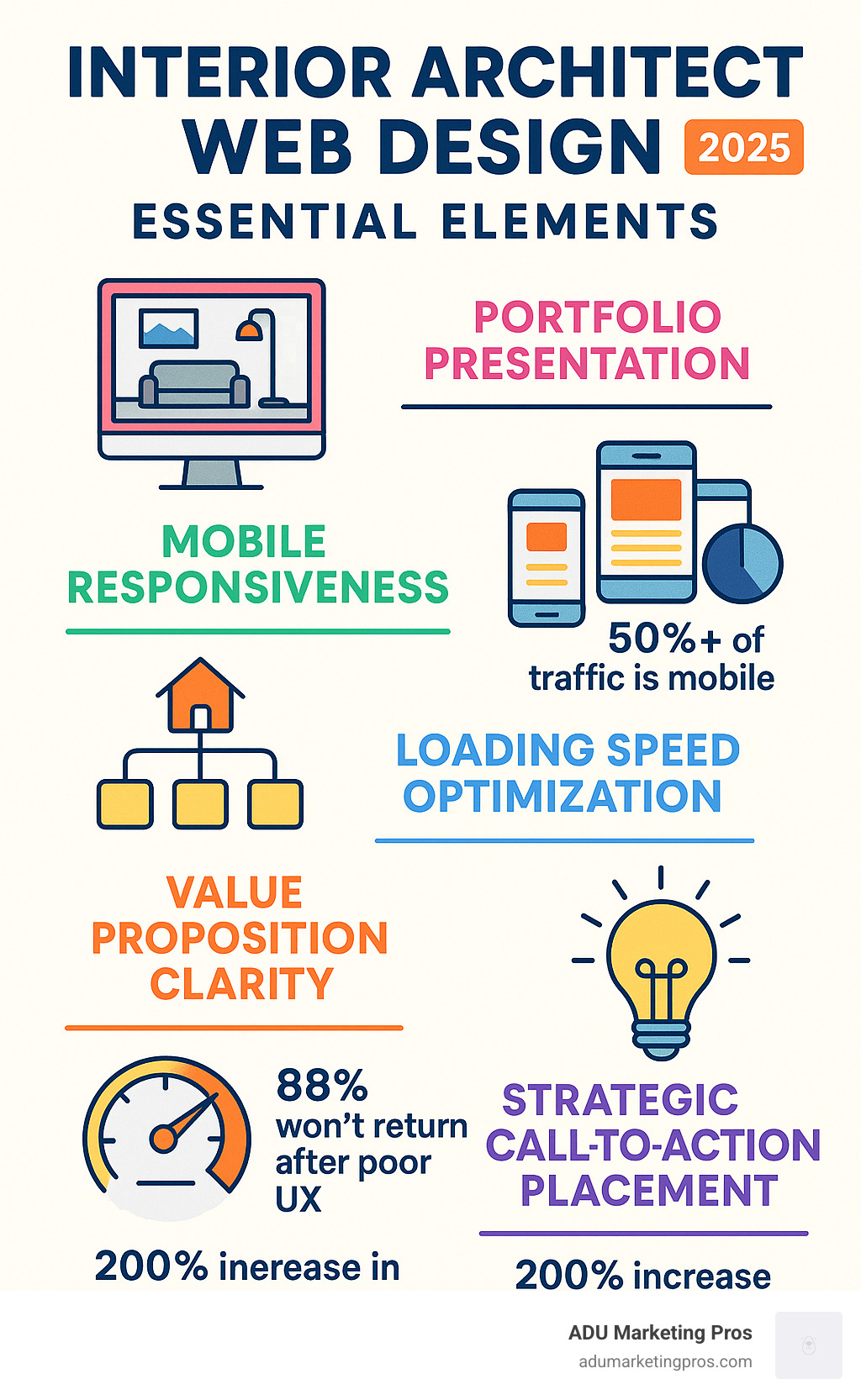
- Mobile-Responsive Design: A seamless experience on all devices, where 50%+ of traffic originates.
- User-Friendly Navigation: An intuitive structure that guides visitors to contact you.
- Fast Loading Speed: Optimized performance to prevent visitor bounce, as 88% won’t return after poor UX.
- Clear Value Proposition: Immediate understanding of your unique design approach.
- Strong Call-to-Actions: Strategic placement to convert visitors into leads.
The stakes are high. As one designer noted, “If you’re an interior design business, how your website looks and feels is paramount… if a potential customer visits your site and finds an ugly, cluttered mess, they’re pretty unlikely to ask you to design their home or business space.”
With the global interior design market projected to reach $283.40 billion by 2032, a high-performing website is essential for capturing your share. A professional site can increase leads by 200%, making it a vital business investment. Yet many talented architects have outdated sites that fail to reflect their excellence or convert visitors.
Simple guide to interior architect web design terms:
The Foundation: Translating Your Brand into a Digital Masterpiece
Think of your website as your most important design project. Your interior architect web design must reflect the same sophistication and attention to detail you bring to every client space. It’s where potential clients experience your aesthetic philosophy through every pixel, color, and font choice.
The key is creating an experience that feels authentically you. Whether you specialize in luxury residential projects, commercial spaces, or hospitality venues, your site should immediately communicate your expertise. This isn’t about trends; it’s about translating your unique design language into a digital format. For deeper insights, the AIA’s Guide to Branding for Architects offers excellent foundational principles.
Defining Your Unique Digital Identity
Your website should feel like walking into one of your designed spaces. Every element—from color palette and typography to brand voice and tone—needs intentional consideration. A minimalist palette might attract clients seeking modern sophistication, while warmer tones could appeal to those wanting comfortable luxury.
Your copy should reflect your personality. Are you the approachable expert or the sophisticated curator? This voice must be consistent across your entire site. Use mood boards to guide your web designer, and ensure your logo and visual language are memorable and cohesive to stand out in a crowded market.
Aligning Your Website with Your Business Goals
A beautiful website that doesn’t support your business is a missed opportunity. Your site must be a strategic tool for growth. Define your primary objectives:
- Lead Generation: Structure your site to capture contact information from qualified prospects for consultations.
- Portfolio Showcase: Emphasize detailed case studies and testimonials to attract larger, more prestigious projects.
- Industry Authority: Use your site as a platform for thought leadership, sharing insights and trends to become a go-to expert.
- E-commerce Integration: If you sell curated collections or design services, this requires a specific technical approach.
Set clear KPIs (Key Performance Indicators) from the start, such as lead conversion rates, traffic growth, or newsletter sign-ups. Design your website for where your firm is going, not just where it has been.
Key Elements of Successful Interior Architect Web Design
An outstanding interior architect web design is about crafting an experience as thoughtfully designed as the spaces you create. Every element should guide visitors smoothly from curiosity to contact, removing friction and building trust.
Mastering User Experience (UX) and Interface (UI)
Think of your website’s navigation like the flow of a well-designed home. Key information shouldn’t be buried in confusing menus.
- Intuitive Navigation: Your portfolio, services, and contact info should be accessible in one or two clicks. 88% of users won’t return after a poor experience.
- Clear Visual Hierarchy: Use whitespace, bold headings, and consistent typography to guide the eye naturally.
- Accessibility: Following WCAG standards ensures everyone can experience your work, reflecting a human-centered design philosophy.
The goal is a seamless journey that lets visitors focus on what matters: your incredible design work.
The Critical Role of Mobile-First, Responsive Design
Over half of your potential clients will first see your work on their phones. If your site isn’t beautiful and functional on mobile, you’ve lost them. Mobile-first design means creating a great experience for smaller screens with touch-friendly buttons, readable text, and fast-loading images.
Google’s mobile-first indexing means your mobile site directly impacts search rankings. A slow or clunky mobile site will struggle to be found. Responsive design ensures your website adapts gracefully to any screen, from a large desktop to a smartphone, so your stunning project photos always look their best.
Building Trust with a Professional ‘About’ and Contact Section
Your ‘About’ page is where potential clients decide if they can trust you. Use professional storytelling to share not just what you do, but why you do it. What is your design philosophy? This helps visitors connect with you personally.
High-quality team photography reinforces your credibility. Make your contact information easy to find, especially if you serve specific locations like San Jose or the Bay Area. Your contact form should be simple and inviting, asking for just enough information to start a conversation and setting clear expectations for what happens next.
The Heart of Your Site: Creating an Irresistible Online Portfolio
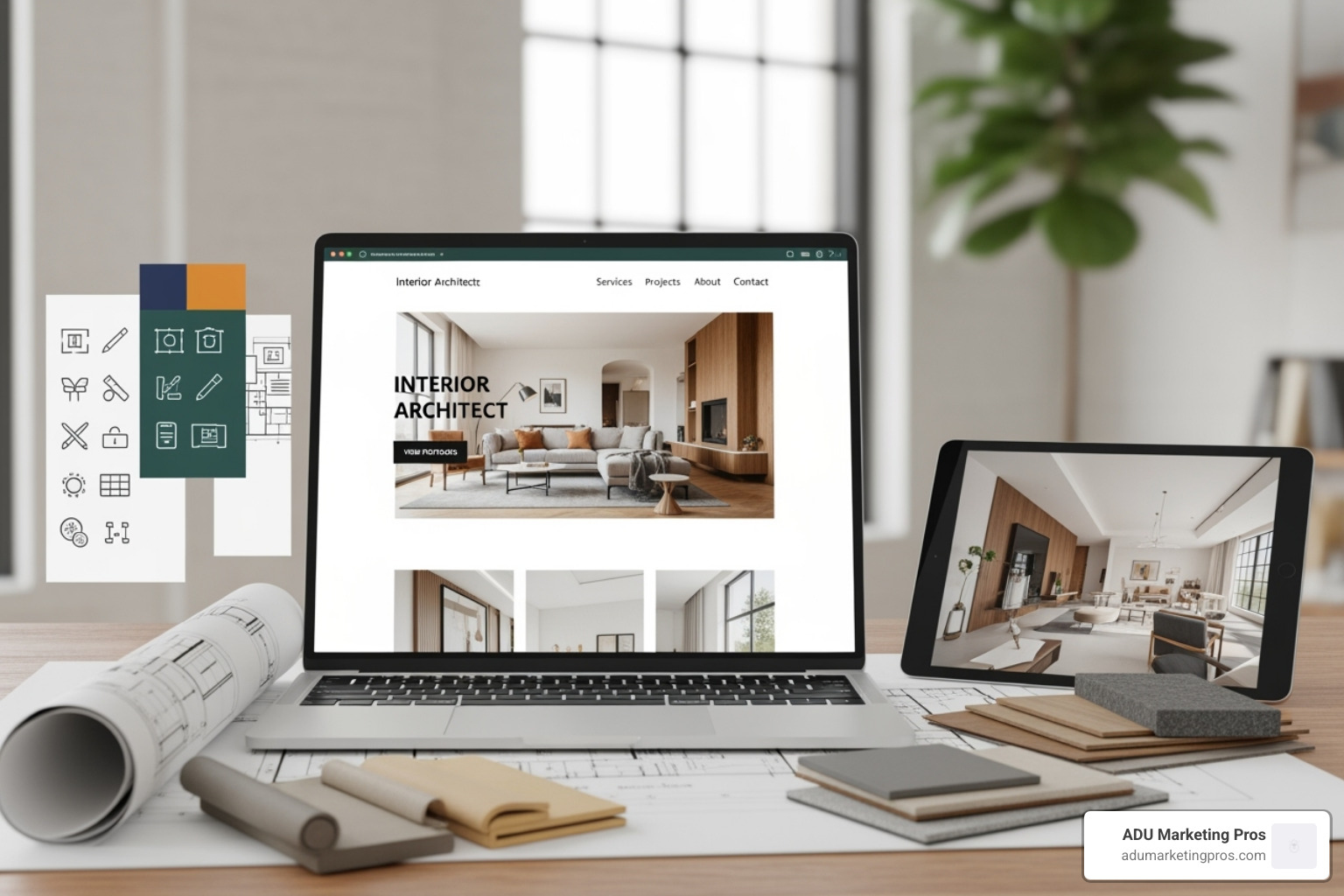
Your portfolio is the digital gallery that transforms casual browsers into excited clients. The secret to an effective interior architect web design portfolio is not just showing all your work, but curating your absolute best projects. Quality over quantity is key.
Organize projects thoughtfully by type (residential, commercial), style, or location to help clients find work that resonates with their vision. Most importantly, use storytelling to connect with potential clients on an emotional level.
The Power of High-Resolution, Professional Visuals
In this industry, photography can make or break your online presence. Professional architectural photography is a non-negotiable investment. Your visual strategy should include:
- Wide shots to capture the overall ambiance and scale.
- Detailed vignettes to highlight craftsmanship.
- Close-up shots to showcase textures and unique materials.
Before-and-after galleries are incredibly compelling, showing the dramatic impact of your work. For an even more immersive experience, use video walkthroughs to let clients virtually step into your designs.
Structuring Project Pages for Storytelling and Engagement
Each project page should be a short story. Start with the client’s brief and goals to frame the challenge. Then, detail your design process and solutions, explaining the “why” behind your choices. This showcases your expertise and the value you bring.
Highlight unique challenges and how you overcame them to demonstrate your problem-solving skills. The ultimate credibility builder is a project-specific client testimonial. A quote like, “When I walked in, I started to cry! I am amazed!” speaks volumes and helps potential clients envision their own change.
Expanding Your Portfolio’s Impact
Your portfolio can do more than just showcase completed projects. Consider including:
- Curated collections of furniture or materials you love.
- Design concepts or speculative projects to show your creative vision.
- Collaborations with other professionals to highlight your teamwork.
- Downloadable resources like style guides to add value and build authority.
Your portfolio works 24/7 to tell your story and attract the right clients. Make every element count.
From Visitors to Clients: A Framework for Growth
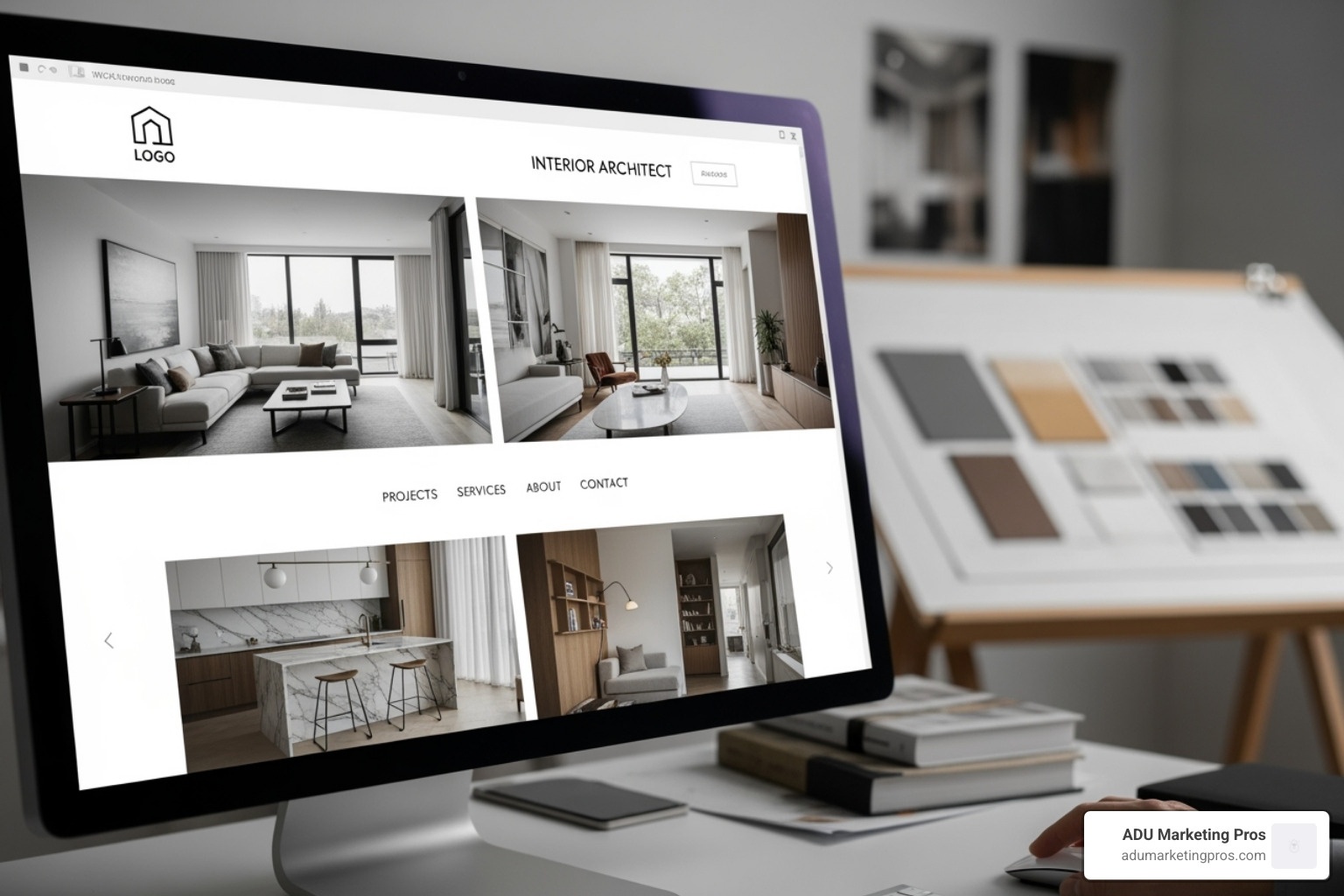
A beautiful website is only as good as its ability to turn visitors into clients. Your interior architect web design must guide people naturally toward working with you, changing your site from a static brochure into an active lead generation machine.
Essential SEO for Interior Architect Web Design
A gorgeous website is useless if no one can find it. Search Engine Optimization (SEO) is crucial. Think like your clients and target keywords they use, such as “luxury interior architect San Francisco” or “ADU design specialist Bay Area.”
Local SEO is vital for attracting clients in your service area. This means optimizing your Google Business Profile and using location-specific keywords. Also, optimize every page and image with descriptive titles and alt text (e.g., “modern-kitchen-renovation-palo-alto.jpg”). Finally, ensure fast page speed, as slow loading is a primary reason visitors leave. For a deeper dive, see Moz’s Beginner’s Guide to SEO.
Building Authority with Content Marketing
Position yourself as a go-to expert with content marketing. This is a powerful long-term growth strategy.
- Blogging: Regularly write about design trends, project insights, and practical advice to establish expertise and provide fresh content for search engines.
- In-depth Case Studies: Go beyond pretty pictures to detail the client’s challenges, your solutions, and the final outcome. This showcases your problem-solving skills.
- Downloadable Resources: Offer valuable content like style guides or budget worksheets to build your email list and attract future clients.
The Content Marketing Institute’s guide for professional services offers excellent strategies for creating content that drives business results.
Designing for Conversion: The Art of the Call-to-Action
Your site needs to guide visitors to the next step with strategic calls-to-action (CTAs). Go beyond a generic “Contact Us.” Use specific, action-oriented phrases like “Schedule Your Design Consultation” or “Download Our Project Portfolio.”
Your “Work with Us” page is critical. Be transparent about your process and investment levels to pre-qualify leads. Make newsletter sign-ups and booking forms simple and easy to use. The goal is to start a conversation, not overwhelm them with questions.
Frequently Asked Questions about Interior Architect Web Design
Diving into interior architect web design can bring up many questions. Here are answers to the most common ones we hear from firms in the Bay Area and beyond.
How much does a professional website for an interior architect cost?
This is like asking, “How much does a kitchen renovation cost?” The investment depends on your needs. Key factors include custom vs. template design, the number of pages and complexity of features (e.g., e-commerce, client portals), and professional content creation like copywriting and photography.
The most important shift is to view your website as a long-term investment in your primary marketing asset, not an expense. A professional site delivers significant ROI through higher-quality leads. When you consider that a professional site can increase leads by 200%, the investment makes perfect sense.
Can I build my own website, or should I hire a professional?
While DIY builders seem easy, there’s a vast difference between “having a website” and “having a website that works for your business.” Working with a professional partner like ADU Marketing Pros provides expertise in UX/UI design, SEO, security, and mobile responsiveness.
A professional ensures a custom, polished look that builds credibility with high-value clients. When someone is considering a six-figure project, your website must reflect the same level of sophistication as your design work. Plus, it saves you time to focus on what you do best: creating incredible spaces.
What are the biggest mistakes to avoid on my website?
Even talented architects make common web design mistakes. Here are the top ones to avoid:
- Low-Quality Images: Unprofessional photos are the cardinal sin. They instantly undermine your credibility. Invest in professional architectural photography.
- Slow Page Loading Times: If your site takes more than three seconds to load, you’ll lose visitors. 88% of users won’t return after a bad experience.
- Confusing Navigation: If clients can’t easily find your portfolio or contact info, they will leave for a competitor’s site.
- Not Being Mobile-Friendly: With over 50% of traffic from mobile, a non-responsive site is invisible to half your potential audience.
- Lacking a Clear Call-to-Action: Always tell visitors what to do next. Make it easy for them to take the next step.
Conclusion: Your Blueprint for Digital Success

An exceptional interior architect web design is more than just a pretty portfolio; it’s a digital foundation that works as hard as you do. Your success depends on a few key pillars:
- A strong brand foundation that reflects your unique design philosophy.
- A flawless user experience with intuitive navigation, fast loading, and a seamless mobile interface.
- A stunning portfolio that uses high-quality visuals and storytelling to connect with clients.
- A smart marketing strategy using SEO and content to turn your site into a lead generation machine.
Think of your website as your most dedicated team member, working 24/7 to attract, impress, and qualify potential clients. The investment in professional web design builds the credibility needed to command premium fees and attract high-value projects. In a competitive market, your website is the key differentiator that sets you apart.
For firms ready to lift their digital presence, partnering with a specialist is crucial. At ADU Marketing Pros, we build websites that don’t just look professional—they perform professionally. Your digital masterpiece should be as beautiful and functional as the spaces you design.
Get a professional website design for your architecture firm