
Why Berkeley’s ADU Parking Rules Are Different
Parking requirement ADU Berkeley rules have changed dramatically in recent years, and most homeowners are surprised by what they find. Driven by a statewide push to address the housing crisis, California has enacted a series of laws that significantly limit a city’s ability to mandate parking for accessory dwelling units. Berkeley, already a city known for its progressive policies, has embraced these changes, making it one of the most ADU-friendly locations in the state. If you’re planning to build an accessory dwelling unit in Berkeley, here’s what you need to know right now:
Quick Answer:
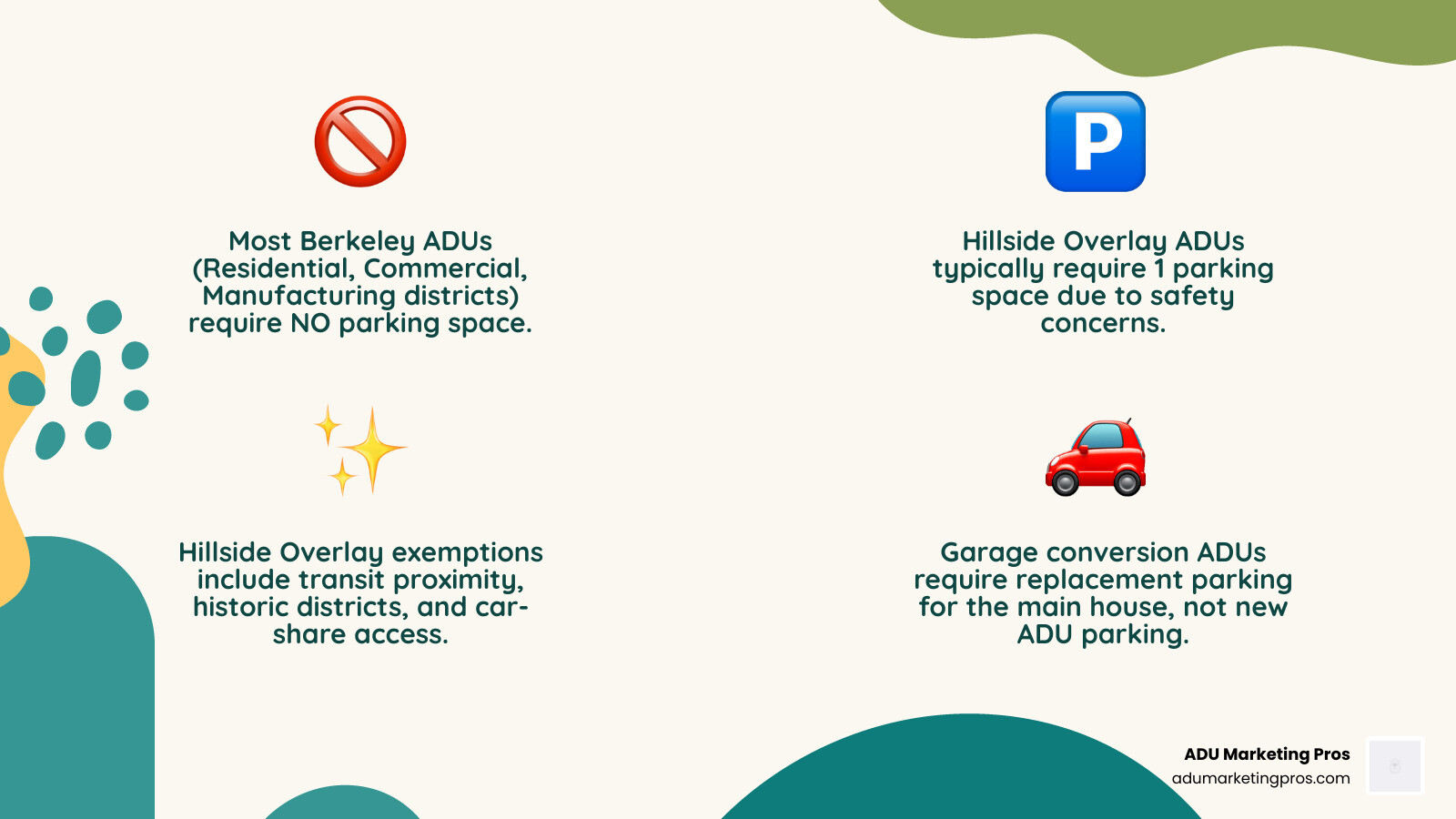
- Most ADUs in Berkeley require NO parking: This is the default rule for the vast majority of properties. It applies to lots in Residential (R), Commercial (C), and Manufacturing (M) districts, as long as they are outside the specific Hillside Overlay zone. This is a direct result of state laws that exempt ADUs near public transit, a condition that covers nearly all of Berkeley.
- Hillside Overlay properties typically need 1 space per ADU: This is the major exception. Due to narrow streets and fire safety concerns, properties in the Berkeley Hills generally must provide one off-street parking space. However, this rule is not absolute; several powerful state-mandated exemptions related to transit access, historic districts, and car-share proximity can waive this requirement.
- Junior ADUs never require parking: These smaller, more integrated units (up to 500 sq ft) are exempt from parking requirements city-wide, with no exceptions. This makes them a highly accessible option for homeowners looking to add a rental unit or space for family.
- Garage conversions require replacement parking: This is a crucial distinction. If you convert a garage or carport that provided a required parking space for your main house, you must replace that specific space. You are not adding parking for the ADU; you are maintaining the required parking for the primary residence. This replacement space can often be a tandem spot in the driveway.
Berkeley is one of California’s most permissive cities when it comes to ADU parking, thanks to state housing laws like AB 68 and SB 9 that prohibit cities from requiring off-street parking for accessory units near public transit. Since virtually every property in Berkeley is within half a mile of a bus stop or BART station, this exemption applies almost universally.
But there’s one major exception that causes confusion: the Hillside Overlay. This zone, covering the Berkeley Hills, has unique parking rules due to narrow streets and fire safety concerns. The City Council even debated imposing stricter requirements but ultimately backed down after state regulators from the Department of Housing and Community Development (HCD) confirmed it would violate California’s ADU law.
This guide breaks down exactly when parking is required, when it’s not, what the Hillside Overlay rules really mean, and how garage conversions work. Whether you’re a homeowner planning your own ADU or a construction firm helping clients steer these rules, you’ll find clear answers here.
Learn more about parking requirement adu berkeley:
The General Rule: When Parking is NOT Required for a Berkeley ADU
For the vast majority of properties, Berkeley cannot require you to add a parking space for a new ADU or Junior ADU (JADU). This is fantastic news for homeowners, as it removes a significant hurdle and cost often associated with new construction. A single parking space can add tens of thousands of dollars to a project, not to mention the loss of valuable yard space. This broad exemption applies to ADUs located in Residential Districts outside of the Hillside Overlay, as well as those in Commercial Districts, or Manufacturing Districts. In simple terms, if your property isn’t nestled in the Berkeley Hills, you’re likely in the clear when it comes to providing new parking for your ADU.
The primary driver for this is California’s ADU law, which prohibits cities from mandating off-street parking for an accessory unit if the property is within a half-mile walking distance of any public transit stop. A “public transit stop” is broadly defined and includes any bus stop (like AC Transit), rail station (like BART), or even a ferry terminal with fixed schedules. Given Berkeley’s robust public transit network, this condition applies to virtually every parcel within the city limits. This state-level exemption is the single most powerful tool for homeowners, overriding most local attempts to impose parking.
This progressive stance reflects a broader effort to ease housing shortages and promote more sustainable, transit-oriented development. By removing parking mandates, the city and state are making it easier and more affordable for homeowners to create much-needed housing. This not only helps address the housing affordability crisis but also encourages denser, more walkable neighborhoods, reducing reliance on personal vehicles and contributing to the diversity and vibrancy of Berkeley’s communities.
What About Junior Accessory Dwelling Units (JADUs)?
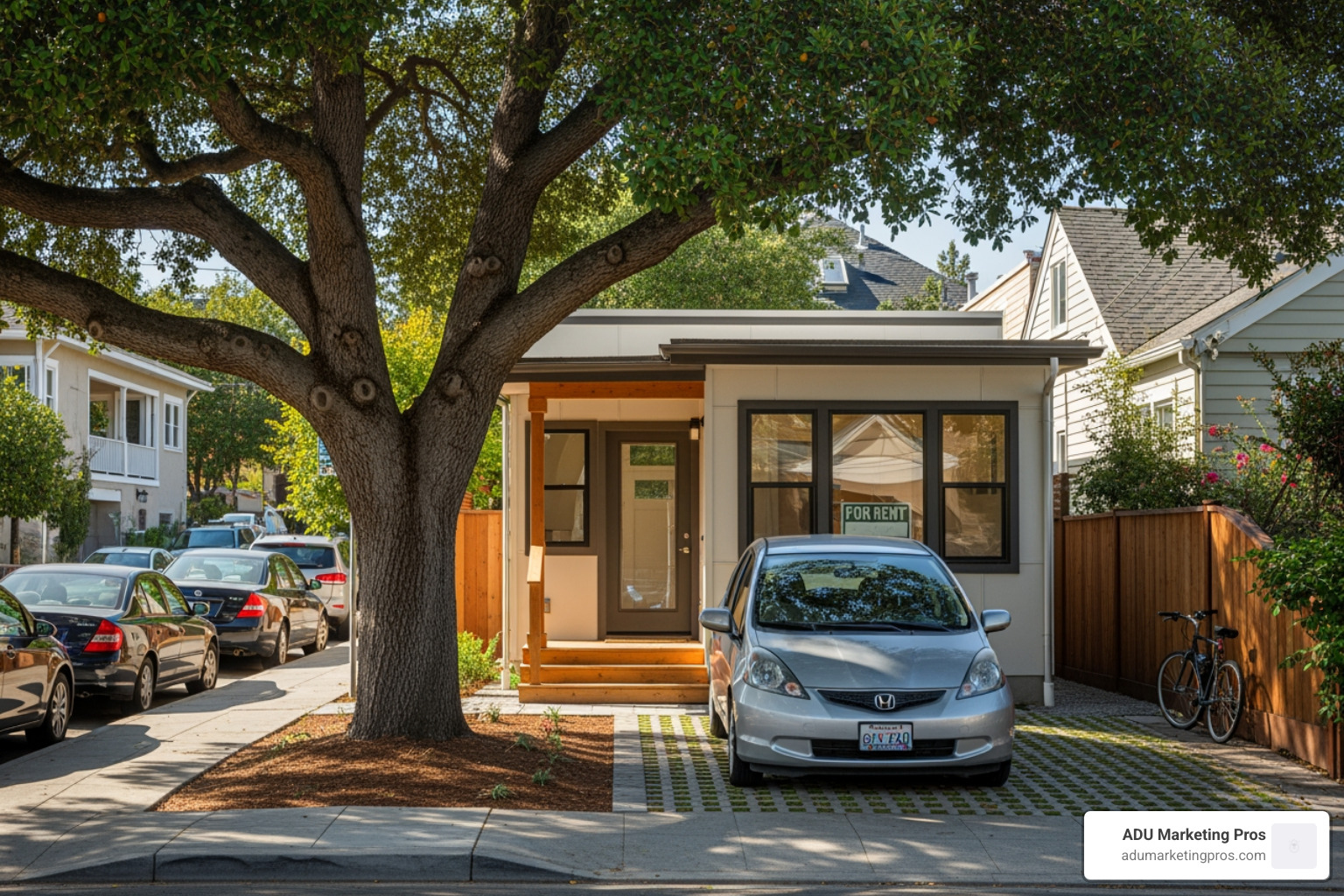
Junior Accessory Dwelling Units (JADUs) are another fantastic option for homeowners looking to add housing without the headache of parking. A JADU is a smaller, self-contained living space (up to 500 sq. ft.) created within the existing footprint of a single-family home. They typically feature an efficiency kitchen, which must include a cooking facility with appliances, a food preparation counter, and storage cabinets of a reasonable size. They must also have an interior connection to the main house and a separate exterior entrance, providing both integration and privacy.
Crucially, like their larger ADU counterparts, JADUs are also exempt from parking requirements city-wide in Berkeley. This means you can convert a spare bedroom or part of a living area into a JADU without worrying about providing an additional parking spot, further reducing costs and simplifying the development process. This makes JADUs one of the most cost-effective ways to add a legal rental unit to your property.
It’s worth noting that JADUs do come with an owner-occupancy rule: the property owner must reside in either the primary dwelling unit or the JADU. This is a key distinction from standard ADUs, where owner-occupancy requirements were eliminated by state law in 2020 (and reinstated for new ADUs starting in 2025 unless the local agency adopts an ordinance to the contrary). This ensures that JADUs contribute to owner-occupied housing and can be a great way for homeowners to gain additional income or house family members while remaining on-site.
The Power of State Law Over Local Control
The reason behind Berkeley’s generally lenient parking requirement ADU Berkeley policy is the strong stance taken by the State of California. State housing laws, such as AB 2299 and SB 1069, which went into effect in 2017, and subsequent updates like AB 68 and AB 881, have significantly streamlined the ADU development process. These laws require cities to adopt regulations that are no more restrictive than state standards, allow ADUs “by right” (meaning without discretionary public hearings), and issue permits within 60 days (not 120) if the plans meet objective standards.
The California Department of Housing and Community Development (HCD) plays a critical role in enforcing these state housing laws. They actively scrutinize local ordinances to ensure compliance and prevent cities from imposing regulations that inadvertently (or intentionally) hinder ADU construction. We saw this play out when Berkeley’s City Council considered imposing stricter parking requirements in the Berkeley Hills. The HCD unequivocally informed the city that such a mandate would violate state law, citing the universal transit access across Berkeley. This intervention led the council to drop the proposal, demonstrating the HCD’s willingness to challenge local ordinances that conflict with state housing goals.
This state preemption means that local jurisdictions like Berkeley have limited ability to impose additional parking requirements beyond what state law allows, particularly in areas well-served by public transit. It’s a clear example of state housing goals taking precedence over local control to address California’s housing crisis. For homeowners, this translates to a much smoother and more predictable ADU permitting process, free from the often-onerous burden of providing extra parking.
The Big Exception: The Hillside Overlay Parking Requirement for ADU Berkeley
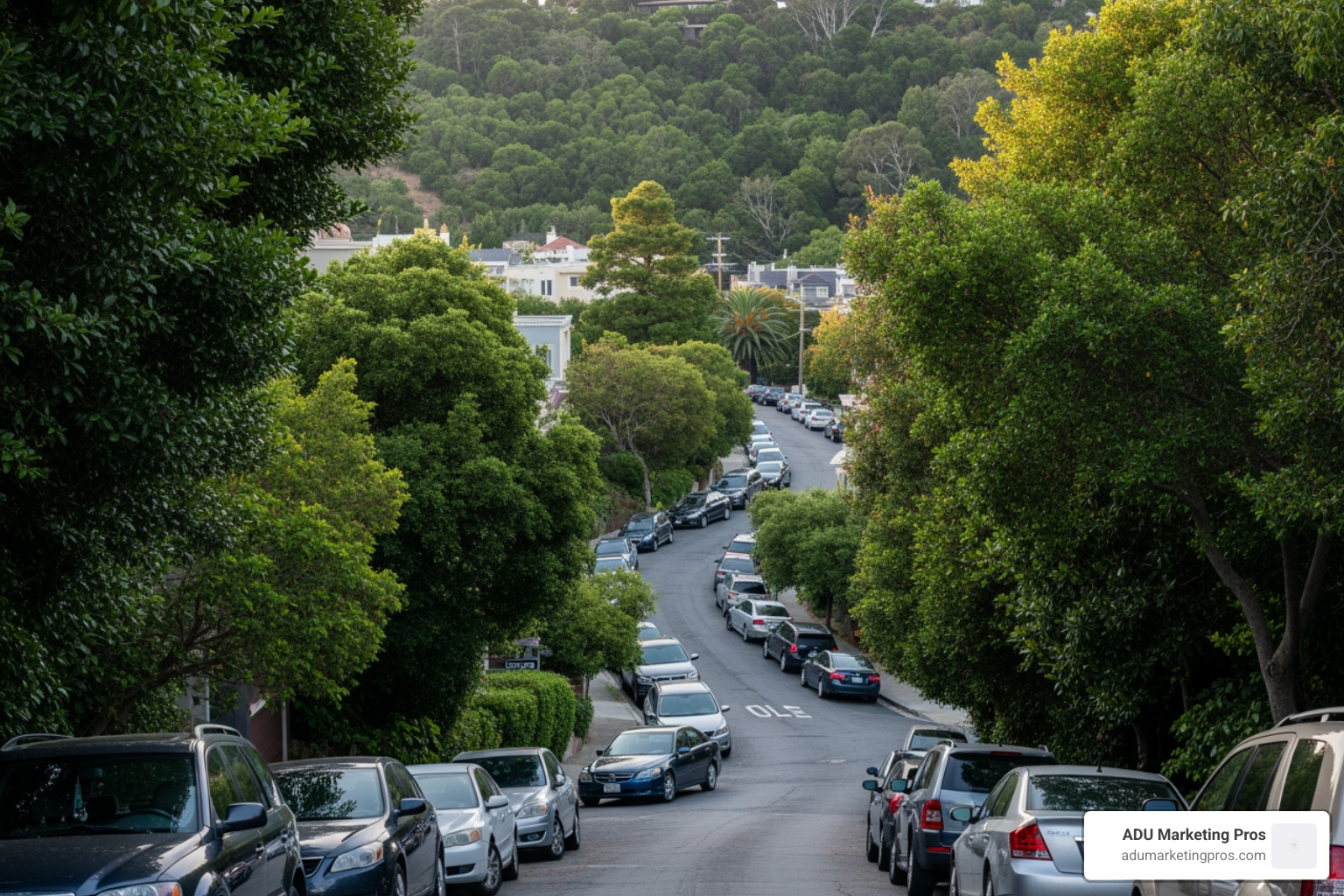
While most of Berkeley enjoys a no-parking-required policy for ADUs, there’s one significant exception: properties located within the Hillside Overlay. This area, with its distinctive topography, narrow, winding streets, and heightened fire risk, presents unique challenges and, consequently, unique regulations. The memory of the devastating 1991 Oakland-Berkeley Hills firestorm looms large, shaping local policy around access and safety.
For ADUs within the Hillside Overlay zone, the general rule shifts: the city typically requires one off-street parking space per ADU. This requirement stems from long-standing concerns about fire safety, emergency vehicle access, and potential traffic congestion in an already constrained environment. The fear is that additional cars from new ADUs could park on narrow streets, impeding the passage of fire trucks during an emergency and blocking evacuation routes for residents.
The discussion around this parking requirement ADU Berkeley in the hills has been quite a saga. The City Council, led by representatives of the hill areas like Councilmember Susan Wengraf, debated a proposal to mandate off-street parking for all ADUs in this zone. Proponents argued passionately that the unique geography and wildfire risk justified a deviation from state law, emphasizing the need to prevent roads from being blocked and ensure first responders could navigate safely. Residents voiced concerns about streets becoming impassable, citing instances where garbage trucks and delivery vehicles already struggle to get through.
However, the proposal faced a significant roadblock: the state. The California Department of Housing and Community Development (HCD) stepped in with a formal letter, confirming that such a blanket mandate would indeed violate state law. The HCD’s position was firm: since all of Berkeley, including the hills, is considered within a half-mile of public transit, the state-level parking exemption applies everywhere. Faced with the threat of legal action and loss of state housing funds, the City Council dropped the proposal, backing away from a direct conflict with state housing regulators.
This outcome highlights the delicate balance between local concerns for public safety and the state’s overarching goal of promoting housing development. While some council members expressed frustration with the state’s “one-size-fits-all” approach, others argued that alternative measures, such as stricter enforcement of existing parking rules, creating more red-curbed “choke points,” and aggressive vegetation management, might be more effective ways to address fire safety than ADU parking mandates.
Are There Exemptions in the Hillside Overlay?
Yes. Even within the Hillside Overlay, where one parking space per ADU is the starting point, there are several key state-mandated exemptions that can free your project from this mandate. It’s like finding a secret shortcut on a winding hillside road! An ADU does not need a dedicated parking spot if the parcel satisfies any of the following criteria:
- Public Transit Proximity: The property is located within a half-mile walking distance of a public transit stop. As we’ve learned, this applies to virtually all of Berkeley and is the most common and powerful exemption, even in the hills. You can easily verify this using Google Maps’ walking distance feature to the nearest AC Transit bus stop.
- Historic Districts: The property is located within an architecturally and historically significant historic district. Berkeley values its heritage, and this exemption helps preserve the unique character of these areas by preventing new curb cuts or parking pads from altering the streetscape.
- Existing Structures: The ADU is part of the proposed or existing primary residence or an accessory structure that is being converted. This means that if you’re converting an existing garage, basement, or a portion of your main home, the one-space-per-ADU requirement does not apply (though replacement parking rules might, see below).
- On-Street Parking Permit Requirements: On-street parking permits are required on the street where the property is located, but the city does not offer a permit to the occupant of the ADU. This prevents a catch-22 where an ADU tenant is legally barred from using available street parking.
- Car-Sharing Proximity: The property is located within one block of a dedicated car-share vehicle pickup/drop-off location (e.g., a designated pod for services like GIG Car Share). This acknowledges the rise of shared mobility services and reduces the need for personal vehicle ownership.
- New Dwelling Permit Application: The ADU is part of a permit application for a new single-family dwelling.
These exemptions provide crucial flexibility for homeowners in the Hillside Overlay, often allowing them to bypass the parking requirement entirely.
Navigating the Hillside Overlay Parking Requirement for your ADU in Berkeley
So, if you’re in the Berkeley Hills, what’s your first step regarding parking? Our recommendation is always to verify your specific situation with a clear, methodical approach.
- Confirm Your Location: Use the City of Berkeley’s online mapping tools, specifically the “Zoning Districts and Overlays” layer on their Community GIS Portal, to definitively confirm if your parcel falls within the Hillside Overlay (HO) zone. Don’t guess – this is a critical piece of information that dictates which rules apply.
- Check for Exemptions: Once you know you’re in the HO zone, systematically go through the list of exemptions. The most common and impactful exemption is proximity to public transit. Use Google Maps to measure the walking distance from your property line to the nearest bus stop. If it’s under 0.5 miles, you are likely exempt. Document this with a screenshot for your permit application.
- Consult City Resources: The City of Berkeley’s Planning and Development Department provides detailed information sheets (like Form 347-ADU) and FAQs regarding ADUs. These resources, along with direct communication with the Land Use Planning division via email or a virtual appointment, can help clarify any ambiguities related to your specific property and proposed ADU project.
Understanding these nuances can save you significant time, money, and headaches, helping you move forward with your ADU project confidently.
Garage Conversions, Tandem Parking, and Replacement Rules
Many Berkeley homeowners eye their underused garages and see the potential for a fantastic ADU. Converting an existing garage or carport is a popular and often cost-effective way to create an accessory dwelling unit. However, this strategy comes with a specific parking rule that homeowners and builders often misunderstand: the replacement parking rule. This is one of the most common questions we get when discussing parking requirement ADU Berkeley projects, and getting it right is key to a smooth permit process.
Converting a Garage? The Replacement Parking Rule
Here’s the deal: if you convert a garage or carport that previously provided a required off-street parking space for your primary dwelling, you must replace that parking space. It’s not about adding a new parking spot for the ADU itself (remember, ADUs usually don’t need parking in Berkeley), but rather ensuring the main house doesn’t lose its existing required parking.
How do you know if your parking was “required”? You may need to do some research. Check the original building permits for your home, which can be requested from the city’s records department. If the permits or plans from when the house was built (or last significantly modified) show a designated number of required parking spaces, and the garage fulfilled that requirement, then you must replace it. If your garage was just for storage, was built without permits long ago, or was never officially counted as a required parking spot for the primary dwelling unit, then no replacement is needed.
The good news is that this replacement space can be located anywhere on the lot, offering considerable flexibility. This includes setback areas or even as a tandem space in your driveway. The Berkeley Municipal Code (BMC 23.306) and related sections are quite clear on this, allowing for creative solutions to meet this replacement requirement without derailing your ADU project.
Tandem Parking and Driveway Rules
Flexibility is the name of the game when it comes to replacement parking in Berkeley. Tandem parking, where one car parks directly behind another in a driveway, is explicitly allowed as a replacement space. This is a common and practical solution for homeowners needing to replace a parking space after a garage conversion, as it utilizes existing paved areas.
The Berkeley Municipal Code (BMC 23.322.080) further simplifies things by stating that replacement parking for a main building on a lot with an ADU is allowed in any configuration on the lot, including within the front setback. This is a significant allowance, as building in front setbacks is typically highly restricted. A standard parking space must be at least 8.5 feet wide by 18 feet long. The replacement space must be uncovered, covered, or enclosed, and it must be accessible from the street.
This means you might be able to pave a portion of your front yard or extend your driveway to accommodate the replacement parking. However, you must still meet other city standards for surfacing and screening. For example, any new paved area may be subject to limits on impervious surfaces to manage stormwater runoff, potentially requiring the use of permeable pavers. You may also need to add landscaping to screen the parking area from the street view, depending on the specifics of your lot and zoning district. This flexibility helps ensure that homeowners aren’t forced to abandon ADU plans simply because they can’t find a conventional spot for replacement parking. It’s all part of Berkeley’s commitment to making ADUs a viable option for more residents.
Frequently Asked Questions about Berkeley ADU Parking
Navigating the specifics of parking requirement ADU Berkeley rules can still lead to some head-scratchers. Here are answers to some of the most common questions we encounter, expanded with the details you need to know.
What happens if my ADU project is in a historic district?
If your property is located within a designated historic district, state law provides an exemption from any local parking requirements for your ADU. This is a powerful provision that applies even if your property is also located in the Hillside Overlay. The rationale behind this exemption is to protect the architectural and historical integrity of these neighborhoods. Requiring a new parking space could necessitate a new curb cut, a concrete parking pad, or a new garage structure that might be inconsistent with the historic character of the property and the district. The state has prioritized the creation of housing over the imposition of parking rules that could damage historical resources. To confirm if your property is in a historic district, you can use the City of Berkeley’s online zoning map or contact the Land Use Planning division.
Do I need a new address for my ADU, and does that affect parking?
Yes, all new ADUs (but not Junior ADUs) require a new, separate address from the city. This is a critical procedural step for several reasons. It’s necessary for establishing utilities (like EBMUD for water, PG&E for gas and electricity, and internet service), for mail delivery via USPS, and most importantly, for emergency services. A separate address ensures that fire, police, or paramedics can find the specific unit quickly in an emergency. The process for obtaining an address is typically handled as part of the building permit application process with the City of Berkeley.
However, whether or not you need to provide a parking space for your ADU is completely unrelated to this address assignment. The parking requirement is determined by factors like your property’s location (e.g., in or out of the Hillside Overlay), proximity to public transit, and whether you’re converting an existing parking-providing structure. So, while you’ll definitely get a new address for your ADU, it has zero impact on your parking obligations.
Where can I find the official city code for the parking requirement for an ADU in Berkeley?
For the most accurate and up-to-date information, it’s always best to go straight to the source: the City of Berkeley’s official municipal code. The primary regulations governing ADUs in Berkeley are found in Berkeley Municipal Code 23.306, which outlines general ADU standards, size limits, height, setbacks, and development rules.
For the specific parking space requirements, you’ll want to consult Berkeley Municipal Code 23.322.030. This section details the minimum required off-street parking spaces across various residential, commercial, and manufacturing districts, including the specific provisions for ADUs and the Hillside Overlay. When reading the code, pay close attention to the definitions and the list of exemptions, as that is where the most critical information is often found. These official documents are your most reliable guide for navigating Berkeley’s ADU parking landscape.
Can my Homeowners Association (HOA) stop me from building an ADU or add its own parking rules?
This is a common concern for those living in developments with Covenants, Conditions, and Restrictions (CC&Rs). The answer is generally no. California Civil Code § 4741, effective 2020, significantly limits the power of HOAs to prohibit or unreasonably restrict the construction of ADUs and JADUs. An HOA cannot outright ban ADUs. While they can impose some “reasonable restrictions,” these cannot be so burdensome as to effectively prevent construction. For example, an HOA cannot require more parking for an ADU than the city does. Since Berkeley requires no parking for most ADUs, your HOA cannot legally require you to add a space. They can, however, impose reasonable rules regarding the appearance of the ADU to match the aesthetic of the community, but they cannot block your project over parking.
Conclusion: Your Next Steps for a Compliant Berkeley ADU
Navigating ADU regulations can feel complex, but Berkeley’s parking rules are surprisingly straightforward for most homeowners, largely thanks to California’s progressive state laws. The key takeaways are clear: for the majority of properties, no parking is required for new ADUs or Junior ADUs. This is a game-changer, removing a significant financial and logistical barrier to creating more housing in our communities.
The main exception is the Hillside Overlay, which starts with a requirement of one parking space per ADU due to unique safety concerns. However, even within this zone, numerous state-mandated exemptions exist, with public transit proximity being the most common and powerful waiver. Finally, if you’re converting a garage, remember the replacement rule: you must replace any required parking that the garage previously provided for your main home, but you don’t need to add new parking specifically for the ADU. Flexible options like tandem parking and utilizing front setbacks make this replacement feasible for most properties.
To ensure your project goes smoothly, follow these next steps:
- Verify Your Zoning: Use the City of Berkeley’s Community GIS Portal to confirm your property’s zoning district and check if it falls within the Hillside Overlay (HO).
- Analyze Exemptions: Methodically review the list of parking exemptions. Use online maps to document your walking distance to the nearest public transit stop. Check if you are in a historic district or near a car-share pod.
- Assess Existing Parking: If planning a garage conversion, research your property’s permit history to determine if the garage contains a required parking space that needs replacement.
- Consult the Experts: Review the city’s ADU informational packets and, if needed, schedule a consultation with the Planning and Development Department to clarify any remaining questions before finalizing your design.
For ADU construction and architecture firms looking to master these nuances and attract more clients, understanding these local rules is the first step to building authority. We at ADU Marketing Pros help firms translate this expertise into powerful marketing that drives growth. You can create blog posts, social media content, and email newsletters that explain these rules clearly, positioning your firm as the go-to expert. By showcasing your deep understanding of local regulations, you build trust and stand out in a competitive market.
For a deeper dive into navigating local regulations and successfully marketing your ADU projects, explore our comprehensive guide on ADU parking requirements.