
Why Tiny House Regulations Matter More Than You Think
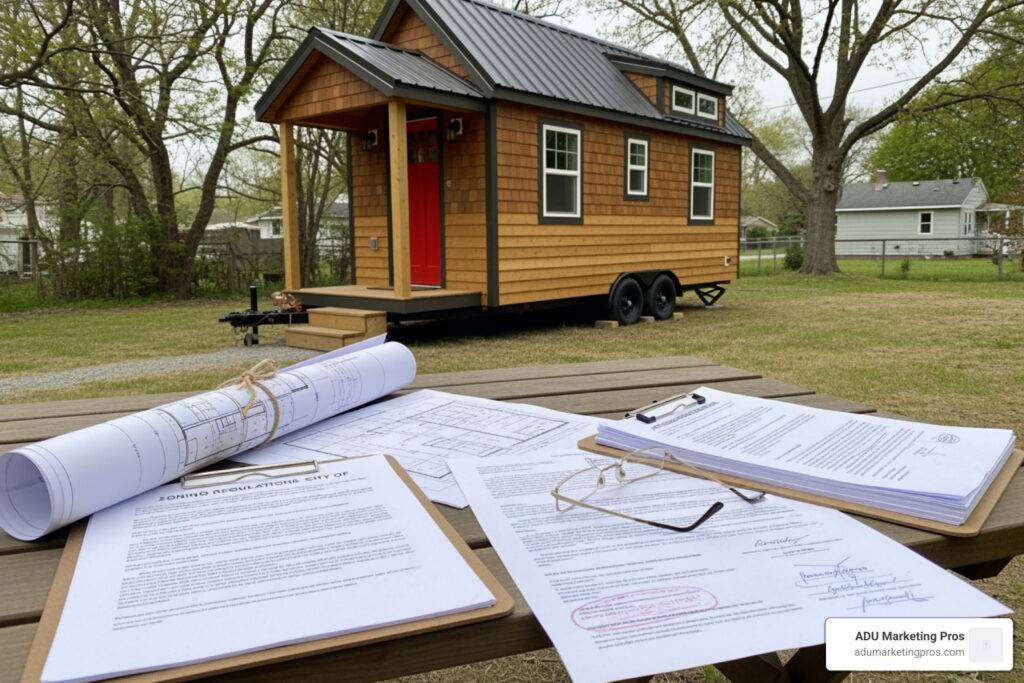
Tiny house regulations are the legal rules that determine where you can place your tiny home, how it must be built, and whether you can live in it full-time. These regulations vary dramatically by location and depend on whether your tiny home is on wheels (often classified as an RV) or a permanent foundation (treated as a dwelling unit).
The tiny house movement has exploded in popularity, with searches for “tiny homes” up 160% in the last five years. People are drawn to the promise of financial freedom and a minimalist lifestyle. But here’s the reality that stops many dreamers: a complex web of rules and regulations.
The biggest obstacle isn’t construction—it’s navigating the legal landscape. According to industry research, 73% of Americans say they’d consider living in a tiny house, yet regulatory problems remain the primary barrier. Will your city classify your tiny home as an RV that can’t be lived in full-time? Does your county have a minimum square footage requirement that excludes tiny homes? The International Residential Code (IRC) defines a tiny house as 400 square feet or less, but local zoning laws can still prohibit them.
This guide provides a clear roadmap to legal tiny living. We’ll break down the critical distinction between tiny homes on wheels and those on foundations, decode the difference between building codes and zoning laws, and show you how to research the regulations in your specific area. Understanding these rules is the foundation of every successful tiny home project.
Tiny house regulations terminology:
Wheels vs. Foundation: The Great Regulatory Divide
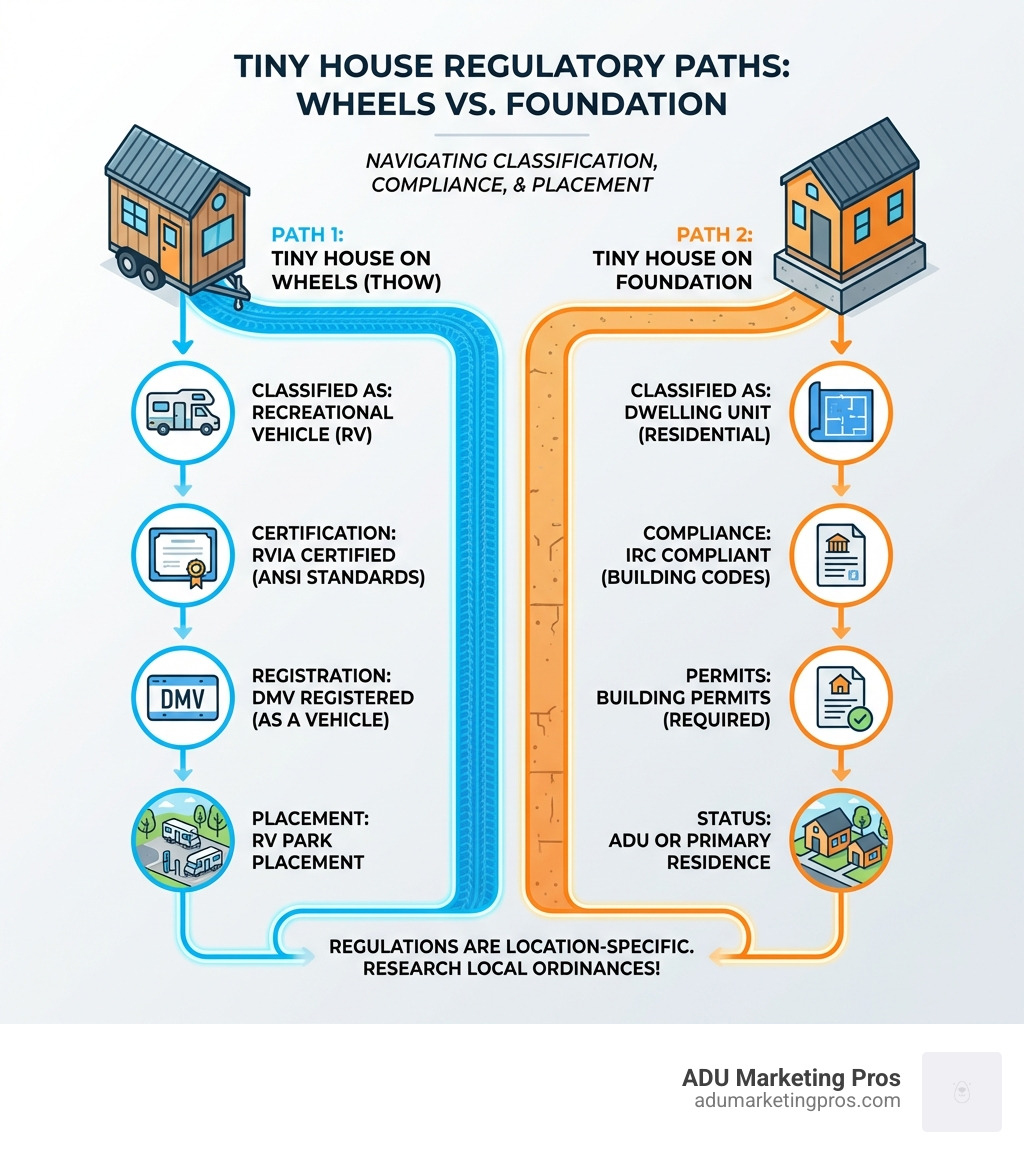
The most critical distinction in the eyes of the law is whether your tiny home is mobile or permanently affixed to the ground. This classification sets the stage for which set of tiny house regulations you’ll need to follow, impacting everything from building standards to where you can legally place your home.
Tiny Homes on Wheels (THOWs): The RV Classification
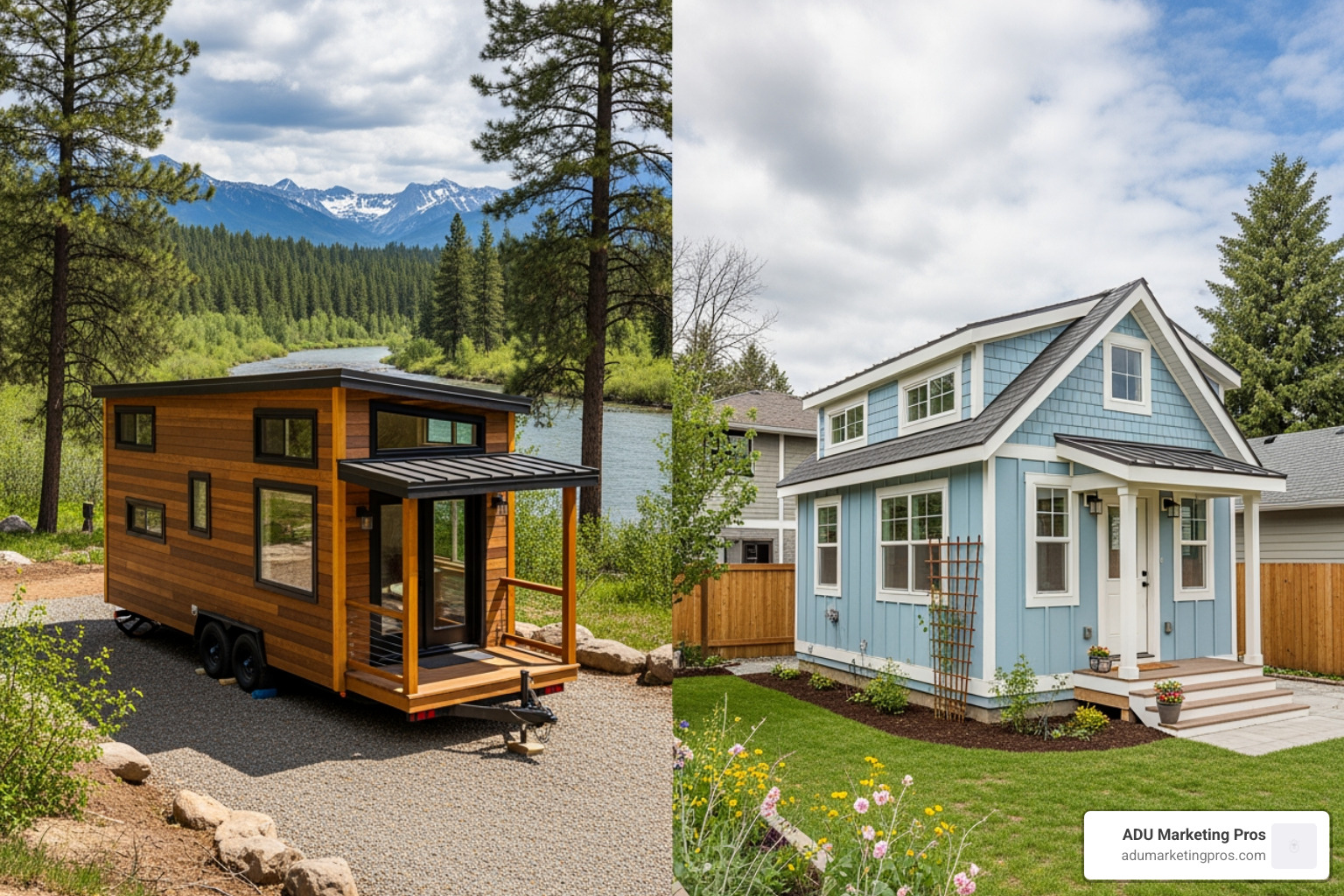
Tiny Homes on Wheels (THOWs) are built on a chassis and designed to be transportable. In California, THOWs are typically classified as Recreational Vehicles (RVs), which means they fall under a different regulatory umbrella than traditional housing.
To be considered a legitimate RV, a THOW must meet specific construction standards. Certification from the Recreational Vehicle Industry Association (RVIA) is the most widely recognized standard, ensuring safety and quality for roadworthiness and temporary occupancy. An alternative is the NOAH (National Organization of Alternative Housing) Standard, which inspects to a blend of ANSI and residential codes. This certification is crucial, as many RV parks and municipalities will not allow uncertified units. Once built and certified, a THOW must be registered with the Department of Motor Vehicles (DMV) for legal transport on public roads.
The biggest challenge for THOW owners is finding a legal place to park and live in full-time. Generally, RVs are permitted in:
- RV Parks and Campgrounds: These are designed for temporary stays. Many parks have rules limiting continuous occupancy, often to 30, 90, or 180 days, requiring owners to move periodically.
- Designated Tiny Home Communities: A growing number of these communities are emerging with specific regulations for THOWs, offering a more stable long-term solution.
- Private Property (with restrictions): This is where it gets tricky. Many California cities have strict zoning laws that prohibit full-time living in an RV on private land. California’s Information Bulletin 2016-01 also clarifies that RVs are for temporary or seasonal use, with specific occupancy restrictions. Financing a THOW also differs, typically requiring a personal or RV loan (chattel loan) with higher interest rates and shorter terms than a traditional mortgage.
The key takeaway is that while THOWs offer mobility, their RV classification often comes with significant restrictions on full-time living. For more information about tiny homes in San Francisco, we encourage you to explore our resources.
Tiny Homes on a Foundation: The Dwelling Unit Path
If your dream involves a more permanent setup, a tiny home on a foundation is treated as real property. This means it must adhere to the same rigorous building codes and zoning laws as any conventional home.
In California, the primary pathway to legality is often through its classification as an Accessory Dwelling Unit (ADU). ADUs are secondary housing units built on the same lot as a primary residence. California has been at the forefront of streamlining ADU regulations, making it significantly easier for homeowners to add these units. Cities like San Jose, Sunnyvale, Mountain View, and San Diego have all adapted their local ordinances to facilitate ADU construction.
Building a tiny home on a foundation as an ADU offers several advantages:
- Compliance with Residential Codes: It ensures your home meets safety and structural standards under the International Residential Code (IRC).
- Increased Property Value: As permanent, permitted structures, foundation-based tiny homes can add significant value to your property and can be financed with traditional mortgages or home equity loans.
- Primary Residence or Rental Income: An ADU can serve as a legal primary residence for an owner or be rented out to a tenant, providing a valuable source of passive income.
This path, while requiring more upfront permitting, provides the most stable and legally recognized form of tiny home living. For a deeper dive into the nuances of ADU vs Tiny House, we have a comprehensive guide that breaks down the differences.
Decoding the Rules: Building Codes vs. Zoning Laws
To understand the legal landscape, we need to separate two distinct categories: building codes and zoning laws. Think of building codes as telling you how to build safely, and zoning laws as telling you where you can build.
What are Building Codes? (How to Build)
Building codes establish minimum standards for construction to protect public health and safety. For tiny homes on foundations, the most relevant code is the International Residential Code (IRC), particularly with the adoption of Appendix Q.
Appendix Q provides specific guidelines for tiny houses (a dwelling of 400 square feet or less), addressing critical aspects like:
- Minimum Ceiling Heights: Habitable spaces, hallways, and bathrooms must have a ceiling height of at least 6 feet 8 inches. The only exception is the loft area, which has no minimum.
- Loft Requirements: Lofts used for sleeping or living must have a minimum floor area of 35 square feet and a minimum horizontal dimension of 5 feet. The loft ceiling can be lower but must be at least 3 feet at its lowest point if it contains a landing platform.
- Egress Windows & Access: Tiny homes must have emergency escape and rescue openings, just like a standard home. Access to lofts can be via ladders, ship’s ladders, or stairs. Ladders must have a rung width of at least 12 inches and be capable of supporting a 200-pound load. Stairs must meet specific tread and riser dimensions for safety.
- Structural Integrity: The IRC ensures the home is structurally sound, properly anchored to its foundation, and resilient against environmental loads like wind and snow.
In California, the California Building Standards Code (CBSC) governs residential structures. It sets general minimums, such as requiring at least one habitable room to be a minimum of 120 square feet, with other habitable rooms being at least 70 square feet. Following these codes ensures your tiny home is a safe and sturdy place to live. You can dive deeper into the specifics of IRC Appendix Q for a full understanding.
What are Zoning Laws? (Where to Build)
While building codes tell us how to build, zoning laws tell us where we can build. These regulations are dictated by local municipalities—your city or county—and can vary dramatically.
Zoning laws divide land into districts (e.g., residential, commercial) and specify what can be built in each. For tiny homes, key zoning considerations include:
- Land Use Regulations: Is the land zoned for residential use? Is it single-family or multi-family?
- Minimum Dwelling Size Requirements: This is a major hurdle. Many older zoning ordinances include minimum square footage requirements for any residential dwelling (e.g., 800 sq. ft.), which would prohibit a tiny home unless it’s classified as an ADU.
- Minimum Lot Size: Many residential zones have minimum lot size requirements that can be prohibitive for a tiny home as a primary residence on a new lot.
- Setbacks: These are the minimum distances a structure must be from property lines, which can constrain placement on smaller lots.
In California, many cities have updated their zoning to be more ADU-friendly, which directly benefits tiny homes on foundations. For example, Fresno’s zoning code permits tiny homes as permanent dwellings in various forms. Some progressive cities are also exploring concepts like “overlay districts” where tiny home rules are relaxed, or “form-based codes” that focus on the building’s physical form rather than strict use and size rules. These forward-thinking approaches are crucial for integrating tiny homes into communities. For more insights, consult A Government’s Guide to Tiny House Regulation and resources from organizations like the American Planning Association that advocate for modernizing zoning codes.
Your Local Playbook: Researching Tiny House Regulations in Your Area
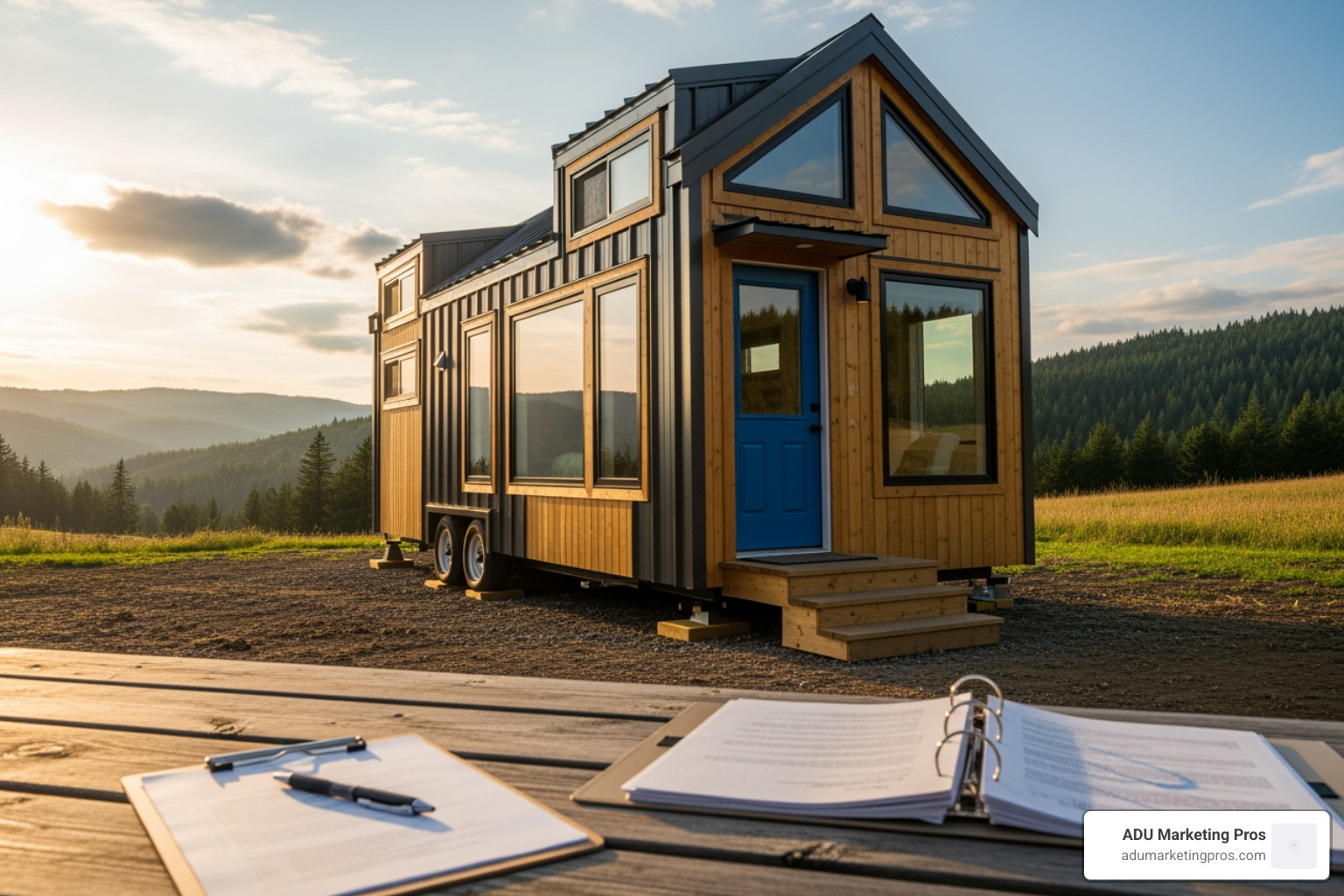
State laws provide a broad framework, but the real gatekeepers for your tiny home project are your local city and county planning departments. Their ordinances and interpretations will determine whether your dream can become a reality.
How to Find Your Local Ordinances
Start your research on your specific city or county’s planning department website. Use search terms like:
- “[Your City/County] zoning ordinance”
- “[Your City/County] Accessory Dwelling Unit”
- “[Your City/County] tiny home regulations”
- “[Your City/County] minimum dwelling size”
Prioritize results from official .gov websites for the most accurate information. Look for sections on zoning, building codes, and ADUs. For instance, cities like San Jose, Sunnyvale, and Mountain View have dedicated sections on their planning websites detailing ADU standards. To help you find local information, we’ve compiled resources on places in Southern California that allow tiny houses.
Key Questions to Ask Your Local Planning Department
Once you’ve done some research, a direct conversation with your local planning department is invaluable. Go in prepared with specific, targeted questions.
- Is there a minimum square footage requirement for a single-family dwelling in the zone I’m interested in? This is crucial, as many older codes have minimums that exclude most tiny homes.
- How does the city/county classify tiny houses on wheels (THOWs)? Can they be used for full-time residency on private land? This determines the legal placement of a mobile tiny home.
- Are Accessory Dwelling Units (ADUs) permitted on my property? What are the size and placement rules for ADUs in my zone? This is often the most viable legal pathway for tiny homes on foundations in California.
- What permits are required to place a tiny home on a foundation? This will typically include building permits and permits for utility connections.
- Can a tiny home be the primary residence on a vacant lot? This often depends on meeting minimum dwelling size requirements for the zone.
Understanding State vs. Local Tiny House Regulations
State laws, like those in California, often create the overarching framework. For example, California has enacted state-level ADU laws that largely preempt restrictive local ordinances, making it easier to build ADUs (and thus foundation-based tiny homes) across the state.
However, local ordinances still fill in the crucial details. A state can be considered “tiny-friendly,” but a specific city might still have its own unique requirements regarding setbacks, design standards, or utility connections. Jurisdictions like San Jose, Sunnyvale, and San Diego still publish their own detailed ADU standards and guides, which you must follow. It’s vital to check both levels of government.
The ADU Solution and Utility Essentials
For many aspiring tiny home dwellers, especially in California, classifying a tiny home as an Accessory Dwelling Unit (ADU) is the most viable and legally recognized pathway. This section explores why ADUs are so impactful and covers the practical necessities of utility hookups.
The Role of Accessory Dwelling Units (ADUs)
ADUs, often referred to as “granny flats” or “backyard cottages,” are independent housing units located on the same property as a primary single-family home. They have become a game-changer for tiny homes on foundations.
California has been a leader in promoting ADUs as a solution to the housing crisis. A series of state laws, including AB 68, AB 881, and SB 9, have significantly streamlined the permitting process, reduced or eliminated impact fees, removed owner-occupancy requirements, and forced local jurisdictions to approve compliant ADU applications within 60 days. This powerful state-level intervention has made it much easier for a tiny home on a foundation to be legally built and occupied as an ADU.
The benefits of the ADU pathway are numerous:
- Legal Recognition: Your tiny home is fully recognized as a legitimate dwelling unit.
- Increased Affordability: ADUs provide a more affordable housing option compared to traditional homes.
- Property Value Improvement: A legally permitted ADU significantly increases the value of your property.
This pathway is particularly relevant for our clients in California, where ADU construction is booming in places like Los Angeles, San Diego, and the San Francisco Bay Area. To learn more about this option, check out our guide on Prefab Granny Flats in California: Granny’s Got a Brand New Pad.
Key Differences in Tiny House Regulations for THOWs vs. Foundation Homes
This table summarizes the crucial distinctions for navigating the regulatory maze:
| Feature | Tiny House on Wheels (THOW) | Tiny House on Foundation |
|---|---|---|
| Governing Code | RVIA/ANSI Standards (e.g., ANSI A119.5) | International Residential Code (IRC) & California Building Standards Code (CBSC) |
| Legal Status | Recreational Vehicle / Personal Property | Real Estate / Dwelling Unit (often ADU) |
| Placement | RV Parks, Designated Communities, Limited temporary private land use | Zoned Residential Lots (as ADU or Primary Dwelling) |
| Utilities | RV-style hookups (hose, power cord, holding tanks) | Permanent utility connections (plumbed water, sewer, grid electricity) |
| Permitting | DMV Registration (for road travel) | Building & Zoning Permits, Certificate of Occupancy |
Requirements for Utility Hookups
Adequate water, sewer, and electricity are non-negotiable for any legal dwelling. Without proper utility hookups, your tiny home may not be considered habitable, and you will not receive a certificate of occupancy.
- For Tiny Homes on a Foundation: These require permanent connections to municipal water, sewer, and electricity grids. This is a significant construction project involving trenching, plumbing, and electrical work that must be inspected and approved by your local building department. The cost for utility hookups can range dramatically from $5,000 to over $30,000, depending on the distance from the main lines and the complexity of the site. Off-grid systems, such as solar panels with battery storage, rainwater catchment, or composting toilets, are an attractive idea but can be very difficult to get permitted for a primary or ADU dwelling. Health departments have strict regulations, and many jurisdictions require a connection to the municipal sewer if it is available. Getting approval for off-grid systems often requires extensive engineering reports and specialized permits.
- For Tiny Homes on Wheels (THOWs): Since THOWs are classified as RVs, they typically use RV-style hookups. This involves connecting a freshwater hose, a sewer hose to a septic or sewer cleanout, and a power cord to an electrical pedestal. While simpler, this setup reinforces the temporary nature of the dwelling. If you plan to keep your THOW stationary for extended periods on private property (where allowed), some jurisdictions might require more permanent, professionally installed utility solutions rather than simple RV hookups.
Frequently Asked Questions about Tiny House Rules
We understand that navigating tiny house regulations can feel overwhelming. To help clarify some common concerns, we’ve addressed a few frequently asked questions:
Can I just buy land and put a tiny house on it?
This is a common dream, but the answer is almost always: “It depends entirely on local zoning.” You must first verify that the land is zoned for residential use and that a tiny home can be considered the primary dwelling. Even then, you will face major hurdles. Most zoning codes have minimum dwelling size requirements (e.g., 800-900 sq. ft. in some areas) that a tiny home cannot meet. You will also need to address setbacks, lot coverage rules, and, most critically, utility access. Bringing water, sewer/septic, and electricity to a vacant lot can be prohibitively expensive. In California, placing a tiny home on a vacant lot as a primary residence means it must meet all local codes for a conventional home, making the ADU route on a lot that already has a primary residence a much more straightforward and cost-effective path.
Are there any states that are universally “tiny house friendly”?
While states like California, Oregon, and Colorado are often highlighted for their progressive tiny house regulations, no state is universally friendly. The legality of tiny living is almost always determined at the city and county level. A state can pass a law that enables tiny homes, but the local planning and building departments are the ones who interpret and enforce the rules. California is a prime example. While state laws have forced the door open for ADUs, specific cities like San Jose, Sunnyvale, and San Diego still have their own detailed ordinances regarding design, parking, and fees that you must consult. Therefore, thorough local research is non-negotiable.
How are tiny homes insured and taxed?
This is a critical question that directly impacts your long-term costs. The answer depends entirely on whether the home is on wheels or a foundation.
- Insurance: For a Tiny Home on Wheels (THOW), you’ll need a specialized policy. It’s often a hybrid between an RV policy and a homeowner’s policy. It’s crucial to find an insurer who understands THOWs and can cover it for liability, personal property, and physical damage, both when it’s parked and during transit. For a tiny home on a foundation, insurance is much simpler. It is considered an ADU or primary dwelling and is typically added to or covered by a standard homeowner’s insurance policy, just like a garage or any other structure on the property.
- Taxes: For a THOW, it is considered personal property and is taxed as such, similar to a vehicle or RV. This usually involves an annual registration fee paid to the DMV. For a tiny home on a foundation, it is considered real property. When you build a permitted tiny home ADU, the county assessor will reassess your property’s value to include the new structure. This will increase your annual property taxes, but it also reflects the added equity and value the ADU brings to your entire property.
How do tiny home regulations impact affordability?
The impact of regulations on affordability is a double-edged sword. On one hand, strict regulations, high permit fees, and mandatory utility connections can significantly increase the cost of going tiny. Meeting the same building codes as a much larger home can add complexity and expense. On the other hand, when regulations are adapted to allow for smaller dwellings like ADUs, they can dramatically improve affordability. By legalizing and streamlining the construction of tiny homes as ADUs, cities like San Jose and San Diego are creating much-needed housing stock that is inherently more affordable than traditional single-family homes, especially in expensive markets like California.
Conclusion: Building Your Dream on a Solid Legal Footing
Navigating tiny house regulations requires diligence, patience, and thorough research, but it is the most critical step in turning your dream of a tiny home into a tangible reality. The journey might seem daunting, but armed with the right information, you can confidently move forward.
The key takeaways are clear:
- Understand the fundamental difference between tiny homes on wheels (often treated as RVs) and tiny homes on foundations (classified as dwelling units, typically ADUs in California). This distinction dictates the codes and permits you’ll need.
- Decipher the roles of both building codes (how to build safely) and zoning laws (where you can build). Even if a state is progressive, local ordinances hold the final say.
- Empower yourself with local knowledge. Use online resources and, most importantly, engage directly with your city or county planning department. Ask precise questions to get accurate answers.
By doing your homework, you can ensure your tiny home is not just a beautiful space, but also a safe, legally compliant, and valuable asset. For those in California looking to explore this path, finding the right partner to guide you through the intricacies of design, permitting, and construction is crucial. We specialize in connecting you with the expertise you need.