
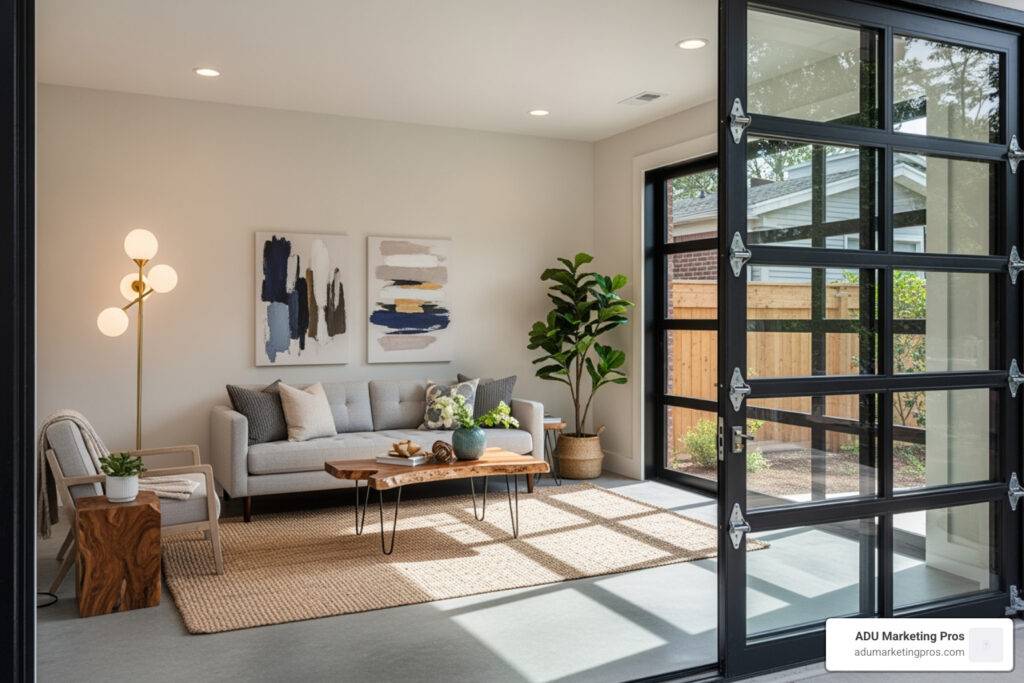
Why Converting Your Garage to Living Space Makes Sense
Convert a garage to living space and you’ll open up valuable square footage without sacrificing yard space or building from scratch. Here’s what you need to know:
Quick Answer: Converting a Garage to Living Space
- Average Cost: $6,000 to $27,500 (about one-third the cost of a traditional home addition)
- Timeline: 3-6 weeks with professionals, several months for DIY
- Key Steps: Planning, permits, structural work, insulation/HVAC, utilities, finishing
- ROI: Homeowners typically recoup about 80% of project costs
- Requirements: Building permits, proper insulation, egress windows, ceiling height minimums
- Popular Uses: Home office, guest suite, rental ADU, gym, art studio
Most garages sit half-empty, collecting boxes and tools nobody uses. Meanwhile, you’re cramped for space inside your home.
A garage conversion changes that equation fast. You’re working with an existing structure—foundation, walls, and roof already in place. That means lower costs and faster timelines compared to building an addition or a detached ADU.
The numbers back this up. At an average cost of $16,500, you’re spending less than a third of what a traditional home addition would run. And if you’re in California, current ADU regulations have made these conversions easier than ever to approve.
But this isn’t just about saving money. It’s about maximizing what you already own. That underused garage can become a revenue-generating rental unit, a private home office that helps you focus, or a guest suite that gives visiting family their own space.
The process has real problems—permits, building codes, and construction complexities. Yet thousands of homeowners complete successful conversions every year. This guide walks you through every step, from initial planning to final paint colors, so you can make smart decisions and avoid costly mistakes.
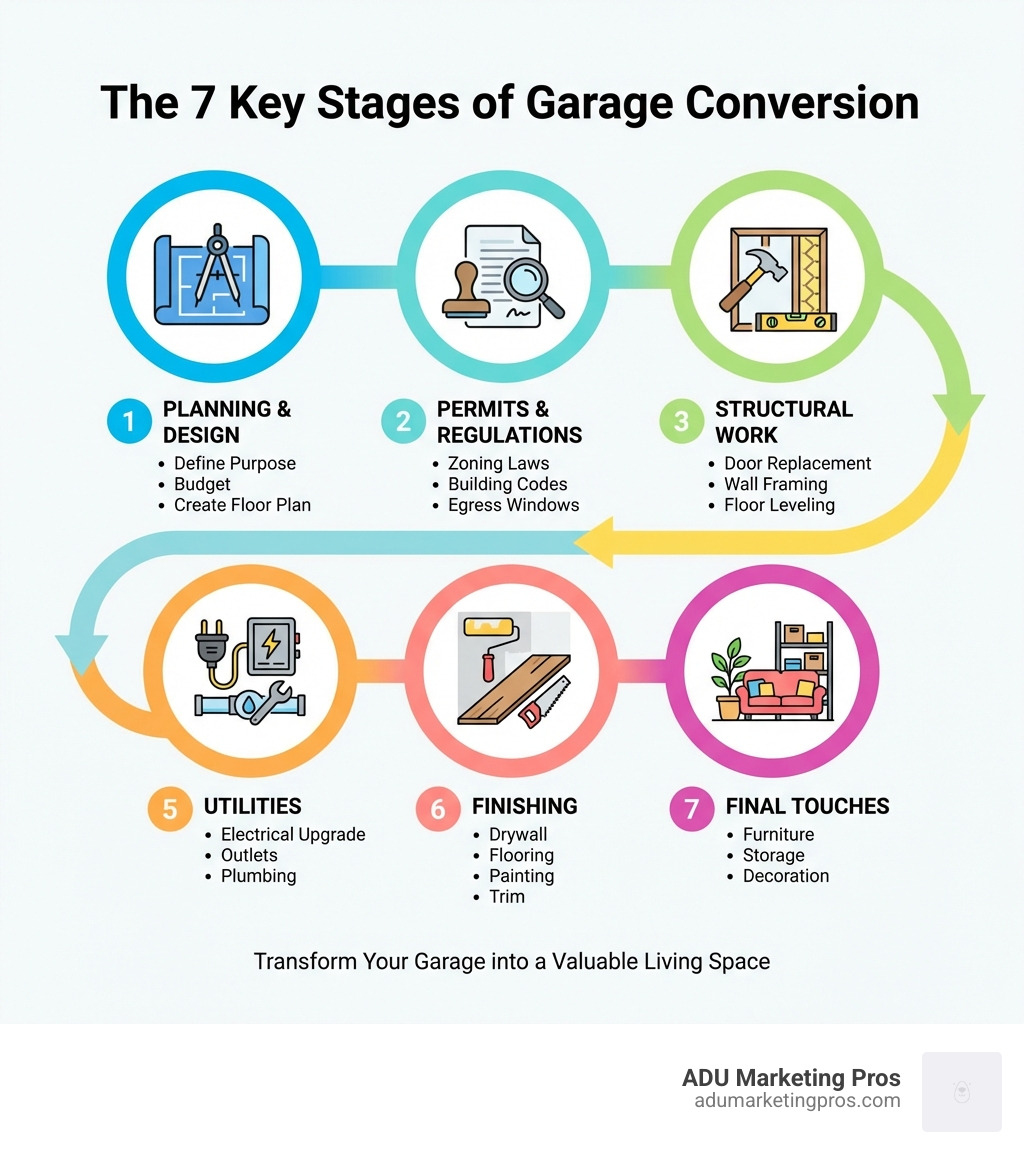
Convert a garage to living space basics:
Why Convert Your Garage? Weighing the Pros and Cons

Before we dive into the nitty-gritty, let’s consider why converting your garage might be the perfect solution for your home, along with a realistic look at the potential downsides.
The Main Benefits of a Garage Conversion
Changing your garage into a functional living area offers a multitude of advantages:
- More Living Space: This is often the primary motivator. Whether you need an extra bedroom, a dedicated workspace, or a cozy guest suite, a garage conversion provides additional square footage without altering your home’s footprint. “Because our house is small, converting the garage would mean losing storage space to gain living space. After much consideration, we decided the extra living space was more important to us,” shares a homeowner from The Honeycomb Home.
- Cost-Effective Expansion: Building a new home addition can be incredibly expensive. A garage conversion, on the other hand, uses an existing structure, often costing less than one-third the price of a traditional addition. We’re talking an average of $16,500 for a conversion compared to potentially hundreds of thousands for a new build.
- Potential for ADU rental income: In California, where housing is at a premium, converting your garage into an Accessory Dwelling Unit (ADU) can provide a significant source of passive income. Many communities are actively encouraging ADU development, making it a smart financial move.
- Increased Home Value: A well-executed garage conversion can significantly boost your home’s market value. Homeowners typically recoup about 80% of their project costs, and in some cases, even more, especially if the conversion adds a bedroom or bathroom.
- Preserving Yard Space: Unlike building an addition, a garage conversion doesn’t eat into your precious outdoor space. You get more interior square footage while keeping your garden, patio, or lawn intact.
Potential Drawbacks and Challenges
While the benefits are compelling, it’s crucial to be aware of the potential drawbacks:
- Loss of Storage Space: Garages often serve as the main storage area for tools, seasonal decorations, and miscellaneous items. Converting it means you’ll need to find alternative storage solutions, which could involve decluttering or investing in sheds.
- Loss of Parking: You will lose a covered parking spot, which can be a drawback in neighborhoods with limited street parking. However, it’s important to note that recent California laws have largely eliminated off-street parking requirements for most ADU conversions, particularly for properties located near public transit. You should still check your local city’s specific ordinances to confirm the rules for your property.
- Permit Complexities: Navigating local zoning laws and building codes can be a bureaucratic maze. Permits are almost always required for structural, electrical, or plumbing changes, and requirements vary greatly by city. For example, in Los Angeles, San Jose, or San Diego, specific ADU guidelines will apply.
- Resale Considerations: While a conversion can add value, an illegally converted or poorly executed one can deter buyers. Additionally, losing covered parking might be a negative for some potential homeowners, depending on the neighborhood.
- Costly Installations: Adding plumbing for a bathroom or kitchen, or extending your HVAC system, can significantly increase the project’s cost. A simple bedroom conversion might cost $12,000, but one with plumbing for a bathroom or kitchen can “cost closer to $50,000.”
Alternatives to Consider
If a garage conversion isn’t feasible or desirable for your situation, we have other ways to add living space:
- Basement Remodel: If you have an unfinished basement, this can be another excellent way to add habitable space, often with fewer exterior modifications.
- Attic Conversion: An unused attic can be transformed into bedrooms or a private retreat, provided it meets ceiling height and structural requirements.
- Building a Detached ADU: If you have sufficient yard space, constructing a brand-new detached ADU offers maximum flexibility in design and privacy.
- Shed Conversion: For smaller, non-habitable needs like a backyard office or art studio, a shed conversion can be a simpler, less costly alternative.
Your Step-by-Step Guide to Convert a Garage to Living Space
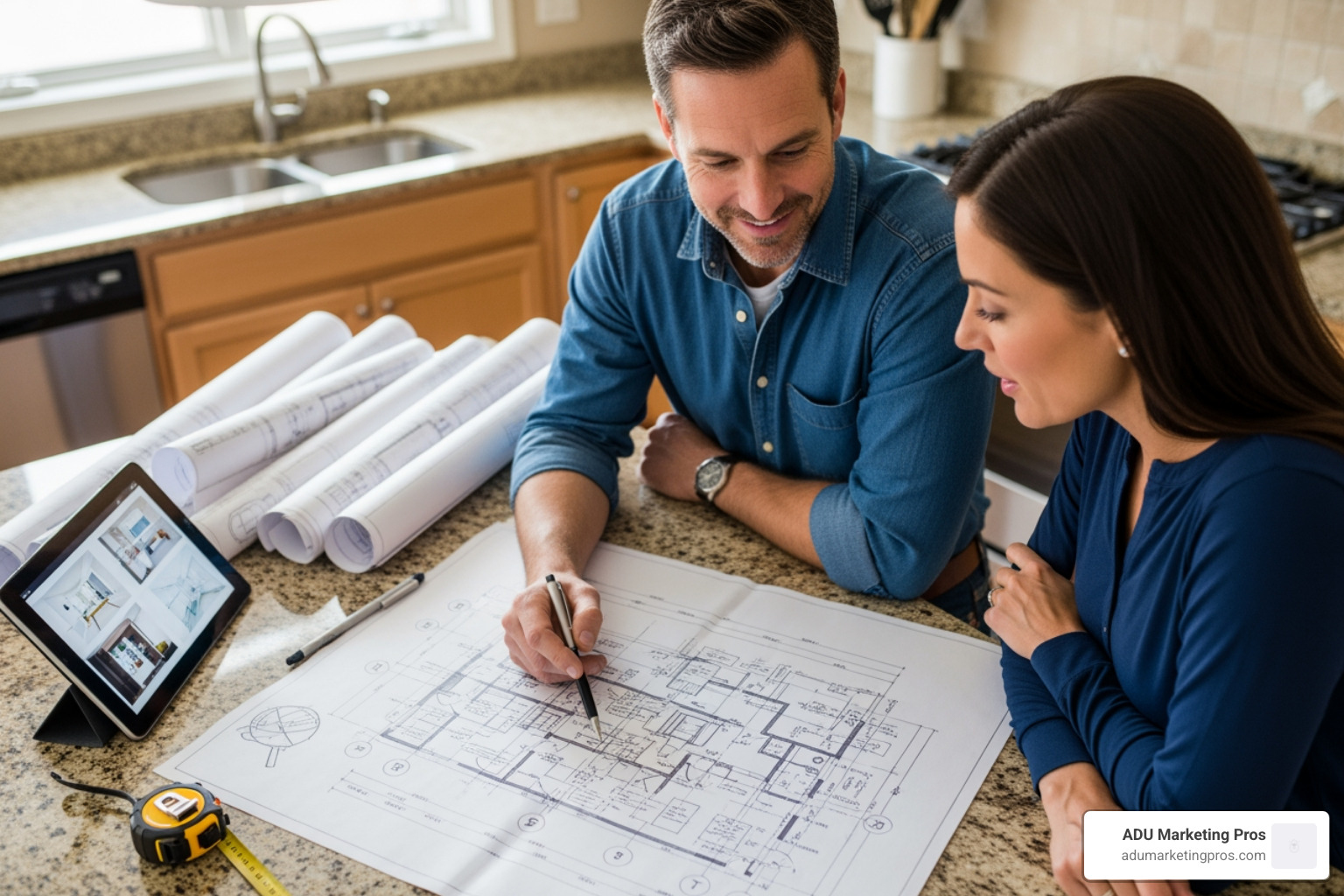
Ready to roll up your sleeves and transform that dusty old garage? Here’s our comprehensive guide to help you convert a garage to living space successfully, from initial sketches to the final coat of paint.
Step 1: Planning and Design
Every successful renovation starts with meticulous planning. This phase is where your vision takes shape.
- Define Purpose: What will your new space be? A home office, a guest suite, an ADU, a gym, or an art studio? Your decision will dictate the design and required utilities.
- Budgeting: Establish a realistic budget from the outset. This will help you make informed decisions about materials and professional help.
- Create a Floor Plan: Even if you’re handy, getting a professional floor plan drawn is a smart move. Samia Jawab of The Right Triangle advises, “Before hiring a contractor, make sure you have a floor plan drawn by a professional such as an interior design drafter.” This helps prevent costly mistakes and ensures your design meets local building codes. You can also explore our resources for ADU Building Plans.
- Hire Professionals: While some tasks can be DIY, complex projects involving structural changes, electrical work, or plumbing often require licensed professionals.
Step 2: Navigating Permits and Building Regulations
This is arguably the most critical and often most challenging step. Ignoring permits can lead to fines, forced demolition, and issues when reselling your home.
- Zoning Laws: Your local planning department (e.g., in Los Angeles, San Jose, San Diego, or Mountain View) will have specific zoning regulations. These dictate what kind of structure can be built and its intended use. For instance, converting a detached garage into a self-contained living space often falls under Accessory Dwelling Unit (ADU) regulations.
- Building Codes: These codes ensure the safety and habitability of your new space. Key areas include:
- Ceiling Height: Most codes require a minimum ceiling height, often 7 feet.
- Egress Windows: All sleeping rooms must have at least one emergency egress window or exterior door for safety. These have specific size requirements (e.g., at least 5.7 sq ft opening with minimum 20 inches wide and 24 inches high).
- Electrical Requirements: Outlets must be spaced no more than six feet apart along walls.
- Insulation: Requirements per California Energy Code (Title 24).
- Heating: Must be able to maintain 68 degrees at 3 feet above the floor.
- Smoke and CO Alarms: Required in all habitable spaces.
- Permit Process: Contact your city’s planning and building department. In California, cities like San Jose, Palo Alto, and San Diego have specific guides for garage conversions or ADUs. For example, Contra Costa County outlines detailed requirements for Residential Garage Conversion.
- ADU Permit Process: This internal resource can help you understand the journey.
- California ADU Regulations: Stay up-to-date with state-specific rules.
Here’s a list of common permit requirements you might encounter:
- General building permit
- Residential infill (if adding square footage)
- Mechanical HVAC permit
- Electrical permit
- Plumbing permit
- Site plan and existing/proposed floor plans
- Structural calculations (if applicable)
“Getting a permit can be tricky in certain locations, so it’s a good idea to check before getting too deep into the project,” advises Erik Yesayan, principal of Pattern Planning & Development Inc.
Step 3: Structural and Foundational Work
Once permits are secured, the real change begins.
- Garage Door Replacement: This is a defining moment. Options include replacing it with a solid wall, a wall with windows, or insulating the existing garage door for climate control. Nadya Sidler of Sidler Designs suggests, “You can really maximize natural light by replacing the garage door with large windows or French doors.” However, Samia Jawab of The Right Triangle reminds us to “decide on how you want your house to look from the outside.”
- Wall Framing: Most garages aren’t built for living. You’ll likely need to add interior framing to accommodate insulation, drywall, and electrical wiring. Masonry garages, in particular, will require this.
- Raising the Floor: Garage floors are often uneven and sloped for drainage. “Don’t overlook the slab when converting a garage into a living space. Most garage floors are sloped for drainage, and older slabs often have uneven corners or height differences,” warns Tim Steiner of Steiner Remodel, LLC. You’ll need to level the concrete slab with a self-leveling compound or build a subfloor to create a comfortable, even surface.
Step 4: Insulation, HVAC, and Weatherproofing
Comfort is key in a living space, and that means proper climate control.
- Wall and Ceiling Insulation: Garages are rarely insulated to residential standards. You’ll need to add insulation to walls and ceilings. Spray foam, fiberglass roll insulation, or rockwool are common choices. Spray foam is often ideal for its sealing capabilities and thermal/moisture control.
- Ductless Mini-Split Systems: For heating and cooling, “a ductless mini-split system is the most efficient way to add heating and cooling,” says Jack Carr, owner of Rapid Heating and Cooling. Nadya Sidler of Sidler Designs agrees, noting they “don’t require ductwork and can efficiently heat or cool your converted garage.”
- Weatherizing Doors and Windows: Garage doors and windows are not typically weatherized like those in a home. George Varga, owner of Above & Beyond Construction, emphasizes, “Garages weren’t built for insulation, so any openings must be thoroughly weatherized.” This involves installing insulated exterior doors, high-quality weatherstripping, and caulking frames.
- Installing New Windows: If your garage lacks natural light, adding windows is essential. Ryan Dalley of Michigan Screens states, “choosing the right windows is key to making the space feel comfortable, functional, and energy-efficient.”
Step 5: Utilities – Electrical and Plumbing
These are the systems that bring your new living space to life.
- Upgrading Electrical Panel: Adding new lights, outlets, and potentially an HVAC system can strain your existing electrical panel. Corey Gilgan, owner of Oregon Generators, advises, “If you’re adding a kitchen, bathroom, HVAC, or laundry, your current service may not support the increased load.” An upgrade might be necessary.
- Adding Outlets and Installing Lighting: Plan for ample outlets to meet modern needs. For lighting, Benjo Hamo with BENJO Interior Design suggests, “Plan the lighting in layers to avoid the harsh, cold feeling garages often have.” Combine ambient, task, and accent lighting for a comfortable atmosphere.
- Plumbing for Kitchens or Bathrooms: If your conversion includes a bathroom or kitchenette, plumbing installation is a major undertaking and can be the most expensive part of the project. This involves running water supply and drainage lines. If your new space is lower than the main house’s sewer line, a pump system might be required. Bruce Morse of Remodel Seattle LLC notes, “The first major hurdle… is setting up the infrastructure to connect the new building (or conversion) to power, water, and sewer.”
Step 6: Finishing Touches for a Livable Space
This is where your converted garage truly starts to feel like home.
- Drywall Installation: After all the behind-the-walls work (framing, electrical, plumbing, insulation) is complete, drywall creates smooth, finished surfaces.
- Flooring Options: Given that garage floors are often concrete, you have many options once leveled. Popular choices include laminate, engineered wood, tile, or luxury vinyl plank (LVP).
- Painting, Trim, and Molding: Choose colors that complement the rest of your home. George Varga of Above & Beyond Construction recommends, “Design with cohesion in mind — use consistent flooring, paint colors, and trim that match the rest of your home.”
- Smart Storage Solutions: Garages inherently lack closet space. Nadya Sidler of Sidler Designs suggests, “Plan for smart storage by incorporating built-in cabinetry or multipurpose furniture.” Kenji from La-Z-Boy Furniture adds that “A sofa bed with a premium mattress is all you need for comfort in a garage-converted living space — multi-functional, cozy, and very versatile.”
Decoding the Costs and Value of a Garage Conversion
Understanding the financial implications is crucial when you convert a garage to living space. Let’s break down the costs, the return on investment, and how it might affect your property taxes.
How much does it cost to convert a garage to living space?
The cost to convert a garage to living space can vary dramatically based on location, size, and the complexity of your project.
- Average Cost: Garage conversions generally cost from $6,000 to $27,500, with an average cost of around $16,500. DIY projects can start as low as $6,000, while high-end conversions by a contractor can reach $27,500 or more.
- Factors Influencing Cost:
- Size of Garage: A single-car garage will naturally cost less than a two-car garage.
- Scope of Work: A simple bedroom without plumbing is far less expensive than a full ADU with a kitchen and bathroom.
- Plumbing Additions: As mentioned, adding plumbing for a bathroom or kitchen can significantly increase the cost, potentially pushing the project closer to $50,000.
- Permit Fees: Garage conversion permits typically range between $300 and $1,000, but can be higher depending on the scope and location (e.g., in San Francisco or Los Angeles).
For a detailed estimate, use our Garage Conversion Cost Calculator.
Here’s a general cost breakdown for common renovation elements:
| Renovation Element | Approximate Cost (HomeAdvisor/Angi) |
|---|---|
| Garage conversion permit | $300 to $1,000 |
| Garage insulation | $0.40 to $6 per board foot |
| Wall framing | $4 to $17 per square foot |
| Windows | $500 to $2,000 per window |
| Ducts and vents | $300 to $5,000 |
| Electrical outlets | $120 to $350 per outlet installed |
| Plumbing (if added) | $1,500 to $4,000 |
| Dumpster rental | $390 to $1,590 |
DIY vs. Hiring a Professional
Deciding whether to tackle the project yourself or hire a professional is a major decision.
- Cost Savings of DIY: If you have the skills, time, and patience, a DIY approach can save you a significant amount on labor costs.
- Time Commitment: While professionals can complete a conversion in three to six weeks, a DIY project can easily stretch for several months, especially if you’re learning as you go.
- Complexity of Permits: The permit process, particularly in California’s competitive housing markets like San Jose or San Francisco, can be daunting. Professionals are often well-versed in local regulations.
- Electrical and Plumbing Risks: These are not areas for amateur mistakes. Improper installation can be dangerous and costly to fix.
- Benefits of a General Contractor: Hiring a general contractor, especially a design-build firm, can streamline the process. Matt of Construction Corps advises, “First things first — nail down your design before diving into the build.” A good contractor handles design, permits, and manages subcontractors, ensuring the project stays on schedule and meets code.
Impact on Home Value and Property Taxes
- Recouping ~80% of Project Cost: Converting a garage into a living space can add value to your home, with homeowners typically recouping about 80% of the project cost. This makes it a strong investment compared to many other home renovations.
- How a Conversion Affects Resale Value: A properly permitted and well-designed conversion, especially one that adds a bedroom or a legal ADU, can significantly increase your home’s appeal and value. However, if the conversion is done illegally, poorly, or if it eliminates much-needed parking in a dense urban area like Los Angeles or San Francisco, it could negatively impact resale value. It’s wise to consult with a local real estate agent about market preferences.
- Impact on ADU property taxes: Adding square footage and functionality to your home will likely increase your property’s assessed value, leading to higher property taxes. This is a common consequence of any significant home improvement.
Inspiring Garage Conversion Ideas to Maximize Your Space
The beauty of a garage conversion is its versatility. With a blank slate, you can create almost any space you dream of. Here are some popular and creative ideas:
The Ultimate Home Office
With remote work becoming increasingly common, a dedicated home office is a game-changer. A converted garage offers separation from the main house, helping you maintain a work-life balance.
- Natural Light: Add large windows or even French doors to flood the space with light. Garage Living suggests that windows can provide a relaxing view of nature.
- Soundproofing: If your garage is near a busy street or loud neighbors, consider soundproofing the walls and door to minimize distractions.
- Creating a space to focus on your work without distractions: This is the core benefit. Add built-in storage, comfortable seating, and robust Wi-Fi to create your ideal productivity hub.
A Private Guest Suite or ADU
This is one of the most popular and value-adding conversions, especially in California. A guest suite or ADU offers privacy for visitors or can generate rental income.
- Garage to ADU Conversion: This often involves adding a kitchenette, a full bathroom, and a private entrance.
- Kitchenette: Even a small one with a sink, mini-fridge, and microwave can make guests feel at home. For design inspiration, articles like This Is STILL the Best Way to Design a Kitchen can offer valuable insights into functional layouts.
- Rental Income Potential: In places like San Jose, Los Angeles, or San Diego, a legal ADU can command significant rental income, making your conversion a lucrative investment.
A Dedicated Home Gym or Studio
Say goodbye to expensive gym memberships or cramped workout spaces.
- Rubber Flooring: Essential for shock absorption and protecting the subfloor.
- Mirrored Walls: Great for checking form during workouts.
- Proper Ventilation: Crucial for air circulation during strenuous activity.
- Space for Equipment: From free weights to a yoga studio or even a boxing ring, a garage offers ample room. If you’re an artist, convert it into an art studio with clear-paneled doors and focused track lighting.
Frequently Asked Questions about Garage Conversions
We get a lot of questions about converting garages. Here are some of the most common ones we hear:
How long does it take to convert a garage to living space?
The timeline for a garage conversion can vary. For professionals, it generally takes from three to six weeks to complete. However, if you’re undertaking a DIY garage conversion, it can take several months, especially if you’re dealing with permits and inspections. Factors like the complexity of the project (e.g., adding plumbing vs. just a bedroom) and how quickly permits are approved will also impact the timeline.
Do I need an architect for a garage conversion?
You may need an architect, especially if your municipality requires plans to be drawn and stamped as part of the permit application. Even if not legally required, hiring an architect or an interior design drafter is a good idea for full garage conversions into habitable space. They can provide design expertise, ensure compliance with building codes, and help you steer the often-complex local regulations in areas like Los Angeles or the San Francisco Bay Area.
Can I convert a detached garage into a self-contained living space?
Yes, converting a detached garage into a self-contained living space is one of the most popular types of Accessory Dwelling Unit (ADU) projects in California. State laws have been streamlined to encourage these conversions. The process involves changing the building’s legal use, which requires permits and adherence to building codes for habitable dwellings. This includes meeting standards for insulation, egress, and having facilities like a kitchen and bathroom. For a clear example of what’s required, you can review official guidelines from a major city like the Los Angeles Department of Building and Safety.
Conclusion
Converting your garage into living space is a powerful way to unlock your home’s hidden potential. It’s a cost-effective, value-adding project that provides the extra square footage you need without sacrificing your yard. As we’ve covered, a successful conversion hinges on a few key pillars: meticulous planning and design, careful navigation of local permits and building codes (especially in states like California), and making smart choices about structural work, utilities, and insulation.
Whether you envision a private home office, a comfortable guest suite, or a revenue-generating ADU, the journey from a dusty garage to a beautiful, functional room is achievable. Remember the critical steps: level the floor, insulate thoroughly, ensure proper egress and ventilation, and plan your electrical and plumbing with a professional. While challenges exist, the reward is a space that enhances your lifestyle and boosts your property’s value, with homeowners often recouping around 80% of their investment.
This transformation is more than just a renovation; it’s a smart investment in your home’s future. By following this guide, you’re well-equipped to make informed decisions and turn your garage conversion dream into a reality.