
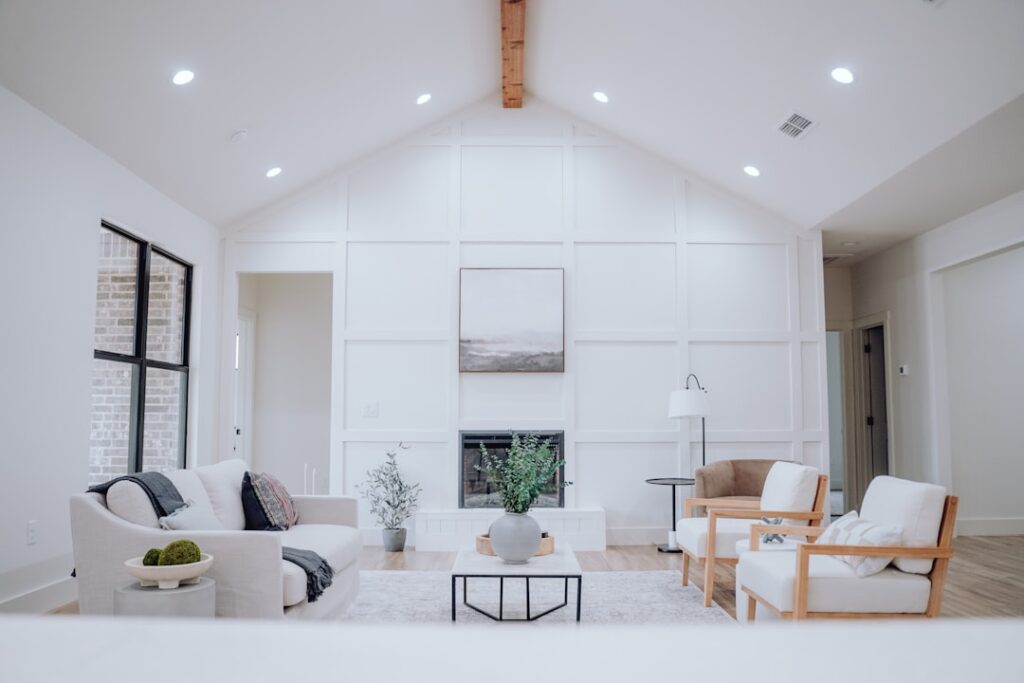
Is an Attached Garage Conversion Worth It? Here’s What You Need to Know
Attached garage conversion is one of the most cost-effective ways to add livable square footage to your home — without building an addition or changing your property’s footprint. In an era where housing prices are soaring and land is at a premium, homeowners are looking inward to find space. The garage, often relegated to a storage unit for forgotten holiday decorations and lawn equipment, represents a massive opportunity for equity growth and lifestyle improvement.
Quick answer for homeowners evaluating feasibility:
| Factor | What to Expect |
|---|---|
| Average cost (2025) | $16,665 (range: $6,000–$27,000+) |
| Cost per square foot | ~$40 (basic: $25, high-end: $75+) |
| Typical ROI | Up to 80% |
| Timeline | 2–6 weeks for most projects |
| Permits required? | Yes — building, electrical, mechanical, and sometimes plumbing |
| Best uses | Guest suite, home office, ADU/rental, gym, playroom |
Why the Attached Garage is Your Best Asset
Most attached garages are underused. They collect boxes, bikes, and tools — while homeowners pay for hotel rooms when family visits or rent a coworking space to focus. That unused square footage is already there, already under your roof, and already connected to your home’s systems. Unlike a detached structure, an attached conversion feels like a natural extension of your hallway.
That’s what makes an attached garage different from a detached one. The walls, electrical panel, and plumbing stack are close. That proximity makes the conversion faster, cheaper, and less disruptive than almost any other home improvement project of the same scale. You aren’t digging a new foundation or running 50 feet of trenching for utilities. You are essentially “finishing” a room that already has three walls and a roof.
However, it’s not as simple as clearing out the clutter and adding drywall. Permits, structural checks, zoning rules, fire separation requirements, and utility upgrades all come into play — and skipping any of them can cost you far more than the conversion itself in the form of fines or issues during resale. This guide walks you through everything — costs, codes, design ideas, and the step-by-step process — so you can decide if a conversion makes sense for your home and budget.
Discover more about Attached garage conversion:
The Benefits and ROI of an Attached Garage Conversion
When we talk to homeowners in San Jose or Los Angeles, the first question is usually: “Will I get my money back?” The short answer is a resounding yes. An Attached garage conversion is widely considered one of the smartest investments in residential real estate, often yielding an ROI of up to 80%. In high-demand markets, this conversion can actually pay for itself within a few years if used as a rental unit.
Why is the return so high? Because you aren’t paying for the most expensive parts of a traditional home addition: the foundation and the primary shell. The “bones” of the room already exist. By leveraging the existing structure, you’re essentially “finding” 400 to 500 square feet of living space that was previously just housing a lawnmower and some spiderwebs. In cities like San Francisco, where the cost per square foot can exceed $1,000, adding 400 square feet of habitable space can increase your home’s value by hundreds of thousands of dollars.
Cost-Effectiveness vs. Traditional Additions
If you were to build a 20-foot by 20-foot room from scratch in the Bay Area, you could easily look at costs between $50,000 and $100,000. In contrast, a high-quality garage conversion typically runs between $15,000 and $30,000, depending on the level of finishes. This lower entry point allows homeowners to achieve their space goals without taking on massive debt.
| Project Type | Estimated Cost | Added Value/Utility |
|---|---|---|
| New Room Addition | $50,000 – $100,000+ | High, but high entry cost |
| Attached Garage Conversion | $15,000 – $30,000 | High ROI, lower entry cost |
| Detached ADU (New Build) | $150,000 – $300,000+ | Maximum value, but major investment |
Beyond the Dollars: Lifestyle Benefits
While the financial ROI is impressive, the “lifestyle ROI” is often what seals the deal. We see families in San Diego and Sunnyvale using these spaces for:
- Rental Income: By turning the space into a garage conversion ADU, you can generate monthly passive income that covers your mortgage. In many California cities, a studio ADU can rent for $1,800 to $2,500 per month.
- Multi-generational Living: Providing a private, accessible suite for aging parents or adult children. This “granny flat” concept allows for proximity without sacrificing privacy.
- Preserving the Backyard: Unlike a detached addition, an attached conversion doesn’t eat up your precious outdoor space. You keep your garden, pool, or patio intact.
- Urban Density Solutions: In crowded markets like San Francisco, where land is at a premium, building “in” is often the only way to grow. It helps combat the housing crisis while providing homeowners with flexibility.
The Appraisal Factor
One critical benefit often overlooked is the impact on your home’s appraisal. When a garage is legally converted, it is removed from the “garage” count and added to the “living area” square footage. In most markets, living area is valued significantly higher than garage space. However, to realize this gain, the conversion must be fully permitted and meet all local building codes for habitability.
Navigating Permits, Zoning, and Building Codes
We’ve seen many DIY enthusiasts think they can just throw some carpet over the concrete and call it a bedroom. Please, don’t do that. In California, if you want your Attached garage conversion to count toward your home’s appraised value and square footage, it must be legal. An unpermitted conversion is a liability that can stall a home sale or lead to forced demolition by code enforcement.

The Paperwork Path
Before you pick up a hammer, you need a building permit. Local jurisdictions—whether you’re in Menlo Park or Mountain View—have specific requirements. For instance, the City of Dublin provides a detailed Residential Garage Conversion Plan Submittal Checklist that serves as a great roadmap for what cities expect to see. You will typically need to submit a site plan, floor plans, and structural details.
Key regulatory hurdles include:
- Zoning Laws: You must ensure your project complies with local setbacks (the distance between the structure and the property line). While California state law has relaxed many ADU setbacks to 4 feet, local rules may still apply for non-ADU conversions.
- Title 24 Energy Compliance: California is strict about energy efficiency. You’ll likely need to provide documentation showing your new space meets state standards for insulation, lighting, and HVAC efficiency. You can learn more about California ADU regulations to see how these laws might work in your favor.
- Fire Separation: Since the garage is attached to the main house, you must maintain a fire-rated barrier between the two. This usually means specific types of drywall and self-closing, fire-rated doors to prevent the spread of fire from the living area to the rest of the house.
- Safety Alarms: You are required to install interconnected smoke alarms and carbon monoxide detectors throughout the new space and the existing home. If one goes off, they all must go off.
Fire Safety and Egress Requirements
Safety isn’t just a suggestion; it’s the law. For a room to be considered “habitable” (especially a bedroom), it must have a secondary way out in case of fire.
- Egress Windows: These must provide a minimum of 5.7 square feet of net clear opening. The window sill cannot be more than 44 inches off the floor. This is often the most common failure in DIY conversions.
- Wall Protection: Shared walls between the conversion and the rest of the house must be finished with 5/8-inch Type X gypsum board to provide at least a one-hour fire rating.
- Official Guidance: It’s always wise to check official guidelines for converting garages to living space to ensure you aren’t missing a critical safety step that could fail an inspection.
Parking Replacement and Zoning Solutions
“But where will I park my car?” This is the number one concern for neighbors and city planners alike. In many California cities, state law has relaxed parking requirements for ADUs, especially if you are within a half-mile of public transit. However, you still need to check local ordinances.
- Off-Street Parking: You may be required to prove you have adequate driveway space or other off-street spots to replace the lost garage parking.
- Partial Conversions: If you have a three-car garage, you might convert two stalls and keep one for parking and storage. This is a popular middle-ground solution in places like Palo Alto where storage is at a premium.
- Storage Solutions: Losing a garage means losing a giant “junk drawer.” We often recommend ADU plans with garage storage to ensure you still have a place for your Christmas decorations and tools. Consider adding a small shed in the backyard to compensate for the lost garage storage.
Structural and Utility Considerations for Attached Spaces
An Attached garage conversion presents unique structural challenges because garages were originally built for cars, not people. Cars don’t care if the floor is cold or slightly slanted; humans do. To make the space truly livable, you must address the “bones” of the garage.
Structural Challenges Unique to an Attached Garage Conversion
- The Sloped Slab: Most garage floors are sloped toward the door to allow water (or oil) to drain out. To make this a comfortable room, you’ll need to level the floor. This can be done with a self-leveling compound for minor slopes or by building a “sleeper floor”—a wooden frame that creates a level surface above the concrete. Sleeper floors also allow you to run utilities underneath.
- Moisture Barriers: Concrete is porous and wicks moisture from the ground. To prevent your new hardwood or carpet from rotting or developing mold, you must install a vapor retarder (like 6-mil poly sheeting) over the slab before laying down flooring.
- Ceiling Height: Residential code typically requires a 7-foot minimum ceiling height. If your garage has a low roof, you may need to excavate the floor (expensive!) or raise the roofline. Most modern garages have enough height, but older homes may require creative solutions.
- Seismic Strengthening: Especially in the Bay Area and Los Angeles, converting a garage might trigger requirements for seismic retrofitting. This ensures the structure can handle earthquake forces once it’s inhabited. This often involves bolting the sill plates to the foundation.
- Design Inspiration: For high-end aesthetic ideas on how to handle these structural shifts, looking at Christopher Architecture and Interiors design inspiration can help you visualize a seamless transition.
HVAC, Electrical, and Plumbing Upgrades
Your home’s existing systems are your best friends during an attached conversion, but they have limits.
- Electrical: Most modern homes have a 200-amp panel. You’ll need to check if you have enough “slots” left for the new room’s lights, outlets, and appliances. If you are adding a kitchen with an electric stove, a sub-panel is almost always necessary. Ensure all outlets in the conversion are AFCI protected as per modern code.
- HVAC: Your central air might not be powerful enough to heat and cool an extra 500 square feet. Mini-split systems are the gold standard for garage conversions—they are energy-efficient, don’t require ductwork, and allow for independent climate control. They are also much quieter than traditional window units.
- Plumbing: If you’re adding a bathroom or kitchenette, you’ll need to “trench” the concrete slab to lay pipes. Proximity to the existing home’s plumbing stack is the biggest factor in how much this will cost. If the garage is adjacent to a laundry room or bathroom, costs will be significantly lower.
- Insulation: Garages are notoriously drafty. You’ll need to meet R-value requirements—typically R-13 to R-15 for walls and R-30 to R-38 for ceilings—to keep the space comfortable and pass Title 24 inspections. Spray foam insulation is a popular choice for garages because it provides both insulation and an air seal in one step. For a deeper dive, check out our garage to ADU conversion guide.
Design Ideas and Finishing Touches
The goal of a successful Attached garage conversion is for a guest to walk in and have no idea they are standing in a former garage. If it still looks like a garage from the outside, you’ve missed a major opportunity for curb appeal and value. The transition should be seamless, both inside and out.
Popular Ideas for Your Attached Garage Conversion
What do you actually need? The beauty of this project is its versatility. Because the space is attached, it can serve as a direct extension of your primary living area.
- The Ultimate Home Office: With more people working from home in San Jose and Palo Alto, a quiet, professional space with its own entrance is a game-changer. You can host clients without them ever entering your main home.
- Luxury Guest Suite: Complete with a small kitchenette and a walk-in shower. This is perfect for visiting relatives or as a short-term rental unit.
- Home Gym or Yoga Studio: High ceilings (if you have them) and mirrors can turn a dingy garage into a high-end wellness space. Consider reinforced flooring for heavy weights.
- State-of-the-Art Theater: Since garages often have few windows, they are naturally suited for cinema rooms. You can control the lighting perfectly and add soundproofing to the shared wall.
- Regional Expertise: If you’re looking for specific inspiration in Southern California, check out garage conversion in Los Angeles or see Grant Homes Remodel & Restoration examples for high-quality finish ideas.
Making the Conversion Feel Like Part of the Main Home
To achieve a seamless “flow,” focus on these details:
- Continuous Flooring: If possible, use the same flooring as the adjacent room in the main house. This tricks the eye into seeing the two spaces as one continuous area.
- Matching Trim and Paint: Use the same baseboards, window casings, and door styles. Small details like matching the door hardware (knobs and hinges) make a huge difference.
- Lighting Design: Ditch the shop lights. Install recessed “can” lights and stylish fixtures that match your home’s interior aesthetic. Layer your lighting with task, ambient, and accent lights.
- The Exterior Face: This is where most people fail. Don’t just leave the garage door or put up a blank wall. Replace the garage door with a large window, French doors, or matching siding that blends with the rest of the house. Adding a small porch or landscaping in front of the old garage door area can completely transform the facade.
- Entryway Integration: If the garage enters into a laundry room or kitchen, consider creating a “mudroom” transition to handle the change in function. Our garage conversion to ADU services can help you plan these tricky transitions.
The Step-by-Step Conversion Process
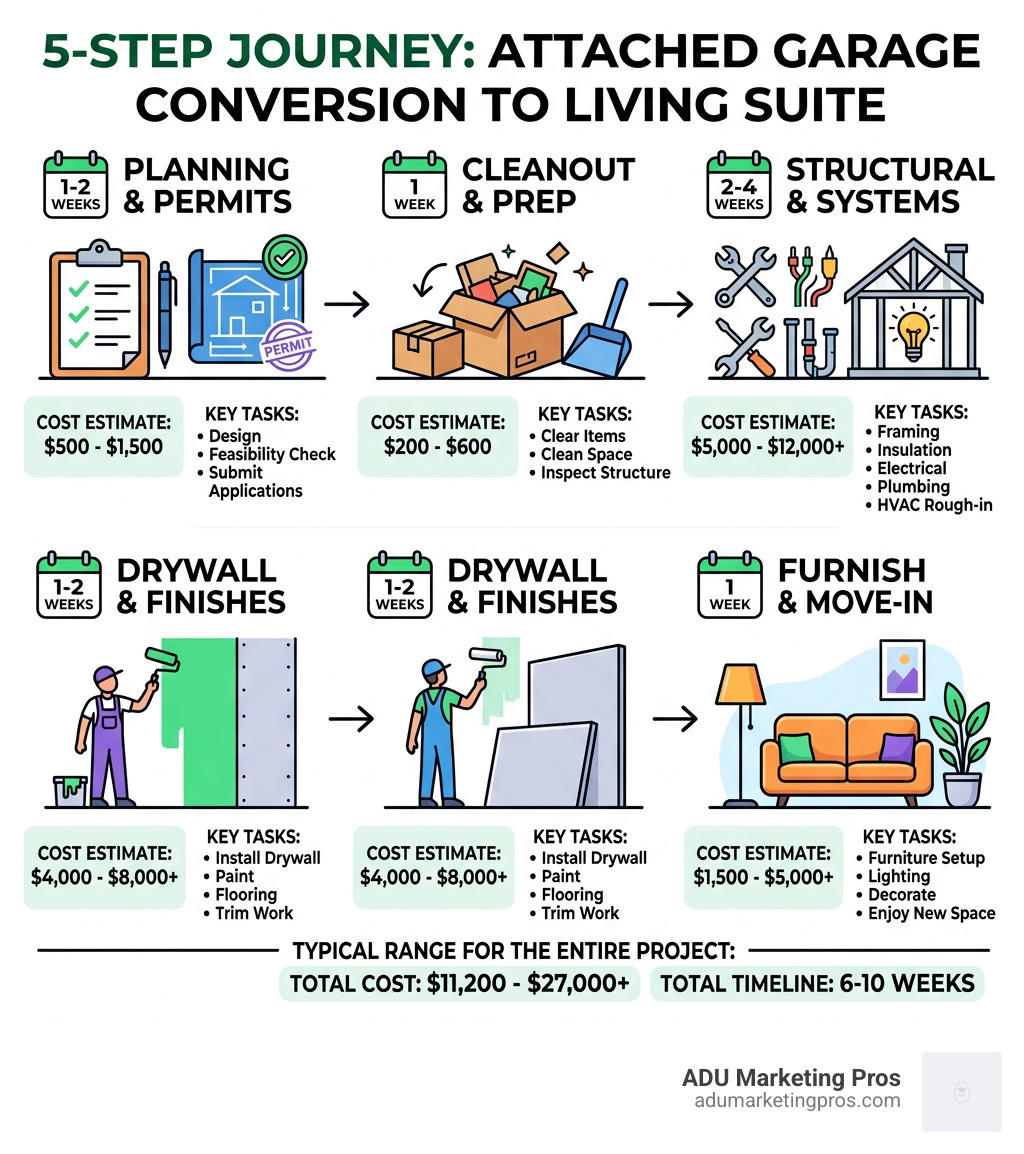
Knowing the “how” can prevent the “losing your mind” part of the project. A typical project follows a logical progression, but the planning phase is often the most critical. Here is a more detailed breakdown of the timeline:
- Feasibility Study (Week 1): Check zoning, measure ceiling heights, and consult with a pro to see if your slab and roof are up to the task. Determine if your electrical panel can handle the new load.
- Design and Permitting (Weeks 2-8): This is the longest phase. You’ll need architectural drawings and city approval. This may involve several rounds of “corrections” from the city building department.
- Demolition and Prep (Week 9): Clearing out the old, removing the garage door, and prepping the slab. This is also when any necessary trenching for plumbing occurs.
- Framing and Rough-ins (Weeks 10-11): Building the new walls, running electrical wires, and plumbing pipes. The “rough-in” inspection happens at the end of this phase before the walls are closed up.
- Insulation and Drywall (Week 12): This is when it starts to look like a real room! Once the drywall is taped and sanded, the space will feel much larger.
- Finishes (Weeks 13-14): Flooring, paint, trim, and light fixtures. This is the most rewarding part of the process where your vision comes to life.
- Final Inspection: The city gives the thumbs up, and you move in. You will receive a final sign-off that makes the space legally habitable.
While the “build” phase might only take 2 to 6 weeks, the planning phase is where the magic (and the headaches) happens. Working with professional ADU garage conversions specialists can help compress this timeline significantly by avoiding common permitting mistakes.
Frequently Asked Questions about Attached Garage Conversions
Does a garage conversion devalue my home?
Generally, no—provided it is done legally and with high-quality finishes. In high-density areas like San Francisco or San Jose, the value of an extra bedroom or a rental unit far outweighs the value of a parking spot for a car. However, if you live in a neighborhood where street parking is impossible, losing the garage might slightly limit your pool of buyers. Always check with a local realtor to understand your specific market demand before proceeding.
How much does an attached garage conversion cost in 2025?
As of 2025, the average cost is approximately $16,665. However, this is a wide range. A simple “man cave” or home office might only cost $6,000, while a full ADU with a kitchen and bathroom can exceed $30,000. On average, expect to pay about $40 per square foot. Note that labor rates in the Bay Area and Los Angeles are higher than the national average, so budget accordingly.
Can I DIY my garage conversion?
You can do some of it, but we don’t recommend doing all of it. While you might be able to handle the painting and flooring, you should always hire licensed professionals for:
- Electrical: To ensure you don’t overload your panel or create a fire hazard. Electrical code is complex and changes frequently.
- Plumbing: Because a leak under a concrete slab is a nightmare to fix. Professional plumbers have the tools to ensure proper drainage and venting.
- Structural: To ensure your new walls are load-bearing and earthquake-safe. This is especially critical in seismic zones.
- Permit Management: A professional knows how to talk to the city inspectors to get your project approved faster and avoid costly delays.
Will my property taxes go up?
Yes, typically. When you add livable square footage, the tax assessor will re-evaluate that portion of your home. However, in California, thanks to specific ADU laws, the entire property is not usually reassessed; only the value of the new improvement is added to your tax bill. This usually results in a modest increase compared to the value added to the home.
Conclusion
An Attached garage conversion is more than just a home improvement project; it’s a strategic move to unlock the hidden value of your property. Whether you’re looking to house a growing family, create a quiet workspace, or generate rental income, the space you need is likely already sitting right behind your garage door. By converting existing space, you save time, money, and resources while significantly boosting your home’s utility.
At ADU Marketing Pros, we understand that the world of ADUs and garage conversions is evolving rapidly, especially in California. We specialize in helping construction and architecture firms stand out in this competitive market. Based in San Jose, we provide the SEO, PPC, and specialized marketing solutions that help local experts connect with homeowners ready to transform their lives.
By focusing on expertise and data-driven insights, we help our clients grow their revenue and establish themselves as the go-to authorities for garage conversions in the Bay Area and beyond. We believe that every garage has the potential to be something greater.
If you’re a homeowner ready to take the next step, or a builder looking to expand your reach in this booming sector, the time to act is now. The demand for creative housing solutions has never been higher.