
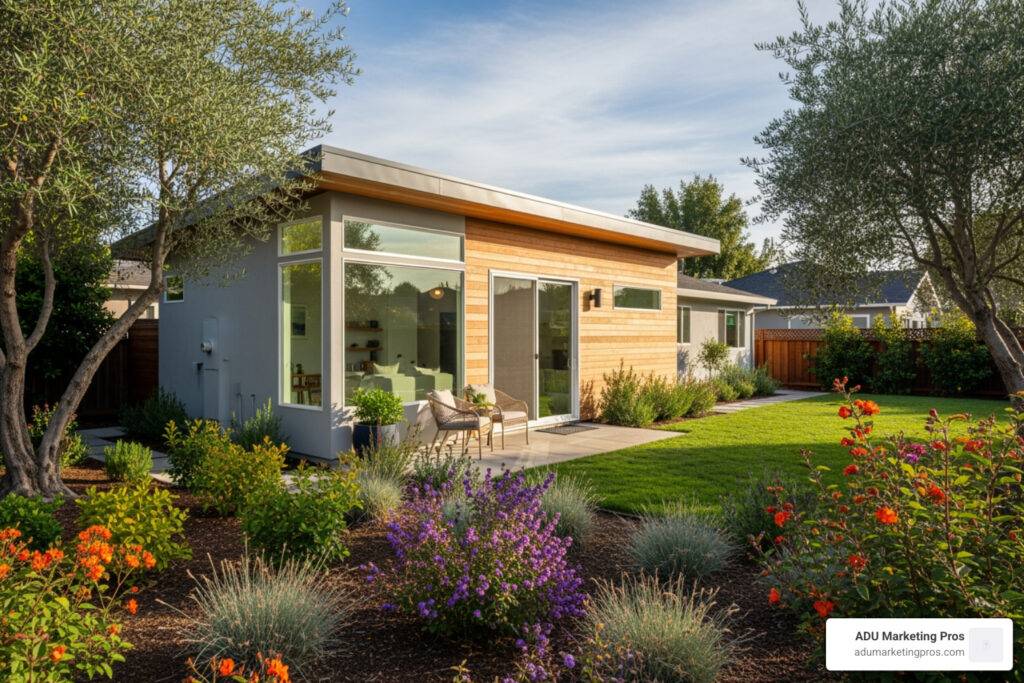
Why San Jose Is Leading California’s ADU Revolution
ADU San Jose projects are changing backyards across the city into valuable living spaces. If you’re looking to build an accessory dwelling unit in San Jose, here’s what you need to know:
Quick Facts About Building an ADU in San Jose:
- Types Available: Detached ADUs, attached ADUs, garage conversions, Junior ADUs (JADUs under 500 sq ft), and Tiny Homes on Wheels
- Size Limits: Up to 1,200 sq ft for detached units on larger lots; 800 sq ft for attached units
- Key Benefits: Rental income, increased property value, housing for family, affordable construction
- Fee Savings: No school or parkland fees for ADUs under 750 sq ft
- Permitting: Streamlined process through SJPermits.org, typically 20-day first review
- Historic Milestone: San Jose became the first California city to approve an ADU condominium under AB 1033
San Jose has doubled its ADU permits over the past five years. The city issued permits for 1,500 ADUs since 2022 and more than 400 this year alone. This explosive growth isn’t an accident.
State legislation removed key barriers starting in 2020. San Jose responded by updating its zoning code and creating robust support systems for homeowners. The result? ADUs are now one of the bright spots in California’s housing supply.
Why are so many San Jose homeowners building ADUs?
The answer is simple: ADUs are affordable by design. You don’t pay for land, major new infrastructure, structured parking, or elevators. Wood frame construction keeps costs down compared to multifamily buildings. Plus, these units provide as much living space as many new apartments and condos.
For homeowners, ADUs create passive income streams. For families, they keep multiple generations close while maintaining privacy. For the community, they address the housing shortage without changing neighborhood character.
Mayor Matt Mahan put it clearly: San Jose is creating housing affordability and ownership by “thinking differently” about accessory dwelling units. With AB 1033, these units can now be sold separately from the main house—offering what the mayor calls “the most accessible form of home ownership.”
Whether you’re a homeowner exploring options or a builder serving this growing market, understanding San Jose’s ADU landscape is essential. This guide walks you through every step, from understanding regulations to completing construction.
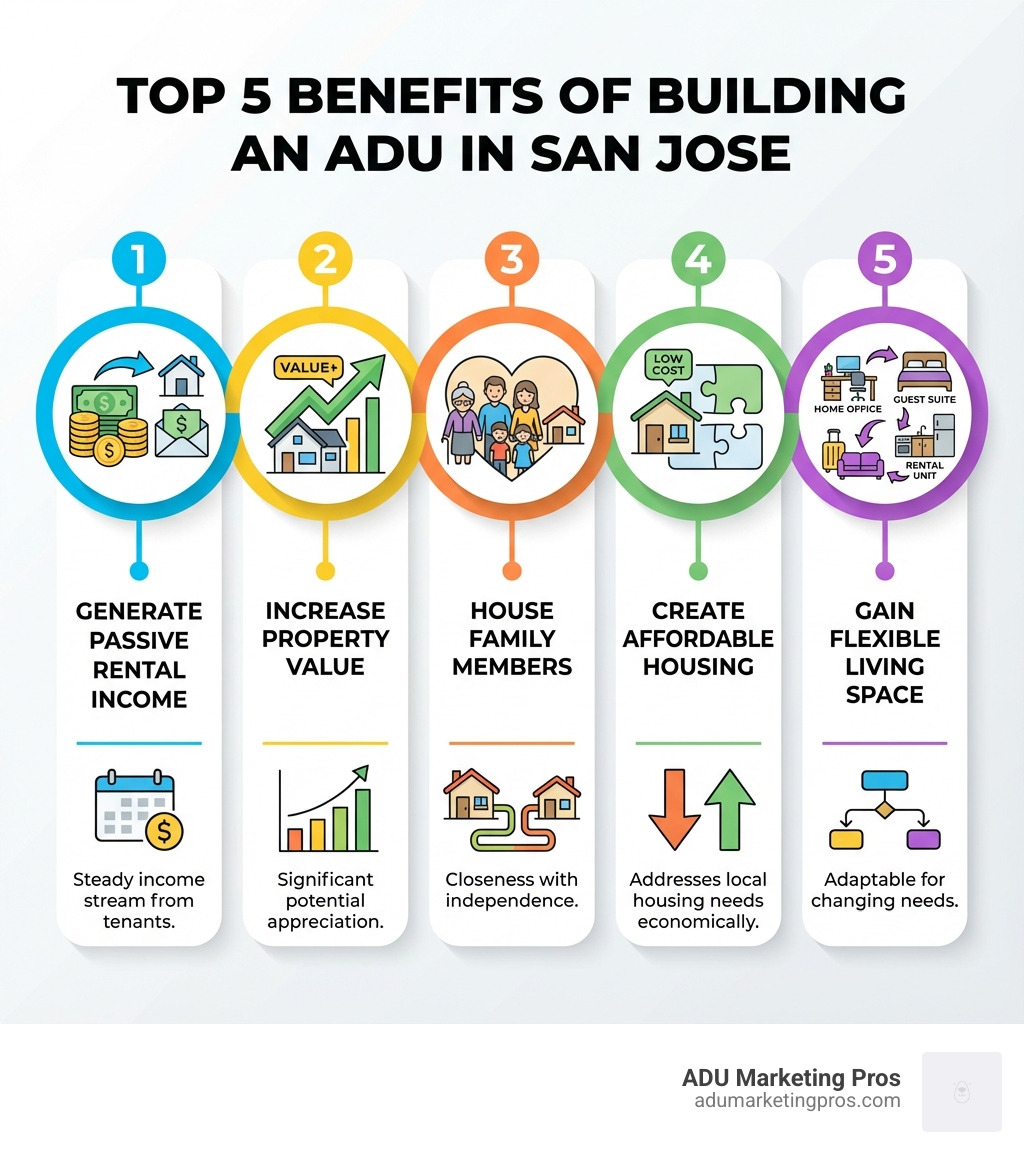
Infographic showing the top 5 benefits of building an ADU in San Jose: 1. Generate Passive Rental Income (illustrated with dollar signs and a rent check icon), 2. Increase Property Value (upward trending house value graph), 3. House Family Members (multigenerational family icon with grandparents, parents, and children), 4. Create Affordable Housing (small affordable home icon contributing to community), and 5. Gain Flexible Living Space (convertible space icon showing home office, guest suite, and rental unit options).
What is an ADU? Understanding Your Options in San Jose
Accessory Dwelling Units (ADUs), often affectionately called “granny flats,” “in-law units,” or “backyard homes,” are independent living spaces built on the same property as a primary single-family home. They’re complete with their own kitchen, bathroom, and sleeping area, offering a fantastic blend of independence and proximity. For homeowners in San Jose, ADUs represent a flexible solution for a variety of needs—from providing a private space for aging parents to generating significant rental income.
The growth of ADUs across California has been nothing short of explosive, and San Jose is truly at the forefront of this movement. The city has seen its ADU permits double in the past five years, with a remarkable 1,500 ADUs permitted since 2022 and over 1,100 final building permits issued. This year alone, the city has issued permits for more than 400 ADUs. This rapid expansion highlights San Jose’s commitment to addressing its housing challenges through innovative solutions like infill development, which strategically uses existing urban land to create more housing.
ADUs are not just about adding another structure; they’re about creating more affordable housing options, promoting sustainable community development, and offering homeowners unprecedented flexibility. They allow seniors to “age in place” comfortably, and families to stay close without sacrificing privacy. It’s a win-win for homeowners and the community alike.
Defining the Different Types of Units
When we talk about ADUs, it’s important to understand that they come in several forms, each with its own characteristics and benefits:
Accessory Dwelling Unit (ADU): This is the broadest category. An ADU can be:
- Detached New Construction: A brand-new, standalone structure built in your backyard, separate from the main house. Think of it as a charming cottage or a modern studio.
- Attached Additions: An extension built onto your existing home, but with its own entrance and facilities, operating as a completely separate unit.
- Garage or Basement Conversions: This is a popular and often cost-effective option, changing an existing space like a garage, attic, or basement into a fully functional living unit. It’s like giving your underused space a whole new purpose!
Junior Accessory Dwelling Unit (JADU): JADUs are a special breed of ADU. They are typically smaller, limited to 500 square feet or less, and must be located within the existing footprint of a single-family home. This can include converting part of an attached garage or an existing bedroom suite. They require their own entrance and a small kitchen, but they may share a bathroom with the main house. We recommend reviewing the JADU Zoning Ordinance requirements from the City of San Jose for precise details.
Tiny Homes on Wheels (THOWs): Yes, even tiny homes on wheels can be considered a type of ADU in San Jose! These are generally allowed only on single-family properties and often have different requirements and a simpler, lower-cost permit process. If you’re intrigued by the idea of a mobile, compact living space, San Jose has provisions for you. The city even offers helpful resources like the “Amazing Tiny Homes on Wheels” video presentation, which is part of its broader video guide on property considerations for ADUs.
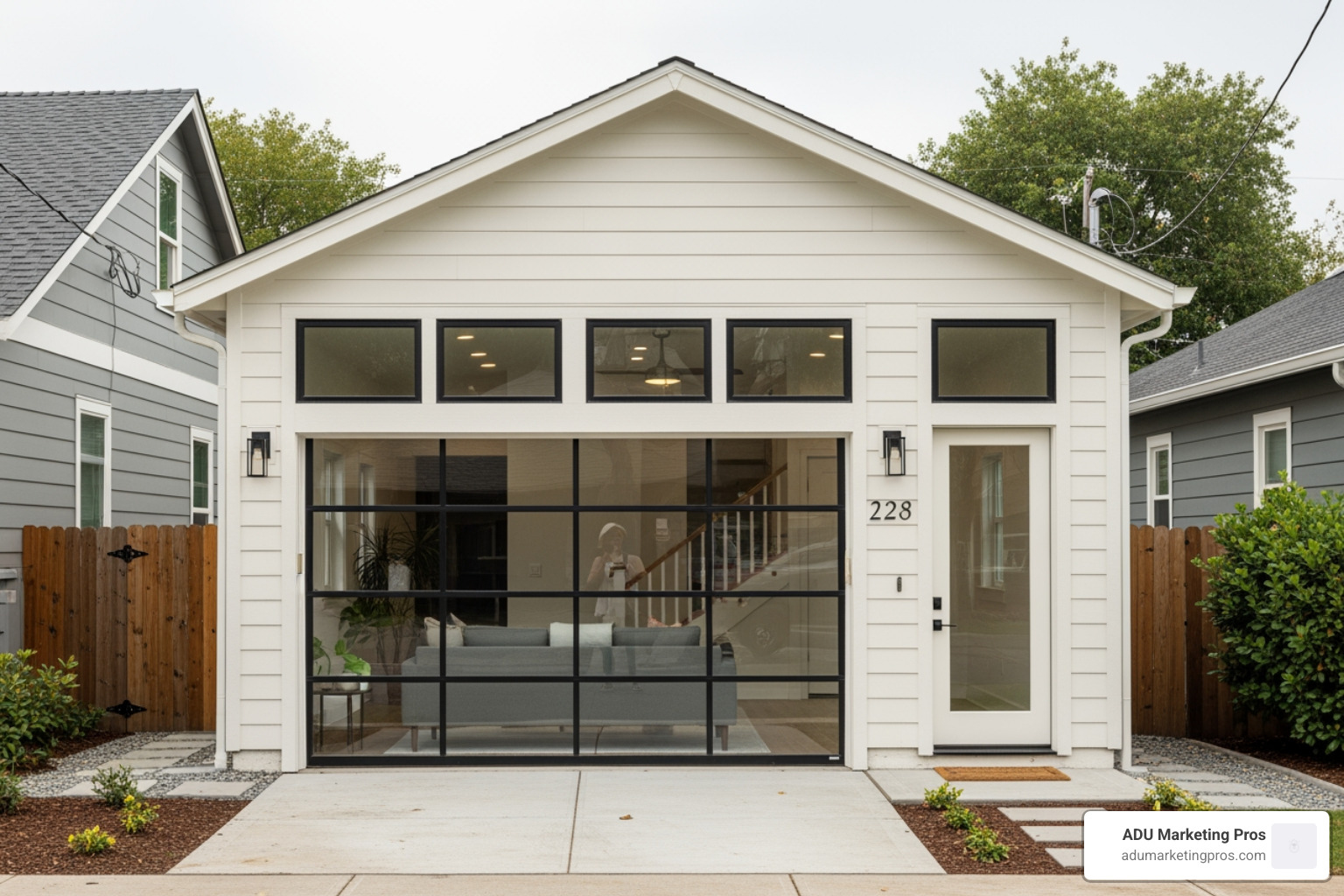
A stylishly converted garage ADU, showing a seamless integration with the main property. The garage door has been replaced with large windows and a modern entrance, while the exterior matches the main house, creating a cohesive look.
The Benefits of Building an ADU
The reasons why homeowners in San Jose are enthusiastically embracing ADUs are clear and compelling:
- Financial Advantages: An ADU can be a significant source of income, providing consistent rental revenue that can help with mortgage payments or simply boost your financial security. Plus, ADUs are often more affordable to construct compared to building a new standalone home, as they leverage existing land and infrastructure.
- Community Impact: By adding more housing options, ADUs play a crucial role in addressing San Jose’s housing shortage and affordability crisis. They promote infill development, making efficient use of urban land and even encouraging the use of public transportation by increasing housing density in established areas.
- Family Flexibility: Imagine having your parents or adult children live close by, offering mutual support, but still enjoying their own private space. ADUs make multigenerational living a reality, providing independence while keeping loved ones near. It’s an ideal solution for “aging in place” or for young adults seeking affordable housing in the Bay Area.
Navigating the Rules: Key Regulations for Your ADU San Jose Project
Understanding the regulatory landscape is crucial for any successful ADU San Jose project. Fortunately, San Jose has been proactive in aligning its local policies with state mandates, making it easier for homeowners to build. As of January 1, 2020, the city updated its ADU zoning to comply with state requirements, signaling a clear commitment to fostering ADU development.
San Jose isn’t just following state law; it’s often leading the charge. The city recently made headlines by becoming the first in California to approve an Accessory Dwelling Unit condominium under AB 1033. This groundbreaking legislation, sponsored by the Bay Area Council, allows ADUs to be sold separately from the main house. This means an ADU can now offer a more accessible path to homeownership for many, creating new opportunities for both sellers and buyers. Mayor Matt Mahan noted that this innovation offers “the most accessible form of home ownership,” showcasing San Jose’s role as a policy leader.
To give you a clearer picture of the general development standards, we’ve put together a table comparing a Detached ADU and a JADU in San Jose. Note that specific rules can vary based on your property’s zoning and other factors, so always consult the city’s official resources.
| Feature | Detached ADU (Single-Family Property) | JADU (Single-Family Property) |
|---|---|---|
| Max Size | 1,000-1,200 sq ft (depends on lot size) | 500 sq ft |
| Max Height | 18 ft (1-story), 24 ft (2-story) | Within existing home footprint |
| Side/Rear Setbacks | 3-4 ft (ground floor), 4 ft (2nd story) | Within existing home footprint |
| Parking Requirements | Often exempt (e.g., near transit) | No additional parking required |
Core Development Standards for an adu san jose
Beyond the general classifications, several core development standards dictate what you can build on your property:
- Size Limits: The maximum size for your ADU San Jose project will depend on your lot size and whether it’s attached or detached. For instance, a detached ADU on a single-family property might be capped at 1,000 sq ft, or even 1,200 sq ft on larger lots. JADUs, as mentioned, are strictly limited to 500 sq ft. There’s also a “Rear Yard Coverage Rule,” which states that the total coverage of your rear yard by structures (including the ADU) may not exceed 40% of the rear yard or 800 sq ft, whichever is greater.
- Height Limits: For detached ADUs on single-family properties, a one-story unit typically has a maximum height of 18 feet, while a two-story unit can go up to 24 feet.
- Setback Requirements: These rules define how close your ADU can be to your property lines. Generally, detached ADUs require a minimum setback of 3-4 feet from the side and rear property lines. There’s also a “Horizontal 6-foot separation rule” that mandates a minimum of 6 feet between the ADU’s walls and any other building on the property.
- Parking Exemptions: Great news for many San Jose homeowners! State law allows for parking exemptions for ADUs in many cases, especially if your property is located near public transit or within a historic district. This can save you the hassle and cost of creating additional parking spaces.
Fee Waivers and Other Important Rules
Building an ADU comes with various fees, but San Jose offers some significant waivers:
- Impact Fee Exemptions: As of January 1, 2020, ADUs that are less than 750 square feet are exempt from school impact fees and parkland fees. This can lead to substantial savings and is a great incentive for building smaller, more affordable units. If your ADU is 750 sq ft or greater, these fees may apply.
- Utility Requirements: When it comes to utilities, there’s an important point about separate metering. PG&E is now requiring ADUs to have their own utility meter. We advise consulting directly with PG&E’s Building and Renovation Service Center at (877) 743-7782 to confirm specific requirements for your project. Note that JADUs are generally not considered separate units and do not require separate meters.
- Natural Gas vs. All-Electric Options: San Jose has paused enforcement of its natural gas prohibition ordinance. This means you have the flexibility to choose between natural gas or all-electric designs for your ADU. However, as a “Climate Smart City,” San Jose strongly encourages all-electric infrastructure in new and remodeled construction to help achieve its greenhouse gas reduction goals. It’s a great opportunity to build a more sustainable and energy-efficient home!
Your 6-Step Guide to Permitting and Building an ADU
Starting on an ADU San Jose project might seem daunting, but with a clear roadmap and the right support, it’s an achievable dream. The city has worked to streamline the process, and understanding each step will make your journey much smoother. We always emphasize the importance of working with experienced professionals—designers, architects, and contractors who are familiar with San Jose’s specific requirements. Their expertise can save you time, money, and headaches in the long run.

Architectural blueprints for an ADU laid out on a table with a pen and calculator, symbolizing the planning and design phase of construction.
Step 1: Pre-Application & Feasibility
Before you even sketch out a design, the very first step is to check your property’s eligibility and understand what’s feasible. This involves a bit of detective work and leveraging the city’s excellent resources:
- Property Eligibility Check: Start with the ADU Universal Checklist. This comprehensive document will walk you through various criteria, from zoning to lot size, to help you determine if your property is suitable for an ADU.
- Zoning Verification: Head over to SJPermits.org to confirm your property’s zoning and general plan designations. This site is a goldmine for property information.
- Property Considerations: Beyond basic zoning, you’ll need to investigate potential challenges like easements (rights of way for utilities), geohazards (such as seismic activity or landslides), and whether your project might involve the removal of any ordinance-size or heritage trees, which require special permits.
- Visual Guidance: The City of San Jose also offers a helpful video, “Step 1 to Any ADU Project: Property Considerations,” which we highly recommend watching to get a visual overview of this crucial initial phase.
- Contact the ADU Ally: If you have questions or need some basic feedback, don’t hesitate to reach out to San Jose’s dedicated ADU Ally team. They’re there to help!
Steps 2 & 3: Plan Preparation & Online Application
Once you’ve confirmed your property’s eligibility, it’s time to get down to the specifics of your ADU design and prepare your application.
- Preparing ADU Plans: This is where professional designers and architects shine. They’ll translate your vision into detailed architectural plans that meet all local and state building codes. Your submittal package will need to include various documents, such as Bulletin #211 (Building Plan Requirements), Bulletin #213 (Inspection Checklist), Title 24 Residential Energy Calculations, a Cal-Green Checklist (Bulletin #203), and potentially a Geotechnical Investigation Report.
- The Critical Water Flow Letter: A key document often overlooked until the last minute is a letter from your Water Company stating the flow data at the hydrant closest to your lot. This can cause significant delays if not obtained early, so put it on your priority list! You’ll also need forms like the Address Assignment Request (Form 302) and either the ADU Property Owner Declaration (Form 312) or the JADU Deed Restriction Agreement (Form 313).
- Starting Your Online Application: San Jose has accepted digital convenience. You’ll start your permit application by using the city’s Application Wizard to determine the correct permitting path.
- Creating an SJPermits.org Account: Once you know your path, you’ll create an account on SJPermits.org. This portal is your gateway for submitting your application and managing the permit process.
Steps 4, 5, & 6: Plan Review, Construction, and Final Inspection
With your plans ready and your application initiated, you’ll move through the review, construction, and final approval phases.
- Submitting Plans to SJePlans: After starting your application on SJPermits.org, you’ll upload your complete electronic plan package to SJePlans. This is where the city’s plan reviewers will carefully check your design for compliance.
- Plan Review Process: The city aims for efficiency, with a typical 20-business-day turnaround for the first round of building review. Be prepared for potential comments and revisions; it’s a normal part of the process. Submitting accurate and complete plans from the outset, ideally prepared by professionals experienced with San Jose’s process, will significantly speed things up.
- Permit Issuance: Once your plans are approved and all fees are paid, your building permit will be issued – a huge milestone!
- Construction Phase: Now the real fun begins! Your contractor will manage the construction, and schedule inspection appointments at key milestones throughout the build. Always keep your approved plans and job permit card handy for the inspector.
- Final Inspection and Sign-off: Before your Building Final Inspection, you’ll need to complete the Construction and Demolition Diversion Review and sign-off application (Form #703). Once the final inspector gives their stamp of approval, your ADU is officially ready for occupancy. Congratulations, you’ve built an ADU San Jose!
The Financials: Costs, Rental Income, and Property Taxes
Building an ADU is not just a construction project; it’s a significant financial decision. We believe in transparency and helping you understand the full picture of your investment. From initial costs to potential long-term returns, let’s explore the financial aspects of your ADU San Jose journey.
Estimating the Cost of Your adu san jose
The total cost of an ADU can vary widely based on size, design, materials, and site conditions. However, we can break down the key components:
- Permit Fees: These are the fees paid to the city for processing your application, plan review, and inspections. San Jose offers a useful Building Fee Estimator tool to give you a general idea of these costs. The size of your ADU will directly impact your building permit fees, and other fees like those for geological hazard review or tree removal permits might apply.
- Construction Costs: This is the bulk of your investment. As we mentioned earlier, ADUs are “affordable by design” because they don’t require new land purchases or extensive new infrastructure. Their use of cost-effective wood frame construction also helps keep prices lower compared to many new multi-family infill buildings.
- Ways to Save Money: There are smart strategies to manage your budget:
- Pre-Approved ADU Plans: San Jose offers pre-approved ADU plans, which can significantly reduce design and plan review costs and speed up the permitting process.
- Building Under 750 sq. ft.: ADUs less than 750 square feet are exempt from school impact fees and parkland fees, offering substantial savings on your overall project cost.
Understanding the Return on Investment (ROI)
An ADU is a powerful asset that can generate significant returns, both financially and in terms of lifestyle benefits.
- Property Tax Increases: Yes, building an ADU will generally increase your property taxes. Your taxes will be reassessed based on the value added by the ADU, but this is typically a “blended assessment” that only applies to the new construction, not your entire property value. For more detailed information, we recommend referring to the Santa Clara County Assessor’s website for granny units.
- Potential Rental Income: This is often the most attractive financial benefit. San Jose, being a high-demand rental market, offers excellent potential for rental income. We encourage you to research local market rates to get a realistic estimate of what your ADU could command.
- Rules for Renting: If you plan to rent out your ADU, it’s crucial to understand the rules.
- Minimum Lease Term: Per state law, the minimum term for an ADU rental in San Jose is 30 days, including for platforms like Airbnb.
- Fair Housing Laws: As a homeowner, you have the right to rent your ADU to anyone you choose, but you must comply with all fair housing laws. This means you cannot establish discriminatory terms or conditions in rental advertising or agreements based on race, color, religion, sex, handicap, familial status, or national origin. You also cannot refuse housing vouchers.
A homeowner smiling as they hand a set of keys to a happy tenant in front of a newly completed ADU, symbolizing the successful rental of the unit and the positive relationship between landlord and tenant.
San Jose’s ADU Program: A City Leading the Way
San Jose has truly distinguished itself as a leader in California’s ADU movement. The city views ADUs not merely as an architectural trend, but as a critical component of its strategy to address the ongoing housing shortage and affordability crisis. Mayor Matt Mahan has articulated a vision where ADUs are integral to creating more accessible homeownership and housing options for all residents, emphasizing the city’s commitment to “thinking differently” about housing solutions.
The city’s proactive stance has transformed the ADU San Jose landscape, making it one of the most favorable environments for homeowners to add these valuable units.
Tracking Success and Finding Support
San Jose is not only facilitating ADU development but also diligently tracking its progress and offering robust support to homeowners:
- Permitting Statistics: The numbers speak for themselves. The city has issued permits for more than 400 ADUs this year alone, demonstrating sustained momentum. This data is part of a larger trend, with 1,500 ADUs permitted since 2022. Most of these units are under 700 square feet, highlighting the popularity of smaller, more cost-effective designs.
- Tracking Progress: San Jose maintains an impressive interactive dashboard that allows anyone to track the city’s ADU permit activity. This transparency is a testament to the city’s commitment to its housing goals.
- City-Provided Resources: The City of San Jose offers a wealth of information and support to homeowners. Their dedicated comprehensive ADU resource page is an excellent starting point, offering everything from FAQs to design guidelines.
- The ADU Ally Program: San Jose even has an “ADU Ally” program, a dedicated staff member (or team!) at the Permit Center whose sole purpose is to answer your questions and connect you with the right city staff. This personalized support is invaluable for navigating what can sometimes feel like a complex process. You can reach them at adu.ally@sanjoseca.gov or 408-793-5302.
Conclusion: Start Your San Jose ADU Project with Confidence
Your journey to building an ADU San Jose is an exciting one, filled with potential for financial freedom, flexible living arrangements, and a meaningful contribution to our community’s housing needs. We’ve seen how San Jose has emerged as a leader in ADU development, actively streamlining processes, offering valuable resources, and even pioneering new ownership models like ADU condominiums.
By leveraging the city’s supportive environment and understanding the detailed steps outlined in this guide, you can start on your ADU project with confidence. Whether you’re looking to generate rental income, provide a home for a loved one, or simply add flexible space to your property, an ADU offers a powerful solution.
For homeowners, building an ADU is about empowering yourselves to be part of the solution to our housing challenges while enhancing your property’s value and utility. For the dedicated builders and architects who bring these visions to life, connecting with informed homeowners like you is key to success. We at ADU Marketing Pros specialize in helping top firms stand out in this competitive market, ensuring that quality craftsmanship meets appreciative clients.
Ready to take the next step in your ADU journey? If you’re a homeowner looking for the perfect team to bring your vision to life, or a builder seeking to connect with more informed clients, explore your options.