
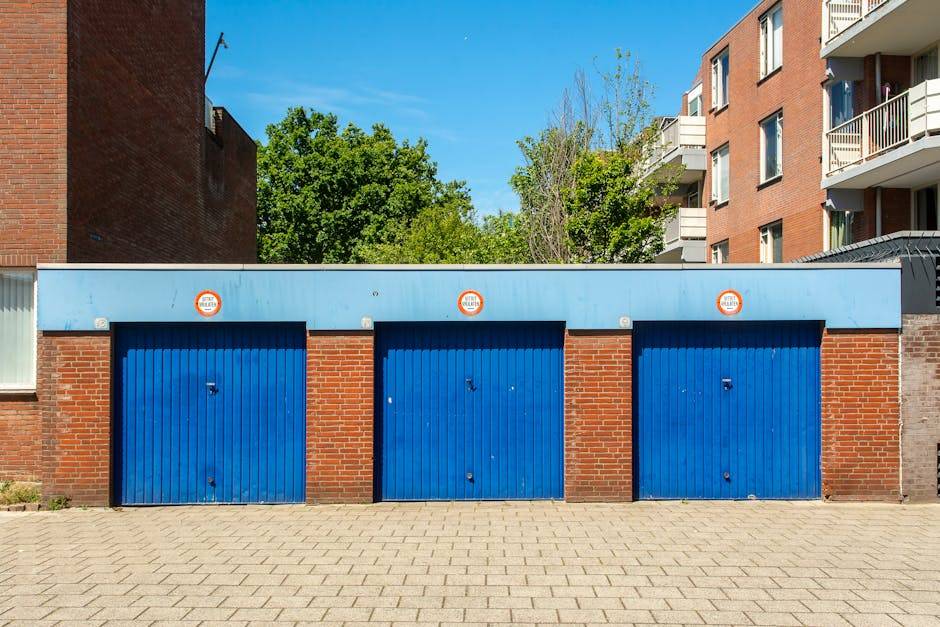
What Does It Cost to Turn a Garage Door Into a Wall?
As we move into 2025, the housing market continues to face inventory shortages and rising prices, leading many homeowners to look inward at their existing square footage. The garage, often underutilized as a storage space for clutter, represents the single largest opportunity for expansion without the massive footprint of a traditional home addition. However, the first hurdle is always the garage door conversion cost.
Typically, a full garage door conversion falls between $6,000 and $27,000 for a complete living space transformation. The national average in 2025 has settled around $16,665, reflecting increases in material costs and specialized labor. If you are simply looking to seal the opening with a finished wall—perhaps to create a more secure workshop or a climate-controlled storage area—the costs are significantly lower than a full ADU (Accessory Dwelling Unit) conversion.
Understanding these costs requires looking at the project through several lenses: structural integrity, aesthetic matching, and functional utility. A wall that looks like an afterthought can hurt your home’s curb appeal, while a seamless integration can significantly boost your property value.
Here’s a quick breakdown of common garage door conversion scenarios:
| Conversion Type | Typical Cost Range | Key Considerations |
|---|---|---|
| Door opening framed into a basic wall | $1,500 – $4,000 | Includes framing, insulation, and basic siding. |
| Two single doors converted to one double door | $950 – $4,600 | Requires a new header; may involve structural engineering. |
| Spring system conversion (TorqueMaster to torsion) | $600 – $1,800 | Mechanical upgrade only; keeps the door functional. |
| Full garage-to-living-space conversion | $6,000 – $27,000+ | Includes HVAC, flooring, electrical, and interior finish. |
| High-End ADU Conversion | $50,000 – $120,000+ | Full kitchen, bathroom, and independent utilities. |
These numbers shift based on your location, materials, labor rates, and whether you need structural changes. California homeowners, for example, often pay well above the national average due to strict Title 24 energy requirements and seismic retrofitting needs.
This guide breaks down every major cost factor so you can plan your budget with confidence—whether you’re sealing up a garage door opening, upgrading a spring system, or converting the whole space into a livable room.
Garage door conversion cost further reading:
- how much does a garage conversion cost
- average cost of garage conversion to granny flat
- average price to convert a garage
Understanding the Total Garage Door Conversion Cost in 2025
When we talk about garage door conversion cost, we have to distinguish between “finishing” a garage and “converting” it into a legal living space. This distinction is the most common source of budget overruns. Finishing a garage—adding some drywall, better lighting, and maybe a slap of paint—is a budget-friendly way to make the space feel cleaner. However, a true conversion involves removing the garage door, framing a permanent wall, and integrating the space into your home’s footprint.
According to data from the Bureau of Labor Statistics, the national average for a garage conversion project is approximately $15,100, though updated 2025 estimates place that closer to $16,665. On a per-square-foot basis, you should budget roughly $40 for a standard conversion. However, if you are in a high-cost area like the San Francisco Bay Area, Seattle, or Los Angeles, these numbers can easily double or triple due to labor shortages and permit complexities.
The Three Tiers of Conversion
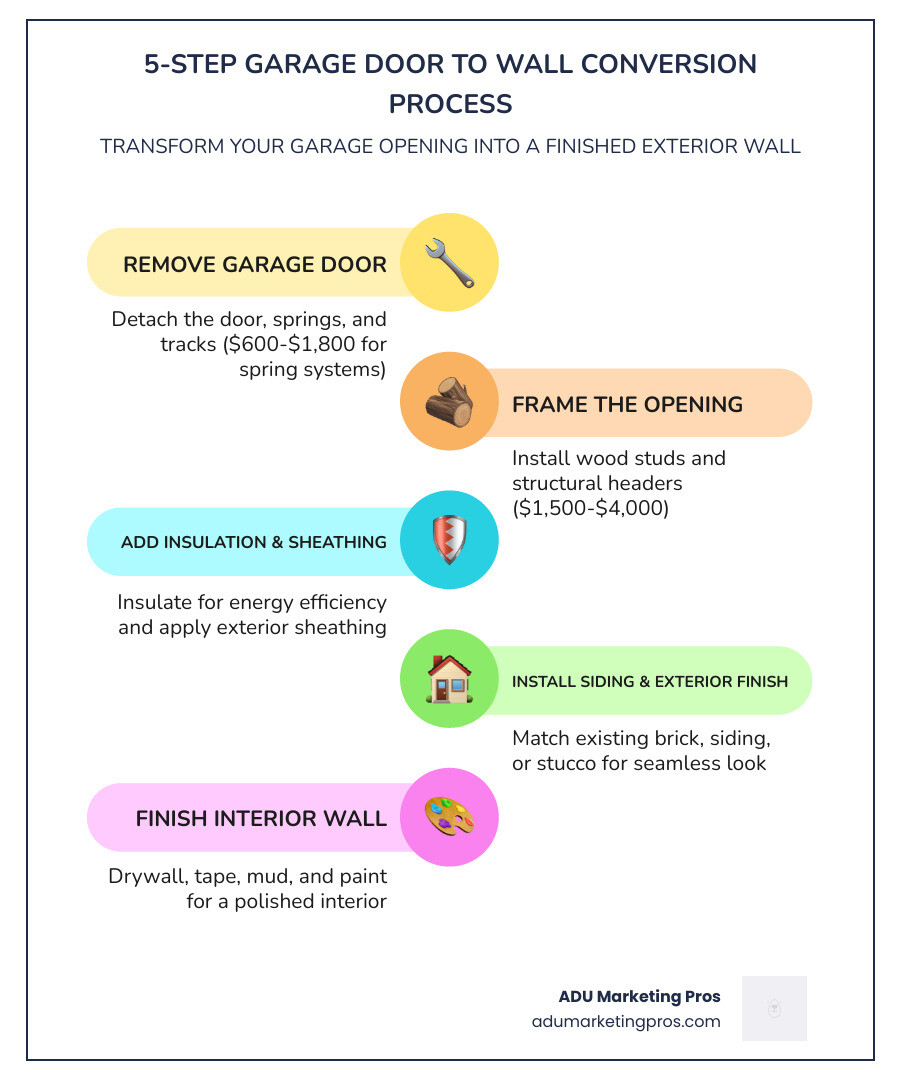
- The Basic Wall-In ($1,500 – $5,000): This is for the homeowner who wants to keep the garage as a garage but remove the overhead door. It involves framing the 7×8 or 16×7 opening, adding a vapor barrier, insulation, and matching the exterior siding. This is common for home gyms or workshops where a traditional garage door is a security or insulation liability.
- The Living Space Conversion ($15,000 – $40,000): This is the most common “middle ground.” It involves removing the door, leveling the floor, adding a dedicated HVAC branch, and finishing the interior to match the rest of the house. This is ideal for a home office, playroom, or extra bedroom.
- The Accessory Dwelling Unit (ADU) ($50,000 – $150,000): This is a complete transformation into a self-contained apartment. It requires a kitchen, a bathroom, and often a separate entrance. While the garage door conversion cost is just a small part of this, the overall investment is significant because of the plumbing and utility requirements.
| Project Type | Average Cost | Description |
|---|---|---|
| Basic Finishing | $3,000 – $17,000 | Drywall, insulation, and basic flooring; keeps the garage door. |
| Full Living Space | $16,665 – $50,000+ | Door removed, wall built, HVAC added, full interior finish. |
| ADU Conversion | $30,000 – $100,000+ | Full apartment with kitchen and bathroom; highest ROI. |
The scope of your project is the primary driver of price. If you’re just looking for a more comfortable workshop, you might spend $6,000. If you’re building a primary suite for the in-laws, you’re looking at the higher end of the spectrum. For more detailed estimates, you can check out our garage conversion cost calculator.
High-End vs. Budget Conversion Estimates
Material quality plays a massive role in where you land on the price scale. A budget conversion might use luxury vinyl plank (LVP) flooring, which costs between $2 and $5 per square foot. It looks great, it’s waterproof, and it’s easy on the wallet. It is also ideal for garages because it can be installed directly over a concrete slab with a simple underlayment.
On the flip side, a premium conversion using engineered hardwood can cost up to $16 per square foot. When you factor in high-end cabinetry, recessed lighting, and premium windows to replace the garage door, a high-end project can range from $30,000 to over $51,000. We find that homeowners who invest in these premium finishes often see a much higher satisfaction rate, especially when the space is intended for daily use like a home office or bedroom. Furthermore, high-end windows (such as black-frame aluminum or custom wood) can turn the former garage door opening into a stunning architectural feature rather than just a flat wall.
Factors Influencing the Price of Your Garage Transformation
It isn’t just the wall and the flooring that eat up the budget. Several “invisible” factors can send your garage door conversion cost climbing. When you peel back the layers of a standard garage, you often find challenges that weren’t apparent during the initial walkthrough.

Structural Changes and Floor Leveling
One of the most overlooked costs in a garage conversion is the floor. Most garage floors are sloped toward the door to allow water and chemicals to drain out. To make this a livable room, we have to level that floor. Leveling a garage floor typically costs between $600 and $2,000. This usually involves a self-leveling concrete compound or, in more extreme cases, framing a new subfloor over the concrete. Framing a subfloor is often preferred in colder climates as it allows for additional floor insulation.
Additionally, when you remove the garage door, you have to frame the new wall. This isn’t just about putting up studs; you need to match the exterior siding or brick of your home. If your home has a unique brick pattern or custom stucco, matching that exterior can add several thousand dollars to your masonry or siding bill. If the garage door was part of a load-bearing wall (which it almost always is), the header must be inspected. If you are widening the opening or changing the structure, a structural engineer’s fee ($500 – $1,500) becomes a mandatory part of your garage door conversion cost.
Impact of Utilities and Climate Control
Garages are notoriously drafty. They are designed to be unconditioned spaces. To make them habitable, you need to extend your home’s HVAC system or install a dedicated mini-split system. HVAC installers regularly charge about $27.55 per hour, and the parts for a new system can range from $2,000 to $5,000. A mini-split is often the best choice for a garage conversion because it provides both heating and cooling without requiring you to tap into your existing (and potentially undersized) furnace.
Electrical is another big one. Most garages have one or two outlets and a single light bulb. To meet building codes for a “living space,” you’ll likely need a full electrical overhaul. This includes:
- Outlets every 6 to 12 feet: To meet NEC (National Electrical Code) requirements.
- Dedicated Circuits: For space heaters, computers, or kitchen appliances.
- Lighting: Recessed cans or flush mounts to replace the single shop light.
- Sub-panel: If your main electrical panel is full, adding a sub-panel can add $1,500 to $3,000 to the project.
If your conversion includes a bathroom or kitchen, the costs jump significantly. Adding plumbing to a garage—especially if the concrete slab needs to be trenched—can cost anywhere from $3,000 to $25,000 depending on the complexity of the waste disposal lines. Trenching through a 4-inch reinforced concrete slab is labor-intensive and requires specialized equipment.
Breaking Down Costs by Conversion Type and Room Function
What are you actually doing with the space? The room’s function is the biggest indicator of your final bill. A room meant for sleeping has much stricter code requirements than a room meant for lifting weights.
- Bedroom Conversion ($12,000 – $25,000): This requires insulation, a closet, a window for egress (safety), and finished walls/flooring. Egress windows are a major cost factor; they must be large enough for a firefighter in full gear to enter, which often means cutting into the concrete foundation or existing walls.
- Home Office ($5,000 – $10,000): Often the most affordable, as it requires less plumbing and potentially simpler HVAC solutions. The focus here is usually on soundproofing and high-speed data lines.
- Kitchen Installation ($20,000 – $50,000): The most expensive due to gas lines, heavy-duty electrical, and plumbing. You also have to consider ventilation for the stove, which can be tricky in a garage layout.
- Home Theater or Music Studio ($15,000 – $35,000): These require specialized acoustic insulation and staggered-stud framing to prevent sound leakage. The garage door conversion cost here includes high-density materials like mass-loaded vinyl.
For those looking to go all out, adu-garage-conversions are the gold standard. These are fully independent living units that can be rented out for significant monthly income. In California, the state has passed laws making it much easier to build these, but the technical requirements remain high.
Estimating the Garage Door Conversion Cost for Spring Systems
Sometimes, you aren’t getting rid of the door; you’re just upgrading the mechanics. This is a different kind of garage door conversion cost. Many older homes use the TorqueMaster spring system, which is notoriously difficult to repair and can be dangerous if it fails.
Converting from a TorqueMaster to a standard torsion spring system is a common request for homeowners who want a more reliable and quieter door.
- Basic Conversion ($600): Uses standard 10,000-cycle springs. This is fine for a door that is used once or twice a day.
- Mid-Range ($850): Often includes 30,000-cycle springs and a 5-year warranty. This is the “sweet spot” for most families.
- High-End ($1,800): This is the “set it and forget it” option. It usually includes 80,000-cycle springs, upgraded rollers with bearings for quiet operation, and a lifetime warranty on parts. If you use your garage door as your primary entrance, this is a wise investment.
While $1,800 might seem high for springs, the International Labour Organization (ILO) and other safety bodies emphasize that high-tension spring work is incredibly dangerous. Hiring a professional who uses high-quality parts ensures you won’t be dealing with a snapped cable in three years. A snapped spring can cause significant property damage or severe injury.
Converting Two Single Doors to One Double Door
If you have a two-car garage with a center column between two single doors, you might find it a nightmare to park modern, wider SUVs. Converting two single doors into one wide double door costs an average of $3,000, though the range is $950 to $4,600.
The biggest variable here is whether that center column is load-bearing. In most two-story homes, that column is supporting the floor above. We always recommend hiring a structural engineer (costing $100-$200 per hour) to assess the header. If the column is holding up your roof or a second story, you’ll need a massive steel or LVL (Laminated Veneer Lumber) header to span the new 16-foot or 18-foot opening. This is a critical step in any garage-to-adu-conversion where you might want to replace the doors with a large glass slider.
Labor, Materials, and Permit Fee Breakdown
When you look at your contractor’s quote, it’s helpful to know where the money is going. Labor is usually about 40% to 50% of the total project cost. In a post-2020 world, labor rates have climbed as skilled tradespeople are in high demand.
- Carpenters: Average $29.31 per hour for framing the new wall and interior trim. Custom trim work to match an older home can drive this higher.
- Electricians: Average $32.60 per hour. In places like Los Angeles or New York, this rate can be $100+ per hour to compensate for the cost of living and insurance.
- Insulation Workers: Average $25 per hour. Proper insulation is the difference between a room you love and a room you avoid in the summer. We recommend spray foam for garage conversions because it provides a superior air seal in a space that was never meant to be airtight.
- Drywall & Paint: Usually quoted by the project, but expect a few thousand dollars for a standard two-car garage. Finishing to a “Level 5” (perfectly smooth) finish will cost more than a standard texture.
If you are planning your layout, having adu-plans-with-garage can save you money by ensuring you don’t over-order materials. Professional plans also make the permit process much smoother.
How Location Impacts Your Garage Door Conversion Cost
Location is the “X-factor.” If you are in the San Francisco Bay Area, Palo Alto, or Mountain View, you are in one of the most expensive construction markets in the world. The cost of a simple wall-in can be double what it would be in the Midwest.
- California Average: $37,400+ for a full conversion. This includes the high cost of compliance with state energy codes.
- Permit Fees: In Los Angeles, a permit for a garage conversion can cost about $1,840 just to get the paperwork started. This doesn’t include school fees or impact fees which can add thousands more.
- Labor Premiums: Metropolitan areas like San Diego and San Jose have much higher labor rates than rural areas. You are also competing with large-scale commercial projects for the same pool of workers.
Because of these high costs, many California homeowners focus on adu-garage-conversion-california projects, which allow them to recoup the investment through high rental rates. In many cases, the rental income from a converted garage can cover the entire mortgage of the primary residence.
Permit Requirements and Zoning Regulations
You cannot simply take out your garage door and put up a wall over a weekend. Most cities require a building permit, which can cost between $1,200 and $2,000. If you are caught doing the work without a permit, the city can force you to tear it down and pay heavy fines.
You also have to navigate:
- HOA Rules: Many Homeowners Associations require you to keep a certain number of off-street parking spots. They may also have strict rules about what the exterior wall must look like.
- Zoning: Some areas do not allow you to convert a garage if it is your only covered parking. You may be required to build a carport elsewhere on the property.
- Certificate of Occupancy: Once the work is done, an inspector must sign off to ensure the room is safe for sleeping. This includes checking smoke detectors, egress windows, and electrical safety. This is especially true for a garage-conversion-los-angeles.
ROI and Value: Is a Garage Conversion Worth the Investment?
One of the most common questions we get is: “Will I get my money back?” The answer is usually a resounding yes, but it depends on the quality of the work and the local market. A poorly done conversion that still looks like a garage from the outside can actually decrease your home’s value.
A well-executed garage conversion can offer an 80% to 85% return on investment. If you spend $20,000, you could potentially see a $16,000 to $17,000 increase in your home’s resale value. This is because you are adding finished, climate-controlled square footage, which is the primary metric used by appraisers.
However, the real “win” is in rental income. In cities like Sunnyvale or Menlo Park, a converted garage studio (ADU) can rent for $1,500 to $2,500 per month. At that rate, the project pays for itself in less than two years. If you’re interested in this route, a garage-conversion-to-adu is one of the smartest financial moves a California homeowner can make. It turns a liability (unused space) into a cash-flowing asset.
Long-Term Savings and Energy Efficiency
By removing the garage door and building a proper wall, you significantly increase the energy efficiency of your home. Garage doors, even insulated ones, are giant thermal holes. They have gaps at the bottom and sides that allow air to pour in. Replacing them with a 2×6 insulated wall with a high R-value (R-19 to R-21) means lower heating and cooling bills for the entire house, especially if the garage is attached.
There are also tax implications. While your property tax might go up slightly due to the added living square footage, the value added to the home usually far outweighs the tax increase. We recommend looking into local energy incentives that might provide rebates for high-efficiency windows or insulation used in your garage-conversion-adu. Some states offer tax credits for adding “green” living space.
Financing Your Conversion
If the garage door conversion cost is more than you have in savings, there are several ways to finance the project:
- HELOC (Home Equity Line of Credit): This is the most common method, as it allows you to borrow against the equity you’ve already built.
- Cash-Out Refinance: If interest rates are favorable, you can refinance your mortgage for a higher amount and take the difference in cash.
- Personal Loans: For smaller “wall-in” projects, a personal loan might be faster, though the interest rates are typically higher.
Frequently Asked Questions about Garage Door Conversions
How long does a garage conversion typically take?
The construction phase usually takes 3 to 6 weeks. However, the planning and permitting phase can take anywhere from 2 to 8 weeks before a single nail is driven. If you’re doing a complex ADU with a kitchen and bathroom, expect the timeline to lean toward the 8-12 week mark. Weather can also play a factor if you are doing masonry work on the exterior.
Do I need an architect for a garage conversion?
For a simple “door-to-wall” swap, you might not. But if you are making structural changes—like removing a load-bearing center column or changing the roofline—most California cities will require plans signed by a licensed architect or structural engineer. Professional drawings typically cost between $300 and $2,500. These drawings are essential for getting an accurate quote from contractors.
Does a garage conversion devalue my home?
In some cold climates or areas where street parking is impossible, losing a garage can be a negative. However, in the California markets we serve (like San Jose and the Bay Area), the demand for living space and ADUs is so high that adding square footage almost always increases the home’s value. The key is to ensure the exterior looks like it was always part of the house.
Can I still use part of the garage for storage?
Yes! Many homeowners choose a “partial conversion.” They build a wall 4-6 feet behind the garage door, keeping the door functional for bike or tool storage, while the rest of the space becomes a finished room. This is a great way to keep the “look” of a garage from the street while gaining living space.
What is the cheapest way to cover a garage door opening?
The cheapest way is to frame a standard 2×4 wall, add fiberglass batt insulation, and use T1-11 or vinyl siding on the exterior. This can often be done for under $2,000 in materials. However, it may not meet the aesthetic standards of your neighborhood or the energy codes of your city.
Do I need to notify my insurance company?
Absolutely. Once you convert a garage into a living space, your home’s replacement value increases. If you don’t update your policy and a fire occurs, you may not be covered for the full value of the conversion. Your premiums may rise slightly, but it protects your investment.
Conclusion
Navigating the garage door conversion cost can feel overwhelming, but it’s one of the most effective ways to maximize your property’s potential in 2025. Whether you’re looking to create a quiet home office in Sunnyvale, a high-earning rental unit in Los Angeles, or simply a more comfortable environment for your hobbies, understanding the breakdown of labor, materials, and permits is the first step toward success.
A garage conversion is more than just a renovation; it’s a strategic investment in your lifestyle and your financial future. By choosing the right materials, hiring qualified professionals, and following local building codes, you can turn a cold, concrete box into a beautiful, functional part of your home.
At ADU Marketing Pros, we specialize in helping construction and architecture firms showcase their expertise in these complex projects. If you’re a homeowner ready to start, we recommend finding a local pro who understands the specific zoning laws of your city. If you’re a builder looking to grow your revenue in the ADU space, we’re here to help you stand out in a crowded market.
Ready to see how a conversion can change your financial future? Calculate your project ROI today and take the first step toward a more valuable home.