
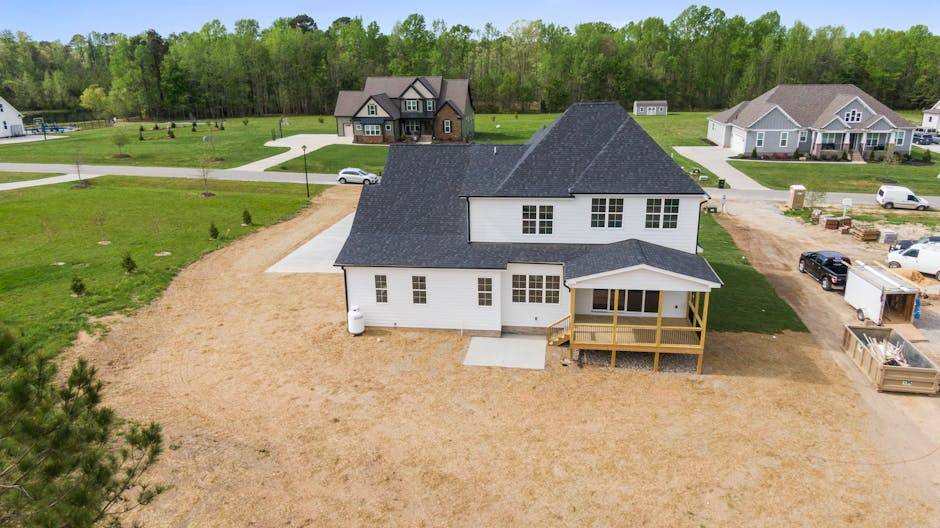
Why ADU Construction in Sunnyvale Is One of the Smartest Property Moves Right Now
ADU construction in Sunnyvale is the process of designing, permitting, and building a self-contained secondary dwelling unit on your residential property — and in Silicon Valley’s tight housing market, it’s become one of the most valuable things a homeowner can do. Sunnyvale is not just another suburb; it is the heart of the Silicon Valley innovation engine. With major tech campuses like Google, Apple, and LinkedIn either within city limits or just a short commute away, the demand for housing in Sunnyvale has reached a fever pitch. This is where accessory dwelling units (ADUs) enter the picture as a transformative solution for homeowners looking to maximize their land use.
The Silicon Valley Housing Context
In a region where the median home price often exceeds $2 million, the ability to add a second or even third living unit to your existing lot is a rare opportunity for wealth creation. Sunnyvale’s unique position—nestled between Mountain View, Santa Clara, and Cupertino—makes it a prime target for renters who want to live close to work but prefer the quiet, tree-lined streets of a residential neighborhood. By investing in an ADU, you are essentially creating a high-demand product in a market with zero vacancy risk.
| Topic | Key Facts |
|---|---|
| ADU types allowed | Detached, attached, garage conversion, Junior ADU (JADU) |
| Max size | Up to 1,200 sq. ft. depending on property |
| Streamlined permitting | New construction up to 800 sq. ft. on single-family lots needs only a Building Permit |
| Max ADUs on single-family lot | Up to 3 total (1 new construction + 1 conversion + 1 JADU) |
| Typical cost | $450–$500 per sq. ft.; a 750 sq. ft. unit starts around $340,000 |
| Timeline | 8–12 months from start to finish |
| Rental income potential | Up to $2,500/month |
| Property value boost | Up to 25–35% increase |
Why Now is the Time to Build
Recent changes in California state law have stripped away many of the barriers that once made ADU construction a nightmare. Minimum lot sizes have been abolished, parking requirements have been slashed, and the approval process has been mandated to move faster. Sunnyvale has responded by updating its local ordinances to be more “ADU-friendly,” recognizing that these units are a key part of solving the regional housing crisis. Whether you’re a first-timer or someone who’s already started researching, you’ll find everything you need here to move forward with confidence.
Understanding ADU Types and Benefits in Sunnyvale
When we talk about adu construction in sunnyvale, we aren’t just talking about a “shed in the back.” Modern ADUs are sophisticated, self-contained homes that include their own kitchen, bathroom, and private entrance. In Sunnyvale, you have several flavors to choose from, each offering unique advantages depending on your lot size and budget.
The Four Pillars of Sunnyvale ADUs
- Detached ADUs: These are standalone structures separated from the main house. They offer the most privacy for both the homeowner and the occupant. Because they are built from the ground up, they allow for the most creative architectural freedom.
- Attached ADUs: These share at least one wall with the primary residence. Think of it as a significant addition that functions as its own apartment. These are often more energy-efficient as they share thermal mass with the main house.
- Garage Conversions: This is often the fastest route to an ADU. By converting an existing garage into a living space, you save on foundation and framing costs. In Sunnyvale, where many homes have detached two-car garages, this is a very popular option.
- Junior ADUs (JADUs): These are smaller units contained entirely within the existing footprint of the main home. They are perfect for converting a spare bedroom or a master suite into a rental unit.
The Financial and Social Benefits
The benefits are hard to ignore. According to a study by the National Association of Realtors, adding an accessory dwelling unit can boost your property value by up to 35%. Beyond the resale value, many of our neighbors use these units for multi-generational living—housing elderly parents or adult children—while maintaining independent lives. If you are looking for experts to guide you, exploring ADU Builders Bay Area is a great place to start.
Defining the Junior ADU (JADU) Specifics
The JADU is the “lite” version of an ADU. In Sunnyvale, these are capped at 500 square feet and must be built within the walls of an existing or proposed single-family home. They require an efficiency kitchen (think small appliances and a sink) and can even share a bathroom with the main house to save space. One unique rule for JADUs is the owner-occupancy requirement: the property owner must live in either the main house or the JADU. This makes them ideal for homeowners who want to downsize into the JADU while renting out their main house for a significant profit.
Maximizing Rental Income in Silicon Valley
We live in one of the most expensive housing markets in the world. By completing an ADU project, you can tap into a massive rental demand. In Sunnyvale, a well-designed ADU can fetch up to $2,500 per month in rental income. This isn’t just “side money”; it’s a long-term investment that can pay off your mortgage faster. For those comparing Sunnyvale to other nearby markets, checking out the details for a Granny Flat San Francisco can provide a helpful perspective on regional rental yields.
Navigating Regulations for ADU Construction in Sunnyvale
Sunnyvale has its own set of rules that often go above and beyond state minimums. Navigating these is where the “genius” part comes in. To keep it simple, we’ve broken down the core requirements you’ll need to satisfy before breaking ground. The city has worked hard to align with California’s mandate to increase housing density, but local zoning still plays a major role.
| Property Type | Max New Construction ADUs | Max Conversion ADUs | Max JADUs |
|---|---|---|---|
| Single-Family | 1 | 1 | 1 |
| Multifamily (Existing) | Up to 8 (detached) | Min 1 / Max 25% of units | 0 |
Understanding California ADU Regulations is the first step, but Sunnyvale-specific zoning is what determines your project’s fate.
Size and Height Limits for Detached Units
In Sunnyvale, detached ADUs can generally reach up to 1,200 square feet, provided your lot size can support it without violating “lot coverage” rules. However, the height is typically restricted to 16 feet for single-story units. If you are aiming for a larger unit, you must also consider the Floor Area Ratio (FAR), which ensures the total buildings on your lot don’t overwhelm the neighborhood’s character. For lots under 6,000 square feet, the city may have stricter limitations on the total footprint to ensure adequate open space remains.
Setbacks and Easements
One of the most critical aspects of adu construction in sunnyvale is the setback requirement. State law now mandates that cities allow ADUs with side and rear setbacks of only 4 feet. This is a massive win for homeowners with smaller backyards. However, you must still be careful about utility easements—areas where the city or utility companies have the right to access underground lines. You cannot build over an easement, so a professional site survey is non-negotiable.
Parking Requirements and Transit Exemptions
One of the biggest hurdles in the past used to be parking. Today, things are much easier. Generally, you need one off-street parking space for your ADU. However, you are exempt from this requirement if:
- The ADU is located within a half-mile walking distance of public transit (which covers much of Sunnyvale near the Caltrain station or VTA lines).
- The ADU is part of an existing primary residence or an existing accessory structure (like a garage conversion).
- You live in a historic district.
For more nuanced details on how these rules compare to our neighbors, see the San Jose ADU Guidelines.
The Step-by-Step Process of Building an ADU
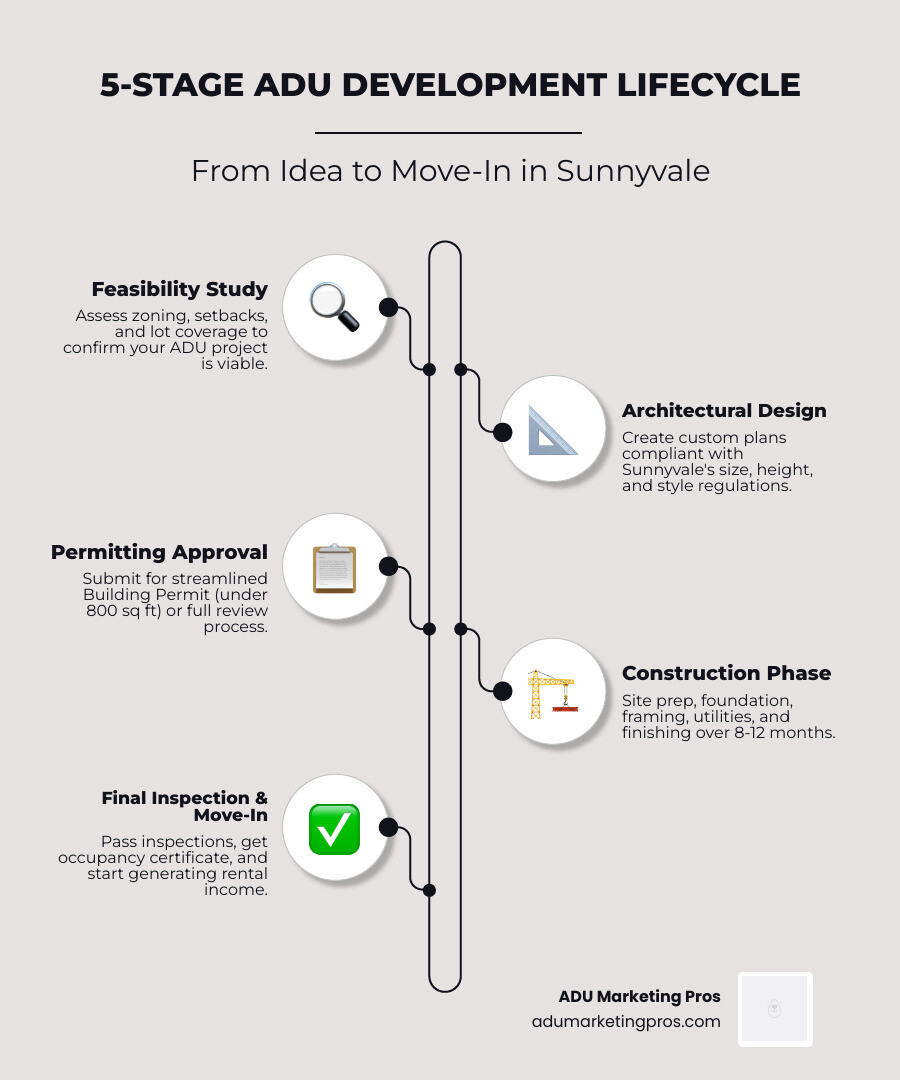
Building an ADU is a marathon, not a sprint. It starts with a feasibility study—checking your utility lines, soil, and zoning—and ends with a final signature from a city inspector. Because Sunnyvale is a built-out city, many projects involve working around existing mature trees and established utility grids.
The 7-Stage Development Lifecycle
- Feasibility & Planning: Can you actually build what you want? We look at setbacks (usually 4 feet from side and rear lines) and utility capacities. This stage often involves a “pre-application” meeting with Sunnyvale planning staff.
- Design: Working with an architect to create San Jose ADU Plans (or Sunnyvale-specific ones) that maximize every square inch. This includes choosing between a modern aesthetic or matching your existing home.
- Permitting: Submitting your “permit-ready” plans to the City of Sunnyvale. This can take 60 to 120 days depending on the complexity of the project.
- Site Prep & Foundation: Clearing the land, removing any old sheds, and pouring the concrete. This is the most disruptive phase for your backyard.
- Framing & Utilities: The “skeleton” of the house goes up, and plumbing/electrical lines are run. This is when you’ll see the ADU really take shape.
- Finishes: Drywall, flooring, cabinets, and paint. This is where your personal style comes to life.
- Final Inspection: The city ensures everything is up to code, from the smoke detectors to the energy-efficient windows.
Streamlined Permitting for ADU Construction in Sunnyvale
If you want to skip the headache of a “Miscellaneous Plan Permit” (MPP), keep your new construction ADU under 800 square feet. On single-family lots, units of this size qualify for streamlined review, meaning you only need a Building Permit. Sunnyvale also offers a gallery of pre-approved plans which can significantly cut down on design costs and approval times. You can see how this works by looking at Pre-Approved ADU Plans San Jose for inspiration.
Selecting a Contractor for ADU Construction in Sunnyvale
Don’t just hire the cheapest guy with a truck. You need a licensed builder who specializes in ADUs. Why? Because ADUs require unique knowledge of utility tie-ins and small-space engineering. For example, connecting a new ADU to an old sewer line requires specific permits and technical expertise that a general remodeler might not possess. Look for contractors who offer structural warranties (often up to 10 years) and have a portfolio of completed projects in the South Bay. If you’re looking for vetted professionals, check out Palo Alto ADU Builders for teams that understand the high standards of Silicon Valley.
Costs, Timelines, and Financing Your Project
Let’s talk numbers. ADU construction in Sunnyvale typically costs between $450 and $500 per square foot. While that sounds high, remember you are building a “miniature” luxury home with all the expensive components (kitchen, bath, HVAC) packed into a small footprint. Unlike a standard home where costs are spread over 2,500 square feet, an ADU concentrates the most expensive rooms into a fraction of the space.
Detailed Cost Breakdown
A standard 750 sq. ft. unit might start at $340,000, while custom units with high-end finishes can exceed $475,000. For a deeper dive into these numbers, our ADU Construction Cost guide breaks down where every dollar goes. Expect the total timeline to be 8 to 12 months: 3–5 months for design and permits, and 4–7 months for actual construction. You can use our ADU Cost Calculator to get a personalized estimate.
Factors Influencing Total Investment
Not all lots are created equal. If your backyard has a steep slope (topography), your foundation costs will rise significantly due to the need for retaining walls or specialized piers. If your main electrical panel is 40 years old, you’ll likely need a utility upgrade to support the extra load of an ADU’s appliances and HVAC. Additionally, choosing between a custom site-built unit and a modular unit will impact your bottom line. Check out the Bay Area ADU Cost overview for more regional data.
Smart Financing Strategies for Homeowners
Most people don’t have $350k sitting in a shoebox. Common ways to fund your project include:
- HELOC (Home Equity Line of Credit): Borrowing against your home’s equity. This is often the most flexible option with lower interest rates.
- Cash-Out Refinance: Refinancing your mortgage for a higher amount and taking the difference in cash. This is great if you can secure a lower overall interest rate.
- Construction Loans: Specialized loans that pay out in “draws” as construction milestones are met. These are ideal for homeowners who don’t have enough equity yet.
- BayREN Rebates: You can often get money back for installing energy-efficient heat pumps or water heaters, helping to offset the initial investment.
For more tips, see our guide on ADU Cost Bay Area.
Design, Sustainability, and Neighborhood Standards
Sunnyvale takes pride in its neighborhoods. Whether you live in a mid-century modern pocket or a classic Craftsman area, your ADU should look like it belongs there. The goal is to create a seamless addition that enhances the aesthetic of the entire property.
Matching Sunnyvale’s Architectural Styles
We recommend matching the roof pitch, siding material, and window styles of your ADU to your primary home. Not only does this keep the neighbors happy, but it also maximizes the “appraisal value” because the property looks like a cohesive estate rather than a main house with a trailer in the back. Privacy screening, such as strategically placed trees or frosted windows, is also essential for maintaining harmony between the two units. In Sunnyvale, the “Objective Design Standards” require that ADUs over a certain height must have specific architectural treatments to prevent them from looking like a plain box.
Modular vs. Site-Built ADUs
- Modular ADUs: Built in a factory and craned into your backyard. They offer incredible speed and cost predictability. Because they are built in a controlled environment, there are fewer weather-related delays.
- Site-Built ADUs: Traditional construction. These allow for 100% customization and are often easier to “blend” into the existing architecture of your home. If you have a very narrow side yard where a crane cannot reach, site-built is your only option.
Sustainability and Energy Efficiency
Sustainability is no longer optional. All new ADUs in California must comply with Title 24 energy standards. This includes high-efficiency HVAC systems, superior insulation, and solar-ready roofing. In fact, most new detached ADUs are required to have solar panels installed. This not only helps the environment but also significantly reduces the monthly utility bills for your tenants, making your unit more attractive in the rental market.
Frequently Asked Questions about Sunnyvale ADUs
How do I legalize an unpermitted ADU built before 2020?
Sunnyvale offers a path to redemption! If your unit was built before Jan 1, 2020, you can apply for legalization. The city may grant a five-year “deferred enforcement” period to bring the unit up to health and safety codes. The focus is on safety (fire exits, proper wiring) rather than strict zoning perfection. This is a great way to turn an “under the table” unit into a legal, value-adding asset.
Can I build more than one ADU on a single-family lot?
Yes! Under current rules, a single-family lot can technically have a Detached ADU, a Conversion ADU (like a garage), and a Junior ADU (JADU). However, total square footage and lot coverage rules still apply, so you’ll need a very smart site plan. This “triple threat” strategy is becoming popular for homeowners looking to maximize rental yield.
Do I need separate utility meters for my ADU?
You aren’t required to have separate meters for water or electricity if the ADU is on a single-family lot, but it’s highly recommended if you plan to rent the unit out. Sub-metering allows you to bill the tenant accurately for what they use, preventing disputes over utility costs. For gas, many modern ADUs are built as “all-electric” to simplify the process and meet new green building codes.
Will an ADU increase my property taxes?
Yes, but only for the value of the ADU itself. Your primary home will not be reassessed at current market value. This is a common misconception. The tax assessor will add the value of the new construction to your existing tax base, which is a small price to pay for the massive increase in property value and rental income.
Conclusion
ADU construction in Sunnyvale is a journey that transforms your backyard into a powerhouse of value. Whether you are looking to house a loved one or secure your financial future with rental income, the current regulatory environment in Sunnyvale is more favorable than ever. The combination of high rental demand, streamlined state laws, and the inherent value of Silicon Valley real estate makes this one of the most secure investments a homeowner can make.
At ADU Marketing Pros, we specialize in helping construction and architecture firms navigate this booming market. We believe in showcasing expertise over price, helping the best builders in the Bay Area connect with homeowners who value quality. If you’re a professional in the space looking to grow your revenue through targeted SEO and digital strategies, contact ADU Marketing Pros for specialized marketing services.
Building an ADU is a big step, but with the right information and the right team, it’s a move that pays dividends for decades to come. From the initial feasibility study to the moment your first tenant moves in, every step is an investment in your future. Ready to start? Your backyard is waiting.