
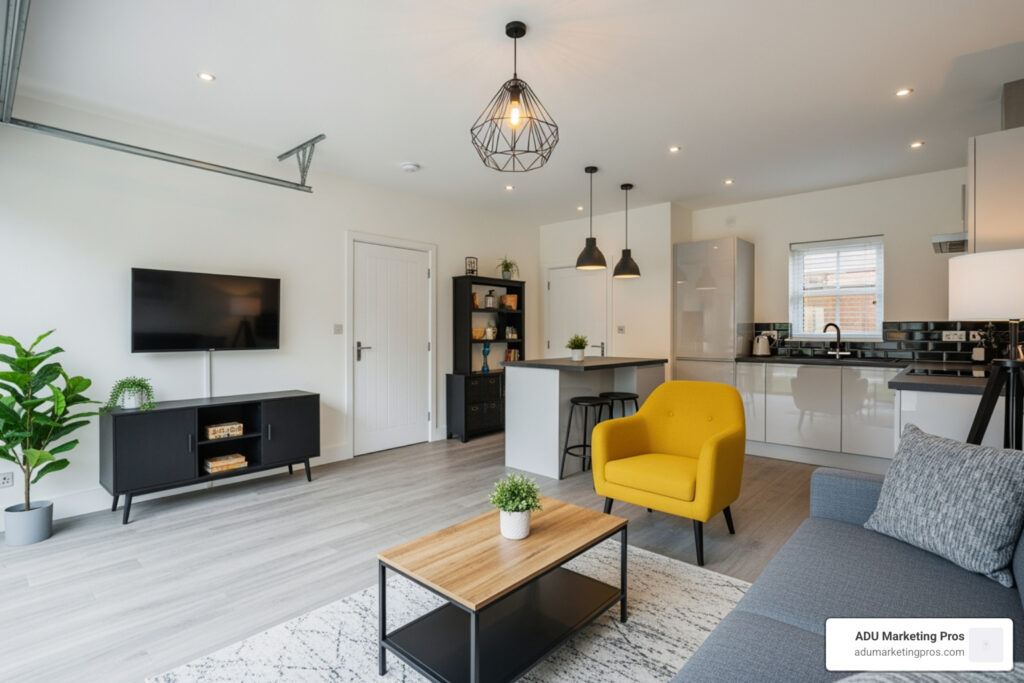
Why Converting Your Garage Is One of Today’s Smartest Housing Investments
The cost to convert 2 car garage to apartment typically ranges from $110,000 to $175,000 in 2024-2025, though simpler conversions can start around $20,000 and luxury builds may exceed $200,000. Your final price depends on factors like location, finish quality, plumbing complexity, and whether you’re building a full accessory dwelling unit (ADU) or a basic guest suite. In the current economic climate, where housing inventory remains at historic lows and interest rates have fluctuated, homeowners are increasingly looking inward—literally—to find ways to maximize their existing property’s potential.
Converting a two-car garage into livable space has become one of the most popular home improvements in America. Housing shortages, rising property values, and new ADU-friendly legislation—particularly in California—have transformed what was once just a parking spot into a serious financial opportunity. This shift is part of a broader movement toward “gentle density,” allowing neighborhoods to accommodate more residents without changing the fundamental character of the community. For many, the garage is the final frontier of underutilized space, often serving as a cluttered storage unit for items that could easily be housed in a small shed, while the square footage itself is worth hundreds of thousands of dollars in the real estate market.
Quick Cost Breakdown:
- Budget conversion (basic bedroom/office): $20,000–$50,000
- Standard apartment (kitchen + bath): $110,000–$150,000
- Premium ADU (California markets): $150,000–$200,000+
- Cost per square foot: $150–$300 (for 400–600 sq ft spaces)
The numbers speak for themselves. According to recent industry data, garage conversions can deliver an impressive 80% return on investment when you sell your home. For homeowners who rent out their converted space, monthly income of $2,000 to $3,000 is common in competitive markets like Los Angeles or the Bay Area. That’s a potential 20% annual ROI on your initial investment. Beyond the financial gains, these units provide essential housing for multi-generational families, allowing adult children to stay close to home or providing a safe, private space for aging parents to age in place while maintaining their independence.
But unlike building a detached ADU from scratch—which can easily cost $180,000 or more—converting your existing garage works with the structure you already have. You’re not paying for a new foundation, framing, or roof in most cases. You’re changing unused square footage into something that generates real value. However, the process involves more than just throwing up some drywall. You’ll need proper permits, plumbing and electrical upgrades, insulation, HVAC systems, and compliance with local building codes. Whether you’re creating rental income, housing aging parents, or building equity for resale, understanding the true costs upfront helps you plan smarter and avoid budget surprises.
This guide breaks down every expense you’ll encounter—from demolition and permits to kitchen appliances and utility connections—so you can make informed decisions about your garage conversion project. We will explore the nuances of California’s specific legislative environment, the technical requirements of Title 24 energy compliance, and the logistical differences between attached and detached structures.
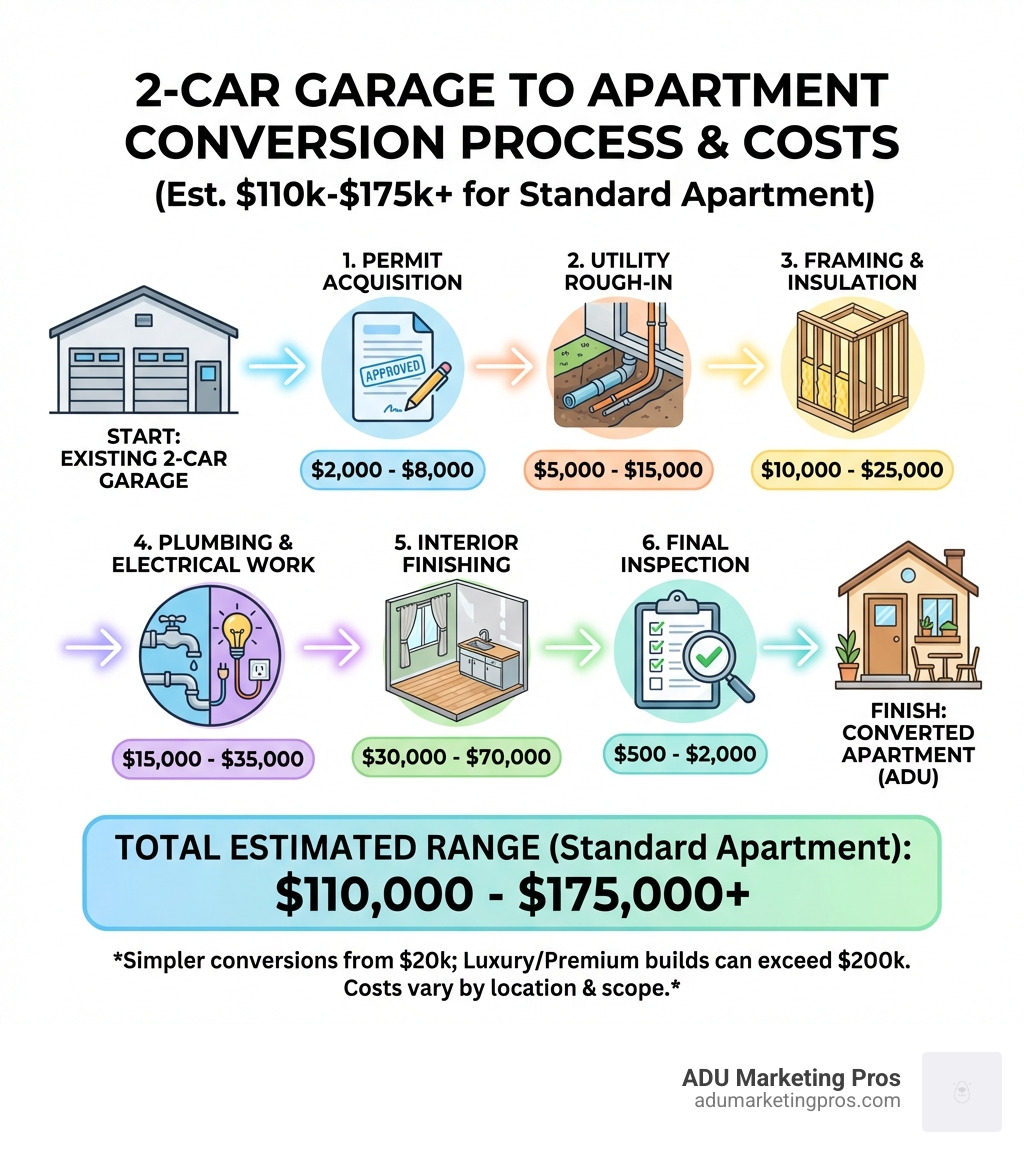
Cost to convert 2 car garage to apartment terms to remember:
The Average Cost to Convert 2 Car Garage to Apartment in 2024/2025
When we talk about the cost to convert 2 car garage to apartment in California, we’re looking at a significant investment that promises substantial returns. While some sources might quote lower figures for basic garage conversions (like simply finishing a room), changing a two-car garage into a fully functional apartment (an Accessory Dwelling Unit or ADU) in our high-demand markets like Los Angeles, San Diego, or the San Francisco Bay Area, typically falls into a higher range. This is because a legal apartment requires its own infrastructure, separate from the main house, to ensure it is a safe and habitable dwelling.
As our introduction noted, you can expect to spend between $110,000 and $175,000 for a standard 2-car garage apartment conversion. This range accounts for all the essential components, from design and permits to construction and finishes. For those aiming for a high-end, luxury ADU, or if structural challenges arise—such as the need for a new slab or significant seismic retrofitting—costs can certainly exceed $200,000. However, simpler conversions, perhaps for a basic guest suite without a full kitchen, might start closer to the $20,000 to $50,000 mark. It is vital to distinguish between a “finished garage” and a “legal ADU,” as the latter adds significantly more value to the property but requires a much higher level of investment in utilities and fire safety.
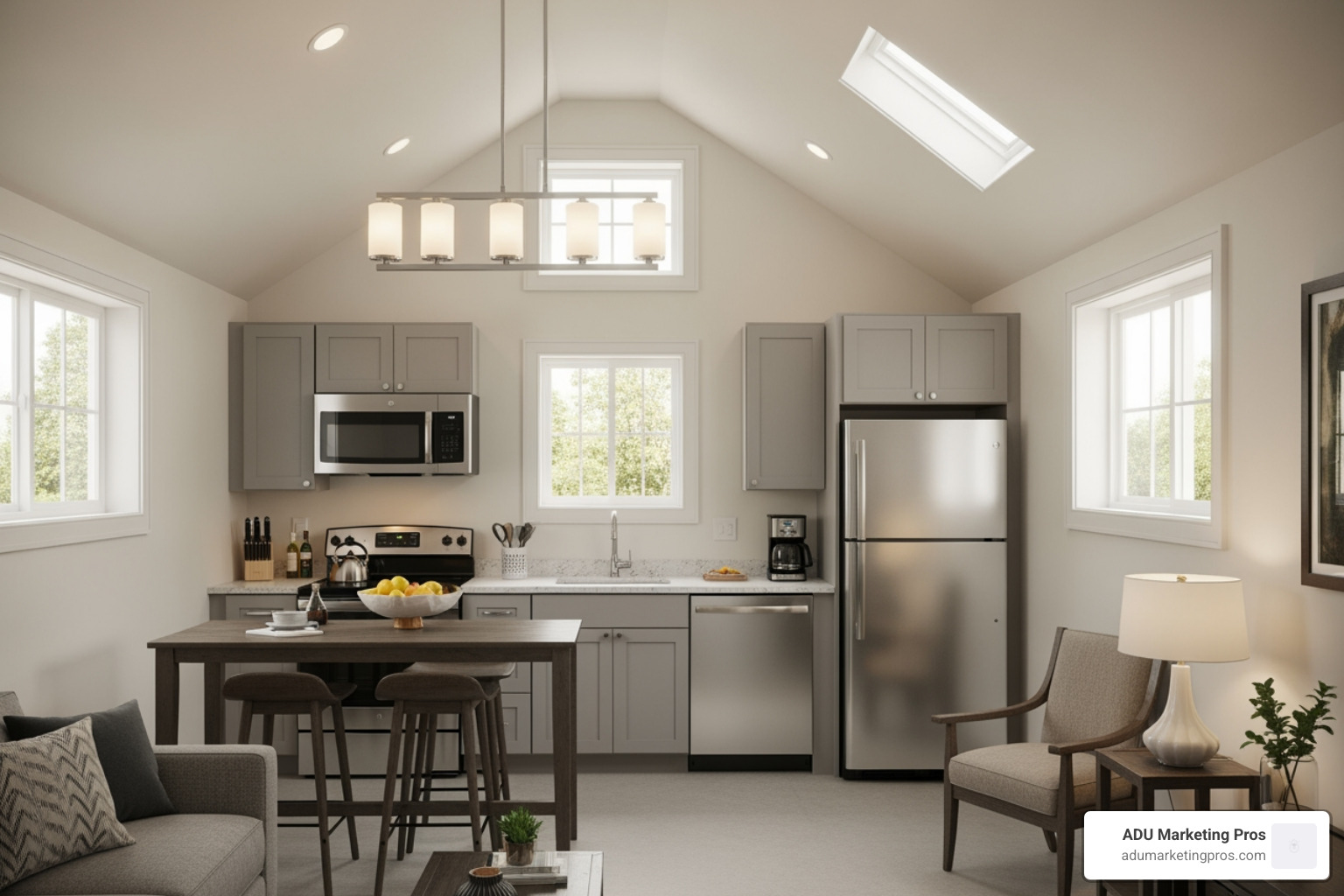
To put these numbers into perspective, let’s look at how different levels of conversion stack up:
| Conversion Type | Typical Cost Range (2-Car Garage) | Key Features |
|---|---|---|
| Basic Bedroom Conversion | $5,000 – $17,000 | Insulation, drywall, flooring, lighting, egress window. No plumbing/kitchen. |
| Guest Suite (Bedroom + Bathroom) | Up to $25,000+ | Adds a basic bathroom (toilet, sink, shower). Still no kitchen. |
| Full ADU Apartment (Standard) | $110,000 – $150,000 | Complete living facilities: bedroom, full bathroom, kitchen, separate entrance, HVAC, permits. |
| Full ADU Apartment (Premium) | $150,000 – $200,000+ | High-end finishes, custom cabinetry, advanced HVAC, potential structural modifications, complex permits. |
These figures highlight that the more amenities and independence you build into your garage conversion, the higher the investment will be. A standard 2-car garage is roughly 400 to 500 square feet, which is the “sweet spot” for ADU development, as units under 750 square feet are often exempt from certain impact fees in California, potentially saving you thousands of dollars.
Estimating the Cost to Convert 2 Car Garage to Apartment Per Square Foot
When budgeting for your garage apartment, thinking in terms of square footage can provide a useful benchmark. A standard two-car garage typically measures anywhere from 400 to 600 square feet. This size offers a fantastic canvas for a studio apartment or a cozy one-bedroom unit. In many urban areas, a 500-square-foot apartment is considered a generous size for a single professional or a couple.
For a full ADU apartment conversion in California, we generally see costs ranging from $150 to $300 per square foot. This means a 400-square-foot garage conversion could cost between $60,000 and $120,000, while a larger 600-square-foot space might be $90,000 to $180,000. These per-square-foot costs are influenced by a few critical factors:
- Material Quality: Are we using budget-friendly laminate flooring and pre-fabricated cabinets, or high-end engineered hardwood and custom millwork? The choice of countertops (quartz vs. laminate) and appliances can swing the budget by $10,000 alone.
- Labor Rates: Our local markets in San Jose, Palo Alto, and San Francisco have some of the highest labor costs in the nation, which naturally drives up the per-square-foot price. Skilled trades like electricians and plumbers are in high demand.
- Design Complexity: A simple, open-concept studio will be less expensive per square foot than a layout requiring multiple partitioned rooms, vaulted ceilings, or intricate architectural details like skylights.
- Utility Requirements: Extensive plumbing or electrical upgrades, especially if they involve trenching new lines across a driveway or upgrading a 100-amp panel to 200-amp service, will increase the per-square-foot cost significantly.
How Intended Use Affects the Cost to Convert 2 Car Garage to Apartment
The primary reason you’re converting your garage is arguably the single biggest determinant of your budget. Are you dreaming of a space for rental income, a private guest suite, or a comfortable in-law unit for family? Each of these uses comes with its own set of requirements and, consequently, its own price tag.
Rental Income (Full ADU): If your goal is to generate rental income, your converted garage must qualify as a legal Accessory Dwelling Unit (ADU). This means it needs to be a self-contained living space with a full kitchen, a full bathroom, and independent living provisions. Adding a kitchen alone can range from $6,000 for a basic setup to over $50,000 for a high-end chef’s dream. Similarly, a full bathroom addition will typically add $15,000 to $30,000 to the total cost to convert 2 car garage to apartment. These are the most expensive conversions, but they offer the highest return on investment because they can be legally rented to third parties.
Guest Suite: A guest suite might not require a full kitchen, potentially saving you a significant chunk of change. However, most homeowners still opt for a full bathroom for guest comfort. You might consider a kitchenette with a mini-fridge and microwave instead of a full range and oven. This is often referred to as a “Junior ADU” (JADU) if it’s within the existing structure and meets specific size and amenity requirements.
In-Law Unit: Similar to a rental ADU, an in-law unit usually requires full independent living facilities, including a kitchen and bathroom, to ensure the comfort and privacy of your loved ones. The main difference might be in the level of finishes, which could be more personalized than a rental unit. Accessibility features, such as curbless showers and wider doorways, might also be prioritized for aging family members.
Regardless of the intended use, our advice is always to plan for the highest level of functionality you might ever need. Adding a kitchen or bathroom later is far more disruptive and costly than doing it during the initial conversion. If you’re looking to tackle significant financial projects like this, it’s always a good idea to ensure your personal finances are in order. Finally get out of debt before starting on major home improvements to ensure you have the credit and capital needed for a smooth construction process.
Key Factors Influencing Your Garage Apartment Budget
Beyond the size and intended use, several critical components drive the overall cost to convert 2 car garage to apartment. These are the foundational elements that transform a cold, utilitarian space into a warm, habitable home. Getting these right is crucial for comfort, safety, and code compliance. In California, the California Department of Housing and Community Development (HCD) provides extensive guidelines that influence these costs, particularly regarding state-mandated ADU laws that override local zoning in many cases.
Here’s a breakdown of the main cost factors:
Plumbing and Electrical Infrastructure
Think of plumbing and electrical as the lifeblood of your new apartment. Without them, it’s just a fancy shed. For a full apartment conversion, you’ll need to run new water supply lines, drainage, and sewer lines, and significantly upgrade the electrical system. This is often where the “hidden” costs of a conversion lie, as the existing garage likely only has a single light bulb and one or two outlets.
- Plumbing: If your garage is attached to your home, connecting to existing water and sewer lines can be simpler, though it might still involve jackhammering concrete for new drain lines. For detached garages, trenching new utility lines from the main house to the garage is often required, which adds considerable cost. Expect to pay anywhere from $3,000 to $10,000 for plumbing work, especially if you’re adding a full bathroom and kitchen. Each new fixture (toilet, sink, shower) can add hundreds to thousands of dollars. Furthermore, you must ensure the existing sewer lateral can handle the additional load, which may require a camera inspection.
- Electrical: Garages typically have minimal electrical service. An apartment will require new wiring, additional circuits for appliances (including 220V outlets for a stove or dryer), and potentially an upgrade to your main electrical panel. If your home currently has a 100-amp panel, you will almost certainly need to upgrade to a 200-amp panel to accommodate the ADU’s HVAC and kitchen appliances. Electrical work can range from $2,000 to $5,000, depending on the extent of the upgrades and whether a panel upgrade is necessary.
HVAC and Climate Control
Garages are notoriously poorly ventilated and temperature-regulated. To make the space livable, you’ll need a dedicated HVAC system. Most garage conversions utilize a mini-split heat pump system. These are highly efficient, provide both heating and cooling, and don’t require extensive ductwork, which is ideal for small spaces. A quality mini-split installation typically costs between $4,000 and $7,000. This is a critical investment for tenant comfort and meeting energy efficiency standards.
Insulation, Drywall, and Title 24 Compliance
In California, all new habitable spaces must meet Title 24 Energy Standards. This means your garage conversion must be highly insulated to minimize energy consumption. You’ll need to insulate the walls, the ceiling, and potentially even the floor if you’re not installing a new slab.
- Insulation and Drywall: Expect to spend $5,000 to $10,000 on professional insulation and drywall installation. This includes the cost of fire-rated drywall, which is often required on walls shared with the main house or located near property lines.
- Windows and Doors: You’ll need to replace the garage door with a permanent wall and install high-efficiency windows and a proper entry door. At least one window in the bedroom must meet “egress” requirements, meaning it’s large enough for a person to climb out of in an emergency. This can cost $4,000 to $8,000 depending on the number and quality of the units.
Permits, Design Fees, and Legal Requirements
This is where the excitement of design meets the reality of regulations. In our service areas like Los Angeles, San Diego, and the Bay Area, local ordinances and statewide ADU laws are strict but also highly supportive of garage conversions.
- Permits and Fees: You absolutely need permits for a garage apartment conversion. These cover structural, electrical, plumbing, and HVAC work, ensuring your project meets safety and zoning standards. Permit costs in California can range from $3,000 to $10,000, and sometimes even higher. This includes plan review charges and potentially school impact fees if your ADU is over 750 sq ft. Understanding the local nuances, such as Los Angeles City Ordinance No. 186481, is crucial.
- Design Fees: Unless you’re an architect yourself, you’ll need professional plans. Architect or designer fees typically range from $5,000 to $10,000 for a detailed garage conversion plan. While this might seem like an upfront cost, a well-designed plan can save you from costly mistakes and delays down the line by ensuring the layout is functional and code-compliant from day one.
Attached vs. Detached: How Structure Impacts Your Investment
The question of whether your 2-car garage is attached or detached is a significant one when calculating the cost to convert 2 car garage to apartment. While both offer excellent potential for ADU conversion, the logistical and financial implications can differ substantially. The choice often comes down to your property’s layout and your goals for privacy and accessibility.
The Logistics of Attached Conversions
Converting an attached garage often benefits from proximity to existing home utilities. Running new plumbing and electrical lines might be less complex, as they can often tie into the main house’s systems with shorter runs. This can lead to some cost savings, especially in labor and trenching. However, attached garages come with their own set of challenges:
- Fire Separation: Attached garages require strict fire separation (firewalls) between the ADU and the main residence. This usually involves installing 5/8-inch Type X drywall on all shared walls and ceilings, and ensuring any connecting doors are fire-rated.
- Noise Transfer: Because the units share a wall, soundproofing becomes a major consideration. You may need to invest in resilient channels or specialized acoustic insulation to ensure privacy for both the main house and the ADU occupant.
- Structural Integration: If you’re changing the roofline or adding large windows, you must ensure the structural changes don’t compromise the integrity of the main house.
The Privacy and Cost of Detached Units
A detached 2-car garage offers greater privacy for the ADU occupant and potentially more design flexibility, as you aren’t constrained by the footprint of the main house. However, it typically incurs higher utility costs. Running new underground water, sewer, and electrical lines from the main house to the detached structure can increase the overall cost to convert 2 car garage to apartment by 20% to 30%.
This is due to the extensive trenching and new hook-ups required. If the garage is far from the main sewer line, you might even need a sewage ejector pump, which adds both initial cost and long-term maintenance. If you’re building in an area like San Diego, where detached structures are common, these utility tie-ins are a primary consideration. Despite the higher cost, detached ADUs often command higher rents because they feel like a standalone “tiny home” rather than a converted part of a larger house.
Regardless of whether your garage is attached or detached, ensuring the structural integrity of the existing building is paramount. Our team always recommends a thorough assessment to identify any necessary foundation repairs or framing reinforcements before diving into the conversion. Many older garages were built with simple “slab-on-grade” foundations that may not have the moisture barriers required for modern living spaces, necessitating a new vapor barrier and flooring sub-structure.
Maximizing Your Return: ROI and Long-Term Financial Benefits
Converting your 2-car garage into an apartment isn’t just about adding space; it’s a strategic financial move, especially in California’s competitive housing market. The return on investment (ROI) and long-term financial benefits are compelling, often outperforming traditional stock market investments over a 10-to-20-year horizon.
- Impressive Resale ROI: A well-executed garage conversion can yield an impressive 80% return on investment when you sell your home. This means if you spend $150,000 on the conversion, you could see your property value increase by $120,000 or more. In some of our markets, like San Jose or Palo Alto, a quality ADU can boost property value by $200,000 to $500,000 because buyers value the flexibility of having a rental unit or a space for extended family.
- Lucrative Rental Income: One of the most attractive benefits is the potential for rental income. In cities like San Francisco, monthly rents for ADUs can exceed $3,000. Even in other parts of the Bay Area or Los Angeles, $2,000 to $3,000 per month is common. This translates to a potential 20% annual ROI on your investment, allowing you to recoup your initial outlay in as little as five to seven years. Imagine paying down your mortgage principal faster with this extra income!
- Long-Term Asset Growth: Beyond immediate income, a garage ADU is a long-term asset. A $110,000 initial investment in a rental ADU could realistically become a $1.2 million asset in 30 years, assuming modest property appreciation and reinvested rental yields. It serves as a powerful hedge against inflation.
- Property Tax Impact: While your property taxes will likely increase due to the added value and square footage, the financial gains from rental income and appreciation typically far outweigh this cost. In California, the reassessment is usually limited to the value of the new construction, rather than a full reassessment of the entire property.
Cost-Saving Strategies for Homeowners
We understand that the cost to convert 2 car garage to apartment can feel daunting. However, there are smart strategies you can employ to keep your budget in check without sacrificing quality or functionality. Planning is the most effective way to save money; changes made mid-construction are always more expensive than those made on paper.
- Strategic DIY: For tasks like painting, installing flooring, or basic landscaping, taking a DIY approach can cut costs by approximately 50% on those specific line items. However, we strongly advise leaving complex electrical, plumbing, and structural work to licensed professionals. Trying to DIY these critical components can lead to costly mistakes, safety hazards, and permit issues that could haunt you when you try to sell the home.
- Smart Material Selection: You don’t need the most expensive materials to create a beautiful and functional space. Opt for mid-range, durable finishes like luxury vinyl plank (LVP) flooring, which is waterproof and perfect for small spaces. Pre-fabricated cabinets and standard fixtures offer excellent value and aesthetics without breaking the bank. You can achieve a “high-end” look with smart lighting and a fresh coat of modern paint.
- Efficient Design-Build Firms: Consider working with a design-build firm. These companies handle both the design and construction phases, streamlining communication and often reducing overall costs by minimizing errors and delays. They have a vested interest in ensuring the design is actually buildable within your budget.
- Simple Layouts: Stick to a straightforward floor plan. Complex designs with many angles, custom built-ins, or extensive structural modifications will naturally increase costs. A simple, open studio layout is often the most cost-effective and can feel larger than a cramped one-bedroom.
- Leverage Existing Structure: The beauty of a garage conversion is that you’re working with an existing structure. Minimize changes to the foundation, exterior walls, and roofline where possible. This saves on significant structural costs. If the garage door opening can be used for a large window or sliding door, you save on the cost of framing new openings.
- Explore Funding and Incentives: Look into local government grants, loans, and tax incentives for ADU construction. Programs like the CalHFA ADU Grant Program in California, which has offered up to $40,000 for low- and moderate-income homeowners in the past, can significantly offset your costs. And as you plan your finances, a solid investment strategy can also help fund your dreams. Start investing with a free bonus can be a great way to kickstart your savings for such a project.
Frequently Asked Questions about Garage Conversions
We hear a lot of questions from homeowners considering this exciting journey. Here are some of the most common ones regarding the cost to convert 2 car garage to apartment and the logistical hurdles involved:
How long does it take to convert a 2-car garage into an apartment?
The timeline for converting a 2-car garage into a full apartment (ADU) is a bit longer than a simple room conversion. While a basic finish might take 2-6 weeks, a comprehensive apartment conversion in California typically spans 4 to 6 months. This includes the design phase (4-8 weeks), permit acquisition (4-12 weeks depending on the city), and actual construction (12-16 weeks). For larger, more complex ADU projects, or if unexpected issues arise—like discovering a cracked foundation or needing a utility upgrade—the entire process from start to finish can extend to 9 to 12 months. Patience is a virtue, and thorough planning helps keep things on track.
Does a garage conversion always require a bathroom and kitchen?
If your goal is to create an “apartment” or a legal Accessory Dwelling Unit (ADU), then yes, it will absolutely require a bathroom and a kitchen. By definition, an ADU must provide “complete independent living facilities,” which includes permanent provisions for living, sleeping, eating, cooking, and sanitation. Without these, it’s considered a finished room or guest suite, not a self-contained apartment. If you only need extra space for a home office or a simple guest room, you might be able to forgo a full kitchen, but a bathroom is almost always a highly recommended addition for convenience and future flexibility. Note that a “kitchen” in an ADU usually requires a built-in sink, a stove or cooktop, and a refrigerator.
Will converting my garage decrease my home’s resale value?
This is a common concern, but in most cases, the answer is no, converting your garage will not decrease your home’s resale value; it will likely increase it. A well-executed garage conversion that adds legal, functional living space, especially a rental ADU, significantly improves your property’s appeal and market value. While you might lose covered parking, the gain in habitable square footage, potential rental income, and flexibility for multi-generational living often far outweighs this. In California’s housing market, where extra living space is highly coveted, an ADU is viewed as a major asset. The key is ensuring the conversion is professionally done, meets all codes, and integrates seamlessly with your existing home’s aesthetic.
What about parking requirements?
In many parts of California, state law now prohibits local jurisdictions from requiring replacement parking when a garage is converted into an ADU, especially if the property is located within a half-mile of public transit. This has been a game-changer for garage conversions, as it removes one of the biggest hurdles homeowners previously faced. However, you should always check your local ordinances to see if any specific “off-street” parking rules still apply to your specific lot or if you live in a high-demand coastal zone.
Are solar panels required for a garage conversion?
Under the current California Building Standards Code, new detached ADUs are generally required to have solar panels. However, for garage conversions (which are considered additions or alterations to an existing structure), solar panels are often not required unless you are significantly expanding the footprint of the building. This can save you $10,000 to $15,000 in upfront costs compared to building a new detached ADU from scratch.
Conclusion
The cost to convert 2 car garage to apartment is a significant investment, typically ranging from $110,000 to $175,000 for a full ADU apartment in California’s vibrant markets. However, as we’ve explored, this investment comes with powerful returns—from substantial property value increases and lucrative rental income to improved living flexibility for your family. By utilizing the existing structure of your garage, you are taking a shortcut to property development that is both more affordable and more sustainable than new construction.
Understanding the key cost factors, from plumbing and electrical infrastructure to permits and design fees, is essential for strategic planning. Whether your garage is attached or detached, each scenario presents unique budgetary considerations. By embracing smart cost-saving strategies like selective DIY, wise material choices, and exploring available funding, you can make your garage apartment dream a reality. The transition from a storage space for cars to a high-value living space is one of the most effective ways to build wealth through real estate today.
At ADU Marketing Pros, we understand the immense potential these conversions open up for homeowners. Our expertise lies in helping firms like yours effectively communicate this value to potential clients, ensuring that every homeowner considering a garage apartment conversion knows the transformative power of a well-executed ADU. For more in-depth information and resources on maximizing your ADU project, explore our site. More info about ADU garage conversions is just a click away. Start your journey today and turn that underutilized garage into a cornerstone of your financial future.