
The Tiny Home Movement Is Bigger Than Ever — Here’s Who’s Leading It
Top rated tiny home builders are in high demand right now — and for good reason.
More Americans are choosing to downsize, cut costs, and live with a smaller footprint. The tiny home market has exploded, with builders ranging from seasoned 25-year veterans to fast-growing newcomers contracting hundreds of homes per year.
Here’s a quick look at some of the most recognized tiny home builders in the US:
| Builder | Location | Specialty | Starting Price |
|---|---|---|---|
| Tumbleweed Tiny House Company | Sonoma, CA | THOWs, largest US producer (est. 1999) | ~$30,000+ |
| Tiny Heirloom | Portland, OR | Luxury custom THOWs | ~$80,000+ |
| ESCAPE Homes | Rice Lake, WI | Award-winning designs, 25 years exp. | ~$50,000+ |
| Tru Form Tiny | Eugene, OR | Craftsman & Urban THOWs | ~$139,800+ |
| United Tiny Homes | West Coast | Fast delivery, Inc. 5000 honoree | ~$50,000+ |
| Wind River Tiny Homes | Chattanooga, TN | High-end custom builds | ~$60,000–$100,000+ |
| Mint Tiny House Company | Vancouver, BC | Energy-efficient THOWs | ~$70,000–$85,000 |
| Oregon Cottage Company | Eugene, OR | Foundation & park model homes | Varies |
| Forever Tiny Homes | Anderson, CA | 11+ years exp., 24,000 sq ft facility | Varies |
| Rocky Mountain Tiny Houses | Durango, CO | Mountain-ready builds | ~$30,000–$85,000 |
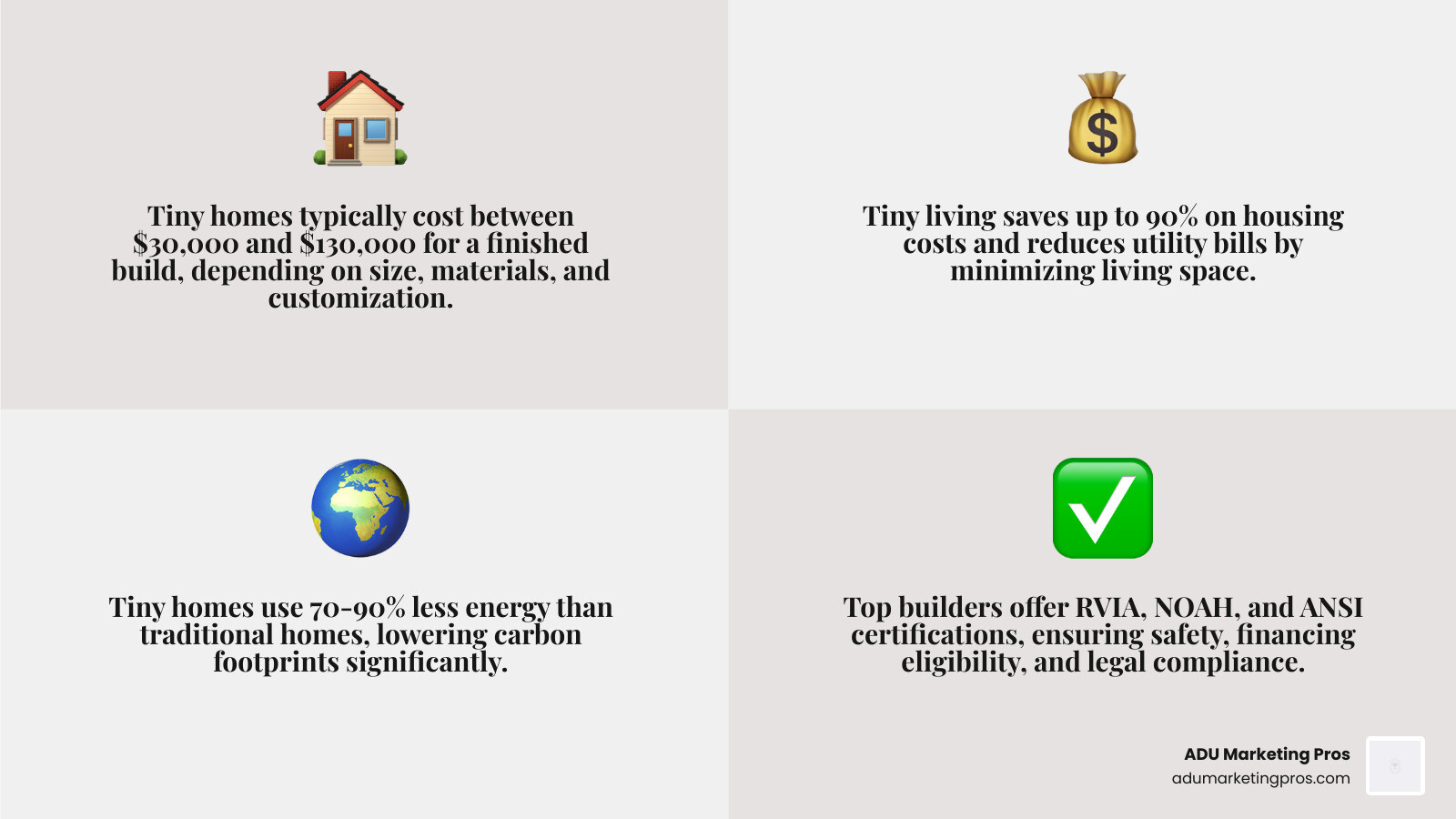
Tiny homes can cost anywhere between $30,000 and $130,000 for a finished build. The price depends on size, materials, customization level, and how far the home needs to be shipped.
Choosing the right builder is not simple. There are dozens of companies out there — each with different strengths, certifications, and design philosophies. Some specialize in tiny homes on wheels (THOWs). Others focus on permanent foundation homes or park models. Some are built for off-grid living. Others lean into luxury finishes.
This guide cuts through the noise. It compares the top rated tiny home builders across the US so you can make a confident, informed decision.
Discover more about top rated tiny home builders:
Key Factors to Evaluate Top Rated Tiny Home Builders

When we look for the “best” in any industry, we have to look past the pretty photos on Instagram. For top rated tiny home builders, the real value lies in the “envelope”—the structural shell that keeps you warm, dry, and safe. Because tiny homes are often moved or subjected to extreme weather, the construction expertise of your chosen firm is paramount.
We recommend evaluating builders based on these core pillars:
- Construction Expertise: How long have they been in business? A company like ESCAPE Homes has been at it for 25 years, while Tumbleweed helped spark the movement in 1999. Experience usually translates to better moisture management and road-ready engineering.
- Customization Flexibility: Some builders offer “production models” to keep costs down, while others like stanleytinyhomes.com start from a blank slate. If you have specific accessibility needs or a unique aesthetic, a custom shop is your best bet.
- Premium Materials: In a small space, every material choice is magnified. Look for builders using real wood, low-VOC finishes, and high-quality appliances. sustainable living isn’t just a buzzword; it’s about choosing materials that last decades rather than years.
- Energy Efficiency: This is especially critical for our clients in the San Francisco Bay Area or the Pacific Northwest. High R-value insulation (like spray foam) and low-E windows can reduce energy costs by up to 50%.
- Structural Warranties: A standard warranty is usually one year, but premium builders may offer up to 10 years on the structure. This is a massive indicator of how much a builder trusts their own work.
Comparing Tiny Home Types
| Feature | Tiny Home on Wheels (THOW) | Park Model (RV) | Foundation-Based (ADU) |
|---|---|---|---|
| Mobility | High (Towable) | Low (Needs Professional Move) | None (Permanent) |
| Size Limit | Usually under 8.5′ wide | Up to 12’–15′ wide | Varies by local code |
| Financing | Personal/RV Loan | RV Loan | Construction/Mortgage |
| Longevity | 20–30 years | 30–50 years | 50+ years |
Understanding Certifications for Top Rated Tiny Home Builders
If you’ve spent five minutes researching this topic, you’ve likely seen acronyms like RVIA, NOAH, and ANSI. These aren’t just alphabet soup—they are the keys to your home’s legality and safety.
- RVIA (Recreational Vehicle Industry Association): This is the gold standard for towable tiny homes. It tells lenders and insurance companies that your home meets specific safety standards for plumbing, heating, and electrical systems. It also makes it much easier to park your home in RV parks.
- NOAH (National Organization of Alternative Housing): NOAH uses digital inspections at various stages of the build. It’s a popular choice for builders who want to prove their structural integrity to local inspectors.
- Appendix Q: This is a specific part of the International Residential Code (IRC) that deals with tiny houses on foundations. Oregon was a pioneer in adopting this, and it’s a crucial standard for anyone looking for more info about tiny house builders in California who build permanent structures.
- ANSI+: Many luxury builders, such as motleyconstruction.com, build to ANSI 119.5 standards, which are typically used for park models. This ensures the home is built to a high safety threshold, making it easier to navigate stricter county codes in places like Los Angeles or San Diego.
Leading Manufacturers Redefining Small Spaces
The market for top rated tiny home builders has matured significantly. Gone are the days of “glorified sheds.” Today’s leaders are architectural firms that happen to build small.
ESCAPE Homes: The Award-Winners
Based in Rice Lake, WI, ESCAPE Homes has spent 25 years perfecting the “Prairie-style” aesthetic. Their homes are famous for massive panoramic windows that make a 300-square-foot space feel like a mansion. They focus on eliminating that “dark and cramped” feeling often associated with early tiny houses.
Tiny Heirloom: Luxury Without Compromise
If you’ve seen tiny homes on national television, you’ve likely seen tinyheirloom.com. Based in Portland, they are perhaps the most recognized brand for high-end, design-forward THOWs. They specialize in balancing luxury materials—think marble countertops and custom cabinetry—with high-end engineering that can handle 60mph highway winds.
Oregon Cottage Company: Handcrafted Artistry
For those who value the “soul” of a home over assembly-line speed, oregoncottagecompany.net is a standout. They are pioneers in the Eugene area, focusing on energy-efficient envelopes and handcrafted details. Their builds are perfect for buyers looking for more info about eco-friendly small homes that prioritize a low carbon footprint and artistic flair.
Innovation and Speed Among Top Rated Tiny Home Builders
While some buyers want a two-year custom journey, others need housing now. This has led to a new wave of builders focused on “The System.”
United Tiny Homes: The Fast-Trackers
United Tiny Homes has made waves by being named one of America’s Fastest Growing Private Companies. They’ve contracted over 250 homes in under a year, and remarkably, 91% of their homes are delivered in 12 days or less once completed. Their UTH System™ focuses on quality construction that doesn’t sacrifice the “real home” feel. For our clients in Sunnyvale or Mountain View looking for a quick guest house solution, their 120-day build-to-delivery promise is a game-changer.
Tumbleweed Tiny House Company: The Original
You can’t talk about the movement without mentioning Tumbleweed. Founded in 1999, they are the largest producer in the US. They offer a highly polished shopping experience, including interactive 3D tours and quote tools. They also cater to the DIY crowd by offering building plans, helping people understand the more info about the difference between an ADU vs tiny house before they swing a hammer.
Regional Specialists and Sustainable Designs
Geography matters in the tiny home world. A home built for the dry heat of Arizona might struggle with the wet winters of Northern California or the Pacific Northwest.
- Tru Form Tiny (Eugene, OR): truformtiny.com is known for a signature “Oregon aesthetic”—a blend of wood, glass, and light. Their backgrounds in PHIUS (Passive House) and LEED standards mean their homes are built to handle moisture and temperature swings with ease.
- Mint Tiny House Company (Vancouver, BC): Mint has built over 100 homes since 2014. They are heavily focused on nature and reducing their carbon footprint. Their homes often feature R21 insulation, making them incredibly cozy even in colder climates.
- California Specialists: In the San Francisco Bay Area and San Jose, the focus is often on ADU (Accessory Dwelling Unit) compliance. Builders like pacificatinyhomes.com and California Tiny House have been instrumental in pushing for legislation that makes tiny living legal in backyard settings. If you are looking for more info about small houses for sale in California, these regional experts understand the local zoning quirks better than anyone.
Specialized Features and Off-Grid Capabilities
For many, “going tiny” is about “going off-grid.” Top rated tiny home builders are increasingly offering tech packages that allow for total independence.
- Rocky Mountain Tiny Houses: Based in Durango, CO, this “quirky” company builds homes specifically for mountain living. We love their innovative exteriors—no two homes look alike. They offer “extreme insulation” packages and wood-burning stoves that are essential for high-altitude survival.
- Incredible Tiny Homes: If you want a home that looks like it belongs in a fairytale, this Tennessee-based builder is famous for their “Hobbit” style homes. They prove that tiny living can be incredibly creative and versatile.
- Wheelhaus: Based in Salt Lake City, wheelhaus.com offers a rustic-modern fusion. Their “Wedge” model is an industry icon, offering high ceilings and a glass-front design that feels like a luxury ski chalet.
- Off-Grid Tech: Most top builders now offer solar kits, composting toilets (like Separett or Nature’s Head), and greywater bypass systems. When combined with high R-value spray foam insulation, these homes can operate in extreme weather with minimal external inputs.
Navigating Costs and Customization
Let’s talk numbers. While the dream is cheap, the reality is that quality costs money.
Price Ranges
- $30,000 – $60,000: This usually gets you a high-quality “shell” or a very basic, small production model.
- $70,000 – $100,000: This is the “sweet spot” for most top rated tiny home builders. You’ll get a fully finished home (24’–30′) with standard luxury finishes and good insulation.
- $110,000 – $160,000+: This is the luxury tier. Expect custom floor plans, high-end appliances, off-grid tech, and premium materials like cedar or reclaimed wood.
What Influences the Cost?
- Size: Every extra foot of trailer length adds to the material and labor cost.
- Customization: Moving a wall or adding a custom skylight requires new engineering drawings.
- Location & Shipping: Shipping a tiny home isn’t like shipping a package. It requires a heavy-duty truck and a professional driver. Some builders, like American Tiny House, offer free shipping within the continental US, which can save you $3,000–$7,000.
- Post-Sale Support: Some builders include a “concierge” service to help you set up your utilities and level the home upon delivery. This added value is worth its weight in gold for first-time owners.
For those in Palo Alto or Menlo Park, working with architects in Southern California who design tiny houses can help you navigate the high costs of land and permitting by ensuring your design is optimized for your specific lot.
Frequently Asked Questions about Tiny Home Construction
How much does a high-quality tiny home cost?
A high-quality, move-in-ready tiny home from a reputable builder typically ranges from $70,000 to $130,000. While you can find “budget” options for $30,000, these often require you to finish the interior yourself or sacrifice insulation quality.
What is the difference between RVIA and NOAH certification?
RVIA is a manufacturer-level certification that focuses on the safety of RV-related systems (plumbing, electric). NOAH is a third-party inspection service that uses video to verify the home is built to residential-grade structural standards at every stage. Both are valuable for financing and insurance.
Can I live in a tiny home year-round in cold climates?
Yes, provided you choose a builder that uses “extreme weather” insulation. Look for closed-cell spray foam insulation and a minimum R-value of R21 in the walls and floor. Builders like Mint Tiny House Company and Rocky Mountain Tiny Houses specialize in these “four-season” builds.
Conclusion
The tiny home industry has evolved from a niche hobby into a sophisticated housing solution. Whether you are looking for a luxury retreat from tinyheirloom.com or a rapid housing solution from United Tiny Homes, the options have never been better.
At ADU Marketing Pros, we see the growth of this sector every day. We specialize in helping the firms that build these incredible structures stand out in a crowded market. Our mission is to help builders in Los Angeles, San Francisco, and San Jose connect with homeowners who value craftsmanship over the lowest possible price. By focusing on expertise and data-driven marketing, we help the tiny home movement continue its upward trajectory.
If you’re ready to stop dreaming and start building, your next step is to start your journey with a California tiny house builder. Whether you want to live large with less or build an investment property in your backyard, the right builder is out there waiting to bring your vision to life.