
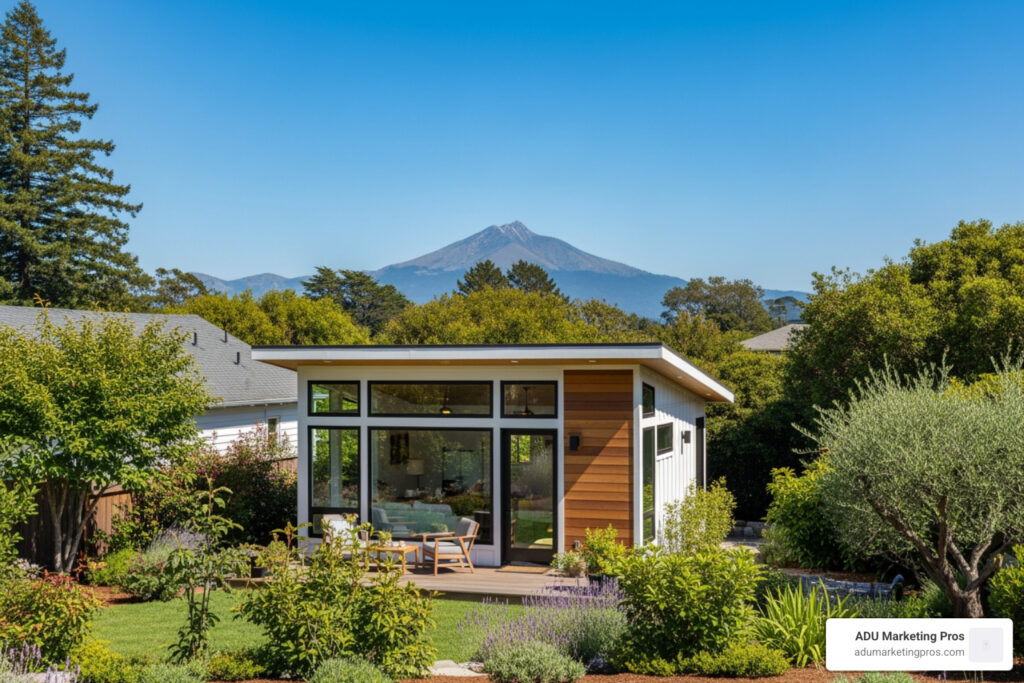
Why Marin County ADU Rules Matter Before You Break Ground
Marin County ADU regulations give homeowners a clear path to add rental income, house family members, or boost property value — but the rules are specific, and getting them wrong costs time and money. In a region known for its stringent environmental protections and high cost of living, understanding the nuances of local zoning is the difference between a successful project and a costly legal headache.
Marin County is currently navigating a significant housing transition. For decades, the county was characterized by strict growth controls, but the state-mandated housing requirements have shifted the landscape. Today, the Marin County ADU is seen as a primary solution to the “missing middle” housing crisis. Whether you are in San Rafael, Mill Valley, or the unincorporated hills of West Marin, the opportunity to build has never been more accessible.
Quick Snapshot of Marin County ADU Standards
| Topic | Key Facts |
|---|---|
| Minimum ADU size | 220 sq ft |
| Max detached ADU size | 850 sq ft (studio/1-bed), up to 1,200 sq ft (2-bed) |
| Max JADU size | 500 sq ft (inside primary home) |
| Setbacks | 4 ft side and rear; front setbacks generally not allowed |
| Height limit | 16–18 ft for detached ADUs |
| Parking | 1 space for studio/1-bed; waivable near transit |
| Permitting timeline | 60-day review; full process ~3–4 months |
| Fee waivers available | Up to $10,000 for qualifying affordable units (through Dec 31, 2026) |
| Programs available | HelloADU (free technical assistance), ADUMarin (resources + pre-approved plans) |
The Economic Reality of Marin Housing
Marin County is dealing with a real housing crunch. Over 64% of Marin workers commute from outside the county — the second-highest rate in the Bay Area. This creates a massive strain on local infrastructure and reduces the quality of life for those who serve the community, such as teachers, healthcare workers, and first responders. More than half of renters were overpaying for housing as recently as 2019, spending more than 30% of their income on rent.
To address this, the county has a stated goal of producing 280 new ADUs between 2023 and 2031 as part of its Regional Housing Needs Allocation (RHNA). This isn’t just a suggestion; it’s a mandate that has forced local planners to streamline the approval process. The good news? Marin has made ADU construction genuinely accessible in most residentially-zoned areas, especially after aligning its local ordinance with California state law. Whether you’re thinking about a backyard cottage, a garage conversion, or an interior bedroom conversion, the regulations are more homeowner-friendly than they’ve ever been.
This guide walks you through everything — from size limits and setbacks to permits, utilities, and financial incentives — so you can move forward with confidence.
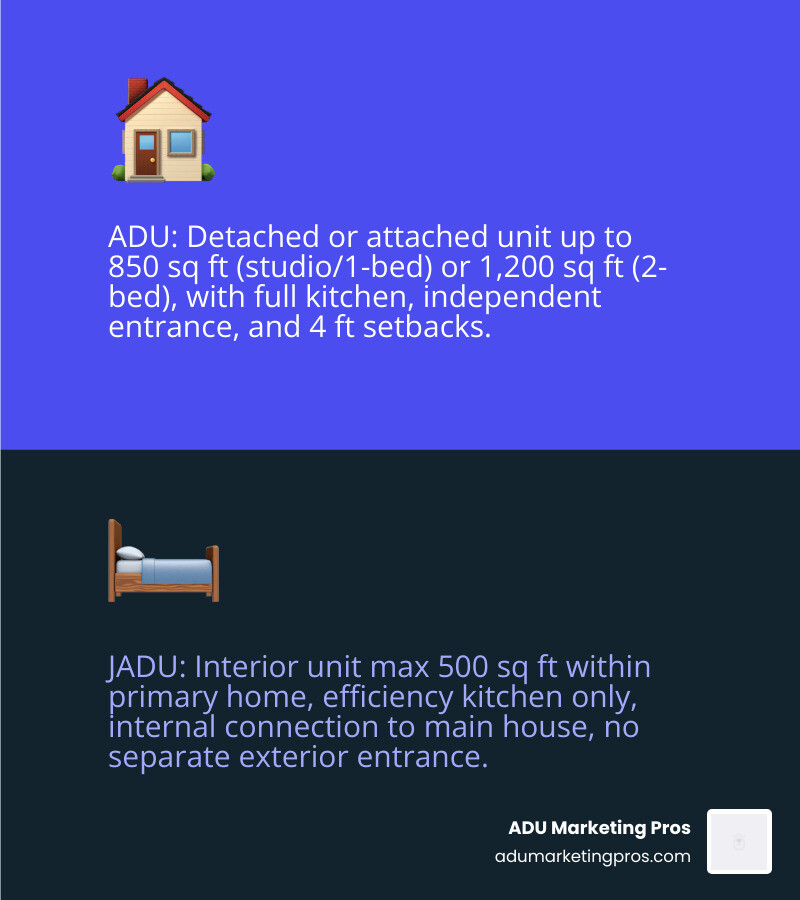
Important Marin County ADU terms:
Understanding the Marin County ADU Landscape
When we look at the rolling hills and coastal vistas of Marin, it’s easy to see why everyone wants to live here. But that beauty comes with a price—literally. With home values skyrocketing and a rental market that’s tighter than a new pair of boots, the Marin County ADU has become a vital tool for local housing stability.
Historically, Marin was one of the most difficult places in California to build any kind of secondary unit. Local opposition and complex environmental reviews often stalled projects for years. However, the legislative tide has turned. Recent shifts in California ADU Regulations have fundamentally changed how we build. Since 2016, a series of state laws (like Gov. Code 65852.2) have stripped away much of the red tape that used to stop these projects.
The Shift to Ministerial Approval
In the past, a neighbor’s complaint or a local board’s “discretion” could kill your dream of a backyard cottage. Today, if you meet the California ADU Requirements, the county must approve your application through a “ministerial” process. This means the review is based on objective standards rather than subjective opinions. No public hearings, no neighbor notifications for standard units, and no subjective design reviews that can be used to block construction. This shift has effectively democratized the building process, allowing average homeowners to become small-scale developers.

Defining the Marin County ADU and JADU
Before you start picking out floor tiles, we need to distinguish between the two main types of units allowed in Marin. Understanding these differences is crucial because they are governed by different sets of rules regarding size, parking, and owner-occupancy.
- Accessory Dwelling Unit (ADU): This is a full, independent living space. It must have its own permanent provisions for living, sleeping, eating, cooking, and sanitation. It can be detached (a separate cottage), attached (an addition to the house), or a conversion of existing space (like a garage). ADUs are generally allowed to be larger and offer more privacy for the tenant.
- Junior Accessory Dwelling Unit (JADU): This is a “light” version of an ADU. A JADU is limited to 500 square feet and must be contained entirely within the walls of the primary residence (though some jurisdictions allow a very small expansion for ingress/egress). It requires an efficiency kitchen (a small food prep area and a sink) and may share a bathroom with the main house. Crucially, JADUs require an internal connection to the main living area, though they also must have their own separate exterior entrance. One major distinction: JADUs usually require the owner to live in either the main house or the JADU, whereas standard ADUs currently do not have this state-mandated owner-occupancy requirement (through 2025).
For a deep dive into the technical definitions, the Marin County Planning Division: Residential Accessory Dwelling Units fact sheet is an excellent official resource.
Benefits for Homeowners and the Community
Why are we seeing so much excitement around the Marin County ADU? It’s a win-win for everyone involved, addressing both personal financial needs and broader societal goals.
- Passive Income: With Marin’s high rents, an ADU can significantly offset a mortgage. Many homeowners find that the ADU Rental Income covers the cost of construction and then some within a few years. In cities like Sausalito or Tiburon, a well-designed ADU can command premium rental rates.
- Multi-Generational Living: Whether it’s a college grad moving back home or a grandparent who wants to be close to the grandkids while maintaining independence, ADUs provide the perfect “middle ground.” It allows families to stay together while providing each generation with their own private space.
- Aging in Place: We’ve seen many Marin seniors move into their own backyard ADU, renting out the main house to fund their retirement. This “downsizing without moving” strategy allows them to stay in the community they love, near their friends and doctors, without the burden of maintaining a large family home.
- Community Support: By building an ADU, you’re helping house the workforce—teachers, firefighters, and service workers—who currently have to commute from hours away. This reduces traffic congestion on Highway 101 and supports the local economy.
- Increased Property Value: Adding a legal second unit is one of the most reliable ways to boost your ADU Return on Investment. Appraisers increasingly recognize the value of ADUs, especially as they become more common in the Bay Area real estate market.
Key Regulations for Your Marin County ADU
Navigating ADU Zoning Laws can feel like a maze, but Marin has simplified things significantly to comply with state mandates. In general, if your lot is zoned for residential use (whether single-family or multi-family) and has an existing or proposed primary dwelling, you are eligible. There is no longer a ADU Minimum Lot Size requirement that would prevent you from building a basic 800-square-foot unit, even on a small urban lot.
Size and Height Restrictions for a Marin County ADU
Size matters, but so does how you attach the unit. Marin County has adopted standards that allow for functional, livable spaces while maintaining the character of the neighborhood. Here is a breakdown of the current limits in unincorporated Marin County:
| ADU Type | Max Size | Max Height |
|---|---|---|
| Detached (Studio/1-BR) | 850 sq ft | 16–18 ft* |
| Detached (2+ BR) | 1,000–1,200 sq ft | 16–18 ft* |
| Attached | 50% of primary home OR 1,200 sq ft (whichever is less) | Matches primary home (up to 25 ft) |
| Junior ADU (JADU) | 500 sq ft | N/A (Internal) |
*Height limits: The standard is 16 feet, but state law now allows up to 18 feet for detached ADUs on lots within a half-mile of major transit or if the unit is built on a multi-family lot. This extra two feet is critical for homeowners wanting to include vaulted ceilings or loft spaces, which make a small footprint feel much larger.
When considering ADU Size Restrictions, a 1,200-square-foot unit is quite large—essentially a small house. If you are wondering How Big Can an ADU Be in California, the answer is often 1,200 square feet, but local jurisdictions can limit you to 1,000 square feet for two-bedroom units if they choose. Marin generally allows the full 1,200 for detached units if they meet all other standards, making it one of the more flexible counties in the region.
Setback and Parking Requirements
Setbacks are the “no-build” zones between your ADU and the property line. For a Marin County ADU, the rules are very generous compared to traditional home additions:
- Side and Rear Setbacks: A minimum of 4 feet is required. This is a huge change from older rules that often required 10 or 20 feet, which effectively banned ADUs on many Marin lots. This 4-foot rule applies to both detached and attached ADUs.
- Front Setbacks: While local front yard setbacks still apply, you generally cannot be forced to meet a front yard setback if it would “effectively prohibit” building an ADU of at least 800 square feet. This is a “safety valve” in the law to ensure that even constrained lots can accommodate a unit.
- Existing Structures: If you are converting an existing legal garage or shed into an ADU, you don’t need to meet new setback requirements—you can build within the existing footprint, even if it sits right on the property line.
Parking is another area where the rules have relaxed to encourage density. Under ADU Parking Requirements, you typically need one off-street parking space per unit. However, this requirement is waived in the vast majority of cases in Marin, including if:
- The ADU is located within a half-mile walking distance of public transit (which includes many bus stops in Marin).
- The ADU is part of an existing primary residence or accessory structure.
- The ADU is located within an architecturally and historically significant district.
- On-street parking permits are required but not offered to the occupant of the ADU.
- A car-share vehicle is located within one block.
Also, if you convert your garage to an ADU, you are not required to replace the parking spaces you lost. This has made ADU Garage Conversions the most popular and cost-effective way to add a unit in Marin. For more specific legal language, check the Marin County Municipal Code.
The Permitting Process and Utility Requirements
Once you have a design, it’s time to face the building department. In Marin, the review process is “ministerial,” meaning the county must act on your application within 60 days of receiving a completed package. This 60-day clock is a state-mandated deadline designed to prevent local governments from “pocket-vetoing” projects by simply not acting on them.
While the review is fast, the full ADU Permits California process—from initial submittal to final inspection—usually takes about 3 to 4 months. This includes the time for the building department to issue “corrections” (requests for more detail) and for your architect to respond. You should also be prepared for the ADU Permit Cost California, which can range from a few thousand dollars to over $15,000 depending on the complexity, size, and location of your unit.
Navigating Utilities for a Marin County ADU
Utilities are often the “hidden” cost of building an ADU. We’ve seen many projects hit a snag because the homeowner didn’t account for the capacity of their existing lines or the requirements of local utility providers.
- Electrical: Most older Marin homes have 100-amp or 125-amp panels. Adding an ADU (especially one with electric appliances, heat pumps, and EV charging) almost always requires an upgrade to a 200-amp panel. Coordinating this with PG&E can take 4-6 months and involves a $1,500 engineering fee just to start the process. It is vital to start your PG&E application as soon as you submit your building permits.
- Sewer: Marin typically requires a 4-inch sewer lateral to handle the added demand. If your house still has an old 3-inch clay pipe, you’ll likely need to replace it. Some sanitary districts in Marin also charge “impact fees” for new units, though state law limits these for ADUs under 750 square feet.
- Water: For ADUs under 750 square feet, you usually don’t need a separate water meter. However, if you’re building a larger unit or if your existing service is old, you might need to upgrade the line to ensure adequate pressure. Marin Municipal Water District (MMWD) has specific rules regarding backflow preventers and meter sizing that must be followed.
- Fire Sprinklers: These are only required in the ADU if they are also required in the primary residence. However, if your ADU is attached to a garage or built in a high-fire zone, check local fire codes early. Even if not required, some homeowners choose to install them for safety and insurance reasons.
Planning for these early will help you get a more accurate estimate of your ADU Building Costs. For those in our area, the Bay Area ADU Cost is generally higher than the state average due to labor shortages and the high cost of materials in Northern California.
Environmental and Fire Hazard Considerations
Marin is beautiful because of its natural environment, but that environment comes with rules. If your property is in a Coastal Zone (like parts of Stinson Beach or Point Reyes), you may need a Coastal Development Permit. While these are often handled administratively for ADUs, they do add a layer of review and can impact design choices regarding colors and materials.
Furthermore, many parts of Marin are designated as High Fire Hazard Severity Zones. In these areas, you must ensure your ADU has adequate fire engine access—usually a 20-foot wide paved path, though there are exceptions for smaller units. You will also need to use ignition-resistant materials, such as fiber-cement siding and tempered glass. Staying updated on New ADU Regulations California is essential, as the state frequently updates how local jurisdictions can enforce these environmental rules while still allowing for housing growth.
Financial Incentives and Support Resources
Building an ADU is a significant investment, often ranging from $200,000 to $500,000 for a detached unit in Marin. To combat the housing crisis, the Board of Supervisors has extended several California ADU Incentives that can save you thousands in upfront costs.
- Fee Waivers: In unincorporated Marin, you can save up to $10,000 in building permit fees if you commit to renting your ADU to a tenant with a lower income (below 80% of the Area Median Income). This is a great option for homeowners who already intended to provide affordable housing for a local worker. Even for standard ADUs, there are reductions of up to $2,500 available through December 31, 2026.
- JADU Savings: Because JADUs have a smaller impact on infrastructure and are contained within existing walls, fee waivers of up to $1,500 are often available. Additionally, JADUs are exempt from many impact fees that apply to larger detached units.
To see how these savings impact your bottom line, we recommend using an ADU Cost Calculator to run the numbers for your specific property. Don’t forget to factor in the potential increase in property taxes, though the “reassessment” only applies to the new construction, not your entire property.
Local Programs: HelloADU and ADUMarin
Marin County has recognized that the technical complexity of building is the biggest barrier for most homeowners. As a result, they have funded some of the best support programs in the state:
- HelloADU: This is a free technical assistance program for homeowners in unincorporated Marin and several participating cities. They offer feasibility assessments, help you vet contractors and architects, and can even provide guidance through the design and permitting process. It’s a fantastic resource for anyone who feels overwhelmed by the technicalities of zoning and construction.
- ADUMarin: The ADUMarin Resource Center is your one-stop shop for inspiration and practical tools. They offer an ADU development guidebook, example floor plans, and even a “one-on-one” feasibility consultation service. Their website features a gallery of local projects that can help you visualize what is possible on different types of Marin terrain.
Garage Conversions and Prefab Solutions
If building from scratch feels like too much, consider a Garage Conversion to ADU. Since the structure already exists, you can save significantly on framing and foundation costs. ADU Garage Conversions are the most popular type of ADU in Marin because they utilize underused space without eating up the backyard. They also tend to have a faster construction timeline since the “shell” is already in place.
Another option gaining traction in Marin is the prefab or modular ADU. These are built off-site in a factory and then craned into your backyard. They offer predictable pricing and much shorter on-site construction timelines—often weeks instead of months. However, keep in mind that Marin’s narrow, winding roads can make crane access difficult and expensive. Always have a prefab company perform a “site visit” before signing a contract.
Frequently Asked Questions about Marin County ADUs
Can I build both an ADU and a JADU on my property?
Yes! Under current California state law, most single-family lots are allowed to have one ADU and one JADU. This is a great way to maximize your property’s potential. For example, you could convert a bedroom into a JADU for a family member and build a detached ADU in the backyard to use as a rental. Exploring different ADU Floor Plans California can help you visualize how both units might fit on your lot without making it feel overcrowded.
How long does the permitting process take in Marin?
While the county is required to review your application within 60 days, the “real world” timeline is usually 3 to 4 months. This includes the time it takes for you to respond to any “corrections” the building department requests. To speed things up, ensure your plans are complete and follow all ADU Regulatory Updates closely before submitting. Hiring an architect with specific experience in Marin County can also prevent common mistakes that lead to delays.
Are there restrictions on short-term rentals for ADUs?
Yes, and this is a critical rule to understand. In Marin County, ADUs and JADUs cannot be used as short-term rentals. This means you cannot list them on platforms like Airbnb for stays of less than 30 days. The goal of the ADU program is to create long-term housing for residents, not hotel rooms for tourists. If you receive a fee waiver, you will likely have to sign an agreement explicitly prohibiting short-term rentals. This applies regardless of the ADU Square Footage or location.
Do I need solar panels on my ADU?
Under the current California Building Code (Title 24), new detached ADUs are generally required to have solar panels. However, if you are doing a conversion (like a garage conversion) or an addition to an existing home, solar is usually not required. If solar is required, the system size is based on the square footage of the unit. Many homeowners choose to add solar even when not required to offset the electrical costs of the new unit.
Will an ADU increase my property taxes?
Yes, but only for the value of the new construction. Your primary home will not be reassessed to current market value. For example, if you spend $250,000 building an ADU, your property tax bill will increase by roughly 1% of that amount (about $2,500 per year). This is a small price to pay for the significant increase in property value and potential rental income.
Conclusion
Building a Marin County ADU is more than just a home improvement project; it’s a way to secure your financial future while contributing to the health of your community. Whether you’re looking to house a loved one, generate rental income, or simply add flexible space to your property, the current regulatory environment in Marin is the most favorable it has ever been. The combination of state-mandated approvals and local support programs like HelloADU has removed the barriers that once made these projects nearly impossible.
At ADU Marketing Pros, we understand the nuances of the California ADU market. While we don’t swing hammers, we specialize in helping ADU construction and architecture firms grow their businesses. We provide specialized digital marketing solutions—from targeted SEO to high-converting PPC campaigns—that help firms stand out in this competitive landscape. Our goal is to drive measurable growth for our clients by highlighting their expertise and connecting them with homeowners ready to build their backyard dreams.
If you are a builder or architect looking to scale your operations in the San Francisco Bay Area, San Jose, or beyond, we are here to help you attract high-quality leads and dominate your local market. We understand the specific search intent of Marin homeowners and can help you position your brand as the local authority on ADU construction.
Ready to take the next step in your ADU journey? More info about ADU garage conversion services is just a click away. Let’s build something great together and help solve the Marin housing crisis one backyard at a time.