
The Best Tiny Home Manufacturers: Why Choosing Right Changes Everything
Choosing from the best tiny home manufacturers is a decision that carries more weight than most homebuyers realize. In the early days of the tiny house movement, the industry was a bit like the Wild West—full of passionate DIYers and experimental builders who often operated without the safety net of standardized building codes. Today, the landscape has matured into a sophisticated market where precision engineering, legal compliance, and architectural integrity are the benchmarks of success. Picking the wrong manufacturer isn’t just a matter of aesthetic preference; it can lead to catastrophic financial losses, years of legal headaches with local zoning boards, or a home that simply isn’t safe for long-term habitation in extreme weather conditions.
This evolution from a niche hobby to a legitimate housing solution has been driven by a perfect storm of economic factors. Skyrocketing traditional housing costs, the rise of remote work, and a growing global interest in sustainable living have pushed tiny homes into the mainstream. For many, these structures represent the only path to debt-free homeownership or a way to provide affordable housing for family members on existing property.
Here’s a detailed look at the top manufacturers currently leading the industry:
| Manufacturer | Best For | Price Range |
|---|---|---|
| Tumbleweed Tiny House Co. | Industry pioneer, RVIA certified | $70K–$97K |
| Tiny Mountain Houses | Affordable turnkey builds | $50K–$100K |
| Minimaliste | Cold climates, modern design | $50K–$120K |
| Wind River Tiny Homes | Custom craftsmanship | $30K–$100K+ |
| Tru Form Tiny | High-end, aesthetic focus | $85K–$165K |
| Custom Container Living | Eco-friendly, sustainable | $29K–$100K |
| EkoBuilt | Passive house, off-grid kits | $45K–$135K |
| Rocky Mountain Tiny Houses | Budget-friendly builds | $30K–$85K |
The surge in demand has particularly impacted the Accessory Dwelling Unit (ADU) sector. Homeowners are no longer just looking for a “shed with a bed”; they are seeking high-quality, small-footprint housing to house aging parents, adult children, or to generate consistent rental income in high-demand markets like California and the Pacific Northwest. This shift has forced manufacturers to adopt more rigorous standards, moving away from “backyard builds” toward factory-certified production lines that mirror traditional home construction.
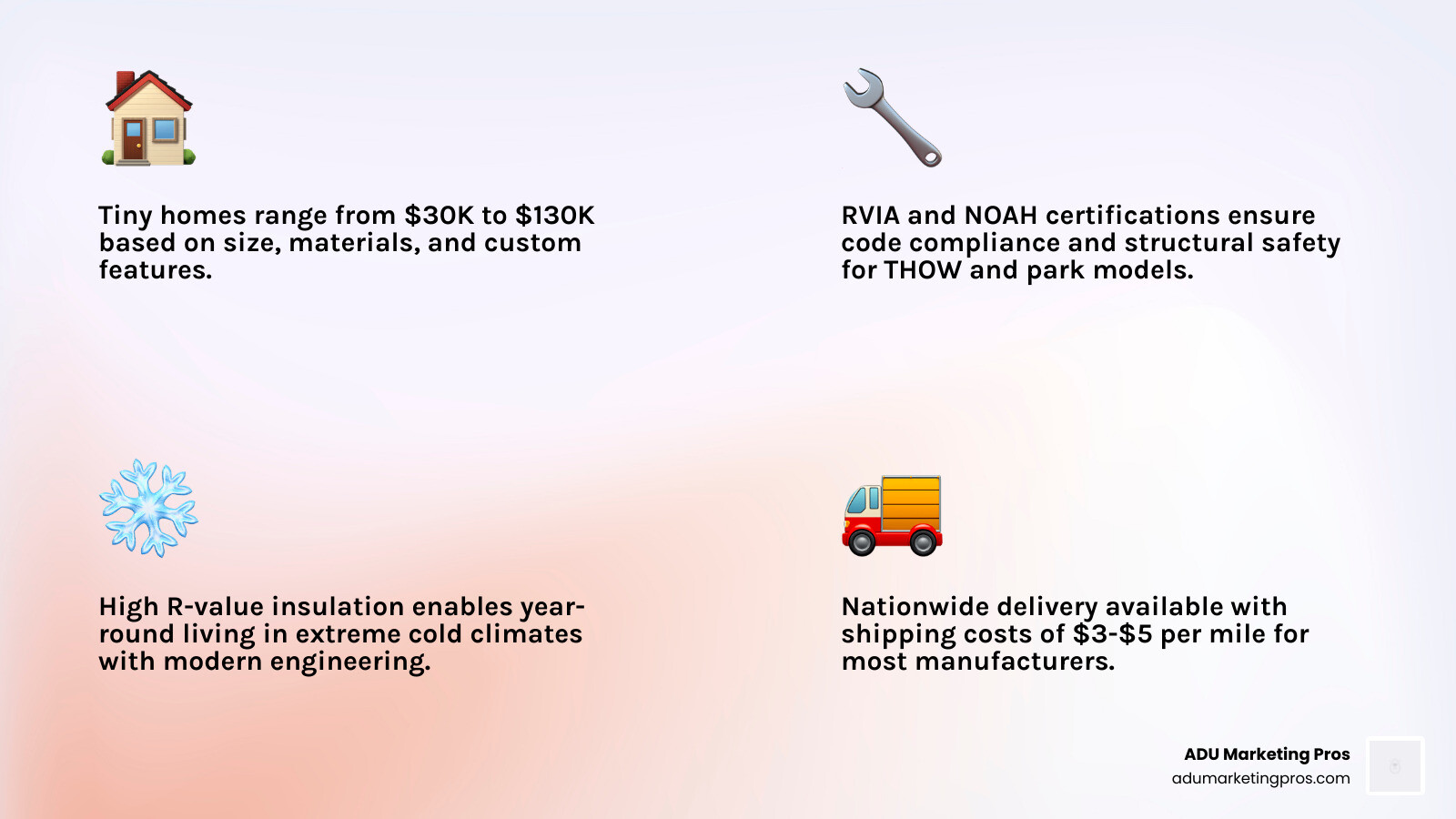
Finished tiny homes typically cost anywhere between $30,000 and $130,000, depending on size, materials, and customization level. This wide range reflects the diversity of the market—from basic “shells” for the DIY enthusiast to luxury, off-grid-ready estates on wheels. Behind these price tags is an equally wide field of manufacturers. Some have decades of experience and rigorous quality control, while others are newer operations still finding their footing in a complex regulatory environment.
This guide cuts through the noise. Whether you’re a homeowner exploring a backyard ADU in California or an ADU construction firm helping clients navigate their options, you need a clear, data-driven picture of who’s building what, at what price, and to what standard. We will explore the technical certifications that matter, the logistical hurdles of delivery, and the specific builders that have earned their reputation as the industry’s elite.
Easy best tiny home manufacturers word list:
Key Factors When Choosing the Best Tiny Home Manufacturers
When we help our clients navigate the landscape of Tiny House Builders California, we always start with the “Big Three”: certification, logistics, and intent. You aren’t just buying a box; you’re buying a structure that needs to be legal, transportable, and durable. The difference between a high-quality build and a “backyard special” often comes down to the invisible details—the framing, the vapor barriers, and the electrical certifications that ensure your home won’t be a liability.

Certification Standards: RVIA and NOAH
One of the first things to check is whether a manufacturer is RVIA (Recreational Vehicle Industry Association) certified. This is crucial for financing and insurance. An RVIA seal means the home was built to NFPA 1192 standards, which are the national safety requirements for RVs. Many of the best tiny home manufacturers also build to NOAH (National Organization of Alternative Housing) standards. NOAH is unique because it involves digital inspections at every stage of the build—from the trailer chassis to the final roof seal. Without these certifications, you might find yourself with a beautiful home that you can’t legally park in San Jose, San Francisco, or any municipality that requires certified ADUs. Furthermore, insurance companies often refuse to cover uncertified builds, leaving your investment unprotected.
Shipping and Logistics: The “Landed Cost”
Don’t let a low sticker price fool you if the builder is 2,000 miles away. Shipping fees typically range from $3 to $5 per mile, and with fuel surcharges, this can add up quickly. If you are in the San Francisco Bay Area and your builder is in Tennessee, you could be looking at $10,000 or more just in transport. We recommend calculating the “landed cost”—the price of the home plus delivery, site prep, and utility hookups—before signing a contract. Site prep is often the most overlooked expense; leveling the ground, pouring a concrete pad, or installing a gravel foundation can cost between $3,000 and $8,000 depending on your terrain and local soil conditions.
Warranty and Lead Times
The industry standard for warranties is usually one year for structural and mechanical systems, though some premium builders offer extended coverage up to 10 years. Lead times are also a major factor; established manufacturers often have waitlists of 6 to 12 months. If you need a home immediately, you may need to look for “inventory models” or “spec builds” that are already completed, though these offer less room for customization. Always ask for a detailed production schedule before placing a deposit.
THOW vs. Park Models vs. Foundation Homes
Understanding the “chassis” of your home is vital. Here is how they generally break down:
| Feature | Tiny Home on Wheels (THOW) | Park Model | Foundation Home (ADU) |
|---|---|---|---|
| Mobility | High (towable by pickup) | Moderate (needs professional tow) | Permanent |
| Size Limit | Under 8.5′ wide | Up to 12′-14′ wide | 400–1,200 sq ft |
| Certification | RVIA / ANSI 1192 | ANSI A119.5 | Local Building Code (OBC/CBC) |
| Best For | Nomadic living / Travel | Semi-permanent placement | Long-term Small Houses |
Custom vs. Production Models
Most of the best tiny home manufacturers offer two paths:
- Production Models: These are pre-designed floor plans. They are more affordable and have faster turnaround times because the engineering is already done. These are ideal for buyers who want a proven design and a predictable price point. Most production models allow for minor aesthetic choices like paint color or flooring type.
- Custom Builds: These allow for 100% flexibility. If you need a music studio, a home office with specific wiring, or a kitchen designed for a professional chef, this is your path. However, expect to pay a premium of 20-40% and wait longer for design consultations and engineering approvals. Custom builds also require a more hands-on approach from the buyer during the design phase.
Understanding Price Ranges for Best Tiny Home Manufacturers
Pricing is the most common question we encounter. While you can find “shells” (unfinished interiors) for $20,000 to $40,000, a turnkey, move-in-ready home from a reputable builder usually starts around $60,000.
- Budget Options ($30k – $60k): Often smaller (18-20 ft) or simpler finishes. These are great for guest houses or short-term rentals.
- Mid-Range ($60k – $100k): The “sweet spot” for quality and features. You’ll typically see better insulation, standard appliances, and more durable siding.
- Luxury Builds ($100k – $200k+): Includes high-end appliances, smart home tech, and premium materials like cedar or exotic hardwoods. Check out Small Houses for Sale to see how these compare to traditional real estate in high-cost areas.
Top-Rated Tiny Home Manufacturers for Every Lifestyle
Choosing a manufacturer is like choosing a partner for a very small, very expensive dance. You want someone who knows the steps, understands your rhythm, and won’t step on your toes when it comes to the budget. The following builders have consistently proven themselves through quality construction and customer satisfaction.
Tumbleweed Tiny House Company: The Industry Pioneer
Founded in 1999, Tumbleweed is essentially the “Grandfather” of the movement. They didn’t just start building homes; they helped define the very standards the industry uses today. With a large facility in Colorado, they are the largest producer in the U.S. and have refined their models—like the Elm, Cypress, and Farallon—through decades of customer feedback.
- Why they stand out: They offer Certified Green by TRA builds, which is a huge plus for eco-conscious buyers in Palo Alto or Menlo Park. Their homes are built to withstand highway speeds and extreme weather.
- Unique Features: Their website features interactive 3D tours and a quote tool that makes the shopping experience incredibly transparent. They also offer a “Tiny House Hotel” experience where you can stay in one of their models before you buy.
Tiny Mountain Houses: Affordable Luxury
Based in Salem, Oregon, Tiny Mountain Houses has built a reputation for making “affordable luxury” a reality. Since 2014, they have focused on turnkey homes that feel like traditional residences. Their price points, typically ranging from $50,000 to $100,000, make them accessible to a wide range of buyers.
- The Vibe: Their interiors often feature impeccable cabinetry, residential-sized appliances, and high-end finishes that make the space feel expansive. They specialize in “Park Models” which offer more width and a more permanent feel.
- Standards: All their models meet RVIA certification standards, making them easier to finance through traditional RV lenders.
Minimaliste: Best for Extreme Climates
If you’re worried about the occasional chilly night or want a home that can handle a full Canadian winter or a high-altitude ski season, the Quebec-based Minimaliste is your go-to. They are world leaders in high R-value insulation and cold-weather engineering.
- Key Models: The Laurier and Noyer models are famous for their modern, sleek aesthetics and legally approved full-time living capabilities. They use Structural Insulated Panels (SIPs) which provide incredible thermal performance.
- Efficiency: Their builds use advanced sealing techniques to ensure they are as energy-efficient as possible. This is perfect for those looking for Eco-Friendly Small Homes that minimize their carbon footprint while maximizing comfort.
Wind River Tiny Homes: Custom Craftsmanship
Based in Chattanooga, Tennessee, Wind River builds about 12-15 highly custom homes per year. They are the “artisans” of the industry, known for their architectural flair—think integrated skylights, custom built-ins, and hand-finished wood details.
- Design Focus: They often work with Architects in Southern California Who Design Tiny Houses to ensure their custom builds meet the specific aesthetic and functional needs of West Coast clients. Their “Nomad” model is a masterclass in functional design.
Tru Form Tiny: High-End Design
Based in Eugene, Oregon, Tru Form Tiny is where “Pinterest-perfect” meets structural integrity. They specialize in RVIA-certified homes with an urban-chic aesthetic that appeals to modern professionals and retirees alike.
- Standout Feature: They are masters of the gooseneck hitch design. By building over the hitch, they create a full-standing bedroom area that eliminates the need for a ladder—a game-changer for long-term comfort and accessibility. This is a popular choice for those who have secured Land for Sale in Southern California for Tiny Houses.
Specialized Manufacturers: Kits, Shells, and Sustainable Builds
Not everyone wants a finished home delivered to their door. Some want to get their hands dirty and save money through sweat equity, while others want to live entirely off the grid using the latest in sustainable technology.
EkoBuilt: Passive House Standards
EkoBuilt offers a unique “UpSizeDown” approach, focusing on passive house kits. They have over twenty tiny or coach house plans available, ranging from 420 sq ft to over 1,200 sq ft. Their focus is on the “envelope” of the building—ensuring it is airtight and incredibly well-insulated.
- The Tech: They provide a site energy analysis to help you customize your home for net-zero or off-grid living. This includes optimizing window placement for solar gain and choosing the right heat recovery ventilation (HRV) systems.
- Flexibility: Their designs often include options for future extensions or building over a garage, making them ideal for Tiny House San Francisco projects where space is at a premium and every square inch must be utilized efficiently.
Custom Container Living: Eco-Friendly Upcycling
If you like the industrial-modern look, Custom Container Living upcycles shipping containers into durable, sustainable homes. Shipping containers are inherently structural and weather-resistant, making them an excellent base for a tiny home.
- Sustainability: They use recycled materials and offer solar integration and composting systems. Because they are made of Corten steel, they are also incredibly fire-resistant—a major consideration for homeowners in drought-prone areas of California.
- Price: Options range from $29,000 to $100,000. Because they are heavy and structural, they can often be placed on level ground with minimal foundation work compared to a traditional stick-built home.
Tiny Home Builders: DIY Kits and Workshops
For the “hands-on” crowd, Tiny Home Builders in Florida offers prefabricated shells and build-it-yourself plans. They are one of the oldest resources in the community for people who want to build their own homes but don’t know where to start.
- Resources: Their website is a goldmine of info, including a savings goal calculator and construction workshops. They focus on teaching the fundamentals of trailer-based construction.
- The Advantage: Buying a shell from San Francisco Tiny House Builders allows you to handle the “fun” part (the interior finishes and decor) while leaving the “hard” part (the structural shell, roofing, and trailer integration) to the professionals. This can save you 30-50% off the cost of a turnkey home.
Navigating Logistics: Shipping, Zoning, and Financing
We’ve seen many dreams stall at the logistics phase. In California, the rules are changing fast, but they are still complex. Understanding the legal and financial framework is just as important as choosing the right builder.
Shipping and Delivery Challenges
As mentioned, expect to pay $3-$5 per mile for delivery. Most of the best tiny home manufacturers offer nationwide shipping, but you must ensure your site is accessible for a large trailer. A narrow, winding road in the Hollywood Hills or a tight alley in San Jose might require a “mule”—a specialized motorized dolly that can maneuver the home into tight spots where a truck cannot go. You also need to consider overhead clearances; most tiny homes are built to the maximum legal height of 13.5 feet, meaning low-hanging branches or power lines can be a major obstacle.
Zoning in Southern California: A Changing Landscape
Zoning is historically the biggest hurdle for tiny home owners. Luckily, many Places in Southern California That Allow Tiny Houses have recently updated their laws to allow Tiny Homes on Wheels (THOWs) as legal Accessory Dwelling Units (ADUs).
- Los Angeles and San Diego: Both cities have been leaders in allowing tiny homes on wheels in backyards. They have created specific permit pathways that treat a THOW similarly to a traditional ADU, provided it is hooked up to utilities.
- San Jose: Known for being “ADU friendly,” San Jose has streamlined the permit process for backyard homes, recognizing them as a vital tool in solving the housing crisis.
Financing Your Tiny Dream
Because tiny homes on wheels are technically RVs, you usually cannot get a traditional 30-year mortgage. Instead, you’ll look for:
- RV Loans: Requires an RVIA-certified builder. These typically have terms of 10-15 years and require a 10-20% down payment.
- Personal Loans: Often have higher interest rates but don’t require the home as collateral. These are best for smaller amounts or shells.
- Manufacturer Financing: Some builders, like Tumbleweed, have in-house financing partners that specialize in the tiny home market.
Best Tiny Home Manufacturers for ADU Compliance
If you are looking for a permanent backyard addition, you might want to look at Tiny House Builders in Southern California who specialize in modular construction. Modular homes are built in a factory but meet the same local building codes as a site-built home. This makes the permit process much smoother because the state or local government has already approved the factory’s plans. These are often referred to as garden suites or laneway houses and can significantly increase your property value.
Frequently Asked Questions about Tiny Home Manufacturers
How much does a professionally built tiny home cost?
A finished, turnkey tiny home typically costs between $60,000 and $120,000. While you can find shells for $30,000, once you add appliances, plumbing, and high-quality finishes, the price rises. Luxury custom models with off-grid solar packages and high-end materials can easily exceed $150,000. It is important to budget an additional 10-15% for site preparation and delivery.
How long is the typical construction timeline for a custom build?
For a production model where the design is already finalized, you might see a build time of 8 to 12 weeks. However, for a fully custom home, the timeline often extends to 6 to 12 months. This includes the time needed for design consultations, engineering stamps, and the builder’s current backlog of orders.
Can I live in a tiny home year-round in cold climates?
Yes, but you must choose a builder that specializes in high-performance insulation. Manufacturers like Minimaliste or EkoBuilt use spray foam insulation and thermal-pane windows to ensure the home remains comfortable in freezing temperatures. In California, this is less of a concern, but high-quality insulation also keeps the home cool during scorching summers, reducing your air conditioning costs.
What is the resale value of a tiny home?
Unlike traditional real estate, tiny homes on wheels can depreciate like a vehicle if they are not well-maintained. However, because of the high demand for affordable housing, many owners find they can sell their homes for close to the original purchase price, especially if they are from a well-known manufacturer like Tumbleweed. Foundation-based tiny homes (ADUs) typically appreciate along with the property value.
How do I insure a tiny home?
Insurance is easiest to obtain for RVIA-certified homes. Companies like Foremost or Strategic Insurance Agency offer specific policies for tiny homes that cover them both while parked and while in transit. If your home is not certified, finding insurance can be significantly more difficult and expensive.
Conclusion: Building Your Future in a Small Footprint
The journey to finding the best tiny home manufacturers is about more than just aesthetics; it’s about finding a partner that understands the technical, financial, and legal landscape of small-scale living. The industry has moved far beyond its experimental roots, offering sophisticated housing solutions that rival traditional homes in quality and durability. Whether you are looking for a nomadic THOW for cross-country adventures or a permanent backyard ADU to house a loved one, the manufacturers we’ve highlighted represent the gold standard in craftsmanship and reliability.
The Long-Term Value of Quality Manufacturing
Investing in a home from a reputable manufacturer ensures that your property remains an asset rather than a liability. As zoning laws continue to evolve in favor of small-scale housing, the resale market for certified tiny homes is expected to remain strong. By focusing on certification, logistics, and long-term durability, you can ensure your tiny home is a sound investment for years to come. Remember that the “cheapest” option often carries hidden costs in the form of repairs, lack of insurance, or legal non-compliance.
The Future of the Tiny Home Industry
We are seeing a significant shift toward “smart” tiny homes and community-based living. Manufacturers are increasingly integrating solar arrays, greywater recycling, and modular expansion capabilities into their standard designs. This innovation is making tiny living more accessible to a broader demographic, from retirees looking to downsize to young professionals seeking an entry point into the housing market. As more cities follow the lead of Los Angeles and San Jose in relaxing ADU restrictions, the tiny home will become a cornerstone of urban density and sustainable development.
At ADU Marketing Pros, we specialize in helping ADU construction and architecture firms stand out in this booming market. We provide highly specialized marketing solutions—from targeted SEO to high-conversion PPC—that help firms in Los Angeles, San Diego, and the San Francisco Bay Area attract high-quality leads and grow their revenue. If you are a builder looking to dominate the Tiny House Builders California market, we’re here to help you turn your expertise into a recognizable, authoritative brand. Let’s build something great together.