
Why Los Angeles Homeowners Are Racing to Build ADUs
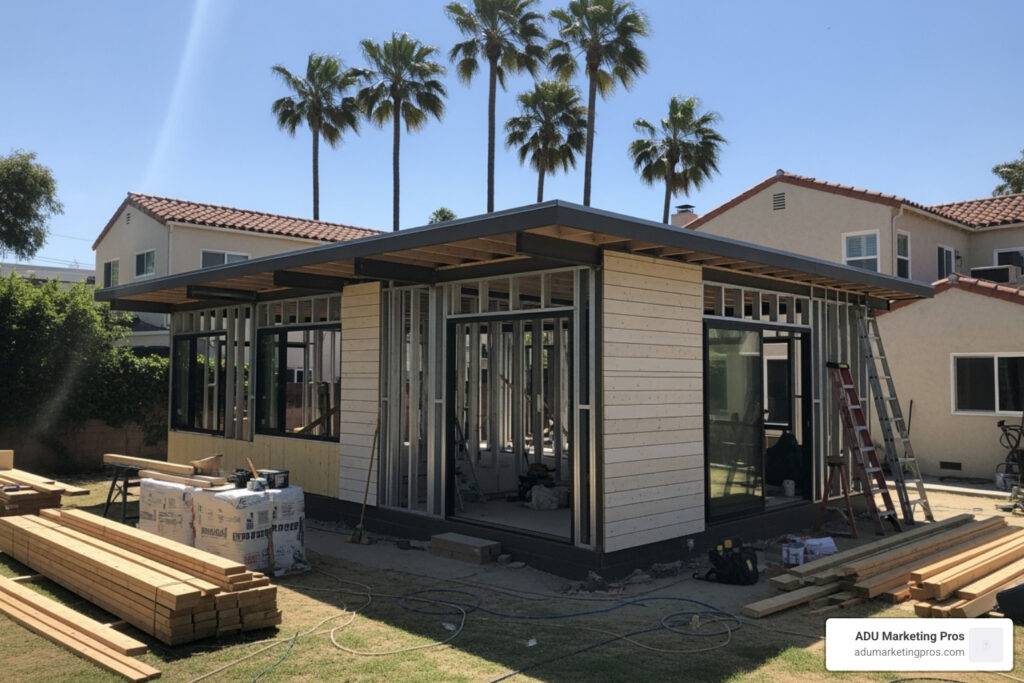
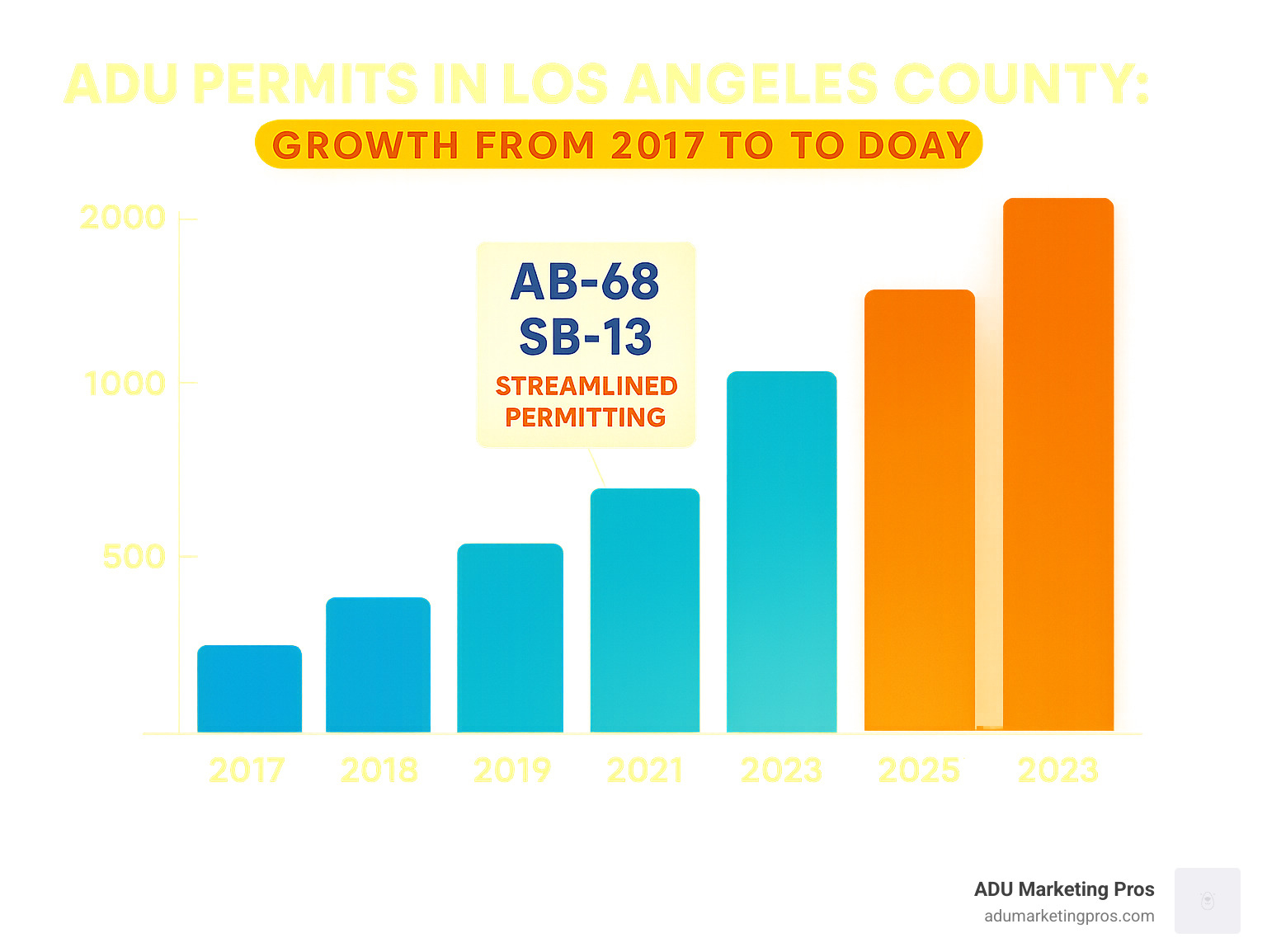
Finding the right ADU builder LA can transform an underutilized patch of your property into a powerful financial and lifestyle asset. Los Angeles isn’t just part of the Accessory Dwelling Unit (ADU) trend; it’s the epicenter. The city has become ground zero for the ADU boom, with permits skyrocketing from just a few hundred in 2016 to over 20,000 annually today. This explosive growth is the direct result of a perfect storm: a severe housing shortage, soaring property values, and a series of landmark state laws designed to slash red tape.
Legislation like AB-68, AB-881, and SB-13 has fundamentally changed the game for homeowners. These laws effectively eliminated many of the biggest historical barriers by waiving parking requirements for ADUs near transit, reducing setback requirements to as little as four feet, banning restrictive owner-occupancy clauses for several years, and compelling cities to approve or deny permits within a 60-day window. The result is a streamlined, more predictable path to construction.
The economics are undeniably compelling. In a city where the median home price consistently breaks records, adding an ADU is one of the most accessible ways to increase property value, often by $150,000 or more. Beyond equity, it unlocks a new stream of rental income, with homeowners frequently collecting $20,000 to $50,000 in annual rent. A typical garage conversion might cost around $150,000, while a new detached unit could range from $300,000 to $400,000+. With strong rental demand, many of these projects can recoup their initial investment in under a decade.
Success, however, hinges on choosing the right partner. The market is filled with builders of all types. Some excel at delivering cost-effective prefab models with rapid timelines, while others are masters of bespoke architectural designs that maximize light and space on challenging hillside lots. The key is to align your specific goals—whether they are budget, speed, rental ROI, or a unique design vision—with an ADU builder LA who specializes in that exact approach.
Why Build an ADU in Los Angeles? The Financial and Lifestyle Perks
Building an ADU in Los Angeles is a strategic move that pays dividends in both wealth and well-being. With the guidance of an experienced ADU builder LA, homeowners can unlock a unique combination of financial returns and enhanced lifestyle flexibility that few other investments can offer.
The Financial Payoff: Cash Flow and Equity Growth
The financial case for an ADU is multifaceted. First is the immediate impact of rental income. In Los Angeles, a well-appointed one-bedroom ADU can easily command $2,000-$3,000 per month in rent, while larger two-bedroom units in desirable neighborhoods can fetch $4,000 or more. This consistent cash flow can offset mortgage payments, cover the ADU’s construction loan, or simply provide a significant boost to household income. Second is the substantial increase in property value. Appraisers now have ample data to value ADUs, and it’s common for a property’s value to increase by $150,000 to $250,000 upon completion of the unit. This powerful combination of cash flow and equity growth is why many LA homeowners now view ADUs as a primary wealth-building strategy, with many projects achieving a full return on investment in 8-10 years or less. For a detailed financial breakdown, see this overview: Los Angeles ADU Cost.
The Lifestyle Dividend: Flexibility for Modern Life
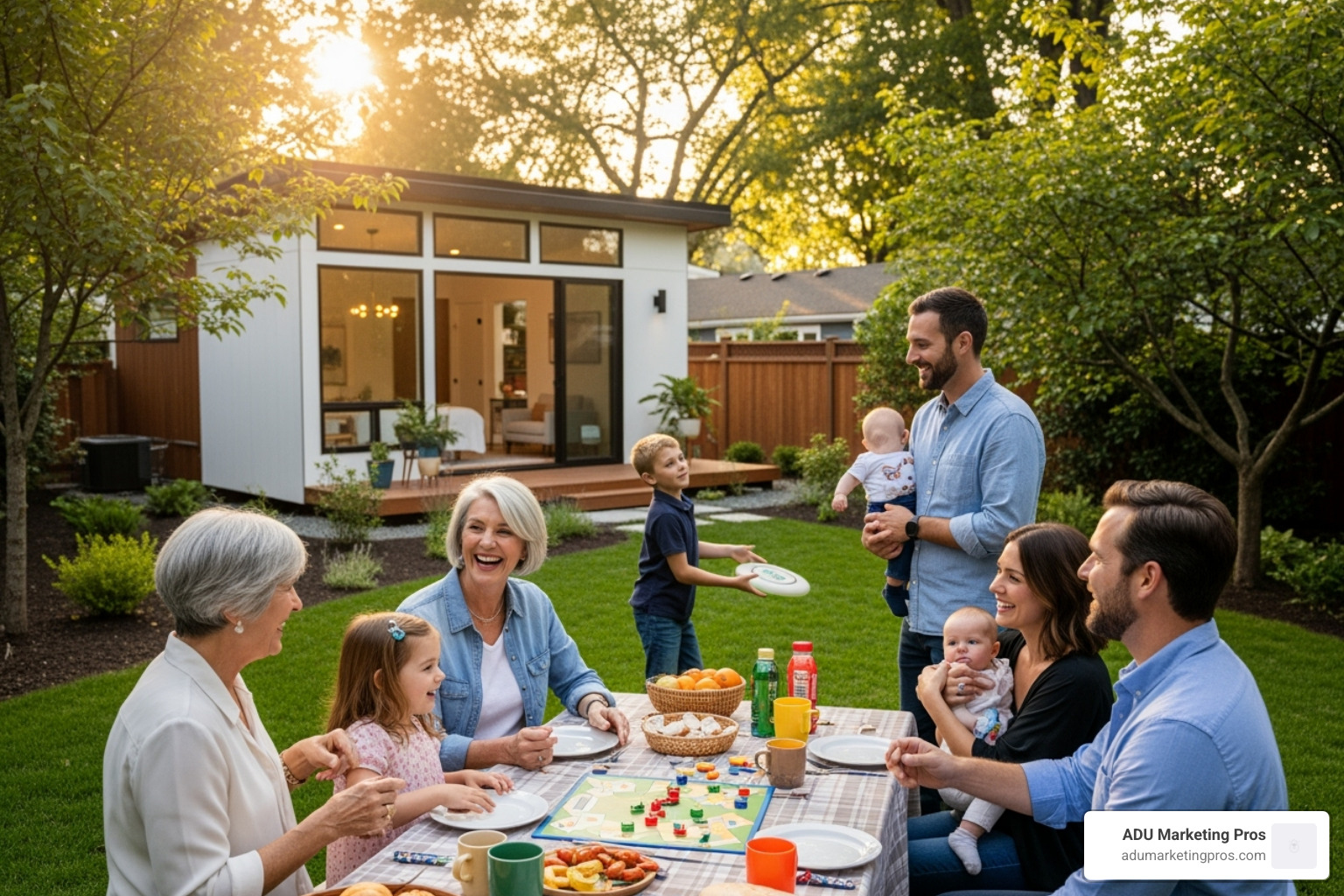
Beyond the dollars and cents, ADUs provide invaluable flexibility. They are the perfect solution for multi-generational living, allowing aging parents to live close by while maintaining their independence and privacy. They can also serve as a landing pad for adult children saving for their own home, offering a supportive environment without the friction of shared living spaces. In the age of remote work, an ADU can be a dedicated home office or creative studio, providing essential separation between work and life. Furthermore, modern ADUs are often built with sustainability in mind. Features like high-efficiency HVAC systems, tankless water heaters, cool roofs, and optional solar panel installations not only reduce the environmental impact but also lead to lower monthly utility bills for the owner or tenant. An ADU is an adaptive space: rent it out today, use it as a guest suite tomorrow, or keep it ready for your family as life’s needs change.
The Spectrum of ADU Builders in LA: Finding Your Match
The Los Angeles ADU market is vibrant and diverse, offering a wide range of construction partners. Choosing the right ADU builder LA is the most critical decision you’ll make. The ideal partner not only understands your vision but also has a proven track record of navigating local regulations, managing budgets, and delivering high-quality work on schedule. Here’s a breakdown of the primary types of builders to help you find your perfect match.

The Full-Service Design-Build Firm: Your One-Stop Shop
This is the most integrated and streamlined option. A design-build firm handles every aspect of the project—from initial architectural design and structural engineering to permit processing and all phases of construction—under a single contract.
- What you get: A single point of contact and accountability, cohesive project management, and often a fixed-price contract that minimizes financial surprises. The process is simplified, as the design and construction teams work together from day one, preventing common communication gaps.
- Best for: Busy homeowners who value convenience and predictability. If you want a hands-off experience with a clear timeline and budget, this is your best bet. It’s also an excellent choice for those using pre-approved plans.
- Helpful resource: ADU Building Plans Los Angeles
The Custom ADU Architect & Builder Team: For a Truly Unique Space
This traditional route involves hiring an architect to create a bespoke design and then bidding the plans out to several general contractors. It offers the highest degree of customization and is ideal for homeowners with a specific architectural vision or a challenging property.
- What you get: A one-of-a-kind ADU tailored to your exact aesthetic, lifestyle needs, and lot constraints. This approach allows for the use of premium materials, unique finishes, and creative solutions for difficult sites like hillsides or irregularly shaped yards.
- Best for: Design-driven homeowners, projects with luxury aspirations, historic properties requiring architectural sensitivity, or complex lots that demand a custom solution. Be prepared for a longer timeline and potentially higher costs.
- Helpful resource: ADU Architects Los Angeles
The Prefab & Modular Specialist: Speed and Efficiency
Prefabricated and modular builders construct the majority of the ADU in a factory setting, which offers significant advantages in speed, quality control, and reduced on-site disruption. The completed modules or panels are then transported to your property for final assembly.
- What you get: A dramatically shorter construction timeline (often cutting on-site work by more than half), cost certainty due to standardized processes, and consistent build quality. There’s also far less noise, dust, and crew traffic at your home.
- Best for: Homeowners prioritizing speed to market for a rental unit, those with standard lot configurations, and anyone looking for a value-focused, efficient building process. Site access for a crane and transport truck is a key consideration.
- Helpful resource: Prefab ADU Los Angeles
Decoding the ADU Construction Process with an ADU builder LA
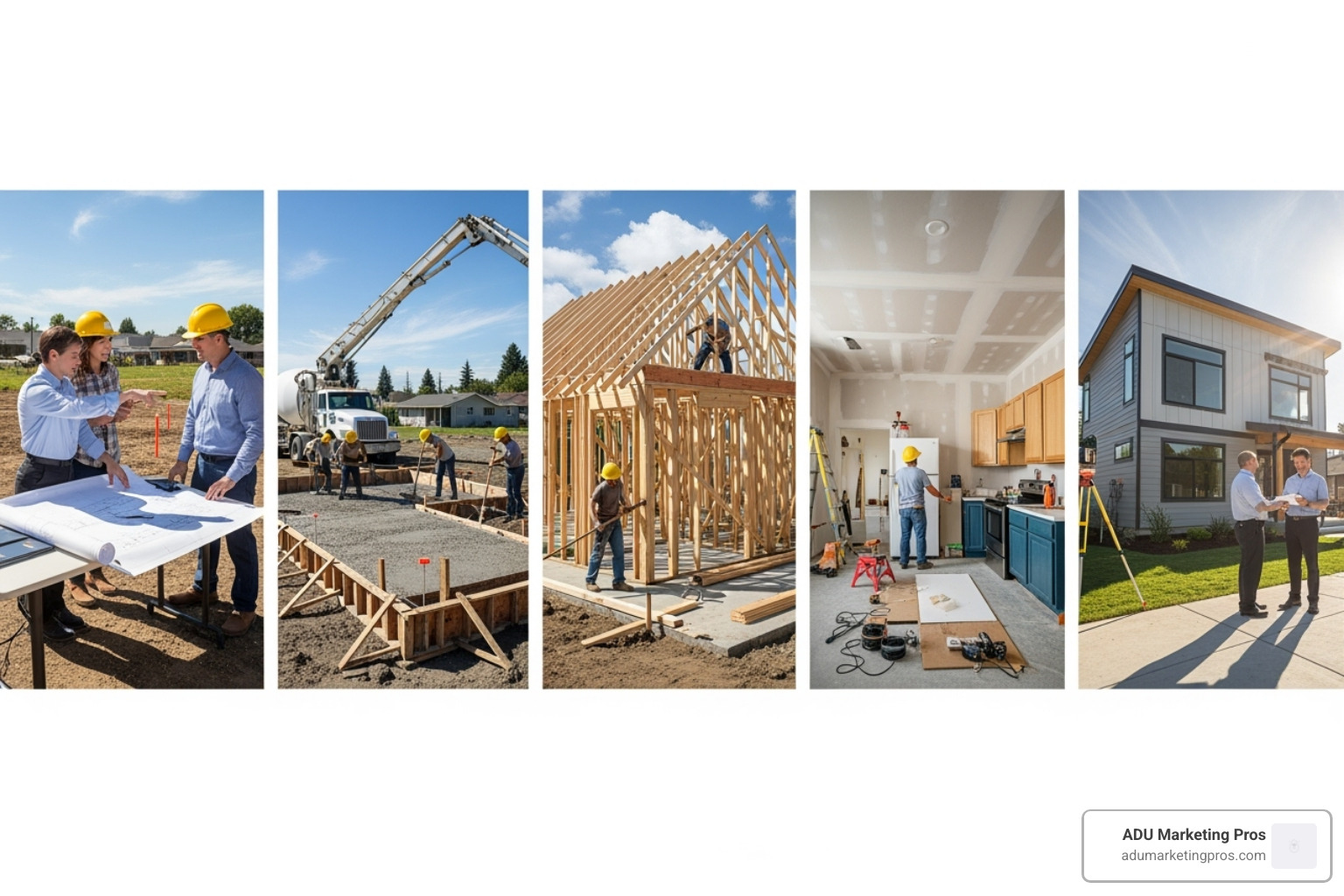
A skilled ADU builder LA demystifies the construction journey, transforming a complex sequence of tasks into a manageable, step-by-step process. While every project is unique, a typical ADU build in Los Angeles takes approximately 8 to 14 months from the initial consultation to receiving the keys. Understanding this timeline helps you set realistic expectations.
Step 1: Feasibility, Design, and Budgeting (2–3 Months)
This foundational phase is where your vision takes shape. Your builder acts as a crucial advisor.
- Site Assessment & Feasibility: Your builder will evaluate your property for critical factors like utility access (sewer, water, power), soil conditions, accessibility for construction vehicles, and optimal placement for privacy and sunlight. They’ll perform a zoning check to confirm exactly what size and type of ADU is permitted on your lot under state and local laws.
- Design & Floor Plans: You’ll decide whether to use a pre-designed plan, modify an existing one, or commission a fully custom design. This is when you’ll finalize the layout, size, and style of your ADU. Explore options here: ADU Floor Plans Los Angeles.
- Budgeting & Financing: Your builder will provide a detailed cost estimate breaking down soft costs (design, permits, engineering) and hard costs (labor, materials, finishes). This is the time to finalize your financing, whether through a cash-out refinance, a home equity line of credit (HELOC), or a construction loan.
Step 2: Permitting and Approvals (3–6 Months)
Navigating the permitting maze is where an experienced ADU builder LA proves their worth. This phase can be a major bottleneck without a professional who knows the system.
- Plan Submission: Your builder prepares and submits a full set of construction documents to the Los Angeles Department of Building and Safety (LADBS) or your local municipal equivalent. This package includes architectural plans, structural engineering calculations, and energy compliance forms (Title 24).
- Plan Check & Revisions: City plan checkers review the documents for compliance with all building codes, zoning ordinances, and safety regulations. They will issue comments or corrections, which your builder’s team must address and resubmit. An experienced builder can anticipate many of these comments, speeding up the process. Learn more at the official site: https://www.ladbs.org/
- Permit Issuance: Once all departments (Building, Planning, Public Works, etc.) have signed off, the building permit is issued, and construction can begin. For a deep dive on rules, see: Los Angeles ADU Regulations.
Step 3: Construction and Finalization (4–8 Months)
This is the most visible phase, where your ADU comes to life.
- Site Prep & Foundation: The site is cleared, graded, and utility trenches are dug. The foundation is then formed, reinforced with steel, and poured.
- Framing, Roofing, and MEP: The walls and roof structure are framed, creating the ADU’s skeleton. Windows and doors are installed, and the building is wrapped for weather protection. This is followed by the rough installation of Mechanical, Electrical, and Plumbing (MEP) systems.
- Inspections: Throughout construction, city inspectors will visit at key milestones (e.g., foundation, framing, MEP rough-in, insulation) to ensure work meets code. Your builder manages and schedules all inspections.
- Interior & Exterior Finishes: After insulation and drywall, the interior is finished with flooring, tile, cabinets, countertops, and paint. Exterior siding, stucco, or other finishes are completed.
- Final Walkthrough & Occupancy: After a final inspection, the city issues a Certificate of Occupancy, certifying the ADU is safe and legal to live in. You’ll do a final walkthrough with your builder to identify any last-minute fixes before taking possession.
Common ADU Types and Costs in the City of Angels
When you’re ready to work with an ADU builder LA, understanding the primary ADU types and their associated costs is the first step in aligning your budget with your goals. Costs in Los Angeles are influenced by site conditions, finish levels, and project complexity, but here is a reliable guide to what you can expect.
| ADU Type | Average Cost Range in LA | Typical Size (SF) | Build Time (Months) | Key Benefits |
|---|---|---|---|---|
| Detached New Construction | $300,000 – $500,000+ | 600 – 1,200 | 10 – 15 | Maximum privacy, highest rental income and ROI potential, complete design freedom. |
| Garage Conversion | $150,000 – $250,000 | 400 – 800 | 6 – 10 | Most cost-effective, fastest timeline, utilizes existing structure to save on costs. |
| Attached ADU / JADU | $200,000 – $350,000 | 300 – 1,000 | 8 – 12 | Shares utilities and a wall with the main house, efficient use of space, lower cost than detached. |
Explore more options: Accessory Dwelling Unit Los Angeles.
Detached New Construction ADU
Often called a backyard cottage or granny flat, a detached ADU is a standalone structure built from the ground up. This option offers the greatest flexibility in design, size (up to 1,200 sq. ft.), and placement on your property. It provides maximum privacy for both the main home residents and the ADU occupants, making it the most desirable type for renters and commanding the highest rental income. While it involves higher upfront costs due to the need for a new foundation, utility trenching, and full construction, it consistently delivers the highest return on investment.
Garage Conversion ADU: An Affordable Project
Converting an existing garage is the most popular and budget-friendly path to building an ADU. By leveraging the garage’s existing foundation, walls, and roof, you can save significantly on time and material costs. This is an excellent way to create a studio or one-bedroom unit quickly. However, a successful conversion requires careful planning. Your ADU builder LA will need to ensure the existing foundation is sound, upgrade the structure to meet modern building and seismic codes, and creatively solve for challenges like low ceilings and bringing in natural light. Learn more here: Garage Conversion Los Angeles.
Attached ADUs and Junior ADUs (JADUs)
An attached ADU is essentially a home addition that functions as a separate living unit. By sharing a wall with the primary residence, you can often simplify utility connections and reduce some construction costs compared to a detached unit. A Junior ADU (JADU) is a more specific and compact option. A JADU must be created within the existing footprint of the main house (like a spare bedroom), be no larger than 500 sq. ft., and can share a bathroom with the main house. JADUs require an efficiency kitchen and are a very low-cost way to add a legal rental unit, though they typically come with an owner-occupancy requirement on the property.
How to Choose the Right ADU Builder in LA: A Homeowner’s Checklist
Selecting the right ADU builder LA is the single most important factor in the success of your project. A great builder ensures a smooth process, high-quality results, and a finished product that meets your budget and timeline. A poor choice can lead to delays, cost overruns, and endless frustration. Use this comprehensive checklist to vet potential partners and make your decision with confidence.
1. Verify Credentials and Stability
Before anything else, confirm the builder is legitimate, licensed, and insured. This is non-negotiable.
- CSLB License: Verify their contractor’s license is active and in good standing on the California State License Board (CSLB) website: https://www.cslb.ca.gov/. Check for any complaints or disciplinary actions.
- Insurance: Ask for certificates of general liability insurance and workers’ compensation. Don’t just take their word for it—call the insurance provider to confirm the policies are current.
- Business History: How long have they been in business, specifically building ADUs in Los Angeles? A company with a long history is more likely to be stable and stand by its warranty.
2. Scrutinize Their Portfolio and Specialization
Look for evidence that they can build the type of ADU you want.
- Review Past Projects: Ask to see a portfolio of their completed ADUs. Pay attention to the style, quality of finishes, and overall craftsmanship. Are the projects similar to what you envision?
- Visit a Job Site: The best builders are proud of their work and their process. Ask if you can visit a current job site (with the owner’s permission) to see their team in action, how they maintain cleanliness, and their level of organization.
- Drive-By Recent Completions: Get a list of addresses of recently completed projects. Driving by allows you to assess the curb appeal and build quality from the outside.
3. Conduct Thorough Reference Checks
Speaking with past clients is the best way to get an unfiltered view of what it’s like to work with the builder.
- Ask for Recent References: Request contact information for at least three clients whose ADU projects were completed in the last year.
- Ask Specific Questions: Go beyond “Were you happy?” Ask questions like:
- “How was their communication throughout the project?”
- “Did the final cost match the initial contract? If not, why?”
- “How did they handle unexpected problems or changes?”
- “Was the project completed on schedule?”
- “Would you hire them again without hesitation?”
4. Analyze the Contract and Proposal
A detailed, professional contract protects both you and the builder.
- Compare Apples-to-Apples: When you get multiple bids, ensure they are for the same scope of work and level of finishes. A low bid might be missing key items.
- Look for Key Clauses: The contract should clearly outline the payment schedule, a detailed scope of work, a process for handling change orders, the estimated timeline, the warranty provided, and a dispute resolution clause.
- Payment Schedule: The payment schedule should be tied to construction milestones, not arbitrary dates. Be wary of builders who ask for a large percentage of the total cost upfront (California law limits down payments to 10% or $1,000, whichever is less).
Frequently Asked Questions about Building an ADU in LA
Embarking on an ADU project brings up many questions. Here are clear, straightforward answers to some of the most common inquiries we receive from homeowners planning a project with an ADU builder LA.
How much value does an ADU add to a Los Angeles property?
Most homeowners see a significant return on their investment. A well-designed and properly permitted ADU can add $150,000 to $250,000 or more to your property’s appraised value. This is in addition to the powerful income stream it can generate. Depending on the size, location, and finish level, monthly rents typically range from $2,000 to $4,000. This dual benefit of equity gain plus cash flow means many projects can pay for themselves in 8-10 years, and sometimes even faster in high-demand rental markets.
Are there grants available to help build an ADU in California?
Yes, financial assistance is available. The most prominent program is the CalHFA ADU Grant Program, which provides up to $40,000 to reimburse homeowners for pre-construction costs like design, engineering, and permit fees. This grant is intended for low-to-moderate-income homeowners and can significantly lower the initial financial barrier. You can check for current funding status and eligibility requirements on the official site: https://www.calhfa.ca.gov/adu/. Program funding is cyclical, so it’s wise to monitor its availability. For background, see this coverage from the LA Times: https://www.latimes.com/california/story/2023-12-11/adu-grants-resume-to-help-lower-income-californians-build.
How do I verify a builder’s license and insurance?
This is a critical step for your protection. First, visit the California State License Board (CSLB) website at https://www.cslb.ca.gov/ and use their “Instant License Check” tool to confirm the contractor’s license is active, in good standing, and that they have workers’ compensation insurance listed. Second, ask the builder for a copy of their general liability insurance certificate. Don’t stop there—call the insurance company listed on the certificate to verify the policy is still active. These simple checks can save you from major financial and legal headaches.
What are the parking requirements for an ADU in Los Angeles?
Under state law, parking requirements are now waived for most ADU projects. Specifically, you do not need to provide an additional parking space for your ADU if your property is located within a half-mile of public transit (like a bus stop or train station), if it’s in a designated historic district, or if it’s a conversion of an existing structure like a garage. Since most of Los Angeles falls within these criteria, the vast majority of ADU projects are exempt from adding parking.
Will my property taxes go up after I build an ADU?
Yes, but not on the entire value of your property. Your existing home will not be reassessed. Instead, you will receive a supplemental property tax bill based only on the new assessed value of the ADU itself. This is a blended assessment, meaning your overall property tax bill will increase, but the increase is calculated only on the value of the new construction, not the total new value of your entire property.
KEY QUESTIONS TO ANSWER
- What are the primary services offered by ADU builders in Los Angeles?
- What is the typical cost range for building an ADU in Los Angeles, and what factors influence it?
- What is the process for obtaining permits for ADU construction in Los Angeles?
- What are the different types of ADUs that can be built in Los Angeles (e.g., detached, garage conversions)?
- How do ADU builders in Los Angeles help homeowners steer zoning regulations and building codes?
- What are the benefits of hiring a full-service ADU construction company in Los Angeles?
- How long does the ADU construction process typically take in Los Angeles?
- What are the key considerations when choosing an ADU builder in Los Angeles?
- How can ADUs increase property value and generate rental income in Los Angeles?
- What are the advantages of pre-designed ADU plans versus custom ADU designs offered by LA builders?
Frequently Asked Questions about Building an ADU in LA
Building an ADU raises smart questions. Here are clear answers we share most often with homeowners planning an ADU builder LA project.
How much value does an ADU add to a Los Angeles property?
Most homeowners see a strong ROI. Well-designed ADUs can add $100,000+ in appraised value and generate $2,000–$4,000 in monthly rent depending on size, finish level, and neighborhood. That dual benefit—equity plus cash flow—often offsets costs in 8–10 years, sometimes sooner in high-demand areas.
Are there grants available to help build an ADU in California?
Yes. The CalHFA ADU Grant Program provides up to $40,000 toward pre-construction costs (design, engineering, permits) for eligible households, lowering barriers to start. Check current details and eligibility here: https://www.calhfa.ca.gov/adu/
Programs have paused and resumed with new funding cycles. For background and updates, see this coverage from the LA Times: https://www.latimes.com/california/story/2023-12-11/adu-grants-resume-to-help-lower-income-californians-build
How do I verify a builder’s license and insurance?
Protect yourself with a quick checklist:
- CSLB license status: Verify the contractor’s license and history at the California State License Board: https://www.cslb.ca.gov/
- Insurance: Request active general liability and property damage certificates; confirm with the insurer.
- Workers’ comp: Confirm coverage if the builder has employees (visible via CSLB records or carrier certificate).
- References: Speak with recent ADU clients about quality, communication, schedule, and budget performance.
These steps dramatically reduce risk and help you select a trustworthy partner.
Frequently Asked Questions about Building an ADU in LA
How much value does an ADU add to a Los Angeles property?
Properties with ADUs often appraise $100,000–$200,000 higher than similar homes without them, and monthly rents commonly range from $1,500–$4,000 based on location and finishes. Many owners target breakeven in under a decade.
Are there grants available to help build an ADU in California?
Yes—most notably the CalHFA ADU Grant Program, offering up to $40,000 toward pre-construction costs for qualifying homeowners. For recent program updates: Read about ADU grants at the LA Times.
How do I verify a builder’s license and insurance?
Use the CSLB site to confirm license status, then verify general liability and workers’ comp directly with the insurer. Ask for references and drive by recent projects.
Frequently Asked Questions about Building an ADU in LA
How much value does an ADU add to a Los Angeles property?
Expect meaningful equity gains plus new income. Typical ADUs add six-figure value and rent for $1,500–$3,500 per month, with higher rents in premium submarkets.
Are there grants available to help build an ADU in California?
Yes. The CalHFA ADU Grant Program can reduce upfront costs by up to $40,000 for eligible owners. For context on funding cycles and availability, see: Read about ADU grants at the LA Times.
How do I verify a builder’s license and insurance?
Start with a CSLB lookup, confirm liability and workers’ comp coverage, and call multiple recent references to assess quality and communication.
Common ADU Types and Costs in the City of Angels
Here’s a compact reference to compare popular ADU formats before you choose an ADU builder LA:
| ADU Type | Average Cost Range in LA | Typical Size (SF) | Build Time (Months) | Key Benefits |
|---|---|---|---|---|
| Detached New Construction ADU | $300,000 – $500,000+ | 600 – 1,200 | 8-12 | Maximum privacy, highest ROI potential, complete design freedom |
| Garage Conversion ADU | $150,000 – $300,000 | 400 – 800 | 4-8 | Cost-effective solution, faster construction, uses existing structure |
| Attached ADUs and JADUs | $200,000 – $350,000 | 300 – 1,000 | 6-10 | Shared wall efficiency, lower cost than detached, efficient space use |
Detached for top rents and privacy, conversions for speed and savings, attached/JADU for efficient space on smaller lots.
Frequently Asked Questions about Building an ADU in LA
How much value does an ADU add to a Los Angeles property?
ADUs can deliver both immediate and compounding returns: added appraised value (often $100,000+) and rent commonly between $1,500–$3,500 per month depending on size and neighborhood.
Are there grants available to help build an ADU in California?
Yes. The CalHFA ADU Grant Program (up to $40,000 for pre-construction costs) is a leading option for eligible owners. Funding cycles can change—monitor news such as this update: According to the LA Times.
How do I verify a builder’s license and insurance?
Verify the CSLB license and workers’ comp status, confirm liability insurance with the carrier, and ask for multiple recent ADU references. These simple steps protect your project from the start.