
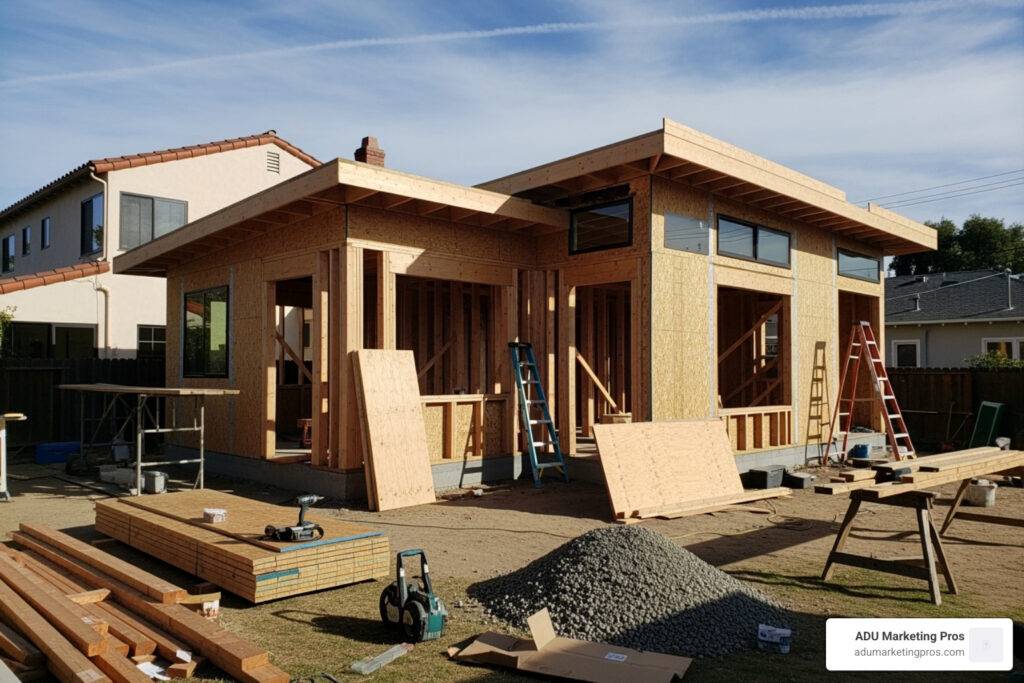
Why ADU Construction in California is Changing Backyards Across the State
ADU construction california is booming as homeowners find the financial and lifestyle benefits of adding accessory dwelling units to their properties. Also known as granny flats or in-law units, these secondary homes help ease the state’s housing shortage while creating new opportunities for property owners.
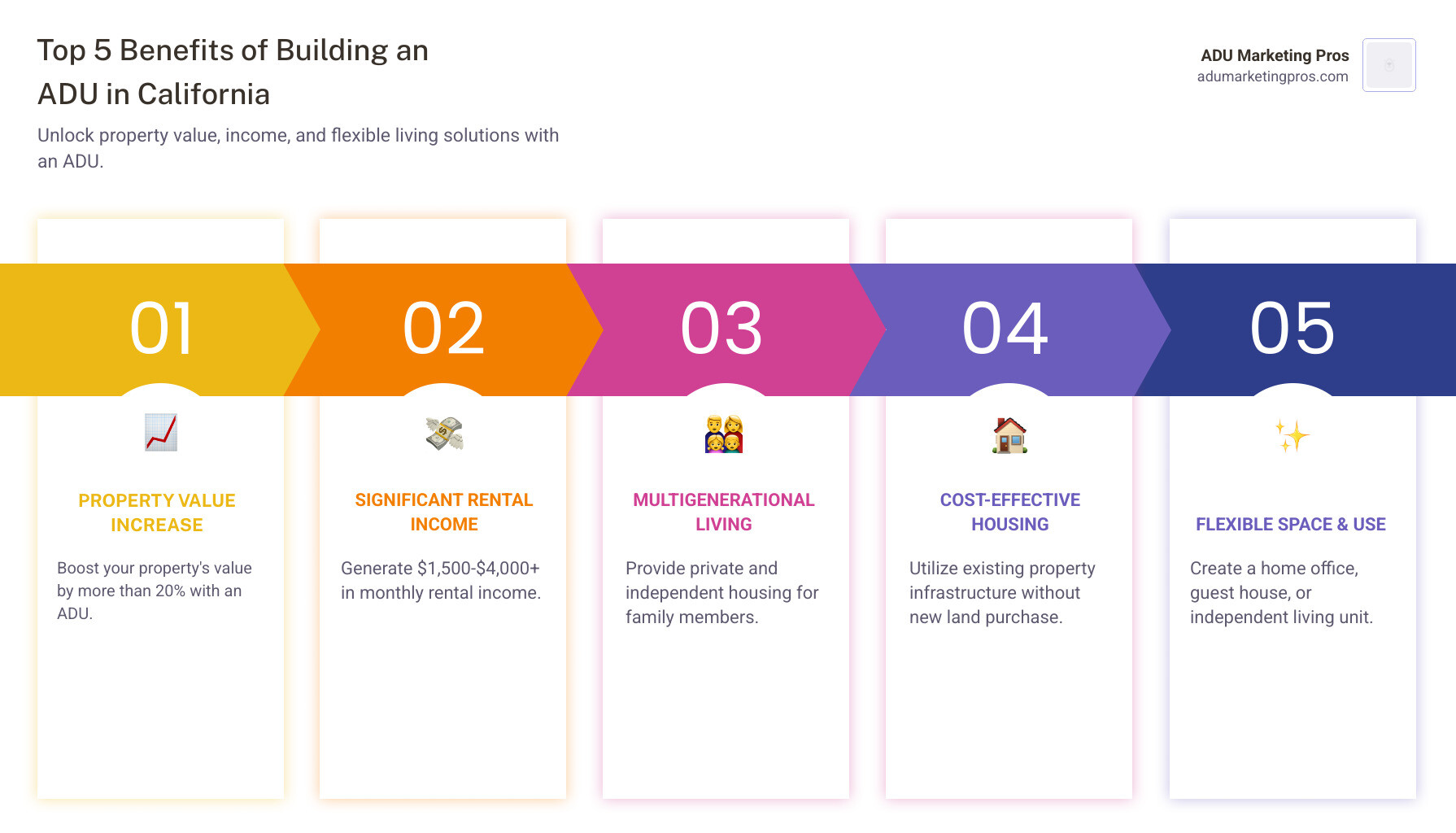
Key benefits of building an ADU include:
- Increased Property Value: An ADU can boost property value by over 20%.
- Rental Income: Generate $1,500-$4,000+ in monthly rental income.
- Flexible Housing: Provide a private home for aging parents or adult children, or use the space as a home office or guest house.
- Cost-Effectiveness: Building an ADU requires no new land purchase and leverages existing infrastructure.
Thanks to progressive state laws, building an ADU is easier than ever. Cities must now approve most permits within 60 days, and many parking requirements have been eliminated. This guide covers everything you need to know about ADU construction in California, from regulations and costs to finding the right builder.
Understanding California’s ADU Landscape: State vs. Local Rules
Building an ADU in California requires navigating both state and local rules. The state sets broad, homeowner-friendly laws to encourage housing development, while your local city or county adds specific ordinances. Understanding how these two levels interact is key to a smooth project.
California’s push for ADU construction is a direct response to its housing crisis. By streamlining the process, the state has enabled homeowners to add housing on existing lots, tapping into current infrastructure and avoiding the high costs of new subdivisions. State law provides a strong foundation of rights, ensuring you have viable options even if your local jurisdiction is not particularly ADU-enthusiastic. For a complete overview, the state’s ADU Best Practices Guidebook offers invaluable insights, while our guides on California ADU Regulations and California ADU Guidelines provide practical next steps.
The Evolution of California’s ADU Legislation
California’s current pro-ADU stance is the result of years of legislative efforts to address the state’s severe housing shortage. Before 2017, building an ADU was often a difficult and expensive process, with many local jurisdictions imposing prohibitive restrictions. A series of landmark state bills, beginning with SB 1069 in 2016, fundamentally changed the landscape. This initial legislation streamlined approvals, reduced parking requirements, and limited fees.
Subsequent laws, including AB 68 and AB 881 (effective 2020), went even further. These bills introduced the 60-day approval timeline, eliminated owner-occupancy requirements for five years (a provision later extended), allowed both an ADU and a JADU on the same property, and further curtailed local governments’ ability to obstruct ADU development. This legislative push signaled a clear directive from the state: homeowners are a key part of the housing solution. Understanding this evolution helps property owners appreciate the rights and protections they now have when embarking on an adu construction california project.
Key Statewide ADU Mandates
Statewide ADU laws establish baseline requirements that all cities and counties must follow. These mandates create predictability for homeowners.
- Ministerial Permit Process: If your plans meet all objective standards (setbacks, height, etc.), the city must approve the permit without subjective review.
- 60-Day Approval Timeline: Local agencies must approve or deny a permit application within 60 days.
- Standardized Setbacks: Setbacks are now just 4 feet for side and rear yards, maximizing usable space.
- Height Limits: Detached ADUs are generally capped at 16 feet, though some local rules allow for more.
- Parking Exemptions: Parking requirements are often waived if the property is near public transit, is a conversion, or is in a historic district.
- Fee Limitations: Impact fees are prohibited for ADUs under 750 square feet and are limited for larger units.
- Owner-Occupancy Waivers: You are no longer required to live on the property to build an ADU, opening up investment opportunities.
Stay current on the latest changes with our coverage of New ADU Regulations California.
Navigating Local Ordinances and Zoning
While state law sets the foundation, local rules add the specific details that will shape your project. Your first and most important stop should be your local city or county’s planning department website. Look for a dedicated ADU section. Here, you will often find a wealth of resources, such as:
- Local ADU Ordinance Documents: The specific legal text that governs ADUs in your area.
- Pre-Approved or ‘Standard’ Plans: Many cities, like the City of San Jose: Accessory Dwelling Unit Program and Los Angeles, offer pre-approved ADU plans that can save you time and money on design fees.
- Zoning Information and Maps: Tools to confirm your property’s zoning and its eligibility for an ADU.
- Fee Calculators: Some cities provide calculators to estimate permit and impact fees.
Local ordinances typically focus on aspects not strictly mandated by the state, such as design standards (e.g., requiring siding and roof materials to match the primary home), height limits within the state’s maximum, and specific privacy considerations. Don’t forget to review your Homeowners Association (HOA) rules (CC&Rs) early on. While state law (AB 670) limits an HOA’s ability to outright ban ADUs, they can still impose reasonable restrictions. Finally, be aware of special overlays. Properties in zones governed by the Coastal Commission or in designated historic districts will face an additional layer of review that requires careful planning and may influence your design.
Junior Accessory Dwelling Units (JADUs)
A Junior Accessory Dwelling Unit (JADU) is a smaller, more affordable type of ADU created entirely within the existing footprint of your home. A JADU must be no more than 500 square feet, include an efficiency kitchen, and have a separate exterior entrance. It can share a bathroom with the main house, which significantly reduces plumbing costs. Because they use the home’s existing systems (HVAC, water heater), JADUs are a cost-effective entry point into adu construction california, perfect for generating rental income or housing family members without major new construction.
Types of ADUs and Design Considerations
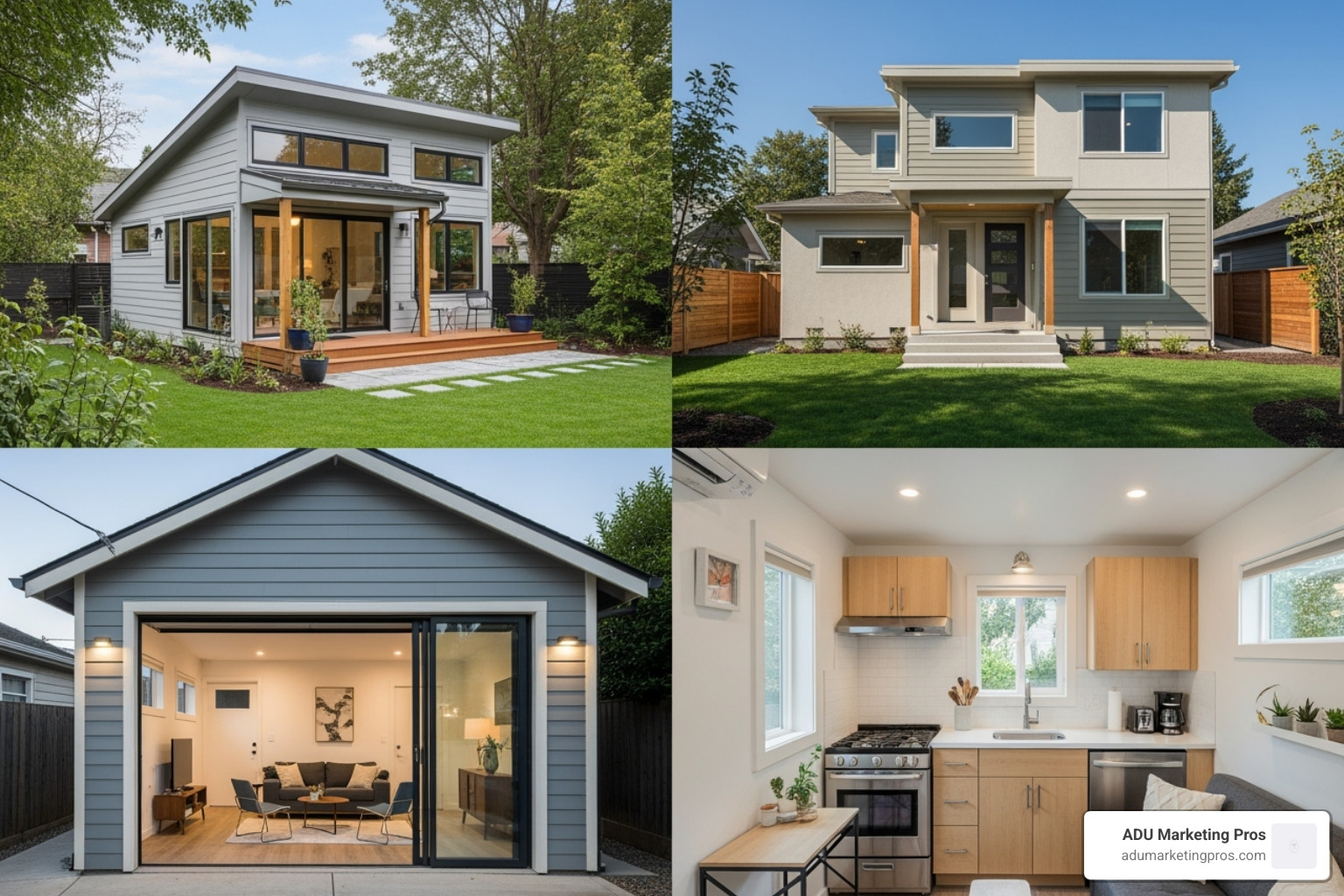
One of the most exciting aspects of ADU construction california is the variety of forms these units can take. From a detached backyard cottage to a clever garage conversion, there is an ADU solution for nearly every property, lifestyle, and budget. The key is to match your vision with your property’s potential and financial goals. For design inspiration, explore our ADU Design Ideas California guide.
Detached ADU
A detached ADU is a standalone structure built in your backyard, often called a backyard cottage. This option offers the most privacy and independence, making it highly attractive for renters. As new construction from the ground up, it allows for complete design freedom but also comes with the highest construction cost due to the need for a new foundation, structure, and separate utility connections. Despite the investment, the high rental income potential and property value increase make it a popular choice. See different layouts in our ADU Floor Plans California resource.
Attached ADU
An attached ADU shares at least one wall with the primary residence but has its own entrance, kitchen, and bathroom. Built as a new addition, it can be more cost-effective than a detached unit by leveraging the existing home’s structure and foundation. The main challenge is design integration—ensuring the addition complements the home’s architecture, materials, and roofline. Careful planning and soundproofing are crucial to maintain privacy between the two units.
Conversion ADU
For the most budget-friendly path, consider a conversion ADU, which repurposes existing space like a garage, basement, or attic. Garage conversions are the most common and affordable option, as the foundation, walls, and roof are already in place. State law often waives parking replacement requirements for conversions, making them even more appealing. Before starting, a structural integrity assessment is essential to ensure the existing foundation and structure can support a living space.
Above-Garage ADU
An above-garage ADU is a new unit built on top of an existing garage. This is an excellent solution for maximizing lot space, as it preserves the backyard for other uses. These units often provide better views and more privacy due to their liftd position. However, this type of project requires a thorough structural analysis by an engineer to determine if the garage foundation and framing can support the additional weight. Reinforcements are almost always necessary, adding complexity and cost to the project.
The A-to-Z Guide to ADU Construction in California
Building an ADU construction california project is a multi-stage journey. We’ve broken down the process into manageable steps to help you steer from initial concept to final completion. Understanding each phase helps you make informed decisions and avoid costly surprises. For a complete checklist, see our guide on ADU Building Requirements.

Step 1: Feasibility, Design, and Planning
This initial phase turns your vision into a viable plan. It starts with a site assessment to evaluate zoning compliance, setbacks, topography, and utility access. Next, you’ll establish a realistic budget that includes both hard costs (labor, materials) and soft costs (permits, design fees), plus a 10-15% contingency fund. You will then hire an architect or designer to create detailed building plans. These are not just sketches but comprehensive documents including architectural drawings, structural engineering, and Title 24 energy calculations needed for permits. Find inspiration with our ADU Building Plans California.
Step 2: The California ADU Permit Process
Thanks to state law, the permit process is more predictable than it once was. You’ll start by submitting your complete construction documents to the local building department. City staff then conduct a plan check to ensure your project complies with all state and local codes. It’s common for the city to request clarifications or minor revisions. Your design team will address these comments and resubmit the plans. By law, cities must approve or deny a complete application within a 60-day review period, which has dramatically accelerated ADU development. Learn more in our guide to the ADU Permit Process California.
Step 3: Site Work, Foundation, and Utilities
With permits in hand, construction begins. This phase starts with site clearing and grading to prepare the build area and ensure proper drainage. Next comes trenching for utilities to connect the ADU to water, sewer, and electrical lines. This may require upgrading your home’s existing electrical panel or other systems. Finally, the concrete foundation is poured, creating the solid base for your ADU. Quality foundation work is critical for the long-term stability of the structure.
Step 4: Framing, Roofing, and Exterior Finishes
This is when your ADU starts to take shape. Wall and roof framing creates the skeleton of the building. This is followed by plywood sheathing for structural stability and a surface for exterior finishes. Windows and doors are installed, followed by the roofing material and siding. Once the exterior is complete with paint, you have a “water-tight” shell that protects the interior from the elements.
Step 5: Interior Work and Final Inspections
The final phase transforms the shell into a home. It begins with rough MEP (Mechanical, Electrical, Plumbing) installation, followed by a city inspection. After that, insulation and drywall are installed. Then come the interior finishes you selected: flooring, paint, cabinetry, and countertops. Fixtures like appliances, sinks, and lights are installed last. Throughout this stage, multiple city inspections occur to ensure all work meets code. Once all inspections are passed, the city issues a Certificate of Occupancy, officially declaring the ADU safe and legal to live in.
Why a Design-Build Approach is Gaining Popularity for ADU Construction California
Many homeowners are choosing design-build firms for their ADU construction california projects. This integrated approach combines design and construction services under one roof, offering several key advantages:
- Single Point of Accountability: One team is responsible for the entire project, eliminating confusion between separate architects and contractors.
- Streamlined Communication: With designers and builders on the same team, problem-solving is faster and more efficient.
- Faster Project Timeline: Design and construction phases can overlap, potentially shaving weeks or months off the schedule.
- Better Cost Control: Builders provide cost feedback during the design phase, helping to prevent budget overruns.
This collaborative model often results in a smoother process and a better final product for the homeowner.
Decoding the Cost of ADU Construction California
Understanding the financial side of adu construction california is essential for a successful project. While the investment can seem significant, ADUs offer a compelling return through property value and rental income. Breaking down the costs helps you make informed decisions. For a complete overview, explore our guide on ADU Construction Cost.
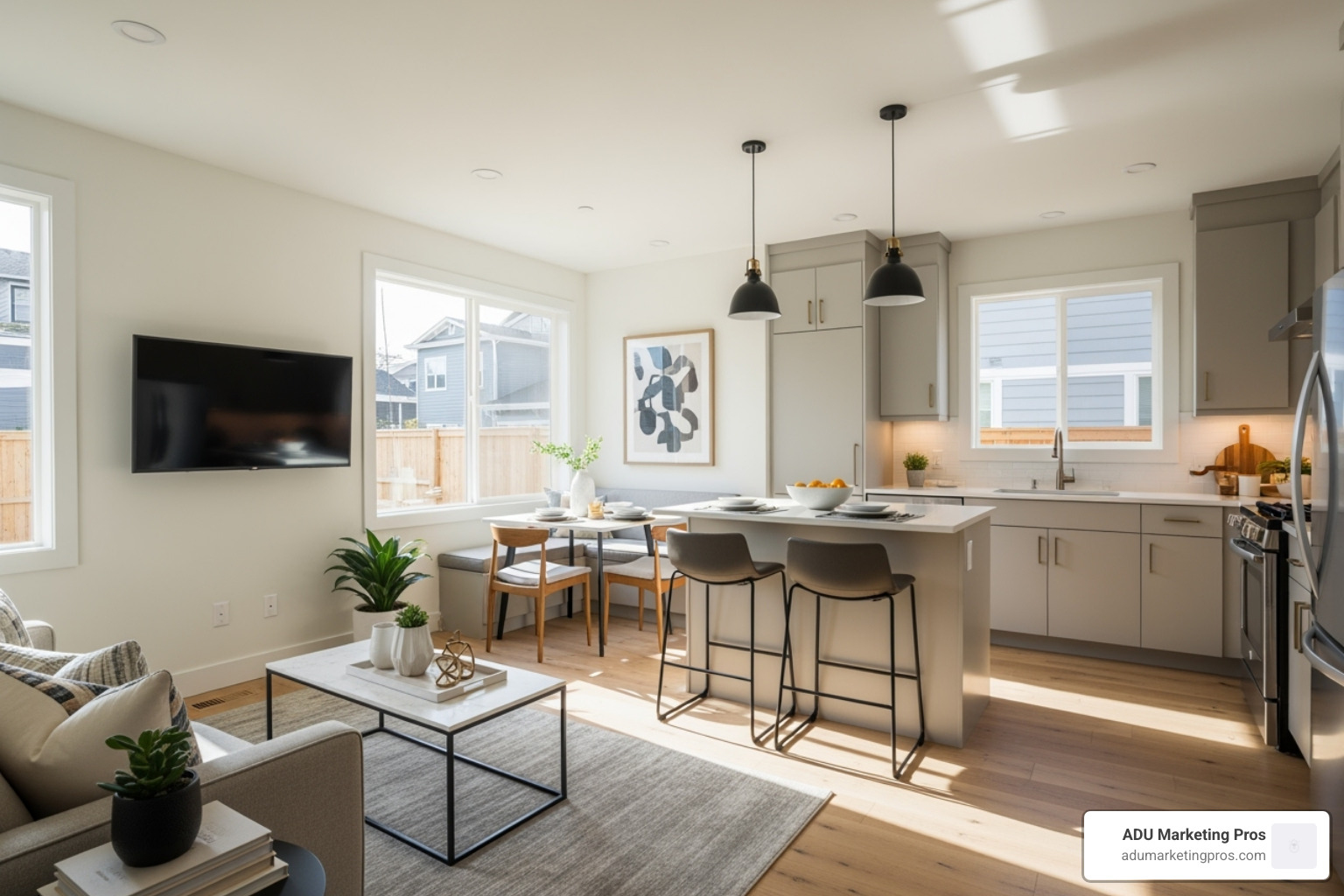
What’s the Average Cost to Build an ADU?
The cost to build an ADU in California typically ranges from $125 to $300 per square foot, though high-end custom projects can exceed $600 per square foot. The type of ADU is a major factor. Conversion projects (garages, basements) are generally the most affordable at $125-$350 per square foot. New detached construction costs more, usually falling between $250-$400 per square foot, because it requires a new foundation, structure, and utility lines.
The table below compares two common 500-square-foot ADU projects:
| Feature/Cost Type | 500 sq. ft. Garage Conversion ADU | 500 sq. ft. Detached New Build ADU |
|---|---|---|
| Average Cost Range | $62,500 – $175,000 | $125,000 – $200,000 |
| Cost Per Square Foot | $125 – $350 | $250 – $400 |
| Typical Timeline | 4-8 months | 8-12 months |
| Foundation Reuse | Yes (existing slab) | No (new foundation) |
| Utility Connections | Often easier/shared | Usually new/extended |
| Structural Complexity | Moderate (existing structure) | Moderate (new structure) |
| Permit Fees | Often lower/waived for conversions | Standard permit fees |
For more pricing details, see our analysis on ADU Cost Per Square Foot.
Key Factors Influencing Your Final ADU Building Costs
Several variables determine your final project cost. The size and type of the ADU are the biggest drivers. Site conditions also play a major role; a sloped lot can increase foundation and grading costs by 25% or more. The quality of materials and finishes you choose can significantly impact the budget, from basic finishes to premium, custom options. Unexpected utility upgrades to your main home’s electrical panel or sewer line can add thousands to the cost. Finally, location matters, as labor and material costs vary across California. Always include a contingency fund of 10-15% for unforeseen expenses. Get more details in our guide on the Cost to Build ADU.
Understanding Soft Costs vs. Hard Costs
Your total budget consists of two categories:
- Hard Costs: These are the tangible construction expenses, including labor and materials like lumber, drywall, roofing, and fixtures. Site preparation, foundation, and framing are also hard costs.
- Soft Costs: These are the indirect project expenses. They include architectural and engineering design fees, land surveys, permit and application fees (often $1,500-$8,000+), impact fees (for ADUs over 750 sq. ft.), and utility connection fees. These can add up to a significant portion of the total budget. Learn more about ADU Permit Cost California.
Financing Your ADU Project in California
Homeowners have several options to fund their adu construction california project:
- Cash-out Refinance: Refinance your existing mortgage for a higher amount and use the cash difference to fund the ADU.
- Home Equity Line of Credit (HELOC): A flexible credit line secured by your home’s equity, allowing you to borrow as needed.
- Construction or Renovation Loan: Specialized loans like an FHA 203k loan are designed to finance building projects and are disbursed in stages.
- Government Grants and Loans: The CalHFA ADU Grant Program offers up to $40,000 to reimburse pre-development costs for qualified low-to-moderate income homeowners. Many cities also offer local assistance programs.
Explore all avenues in our guide to ADU Financing Options.
Choosing the Right Team: How to Select an ADU Builder
Choosing the right builder is one of the most critical decisions for your adu construction california project. ADUs require specialized knowledge of state and local codes, utility connections on existing properties, and infill construction challenges. A general contractor may not have the specific experience needed. A specialist will steer the process more efficiently and avoid common pitfalls that can cause delays and cost overruns.
For a directory of qualified professionals, explore our guide to ADU Builders California.
Essential Qualities of a Top ADU Contractor
When vetting potential builders, look for these non-negotiable qualities:
- Proper Licensing: Verify they have an active “B” General Building Contractor license in good standing on the California State License Board (CSLB) website.
- Full Insurance: The contractor must provide proof of both general liability and workers’ compensation insurance to protect you from liability.
- Proven ADU Portfolio: Ask to see photos of completed ADUs and request references from recent clients. This demonstrates their specific experience and quality of work.
- Local Code Knowledge: An experienced ADU builder will be deeply familiar with your city’s specific permit process, inspection requirements, and local ordinances.
- Transparent Communication: Your builder should provide regular updates, clear timelines, and be upfront about any challenges that arise.
Questions to Ask Potential ADU Builders
During the interview process, ask targeted questions to gauge their expertise:
- How many ADUs have you completed in my city?
- Can you provide a detailed, fixed-price bid that separates soft and hard costs?
- What is your typical project timeline from permit approval to completion?
- How do you manage change orders and unexpected costs?
- What warranties do you provide on your work?
- Who will be my main point of contact during the project?
Finding Reputable ADU Builders in Your Area
Start your search with referrals from friends, family, or neighbors who have built an ADU. Online reviews on platforms like Yelp and Houzz can offer insights, but always verify information independently. Most importantly, check the CSLB website to confirm license status and check for any disciplinary actions. Regional specialists often have the deepest knowledge; homeowners can research builders in Los Angeles or the Bay Area. The cheapest bid is rarely the best value. Prioritize expertise, transparency, and a proven track record.
Conclusion: Is an ADU the Right Investment for You?
After exploring the landscape of adu construction california, it’s clear that ADUs are more than just extra space. They are a smart financial investment and a flexible solution to California’s housing needs. An ADU can significantly boost your property value, generate substantial rental income, and provide adaptable housing for family or a dedicated home office.
While the process requires careful planning—from navigating regulations to managing costs and selecting the right team—California’s progressive laws have made it more accessible than ever. With a 60-day permit timeline and streamlined rules, building an ADU is a feasible goal for many homeowners. The key to success is thorough preparation and partnering with experienced professionals who specialize in California’s unique ADU market.
For ADU builders and architects, this growing homeowner interest presents a massive opportunity. Standing out in this competitive field requires marketing that highlights your expertise and builds trust. ADU Marketing Pros specializes in connecting top construction and architecture firms with serious, qualified clients. We create targeted marketing strategies that showcase your knowledge and help you grow your business.
Ready to connect with homeowners actively planning their ADU projects? Explore our services for ADU Builders in the San Francisco Bay Area and learn how we can help you dominate the market.