

Why Finding the Right ADU Contractor California Is Your Most Important Decision
An ADU contractor California homeowner hires can make or break their project. If you’re searching for the right team, here’s what matters most:
Key Factors When Choosing an ADU Contractor:
- Valid California contractor’s license and insurance – Non-negotiable for legal protection
- Proven ADU-specific experience – Not just general construction
- Design-build capability – Streamlines the entire process under one roof
- Transparent pricing – Detailed proposals with no hidden costs
- Permit expertise – Steers California’s complex regulations
- Portfolio of completed ADUs – Shows quality and style range
- Strong client testimonials – Real feedback from past projects
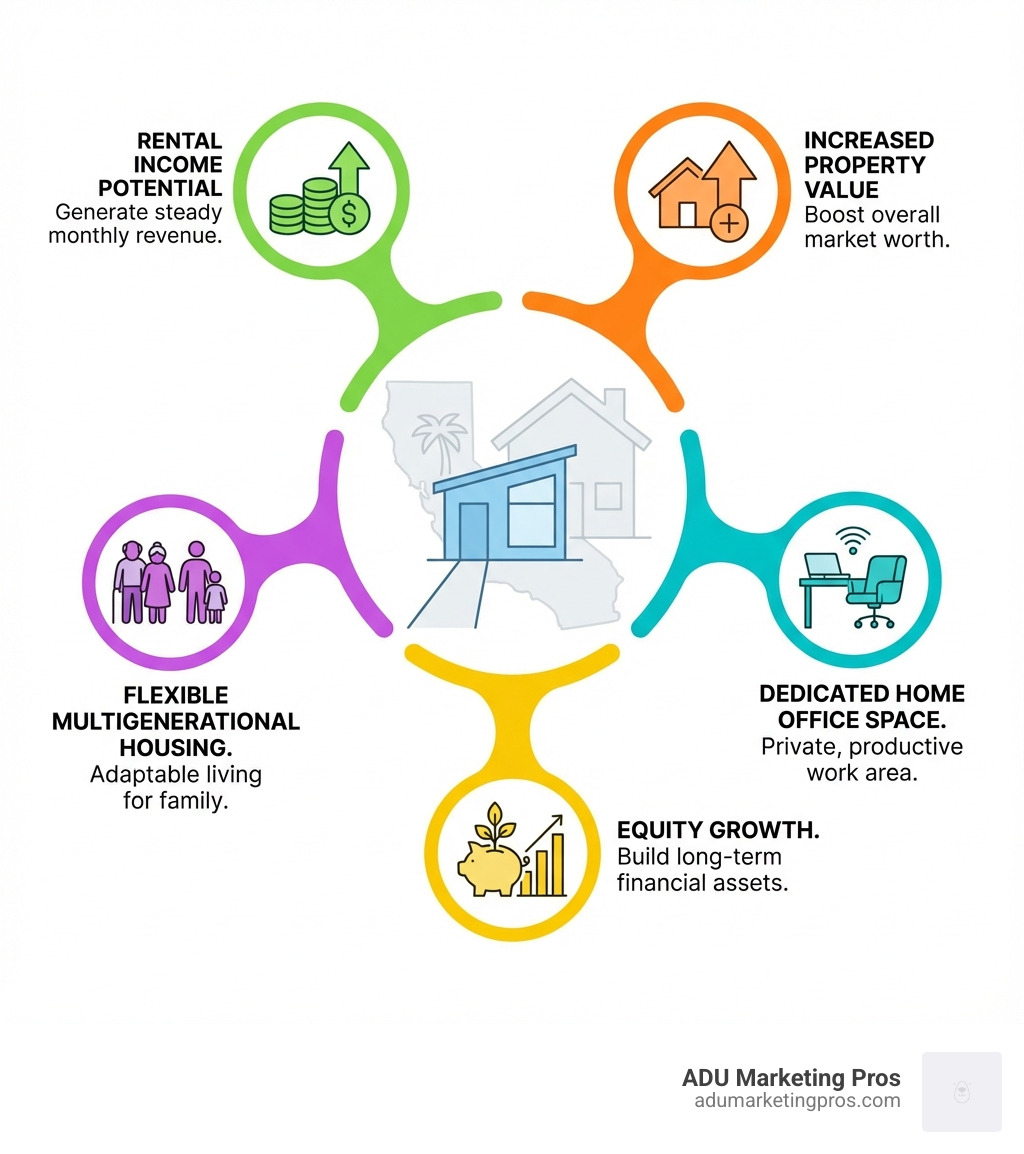
California’s housing crisis makes accessory dwelling units (ADUs) a smart solution. These backyard homes, or granny flats, can generate rental income, house family, or serve as a home office, all while increasing property value.
Building an ADU is like constructing a new home on your property. It involves design, engineering, complex permitting, and months of construction, all managed by a single contractor or team of specialists.
The right contractor doesn’t just build; they guide you through every phase, from translating your vision into plans to managing permits, subcontractors, and timelines. They ensure the final unit meets California’s strict building codes and your quality standards.
The wrong contractor? That leads to budget overruns, permit delays, design flaws, and construction nightmares that can derail your project entirely.
This guide covers everything you need to find your ideal ADU contractor in California, from budgeting and design to vetting and regulations. Whether you’re planning a small studio or a large two-bedroom unit, you’ll learn how to open up your property’s potential with confidence.
Explore Related Topics:
Understanding the ADU Landscape in California
Accessory Dwelling Units (ADUs) are a key part of California’s housing strategy. An ADU is a secondary housing unit on a residential lot with its own kitchen, bathroom, and entrance—a “mini-home” that can be a backyard cottage, garage conversion, or part of your existing house.
Known as granny flats or in-law units, ADUs provide independent living space. Popular options include ADU Garage Conversions and Detached ADU Plans that maximize a property’s potential.
ADU Types and Benefits
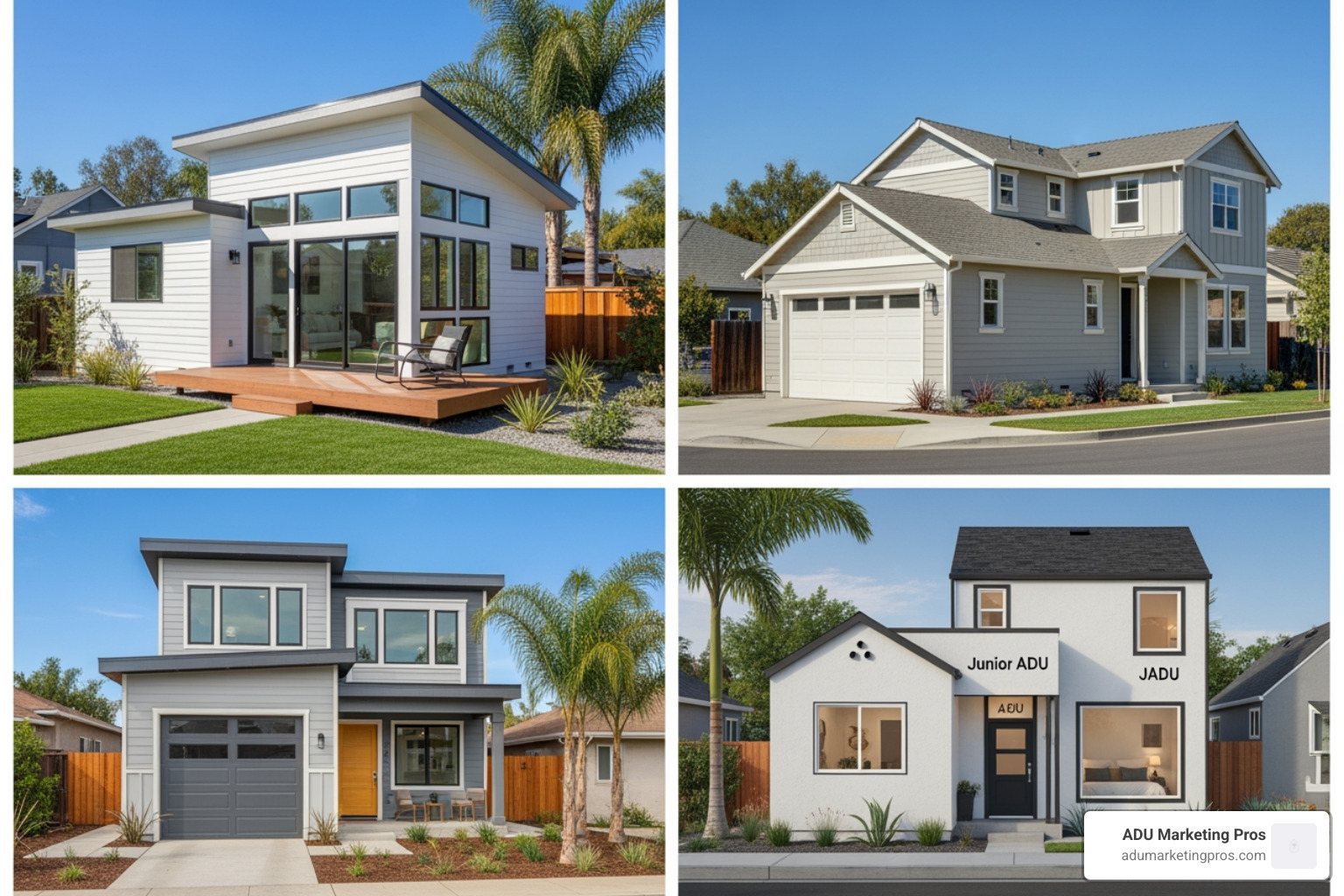
California’s ADU landscape offers a variety of styles to fit nearly any property and purpose. Here are the main types:
- Detached ADU: A standalone structure separate from the main house, offering maximum privacy and design flexibility.
- Attached ADU: An addition to the home that shares a wall but has a separate entrance.
- Garage Conversion: Converting an existing garage into living space. It’s often cost-effective because it uses an existing structure.
- Junior ADU (JADU): A small unit (up to 500 sq. ft.) created within an existing home, often with a kitchenette.
- Above-Garage ADU: An ADU built above a garage, ideal for maximizing space on smaller lots.
The benefits of building an ADU are numerous and impactful for homeowners across California:
- Increased Property Value: An ADU significantly boosts your home’s market value and equity.
- Rental Income: Generate significant ADU Rental Income, which can help cover mortgage payments or other expenses.
- Multi-generational Living: Provides independent living quarters for aging parents or adult children.
- Flexible Living Space: Offers flexible space for a home office, guest house, or creative studio.
- Financial Flexibility: Offers financial security through rental income or options for downsizing.
Custom vs. Prefab ADUs: Which is Right for You?
A key decision is choosing between a custom-built or prefabricated (prefab) ADU. The right choice depends on your budget, timeline, and design goals. Many California contractors offer both.
| Feature | Custom-Built ADUs | Prefab/Modular ADUs |
|---|---|---|
| Cost | Higher and more variable, often starting at $400-$600+/sqft. | Often lower and more predictable, with studios starting around $115,000. |
| Construction Timeline | Longer (8-10+ months) due to on-site work and potential delays. | Shorter, as units are built off-site while site prep occurs. |
| Design Flexibility | Total design freedom to match your lot and style. Ideal for Custom ADU Builders. | Limited to pre-designed models with some customization. See ADU Modular Homes California for options. |
| Site Impact | Longer on-site construction and disruption. | Minimal on-site disruption; units are delivered and installed. |
| Quality Control | Depends on the on-site contractor’s craftsmanship. | Consistent quality from a factory-controlled environment. |
| Permitting | Requires a full, site-specific permit process. | Still requires site-specific permits, but pre-approved plans can sometimes speed up the process. |
A custom ADU offers total design control, perfect for a unique space that complements your home. Prefab ADUs are an excellent choice if speed and predictable costs are priorities, offering a faster path to a finished unit. The best option depends on your project’s specific goals.
Budgeting and Planning Your California ADU Project
Starting on an ADU project requires careful financial planning and a clear understanding of the process. It’s an investment, and like any good investment, it benefits from thorough preparation.

Estimating Your ADU Construction Cost
The most common question is, “How much does an ADU cost?” In California, the cost can range from $75,000 to over $250,000, with per-square-foot costs typically starting around $400-$600+.
Several factors heavily influence the final price tag:
- Size: Larger ADUs cost more. For example, some custom packages start around $88,000 for 250 sq. ft. and go up to nearly $200,000 for 600 sq. ft.
- Type of ADU: Garage conversions are often more affordable than new detached or above-garage units, which require new foundations.
- Materials and Finishes: High-end finishes, custom cabinetry, and smart home features increase costs.
- Site Conditions: Difficult terrain, grading, or complex utility hookups add to the cost.
- Labor Costs: Labor rates vary by region, with higher costs in major urban areas like Los Angeles and the Bay Area.
- Permit Fees: Mandatory fees vary by jurisdiction and are a significant upfront cost.
- Design and Engineering Fees: Fees for architectural and engineering plans are essential.
Always get a detailed quote from a trusted ADU contractor California. An ADU Cost Calculator can provide an initial estimate, but a professional consultation is vital. For more details, see our guide on ADU Construction Cost.
Mapping Your Project Timeline
A realistic timeline is key. A typical ADU project in California follows these stages:
- Feasibility & Design Phase: Initial consultation, site assessment, and architectural plans. (1-3 months).
- Permitting Phase: Submitting plans and getting approvals from local departments. This unpredictable phase can take 2-6+ months.
- Construction Phase: The physical build, from foundation to finishes. (4-10 months).
In total, expect the process to take 8 to 18 months. An experienced contractor can streamline the ADU Building Process.
Financing Your ADU
While a substantial investment, numerous financing options are available:
- Cash-out Refinance: Refinance your mortgage to access home equity.
- Home Equity Line of Credit (HELOC): A flexible line of credit based on your home’s equity.
- Construction Loans: Loans for new construction, paid out in stages.
- Renovation Loans: Loans designed for renovation projects.
- ADU Funding Grants: The CalHFA ADU Grant Program offers up to $40,000 for pre-construction costs to qualified homeowners, as reported by the LA Times. Funding is limited but a great opportunity.
Consult with financial advisors and your contractor to find the best strategy. Learn more about ADU Financing Options and ADU Funding Grants.
Key Design Considerations
A thoughtful ADU design balances aesthetics with functionality and efficiency.
- Size and Layout Optimization: Clever design can make small ADUs feel spacious. Maximize every square foot with smart layouts. See ADU Floor Plans California for ideas.
- Architectural Styles: Your ADU should complement your main home’s style, whether it’s Modern, Farmhouse, or Spanish.
- Natural Light: Use large windows and skylights to make the space feel bigger and more inviting.
- Smart Storage Solutions: Incorporate built-ins and multi-functional furniture to save space.
- Energy Efficiency: Use energy-efficient appliances and good insulation to lower utility costs and build an Eco-Friendly ADU.
- ADA Accessibility: Consider ADA accessible features for aging family or rental versatility.
Staying on top of ADU Design Trends can also help ensure your ADU is not only functional but also attractive and modern.
How to Find and Vet the Best ADU Contractor California Has to Offer
Finding the right ADU contractor California is the key to a successful project. You need a partner who understands the unique complexities of ADUs.
Where to Find Potential Contractors
Starting your search can feel overwhelming, but several reliable avenues exist:
- Online Searches: Search online for “ADU Builders Near Me” and focus on ADU specialists, not just general contractors.
- Referrals: Ask friends, family, or neighbors for recommendations.
- Local Building Departments: Check with your local planning department for lists of contractors.
- Professional Organizations: Use directories from organizations like the National Association of the Remodeling Industry (NARI) or the American Institute of Architects (AIA).
How to Choose the Right ADU Contractor California
Once you have a list of potential contractors, it’s time to vet them thoroughly. This due diligence can save you immense stress and cost down the line.
- Verify License and Insurance: This is non-negotiable. Verify their California contractor’s license and check for full liability and worker’s compensation insurance.
- Experience Specifically with ADUs: ADU-specific experience is crucial. Ask how many they have completed.
- Review a Portfolio: Review their portfolio to see if their style and quality match your vision.
- Client Testimonials and Reviews: Check online reviews on Google, Yelp, and Houzz for feedback on communication, quality, and timeliness.
- Assess Communication Style: Choose a contractor who is responsive and communicates clearly.
- Demand Transparent Pricing and Detailed Contracts: Get a detailed, itemized quote and a contract that clearly outlines the scope, schedule, and payment process.
Services of a Comprehensive ADU Contractor
A top contractor offers comprehensive services, acting as a single point of contact. These include:
- Design Services: Design, architectural plans, and 3D renderings.
- Structural Engineering: Ensuring the design is structurally sound.
- Permit Processing: Managing the entire ADU Permit Process.
- Construction and Project Management: Overseeing all construction and managing subcontractors.
- Coordinating Inspections: Coordinating all required city inspections.
- Turnkey Solutions: Offering turnkey “design-permit-build” services for a seamless process.
The Design-Build Advantage
The design-build model, which combines design and construction in one firm, is popular for ADUs.
Advantages of a Design-Build ADU Contractor:
- Single Point of Accountability: One team is responsible for the entire project.
- Streamlined Process: Collaboration from day one leads to a faster process.
- Improved Communication: Better communication with an integrated team.
- Better Cost Control: More accurate budgeting and fewer cost surprises.
- Potentially Faster Project Delivery: Faster project delivery due to overlapping planning.
This integrated approach significantly reduces the stress of a construction project.
What to Look for in Quality and Craftsmanship
Beyond experience and a smooth process, the tangible quality of the finished ADU is paramount. When evaluating a ADU contractor California, consider:
- High-Quality Materials: Ask about the quality of materials used for framing, roofing, and finishes.
- Attention to Detail: Check their portfolio for precision and clean finishes.
- Clean and Organized Job Site: A tidy job site reflects a professional approach.
- Qualified and Vetted Subcontractors: Ensure they work with trusted, licensed subcontractors.
- Comprehensive Warranties: Look for a contractor who offers comprehensive warranties on labor and materials.
Overcoming Common ADU Challenges
An experienced contractor helps steer common challenges, including:
- Budget Overruns: Unexpected costs. A contingency fund (10-15%) is crucial.
- Permit Delays: Slow city bureaucracy. An experienced permit specialist helps.
- Unforeseen Site Conditions: Issues like hidden utility lines or poor soil.
- Design Flaws: Impractical or costly designs from inexperienced designers.
- Communication Breakdowns: Misunderstandings due to poor communication.
A seasoned ADU contractor California anticipates these issues, maintains open communication, and acts as your advocate to keep the project on track.
Navigating California’s ADU Regulations and Permitting
California has progressive ADU laws to address its housing shortage, but navigating them can be complex and requires expert guidance.
Understanding California’s State ADU Laws
State laws have significantly streamlined the ADU building process, overriding many restrictive local ordinances. Here are some key aspects:
- Maximum Size Limits: State law allows detached ADUs up to 1,200 sq. ft. and attached ADUs up to 50% of the main home’s size, though local rules may apply.
- Minimum Setback Requirements: State law requires only 4-foot side and rear yard setbacks, making it easier to build on small lots.
- Parking Exemptions: Parking is often exempt if the property is near public transit or in a historic district.
- Owner-Occupancy Rule Changes: Owner-occupancy requirements are suspended until 2025, allowing more rental flexibility.
- Utility Connections: Utility connection fees have been reduced or waived for some ADU types.
An expert ADU contractor California understands both state and local rules. For an overview, see California ADU Regulations and the California’s official ADU handbook.
The Critical Role of Permitting
Permitting is not just a bureaucratic hurdle; it’s a critical step that ensures your ADU is safe, legal, and a sound investment.
- Ensuring Compliance: Permits ensure your ADU meets all safety, building, and environmental codes.
- Legalizing Your Investment: An unpermitted ADU can cause fines and resale problems. Building legally protects your investment.
- Avoiding Fines and Resale Problems: Building without permits is illegal and can lead to penalties. A permitted ADU adds verifiable value.
Understanding ADU Permits California is essential for any homeowner considering an ADU.
How a Top ADU Contractor California Handles Permitting
A specialized ADU contractor California makes the daunting permit process smooth with established systems:
- Employing In-House Permit Specialists: They employ in-house specialists who know local codes in Los Angeles, San Diego, and the Bay Area.
- Managing All Plan Submissions and Revisions: They manage all plan submissions and revisions with the city.
- Communicating Directly with City Departments: They use established relationships with city departments to speed up processing.
- Navigating Complex Local Ordinances: They understand the nuances of complex local ordinances.
- Ensuring Full Compliance: They ensure full compliance to minimize delays and avoid mistakes.
A skilled contractor makes the permit phase a manageable step, not a roadblock.
Frequently Asked Questions about Building an ADU in California
We understand you likely have many questions about building an ADU. Here, we address some of the most common ones.
Will building an ADU increase my property taxes?
Yes, but your property taxes are reassessed based only on the value of the new ADU, not your entire property. This “blended assessment” keeps the tax increase manageable and proportionate to the value added. For example, if your ADU adds $150,000 in value, only that amount is reassessed at current rates. Learn more about ADU Property Taxes.
What is the maximum size for an ADU in California?
State law generally allows detached ADUs up to 1,200 sq. ft. and attached ADUs up to 50% of the main home’s size. However, local ordinances can have specific rules. An experienced ADU contractor California can clarify what’s possible on your lot in areas like Los Angeles, San Diego, or the Bay Area. For more details, see our guide on How Big Can an ADU Be in California?.
Can I build an ADU on a property with a duplex or apartment building?
Yes, recent state laws allow ADUs on properties with multi-family dwellings. You may be able to convert non-livable spaces like garages or build new detached units, depending on local rules. This is part of California’s effort to increase housing density. An ADU contractor California can assess your property’s feasibility.
Conclusion
Building an ADU is a significant investment that can transform your property and financial future. The journey from a simple idea to a completed home involves careful planning, budgeting, and navigating complex regulations. The single most important decision you’ll make is choosing the right contractor to guide you. By vetting for experience, quality, and transparency, you can ensure a smooth process and a final product that meets your vision. For ADU builders and architects looking to connect with these informed homeowners, ADU Marketing Pros provides specialized digital marketing services to showcase your expertise and grow your business in California’s competitive market.
Ready to build your dream ADU? Find expert tiny house builders in California to bring your vision to life.