Why ADU Floor Plan Designs Are the Foundation of Your Perfect Backyard Home
ADU floor plan designs are the essential architectural blueprints that dictate the form and function of your accessory dwelling unit. More than just a drawing, a well-conceived floor plan is a strategic document that balances your personal goals, site constraints, and local building codes. These plans are meticulously crafted to maximize every inch of living space within a compact footprint, which in California typically ranges from a cozy 400 square feet to a more spacious 1,200 square feet. The core principle behind every successful ADU plan is efficiency, achieved through intelligent design choices like open-concept layouts, highly functional compact kitchens, versatile living areas, and innovative storage solutions that make a small home feel expansive and comfortable.
Choosing the right floor plan is the single most important decision you’ll make in your ADU journey. It transforms a small structure into a highly functional and desirable home, whether its purpose is generating rental income, housing family members, or serving as a dedicated home office or creative studio. Understanding the different types of floor plans is the critical first step, whether you’re considering a detached backyard cottage, an attached unit that expands your current home, or a clever garage conversion.
Top ADU Floor Plan Types:
- Studio Plans (Under 500 sq ft) – These open-concept layouts combine living, sleeping, and kitchen areas into one fluid space. Ideal for single occupants, students, or as a guest suite, they are the most cost-effective option and perfect for smaller lots.
- One-Bedroom Plans (500-800 sq ft) – The most popular and versatile option, these plans provide the privacy of a separate bedroom. This layout is highly sought after in the rental market and offers a comfortable living arrangement for individuals, couples, or aging parents.
- Two-Bedroom Plans (800-1,200 sq ft) – Suitable for small families, roommates, or multi-generational living arrangements where more privacy is needed. These designs require clever space planning to fit two bedrooms, a living area, and a kitchen comfortably within the maximum square footage allowed.
- Garage Conversion Plans – These plans focus on repurposing an existing garage into a fully functional living space. This is often a faster and more affordable route, as the foundation and structure are already in place. The design challenge lies in creatively working within the existing footprint.
- Two-Story Designs – When lot space is limited, building up is the answer. Two-story ADUs maximize living area on a smaller footprint, often placing bedrooms on the second floor for privacy and living spaces on the ground floor for easy access to the outdoors.
The construction process for an ADU is significantly faster than that of a traditional home, often completing in just 4 to 8 months from breaking ground. This accelerated timeline is made possible by the smaller scale and, in many cases, the use of streamlined building systems. Ultimately, the key is to match the floor plan to your specific needs, as each purpose—a rental property, a suite for aging parents, or a quiet home office—demands different design considerations to be truly successful.
Understanding the Fundamentals of ADUs
Accessory Dwelling Units (ADUs) are versatile, small-scale homes that add immense value and flexibility to properties across California, from the dense urban neighborhoods of Los Angeles to the sprawling suburbs of the San Francisco Bay Area. They are a powerful tool for homeowners, solving real-world problems by enabling multi-generational living, creating new passive income streams, and providing adaptable space that evolves with life’s changes.
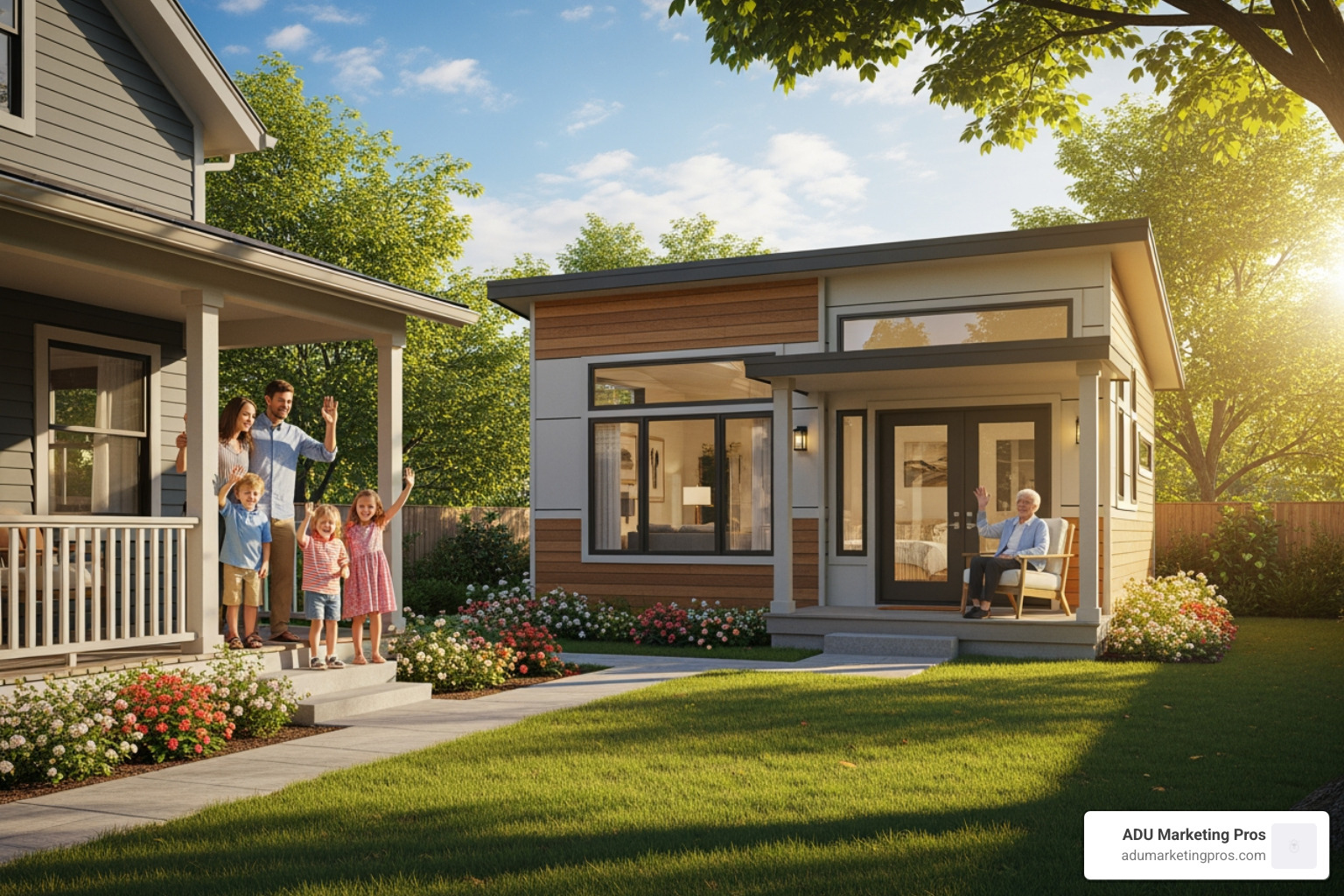
What is an Accessory Dwelling Unit?
An Accessory Dwelling Unit (ADU), at its core, is a smaller, self-contained residential unit located on the same lot as a standalone single-family home. To qualify as an ADU, the structure must provide all the fundamental elements of a home: a dedicated entrance, a full kitchen (including a sink, cooking appliance, and refrigerator), a bathroom, and a designated sleeping area. This independence is what distinguishes an ADU from a simple guest room or pool house.
Commonly known by various names like granny flats, in-law suites, backyard cottages, or casitas, ADUs serve a vital purpose in modern urban planning. They gently increase housing density in established, desirable neighborhoods without the need for large-scale, disruptive development. This is especially critical in a state like California, where a series of progressive state laws have been enacted to encourage ADU construction as a key strategy to create more affordable and diverse housing options in communities facing severe shortages.
The Core Benefits: Why Build an ADU?
Investing in well-thought-out adu floor plan designs and constructing an ADU unlocks a multitude of benefits for homeowners, transforming an underutilized backyard into a valuable asset.
Multi-generational living is a primary driver for many families. An ADU provides a perfect solution for keeping family members close while preserving individual privacy and independence. It’s an ideal home for aging parents who may need occasional support but cherish their autonomy, or for adult children saving for their own home who need an affordable place to live. This arrangement fosters stronger family bonds and provides peace of mind.
The rental income potential offers a significant financial advantage. A long-term tenant in an ADU can provide a steady, reliable monthly income stream that can help offset mortgage payments, cover property taxes, or build savings. In areas where permitted, short-term rentals (like Airbnb) can offer even higher returns, though they require more active management. This passive income can dramatically improve a homeowner’s financial stability.
An ADU directly increases your property value. By adding legal, permitted, and functional square footage to your property, you are creating a more valuable and desirable asset. Appraisers recognize the income-generating potential and added utility of an ADU, which often translates to a significant boost in the property’s market value, making it highly attractive to a wider range of future buyers.
The flexible space an ADU provides is invaluable. Its function can adapt to your family’s changing needs over time. What starts as a rental unit can later become a home for a family member, a dedicated home office for remote work, a private art or music studio, a personal gym, or simply a quiet retreat from the main house.
Finally, ADUs inherently promote sustainability. Their smaller footprint means they require fewer materials to build and consume significantly less energy for heating, cooling, and lighting compared to a traditional single-family home. When you incorporate green features into your adu floor plan designs—such as solar panels, high-efficiency windows, and sustainable materials—you create an eco-friendly living space that is both comfortable and cost-effective to operate, aligning with California’s ambitious environmental goals.
Exploring the Spectrum of ADU Floor Plan Designs
When you begin to explore the world of ADU floor plan designs, you’ll quickly discover a rich and diverse spectrum of types, layouts, and architectural styles. The right design is not just about fitting a small house in your backyard; it’s about creating a space that is functional, beautiful, and perfectly suited to its purpose. Understanding this spectrum is key to unlocking the full potential of your property.
Types of ADUs and Their Floor Plans
ADUs are categorized into several distinct types, each with unique advantages, challenges, and corresponding floor plan considerations:
- Detached New Construction (D-ADU): Often called a backyard cottage or granny flat, the D-ADU is a completely separate, standalone structure built from the ground up. This type offers the highest degree of privacy for both the main house occupants and the ADU residents, making it a premier choice for rental units. The design flexibility is unparalleled; you can orient the structure to maximize natural light, capture views, and create private outdoor living spaces. Floor plans can be fully customized, from an efficient studio to a family-friendly 1,200-square-foot, two-bedroom home.
- Attached ADU (A-ADU): This type of ADU is built as an addition that shares one or more walls with the primary residence. Attached ADUs are often more cost-effective to build because they can leverage the existing foundation and utility connections. Floor plans for A-ADUs must be thoughtfully designed to ensure a seamless integration with the main house, both aesthetically and functionally, while providing adequate soundproofing and a separate entrance to maintain privacy.
- Conversion ADUs: These ADUs are created by repurposing an existing part of the property. Garage conversions are by far the most popular, often proving to be the fastest and least expensive path to an ADU. The floor plan is designed within the existing footprint, which presents unique challenges like dealing with sloped concrete floors and incorporating windows and doors. Basement and attic conversions are also viable options in homes with suitable structures, offering a way to add a unit with minimal impact on the property’s exterior.
- Junior ADU (JADU): A JADU is a specialized, smaller unit of no more than 500 square feet, created entirely within the existing walls of the primary home (e.g., converting a spare bedroom). A JADU must have an efficiency kitchen and an exterior entrance, but it can share a bathroom with the main house, making it a highly cost-effective option for adding a small rental or living space. Most jurisdictions require the property owner to reside in either the main home or the JADU.
Popular Layouts for Smart adu floor plan designs
Smart layouts are the secret to making a compact ADU feel spacious and livable. The goal is to maximize usable space while minimizing wasted square footage.

- Studio plans (typically under 500 sq ft) utilize a completely open-concept layout where the living, sleeping, and kitchen areas flow into one another. This is the most efficient use of space for a single occupant or a couple.
- One-bedroom plans (500-800 sq ft) remain the most popular and marketable layout. They provide the crucial privacy of a separate bedroom, which significantly enhances livability for long-term residents.
- Two-bedroom plans (800-1,200 sq ft) are ideal for small families, roommates, or as a high-value rental unit. These plans require creative solutions, such as tandem bedrooms or compact bathrooms, to maximize functionality within California’s typical size limits.
- Loft designs are a brilliant way to leverage vertical space. A sleeping loft above the main living area can free up the entire ground floor for kitchen, living, and dining, making a small footprint feel much larger. This design is best suited for ADUs with high or vaulted ceilings.
Popular Architectural Styles
The compact scale of an ADU provides a wonderful canvas for creative architectural expression. The style can either match the main house for a cohesive look or stand out as a unique design statement.
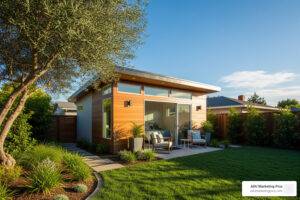
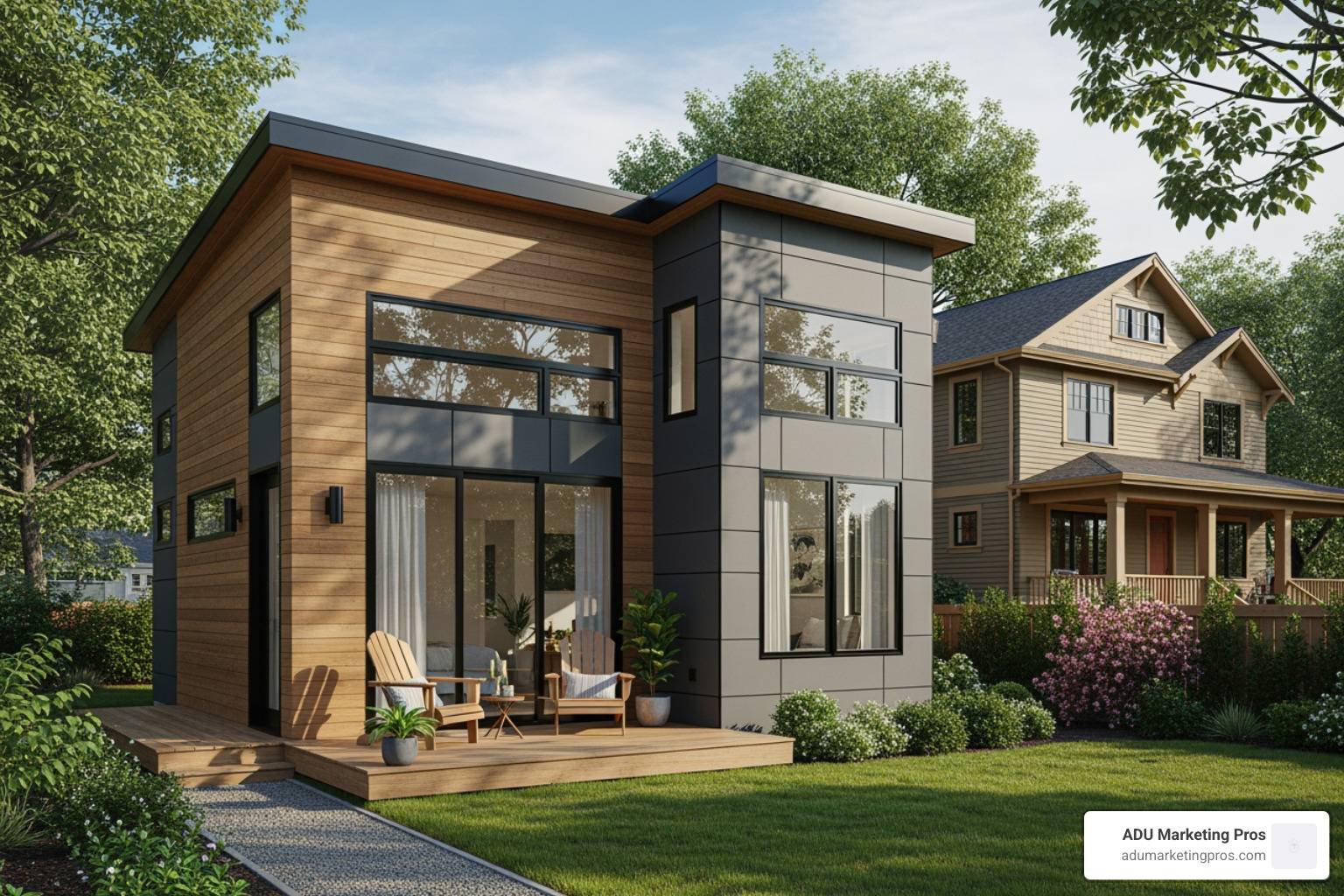
- Modern: Characterized by clean lines, simple forms, large expanses of glass, and a minimalist color palette. Flat or single-slope roofs are common, and interiors are open and uncluttered.
- Modern Farmhouse: This wildly popular style blends rustic charm with clean, contemporary design. It often features board-and-batten or lap siding, gable roofs, large windows with black frames, and a warm, inviting interior.
- Craftsman: Known for its emphasis on natural materials and handcrafted details, this style features low-pitched roofs with wide eaves, exposed rafter tails, detailed woodwork, and welcoming front porches supported by tapered columns.
- Cottage: These ADUs evoke a sense of cozy, storybook charm. Key features include steeply pitched roofs, quaint front porches, and decorative details that create a whimsical and inviting retreat.
Key Design Considerations for Maximizing Your ADU
A successful ADU is a masterclass in smart design. When you’re working with a limited footprint, every single decision matters. Thoughtful planning and clever design strategies are what transform a small space from feeling cramped and compromised to feeling open, functional, and perfectly tailored to your needs. This is where the expertise embedded in professional ADU floor plan designs truly shines.
Space-Saving Strategies in adu floor plan designs
Maximizing space efficiency is the primary goal of any great ADU floor plan. These design choices are not just about saving space; they’re about enhancing the perception of space and improving the overall quality of life within the unit.
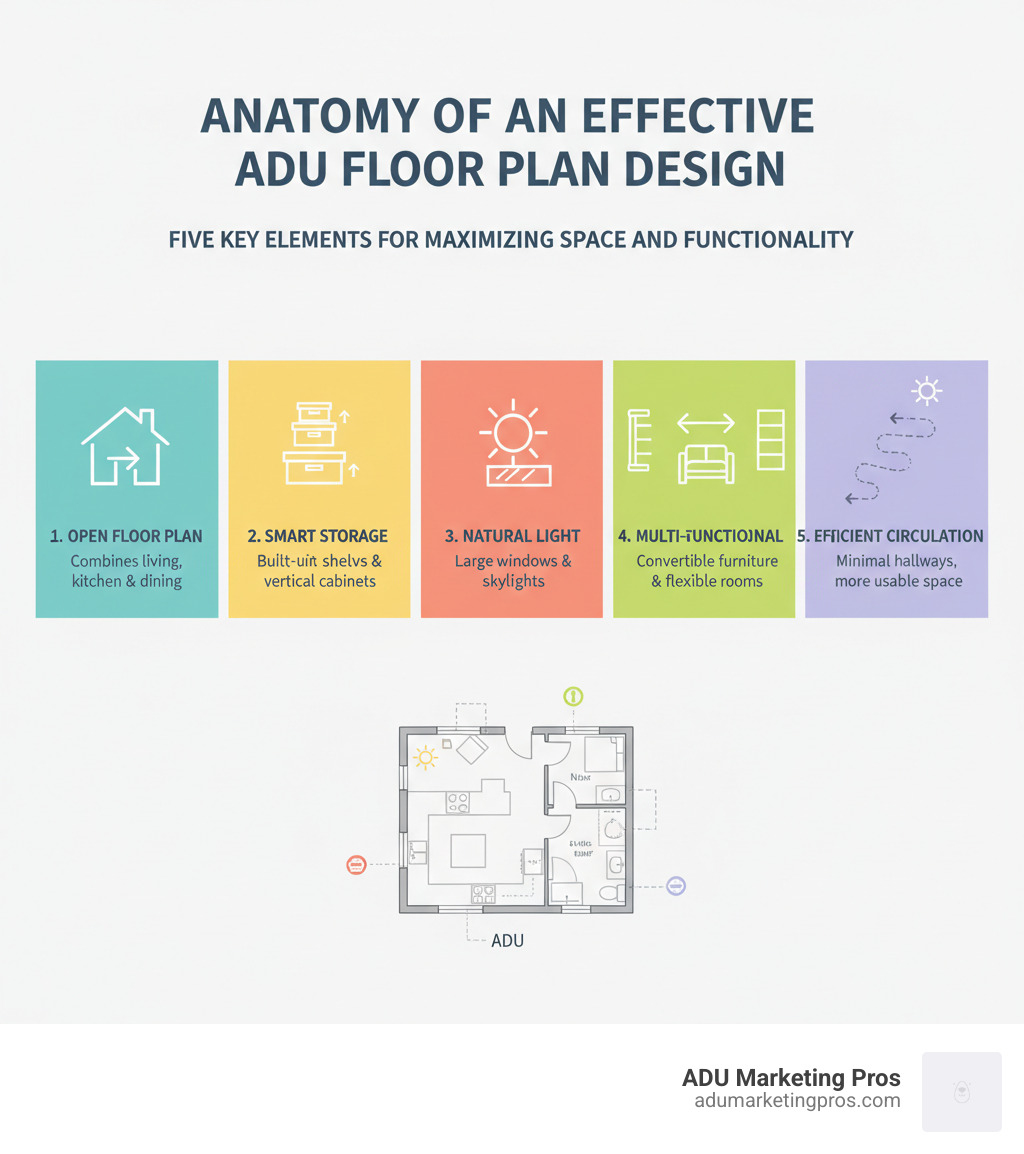
- Open floor plans: This is the cornerstone of modern ADU design. By eliminating interior walls that traditionally separate the kitchen, living, and dining areas, you create a single, expansive great room. This not only makes the space feel significantly larger but also improves circulation and allows natural light to penetrate deeper into the unit.
- Multi-functional furniture: In a small space, every piece of furniture should work hard. A Murphy bed can transform a living room into a bedroom at night. An extendable dining table can accommodate guests without permanently taking up space. Ottomans with hidden storage and nesting coffee tables are other excellent choices.
- Smart storage solutions: Effective storage is non-negotiable. Think vertically with floor-to-ceiling cabinetry. Utilize often-overlooked spaces with built-in shelving, under-stair storage, and toe-kick drawers in the kitchen. A well-designed plan integrates storage seamlessly into the architecture.
- Strategic use of natural light: Light is one of the most powerful tools for making a space feel larger. Large windows, glass doors (like sliders or French doors), and skylights can flood an ADU with daylight, creating an airy, open atmosphere and connecting the interior with the outdoors.
- High and vaulted ceilings: Drawing the eye upward creates a powerful sense of volume and openness. Even a modest increase in ceiling height can prevent a compact space from feeling confined. Vaulted or sloped ceilings can add architectural drama and make a room feel grander.
- Pocket and barn doors: Traditional swing doors require a significant amount of clear floor space to operate. Sliding pocket doors that disappear into the wall or stylish barn doors are excellent space-saving alternatives for bathrooms, closets, and bedrooms.
Prefab vs. Custom-Built ADUs
Once your design is finalized, you’ll face a key decision: prefab or custom construction. Each path has distinct advantages, and the right choice depends on your priorities regarding cost, timeline, and customization.
| Feature | Prefab ADUs | Custom-Built ADUs |
|---|---|---|
| Cost | Often more predictable, with a fixed price for the unit. Site work and installation are additional costs. | Varies widely based on design complexity and finishes. Can be higher due to unique engineering and labor. |
| Timeline | Significantly faster. Factory construction occurs while site prep is underway. Typical timeline is 4-8 months. | Longer and more variable. Subject to weather delays and subcontractor schedules. Can take 9-18 months or more. |
| Customization | Limited. You choose from a catalog of pre-designed models with a set of finish options. | Complete design freedom. The ADU is tailored to your exact specifications, lot constraints, and aesthetic preferences. |
| Quality Control | Generally high and consistent, as units are built in a controlled factory environment protected from the elements. | Dependent on the quality and oversight of your general contractor and their subcontractors. |
| Site Disruption | Minimal. The majority of construction happens off-site. On-site time is primarily for foundation, utility hookups, and installation. | Significant. Your backyard becomes a construction zone for many months, with associated noise and activity. |
Prefab ADUs are constructed in modules in a factory setting and then transported to your property for assembly. This method offers unparalleled speed and cost predictability. The factory process, which can include pre-approved engineering, often streamlines permitting. You can watch a passive prefab build to see the remarkable speed of installation.
Custom-built ADUs (or ‘stick-built’) are constructed entirely on-site from the ground up, following traditional building methods. This approach offers complete design freedom, making it the ideal choice for homeowners with very specific needs, unique lot shapes, or a desire to perfectly match the architecture of their existing home.
Sustainability and Energy Efficiency
Building an ADU presents a golden opportunity to embrace sustainable, energy-efficient living. A smaller home is already more eco-friendly, and incorporating green features can further reduce its environmental impact and lower long-term operating costs.
- Passive design: This is a smart, no-cost design strategy. It involves orienting the ADU to take advantage of the sun’s path and prevailing breezes. Strategic window placement, properly sized roof overhangs, and cross-ventilation can dramatically reduce the need for artificial heating and cooling (see the U.S. Department of Energy’s overview: https://www.energy.gov/energysaver/passive-solar-home-design).
- High-performance envelope: This refers to the shell of the house. Investing in high-quality insulation (in walls, floors, and ceiling) and energy-efficient, dual-pane windows is crucial. This creates a tightly sealed home that maintains a comfortable indoor temperature year-round, slashing energy bills.
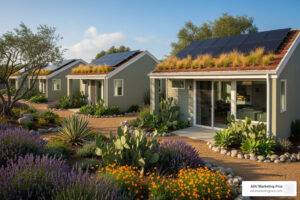
- Solar panels: An ADU’s smaller roof is often perfectly sized for a modest solar array that can offset most or all of its electricity usage. Many homeowners can achieve net-zero energy status, producing as much power as they consume.
- Water-saving fixtures: In drought-prone California, water conservation is essential. Installing low-flow toilets, faucets, and efficient showerheads that meet EPA WaterSense standards is a simple way to make a big impact (see EPA WaterSense: https://www.epa.gov/watersense).
- Sustainable materials: Choose materials with a lower environmental footprint, such as reclaimed wood, bamboo flooring, recycled-content countertops, and low-VOC (volatile organic compound) paints and finishes for healthier indoor air quality.
For building professionals, mastering the integration of these green features into ADU architectural plans is no longer a niche skill but a market expectation.
Navigating the Practicalities: Costs, Permits, and Challenges
While the design phase is exciting, a successful ADU project requires a firm grasp of the practicalities. Understanding the true costs, navigating the complex web of zoning and permitting, and anticipating common challenges will set your project up for a smooth and successful build from start to finish.

Understanding ADU Costs
The cost to build an ADU is one of the most critical factors, and it varies dramatically. A realistic budget must account for location, size, design complexity, site conditions, and level of finishes. It’s helpful to break costs into two categories:
- Soft Costs (10-20% of budget): These are the fees required before construction begins, including architectural design, structural engineering, soil reports, energy calculations (Title 24), and city/county permit and impact fees.
- Hard Costs (80-90% of budget): This covers all physical construction, including labor, materials, site preparation, foundation, framing, roofing, plumbing, electrical, HVAC, insulation, and all interior and exterior finishes.
Key factors influencing the final budget include:
- Location: Construction costs differ significantly across California. Labor rates and material costs in high-cost areas like the San Francisco Bay Area (San Jose, Palo Alto, Menlo Park) or Los Angeles are substantially higher than in other regions.
- Size and Design: A larger, more complex adu floor plan design with features like vaulted ceilings or custom cabinetry will cost more per square foot than a smaller, simpler, rectangular design.
- Finishes: The choice of appliances, countertops, flooring, tile, and fixtures significantly impacts the budget. High-end selections can add tens of thousands of dollars to the final cost.
- Site Preparation: This is a major variable. A flat, clear lot will be far less expensive to prepare than a sloped lot requiring retaining walls, or a site with mature trees that need removal or extensive utility trenching.
Common financing options include home equity lines of credit (HELOCs), cash-out refinances, renovation loans (like the FHA 203k), and construction loans. It is essential to consult with a financial advisor and mortgage professional to determine the best strategy for your financial situation.
The Maze of Zoning and Permitting
Navigating the permitting process can be one of the most daunting aspects of an ADU project. While California state laws have streamlined the process and mandated that cities approve ADUs, local city and county ordinances still dictate the specific requirements. For the most current statewide rules and guidance, the California Department of Housing and Community Development’s ADU resources are indispensable: https://www.hcd.ca.gov/policy-research/accessory-dwelling-units.
Cities like San Jose, Sunnyvale, Palo Alto, Mountain View, and Menlo Park each have their own detailed ordinances that build upon state law, covering specifics like maximum size, height, setbacks, and architectural styles. Key requirements to investigate early include:
- Size Limits: Most cities allow detached ADUs up to 1,200 sq ft, but this can vary.
- Setbacks: State law mandates a minimum of 4-foot side and rear yard setbacks, a significant reduction from previous rules.
- Height Restrictions: Typically 16 feet for a single-story ADU, but can be higher for two-story units or those above a garage.
- Parking Rules: In most cases, parking is not required for ADUs, especially if they are near public transit.
To simplify and expedite the process, many cities now offer pre-approved or ‘permit-ready’ plans. For example, San Jose’s preapproved ADU plans can significantly reduce the plan review time. The role of an experienced architect or designer is crucial here. They are experts in interpreting local codes and can ensure your adu floor plan designs are fully compliant, saving you time, money, and frustration. While general guides like Your Guide to Building an Accessory Dwelling Unit are helpful for context, always defer to California-specific regulations and your local planning department.
Common Challenges and Smart Solutions
- Limited Lot Space: On tight lots, creative designs are key. This might involve a two-story plan, a cantilevered second floor that gains square footage without expanding the foundation, or strategic placement to preserve precious yard space.
- Utility Hookups: An early decision is whether to tie into the main house’s utilities or install separate meters. Tying in is often cheaper upfront, but separate meters provide billing independence for rentals and may be required if the main panel lacks capacity.
- Privacy for All: Maintaining privacy for both the main house and the ADU is critical. This can be achieved through clever window placement (using high clerestory windows or frosted glass), strategic fencing, and thoughtful landscaping with trees and shrubs to create natural visual buffers.
- Neighbor Relations: Proactively communicate your plans with your neighbors before construction begins. Sharing your designs, being mindful of construction noise and hours, and adhering strictly to all setback and height rules can help maintain positive community relations and prevent potential disputes.
Conclusion
Building an ADU is about creating possibilities. As we’ve explored, adu floor plan designs offer incredible versatility, from cozy studios perfect for a single renter to spacious two-bedroom homes that can comfortably house a small family. We’ve covered the essential fundamentals, from the powerful benefits of multi-generational living and rental income to the diverse spectrum of design styles and the critical practicalities of costs, permits, and construction challenges.
The right floor plan is the absolute foundation of a successful ADU. It is the strategic tool that transforms a simple structure into a functional, comfortable, and valuable home that is perfectly customized to your unique goals. Whether you aim to generate passive income, keep your family close, or create a dedicated workspace away from the main house, your choice of layout will dictate the project’s ultimate success.
Our best advice is to start with a clear and detailed vision. Before you look at a single blueprint, take the time to define the primary purpose of your ADU. Who will live there? What activities will take place inside? How will it relate to your home and your lifestyle? Answering these questions will guide every subsequent design decision and ensure the final result not only meets but exceeds your expectations.
For architecture and construction firms operating in California’s dynamic and competitive ADU market, standing out is essential. ADU Marketing Pros specializes in helping you showcase your design expertise and connect with discerning clients who value quality, creativity, and professionalism. We understand the nuances of this unique market. Explore our insights on marketing ADU architectural plans to learn how we can help your business thrive in this growing industry.
Your perfect ADU begins with the right plan—and the right partners to help you bring that vision to life.