
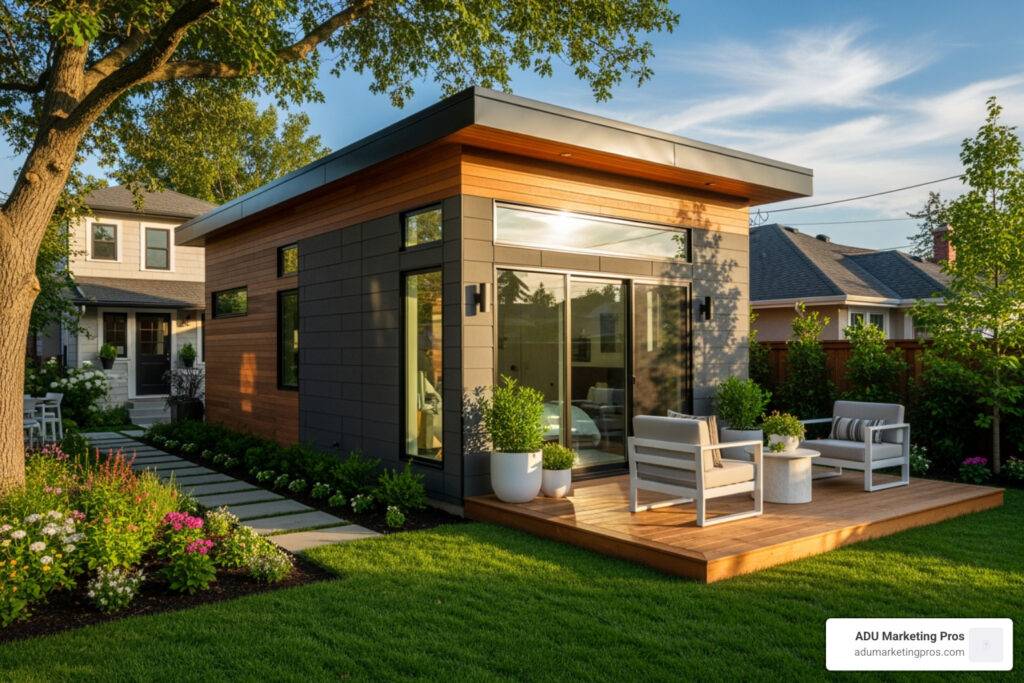
Why an ADU Remodel Can Transform Your Property
An ADU remodel is one of the smartest and most impactful investments you can make in your home. Whether you’re eyeing an underutilized garage, an outdated backyard cottage, or a dusty basement, you’re looking at a space brimming with potential. Once simply known as “granny flats,” Accessory Dwelling Units (ADUs) have evolved into a sophisticated and powerful solution for modern homeowners. In an era defined by housing affordability challenges, the rise of multigenerational living, and the desire to maximize every square foot of property, the ADU has become a cornerstone of intelligent real estate strategy.
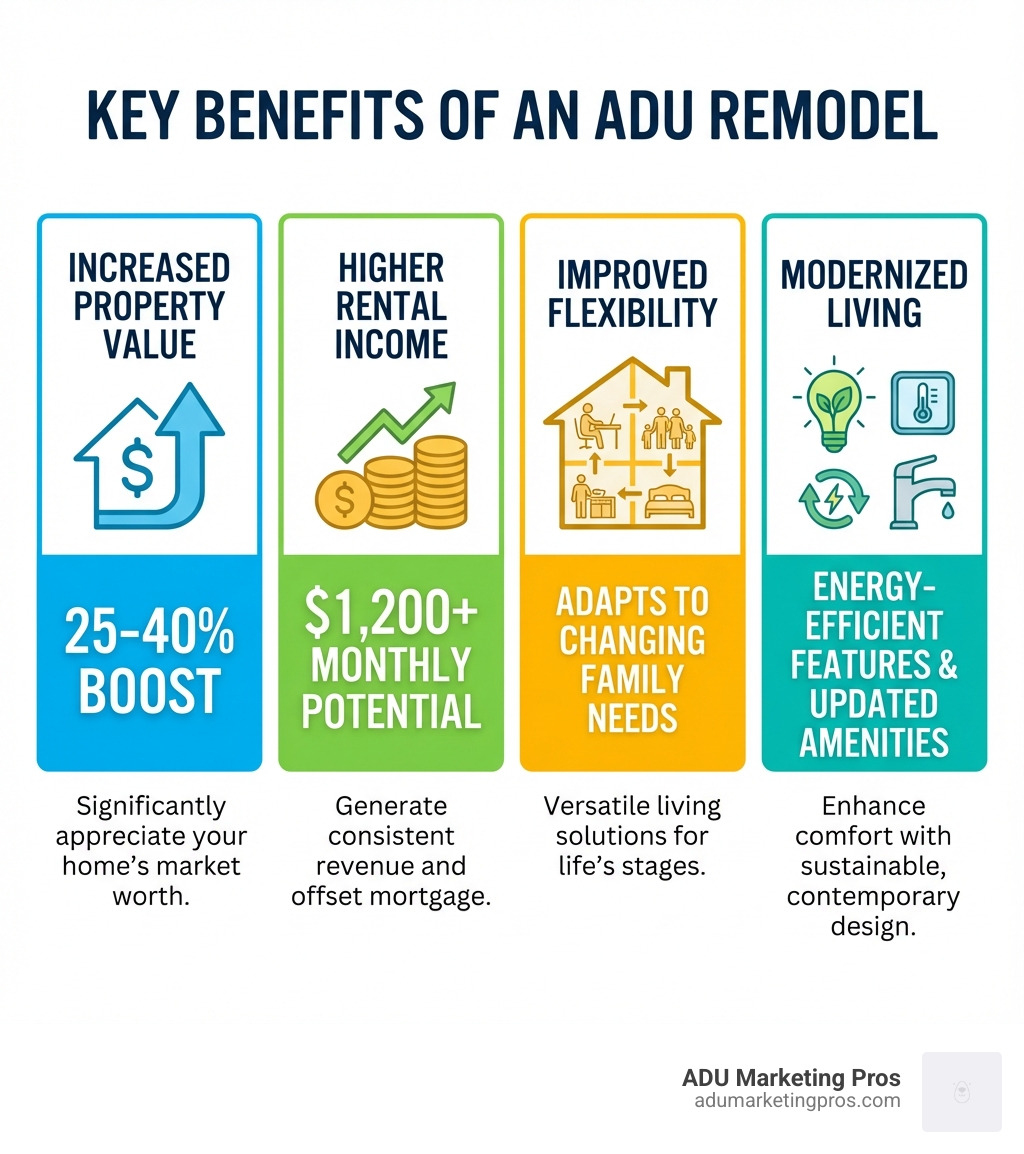
The financial benefits are substantial and well-documented. According to comprehensive industry data, converting an existing structure like a basement or garage into a fully functional living space can increase your home’s value by an astounding 25% to 40%. This isn’t just a minor bump; it’s a significant appreciation of your most valuable asset. Beyond the long-term equity growth, a well-executed ADU remodel opens the door to a consistent and lucrative stream of rental income. In high-demand markets like the Bay Area, Los Angeles, or San Diego, even a modest ADU can command rents of $1,200, $2,500, or more per month. This transforms a non-performing part of your property into a cash-flow-positive engine that can offset your mortgage, cover property taxes, and provide a return on investment that pays dividends year after year.
But the value of an ADU remodel transcends mere dollars and cents. It offers unparalleled flexible living arrangements that can adapt to the ever-changing chapters of your life. The stylish home office you build today can seamlessly become a private guest suite for visiting family tomorrow. Next year, it could be a rental unit providing financial stability. An aging parent can maintain their independence and dignity while staying close to the family support system. A recent college graduate can have a safe and affordable place to start their career while you offset your mortgage. This adaptability is the true superpower of the modern ADU.
The key to unlocking this potential lies in meticulous planning and a thorough understanding of the renovation process from conception to completion. This comprehensive guide is designed to walk you through every essential step—from evaluating your existing structure and navigating the complexities of permits to selecting and managing contractors and adding those final design touches that make your ADU not just a space, but a stylish, functional, and valuable home.
Understanding ADUs and the Value of a Remodel
An Accessory Dwelling Unit (ADU) is a secondary, fully self-contained home located on the same lot as a primary single-family residence. What distinguishes an ADU from a simple room addition or guest house is its independence; it must have its own kitchen, bathroom, and sleeping area. This critical distinction is what makes an ADU remodel such a powerful financial and lifestyle investment, particularly in high-demand, high-cost-of-living areas like Los Angeles, San Diego, and the San Francisco Bay Area, where housing solutions are at a premium.
Remodeling an existing structure or building a new ADU offers a unique and compelling combination of benefits that few other home improvement projects can match:
- Massive Property Value Increase: As a functional, separate dwelling, an ADU can boost your property’s market value by as much as 25% to 40%, offering one of the highest returns on investment in real estate.
- Significant Rental Income: A well-designed ADU can generate substantial monthly income, which can be used to offset mortgage payments, build savings, or fund other investments. It effectively turns a single-family property into a multi-unit income generator.
- Unmatched Living Flexibility: An ADU is a chameleon space. It can serve as a comfortable home for aging parents (keeping them close but independent), a starter home for adult children saving for their own down payment, a private and productive home office, or a welcoming suite for guests.
- Sustainable and Efficient Living: Modern ADUs are often built with green technology and energy-efficient features. Their smaller footprint naturally consumes fewer resources, and incorporating features like solar panels, high-efficiency windows, and tankless water heaters can dramatically reduce utility costs and environmental impact.
Types of ADUs and Their Remodeling Needs
ADUs are not a one-size-fits-all solution. They come in several forms, each with its own unique set of considerations, costs, and benefits for a remodel. Understanding these types is the first step in determining the best fit for your property and goals.
- Detached ADU: Often called a backyard cottage or granny flat, this is a standalone structure completely separate from the primary house. It can be built from the ground up (new construction) or by remodeling an existing outbuilding like a large shed or detached garage. These offer the highest degree of privacy for both the main home occupants and the ADU residents.
- Attached ADU: This type is built as an addition to the primary home but functions as a separate unit. It shares at least one wall with the main house but has its own entrance, kitchen, and bathroom. The remodeling challenge here is to ensure seamless architectural integration while providing crucial privacy and soundproofing between the two dwellings.
- Conversion ADU: This is often the most cost-effective and popular type of ADU remodel. It involves transforming existing, often underutilized, space within your home’s footprint into an independent living unit. Common examples include converting a garage, basement, or attic. Since the foundation, roof, and exterior walls are already in place, costs and construction timelines can be significantly reduced.
- Junior ADU (JADU): A JADU is a specialized, smaller type of conversion ADU, limited to 500 square feet. It is created within the existing walls of the primary residence, typically by converting a spare bedroom. A JADU must have its own separate entrance and an efficiency kitchen (with smaller appliances and limited counter space). It may share a bathroom with the main house, which further reduces costs. JADUs are an ultra-low-cost option but often come with an owner-occupancy requirement, meaning the owner must live in either the main house or the JADU.
Here’s a quick comparison of these ADU types to help you weigh the options:
| ADU Type | Typical Size | Average Cost (Remodel) | Remodel Focus | Key Benefits |
|---|---|---|---|---|
| Detached ADU | Up to 1,200 sq ft | $100,000 – $200,000+ | New construction, utility hookups, landscaping, interior finishes | Maximum privacy, significant rental income, highest property value boost |
| Attached ADU | Varies, often 600-1,000 sq ft | $75,000 – $150,000 | Interior separation, soundproofing, independent entry, utility connections, finishes | Integrates with existing structure, good privacy, rental income potential |
| Conversion ADU (Garage/Basement) | Varies, often 400-800 sq ft | $50,000 – $120,000 | Structural modifications, waterproofing, insulation, utility extensions, egress, interior finishes | Cost-effective, uses existing footprint, faster completion, environmentally responsible |
| Junior ADU (JADU) | Up to 500 sq ft | $20,000 – $60,000 | Efficiency kitchen, separate entrance, sometimes shared bath, minimal structural changes, finishes | Lowest cost, fastest to build, ideal for single occupants or small families, owner-occupancy often required |
Planning Your ADU Remodel: From Vision to Blueprint
A successful ADU remodel is 90% planning and 10% execution. A project that begins with a clear, well-researched plan is far more likely to stay on budget, finish on schedule, and perfectly meet your long-term goals. This crucial pre-construction phase involves defining your vision, establishing a robust budget, securing financing, and navigating the complex web of legal and regulatory requirements.
Defining Your Goals and Budget
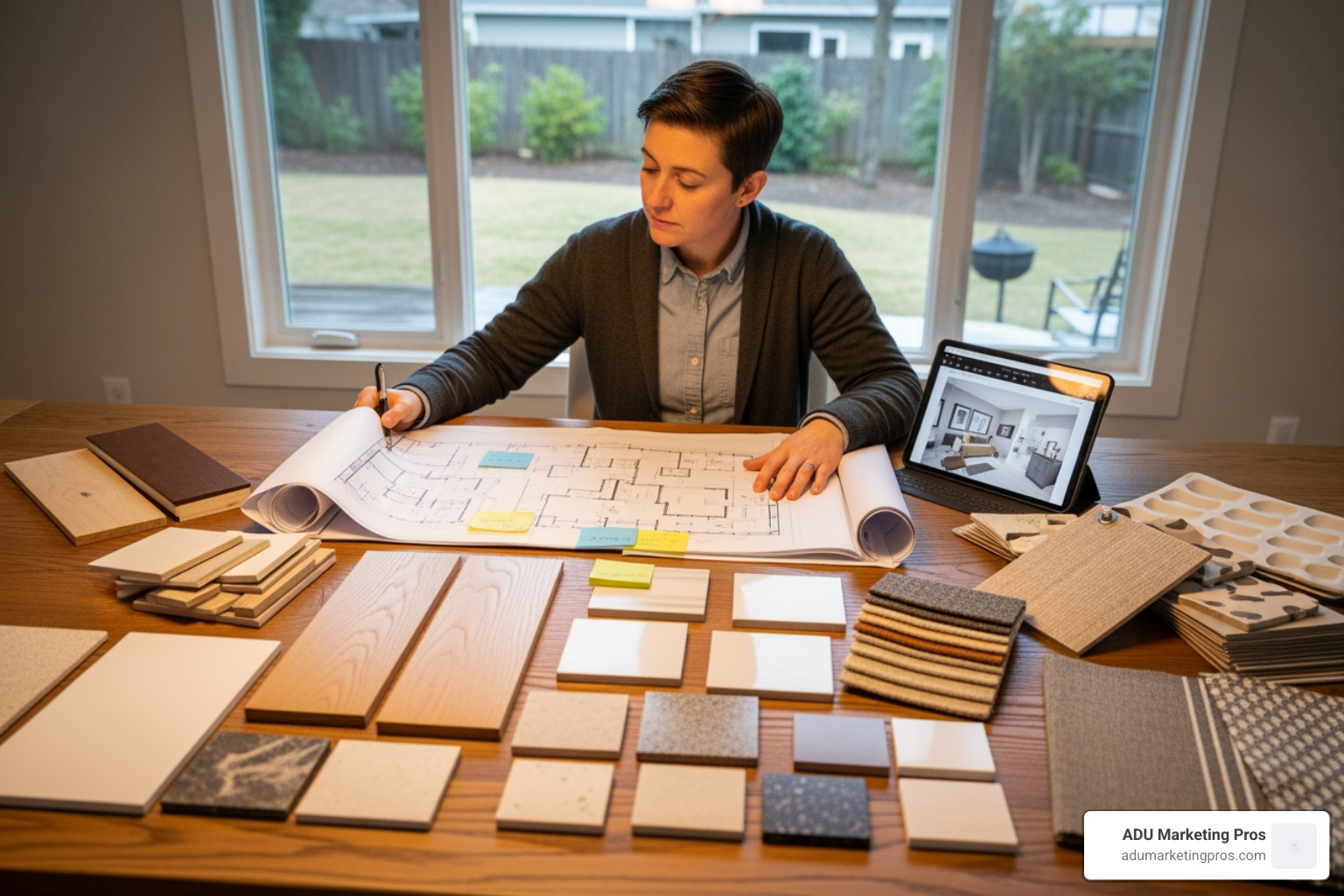
Before you look at a single floor plan, you must clarify the primary purpose of your ADU. Your ‘why’ will dictate every subsequent decision. Will it be a high-end rental unit designed to maximize monthly income? A comfortable and accessible home for an aging parent? Or a flexible workspace that doubles as a guest suite? Each goal has different implications for layout, finishes, and features.
Once your goal is clear, you can establish a realistic budget. ADU remodel costs vary dramatically based on the project’s scope, location, ADU type, and level of finishes. A simple garage conversion in a lower-cost area might start around $50,000, while a custom-built, detached unit in a high-cost market like the Bay Area can easily exceed $200,000 or even $300,000. A critical part of budgeting is including a 15-20% contingency fund. This is not optional; it’s essential for covering the inevitable unexpected expenses that arise during any renovation, such as discovering hidden structural issues or needing to upgrade an electrical panel. When calculating your budget, remember to factor in the long-term return on investment (ROI) from both potential rental income and the significant increase in your property’s value.
Navigating Zoning Laws and Building Permits
This is often the most intimidating step for homeowners, but it’s non-negotiable. While California has passed several state-level laws (like SB 9 and AB 68) to encourage and streamline ADU construction, each city and county still has its own specific set of rules. Regulations regarding size, height, setbacks (the distance from your property lines), and parking can vary significantly between cities like San Jose, Los Angeles, and San Diego.
Key regulatory considerations to investigate early include:
- Size and Height Limits: Most jurisdictions have maximum square footage allowances (e.g., 850 sq. ft. for a one-bedroom, 1,000 sq. ft. for two bedrooms) and height restrictions (e.g., 16 feet for a single-story detached ADU).
- Setbacks: State law has reduced setbacks to as little as four feet for side and rear yards, but you must confirm your local requirements.
- Parking: In a major win for homeowners, parking requirements are often waived for ADUs, especially if the property is located near public transit or if it’s a conversion of an existing structure like a garage.
- Owner-Occupancy: While state law has temporarily suspended owner-occupancy requirements for new ADUs until 2025, some cities may still have rules for JADUs or specific local programs.
Navigating the permitting process can be complex and time-consuming. For a comprehensive overview of ADU basics, you can start with excellent government resources like Alameda County’s Learn the basics before you start. However, the single best investment you can make at this stage is to partner with an experienced local architect, designer, or design-build firm. They understand the local codes and have relationships with the planning department, ensuring your plans are designed for approval from the start, saving you months of delays and frustration.
Financing Your ADU Remodel Project
With a clear plan and a preliminary budget, you can explore your financing options. Most homeowners leverage their property’s existing equity to fund their ADU remodel. The most common methods include:
- Home Equity Line of Credit (HELOC): This functions like a credit card secured by your home. You get a revolving line of credit that you can draw from as needed during the project, paying interest only on what you use. This is great for managing cash flow during construction.
- Home Equity Loan: This is a lump-sum loan with a fixed interest rate and predictable monthly payments. It’s a good option if you have a firm, fixed-price contract with your builder.
- Cash-Out Refinance: This involves replacing your current mortgage with a new, larger one and taking the difference in cash. This can be a great option if current interest rates are lower than your existing mortgage rate.
- Construction Loan: This is a short-term loan specifically designed for building projects. The funds are disbursed in stages as construction milestones are met. These can be more complex to secure but are tailored to the building process.
- Renovation Loan: Specialized loans, like the FHA 203(k) or Fannie Mae HomeStyle, bundle the cost of the renovation into the mortgage. Crucially, some lenders offer products that base the loan amount on the home’s future value after the ADU is completed, which can significantly increase your borrowing power. You can explore options like these to get started with a home improvement loan today. Additionally, always check with your local city or county housing department, as some offer grants or low-interest loan programs to encourage ADU construction.
The Essential Steps of a Successful Renovation
With your plans approved, financing secured, and contractor selected, it’s time to bring your ADU remodel to life. This construction phase is a carefully orchestrated sequence of events, moving from the foundational and structural work to the final cosmetic touches that create a safe, functional, and beautiful living space. Understanding this process helps you manage expectations and stay engaged with your build team.
Structural and Foundational Renovations
Before any walls go up or pretty finishes are installed, the unseen core of your ADU must be perfect. This is especially critical for garage, basement, or attic conversions, as these spaces were never originally intended for human habitation. Rushing this stage is a recipe for future problems.
- Structural Assessment and Reinforcement: A structural engineer’s report is your bible here. They will evaluate the existing foundation, walls, and roof structure to ensure they can support the new living space. For garage conversions, this often means reinforcing ceiling joists. For all ADUs in California, seismic retrofitting—bolting the structure to the foundation and bracing walls—is a crucial step to ensure safety during an earthquake.
- Foundation and Waterproofing: Any existing cracks in the foundation slab must be professionally repaired. For basement or below-grade conversions, robust waterproofing is non-negotiable to prevent moisture intrusion, which can lead to mold, rot, and an unhealthy living environment. This may involve exterior membranes, interior sealants, and a sump pump.
- Insulation and Ventilation: Modern building codes have strict requirements for insulation, which is key to comfort, energy efficiency, and soundproofing. Proper ventilation, including bathroom fans and a kitchen exhaust hood, is also essential for maintaining good air quality in a smaller, airtight living space.
- Utility Rough-Ins: This is a major milestone. Your ADU will need its own plumbing, electrical, and HVAC systems. This involves trenching for new water and sewer lines, running electrical wiring, and installing ductwork or lines for a mini-split system. This work is done before the drywall goes up and requires careful coordination with utility providers, especially if you’re installing a separate electrical or water meter.
Key Design Considerations for a Functional and Stylish ADU
Designing a small space is a unique challenge that requires clever solutions to maximize every inch of functionality while creating a sense of openness and comfort. The goal is to make the space live larger than its actual square footage.
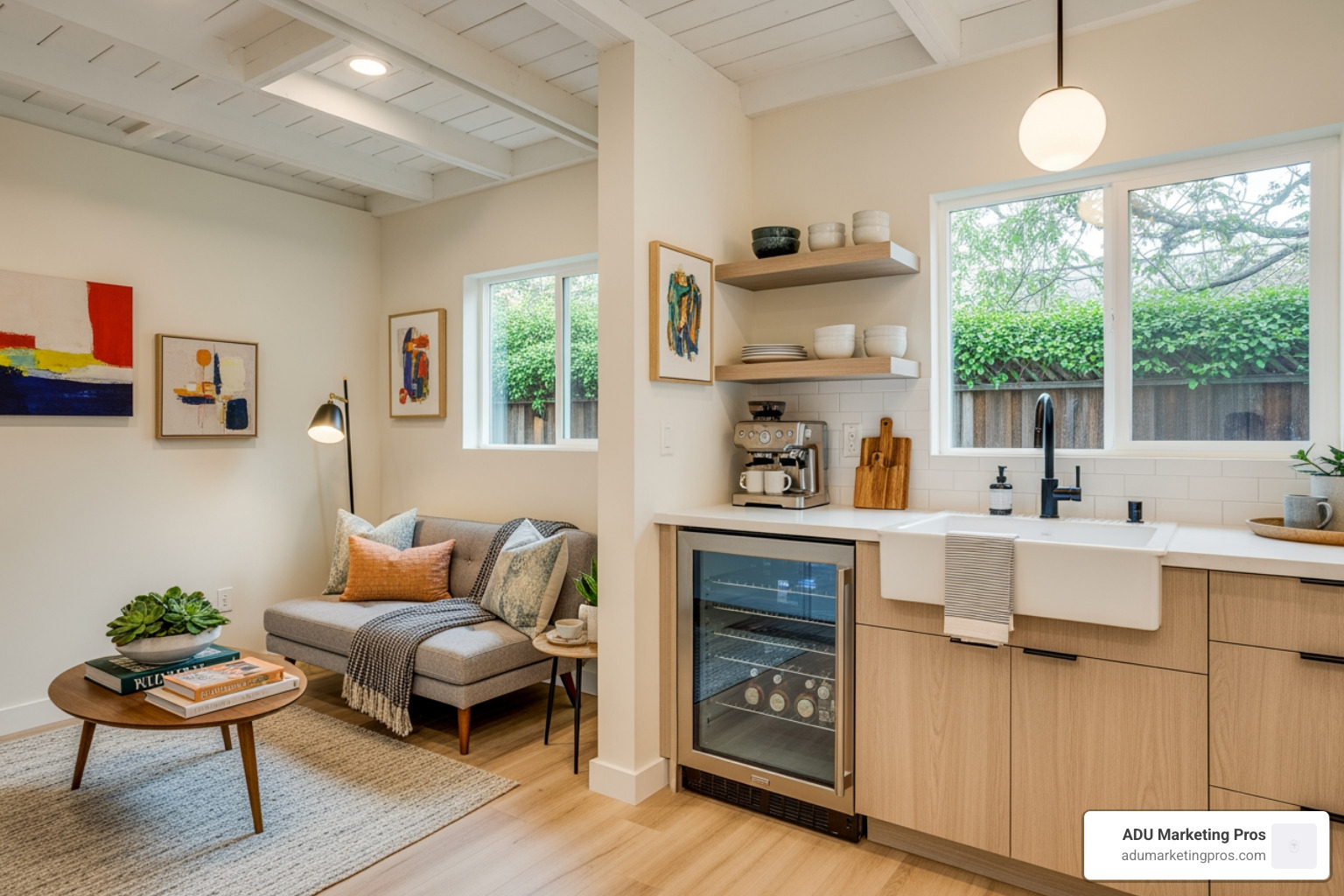
- Space Optimization and Layout: An open floor plan is almost always the best choice for an ADU, combining the kitchen, living, and dining areas into one cohesive space. Multifunctional furniture is your best friend: think Murphy beds that fold away to reveal a desk, expandable dining tables, or ottomans with hidden storage. As noted by design experts at Goodhomes Magazine, you can create distinct ‘zones’ for different activities using area rugs or furniture placement, which provides definition without closing off the space.
- Maximizing Natural Light: Light is the cheapest and most effective way to make a small space feel larger. Prioritize large windows, glass doors (like a sliding or French door leading to a small patio), and even skylights or solar tubes to flood the interior with natural light. Placing windows on multiple walls creates cross-illumination and prevents dark corners.
- Implementing Smart Storage Solutions: Clutter is the enemy of small-space living. A successful ADU design incorporates storage everywhere. Think vertically with floor-to-ceiling cabinets in the kitchen and bathroom. Utilize often-wasted space with built-in shelving, under-bed storage drawers, and toe-kick drawers under kitchen cabinets.
- Choosing the Right Materials and Colors: A light and neutral color palette for walls, ceilings, and floors will reflect light and create an airy, expansive feel. For materials, prioritize durability and ease of maintenance, especially if the ADU will be a rental. Luxury vinyl plank (LVP) flooring is an excellent choice as it’s waterproof, scratch-resistant, and mimics the look of real wood. Quartz countertops are more durable and less porous than granite, making them ideal for a high-use kitchen.
Cosmetic Updates for Your ADU Remodel
Once the drywall is up and painted, the cosmetic finishes will define your ADU’s character, appeal, and ultimate value.
- The All-Important Kitchen and Bathroom: These two rooms have the biggest impact on livability and rental/resale value. In the kitchen, focus on efficient, apartment-sized appliances (e.g., 24-inch ranges, slim refrigerators) to save space. A quality faucet and stylish cabinet hardware can elevate the look without breaking the bank. In the bathroom, a floating vanity can make the room feel larger, and a glass shower door is preferable to a curtain.
- Flooring and Lighting Strategy: Consistent flooring throughout the main living area creates a seamless, larger-feeling space. Your lighting plan should be layered. Start with ambient light from recessed cans or a central fixture, add task lighting under kitchen cabinets and over the bathroom mirror, and include accent lighting like a stylish pendant over a peninsula to add personality.
- Final Touches: Paint and Fixtures: A fresh coat of paint is the most cost-effective transformation. Upgrading all hardware—door knobs, cabinet pulls, faucets, and light fixtures—to a consistent finish (like matte black or brushed brass) provides a polished, high-end, and intentional look.
Overcoming Common Challenges and Ensuring Success
Even the most meticulously planned ADU remodel can encounter turbulence. From construction logistics and surprise discoveries to navigating utility hookups, being prepared for potential challenges is the key to keeping your project on track and on budget. Proactive problem-solving, rather than reactive panic, will ensure a smooth and successful outcome.
Managing Construction and Contractor Selection
The single most important decision you’ll make for your project is choosing your general contractor. The success of your ADU remodel rests heavily on their expertise, communication, and integrity. Don’t just go with the cheapest bid. Look for licensed contractors who have specific, demonstrable experience building ADUs in your city, whether it’s San Jose, San Diego, or Los Angeles. A builder who understands the local codes and inspection process is invaluable.
Vetting Your ADU Builder: A Quick Checklist
- Verify License and Insurance: Check their license status on the CSLB website and ask for proof of liability and workers’ compensation insurance.
- Request ADU-Specific References: Talk to at least three recent clients who had a similar ADU project built.
- Review Their Portfolio: Look at photos and, if possible, visit a completed project to assess the quality of their work.
- Get a Detailed, Itemized Bid: A one-page quote is a red flag. A professional bid will break down costs for labor, materials, permits, and more.
- Assess Communication: Are they responsive, clear, and professional in their communication? This is a preview of what working with them will be like.
Even with a great contractor, your involvement is crucial. Schedule regular weekly check-ins and site visits to ask questions and monitor progress. This prevents misunderstandings and allows you to catch potential issues early. A clear, detailed contract that outlines the scope of work, payment schedule, and process for handling change orders is your best tool for resolving any conflicts that may arise.
Dealing with Utilities and Site Complications
Some of the biggest headaches in an ADU remodel stem from the logistical challenges of utilities and the building site itself.
- Utility Connections: Every ADU requires connections for water, sewer, electricity, and gas (if applicable). The key decision is whether to tie into the main house’s systems or install separate meters. For a rental unit, separate meters are highly recommended as it makes billing clean and simple. However, this can add significant cost and complexity, as it may involve trenching to the street and paying substantial connection fees to utility companies. Coordinate with your local utility providers very early in the planning process to understand the requirements and costs.
- Site Access: How will workers and materials get to the build site? Limited access to a backyard, common in dense urban neighborhoods, can complicate the delivery of materials and the use of heavy equipment. This can increase labor costs and extend the project timeline. Discuss the site access plan with your contractor upfront.
- Neighbor Relations: An ADU project is a major construction effort that will inevitably impact your neighbors with noise, dust, and parking congestion. The best approach is proactive and transparent communication. Before the project begins, have a friendly chat with your neighbors. Show them the plans, give them a rough timeline, and provide your contact information (or the contractor’s) to address any concerns. This simple courtesy can prevent complaints and maintain good relationships.
- Uncovering Unexpected Issues: Remodeling, especially a conversion of an old garage or basement, is like an archeological dig—you never know what you’ll find when you open up the walls. Common surprises include termite damage, dry rot, asbestos, lead paint, outdated and unsafe wiring, or crumbling plumbing. This is precisely why your 15-20% contingency fund is not just a suggestion, but a necessity. It provides the financial buffer to handle these surprises without derailing the entire project.
Frequently Asked Questions about ADU Remodels
Embarking on an ADU remodel brings up many questions. Here are detailed answers to some of the most common inquiries from homeowners.
How much does it cost to remodel an ADU?
The cost of an ADU remodel is highly variable, depending on the project’s size, type (conversion vs. new build), location, and the quality of finishes. However, you can use these general estimates as a starting point for budgeting:
- Junior ADU (JADU) Conversion: $20,000 – $60,000. This is the most affordable option, focusing on creating an efficiency kitchen and ensuring a separate entrance.
- Garage/Basement Conversion: $50,000 – $120,000. This is a popular mid-range option. Costs are influenced by the condition of the existing structure, such as whether the foundation needs significant work or if the ceiling needs to be raised.
- Attached ADU: $75,000 – $150,000. This is similar to a home addition, with costs tied to creating a new foundation, framing, and seamlessly integrating with the existing house.
- Detached ADU (New Construction): $100,000 – $200,000+. This is the most expensive option but offers the most flexibility and privacy. Costs can easily exceed $200,000 in high-cost areas or for larger, more customized units.
Remember that these are ballpark figures. High-end finishes (like custom cabinetry or premium appliances), complex site conditions (like a steep slope), or significant utility upgrades will increase the final price. Always get multiple detailed quotes and have a 15-20% contingency fund.
How long does an ADU remodel take?
From the first sketch to a tenant moving in, a typical ADU remodel project can take anywhere from 12 to 24 months. It’s helpful to break this timeline into three distinct phases:
- Phase 1: Design & Planning (2-4 months): This involves working with an architect or designer to create detailed construction plans and blueprints. This includes site surveys, structural engineering, and making all your design selections.
- Phase 2: Permitting (2-6 months): You submit your completed plans to your local city or county planning department for review and approval. While state law mandates that agencies act on ADU applications within 60 days, backlogs and requests for corrections can extend this phase. An experienced local professional can help expedite this process.
- Phase 3: Construction (4-10 months): This is the actual build-out. The duration depends heavily on the project type. A straightforward garage conversion might be completed in 4-6 months, while a new detached ADU could take 8-10 months or longer, depending on weather, inspections, and material availability.
Can I convert my garage into a legal ADU?
Yes, absolutely. Converting a garage is one of the most popular and encouraged ways to build an ADU in California, thanks to state laws that have streamlined the process. However, to be a legal and safe dwelling, the conversion must meet all residential building codes. This is not a simple cosmetic makeover. Key requirements include:
- Structural Integrity: The existing foundation and framing must be sound.
- Insulation and Ventilation: The space must be properly insulated and ventilated for energy efficiency and air quality.
- Fire Safety: This often means adding a layer of drywall to walls shared with the main house and ensuring proper smoke and carbon monoxide detectors are installed.
- Egress: You must have windows of a certain size in sleeping areas and a separate entrance for safe exit in an emergency.
- Utilities: The ADU needs legal and safe connections for water, sewer, and electricity.
Working with a professional contractor is essential to ensure your garage conversion is fully compliant, safe, and permitted.
Will an ADU increase my property taxes?
Yes, but not as much as you might think. Your property will be reassessed, but only the value of the new construction (the ADU itself) will be added to your existing property tax bill. Your primary home’s assessed value will not be affected. The increase is typically modest and is often easily offset by the rental income the ADU generates.
Conclusion: Open up Your Property’s Full Potential
An ADU remodel is more than just a construction project; it’s a strategic investment in your future that unlocks your property’s full potential. It offers a rare and powerful combination of immediate financial gain, long-term equity growth, and invaluable lifestyle flexibility. By transforming an underused space like a garage or building a new backyard unit, you are not just adding square footage—you are creating opportunity. You’re creating a source of significant rental income, a safe and comfortable home for a loved one, a private and productive workspace, and a powerful asset that can dramatically increase your property’s value.
The journey from a simple idea to a completed ADU is complex, but it is entirely achievable. The key to a successful project lies in diligent, upfront planning. This means clearly defining your goals and budget, thoroughly researching local regulations, making smart design choices, and assembling a team of experienced professionals. While challenges like permit delays or unexpected construction issues can arise, a well-thought-out approach and a robust contingency plan will ensure you can navigate them effectively, keeping your project on the path to success.
Your ADU will be a valuable and enduring asset for years to come, adapting to your family’s needs and providing financial security. The effort invested today will pay dividends for a lifetime.
At ADU Marketing Pros, we specialize in connecting homeowners with the most reputable and experienced construction and architecture firms across California. We understand the nuances and complexities of the ADU market in regions like the Bay Area, Los Angeles, and San Diego, and we are dedicated to helping you find the perfect experts to bring your unique vision to life.
Ready to take the next step and transform your property? Find top ADU builders in the Bay Area and start your journey toward maximizing your home’s financial and functional potential today.