
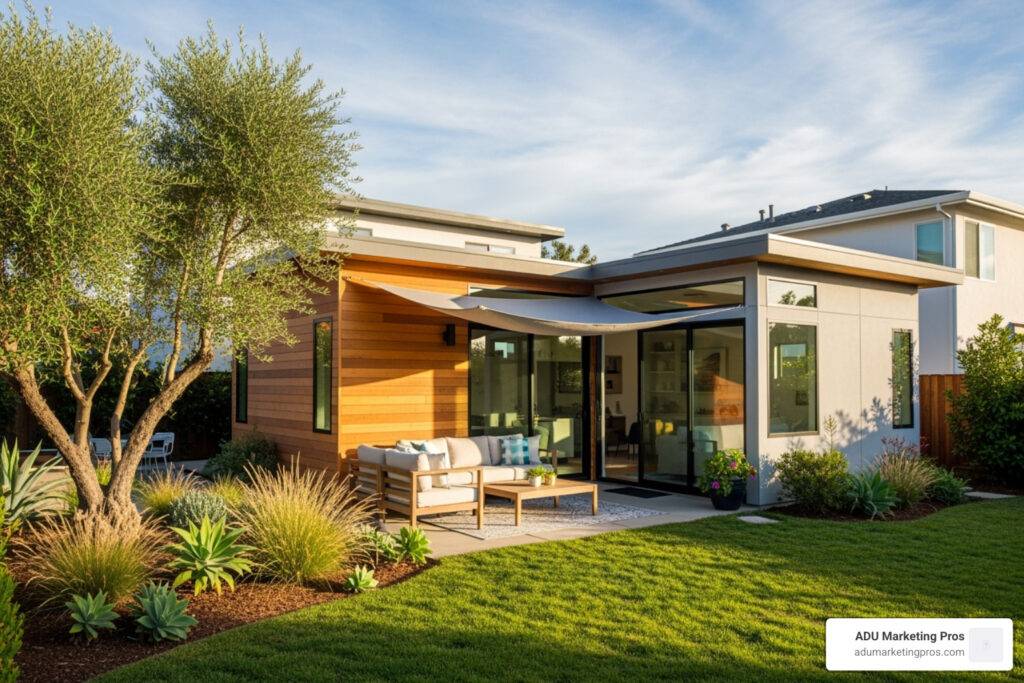
Why ADU Rental Income Matters for Your Property and Your Future
ADU rental income is a primary driver for homeowners adding accessory dwelling units, and for good reason. It represents a powerful opportunity to generate passive income, build generational wealth, and enhance your financial stability. While national averages for a 600 sq ft unit hover around $1,940/month, high-cost markets like San Diego can see rents exceed $2,600/month. For those in jurisdictions where it’s permitted, a short-term rental model can yield an impressive $3,500–$5,000 monthly. With strategic planning, a return on investment (ROI) of nearly 10% is achievable, with a typical break-even timeline of 10 years for construction costs.
Beyond the numbers, ADUs offer a practical and elegant solution to California’s persistent housing shortage. By adding a small home to your property, you not only offset your mortgage and increase your property’s value but also contribute a needed housing unit to your community. For renters, an ADU can mean newfound independence and a private sanctuary; for homeowners, it can provide a space for aging parents or adult children, offering flexibility for life’s changing needs.
Crucially, recent policy changes from Fannie Mae and the FHA have revolutionized ADU financing. Homeowners can now use projected ADU rental income to qualify for the mortgages needed to build them. This is a game-changer, making ADU construction accessible to a much broader range of property owners who previously may not have qualified. However, earning consistent income isn’t automatic. Success requires a deep understanding of your local market, choosing the right rental model for your lifestyle, and managing the property with professionalism and care. This guide will walk you through every step of estimating, maximizing, and sustaining your ADU rental income.
Calculating Your Potential ADU Rental Income
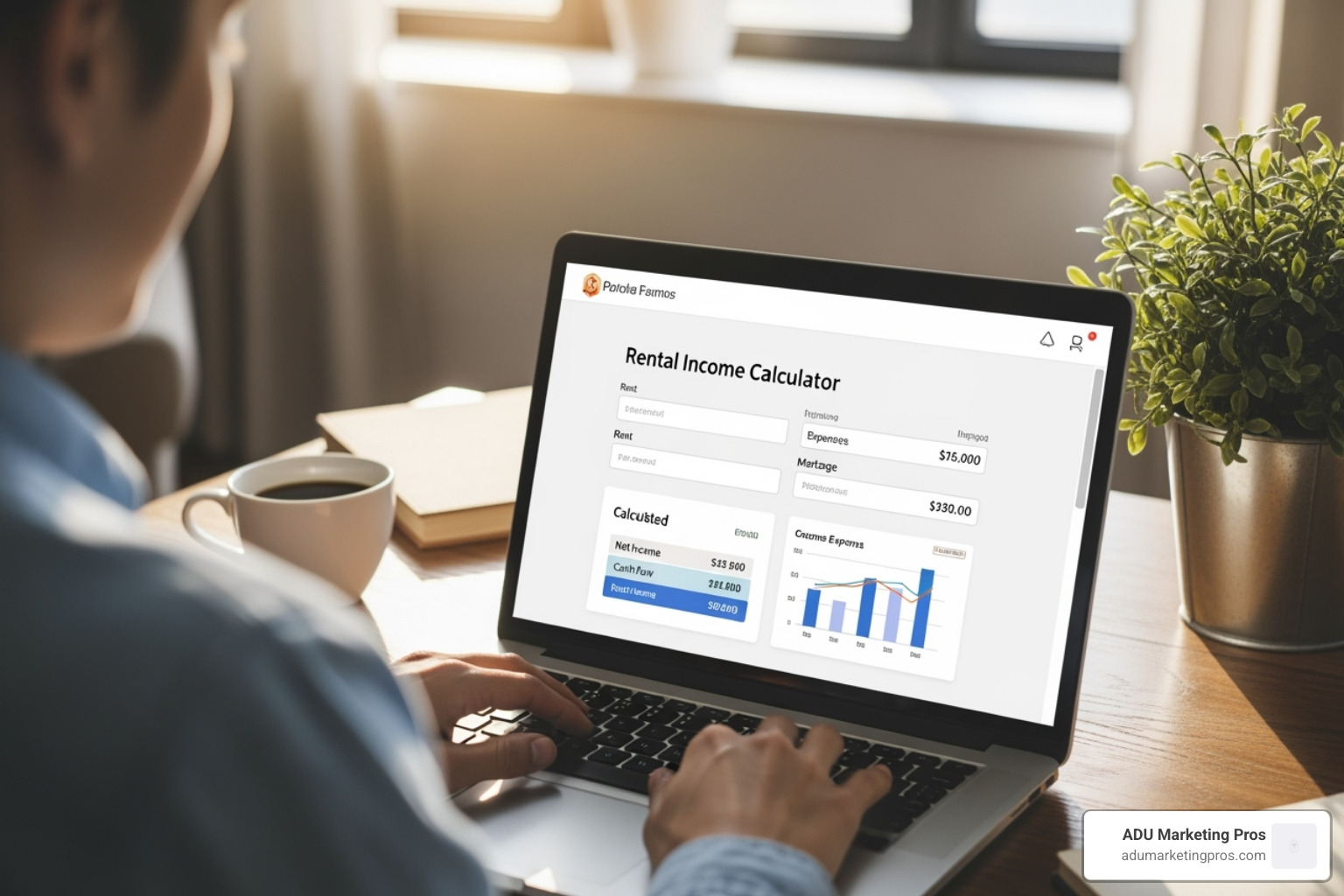
Accurately estimating your ADU’s earning potential is the first step to a smart investment. Income varies widely based on location and unit type, from $1,500 in a smaller town to over $2,600 in San Diego for the same size unit. To get a precise estimate, you must analyze local data and understand the specific features that drive value. Tools like our ADU Return on Investment guide and online calculators from sites like Rentometer can provide a baseline, but a deeper dive is necessary.
Factors That Determine Your ADU Rental Income
Several key ingredients determine your ADU’s rental potential. Getting the mix right will help you command premium rates.
- Location: This is the most critical factor. Proximity to job centers, transit hubs, universities, and desirable amenities like coffee shops and parks is paramount. High-demand markets like Los Angeles and the San Francisco Bay Area consistently support higher rents. Consider your property’s walkability and access to freeways.
- Size and Layout: A well-designed 600-square-foot unit with an open-concept layout can feel more valuable and spacious than a poorly planned 700-square-foot one. The number of bedrooms and bathrooms also directly impacts rent; a one-bedroom unit will almost always command more than a studio. Understanding local ADU Square Footage norms helps you plan a unit that meets market expectations.
- Quality Finishes: Tenants recognize and will pay for quality. Modern appliances (especially stainless steel), durable countertops like quartz, hardwood or luxury vinyl plank flooring, and energy-efficient windows signal a premium property and justify higher rent.
- Private Outdoor Space: In an era of remote work, a private patio, deck, or small yard is a huge draw. This feature is a major differentiator that provides tenants with a personal sanctuary and can significantly boost rental income.
- Parking: While many jurisdictions have relaxed ADU Parking Requirements, offering a dedicated off-street parking spot remains a valuable amenity, especially in car-dependent suburbs or neighborhoods with limited street parking. It can be the deciding factor for a prospective tenant.
Estimating Your Return on Investment (ROI)
Monthly rent is just one part of the equation. Here’s how to calculate the complete financial picture.
- Start with Total Project Costs: This is your largest initial expense. A garage conversion might run $30,000-$100,000, while a new detached unit in California typically costs $200,000-$400,000. This includes soft costs (design, permits) and hard costs (construction, site work). Always include a 10-15% contingency fund for unexpected issues. Our ADU Building Costs guide and ADU Cost Calculator can help you create a detailed estimate.
- Factor in Financing: Account for interest payments from your HELOC, cash-out refinance, or construction loan. These costs directly affect your net income.
- Calculate Gross Annual Rent: This is your projected monthly rent multiplied by 12.
- Budget for Vacancy: A common mistake is assuming 100% occupancy. A conservative and realistic approach is to budget for a 5-8% vacancy rate, which is roughly one month of lost rent per year between tenants.
- Set Aside for Maintenance & Repairs: Earmark 5-10% of your rental income for ongoing repairs and upkeep. This fund will cover everything from a leaky faucet to replacing an appliance down the road.
- Account for Property Tax Increases: Your property will be reassessed, but it’s typically a “blended assessment.” This means only the value of the new construction is taxed at current rates, not your entire property. For example, if you add a $300,000 ADU, only that value is added to your tax basis.
- Determine Your Net Operating Income (NOI): Your true profit is your Gross Rent minus all operating expenses (vacancy loss, maintenance, property management, taxes, insurance). This does not include financing costs.
- Calculate Cash-on-Cash Return: Divide your annual pre-tax cash flow (NOI minus debt service) by your total cash investment. This percentage is your true ROI. A 9-10% return is a solid target for a well-planned ADU project.
Rental Models and Strategies to Maximize Your Earnings
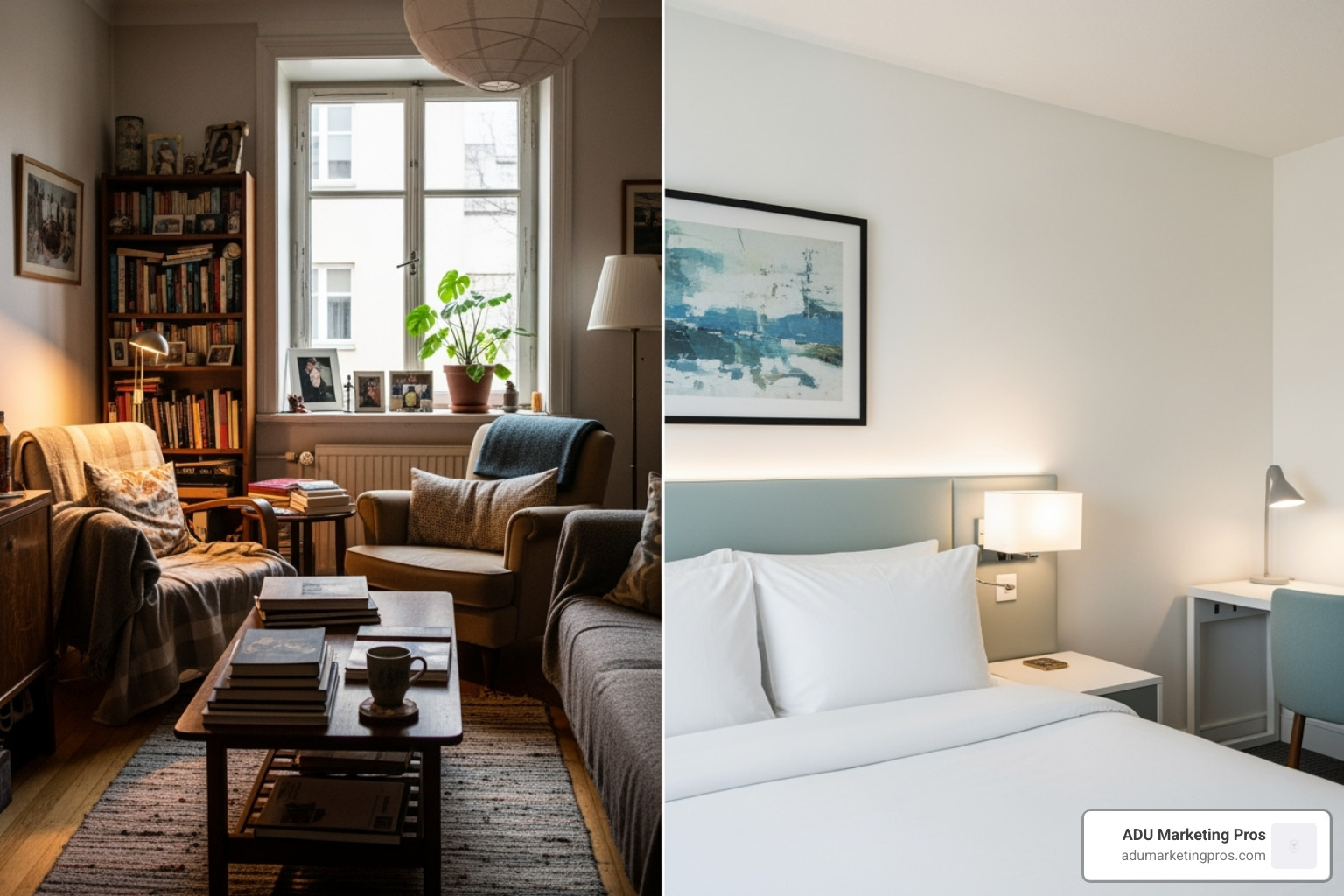
Once your ADU is built, you must choose a rental model. This decision impacts your ADU rental income, management time, and the challenges you’ll face. The three main paths are long-term, mid-term, and short-term rentals. Staying current with ADU Design Trends can also provide a competitive edge regardless of the model you choose.
Long-Term vs. Short-Term vs. Mid-Term Rentals: Which is Right for You?
The right choice depends on your lifestyle, financial goals, and local laws.
-
Long-Term Rentals (6+ months): This is the most common model, offering stable, predictable income with less tenant turnover and lower wear and tear. Management is less intensive once a good tenant is in place, making it the preferred option for most homeowners seeking consistent returns without the hassle of constant guest management. It fosters stability and a sense of community.
-
Short-Term Rentals (Nights/Weeks): Listing on platforms like Airbnb or Vrbo can generate 30% or more in revenue, with potential earnings of $3,500-$5,000 per month in high-demand areas. However, this comes with significantly more work, including managing bookings, coordinating cleanings, restocking supplies, and addressing guest issues 24/7. It’s like running a mini-hotel, with income fluctuating based on seasonality and demand.
-
The Mid-Term Rental (30-90 days): This hybrid model caters to traveling professionals like nurses, corporate relocations, or homeowners needing temporary housing. It can offer higher income than a traditional long-term lease without the high turnover of a short-term rental. These units are typically furnished, commanding a premium price point.
-
Crucial Caveat: Many California jurisdictions, such as San Mateo and Alameda Counties, have banned or strictly limited short-term ADU rentals (less than 30 days) to preserve long-term housing stock. Always check your local city and county ordinances before pursuing a short-term or mid-term rental model.
Upgrades and Designs That Boost Rental Value
Strategic upgrades are investments that directly increase what tenants will pay and reduce vacancy time.
- High-Quality Finishes: Durable quartz countertops, modern flooring, and an in-unit washer/dryer are major differentiators. An in-unit laundry alone can justify $200-$400 more in monthly rent and attract higher-quality tenants. Explore our ADU Kitchen Ideas for inspiration.
- Smart Home Technology: Keyless entry, smart thermostats, and integrated lighting appeal to modern renters, add convenience for both tenant and landlord, and signal a high-end property.
- Privacy, Privacy, Privacy: This cannot be overstated. A dedicated, well-lit entrance and a small, private patio or fenced-off yard are huge selling points that create a sense of personal space.
- Energy Efficiency: An Energy Efficient ADU with solar panels, quality insulation, and dual-pane windows lowers tenant utility bills. Advertising this benefit makes your unit more attractive and competitive.
- Thoughtful Interior Design: Maximize every square foot with built-in storage, clever closets, and a cohesive aesthetic. Good design makes a small space feel functional and inviting. See our ADU Interior Design Ideas for tips.
- Dedicated Parking: In neighborhoods where parking is scarce, a guaranteed spot is a major competitive advantage that can command higher rent and reduce turnover.
- Soundproofing: For attached ADUs or garage conversions, investing in sound-dampening insulation between units is essential for maintaining privacy and peace for both you and your tenant.
The Financial and Legal Framework of Renting Your ADU
Navigating the financial and legal aspects of an ADU is critical for a successful investment. From securing financing and understanding tax benefits to complying with local laws, this section covers the essential framework for your rental business.
Building an ADU is a significant financial investment that requires meticulous legal and financial planning. Understanding financing, taxes, and regulations is crucial for long-term success and profitability. The ADU Permit Process is just one piece of this larger puzzle.
Financing Your ADU and Qualifying with Rental Income
For most homeowners, financing is the first hurdle. Fortunately, options have expanded, making it easier to use future ADU rental income to qualify.
- Common Options: Home Equity Lines of Credit (HELOCs) offer flexibility but often have variable rates. Cash-out refinancing provides a lump sum at a fixed rate but resets your entire mortgage. Construction loans are designed for building projects, releasing funds in stages. Explore all ADU Financing Options to see which fits your situation.
- Government Programs: Look for local grants and loans. For example, the California Housing Finance Agency (CalHFA) and various counties offer programs to assist homeowners with pre-development and construction costs.
- Using Projected Income: This is a revolutionary development. Fannie Mae, Freddie Mac, and the FHA now allow you to use projected rental income to help qualify for your mortgage. Lenders will order an appraisal that includes a Comparable Rent Schedule (Form 1007), which establishes the property’s market rent. They will typically use 75% of this projected rent (to account for vacancy/expenses), and it may be capped at 30% of your total qualifying income. Check our guides on Fannie Mae ADU Rental Income and FHA ADU Rental Income for more details, and consult Fannie Mae’s Selling Guide for official rules.
Tax Implications of ADU Rental Income
Owning an ADU comes with valuable tax benefits that improve your bottom line. Meticulous record-keeping is essential.
- Deductible Expenses: The IRS treats your ADU as a rental property, allowing you to deduct a prorated portion of expenses like mortgage interest, property taxes, and insurance, plus 100% of direct costs like repairs and management fees.
- Depreciation: This is a powerful non-cash deduction. It allows you to deduct the value of the ADU structure (not the land) over 27.5 years. For a $300,000 ADU, this translates to a deduction of over $10,000 per year, significantly lowering your taxable income.
- Prorating Expenses: For shared costs, you must allocate them between your primary residence and the ADU. A common method is to prorate based on square footage. If your ADU is 25% of your property’s total living area, you can deduct 25% of your insurance premium.
Always consult a tax professional. You can prepare for that conversation by reviewing our page on ADU Rental Income Taxes and this helpful article on ADU tax benefits explained.
Navigating Local Zoning and Landlord-Tenant Laws
Compliance with local laws is the foundation of a stress-free rental business.
- Zoning and Permits: State laws like California’s AB 68 and SB 9 have streamlined ADU development, but local laws still dictate size (typically 600-1,200 sq ft), setbacks, and design. The permitting process involves multiple inspections. Check our California ADU Regulations guide, but always verify with your local planning department as the ultimate source of truth.
- Owner-Occupancy: Many cities in California have removed owner-occupancy requirements for a period of time to spur development, but this can change. Verify your local rules.
- Landlord-Tenant Law: As a landlord, you must understand tenant rights, use a legally compliant lease, and follow strict rules for rent increases and evictions. The California Tenants guide is an essential resource for landlords in the state. Ignorance of the law is not a defense.
From Construction to Tenancy: A Landlord’s Guide to ADU Management

With your ADU built, the next phase is management. Being a good landlord is key to ensuring steady ADU rental income and protecting your investment. It involves finding a great tenant, maintaining the property, and handling day-to-day responsibilities with professionalism. As we cover in From Listings to Leases: A How-To on ADU Marketing, success comes down to smart planning and execution.
Best Practices for Finding and Managing Tenants
Finding the right tenant is the single most important task for a landlord. It sets the tone for the entire rental experience.
- Marketing: Your listing is your first impression. Use professional-quality photos, a video walkthrough, and a detailed, honest description on platforms like Zillow and Facebook Marketplace. Highlight key features like “private entrance,” “in-unit laundry,” and “dedicated patio.”
- Tenant Screening: This is your most important task. Establish written criteria and apply them consistently to all applicants to comply with Fair Housing laws. Conduct thorough background and credit checks, verify income (a 3x rent-to-income ratio is standard), and always call previous landlord references.
- Lease Agreement: Use a separate, legally sound lease for the ADU that is specific to your state’s laws. Do not use a generic template. The lease should specify all terms, including rent, security deposit, utility responsibilities, guest policies, and rules for shared spaces.
- Setting Expectations: From day one, clearly communicate about shared spaces, noise (quiet hours), parking, and maintenance request procedures. This builds mutual respect and prevents future conflicts.
- Maintenance: Respond to requests promptly and professionally. Conduct regular inspections (with proper 24-hour notice) to catch small issues before they become expensive problems.
- Competitive Rent: Use tools like Rentometer to research comparable local rentals. Pricing your unit at or slightly below market rate can attract a larger pool of higher-quality tenants and reduce costly vacancy periods.
Overcoming Common Challenges for ADU Landlords
Anticipating challenges is key to a smooth landlord experience.
- Managing Vacancies: Budget for one to three months of vacancy per year in your financial projections. This financial cushion removes the pressure to accept a less-qualified tenant just to get the unit filled quickly.
- Budgeting for Repairs: Set aside 1-2% of the property’s value annually for maintenance. A home warranty can also be a smart investment to help manage large, unexpected costs for major appliances or systems.
- Handling Disputes: Address issues promptly, professionally, and in writing. Use your detailed lease as a guide to resolve disagreements. Documenting all communication creates a paper trail and demonstrates your diligence.
- Maintaining Privacy: This is crucial for harmony. Use design features like separate entrances, strategic fencing, and landscaping for physical separation. Always provide the legally required 24 hours’ notice before entering the unit, except in true emergencies.
- Navigating Regulations: ADU and landlord-tenant laws evolve. Stay informed on ADU Regulatory Updates and local ordinances to remain compliant and avoid fines. Joining a local apartment owners association can be a valuable resource.
Frequently Asked Questions about ADU Rentals
You’ve made it this far, which means you’re seriously considering the ADU journey—or you’re already knee-deep in planning! Either way, you probably have questions. Let’s tackle some of the most common concerns we hear from homeowners and property investors about generating ADU rental income.
Do I need a separate rental agreement for an ADU?
Absolutely, 100%. An ADU is a separate dwelling and requires its own specific, legally-binding lease agreement. This document protects both you and your tenant by clearly outlining all terms, including rent amount, due dates, security deposit, rules for shared spaces, utility responsibilities, and maintenance procedures. A generic lease or a verbal agreement won’t cover the unique aspects of an ADU rental, creating potential for disputes and leaving you legally exposed.
How does building an ADU affect my property taxes?
Your property taxes will increase, but not as drastically as you might fear. California and most jurisdictions use a “blended assessment.” This means only the value of the new ADU is assessed at current market rates, not your entire property. Your original home’s tax basis remains protected, often under Proposition 13. For example, if your home has a tax basis of $400,000 and you build an ADU for $300,000, your new basis will be $700,000, not the full current market value of your entire property. Contact your local county assessor’s office for an estimate.
Can I really use future ADU rental income to qualify for a mortgage?
Yes. This is a major recent development in ADU financing. Both Fannie Mae and the FHA now allow lenders to consider a portion of your projected ADU rental income when you apply for a construction loan or refinance. This makes it significantly easier to qualify. You’ll need an appraisal with a fair market rent analysis (Form 1007). Lenders typically use 75% of that projected income in their calculations to account for vacancy and expenses, but it’s a powerful tool for homeowners.
How much does ADU insurance cost and do I need a special policy?
Your standard homeowner’s policy is not sufficient for a rental unit. You will need either a landlord insurance policy (also known as a Dwelling Fire policy) or a specific endorsement added to your existing homeowner’s policy. This covers the structure, your liability as a landlord, and loss of rental income. Costs can vary widely from $600 to over $1,500 per year depending on your location, coverage amount, and the ADU’s value. It is a non-negotiable expense.
What are the biggest mistakes new ADU landlords make?
Three mistakes are most common: 1) Underestimating total project costs and failing to have a 10-15% contingency fund, leading to financial stress. 2) Poor tenant screening, often by rushing to fill a vacancy and choosing a tenant who pays late or damages the property. 3) Ignorance of landlord-tenant law, which can lead to costly legal battles over evictions, security deposits, or habitability issues.
Conclusion: Is an ADU Rental a Smart Investment for You?
An Accessory Dwelling Unit can be a powerful tool for generating passive income, increasing your property’s value, and providing much-needed housing. As we’ve explored, the potential for significant ADU rental income is clear, but success is not guaranteed. It hinges on careful planning, financial diligence, and a clear understanding of the commitments involved.
Success rests on four key pillars: accurate financial forecasting, strategic design that meets market demand, strict adherence to the legal and tax framework, and professional property management. By estimating costs, projecting income, and preparing for the responsibilities of being a landlord, you can mitigate risks and turn your backyard into a valuable, income-producing asset. You’re not just building a rental unit; you’re building financial resilience for your family while contributing a positive solution to the housing crisis in your community.
The journey from concept to a cash-flowing rental begins with a single step. Start today by researching your local zoning codes, calculating a preliminary budget, and speaking with a lender about using projected rental income to finance your project.
For ADU builders and architects, this growing market presents immense opportunities. At ADU Marketing Pros, based in San Jose, CA, we specialize in helping ADU construction and architecture firms stand out. We provide targeted marketing strategies to connect you with homeowners ready to build, turning the dream of ADU ownership into a profitable reality for everyone involved.