
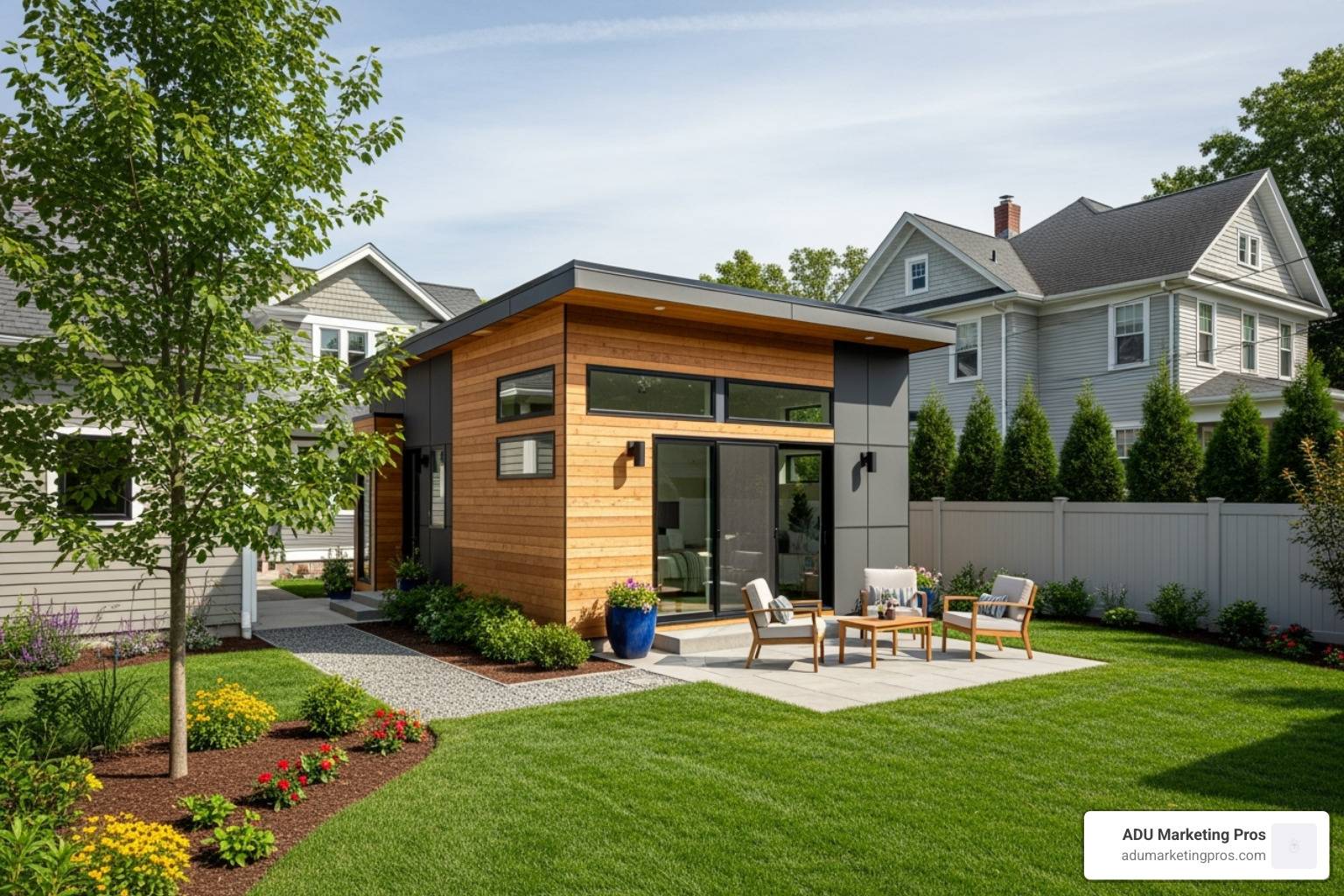
Why ADU Rentals Are a Growing Housing Solution
ADU rentals—also known as granny flats, in-law suites, or backyard homes—are self-contained living spaces located on the same property as a primary single-family residence. As the housing affordability crisis intensifies across the country, these innovative units have emerged as a critical piece of the solution. They offer a popular option for renters seeking private, modern homes in desirable neighborhoods that might otherwise be financially out of reach. This trend is fueled by widespread zoning reforms in states like California, Oregon, and Washington, which have streamlined the approval process to encourage this form of gentle density.
For renters, ADUs provide a unique middle ground between the anonymity of a large apartment complex and the high cost of a single-family house. You can find them listed on major platforms like Zillow and Craigslist, but the most important factor is ensuring the unit is legal, safe, and professionally managed. A permitted ADU is your best guarantee of a secure and positive living experience.
Quick checklist for finding a reputable ADU rental:
- Search online platforms: Use specific keywords like “ADU,” “guest house,” “in-law suite,” and “backyard cottage” on Zillow, Apartments.com, Craigslist, and Facebook Marketplace to broaden your search.
- Verify legality: Don’t be shy about asking the landlord to see the building permits and the final Certificate of Occupancy. This is your right as a prospective tenant and confirms the unit was built to code.
- Inspect safety features: During a walkthrough, look for essential safety elements like a dedicated, clear entrance, properly sized egress windows (especially in basement units), and hardwired smoke and carbon monoxide detectors.
- Review the lease carefully: A formal lease is non-negotiable. Ensure it clearly outlines all terms for rent payments, utility responsibilities, maintenance procedures, and tenant rights. Vague or verbal agreements are a major red flag.
- Watch for warning signs: Be wary of unusually low rent for the area, demands for cash-only payments without receipts, or a landlord who seems evasive about the unit’s history or legal status.
While ADUs offer an innovative solution, not all are created equal. A legal, permitted ADU complies with local zoning, building, and fire safety codes, offering you full protection as a tenant under landlord-tenant law. An unpermitted or illegal conversion, however, puts you at significant risk of eviction with little notice if the city discovers it, not to mention potential safety hazards. In cities like Los Angeles, many ADUs fall under the Rent Stabilization Ordinance (RSO), providing additional protections against steep rent hikes. Meanwhile, municipalities like Newport Beach and Alameda County prohibit short-term rentals of ADUs to preserve them for the long-term housing stock.
This guide will walk you through the entire process, from identifying the different types of ADUs and their unique characteristics to securing a lease and understanding your rights and responsibilities. Whether you’re a renter searching for your next home or a builder advising clients on rental potential, you’ll find the insights you need to navigate the ADU rental market with confidence.
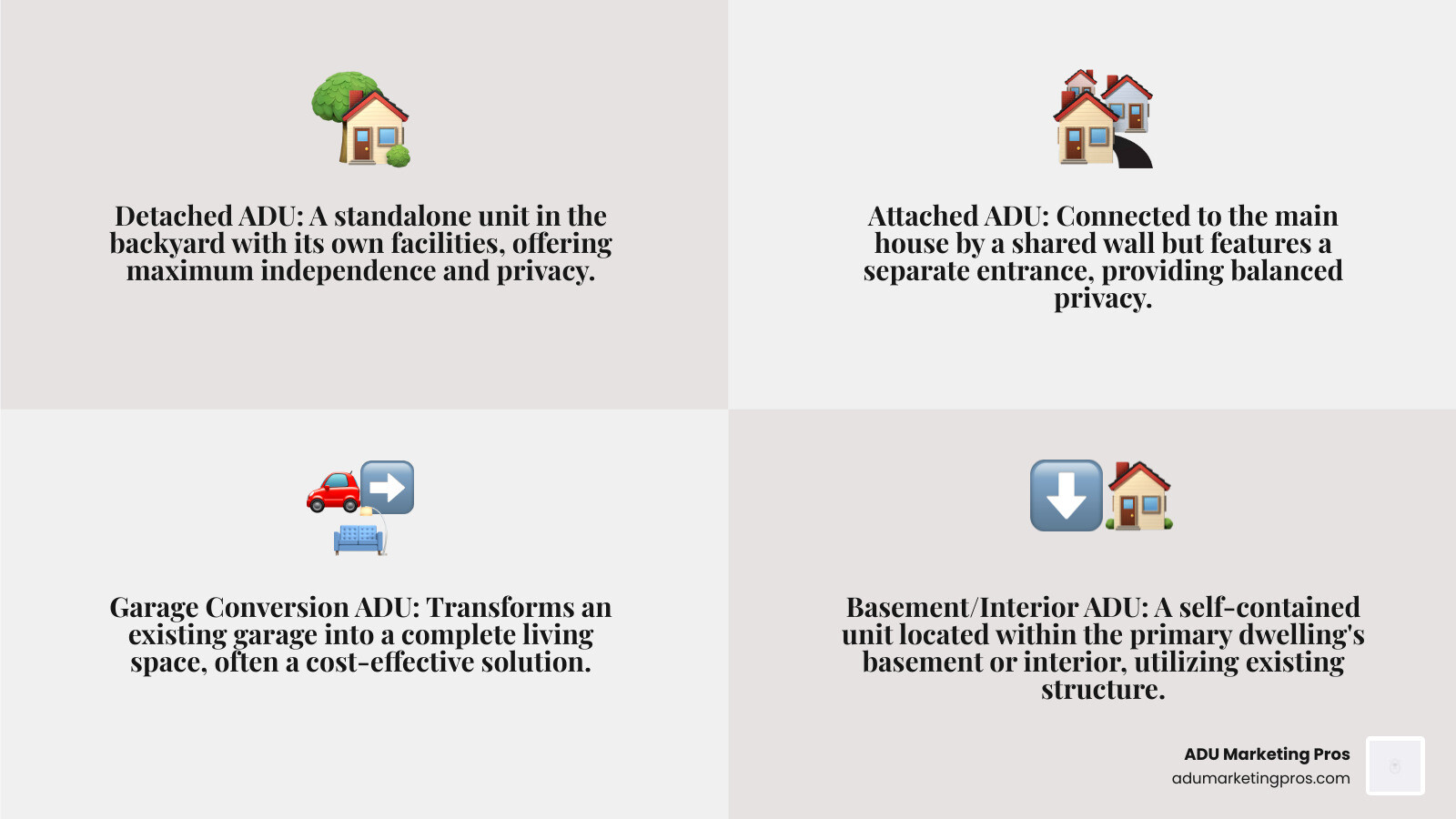
What to Expect from an ADU Rental
An ADU rental offers a unique housing option that balances the independence of a private home with the community feel of a residential neighborhood. These self-contained units are required to provide all the essentials for independent living—a full kitchen, a bathroom, sleeping/living space, and a separate entrance—while often granting access to shared amenities like a backyard, garden, or laundry facilities. Unlike the dense, often noisy environment of large apartment complexes, ADUs provide a quieter, more private living experience that feels more like a home than a temporary unit.
ADUs have gained significant momentum as an affordable alternative to traditional rentals, especially in competitive urban and suburban markets. They represent a form of “missing middle” housing that can gently increase density without altering the character of a neighborhood. To see how they compare to other compact living options, read our article on ADU vs Tiny House. For space-saving inspiration, check out our guide to Studio ADU Floor Plans.
The Different Types of ADUs for Rent
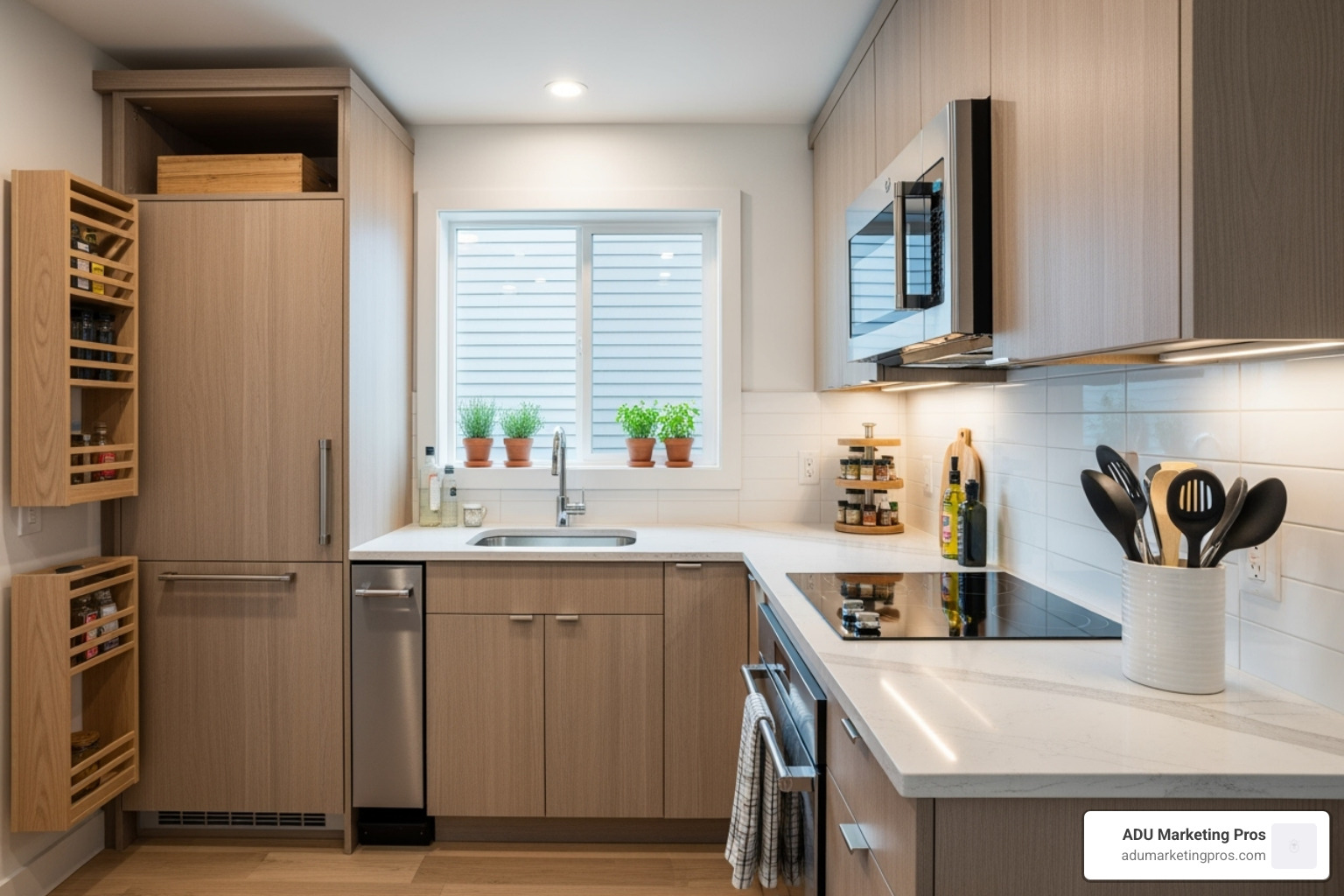
Understanding the different ADU types helps you find the right fit for your lifestyle, budget, and privacy needs. Each has distinct characteristics:
- Detached units (DADUs): These are standalone structures, often called garden suites, backyard cottages, or laneway houses. They offer the most privacy and autonomy, feeling like a small, independent house. They are often the most expensive type of ADU to rent but provide the best separation from the main home. For design ideas, explore our ADU Design Ideas California and Detached ADU Plans.
- Garage conversions: An existing garage is transformed into a cozy studio or one-bedroom apartment. These are a popular and cost-effective option for homeowners to build, which can translate to more affordable rent. They often feature unique layouts with high ceilings, concrete floors, and industrial-chic aesthetics, but may have less natural light than other ADU types.
- Attached units: These ADUs are connected to the main house with at least one shared wall but maintain a separate exterior entrance. They offer a middle ground between the privacy of a detached unit and the convenience and lower cost of an internal unit. Noise transfer can sometimes be a consideration, depending on the quality of construction.
- Internal or Interior Conversions (IADUs): Located entirely within the primary residence, such as in a converted basement, attic, or a segregated portion of the main floor. Often called in-law suites, these are typically the most affordable ADU option. While they must have a separate entrance and all required amenities, they offer the least privacy.
Key Benefits for Renters
ADU rentals are increasingly popular for several key reasons that go beyond just four walls and a roof:
- Lower rent costs: In many cases, ADUs are more affordable than traditional apartments or single-family homes in the same neighborhood. Some homeowners, who are not professional landlords, may price them competitively to attract a stable, long-term tenant who will be a good neighbor.
- Unique character and design: Unlike cookie-cutter apartment buildings, ADUs frequently feature distinctive architectural details, higher-quality finishes, and a more home-like atmosphere. Many are brand new and include modern appliances and energy-efficient features.
- Access to desirable neighborhoods: ADUs allow renters to live in established, single-family residential communities with access to better parks, schools, and local amenities that might otherwise be financially inaccessible.
- Enhanced privacy: With your own entrance, kitchen, and bathroom, you get a high degree of privacy that is rare in multi-family housing. This is especially true with detached units, which offer total separation.
- Community integration and security: Living in close proximity to your landlord can foster a supportive, neighborly environment. This offers a more personal alternative to dealing with a large, faceless property management company and can lead to quicker responses for maintenance issues. The presence of the homeowner on-site also adds a layer of informal security.
As defined by Investopedia, ADUs provide flexible living arrangements that can adapt to changing needs, making them a versatile and resilient option in today’s dynamic housing market.
Your Search Guide: Finding Legitimate ADU Rentals
Finding the perfect ADU rental requires knowing where to look, what to ask, and which red flags to avoid. While the vast majority of homeowners offer quality, safe housing, the growing popularity of ADUs has also led to a rise in unpermitted units. Being a savvy renter means doing your due diligence to protect yourself. This guide will help you navigate your search with confidence.
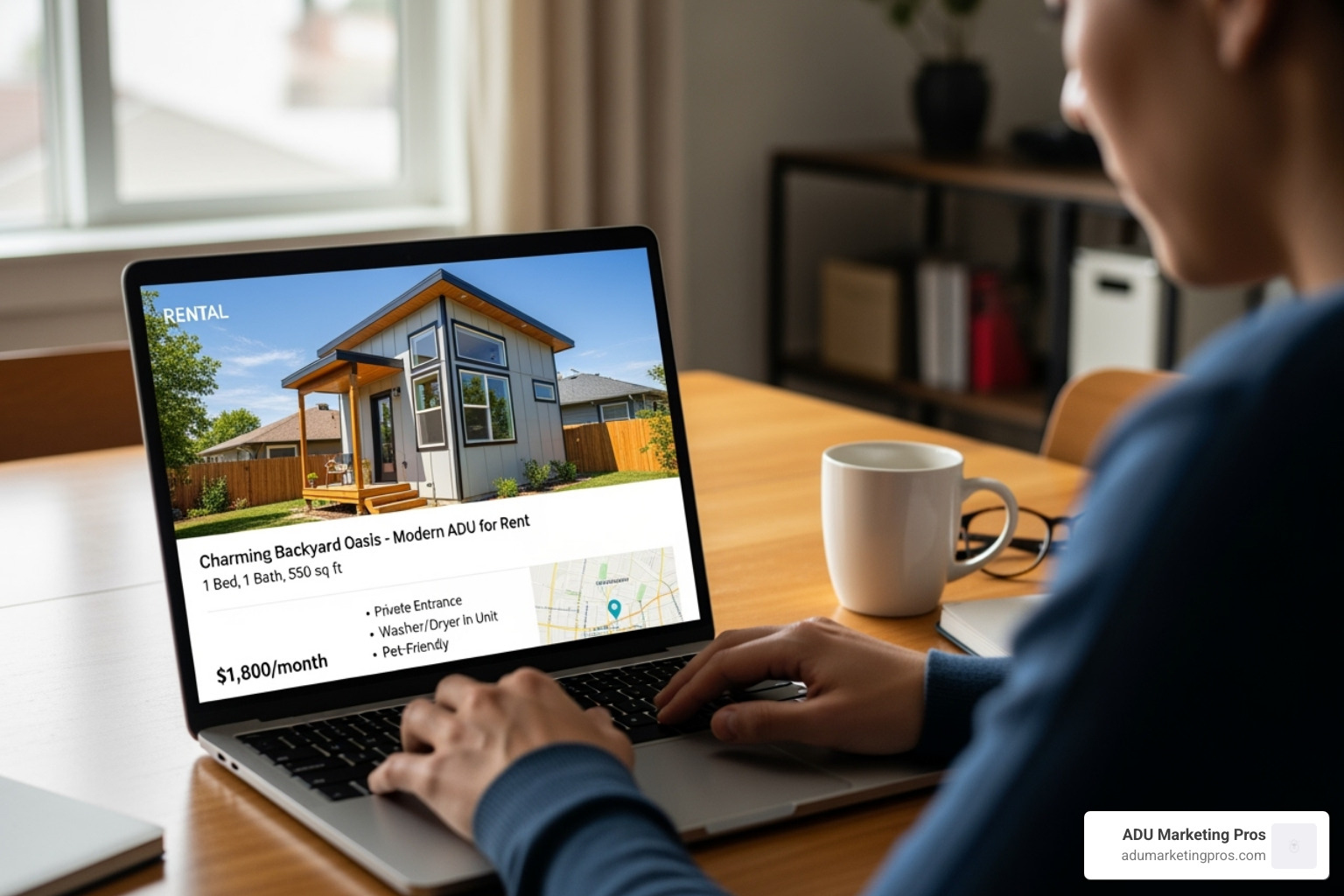
The market for ADU rentals is booming, especially in high-demand areas where housing is scarce. For location-specific tips and market analysis, you might check out our guide on ADU Rentals San Diego.
Where to Find ADU Rentals
Start your search on these platforms, using a variety of keywords like “ADU,” “granny flat,” “in-law unit,” “guest house,” or “backyard cottage” to capture all possible listings:
- Major rental sites: Zillow, Apartments.com, and Trulia are the top platforms where homeowners and property managers list ADUs. Use filters to narrow down by home type (look for “guest house” or “apartment” in a house). Craigslist remains a popular, if less polished, source for direct-from-owner listings.
- Social media: Facebook Marketplace is a rapidly growing platform for rentals. Also, join local neighborhood and housing groups on Facebook or Nextdoor, as these often feature hyper-local listings that don’t appear elsewhere.
- Specialized ADU sites: A few new websites are popping up that specialize in ADU rentals, connecting renters directly with homeowners. Keep an eye out for these in your local market.
- Property managers: Local property management companies that specialize in single-family homes are increasingly managing portfolios that include legal, vetted ADU properties. This can be a great route for finding a professionally managed unit.
- Word-of-mouth: Let friends, family, and colleagues know you’re looking. Personal referrals are a powerful and trusted way to find upcoming vacancies before they’re even listed.
How to Spot a Legal and Safe Unit
Verifying an ADU’s legality is the single most important step for ensuring your safety and legal protection. Here’s a detailed checklist:
- Ask for the Certificate of Occupancy: This document is the gold standard. It is issued by the local building department only after the ADU has passed all inspections and is deemed legally habitable. A reputable landlord will be proud to show it to you. If they can’t or won’t, consider it a major red flag. To learn more, see our guide on the ADU Permit Process.
- Look for Key Safety Features: A legal ADU must have its own separate entrance. In bedrooms and basements, look for egress windows large enough to escape through in a fire. Check for hardwired smoke and carbon monoxide detectors. The unit should have its own thermostat for climate control.
- Inspect Utilities and Construction: Look for signs of professional work. Electrical outlets in kitchens and bathrooms should be GFCI-protected. The plumbing should have good water pressure and drainage. The overall construction should feel solid, not like a makeshift shed. Our guide to ADU Building Requirements provides more detail.
Red Flags to Watch Out For
Stay alert for these warning signs of an illegal, unsafe, or poorly managed ADU rental:
- Unusually low rent: If the price is significantly below market rate for the neighborhood, the landlord may be trying to lure a tenant into an illegal unit before the city finds out.
- No formal lease agreement: A landlord who insists on a verbal or informal agreement is a major red flag. A written lease protects both parties and is standard professional practice.
- Cash-only payments: Demands for cash payments, especially without receipts, suggest the landlord is trying to operate off the books and avoid creating a paper trail.
- Evasiveness about permits: A landlord who gets defensive, vague, or dismissive when asked about permits or the Certificate of Occupancy likely has something to hide.
- Obvious safety hazards: Exposed wiring, unvented gas appliances, lack of proper windows, mold, or poor construction quality are all clear signs to walk away immediately.
- Shared or unclear utility setup: If the landlord can’t clearly explain how utilities like electricity and water are metered and billed, it may signal a non-compliant setup that could lead to disputes later.
Securing Your Rental: Leases, Costs, and Your Rights
Once you’ve found a promising and legitimate ADU rental, the next step is to navigate the leasing process, understand the full financial picture, and know your rights as a tenant. This phase is crucial for setting the foundation for a positive and conflict-free rental experience. For context on the market, stay updated with ADU Rental Market Trends.
Understanding the Lease Agreement
A lease is a legally binding contract, so it’s essential to read and understand every clause before you sign. Don’t be rushed. Pay close attention to these key details specific to ADU rentals:
- Lease Term: Decide if a fixed-term lease (typically one year) offering stability or a month-to-month agreement offering flexibility is right for you. Landlords often prefer fixed-term leases for new tenants.
- Rent, Deposits, and Fees: Confirm the exact rent amount, the due date, and acceptable payment methods. The lease should also specify the security deposit amount and the conditions for its full return, as well as any late fees.
- Maintenance and Repairs: The lease must clarify who is responsible for what. Typically, landlords handle major issues (plumbing, electrical, appliances), while tenants are responsible for minor upkeep and reporting problems promptly.
- Rules for Shared Spaces: If you have access to a yard, patio, laundry room, or pool, the rules for use (hours, guests, cleaning) should be explicitly defined in writing to prevent future misunderstandings.
- Guest and Pet Policies: The lease should state the policy on overnight guests (e.g., maximum number of consecutive nights) and any rules, fees, or deposits related to pets.
- Utilities: The agreement must state precisely how utilities are handled. Is there a separate meter? Is it a flat monthly fee? Is it a percentage of the total property bill? This must be crystal clear.
- Landlord’s Right of Entry: The lease should specify the notice period the landlord must provide before entering your unit for non-emergencies (usually 24 hours), respecting your right to privacy.
Financials: What to Budget For
Your monthly housing costs will extend beyond just the rent check. Be sure to budget for the full picture:
- Average Rent: Prices vary dramatically by location, size, age, and quality of the ADU. In suburban areas, a one-bedroom ADU might rent for $1,800 to $2,500, while in high-demand urban markets like the Bay Area or Los Angeles, rents can easily exceed $3,000 to $4,000+ per month.
- Security Deposit: Most states limit the security deposit to one or two months’ rent. This is a refundable deposit that covers damages beyond normal wear and tear.
- Application Fees: A modest, non-refundable fee (typically $30-$75 per applicant) is standard to cover the cost of background and credit checks.
- Utility Costs: Unless utilities are included, this can be a significant monthly expense. If you are on a shared meter, insist on a clear, fair method for calculating your share. Ask to see past bills to get an estimate.
- Renter’s Insurance: This is strongly recommended and sometimes required by the landlord. For a small monthly fee (often $15-$30), it protects your personal belongings from theft, fire, or damage and provides liability coverage.
Your Rights as a Tenant in an ADU
As a tenant in a legal ADU, you have the same fundamental legal protections as any other renter. It’s crucial to know your rights:
- Right to a Habitable Home: Your landlord is legally required to provide a safe, livable home with working essential services like heat, hot water, and electricity. If these standards are not met, you have legal recourse. Resources like the U.S. Department of Housing and Urban Development (HUD) outline these rights.
- Right to Privacy: Except in true emergencies, your landlord must provide reasonable written notice (typically 24 hours) before entering your unit.
- Protection from Retaliation: A landlord cannot retaliate against you (e.g., by trying to evict you) for requesting legitimate repairs or exercising your legal rights.
- Fair Housing Rights: You are protected from housing discrimination based on race, color, religion, sex, national origin, familial status, or disability under the federal Fair Housing Act.
- Proper Eviction Process: A landlord cannot simply lock you out or throw your belongings on the street. They must follow a formal legal eviction process through the court system.
- Rent Control and Increases: In some jurisdictions (like many cities in California), ADUs may be subject to rent control ordinances that limit how much and how often your rent can be raised. For example, Ontario’s Landlord and Tenant Board provides clear rules on this, as do local rent boards in the U.S.
Living in an ADU: What to Know After You Move In
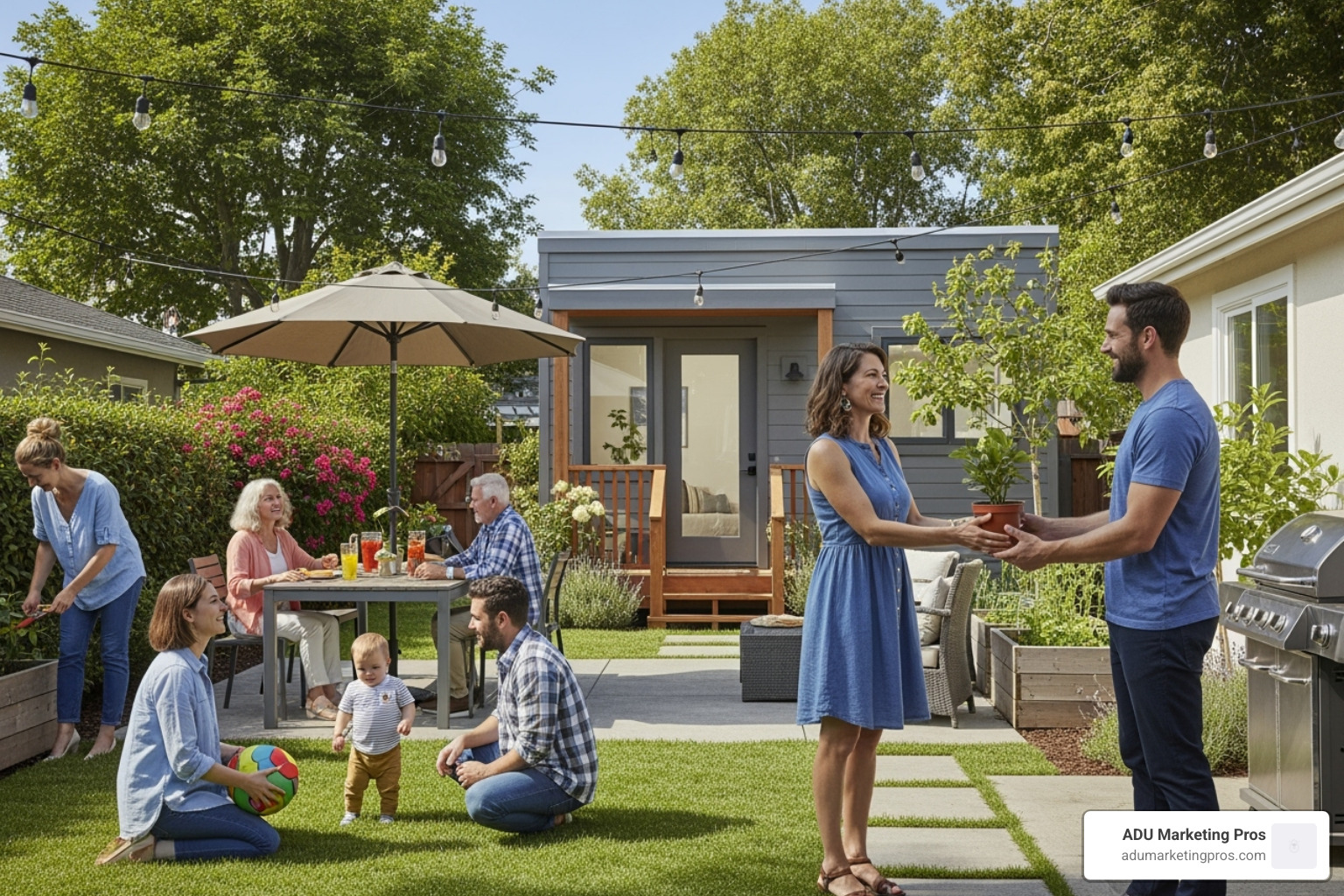
Moving into an ADU rental marks the beginning of a unique living arrangement, one that often involves sharing a property with your landlord. Establishing clear communication, understanding property rules, and respecting shared boundaries are the keys to a harmonious and long-lasting tenancy.
Navigating the Homeowner-Tenant Relationship
Living on the same property as your landlord can be a huge benefit, offering quick maintenance responses and a sense of security. However, it requires a more thoughtful approach than renting from a remote corporation. Establish clear communication protocols from the start. Agree on the best way to communicate (e.g., text for urgent issues, email for non-urgent ones). Be mindful of noise, especially in attached or internal ADUs, and have a conversation about quiet hours if it’s not already in the lease. Open, proactive, and respectful communication is the best tool for preventing small misunderstandings from becoming larger conflicts.
Managing Shared Amenities and Spaces
If your lease includes access to shared spaces like a backyard, laundry room, or driveway, it’s vital to have clear rules. Discuss and document expectations for:
- Backyard/Patio Use: Who is responsible for upkeep? Are there rules about hosting guests or parties? For inspiration on how these spaces can be designed for shared use, see our ADU Backyard Ideas.
- Laundry Schedules: If laundry machines are shared, work out a schedule or system to avoid conflicts.
- Parking: Parking can be a major point of contention. Ensure your designated spot is clearly defined and discuss rules for guest parking.
- Package Deliveries: With the rise of e-commerce, establish a secure and agreed-upon location for package deliveries to prevent theft or confusion.
Are There Restrictions on Short-Term Rentals?
Yes, and for long-term tenants, this is generally good news. Many municipalities restrict or outright ban the use of ADUs as short-term rentals (like Airbnb or Vrbo) to ensure they contribute to the long-term housing supply.
A 30-day minimum rental period is a common requirement. Cities across the country, from Portland, Oregon, to Alameda County, California, and Newport Beach, enforce this to prevent ADUs from becoming revolving-door vacation rentals. In many cases, homeowners must file a deed restriction as part of their permit, legally binding them not to use the unit for short-term stays.
Local ordinances vary widely. For example, Mesa, Arizona, allows licensed short-term rentals in ADUs, while Los Angeles generally prohibits them in units subject to its Rent Stabilization Ordinance (RSO). Even in tourist-heavy areas where nightly rates could be high ($120–$180+), a business license and adherence to strict safety and occupancy regulations are almost always required.
These regulations reinforce the primary policy goal behind the ADU movement: to increase the supply of stable, affordable, long-term housing for local residents. For you as a tenant, this means your ADU rental is more likely to be a secure home rather than a property subject to the whims of the vacation market.
Frequently Asked Questions about ADU Rentals
Here are answers to some of the most common questions renters have when considering an ADU rental. Understanding these nuances can help you make a more informed decision.
Can a landlord enter my ADU whenever they want?
Absolutely not. Your ADU rental is your private home, and you are afforded a legal right to privacy. In nearly all jurisdictions, landlords must provide at least 24 hours’ written notice before entering for non-emergency reasons, such as routine inspections, repairs, or showing the unit to prospective tenants. The only exception is a true emergency that threatens health, safety, or the property itself, such as a fire, gas leak, or major water pipe burst. In such cases, they may enter without notice.
Are ADUs typically furnished or unfurnished?
It varies greatly depending on the landlord’s strategy and target market. You will find both options available.
- Furnished ADUs are often marketed toward students, traveling professionals, or people relocating who need a turnkey solution. They are move-in ready and command higher rent but save you the cost and hassle of buying and moving furniture.
- Unfurnished ADUs are more common for standard one-year leases. They offer a blank canvas for long-term renters to personalize their space and make it their own. Rent is typically lower than for a comparable furnished unit.
Always clarify exactly what is included (e.g., appliances, window coverings) before signing a lease.
How are utilities handled in ADU rentals?
Utility arrangements for ADU rentals are a critical detail to clarify, as they can significantly impact your monthly budget. Common setups include:
- Separate Meters: This is the ideal and most transparent setup. The ADU has its own electric, gas, and water meters, and you pay the utility companies directly for your own usage.
- Sub-metering: The landlord installs a private meter that tracks only your unit’s usage. They receive the total bill and then bill you for your specific portion. This is a fair and common practice.
- Flat-Rate or Pro-Rata Share: You pay a fixed monthly fee for utilities or a pre-agreed percentage (pro-rata) of the total property bill. If it’s a pro-rata arrangement, the lease must clearly state the percentage and the method of calculation to be legally enforceable.
- Included in Rent: All utility costs are bundled into your monthly rent payment. This offers predictable budgeting but may mean you’re paying more than you would if you conserved energy.
Some jurisdictions, like Mesa, Arizona, may require ADUs to share a single utility meter with the main house. Whatever the arrangement, ensure it is explicitly and clearly detailed in your lease agreement to prevent future disputes.
Do I need renter’s insurance for an ADU?
Yes, it is highly recommended, and many landlords now require it as a condition of the lease. The homeowner’s insurance policy covers the structure itself, but it does not cover your personal belongings. Renter’s insurance is an inexpensive policy that protects your possessions from events like fire, theft, or water damage. It also provides liability coverage in case someone is injured in your unit, protecting you from potential lawsuits.
What are the common rules for parking?
Parking can be a significant challenge, especially in dense urban areas. Because many new state laws prohibit municipalities from requiring off-street parking for ADUs (especially those near transit), parking is not always guaranteed. You must clarify the parking situation before signing a lease. Is there a dedicated spot in a driveway or garage? Is it street parking only? If it’s street parking, is a permit required? A verbal promise of a parking spot is not enough; it needs to be written into the lease.
Conclusion
ADU rentals represent a vital and growing segment of the housing market, offering a practical and attractive solution to today’s affordability and inventory challenges. For renters, they provide an opportunity to live in private, modern, and often more affordable homes within established and desirable neighborhoods. They are more than just apartments; they are a unique form of housing that blends independence with community.
As this comprehensive guide has shown, the key to a successful ADU rental experience lies in diligence and communication. Finding a legal, permitted ADU is paramount. This means you must always verify permits, thoroughly inspect the unit for safety features, and be wary of red flags like a landlord who avoids providing a formal lease. Understanding your rights as a tenant—including your right to privacy, a habitable home, and protection from discrimination—is equally crucial. By establishing clear expectations and fostering open communication with your landlord, you can build a positive, respectful relationship and fully enjoy all the unique benefits of ADU living.
For builders, designers, and architects, grasping the renter’s perspective is essential for creating ADUs that not only meet code but also attract high-quality, long-term tenants. A well-designed, legally compliant ADU with features like ample storage, private outdoor space, and dedicated home office nooks is a valuable, income-generating asset for any homeowner. To help your clients maximize their investment, focus on designs that enhance livability and durability, and learn how to effectively market the benefits of their ADU rental income potential.
At ADU Marketing Pros, we specialize in helping ADU construction and architecture firms connect with homeowners by highlighting what matters most to both them and their future tenants. By developing marketing strategies that focus on quality, safety, and smart design, we help our clients attract the right projects and achieve measurable growth. The future of housing is innovative, flexible, and community-focused—and ADUs are at the very forefront of this evolution.