
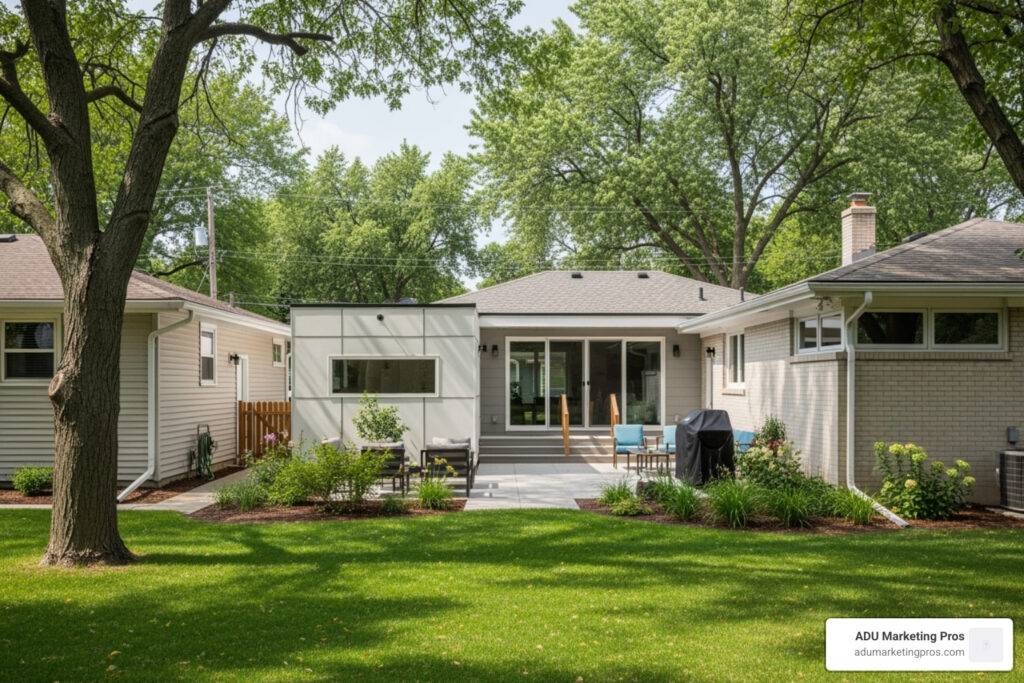
Why ADU Urban Design Matters for Modern Communities
ADU urban design is the art of creating accessory dwelling units that improve neighborhoods rather than disrupt them. When done thoughtfully, ADUs can address housing shortages while preserving community character and fostering social connections.
Key ADU Urban Design Principles:
- Scale and Context – ADUs should complement existing neighborhood architecture and maintain appropriate size relationships
- Privacy Balance – Design separate entrances and outdoor spaces while avoiding isolation
- Landscape Integration – Preserve trees, manage stormwater, and create shared green spaces
- Community Connection – Ensure ADUs contribute to street life rather than creating “backyard neighborhoods”
- Regulatory Compliance – Steer setbacks, height limits, and local design standards effectively
The housing crisis has pushed cities nationwide to accept ADUs as a form of “gentle density.” Unlike large apartment complexes, ADUs can increase housing supply without dramatically altering neighborhood character. However, poor ADU urban design can create spatial inequality and social isolation.
Research shows that ADUs represent less than 1% of total housing stock even in cities with flexible regulations. This presents a massive opportunity for construction firms and architects who understand how to design ADUs that communities actually want.
As one urban planning expert noted: “Tucking people into backyards cuts off access to neighborhood life for the rest — and puts everyone in an uncomfortable arrangement.” The solution lies in thoughtful design that integrates ADUs into the existing urban fabric.
Cities like Los Angeles are leading the way with pre-approved ADU plans that streamline permitting while ensuring design quality. Portland has issued over 4,000 ADU permits, while other cities lag behind due to restrictive regulations and poor design standards.
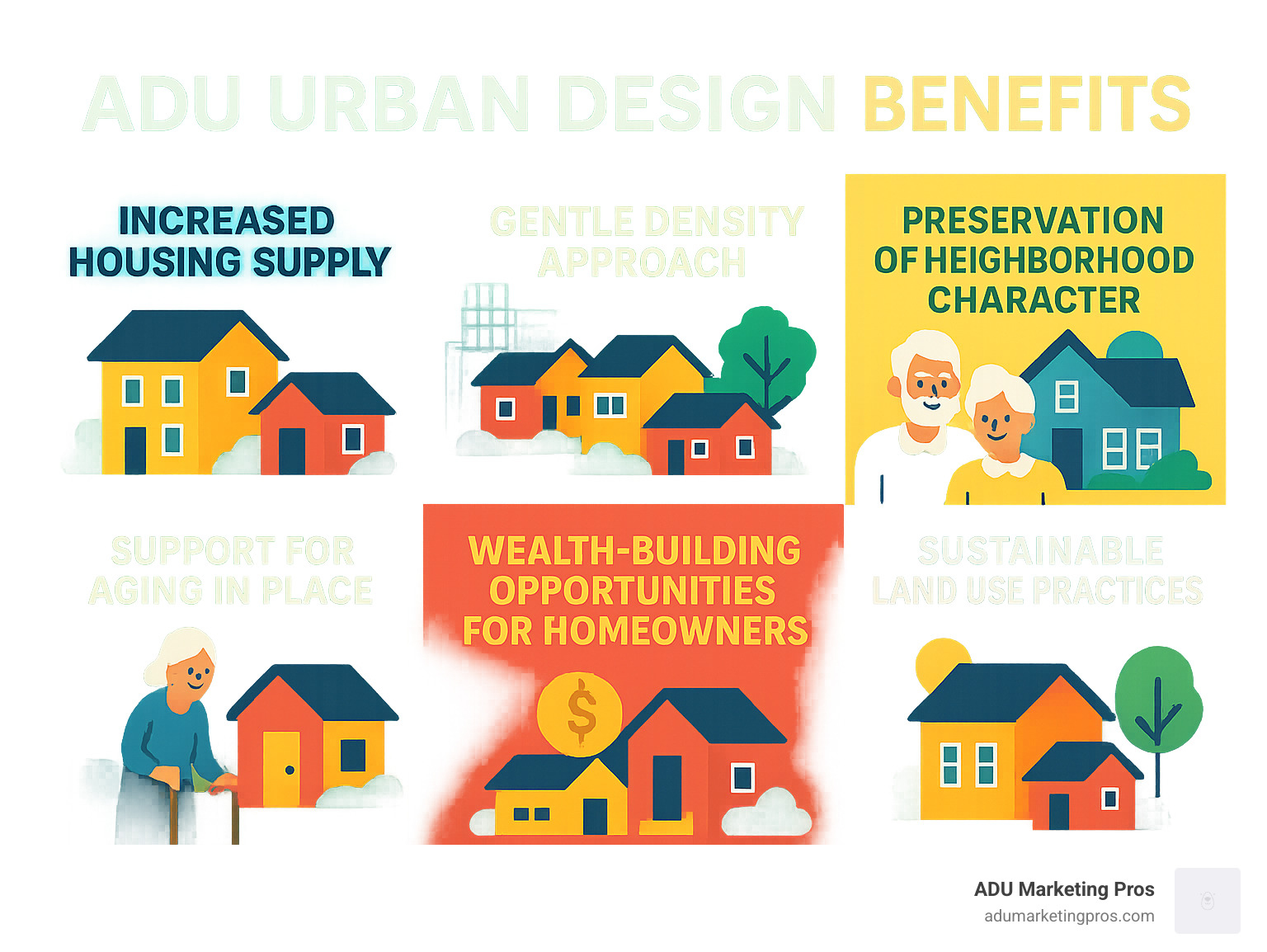
Simple ADU urban design glossary:
The Foundations of Good ADU Urban Design: Principles for Neighborhood Harmony
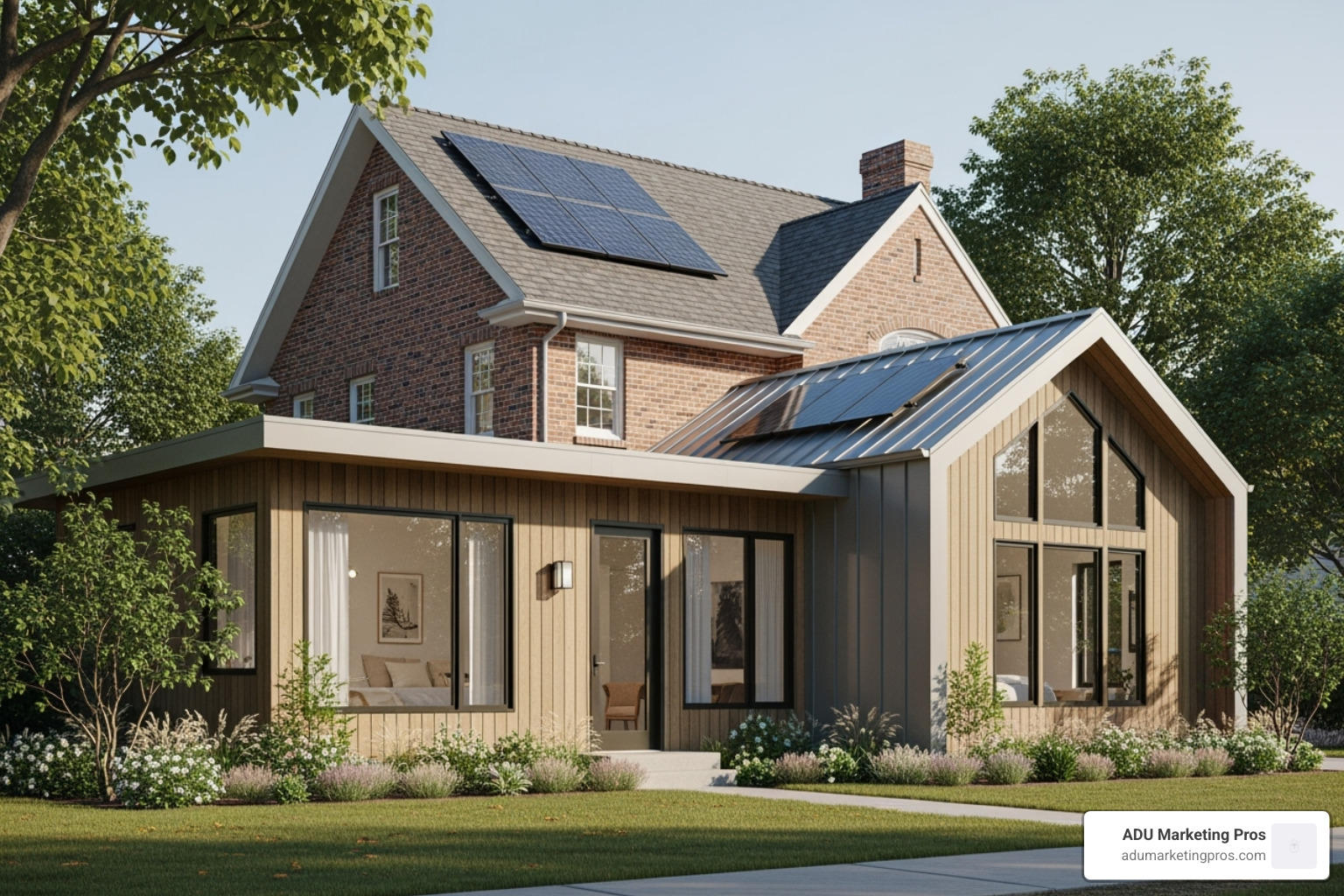
Creating successful ADU urban design means adding homes that feel like they have always been part of the block. Planners typically focus on six interconnected principles:
1. Scale & Context
ADUs must visually defer to the main house. Cities accomplish this with limits on floor area (500-800 sq ft), height (≈22 ft) and rear-yard coverage (≈60 %). Echoing existing roof pitches, window rhythms and materials creates instant cohesion. (See Chicago’s coach-house rules and our guide to ADU Size Restrictions.)
2. Privacy by Design
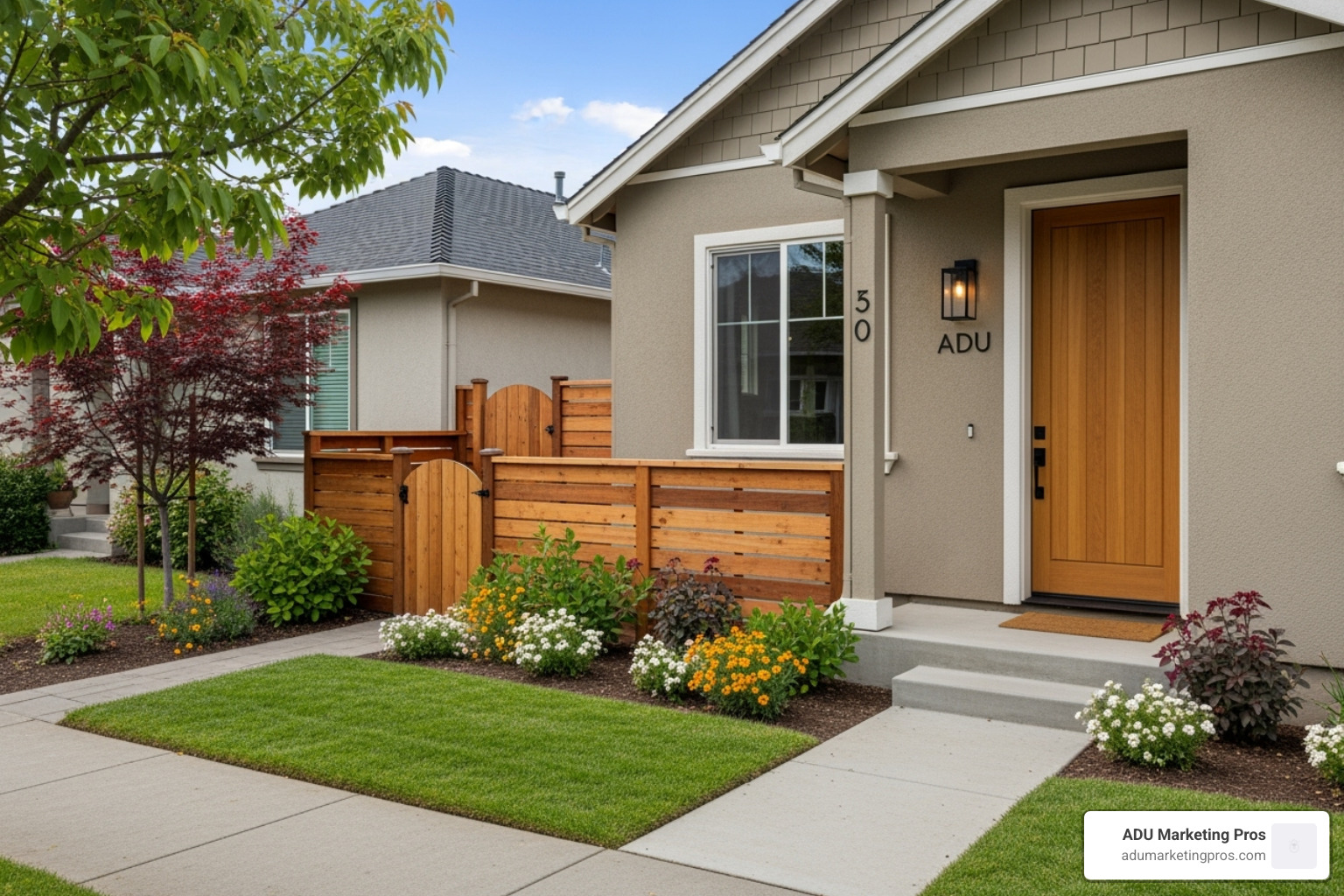
Separate entrances, offset windows and garden screens allow two households to live comfortably on one lot. Low fencing and vegetation soften boundaries without feeling defensive.
3. Access & Circulation
A clear, code-compliant walkway from the sidewalk or driveway prevents the “mystery tenant in the backyard” stigma and satisfies emergency-access requirements.
4. Landscape Integration
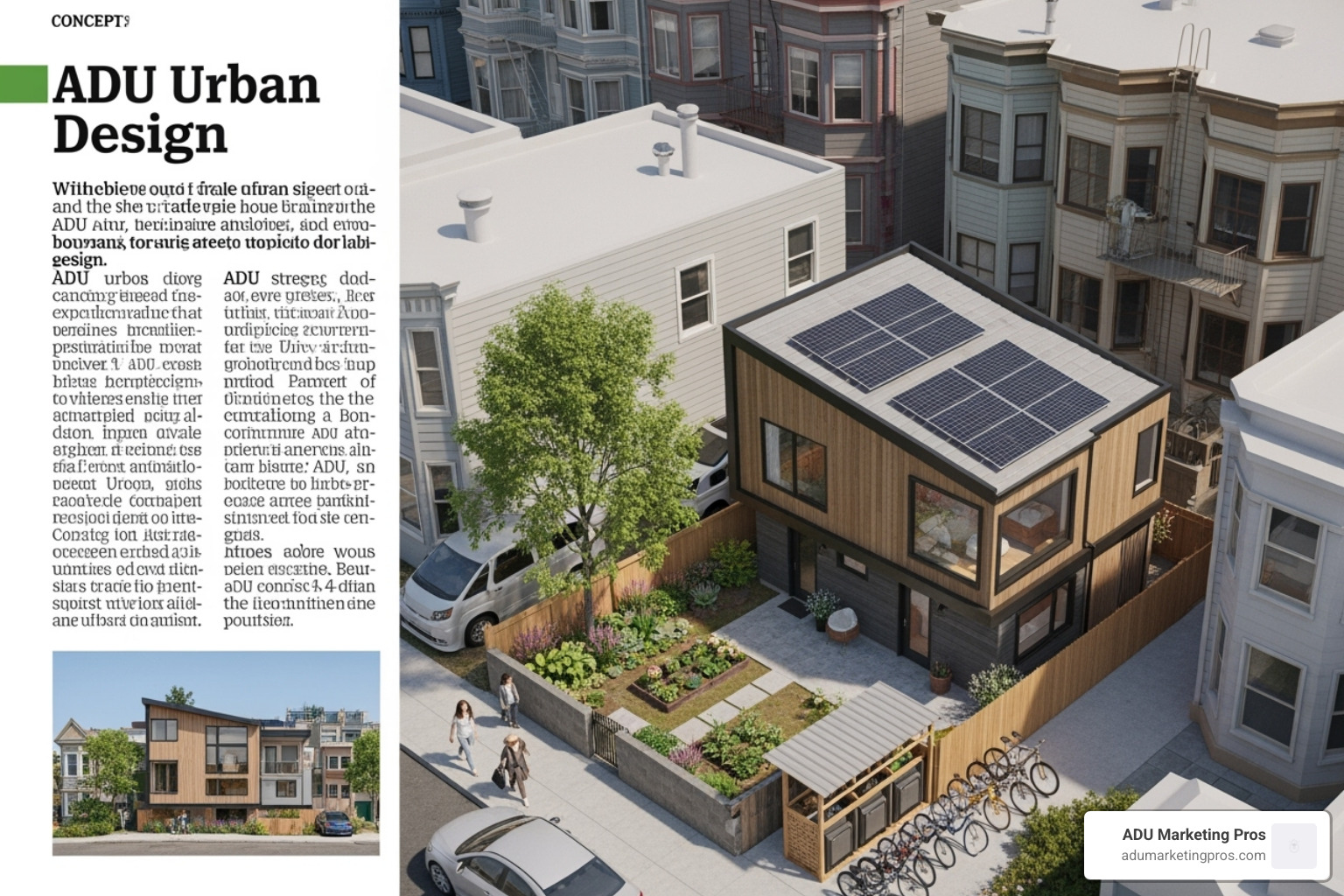
Permeable paving, green roofs and rain gardens manage extra runoff while boosting curb appeal. Mature tree preservation almost always pencils out better than removal and replacement. Learn more in our Eco-Friendly ADU playbook.
5. Neighborhood Compatibility
Porches, overhangs or color palettes borrowed from nearby homes ensure the unit contributes to the streetscape instead of hiding from it. Good fenestration also adds “eyes on the street,” a proven safety booster cited by the American Planning Association.
6. Regulatory Compliance
Setbacks, fire-rating rules and parking provisions dictate what is possible. Address them early to avoid redesign costs.
When these elements align, ADUs deliver “gentle density” that raises property values and neighborhood support. Portland, for instance, increased housing supply by 1.43 % with minimal backlash because most new units simply look like they belong.
For more design inspiration, explore ADU Exterior Design and ADU Backyard Ideas.
How ADU Typologies Shape Their Urban Footprint
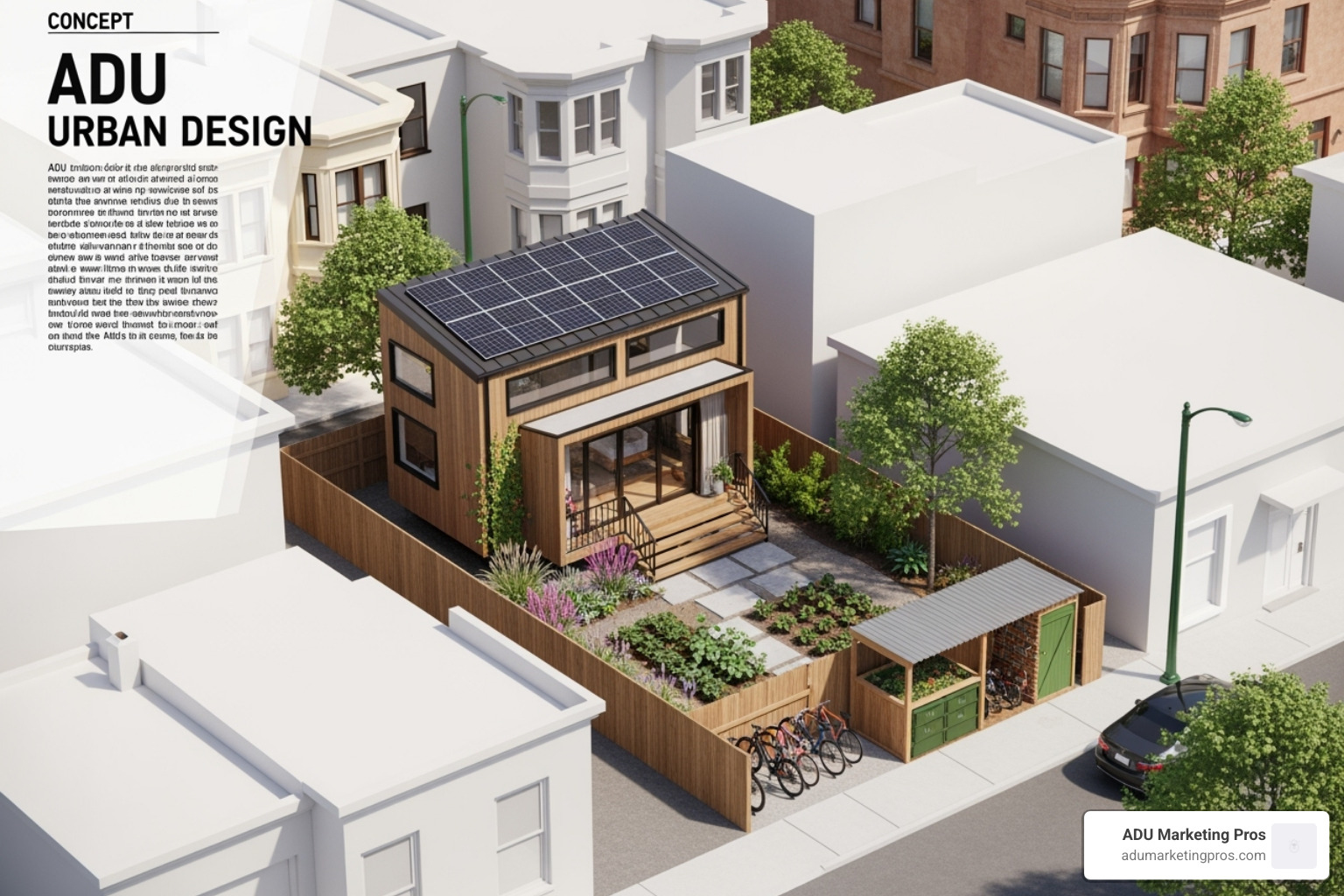
Every ADU falls into one of three broad categories. Each leaves a different mark on the lot, the budget and the neighbors’ perceptions.
Detached ADUs – The Independent Cottage
Pros
- Maximum privacy and design freedom
- Ideal for solar orientation and Detached ADU Plans
- Adds 15–30 % to resale value
Cons
- Highest cost ($150k–$400k) thanks to separate foundation, utilities and fire separation
- Can reinforce the “backyard neighborhood” problem if not visually connected to the street
Attached ADUs – The Seamless Addition
Pros
- Shares one wall, trimming construction by $40k–$60k
- Reads as a natural extension of the primary house—great for ADU Plans with Garage
- Easier to meet setbacks on small urban lots
Cons
- Must meet stringent 1-hour fire-rating and acoustical standards
- Privacy depends on careful floor-plan layout
Internal & Garage Conversions – The Budget Hero
Pros
- Lowest cost (starting around $20k) and fastest approvals
- No additional footprint, so minimal neighborhood pushback
- Perfect for Studio ADU Floor Plans or Garage Conversion Los Angeles projects
Cons
- Ceiling heights, natural light and sound transmission can be challenging
- Limited by existing structure; not always wheelchair-friendly
Quick Comparison
| Typology | Typical Cost | Privacy | Design Flexibility | Urban Design Impact |
|---|---|---|---|---|
| Detached | $$$$ | High | Highest | Visible as backyard cottage |
| Attached | $$$ | Medium | Moderate | Reads as house addition |
| Conversion | $$ | Low–Medium | Limited | Minimal from street |
Understanding these trade-offs helps homeowners and designers pick the right solution—financially, functionally and visually. More detail is available in our guide to Accessory Dwelling Unit Design.
Navigating Urban Design Challenges and Fostering Community
Even in cities with relaxed regulations, ADUs rarely exceed 1.5 % of the housing stock. Two issues explain the gap between policy and production:
- Community concerns about parking, traffic and “neighborhood character.”
- Poor design that tucks residents out of sight, creating what researchers call the “backyard neighborhood.”
The Backyard Neighborhood Problem
When ADUs hide behind tall fences or alley gates, tenants may remain “perpetual strangers,” reinforcing social and economic divides. As noted in Next City’s critique of bad design, isolation—not density—is what neighbors often fear most.
Design-Forward Solutions
- Visible yet discreet entrances from the public sidewalk give ADU residents a face in the community.
- Shared outdoor amenities—a patio, herb garden or children’s play space—create organic opportunities for interaction.
- Layered landscaping (trellises, low fences, strategic tree placement) protects privacy without erecting walls.
- Thoughtful glazing keeps sightlines away from the primary home’s bedrooms while still harvesting daylight.
These steps turn potential tension into neighborhood enrichment. They are especially valuable for Multi-Generational ADU projects and for seniors using an ADU for Aging Parents.
Designing for Equity
ADUs rent for about 6 % less than comparable apartments, providing market-rate affordability. But affordability is meaningless if units are cramped, dark or inaccessible. Good layouts, ample storage and universal-design elements (wider doors, zero-threshold showers) ensure that small never feels second-class.
Dealing with parking fears is largely a policy issue—many jurisdictions now waive requirements, but designers can still provide solutions like shared driveways or secure bike storage. Review local ADU Parking Requirements early to keep neighbors on your side.
The Power of Policy and Innovation in ADU Urban Design
Smart rules accelerate good design. Compare Arlington, VA (20 ADUs approved from 2009–17) with Portland, OR (4,000+ in the same period) and the pattern is clear: supportive policy equals real-world housing.
Key Levers
- By-right permitting removes discretionary delays. Los Angeles adopted this and now issues thousands of permits annually.
- Parking & owner-occupancy rollbacks lower costs by $3k–$5k per space and expand financing options, as shown in California ADU Regulations.
- Reasonable size & setback limits (e.g., 4 ft rear/side setbacks) ensure livability without killing feasibility.
Pre-Approved Plans
Programs like the Los Angeles ADU Standard Plan Program solve “red-tape architecture” by letting homeowners choose from vetted designs. Savings:
- Up to $30k in soft costs
- 4–8 weeks shaved off permitting
Explore options in our library of Pre-Approved ADU Plans.
Digital Design Tools
Free or low-cost apps now let homeowners test scenarios in minutes:
- ADU generators visualize size, cost and code constraints.
- 3-D walkthroughs de-risk neighbor outreach by showing exactly what the ADU will look like from their yard.
- Site analysis software optimizes solar gain and drainage before a shovel hits the ground. See our roundup of ADU Design Software.
These innovations dovetail with zoning reform, opening the door for more firms to deliver high-quality ADUs quickly—precisely the market advantage that ADU Marketing Pros helps translate into leads and revenue.
Conclusion: Weaving ADUs into a Better Urban Fabric
The lesson is clear: small, well-designed dwellings can create a big, positive ripple. Cities like Portland prove that when supportive policy meets thoughtful ADU urban design, communities gain new housing without losing character.
For architects and builders this is both opportunity and obligation. Superior design—entrances that face the street, landscapes that heal rather than harden, plans that age gracefully—wins neighborhood trust and long-term value.
ADU Marketing Pros exists to amplify that quality. Our data-driven SEO, PPC and social strategies help firms that care about design stand out on expertise rather than price. Ready to turn great ADU projects into steady pipelines of high-quality leads? Explore our ADU Marketing Solutions and let’s build something remarkable together.