
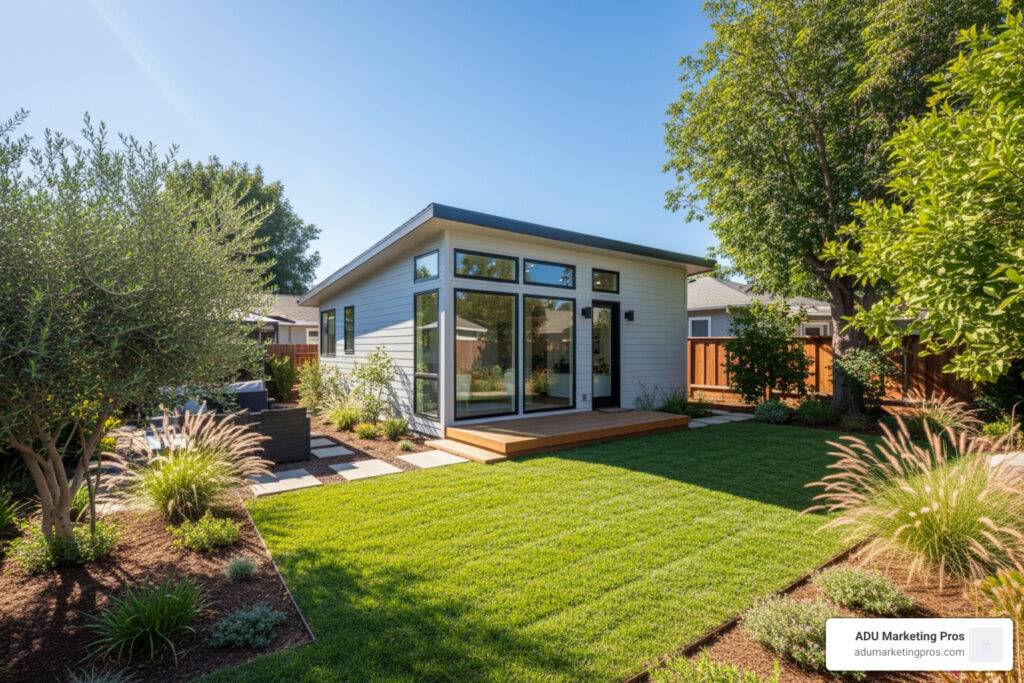
Introduction: Why Build an ADU in Baldwin Park?
Baldwin Park ADU requirements are some of the most homeowner-friendly in California, making this San Gabriel Valley city an excellent place to add an accessory dwelling unit to your property. Whether you’re looking to house family members, generate rental income, or increase your home’s value, understanding these requirements is your first step toward success.
Quick Answer: Key Baldwin Park ADU Requirements
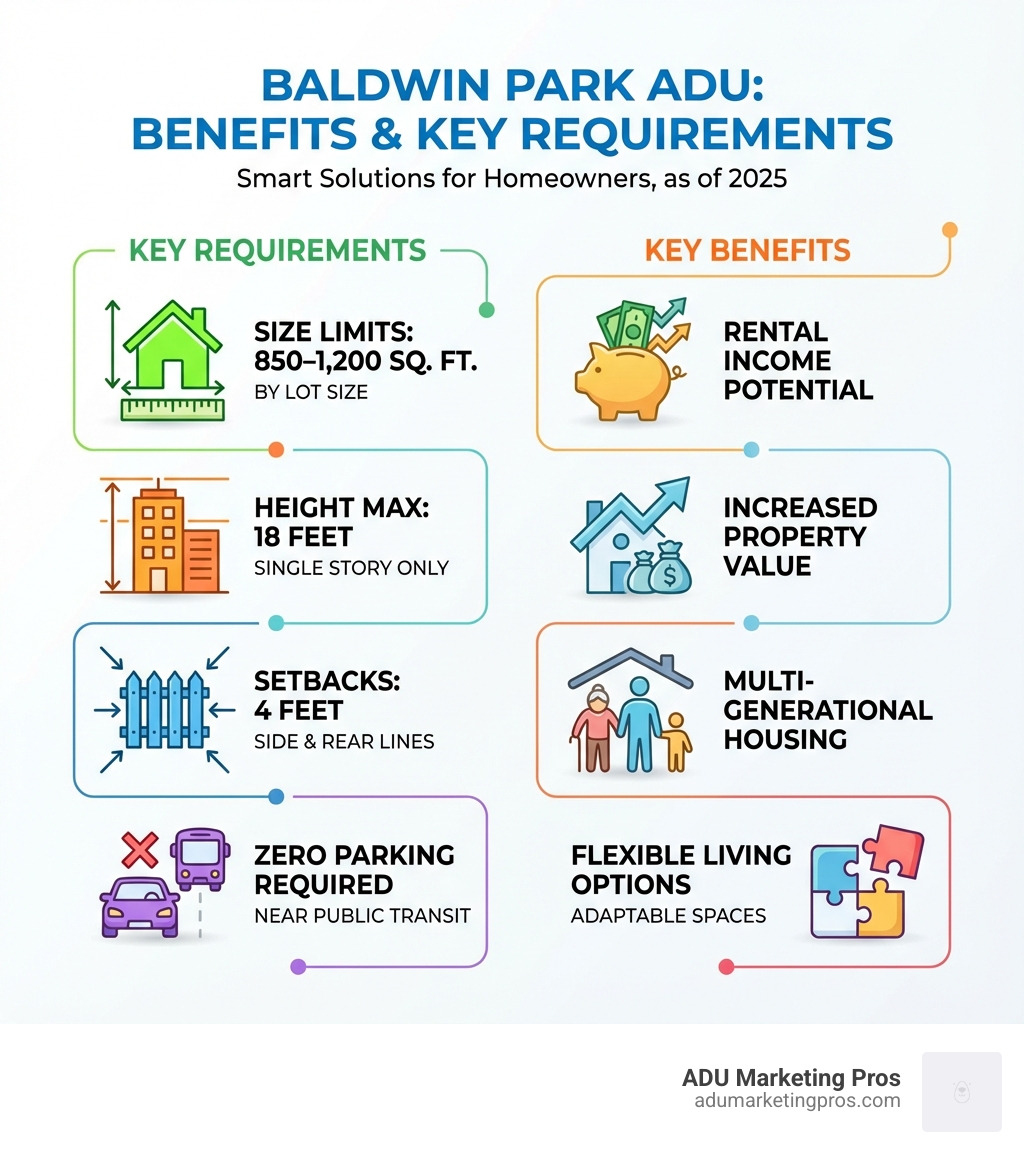
- Size Limits: 850–1,200 sq. ft. depending on your lot size
- Height Limit: Maximum 18 feet (single story only)
- Setbacks: 4 feet from side and rear property lines
- Location: Must be in the rear 50% of your property
- Parking: No parking required (city is within 1/2 mile of public transit)
- Maximum Units: One ADU plus one JADU per single-family lot
- Approval: Ministerial process with 60-day timeline
- Rental: Allowed, but no short-term rentals under 30 days
- Sale: Cannot be sold separately from primary home
Baldwin Park’s location near schools, public transportation, and major highways makes ADUs particularly attractive for renters. With tens of thousands of ADUs already built across Los Angeles County, homeowners are finding that these units offer more than just extra space—they provide real financial returns and flexible housing solutions.
The city has updated its regulations to comply with recent California state laws (AB 2221, SB 897, and others), creating a streamlined approval process. Unlike many cities, Baldwin Park doesn’t require additional parking for ADUs because 100% of residential properties sit within half a mile of public transit. This makes garage conversions especially appealing.
Building an ADU can increase your property value significantly while providing versatile living options. Whether you’re considering a detached unit, an attached addition, or converting your garage, understanding the specific requirements will help you avoid costly mistakes and delays.
For deeper state-level background, the California Department of Housing and Community Development maintains an official Accessory Dwelling Unit handbook that explains how state law applies in cities like Baldwin Park.
Common baldwin park adu requirements vocab:
ADU vs. JADU: Choosing the Right Unit for Your Property
When considering adding an accessory dwelling unit to your property in Baldwin Park, one of the first decisions you’ll face is understanding the different types available: Accessory Dwelling Units (ADUs) and Junior Accessory Dwelling Units (JADUs). While both offer flexible living solutions, they come with distinct characteristics and regulations.
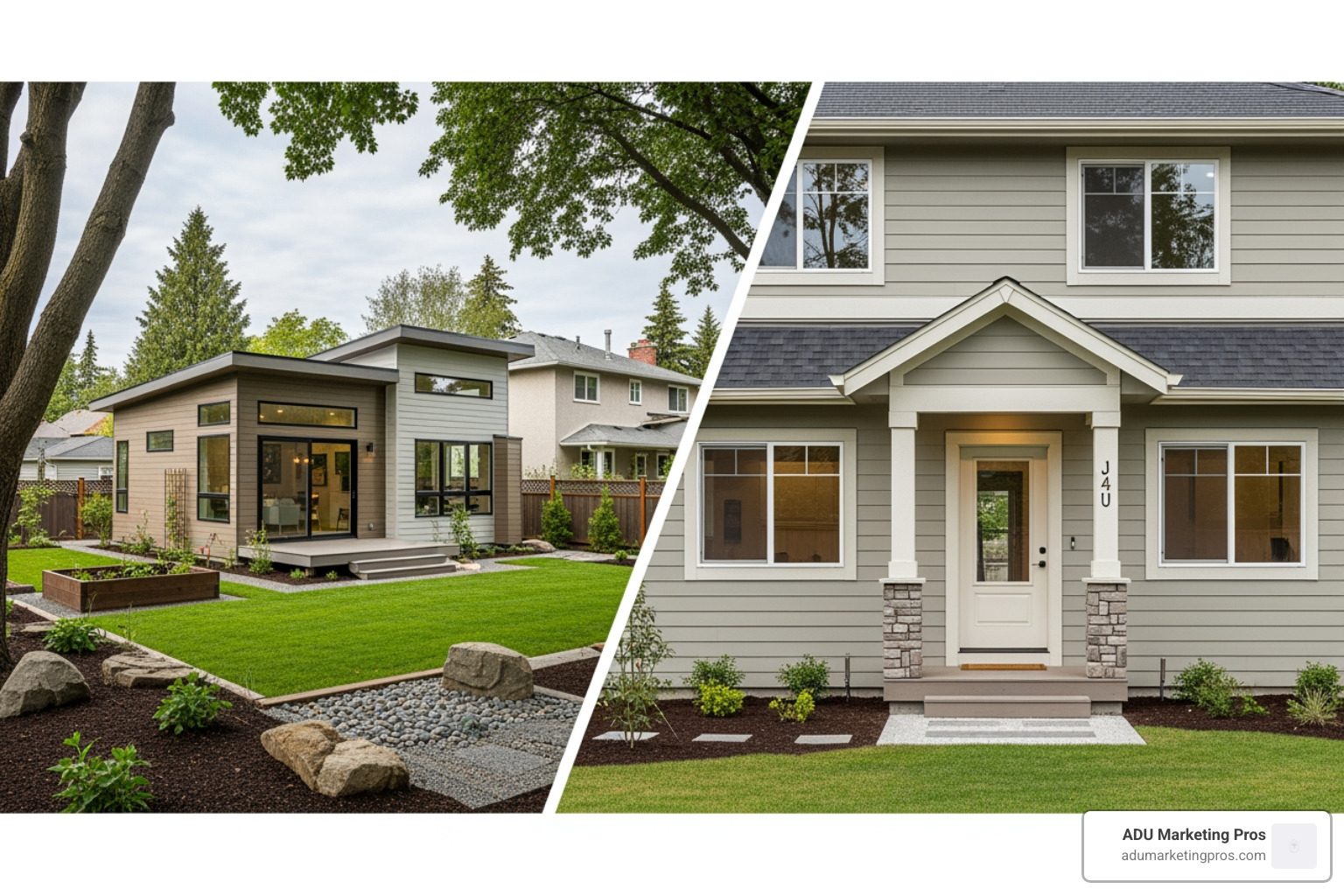
What is an Accessory Dwelling Unit (ADU)?
An ADU is a self-contained living space that provides independent living facilities for one or more persons. Think of it as a complete, separate home on your property.
Key features of an ADU include:
- Complete Independent Living: It must have permanent provisions for living, sleeping, eating, cooking, and sanitation. This means a full kitchen (not just an efficiency kitchen) and a private bathroom are essential.
- Separate Entrance: An ADU must have its own direct outside access, completely separate from the primary dwelling unit. No internal connection is allowed, ensuring privacy and independence.
- Types: ADUs can be:
- Detached ADU: A newly constructed, standalone structure on your property.
- Attached ADU: An addition to your existing home, functionally separate but physically connected.
- Garage Conversion: Changing an existing garage into a habitable living space. This is a popular and often cost-effective option, especially since Baldwin Park doesn’t require replacement parking for converted garages. You can learn more about ADU types here.
- Permitted on Single-Family and Multi-Family Lots: ADUs are allowed in all residential zones in Baldwin Park, whether your property has a single-family home or is a multi-family dwelling.
- More info about ADU building plans
What is a Junior Accessory Dwelling Unit (JADU)?
A JADU is a smaller, more integrated type of ADU. It’s designed to be part of the existing single-family home, offering a simpler way to add living space.
Here’s what defines a JADU:
- Max 500 sq. ft. : JADUs are limited to a maximum size of 500 square feet.
- Within Existing Home: It must be located within the walls of a proposed or existing single-family home or an attached accessory structure (like a garage).
- Efficiency Kitchen: A JADU only requires an “efficiency kitchen,” which typically includes a sink, a cooking facility (like a hot plate or microwave), and a food preparation counter and storage.
- Shared Bathroom Option: Unlike a full ADU, a JADU may share a bathroom with the main home, although it can also have its own.
- Owner-Occupancy Requirement: For JADUs, the property owner must occupy either the principal dwelling unit or the JADU. This is a key distinction from ADUs, which generally do not have an owner-occupancy requirement under current state law (though Baldwin Park’s ordinance notes some specific owner-occupancy conditions for ADUs outside of state law exemptions).
- Deed Restriction: A deed restriction is required for JADUs to ensure they are not sold separately from the primary dwelling and adhere to owner-occupancy rules.
- More info about JADU options
How Many Units Can You Build?
Baldwin Park, in alignment with California state law, is quite generous with the number of ADUs you can add to your property:
- Single-Family Properties: For properties with a single-family home, you can build one ADU and one JADU on the same lot. This means you could potentially have three distinct living units on one parcel!
- Multi-Family Properties: If you own a multi-family property, you have a couple of options:
- You can construct up to two detached ADUs.
- You can also convert non-habitable spaces (like storage rooms, boiler rooms, or laundry rooms) into ADUs. The number of such conversion ADUs is limited to 25% of the number of existing dwelling units, with a minimum of one unit allowed.
This flexibility allows homeowners and property investors to significantly increase housing density and potential rental income.
Navigating the Core Baldwin Park ADU Requirements
Building an ADU is an exciting prospect, but it requires careful adherence to local regulations. In Baldwin Park, a combination of state laws and city ordinances dictates what you can build.
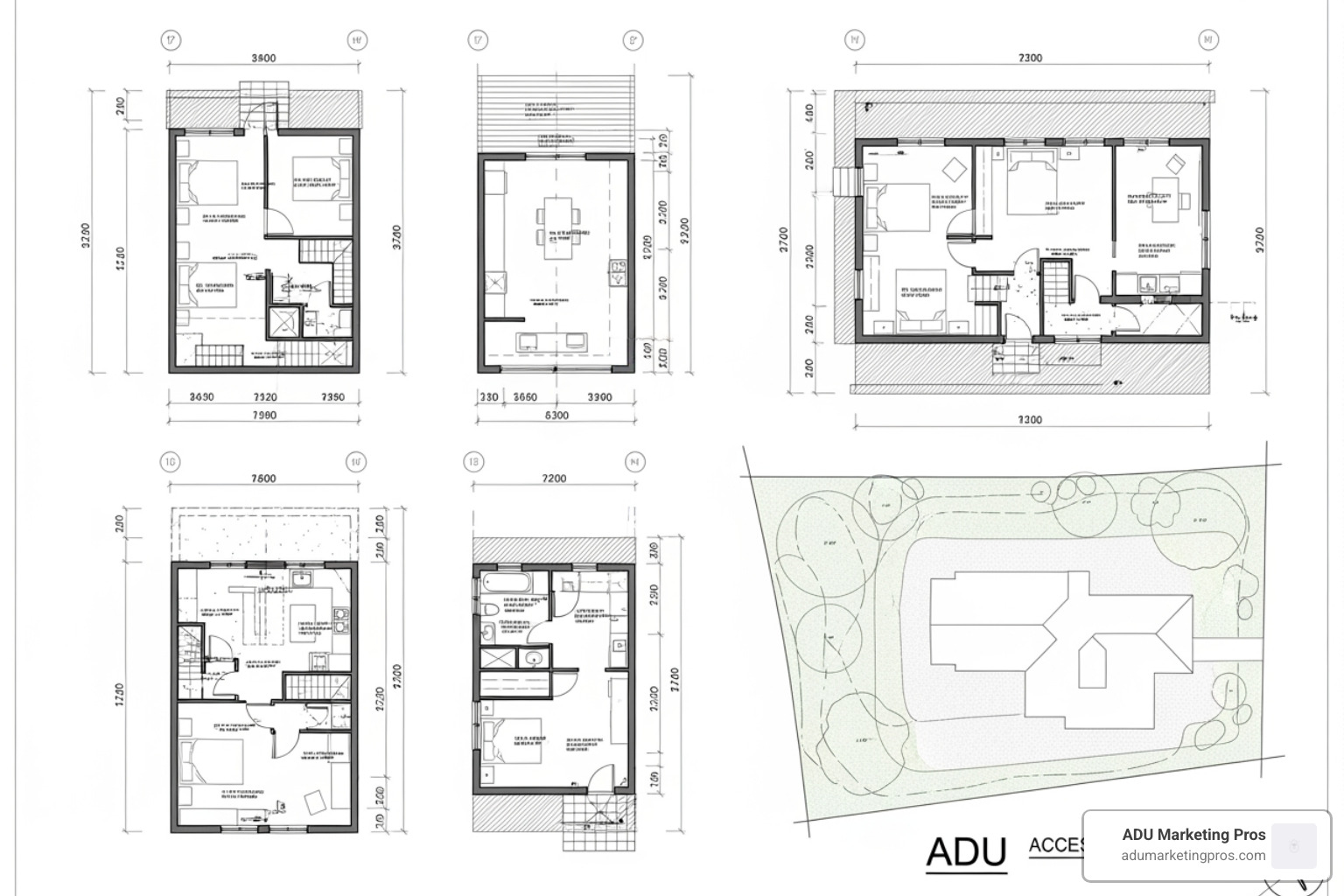
Zoning Laws, Building Codes, and Ministerial Approval
- Zoning Laws: ADUs are permitted in all residential zones within Baldwin Park (R-1-7,500, R-1, R-G, and R-3). This means that if your property is zoned for residential use, you’re generally eligible to build an ADU.
- Building Codes: All ADUs must comply with the California Building Code (CBC) and other applicable building standards, including those related to health and safety, fire, and habitability. This ensures your new unit is safe and structurally sound. You can review current statewide building standards through the California Building Standards Commission.
- Ministerial Approval: One of the biggest advantages for ADU applicants in Baldwin Park is the “ministerial approval” process. This means that if your proposed ADU meets all the city’s objective standards and requirements, it must be approved. There’s no discretionary review or public hearing, which significantly streamlines the process and reduces uncertainty. The city is mandated to act on completed applications within 60 calendar days.
- Architectural Consistency: While the approval is ministerial, newly constructed ADUs (attached or detached) must incorporate similar architectural features, building materials, and colors as the primary dwelling. This helps maintain the aesthetic consistency and character of the neighborhood.
- More info about ADU building requirements
Understanding Size and Height Limitations for the Baldwin Park ADU Requirements
The maximum size for your ADU in Baldwin Park depends on the size of your property. State law generally allows up to 1,200 square feet, but local ordinances can set specific limits based on lot size.
| Parcel Size | Maximum ADU Size (Newly Constructed) |
|---|---|
| 5,000 sq. ft. or less | 850 sq. ft. (1 bedroom or less) |
| 1,000 sq. ft. (2 or more bedrooms) | |
| 5,001 – 8,000 sq. ft. | 1,000 sq. ft. |
| Greater than 8,001 sq. ft. | 1,200 sq. ft. |
- Attached ADUs: If you’re building an attached ADU, it generally cannot exceed 50% of the habitable space of the primary residence, unless exceeding this is necessary to reach 800 sq. ft.
- Existing Accessory Structures: If you’re converting an existing accessory structure (like a shed or detached garage) into an ADU, you can often expand it by up to 150 sq. ft. for ingress/egress without triggering full size limitations, as long as it remains within the general ADU size caps.
- Height Limit: For newly constructed detached and attached ADUs, the maximum height is 18 feet as measured from grade. This effectively means ADUs are limited to a one-story maximum in Baldwin Park.
- More info about ADU size restrictions
Setbacks, Location, and Access Rules
Setbacks are the minimum distances your ADU must be from property lines. These rules ensure proper light, air, and privacy for both your property and your neighbors.
- Side and Rear Setbacks: California state law mandates a minimum 4-foot setback from the rear and side property lines for new detached ADUs. Baldwin Park adheres to this standard.
- Front Yard Setback: The front yard setback for an ADU will generally refer to the underlying zoning requirements for your specific residential zone. This can vary, so it’s important to check your property’s specific zoning details.
- Location: For new detached ADUs, the unit must be located within the rear 50% of the property. This helps maintain the traditional street-facing appearance of the primary home.
- Direct Outside Access: All ADUs must have their own direct outside access. This means no internal doors connecting the ADU to the primary home, ensuring complete independence. The only exception is for JADUs, which can have a shared bathroom with the principal dwelling unit.
- Corner Lots: Special attention is paid to visibility on corner lots. Fences and walls exceeding 36 inches above street grade are prohibited within the visibility triangle (15 feet along each curb line) to ensure clear lines of sight for safety.
- More info on California ADU regulations
Parking Rules: A Key Part of Baldwin Park ADU Requirements
This is where Baldwin Park truly stands out and makes ADU development significantly easier for homeowners.
- No Parking Required: Due to a strategic city-wide finding, Baldwin Park does not require any additional off-street parking for ADUs. The city has determined that 100% of its residential properties are located within a half-mile of public transit. This finding allows them to exempt all ADUs from parking requirements, a major benefit for homeowners.
- Garage Conversion Exemption: If you convert your garage into an ADU, you do not need to provide replacement parking for the spaces lost. This makes garage conversions incredibly attractive and cost-effective.
- No Replacement Parking Needed: Even if you demolish an existing garage or carport to build a new detached ADU, you are not required to replace the parking spaces.
This lack of parking requirements removes a significant hurdle and cost factor for many potential ADU projects, making Baldwin Park one of the most ADU-friendly cities in California in this regard. More info about ADU parking rules
The ADU Process: From Application to Occupancy
Building an ADU in Baldwin Park involves a clear, step-by-step process designed to be efficient and predictable, largely thanks to state mandates for ministerial approval.
Application Submittal and Approval
- Design Your ADU: First, you’ll need plans for your ADU, whether it’s a new build, an attached addition, or a garage conversion. These plans must adhere to all Baldwin Park baldwin park adu requirements for size, setbacks, height, and architectural consistency.
- Application Submittal: Once your plans are ready, you’ll submit them to the city’s planning department. This typically includes detailed site plans, floor plans, roof plans, and building elevations.
- Ministerial Review: As mentioned, Baldwin Park’s review process is ministerial. This means that if your application meets all objective standards, it must be approved. There’s no discretionary review that can delay or deny your project based on subjective criteria.
- 60-Day Timeline: The city is mandated by state law to act on a completed ADU permit application within 60 calendar days. This provides a relatively quick and predictable timeline for approval, assuming your plans are compliant.
- Building Permits: After planning approval, you’ll proceed to obtain the necessary building, electrical, plumbing, and mechanical permits. These ensure your construction meets safety and quality standards.
- Construction and Inspection: Once permits are issued, construction can begin. Regular inspections by city officials will occur at various stages to ensure compliance with approved plans and building codes.
- Certificate of Occupancy: Upon successful completion of construction and final inspections, a Certificate of Occupancy will be issued, allowing the ADU to be legally inhabited.
Fees, Taxes, and Utility Connections
Understanding the financial implications beyond construction costs is crucial for any ADU project.
- Impact Fees: ADUs of any size may be subject to impact fees. Specifically, school impact fees are a common charge. It’s always best to contact Baldwin Park’s Building and Safety Staff directly to get the most accurate information on current fees for your specific project.
- Property Tax Reassessment: Yes, building an ADU will increase your property taxes. The Los Angeles County Assessor appraises all new construction and remodels, including ADUs, at fair market value. This increase will be a “blended assessment,” meaning only the value added by the ADU will be reassessed, not your entire property. For more information, you can visit the LA County Assessor’s website. More info about ADU property taxes
- Separate Utility Meters (Optional): The City of Baldwin Park does not require the installation of separate water and/or electrical meters for ADUs or JADUs. This can be a cost-saving measure as it avoids the expense of installing new utility connections. However, the city also doesn’t prohibit separate meters. Your specific utility providers (e.g., water company, Southern California Edison) may have their own requirements or recommendations, so it’s wise to contact them directly to determine if separate meters are needed or beneficial for your situation.
- For more comprehensive state-level guidance, the California HCD ADU Handbook is an excellent resource.
Renting, Selling, and Deed Restrictions
The flexibility of ADUs extends to how they can be used, with some important rules to keep in mind.
- Rental Permitted: Yes, your ADU can be rented out! This is one of the primary benefits for many homeowners, providing a steady stream of rental income to offset mortgage costs or simply boost household finances.
- No Short-Term Rentals (<30 days): While long-term rentals are encouraged, Baldwin Park, like most California cities, prohibits short-term rental activity for ADUs and JADUs. This means you cannot rent out your ADU for periods of 30 consecutive days or less (e.g., through platforms like Airbnb or VRBO).
- Cannot Be Sold Separately: An ADU cannot be sold separately from the primary dwelling unit. It is considered part of the main property. The only exception is under very specific non-profit and affordable housing conditions, which are rare for individual homeowners.
- Deed Restriction Requirement: A deed restriction is mandatory and must be recorded with the County Recorder and filed with the Planning Division before occupancy or issuance of a Certificate of Occupancy for your ADU or JADU. This legal document ensures compliance with various regulations, including the inability to sell the unit separately and, where applicable, owner-occupancy requirements.
- Owner-Occupancy Rules: For JADUs, the owner must always occupy either the principal dwelling unit or the JADU. For ADUs, Baldwin Park’s ordinance notes that owner-occupancy is generally required, with an exception for permits issued between January 1, 2020, and December 31, 2024, if a Certificate of Occupancy was issued before the permit expired. It’s always best to confirm the most current owner-occupancy requirements with the city planning department for your specific project.
- More info about ADU rental income
Frequently Asked Questions about Baldwin Park ADUs
We know you might have specific questions as you start on your ADU journey. Here are some common ones we hear from homeowners in Baldwin Park.
Can I build a two-story ADU in Baldwin Park?
No, you cannot build a two-story ADU in Baldwin Park. The city’s regulations clearly limit ADUs to a single story, with a maximum height of 18 feet as measured from grade. This ensures that ADUs blend harmoniously with the existing residential landscape and do not overshadow neighboring properties.
Does my ADU need its own address?
For new detached ADUs, yes, it is required to have its own address. This helps with emergency services, mail delivery, and general identification of the separate unit. However, for other types of ADUs, such as attached ADUs or garage conversions, having its own address is optional. You might choose to obtain a separate address for convenience, particularly if you plan to rent it out.
Are there specific design requirements for my ADU?
Yes, there are specific design considerations for newly constructed ADUs in Baldwin Park. To maintain neighborhood character and aesthetic consistency, your ADU must incorporate similar architectural features, building materials, and colors as the primary dwelling. This doesn’t mean it has to be an exact replica, but it should complement the main house. For example, if your primary home has a Spanish-style tile roof and stucco exterior, your ADU should reflect those elements rather than having a modern metal roof and wood siding. This ensures a cohesive look for your property and the surrounding area. More info about ADU design ideas
Conclusion: Start Your Baldwin Park ADU Project with Confidence
Building an ADU in Baldwin Park offers a wealth of benefits, from increasing your property value and generating rental income to providing flexible living spaces for family or guests. The city’s progressive approach to ADU development, particularly its unique exemption from parking requirements, makes it an attractive location for homeowners looking to maximize their property’s potential.
Navigating the various baldwin park adu requirements – including size, height, setbacks, and the ministerial approval process – can seem complex. However, with the right information and professional guidance, your ADU project can be a smooth and rewarding experience.
That’s where professional guidance becomes invaluable. Working with experienced ADU builders and designers who deeply understand Baldwin Park’s specific regulations and the broader California state laws can save you time, money, and stress. Such professionals can help you:
- Interpret complex zoning laws and building codes specific to your property.
- Design a compliant and functional ADU that meets your needs and the city’s aesthetic standards.
- Streamline the application and permitting process, ensuring all documentation is correct and submitted on time.
- Avoid costly mistakes by ensuring your project adheres to all requirements from the outset.
At ADU Marketing Pros, we specialize in connecting homeowners like you with top-tier ADU construction and architecture firms who are experts in local regulations. We empower these firms to deliver exceptional results, and we’re here to ensure you find the right partner for your Baldwin Park ADU. Whether you’re just starting to explore options or ready to break ground, understanding these requirements is your foundation for success.
For further details on parking, which is often a major hurdle in other areas but simplified in Baldwin Park, check out our guide on ADU parking requirements.