
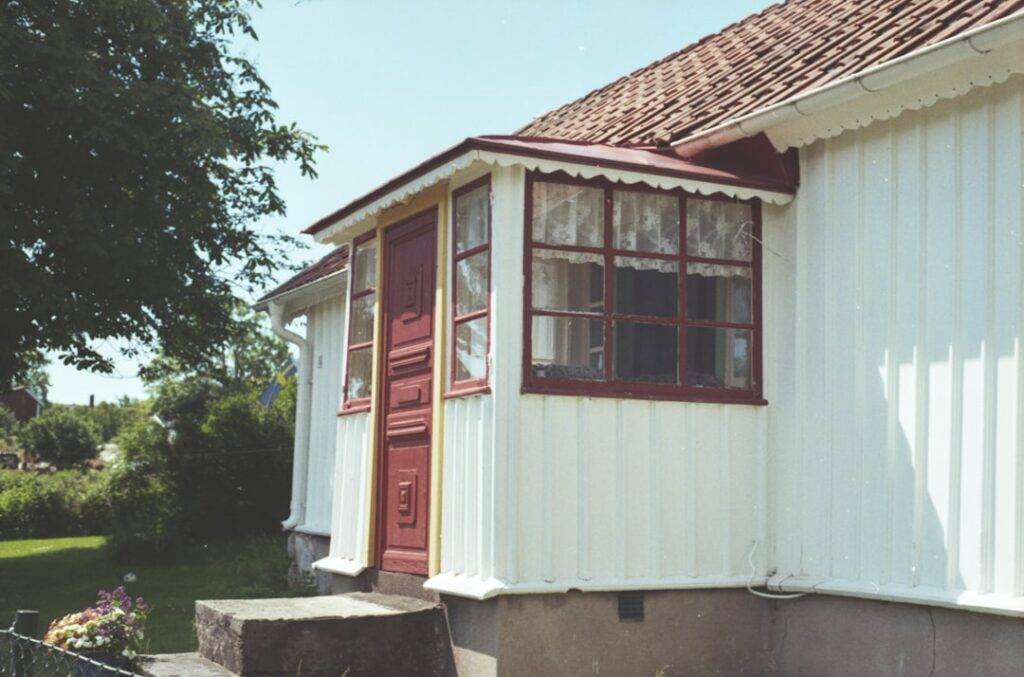
Why Building Small Homes is the Future of Affordable Housing
Building small homes is changing how people think about homeownership. Whether you’re drawn to financial freedom, a smaller environmental footprint, or a more intentional way of living, constructing a compact dwelling offers a path that is rapidly becoming mainstream.
Quick Answer: The Essential Steps for Building Small Homes
- Research Local Codes & Zoning – Verify tiny house regulations (typically under 400-1,000 sq. ft.), minimum size requirements, and permitted land use.
- Choose Your Foundation – Select from monolithic slab, pier and beam, or crawl space based on your climate, site, and budget.
- Decide DIY vs. Professional – A DIY build can cost $30,000-$70,000, while professional construction typically runs $60,000-$150,000+.
- Plan Utilities & Systems – Arrange for water (municipal or off-grid), waste management (septic or composting), and energy (grid-tied or solar).
- Design for Efficiency – Maximize your footprint with open floor plans, multi-functional furniture, and vertical storage solutions.
The small home movement has exploded from a fringe lifestyle into a viable solution for housing affordability, proving that living large doesn’t require massive square footage. This guide walks you through every phase of building small homes—from navigating the regulatory maze to laying your foundation and installing essential utilities.
For construction professionals and architects in California’s growing ADU market, this resource also highlights how small home expertise translates directly to accessory dwelling unit opportunities—a sector experiencing unprecedented growth.

Basic Building small homes terms:
Navigating the Maze: Codes, Zoning, and Legal Problems
Starting the journey of building small homes in California is exciting, but it’s crucial to begin with a solid understanding of the legal landscape. Thorough research is the first step to avoid costly mistakes, as regulations vary significantly by municipality. What’s permissible in San Jose might differ from Los Angeles, so due diligence is key.
Understanding Building Codes and Regulations
Building codes exist to ensure safety, health, and structural integrity. For tiny houses, the primary reference in the U.S. is the 2021 International Residential Code (IRC), particularly Appendix AQ. This appendix defines tiny houses as “dwelling units that are 400 square feet (37 m2) or less in floor area, excluding lofts,” providing a clear regulatory framework.
While the IRC is a national standard, California municipalities adopt and often amend these codes. This means local requirements can dictate minimum sizes (e.g., some regions require at least 188 sq. ft.), ceiling heights, window dimensions, and staircase types. For a comprehensive overview, the International Code Council (ICC) offers valuable resources, including their guide to Navigating the Tiny Home Landscape.
Zoning Laws: Where Can You Build?
Beyond building codes, zoning laws are often the most significant hurdle. These municipal ordinances dictate how land can be used, specifying rules for lot size, setbacks (how far a structure must be from property lines), and overall lot coverage.

In California, a key distinction is between tiny homes on wheels (THOWs) and those on permanent foundations. THOWs are often classified as RVs and face restrictions on long-term occupancy. Permanent small homes are typically treated as traditional dwellings and must comply with residential zoning laws.
Before you draw a blueprint, contact your local planning department for precise information on:
- Permitted uses: Is a small home allowed as a primary residence or an Accessory Dwelling Unit (ADU)?
- Minimum lot sizes: Does your property meet the minimum size requirement?
- Setbacks and lot coverage: What percentage of your lot can be covered by buildings?
- Height restrictions: How tall can your small home be?
Ignoring these rules can lead to significant delays, fines, or even forced removal of your structure.
Small Home vs. Accessory Dwelling Unit (ADU)
The terms “small home” and “Accessory Dwelling Unit” (ADU) are often used interchangeably, but they have key differences in California. An ADU is a secondary dwelling unit on a residential lot, which can be attached, detached, or a conversion of existing space like a garage.
While a tiny house (under 400 sq. ft.) is a type of small home, not all small homes are ADUs, and many ADUs are larger (800-1,200 sq. ft.).
In California, progressive state legislation has streamlined the ADU permitting process and eased zoning restrictions to address the housing crisis. This means that building small homes as ADUs in places like San Jose and throughout the Bay Area is often more straightforward than building a standalone tiny home. This allows homeowners to build a secondary unit that can serve as a rental, guesthouse, or multi-generational living space, all while adding significant value to their property.
Laying the Groundwork: Choosing the Right Foundation
Before you can even think about the type of foundation, you must conduct thorough site preparation. This initial phase is non-negotiable for a stable and long-lasting structure. It typically involves clearing the land of trees, rocks, and debris. Crucially, the site must be graded to ensure proper drainage, directing water away from your future home to prevent moisture problems down the line. For many projects, a professional soil test is also a wise investment. A geotechnical engineer can analyze the soil’s composition, density, and load-bearing capacity, providing an essential report that will inform the best foundation design for your specific location. Skipping this step can lead to catastrophic failures like cracking or sinking foundations later on.
The foundation is the bedrock of your small home, ensuring stability, longevity, and protection from the ground up. Your choice impacts cost, construction time, and energy efficiency. When building small homes, selecting the right foundation requires careful consideration of site conditions, local climate, and your budget. In seismically active California, these considerations are even more critical and require engineering oversight.
Types of Foundations for Small Homes
Below are common foundation types for small homes. Costs are nationwide averages; prices in California’s competitive construction market may be higher.
| Foundation Type | Cost per sq. ft. | Pros | Cons | Best For |
|---|---|---|---|---|
| Monolithic Slab | $5-$7 | Cost-effective, quick to install, low maintenance, pest resistant. | Vulnerable to ground movement, poor flood protection, difficult plumbing access. | Flat, stable ground with good drainage where accessibility is a priority. |
| Stem Wall Slab | $8-$10 | More stable on slopes, better flood protection, good for seismic zones. | More expensive and complex than monolithic, limited repair access. | Slightly sloped lots, areas with moderate flood risk, or where a raised floor is desired. |
| Pier and Beam | $7-$13 | Excellent for slopes, great flood protection, easy utility access. | Potential for pests in crawl space, requires good floor insulation. | Steeply sloped or flood-prone areas and sites with unstable soil. |
| Crawl Space | $10-$19 | Easy access for utilities, protects from ground moisture, good for slopes. | More expensive, potential for moisture/pests if not properly sealed. | High groundwater areas or sloped lots where easy utility access is a priority. |
| Basement (Full) | $17-$33 | Maximizes usable space, excellent storm protection, adds resale value. | Most expensive, long construction time, requires extensive excavation. | Sites where maximizing space is key and soil/water table conditions permit. (Less common for tiny homes). |
In California, especially in seismic zones, foundations must be engineered to withstand earthquakes. This isn’t just a recommendation; it’s a legal requirement. Your building plans will need an engineer’s stamp confirming they meet the state’s stringent seismic codes. This often involves using reinforced concrete with a specific rebar grid, installing heavy-duty anchor bolts (like J-bolts) to securely fasten the frame to the foundation, and adding shear walls or braced wall panels to resist lateral forces. For pier and beam or crawl space foundations, this may include ‘cripple wall’ bracing and specific connections between posts, beams, and the floor structure to create a unified system that can move with the ground during a tremor rather than collapsing.
What About Floating Small Homes?
The idea of a floating small home offers a unique waterfront lifestyle but comes with its own set of challenges and specialized foundation solutions.
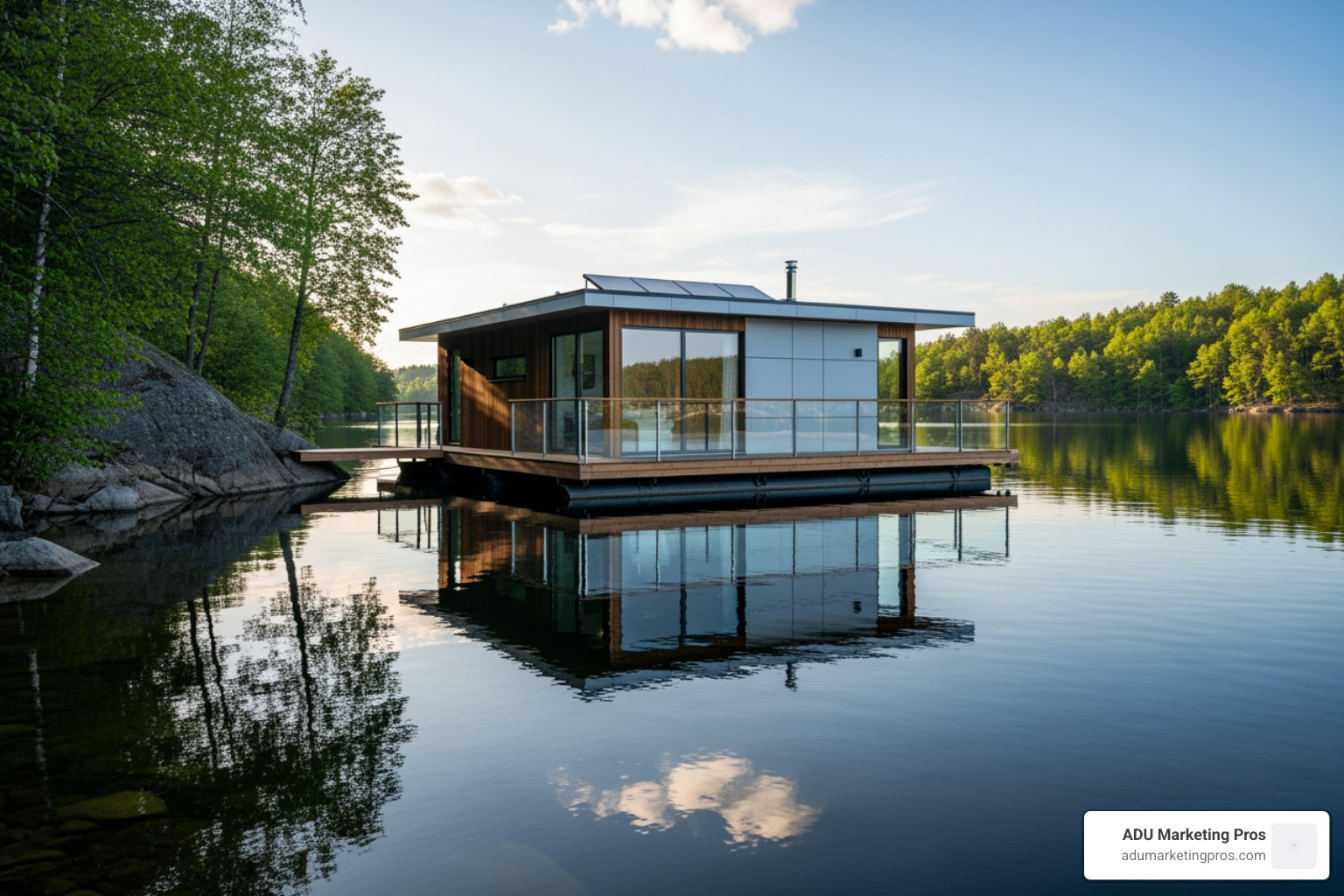
The primary challenges are significant:
- Legal and waterway permits: Securing permits for floating structures in California can be a lengthy and intricate process.
- Durability and maintenance: Marine environments are harsh and require foundations that can withstand constant water exposure and currents.
- Utility connections: Providing water, waste, and power to a floating structure requires specialized, non-traditional solutions.
Foundation solutions typically involve buoyant platforms like high-density polyethylene (HDPE) pontoons and robust anchoring systems. While captivating, the regulatory and engineering complexities mean that building small homes that float is a niche endeavor requiring specialized expertise.
The Ultimate Guide to Building Small Homes: DIY or Professional Help?
Once you’ve steerd the legal maze and chosen your foundation, construction begins. This is where your dream of building small homes takes shape, offering a spectrum of approaches from a full DIY endeavor to a professionally managed build.
The DIY Route: A Step-by-Step Overview for Building Small Homes
Many are drawn to the DIY route for creative control and significant cost savings—up to 50% on labor. While challenging, it’s a huge accomplishment.
Here’s a simplified overview of the DIY steps:
- Design and Floor Plan: Bring your vision to life with your own design or pre-existing plans. Consulting an engineer for structural soundness is highly recommended, especially in California.
- Sourcing Materials: Opt for high-quality, durable materials. A smaller footprint means you can invest in higher-end finishes for less overall cost.
- Foundation and Framing: Prepare the foundation, then construct the home’s skeleton, including walls, siding, insulation, and roofing.
- Interior Finishing: Install electrical, plumbing, drywall, flooring, and final touches. This is where space-saving solutions like pocket doors and compact appliances shine.
LIST: Essential tools for a DIY build:
- Staple gun
- Smart string line
- Level
- Circular saw
- Tape measure
- Drill/driver
- Hammer
- Safety gear (gloves, eye protection, etc.)
The satisfaction of a DIY build is immense, but be honest about your capabilities.
When to Hire Professionals
While the DIY spirit is admirable, certain aspects of building small homes are best left to licensed professionals for safety and code compliance.
- Structural Engineers: Absolutely critical in California to ensure your design is structurally sound and meets seismic requirements.
- Licensed Electricians: Electrical work is complex and dangerous if done incorrectly.
- Qualified Plumbers: Proper installation prevents leaks and ensures compliance with health codes.
- General Contractors: A GC can oversee the entire project, coordinate subcontractors, and ensure everything stays on schedule and budget.
The value of working with local experts who understand California’s building codes cannot be overstated. An engineer’s stamp of approval is often non-negotiable.
Cost Breakdown: What to Expect When Building Small Homes
The cost of building small homes varies dramatically based on your approach, materials, and location.
- DIY Projects: A self-build can average $30,000 to $70,000. This covers materials, tools, and any professional help for specific tasks.
- Professionally Built Homes: A manufactured or custom-built home typically costs $60,000 to $150,000+, depending on finishes and smart features.
It’s a paradox that small homes can cost more per square foot due to the complexity of fitting systems into a compact space. However, the overall cost is almost always less than a traditional home.
Power, Water, and Waste: Essential Systems for Your Small Home
Building small homes isn’t just about the structure; it’s about creating a functional living space. This means carefully planning your essential utilities: energy, water, and waste management. You’ll need to decide between connecting to municipal services or choosing sustainable, off-grid options—a key consideration in resource-conscious California.
Energy Systems
Your energy choices depend on your location and desired self-sufficiency.
- Grid Connection: The simplest option on a serviced lot, this connects you to the local power utility for a reliable supply but means ongoing bills.
- Solar Panels: A popular sustainable choice in sunny California, solar can reduce or eliminate electricity bills. While a grid-tied system is simplest, pairing solar panels with a battery storage system like a Tesla Powerwall or LG Chem RESU provides true energy independence. This setup allows you to store excess energy generated during the day for use at night or during a power outage—a significant advantage in areas prone to public safety power shutoffs. While the upfront cost is higher, federal tax credits and state-level incentives like California’s Self-Generation Incentive Program (SGIP) can help offset the investment.
- Propane: A common solution for both on-grid and off-grid homes, propane can be used for cooking, water heating, and space heating.
- Energy-Efficient Appliances: Regardless of your power source, investing in energy-efficient appliances like mini-fridges and LED lighting is crucial for minimizing consumption.
Water and Waste Management
Access to clean water and efficient waste disposal are non-negotiable.
- Water Sources: Options include a straightforward municipal hookup, a private well on rural properties, or a sustainable rainwater collection and filtration system.
- Waste Systems: A standard septic system is common where sewer connections are unavailable. Composting toilets are a popular water-saving choice for off-grid homes, eliminating the need for a blackwater connection.
- Greywater Recycling: Greywater recycling systems, which treat water from sinks and showers for non-potable uses like irrigation, are particularly valuable in drought-prone California. State regulations are generally favorable, but local ordinances may have specific requirements for system design and installation. A simple ‘laundry-to-landscape’ system can be installed with minimal permitting, while more complex systems that collect water from showers and sinks may require more detailed plans and inspections. These systems not only conserve precious water but also reduce the load on your septic system or the municipal sewer.
Staying Connected and Comfortable
Modern comforts are achievable with thoughtful planning.
- Internet Options: Satellite internet, mobile hotspots, or extending Wi-Fi from a nearby main house are common connectivity solutions.
- Heating and Cooling: Highly efficient ductless mini-split systems are ideal for small spaces. Wood stoves offer cozy warmth but require proper venting and safety clearances.
- Ventilation: In well-sealed, airtight small homes, an Energy Recovery Ventilator (ERV) or Heat Recovery Ventilator (HRV) is essential. Both systems bring in fresh air while exhausting stale, humid air. The key difference is that an HRV transfers heat between the outgoing and incoming air streams, while an ERV transfers both heat and moisture. For California’s diverse climates, an ERV is often the superior choice. In hot, dry areas, it helps retain indoor humidity for comfort, while in humid coastal areas, it prevents excess moisture from entering the home. This continuous, balanced ventilation is critical for preventing moisture buildup, mold growth, and ensuring high indoor air quality.
The Small Living Lifestyle: Weighing the Pros and Cons
Building small homes is more than just a construction project; it’s an accept of a lifestyle. This shift brings significant advantages, but also unique challenges that prospective small homeowners should carefully consider.
Advantages of Small Home Living
The allure of tiny living extends far beyond the physical structure itself.
- Lower Costs: This is often the biggest draw. A smaller footprint means a smaller mortgage (or none at all), lower property taxes, and significantly reduced utility and maintenance bills.
- Simplicity and Decluttering: Living in a small home naturally encourages a minimalist mindset. You’re forced to keep only what matters most, leading to less clutter and a more organized environment.
- Mobility (for THOWs): While permanent small homes are fixed, tiny homes on wheels (THOWs) offer the unique advantage of mobility, allowing owners to change locations (subject to RV and zoning regulations).
- Reduced Environmental Footprint: Smaller homes consume fewer resources to build, heat, and cool. This translates to less energy consumption and a smaller carbon footprint, aligning with California’s sustainability goals.
- More Time for Experiences: With less time and money spent on home maintenance, small homeowners often find they have more freedom to pursue hobbies, travel, and experiences.
Disadvantages and Challenges
It’s not all sunshine in small living. There are genuine trade-offs.
- Limited Space and Storage: This is the most obvious challenge. While clever design can maximize space, there’s no escaping the fact that you have less of it, which can be restrictive for large families or those with gear-intensive hobbies.
- Not Ideal for Large Families: A tiny home (especially under 400 sq. ft.) is generally not suitable for large or growing families who need more room.
- Zoning and Legal Problems: As discussed, navigating municipal regulations, permits, and zoning laws can be complex and frustrating.
- Financing and Insurance Hurdles: Securing financing for a small home can be a significant challenge, especially compared to a conventional property. Many lenders are hesitant to issue traditional mortgages for homes under a certain square footage or value, and the process is even more complicated for tiny homes on wheels (THOWs), which are often classified as personal property (like an RV) rather than real estate. Prospective builders may need to seek alternative financing, such as unsecured personal loans (which often have higher interest rates), RV loans for THOWs, or specialized financing from builders who offer it. Similarly, finding homeowners insurance can be tricky. You’ll likely need to work with an agent who specializes in tiny homes to find a policy that covers your unique structure, whether it’s stationary or mobile.
- Uncertain Resale Value: While a well-built small home or ADU in a desirable location like California will almost certainly add value to a property, the standalone resale market can be less predictable than for conventional homes. The niche appeal means a smaller pool of potential buyers. For THOWs, the value can depreciate similarly to an RV. However, as small homes become more mainstream and regulations continue to adapt, the market is stabilizing, but it remains a key consideration for anyone viewing their home primarily as a financial investment.
- Social Perceptions: Despite growing popularity, some people still view small homes as unconventional, which can sometimes lead to misunderstandings.
The decision to start building small homes means weighing these pros and cons against your personal values, financial goals, and lifestyle aspirations.
Conclusion: Your Path to Building a Small Home
The journey of building small homes, from the initial blueprint to the bliss of living in your own compact space, is a transformative one. We’ve explored the critical steps, from decoding permits and zoning to choosing the right foundation, weighing DIY versus professional construction, and detailing the essential utility systems that bring your small home to life.
This guide aims to empower you with the knowledge needed to confidently approach your small home project. Whether you envision a primary residence that embodies financial freedom or an Accessory Dwelling Unit (ADU) that adds value to your California property, understanding each phase is key. The surge in ADU construction, driven by recent state-level changes, presents an unprecedented opportunity for homeowners in Los Angeles, San Jose, and throughout the Bay Area to accept smaller, more efficient living spaces.
For those in California looking to steer this exciting landscape, working with experienced local builders who understand the nuances of state and municipal regulations is paramount. They can help ensure your project is not only beautiful and functional but also fully compliant and built to last.
Your path to building small homes is a testament to intentional living and smart design. With the right information and a clear vision, your small home dream can become a reality.
For those ready to take the next step and connect with trusted professionals, ADU Marketing Pros is here to help. Find expert tiny house builders in California by visiting our dedicated resource: Find expert tiny house builders in California