
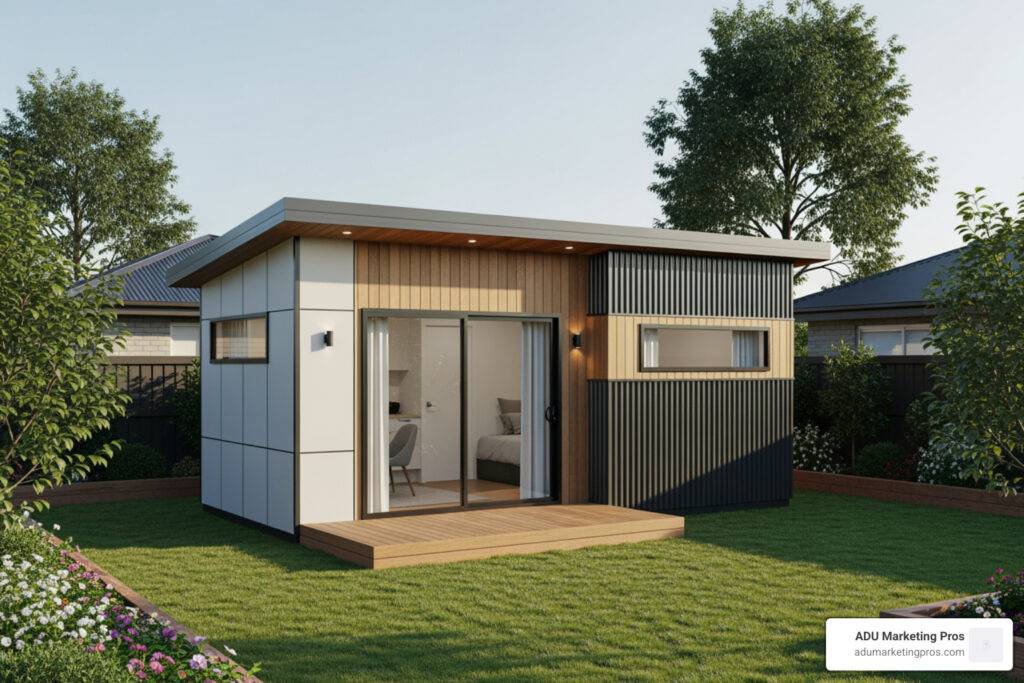
Why China Granny Flat Prefab Homes Are Gaining Global Attention
China granny flat prefab home options have exploded in popularity as homeowners and builders search for affordable, fast housing solutions. The promise is compelling: a new home, built in a factory and assembled in days, for a fraction of the cost of traditional construction. But is it too good to be true?
Quick Answer: What to Expect from China Prefab Granny Flats
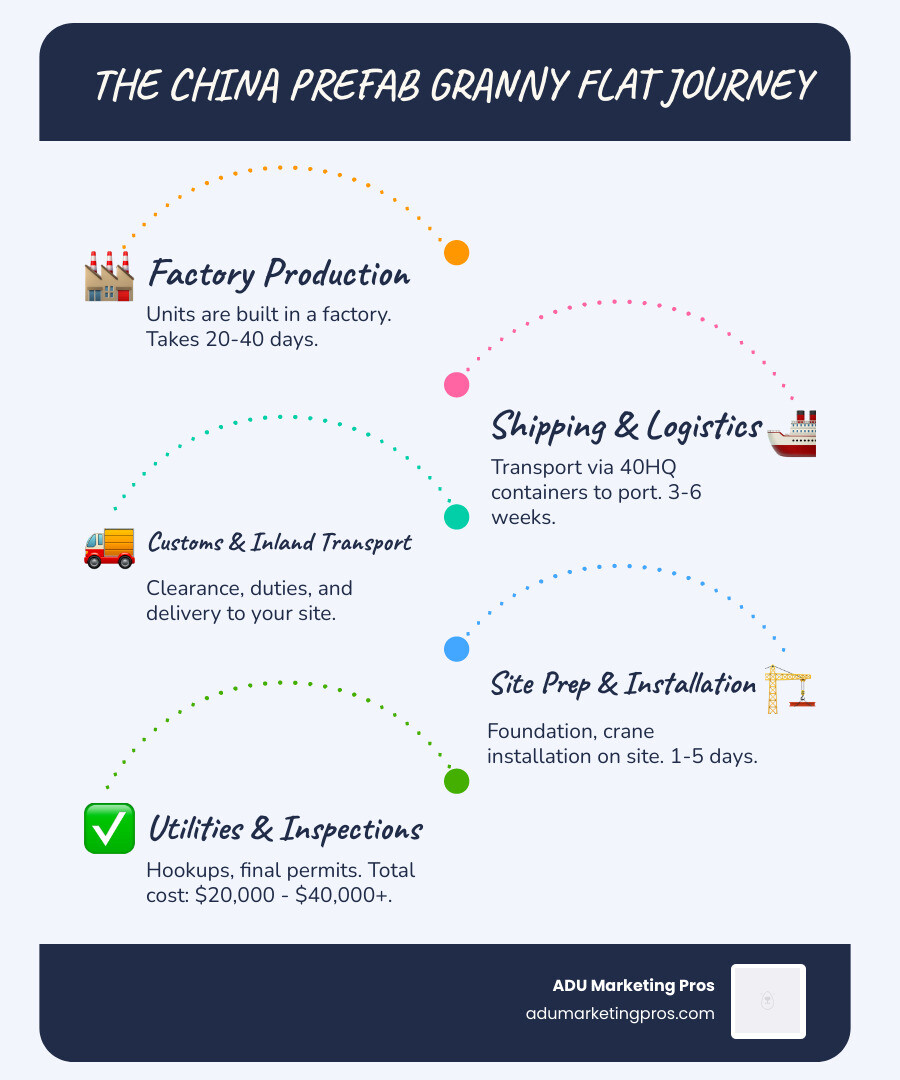
- Cost: $6,000–$10,000 for the base unit, but the total landed cost (including shipping, permits, foundation, and utilities) typically reaches $20,000–$40,000+.
- Timeline: 20-40 days for factory production, 3-6 weeks for shipping, and 1-5 days for assembly.
- Types: Expandable containers, foldable/flat-pack units, or modular light steel frames.
- Major Challenge: US building code compliance and permitting—often the biggest and most expensive hurdle.
- Best For: Experienced builders or developers who understand import logistics and local regulations.
This guide cuts through the marketing hype to give you an honest assessment of what it’s really like to import and install a prefab granny flat from China. We’ll cover the types available, the true costs, quality considerations, and most importantly—the permitting and compliance challenges that trip up most buyers. Whether you’re an ADU professional or a homeowner, you’ll learn what to expect before you send that deposit.
What Exactly is a China Granny Flat Prefab Home?
At its core, a china granny flat prefab home is a dwelling built in a factory rather than on your property. The factory produces modules or panels in a controlled environment, then ships these components to your site for assembly. The term “granny flat” is another name for an Accessory Dwelling Unit (ADU)—a secondary home on a residential lot.
What makes these homes different from traditional construction? Three key characteristics stand out:
- Affordability: Factory production allows for economies of scale, less waste, and lower labor costs.
- Speed: Manufacturing components simultaneously in a climate-controlled facility is dramatically faster than site-building.
- Modularity: The homes are designed for efficient transportation and straightforward assembly, sometimes in just a few days.
These factory-built modules are essentially transportable dwellings. A Chinese manufacturer builds your granny flat in sections, loads them into shipping containers, and sends them across the Pacific. Once they arrive, they’re assembled on your property.
The applications are diverse. Many California homeowners use them as ADUs for family members or as rental units to generate passive income in high-demand markets like San Jose or San Diego. Others create backyard offices, temporary housing during construction, or even affordable starter homes. The key takeaway is that a china granny flat prefab home isn’t a single product but a category that ranges from basic containers to sophisticated modular homes.
Decoding the Types: Expandable, Foldable, and Modular
When shopping for a china granny flat prefab home, you’ll encounter three main types. Understanding their differences is crucial for any ADU project, especially in California where building codes and durability are paramount.

Expandable Container Homes
These units ship in a compact container form and unfold on-site to create a larger living space. The primary advantage is shipping efficiency, as multiple units can fit in a single container, lowering transport costs. However, the mechanical components (hinges, tracks) are potential points of failure, and ensuring the sealing integrity where sections join is a long-term challenge. They are often best for temporary housing rather than permanent, code-compliant ADUs. The [Hot Item] Cost-Saving Expandable Container House Granny Flat Assembled in Minutes showcases this rapid deployment.
Foldable & Flat-Pack Homes
Think of these as the IKEA of housing. They pack flat for transport and are assembled on-site from pre-made panels. Their main selling point is rapid assembly, making them ideal for emergency housing or temporary accommodations. The trade-off is often limited design sophistication, with basic floor plans and standard finishes. Like expandable homes, they face significant problems in meeting local building codes for permanent residential structures in California.
Modular Light Steel Frame Homes
This is the highest-quality option, most closely resembling traditional construction. These homes use light gauge steel framing and are delivered as either panelized systems or complete volumetric modules. The construction quality is significantly higher, with galvanized steel frames that resist termites and rust, and properly insulated sandwich panel walls. This type of china granny flat prefab home offers far more design flexibility and structural resilience, making it the most suitable for meeting California’s seismic and energy requirements. While they cost more and have longer production times, the investment often makes sense for a permanent ADU. The [Hot Item] Prefabricated Modular House Kits Adu/Granny Flat with Light Steel Frame illustrates the sophistication possible with this method.
Construction Deep Dive: Materials, Quality, and Customization
Understanding what goes into a china granny flat prefab home is key to evaluating its long-term comfort, durability, and efficiency. Here’s a look at the typical materials and customization options.

Common Materials and Their Properties
- Structural Frame: Most modular systems use light gauge steel, which is resistant to termites, rot, and warping. Container-based units typically use galvanized steel for rust prevention.
- Walls: Manufacturers use sandwich panels with an insulating core (like EPS, Rockwool, or PU foam) between steel sheets. Thicker panels provide better thermal resistance (R-value), which is crucial for comfort and energy savings.
- Flooring: A fire- and moisture-resistant MgO board often serves as the subfloor. Finishes typically include waterproof PVC flooring in wet areas and laminate flooring in living spaces.
- Windows and Doors: Look for double-glazed glass in aluminum alloy frames. This is critical for meeting California’s energy codes and providing sound insulation.
Understanding Specifications and Your Custom china granny flat prefab home
Units are designed around shipping container dimensions. A 20ft base unit might expand to around 387 sq ft (a studio or small one-bedroom), while a 40ft base unit can offer over 750 sq ft, enough for a two-bedroom layout.
Customization is possible but comes with trade-offs. You can often request:
- Floor plan modifications
- Interior finish selections (flooring, cabinets, countertops)
- Exterior cladding choices (metal, wood-grain, or fiber cement panels)
- Adjustments to window and door placement
While standard configurations are cheapest and fastest, every change adds cost and extends the production timeline. Significant structural modifications can increase the base price by 20% or more. The key is to find a balance between meaningful customizations and budget. Always request detailed technical specifications before committing, as a reputable manufacturer will provide them.
The Buyer’s Journey: From China to Your Backyard
Importing a china granny flat prefab home is a multi-step process with significant potential for costly pitfalls. Understanding each stage is critical to managing risk. Here’s a more detailed look at the journey from a factory in Guangzhou to your California backyard.
Step 1: Vetting Suppliers and Ensuring Quality
Your first and most important task is finding a trustworthy manufacturer on platforms like Alibaba or Made-in-China.com. This requires more than just looking at glossy photos. To separate legitimate suppliers from risky ones:
- Go Beyond Certifications: While ISO9001 certification is a good starting point, it only indicates a documented quality management process, not necessarily high-quality output. Ask for proof of export to North America or Europe, as this suggests experience with Western standards.
- Demand Transparency: Request a live video tour of the factory. A reputable supplier will be happy to show you their production line, materials, and finished products. Evasiveness is a major red flag.
- Get Material Samples: Ask the supplier to ship you small samples of key materials, such as the wall panel insulation, flooring, and window frame extrusions. This allows you to physically inspect the quality before committing.
- Scrutinize Payment Terms: Be extremely wary of suppliers demanding 100% payment upfront. A standard, more secure arrangement is 30-50% deposit to begin production and the remaining balance upon completion, ideally after you’ve received photos or a third-party inspection report.
- Check Communication: Clear, responsive communication in English is vital. If you struggle to get clear answers to technical questions, imagine trying to resolve a complex problem after you’ve paid. Companies like DeepBlue SmartHouse that have a professional web presence and showcase their certifications are a better place to start.
Step 2: Navigating Shipping, Logistics, and Hidden Costs
Getting your home across the ocean is a logistical puzzle. Most units ship in standard 40HQ containers. Understanding Incoterms (international commercial terms) is crucial.
- FOB vs. CIF: You’ll likely see terms like FOB (Free on Board) and CIF (Cost, Insurance, and Freight). FOB means the seller’s responsibility ends once the container is loaded onto the ship at the Chinese port. You are then responsible for ocean freight, insurance, and all US-side logistics—a complex task for a first-timer. CIF is often recommended for beginners, as the seller arranges and pays for shipping and insurance to your destination port (e.g., Port of Los Angeles). However, you are still responsible for everything from that point on.
The advertised base price is just the beginning. Be prepared for a cascade of hidden costs, which often double the initial price:
- Customs Duties and Tariffs: These are taxes imposed by the US government and can add 10-25% or more to the value of the home.
- Port and Terminal Fees: Fees for unloading the container from the ship and handling it at the port.
- Customs Broker Fees: You must hire a licensed customs broker to clear your shipment through US Customs and Border Protection.
- Drayage: The cost of trucking the container from the port to your property or a local staging yard. This can be several thousand dollars.
- Demurrage/Detention: Fees charged by the shipping line if you fail to pick up your container from the port or return the empty container on time.
Step 3: Installation, Permits, and Site Preparation for your china granny flat prefab home
This is the most challenging and expensive phase for California buyers. While a manufacturer might claim assembly takes days, making the unit a legal, habitable ADU takes months and a team of local professionals.
The biggest hurdle is the permit challenge. Most Chinese prefabs are not pre-certified for California’s strict building codes. As mandated by the California Department of Housing and Community Development, all ADUs must be fully permitted. This requires:
- A Local Team: You must hire a local architect or engineer to review the Chinese structural plans and “wet stamp” them, taking legal responsibility for the design. You’ll also need a Title 24 energy consultant to ensure compliance.
- System Replacement: Expect to have a licensed contractor replace most of the electrical and plumbing systems. Chinese components are rarely UL-listed (for electrical) or UPC-certified (for plumbing), making them illegal for use in a US home.
- Site Preparation: Before the unit arrives, you need a fully permitted and constructed foundation. This requires a soils report from a geotechnical engineer and a foundation plan from a structural engineer. You must also trench and run utility lines (water, sewer, electrical, gas) to the site.
This compliance work can easily add tens of thousands of dollars and several months to your project, turning an “affordable” home into a complex and costly construction project.
The Pros and Cons of a China Granny Flat Prefab Home
In California’s expensive housing market, the idea of an affordable, quickly built china granny flat prefab home is undeniably tempting. However, these units come with a distinct set of genuine advantages and significant, often project-ending, challenges.
The Advantages: Why Buyers Are Interested
- Significant Initial Cost Savings: The primary driver is price. With factory-direct base prices from $6,000 to $10,000, the unit itself can be up to 30% cheaper than the raw material and labor cost for a comparable traditional site-built structure.
- Rapid Construction Speed: While site prep and permitting take time, the factory production itself is incredibly fast. A home can be manufactured in just 20-40 days, a timeline that can reduce the overall project duration by months compared to a conventional build.
- Cost Predictability (for the Unit): The fixed factory price for the home module eliminates many of the budget overrun risks associated with on-site construction, such as weather delays, fluctuating material prices, or labor shortages affecting the core structure.
- One-Stop-Shop Convenience: Many units arrive with basic finishes, fixtures, and systems pre-installed. For a buyer experiencing “decision fatigue,” this can be a major benefit, as it simplifies the overwhelming process of selecting every cabinet, countertop, and faucet.
The Challenges and Drawbacks: An Honest Look
- Permitting and Code Compliance Nightmare: This is the single biggest obstacle. Most units are not designed for California’s strict seismic requirements, fire codes, and Title 24 energy standards. This necessitates hiring expensive local engineers to analyze and stamp plans, and contractors to perform extensive, costly modifications.
- Quality Control Variability: Without on-site oversight during manufacturing, quality is a gamble. What looks good in photos can hide shoddy welding, inadequate insulation, poor sealing at joints, or non-compliant components that will fail inspection and require replacement.
- Shipping Risks and Spiraling Hidden Costs: Units can be damaged in transit, and the final landed cost is often 2-3 times the advertised base price after factoring in shipping, 25%+ tariffs, customs fees, port charges, and inland transport.
- Financing Difficulty: Traditional mortgage lenders are extremely hesitant to finance imported homes that lack US code certification and third-party inspection labels (like a state-issued factory-built housing insignia). Banks see them as non-standard, high-risk collateral, forcing most buyers to pay with cash or use high-interest personal loans.
- Resale Value Uncertainty: An ADU with a convoluted or unclear permitting history can be a liability when you sell your property. Potential buyers may be spooked by the non-standard construction, potentially lowering your home’s overall market value compared to a fully compliant, locally built ADU.
- Lack of Meaningful Warranty or Recourse: If your unit arrives damaged or develops a serious issue like a roof leak or structural failure, enforcing a warranty with a company halfway around the world is practically impossible. You are left to bear the full cost and headache of repairs, with little to no legal recourse.

The bottom line? A china granny flat prefab home can work for experienced professionals who can navigate the complexities. For the average homeowner, the challenges, hidden costs, and immense risks often outweigh the initial perceived benefits.
Market Trends and the Future of Prefab Housing
The numbers tell a compelling story. The global prefabricated housing market reached $101.2 billion in 2022 and is projected to hit $175.8 billion by 2030. China is at the center of this boom, with its domestic prefab market alone expected to surge from $150.5 billion in 2023 to $250.8 billion by 2028. This growth reflects China’s role as a manufacturing powerhouse for affordable housing solutions worldwide.
The industry is also evolving rapidly. Key innovations include:
- Smart Home Technology: Integration of automated lighting, climate control, and security is becoming standard, helping meet California’s Title 24 energy requirements.
- Sustainable Materials: A growing number of manufacturers are using recycled steel, eco-friendly insulation, and designs that minimize construction waste, appealing to environmentally conscious buyers.
- Innovative Design Concepts: Companies are experimenting with radical new ideas. While US-based, BOXABL‘s concept of a house that unfolds in hours shows the creative thinking influencing the global market.
Looking ahead, there is cautious optimism that Chinese manufacturers will improve code compliance to better access lucrative Western markets like California. Some are already working with US engineers to pre-certify their systems. However, widespread availability of US-compliant prefab homes from China is likely still years away. Until then, buyers in San Jose, San Diego, and across California must approach these imports with a full understanding of the regulatory problems involved.
Frequently Asked Questions about China Prefab Granny Flats
Homeowners and builders across California often have the same questions when considering a china granny flat prefab home. Here are direct answers to the most common ones.
How much does a prefab granny flat from China really cost, including shipping?
The advertised base price of $6,000-$10,000 is misleading. The total landed cost is what matters. Expect to pay 2-3 times the unit price, often landing in the $20,000-$40,000+ range. This total includes the factory price plus shipping, port fees, customs tariffs, inland transport, foundation work, utility hookups, and the extensive (and expensive) modifications required to meet local building codes.
Can I legally install a prefab home from China in California or other US states?
Yes, but it’s extremely challenging and costly. Most Chinese prefabs are not designed to meet California’s rigorous building codes for seismic safety and energy efficiency (Title 24). To get a permit, you will need to hire local engineers to review and approve the structure, and licensed contractors to potentially replace the electrical and plumbing systems entirely. It is not a plug-and-play solution, and the cost of modifications can eliminate the initial savings.
What is the expected lifespan and maintenance of these homes?
The lifespan varies widely from 15 to 50+ years, depending on the quality of the materials and construction. A unit with a high-quality galvanized steel frame and proper insulation will last far longer than a budget model. Regular maintenance is critical. This includes:
- Inspecting steel frames for rust, especially in coastal areas.
- Checking waterproof seals on expandable or foldable units to prevent leaks.
- Inspecting the roof and cladding for wear and tear to prevent water damage.
Proactive care is essential to maximizing the home’s longevity, particularly in California’s diverse climate.
Conclusion: Is a China Prefab Home the Right Choice for You?
We’ve explored the compelling promise and significant risks of the china granny flat prefab home. While the low initial cost and fast construction are attractive, the reality is far more complex.
For an experienced builder or developer who understands international shipping and local building codes, importing a prefab home can be a viable, cost-saving strategy. They have the expertise to manage the logistics and steer the difficult permitting process.
However, for the average homeowner in California, this path is fraught with risk. The initial $10,000 price tag can easily swell to $40,000 or more after shipping, tariffs, foundation work, and the extensive modifications needed to meet California’s strict building codes. The permitting process alone can be a frustrating, costly, and time-consuming ordeal, negating the very benefits of speed and affordability.
This is why working with local experts is often the smarter choice. A local ADU builder understands the specific requirements of cities from San Jose to Palo Alto and has established relationships with planning departments. They can deliver a high-quality, compliant ADU without the logistical headaches and hidden costs of importing.
At ADU Marketing Pros, we connect homeowners with top-tier, compliant ADU builders and architects in California. We help these firms highlight their expertise in navigating local regulations, ensuring your project is a success from start to finish.
If you’re considering an ADU, we encourage you to explore local, compliant options first. For a comprehensive look at ADU solutions designed for California, check out our guide on prefab granny flats in California. Working with local experts can save you time and money while delivering an ADU that adds lasting value to your property.