

Introduction: Your Shortcut Through LA’s Building Bureaucracy
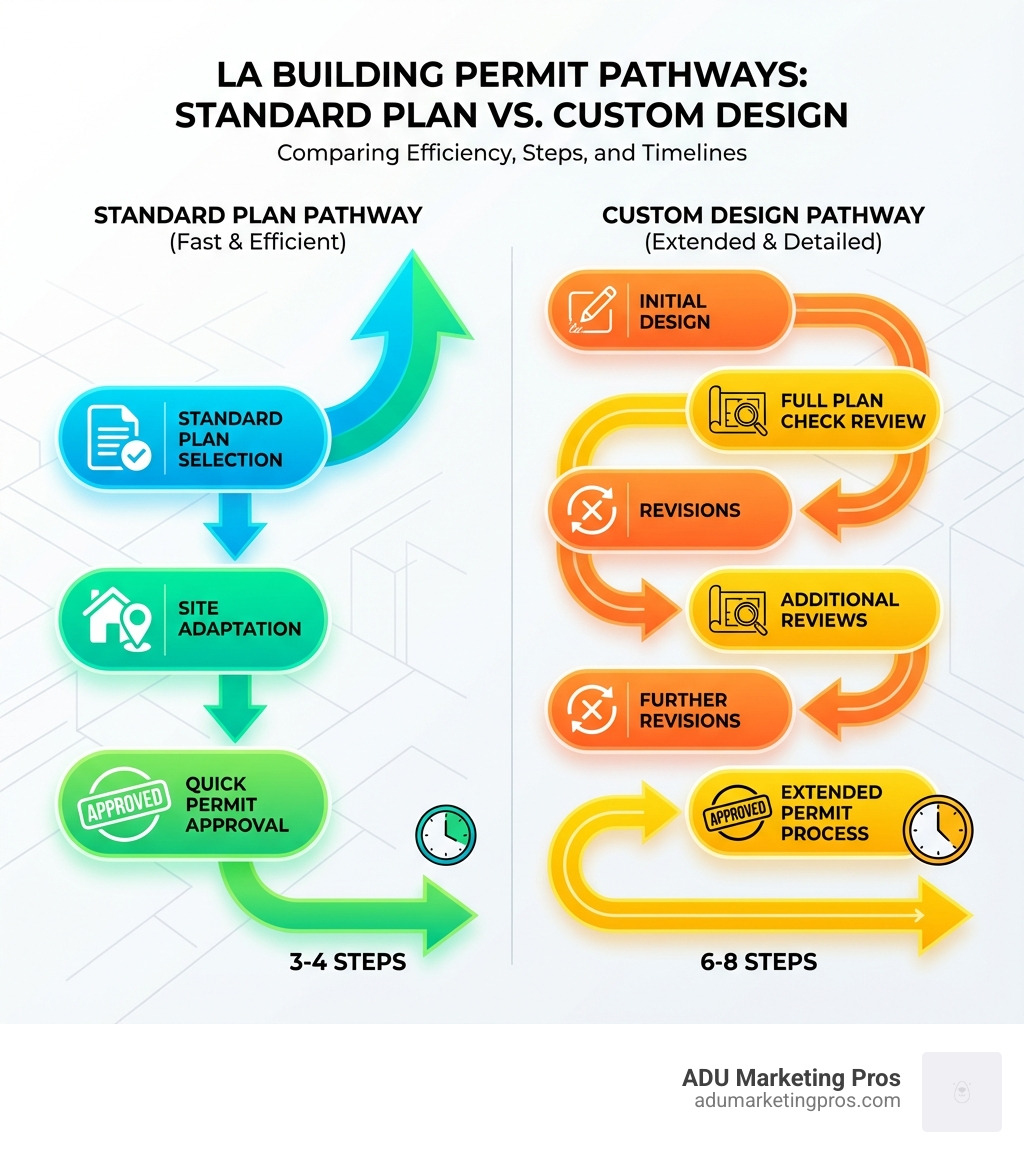
City of LA standard plans are pre-engineered, city-approved design templates that help builders and homeowners steer the complex permitting process more efficiently. Instead of starting from scratch with a fully custom design, you can use these standardized blueprints as a foundation, adapt them to your specific property, and potentially cut weeks or months off your approval timeline.
Quick Answer: How to Access City of LA Standard Plans
-
Bureau of Engineering (BOE) Plans – For public infrastructure like streets, sewers, and storm drains
- Free to download at eng2.lacity.org/techdocs/stdplans
- Categories include S-Series, B-Series, DL-Series, and Numeric Series
-
Department of Building and Safety (LADBS) Plans – For private construction like pools, patios, and ADUs
- Privately owned by engineers, must be purchased
- View available plans at ladbsservices2.lacity.org/StandardPlan
-
All standard plans require site-specific adaptation by a licensed professional before submission
If you’re an ADU architect or builder in Los Angeles, understanding the difference between these two types of standard plans isn’t just helpful—it’s essential. The city receives thousands of permit applications every year, and many get delayed because applicants don’t know which plans to use or how to properly adapt them.
Standard plans exist to create safety, uniformity, and efficiency across LA’s built environment. They’ve been reviewed and approved by city engineers, which means they meet current building codes and standards. When you use them correctly, you’re essentially borrowing the city’s stamp of approval—but you still need to show how that approved design works on your specific lot.
The catch? Los Angeles has two entirely separate systems of standard plans, managed by different departments, for different purposes. Mix them up, and you’ll waste time and frustrate your clients. Get them right, and you’ll streamline your workflow and close more projects.
Learn more about city of la standard plans:
The Two Worlds of LA Standard Plans: Bureau of Engineering (BOE) vs. Building and Safety (LADBS)
Navigating the labyrinth of building and public works projects in Los Angeles can feel like a game of “choose your own adventure,” but with more paperwork. A crucial distinction we need to make right off the bat is between the two primary types of city of LA standard plans: those managed by the Bureau of Engineering (BOE) and those overseen by the Los Angeles Department of Building and Safety (LADBS). While both aim to standardize construction practices, their scope, ownership, and application differ significantly.
Think of it this way: the BOE handles the city’s bones—its infrastructure, public spaces, and utilities. LADBS, on the other hand, deals with the structures built on private property, from your home to your new Accessory Dwelling Unit Los Angeles. Understanding this fundamental difference is key to avoiding costly delays and ensuring your project starts on the right foot.
Let’s break down these two worlds:
| Department | Scope of Work | Ownership | How to Obtain | Example Projects |
|---|---|---|---|---|
| Bureau of Engineering (BOE) | Public infrastructure, right-of-way, utilities | Publicly owned (City of LA) | Free download from BOE website | Streets, sewers, storm drains, curb ramps, traffic signals |
| Dept. of Building and Safety (LADBS) | Private property construction, building elements | Privately owned (by engineers) | Purchase from the plan’s owner/vendor | Swimming pools, patio covers, stairways, ADUs, signs |
The BOE’s standard plans dictate how public infrastructure is built, ensuring uniformity and safety across the city’s vast network of streets, sewers, and storm drains. These plans are publicly owned and freely accessible, as they serve the public good.
LADBS standard plans, conversely, are typically for private development. They are designed by private engineers, then reviewed and approved by LADBS. This approval means they meet the city’s building codes, but the plans themselves remain the intellectual property of the engineers who created them. Therefore, to use an LADBS pre-approved plan, you’ll generally need to purchase it directly from the engineer or a licensed vendor.
Understanding Bureau of Engineering (BOE) Standard Plans
When we talk about the Bureau of Engineering, we’re discussing the backbone of Los Angeles’s public works. Their standard plans are the blueprints for infrastructure, ensuring every street, sewer, and storm drain across the city is built to a consistent, safe, and functional standard. This focus on infrastructure standards guarantees consistency in city projects, making it easier for contractors and developers to integrate their work with existing public systems.
These documents often work in conjunction with other city publications, such as the “Brown Book” (Environmental Group) and the “Green Book” (Standard Specifications for Public Works Construction). The “Green Book,” for instance, has been a foundational text since 1967, and the BOE standard plans are intended to supplement its provisions, providing detailed drawings for common construction elements.
Where can you find these invaluable resources? The official BOE Standard Plans are indexed online, making them relatively easy to access. We can find them at the Official BOE Standard Plans Index. This digital library is a treasure trove for anyone involved in public works or private projects that interface with city infrastructure.
However, sometimes a digital copy might not be perfectly legible, or you might need an official hard copy. For such instances, the Bureau of Engineering Vault is your go-to. It’s located at 1149 S Broadway, Suite B-10, Los Angeles, CA 90015, and you can reach them at (213) 847-0700 to obtain legible copies of any standard plans. It’s our responsibility, as professionals, to ensure we’re working with clear and accurate documentation.
Understanding LADBS Pre-Approved Standard Plans
Now, let’s shift our focus to the structures that populate our private properties. The Los Angeles Department of Building and Safety (LADBS) plays a pivotal role in reviewing and approving standard plans for private construction. These pre-approved plans are a fantastic tool for streamlining permits for common structures like swimming pools, patio covers, stairways, and yes, even ADUs.
The beauty of LADBS pre-approved standard plans is their efficiency. They’ve already gone through the rigorous plan check process with the city, meaning they comply with the applicable building codes. This can significantly reduce the time required for plan check and permit issuance for frequently built structures. Think about it: instead of waiting for a full, custom design review, the city can quickly verify that your chosen standard plan, once adapted to your site, meets all requirements.
However, there’s a key difference from BOE plans: LADBS standard plans are designed by private engineers. These talented professionals invest their expertise to create robust, code-compliant designs that can be replicated. Because they are the intellectual property of these engineers, they are privately owned. This means you’ll need to purchase a copy directly from the plan’s owner or an authorized vendor. The LADBS website offers a helpful resource where you can See list of Standard Plans available from private vendors.
For those of us in the ADU sector, this is particularly relevant. The availability of Pre-Approved ADU Plans Los Angeles means we can often expedite projects, offering our clients a faster path to building their backyard homes. It’s a win-win: the city benefits from standardized, compliant construction, and we benefit from a more efficient permitting process.
Navigating the Official City of LA Standard Plans: A Deep Dive into BOE Categories
Understanding the organizational structure of city of LA standard plans is like having a well-indexed library at our fingertips. The Bureau of Engineering (BOE) has carefully categorized its standard plans into several series, making it easier for us to find precisely what we need for public works projects. This systematic approach ensures that whether we’re dealing with sewers or streetlights, there’s a clear, approved guideline.
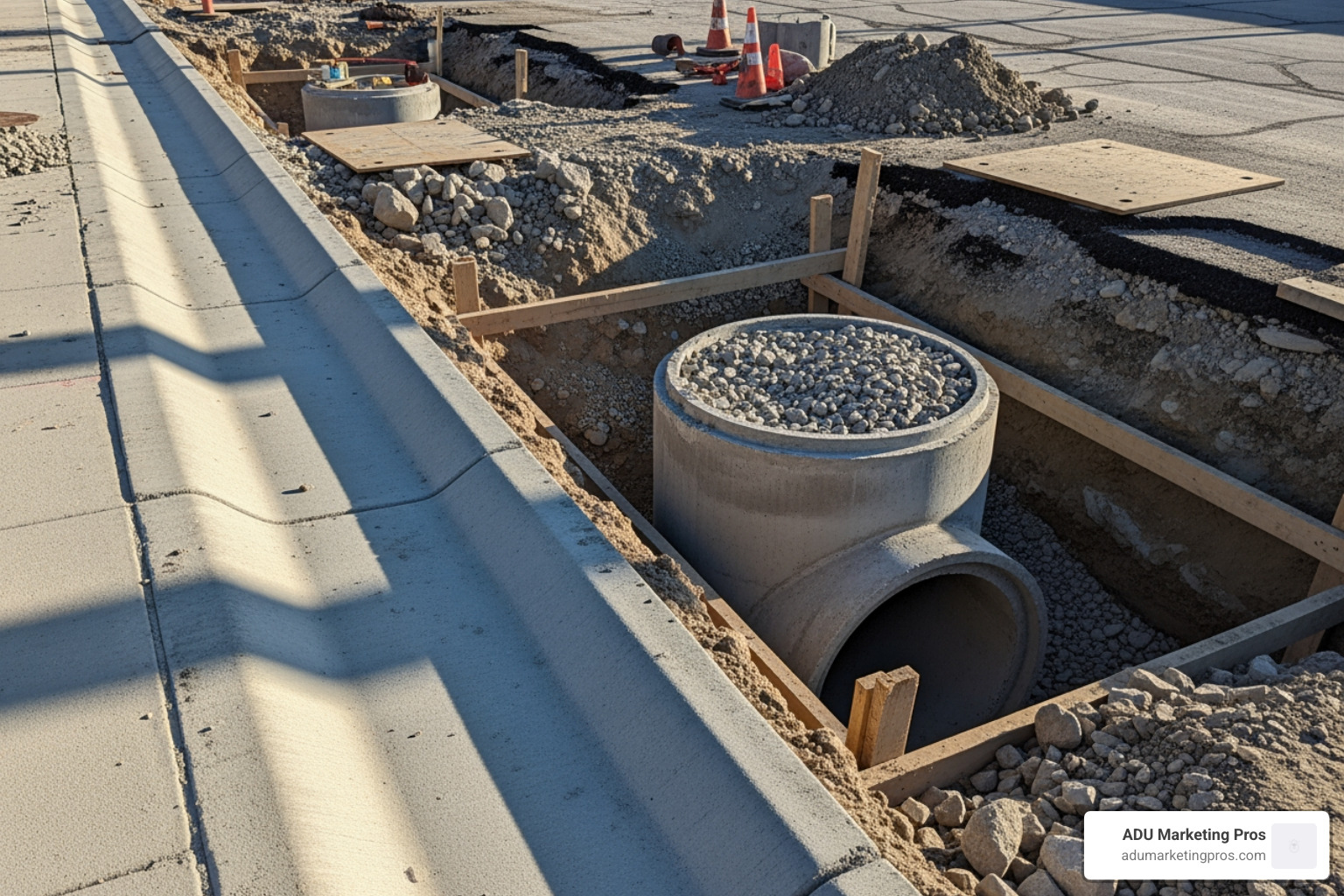
When we’re searching for the right plan, it’s absolutely critical to ensure we’re using active, not expired, plans. The city regularly updates its standards, and using outdated information can lead to permit rejections and costly rework. The BOE’s online index is usually up-to-date, but always double-check the revision dates.
The BOE’s standard plans are primarily divided into the following series:
- S-Series: This is perhaps the most common and extensive category, covering everything from sewers and storm drains to streets and structural elements.
- B-Series: Focuses on specific structural components like catch basins, manholes, and retaining walls.
- DL-Series: Dedicated to standard culverts.
- Numeric Series: Includes miscellaneous items like standard saddle connections and North Point symbols for drafting.
Each series provides detailed drawings and specifications that ensure uniformity and quality in public infrastructure projects.
The S-Series: Sewers, Streets, and Structures
The S-Series is the workhorse of the BOE standard plans, covering a vast array of public infrastructure components. Let’s dig into its key sections:
- S-100 to S-300: Sewers and Storm Drains: These sections are vital for managing Los Angeles’s complex underground networks. They detail everything from pipe sizes and materials to manhole designs and connection methods. Whether it’s a new sewer line for a development or a storm drain upgrade to prevent flooding, these plans ensure proper engineering and environmental compliance.
- S-400: Streets and Green Streets: This series is crucial for any project impacting public roadways. It covers the design of curbs, gutters, driveways, sidewalks, and critically, curb ramps, which are essential for accessibility. With the city’s push for sustainable infrastructure, this section also includes guidelines for “Green Streets,” incorporating elements like permeable pavements and bioswales to manage stormwater runoff.
- S-500 to S-700: Structural, Drafting, Survey: These sections round out the S-Series. S-500 covers various structural elements, ensuring the integrity of public facilities. S-600 provides drafting and landscape standards, promoting clear and consistent technical drawings. Finally, S-700 addresses survey and signage standards, critical for accurate mapping and public guidance.
These detailed plans are the reason why, despite its vastness, Los Angeles’s infrastructure maintains a remarkable degree of consistency and functionality.
Other Key BOE Plan Series
Beyond the extensive S-Series, the BOE provides other specialized plan series that are equally important for specific public works components:
- B-Series: This series focuses on the design and construction of structures that are integral to our drainage and access systems. It includes detailed plans for various types of catch basins, manholes, retaining walls, bulkheads, and even reinforced concrete cribbing. These elements are critical for controlling water flow and stabilizing earth, playing an unsung but vital role in urban resilience.
- DL-Series: This concise series is dedicated to standard culverts. Culverts are essential for allowing water to flow under roads, railways, or embankments, preventing erosion and maintaining structural integrity. The DL-Series provides standardized designs to ensure these critical components are built correctly.
- Numeric Series: This series covers a collection of miscellaneous but important standardized details. Examples include the Standard Saddle Connection, used for connecting smaller pipes to larger ones, and the Standard North Point, a drafting symbol that ensures consistency in plan orientation. These seemingly small details contribute significantly to the clarity and accuracy of engineering drawings.
By providing such comprehensive and categorized standard plans, the City of Los Angeles empowers engineers, contractors, and developers to execute projects efficiently and in full compliance with municipal standards.
Using Standard Plans in Your Project: The Step-by-Step Permitting Process
So, we’ve explored the two main types of city of LA standard plans and where to find them. Now, let’s talk about how to actually use them in your project to steer the permitting process. Using a standard plan is not a waiver for obtaining a building permit. Instead, it’s a powerful tool designed for faster approval, assuming you follow the correct steps.
The entire process hinges on the expertise of a registered professional engineer (or architect for LADBS plans). Their stamp of approval is what validates the adaptation of a standard plan to your unique site.
Here’s a step-by-step guide to using standard plans in your Los Angeles project:
- Step 1: Identify Project Needs & Find the Right Plan: First, clearly define your project. Is it public infrastructure (BOE) or private construction (LADBS)? Then, search the respective department’s index for a standard plan that closely matches your needs. Remember to check if the plan is active and not expired.
- Step 2: Obtain the Plan: For BOE plans, simply download them from the official website. For LADBS pre-approved plans, you’ll need to contact the private engineer or vendor who owns the plan to purchase a copy.
- Step 3: Site-Specific Adaptation: This is perhaps the most critical step. A standard plan is a generic template. You must adapt it to your specific site conditions. This involves creating detailed site plans, foundation details, and utility connections, all prepared by a licensed professional.
- Step 4: Submit to the City: With your adapted, wet-stamped, and signed plans in hand, submit them to the appropriate city department (BOE or LADBS) for plan check.
- Step 5: Permit Issuance: Once the city’s plan checkers verify that your adapted standard plan complies with all applicable building and zoning codes, your building permit will be issued.
Mapping out this process visually, just as one would on a whiteboard, helps ensure no step is missed and all stakeholders are aligned before moving to the critical adaptation phase.
Adapting a City of LA Standard Plan for Your Property
Adapting a city of LA standard plan to your specific property is where the magic (and the engineering) happens. It’s also where many projects can get bogged down if not handled correctly. A standard plan provides the core design for a specific element (like a patio cover or a curb ramp), but it doesn’t know anything about your unique piece of Los Angeles.
Your site plan is absolutely key here. It must clearly show:
- Your property lines and existing structures.
- The exact proposed location of the standard plan element.
- How the standard plan’s foundation will integrate with your soil conditions and existing structures.
- All necessary utility connections (water, sewer, electrical) if applicable.
- Drainage plans and how they tie into the existing site.
This critical adaptation work almost always requires hiring a licensed professional. For ADUs and other structural elements, an ADU Architects Los Angeles or a civil/structural engineer will take the generic standard plan and make it site-specific, ensuring it meets local conditions and codes. They will then apply their professional stamp and signature to the adapted plans.
Before any submission, it’s also wise to Review LAPELS Laws on Use of Seals. This document, specifically Chapter 27, outlines the regulations governing the use of professional seals by engineers and architects, ensuring that all submitted plans meet legal and ethical standards.
Common Pitfalls to Avoid
Even with the best intentions, it’s easy to stumble when using standard plans. We’ve seen it happen, and we want to help you avoid these common pitfalls:
- Using expired plans: The LADBS data table clearly shows that many standard plans have expiration dates. Using an expired plan means it’s no longer considered code-compliant, leading to immediate rejection. Always verify the plan’s validity.
- Ignoring site-specific requirements: This is the biggest trap. A standard plan is not a “one-size-fits-all” solution. Failing to adequately adapt it to your property’s unique topography, soil, existing structures, or setbacks will halt your project.
- Forgetting the engineer’s wet stamp: As mentioned, a licensed professional must adapt and stamp the plans. Without that “wet stamp” (or digital equivalent), the city won’t accept your submission.
- Misunderstanding BOE vs. LADBS: Submitting a public works plan to the building department for a private structure, or vice versa, will send you back to square one. Know which department governs your project.
- Not planning for your ADU Construction Cost: While standard plans can save on design costs, they don’t eliminate construction expenses. Ensure your budget accounts for the actual building process, materials, labor, and all associated city fees.
By being mindful of these potential issues, we can significantly smooth out the permitting journey for our clients and our own projects.
Frequently Asked Questions about City of LA Standard Plans
We know that navigating the intricacies of city of LA standard plans can spark a lot of questions. Our goal is to provide clear, concise answers to help you move forward with confidence. Here are some of the most common queries we encounter:
Are there fees for using City of LA Standard Plans?
Yes, and no, depending on the type of plan.
- BOE plans (for public infrastructure): These are generally free to download from the Bureau of Engineering’s website. They are publicly owned resources.
- LADBS pre-approved plans (for private construction): These plans are privately owned by the engineers who designed them. Therefore, you must purchase a copy directly from the engineer or an authorized vendor. The cost will vary depending on the complexity of the plan and the vendor.
- City permit fees: Regardless of whether the standard plan itself was free or purchased, all projects submitted to the City of Los Angeles for permitting will incur various city permit and plan check fees. These fees cover the city’s administrative costs for reviewing your project and issuing permits.
What’s the difference between a “Standard Plan” and a “Pre-Approved ADU Plan”?
“Standard Plan” is a broad term used by the City of Los Angeles to refer to pre-engineered designs. However, it encompasses two distinct categories:
- BOE Standard Plans: These are specifically for public works and infrastructure projects (e.g., street improvements, storm drains, sewers). They are city-owned and freely accessible.
- LADBS Standard Plans: These are for common private construction elements like swimming pools, patio covers, stairways, and signs. They are privately owned by engineers and must be purchased.
A Pre-Approved ADU Plan is a specific type of LADBS Standard Plan. It’s a pre-designed Accessory Dwelling Unit that has gone through the LADBS plan check process and received approval. The purpose of these plans is to significantly fast-track the permit issuance for ADUs, as the core design is already city-approved.
All pre-approved ADU plans are a type of LADBS Standard Plan, but not all LADBS Standard Plans are for ADUs.
Do I still need an architect or engineer if I use a standard plan?
Absolutely, yes! This is a critical point that often causes confusion. While a standard plan provides the core design, it is generic. A licensed professional is always required to:
- Adapt the standard plan to your specific site conditions. This includes showing how the plan fits on your property, addressing specific setbacks, grading, utility connections, and foundation requirements based on your unique soil conditions.
- Create the necessary site-specific drawings that integrate the standard plan with your property.
- Stamp and sign the plans for submission to the city. This professional seal certifies that the plans, as adapted, comply with all applicable codes and are suitable for your specific site.
Without this professional adaptation and stamp, the City of Los Angeles will not accept your permit application. The expertise of an architect or engineer is indispensable for ensuring the safety, legality, and successful execution of your project, even when starting with a standard plan.
Conclusion: Build Smarter, Not Harder, in Los Angeles
Navigating the permitting landscape in Los Angeles doesn’t have to be a bewildering ordeal. By mastering the use of city of LA standard plans, we empower ourselves and our clients to build smarter, not harder. These pre-approved templates are invaluable strategic tools, designed to streamline the design and permitting process, ultimately saving precious time and resources.
We’ve seen that understanding the distinction between BOE (Bureau of Engineering) and LADBS (Department of Building and Safety) standard plans is paramount. BOE plans serve the public field, dictating the construction of our city’s vital infrastructure like streets, sewers, and storm drains, and are freely accessible. LADBS plans, on the other hand, cater to private property development, offering pre-approved designs for common structures such as swimming pools, patio covers, and, increasingly, Accessory Dwelling Units. These are typically privately owned and require purchase from the designing engineer.
While standard plans offer a shortcut through the initial design review, they are not a substitute for a building permit. Crucially, every standard plan requires careful, site-specific adaptation by a licensed professional—an architect or engineer—who will ensure the design seamlessly integrates with your unique property conditions and meets all local codes. Their professional stamp is your guarantee of compliance and safety.
For complex projects like ADUs, where regulations are constantly evolving and market demands are high, expert guidance is invaluable. At ADU Marketing Pros, we understand the nuances of the Los Angeles building environment and the importance of efficient processes. We’re here to help firms like yours stand out by leveraging this expertise. Learn how to market your architectural services for ADU projects and connect with clients who appreciate the value of building smarter.