Why Your ADU Foundation Matters More Than You Think
The Foundation for ADU construction is the literal bedrock of your accessory dwelling unit. A properly designed and installed foundation is critical for the stability, safety, and longevity of your investment. It supports the entire structure, anchors it against seismic forces, and protects it from soil and moisture issues. Getting this first step right prevents a cascade of costly problems down the line, from cracked walls and uneven floors to catastrophic structural failure.
Quick Answer: Understanding ADU Foundation Types
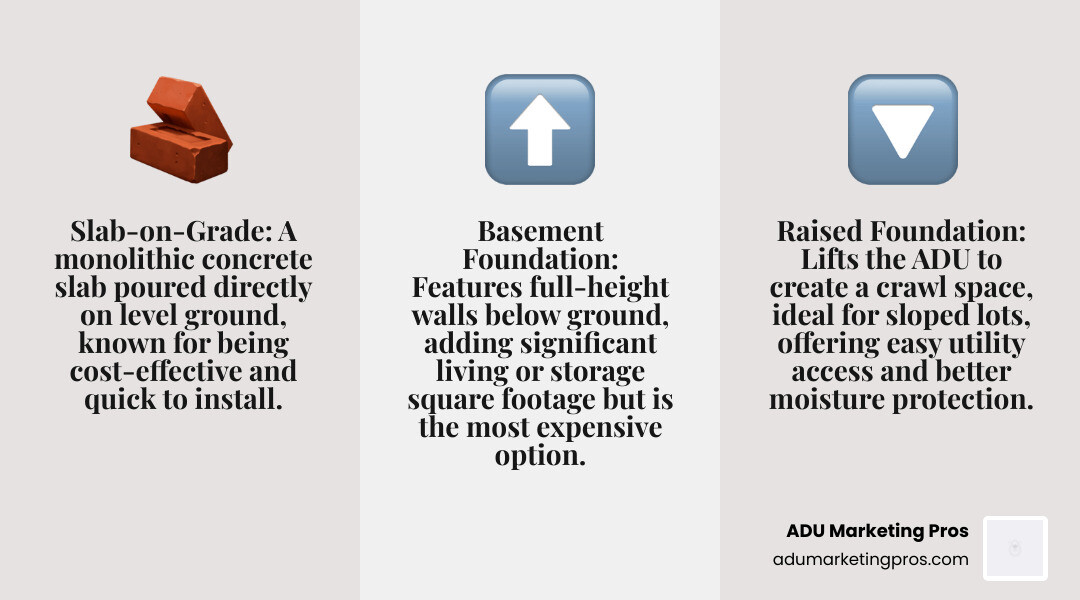
An ADU foundation supports the entire structure, distributes its weight safely into the ground, and protects against soil movement, moisture, and seismic forces. The three main types are:
- Slab-on-Grade: A single concrete slab poured directly on level ground ($6-12/sq ft). Best for flat lots with stable soil.
- Raised Foundation: Lifts the structure with a crawl space underneath, ideal for slopes and providing utility access (footings 18-24″ deep).
- Basement Foundation: A full below-ground level that adds living area, but is the most expensive and complex option.
Your choice depends on your lot’s soil composition, slope, local building codes, budget, and timeline. A professional geotechnical and structural analysis is non-negotiable.
In California, where seismic activity and varied soil types meet some of the strictest building codes in the nation, this decision carries significant weight. A foundation that’s wrong for your site can lead to failed inspections, expensive rework, and long-term structural headaches that can cost tens of thousands of dollars to repair. Since 2020, streamlined ADU laws have made building easier, but the engineering fundamentals remain unchanged. Every ADU needs a foundation engineered for its specific site conditions, not a one-size-fits-all solution.
While a slab-on-grade foundation is often assumed in initial cost estimates due to its affordability, it isn’t always the right or even the cheapest choice once site preparation is factored in. Sloped lots, expansive clay soils, or properties in flood zones can quickly shift the equation toward raised or specialized foundations. This comprehensive guide walks you through the main types, their detailed costs, critical site factors, and California code requirements to help you make an informed, confident decision.
The Main Types of ADU Foundations
Choosing the right foundation for ADU construction is a critical early decision that impacts your budget, timeline, and the unit’s long-term durability. There is no single “best” option; the ideal choice depends on matching a foundation’s strengths to your property’s specific needs. A thorough site evaluation by a professional is the only way to determine the most suitable and cost-effective solution.
Slab-on-Grade Foundation
A slab-on-grade foundation is a single, thick concrete slab poured directly onto a prepared, level ground pad. It serves as both the structural base and the subfloor of the ADU. It’s the most common type for ADUs on flat lots due to its relative simplicity and cost-effectiveness. Slabs can be monolithic (where the footing and slab are poured as one piece) or stem wall (where footings are poured first, a short “stem wall” is built on top, and the slab is poured inside the walls).
- Pros: Typically the most affordable option at $6 to $12 per square foot for the slab itself. It’s also faster to install than other types and, with a properly installed vapor barrier, offers excellent resistance to moisture and pests from the ground.
- Cons: Repairing utilities like plumbing or electrical lines embedded in the concrete is extremely difficult and expensive, often requiring jackhammering the slab. Slabs are not suitable for sloped lots without extensive and costly grading. They also offer less protection in flood-prone areas.
- Best For: Flat lots in warmer climates where frost heave is not a concern and the soil is stable.
Raised Foundation (Crawl Space)
A raised foundation (also known as a perimeter or crawl space foundation) lifts the ADU off the ground, creating an accessible space underneath. It consists of continuous concrete footings around the perimeter and interior concrete piers, which support short walls (cripple walls) that in turn support the wood-framed subfloor of the ADU.
- Pros: The crawl space provides easy access to plumbing, electrical, and HVAC systems for repairs and future upgrades. This type is ideal for sloped lots, as the foundation can be “stepped” down the hill to match the terrain, avoiding major grading. The elevation also offers superior protection from ground moisture, termites, and flooding.
- Cons: Raised foundations are more expensive and time-consuming to build than slabs due to the multiple components (footings, walls, subfloor framing). The crawl space requires proper ventilation to prevent moisture buildup, which can lead to mold and wood rot. Modern solutions often involve sealing and conditioning the crawl space for better performance.
- Best For: Sloped or uneven lots, areas with moisture or flooding concerns, and for homeowners who prioritize easy, long-term access to utilities.
Basement Foundation
A basement foundation is the most extensive option, involving deep excavation to create a full-height level of living or storage space beneath the ADU. It functions as a retaining wall against the surrounding earth and supports the structure above.
- Pros: Massively increases the usable square footage and potential property value, often doubling the ADU’s functional space. The surrounding earth provides natural insulation, making the basement level energy-efficient. When engineered correctly, it is exceptionally strong and durable.
- Cons: This is by far the most expensive and time-consuming option. Costs are driven by heavy excavation, extensive concrete and reinforcement, complex waterproofing systems (membranes, drain tiles, sump pumps), and the need for engineered egress (windows or doors).
- Best For: Properties on a slope where a “daylight” basement is feasible, projects where maximizing square footage is the top priority, and where the budget can accommodate a significant investment.
Specialized and Hybrid Foundation for ADU Solutions
For sites with unique challenges like steep hillsides, poor soil, or high water tables, standard foundations may not be sufficient. These specialized solutions provide engineered answers for difficult conditions.
- Hybrid Foundations: These combine elements of different foundation types. For example, a home might have a slab-on-grade section in a flat area and a raised foundation section where the lot slopes away.
- Pier and Beam Foundations: Often used for very steep slopes or areas with poor drainage, this system uses deep concrete piers (caissons) drilled down to stable bedrock or soil. Beams span between the piers to support the floor structure, minimizing site disturbance.
- Skid Foundations: Not a permanent foundation, this system uses a simple gravel base with pressure-treated wood beams (“skids”). It’s only suitable for small, lightweight, often prefabricated ADUs that are classified as personal property and may not be permitted for habitable ADUs in many jurisdictions.
- Post-Tensioned Slabs: Essential for sites with highly expansive clay soils. After the concrete is poured, steel cables running through the slab are hydraulically tightened, creating internal compression that helps the slab resist cracking and heaving as the soil swells and shrinks.
- Stem Walls: Short concrete walls that can be used to create a short crawl space or to level out minor variations in grade before a slab is poured on top.
- Deepened Footings: Standard footings are extended deeper than code minimums to reach stable, load-bearing soil, bypass problematic soil layers, or to create a stable base on a slope near an existing structure.
| Foundation Type | Average Cost (per sq ft) | Construction Time | Best For (Site Type) | Utility Access |
|---|---|---|---|---|
| Slab-on-Grade | $6 – $12 | Fastest | Flat, level ground; warmer climates | Difficult |
| Raised (Crawl Space) | $15 – $25 | Moderate | Sloped or uneven lots; areas prone to moisture | Easy |
| Basement | $100 – $200+ | Longest | Projects needing maximum space; suitable slopes | Very easy; integrated |
| Pier and Beam | $20 – $40 | Moderate | Steep slopes, unstable soil | Easy |
The right foundation for ADU construction depends entirely on your specific situation. A professional evaluation of your site is essential before any concrete gets poured.
Key Factors in Choosing Your ADU Foundation
Selecting the right foundation for ADU construction requires a careful, data-driven analysis of your property, budget, and local regulations. Forcing a cheaper foundation onto an unsuitable site is a recipe for disaster, inevitably leading to expensive structural problems and failed inspections. The smartest approach is to invest in professional expertise early. A geotechnical engineer, structural engineer, and experienced ADU contractor will work together to navigate the key factors and design a solution that is safe, compliant, and cost-effective in the long run.

Site Conditions: Soil, Topography, and Climate
Your property’s physical characteristics are the primary determinant of your foundation options. You cannot fight geology; you must build in accordance with it.
-
Soil Composition: California’s geology is incredibly diverse, from the sandy, well-draining soils of coastal areas to the highly expansive clay soils found inland that swell and shrink dramatically with moisture changes. A professional soil report, prepared by a geotechnical engineer, is required for nearly all new ADU construction in California and is the most critical piece of preliminary data. The engineer will take soil borings from your site and analyze them for stability, composition, and load-bearing capacity. The resulting report provides the essential data your structural engineer needs to design a suitable foundation, specifying the type, depth of footings, and reinforcement required. You can find general information from California soil resources, but it is no substitute for a site-specific report.
-
Topography: The slope of your land is a major factor. A flat lot is the ideal candidate for a cost-effective slab-on-grade foundation. However, if your yard has even a moderate slope, a raised foundation often becomes the more economical choice. The cost of extensive excavation, grading, and retaining walls needed to create a level pad for a slab can easily exceed the higher initial cost of a stepped, raised foundation that works with the natural contour of the land.
-
Climate and Environmental Factors: In flood-prone areas (FEMA flood zones) or regions with heavy rainfall, a raised foundation is non-negotiable, as it elevates the living space above potential water levels. In colder mountain communities, foundation footings must extend below the local frost line to prevent the foundation from heaving and cracking as the ground freezes and thaws.
Budget and Timeline Implications
Your foundation choice directly and significantly impacts your project’s overall cost and schedule.
- Cost: A slab-on-grade foundation is the most budget-friendly option ($6-$12/sq ft) on a suitable flat lot. Raised foundations cost more upfront but can be more economical on sloped sites by avoiding massive grading costs. Basements are a major financial commitment. However, the cost of the foundation itself is only part of the picture. Always budget for these associated costs:
- Geotechnical (Soils) Report: $2,000 – $5,000
- Structural Engineering: $3,000 – $8,000
- Excavation and Grading: Highly variable, from $3,000 to $20,000+
- Drainage Systems: $2,000 – $10,000
- Unexpected soil issues or rock removal
Always include a 15-20% contingency fund in your budget specifically for site work and foundation. For a deeper dive into project expenses, see this guide on understanding ADU construction costs.
- Timeline: Slabs can be formed and poured in a matter of weeks. Raised foundations take longer due to their multiple components (footings, walls, framing). Basements have the longest construction timeline by far, often taking several months. Weather, inspection schedules, and unforeseen soil conditions can cause delays, so it’s important to build flexibility into your schedule.
California Building Codes and Permitting for an ADU Foundation
California’s building codes are rigorous to ensure structures are safe, especially given the state’s high seismic activity. There is no room for error or corner-cutting.
-
Statewide Requirements: The California Building Code (CBC) mandates minimum foundation depths (typically 12 inches into undisturbed soil), steel rebar reinforcement to provide tensile strength against soil and seismic forces, and vapor barriers under slabs to block ground moisture. Crucially, all foundations must be engineered with a continuous load path, using specific steel connectors (like anchor bolts and hold-downs) to securely fasten the structure to the foundation and resist earthquake-induced uplift and shear forces.
-
Local Variations: While state law sets the baseline, each city and county has its own specific requirements, interpretations, and permitting processes. The requirements for the zoning, permitting, and inspection process in San Diego County may differ from those in Los Angeles or the Bay Area, especially regarding hillside ordinances or soil conditions. Working with professionals who are deeply familiar with your local jurisdiction is crucial for a smooth process.
-
Compliance and Inspections: Cutting corners is not an option. It leads to failed inspections, stop-work orders, costly rework, and significant delays. The foundation process involves multiple mandatory inspections, including a check of footing excavation before concrete is poured and a pre-pour inspection of the formwork, rebar placement, and utility rough-ins. Only after an inspector signs off can the concrete be poured.
The ADU Foundation Construction Process
Building a foundation for ADU is a precise, multi-step process that transforms a plot of land into a stable, engineered base for your new unit. When managed by experienced professionals, this process unfolds methodically, with critical checkpoints to ensure a high-quality result that meets all code requirements. Here’s a detailed overview of the key stages.
Step 1: Planning, Engineering, and Permitting
Before a single shovel of dirt is moved, extensive planning occurs. This is the most important phase. A structural engineer analyzes your geotechnical (soil) report, calculates the structural loads of the planned ADU, and designs a foundation system custom-tailored to your site and compliant with California’s stringent seismic codes. Your contractor and architect work with the engineer to create a full set of detailed structural plans. These plans, along with the soil report and architectural drawings, are submitted with your building permit application to your local building department. This review process can take weeks or months. Construction cannot legally begin until the permit is approved and issued.
Step 2: Site Preparation and Excavation
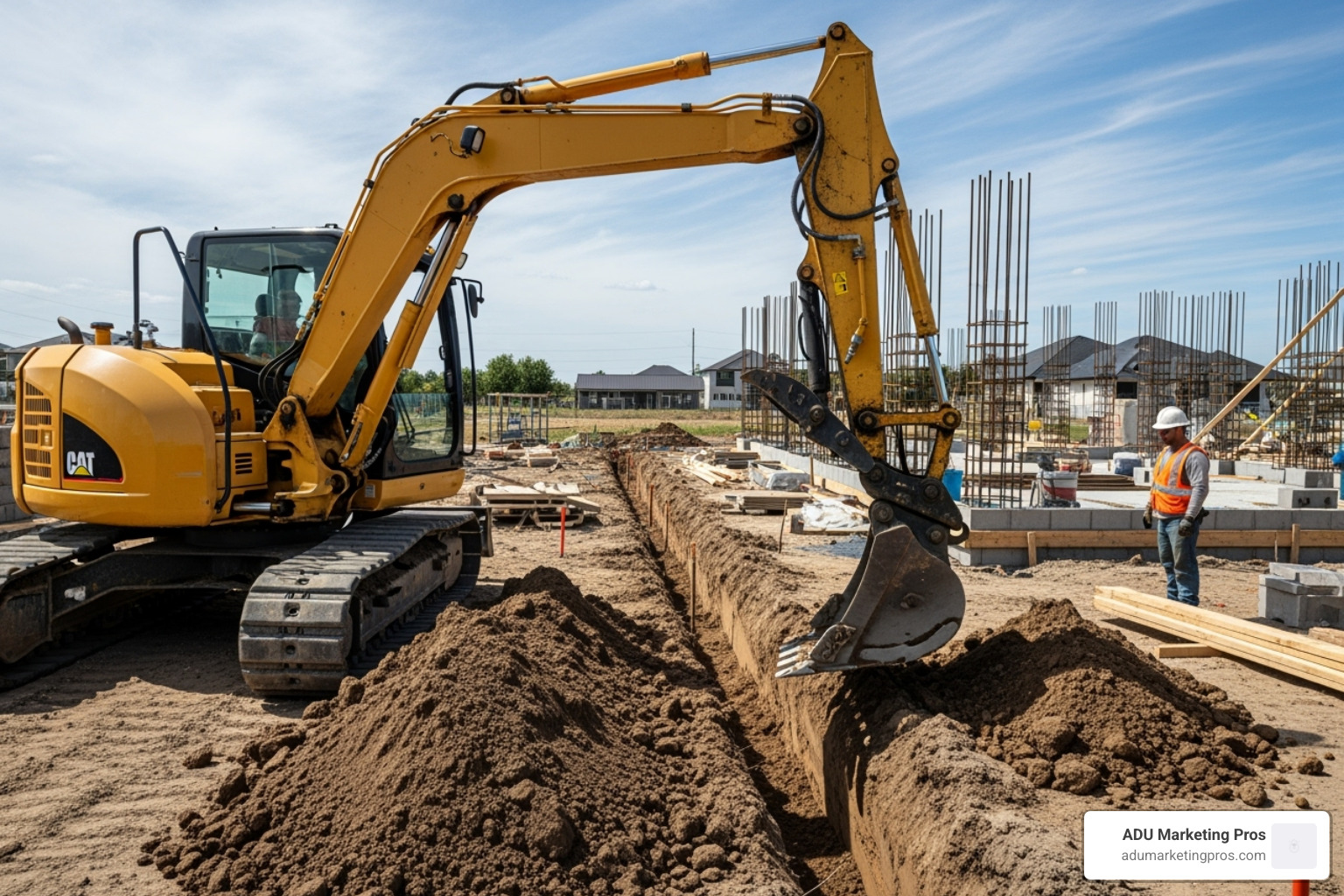
With permits in hand, the physical work starts. The site is cleared of vegetation, rocks, and any existing structures. The buildable area is staked out according to the plans. For sloped lots, this is when major grading occurs to create building pads or terraces, ensuring proper drainage away from the foundation. Before any digging, it is legally required to use the 811 “Call Before You Dig” service to have all underground utility lines (gas, electric, water, sewer, communications) located and marked. An excavator then digs the trenches for the footings to the precise depth and width specified by the engineer. The soil at the bottom of the trenches is then compacted to ensure a solid bearing surface.
Step 3: Formwork, Reinforcement, and Pouring
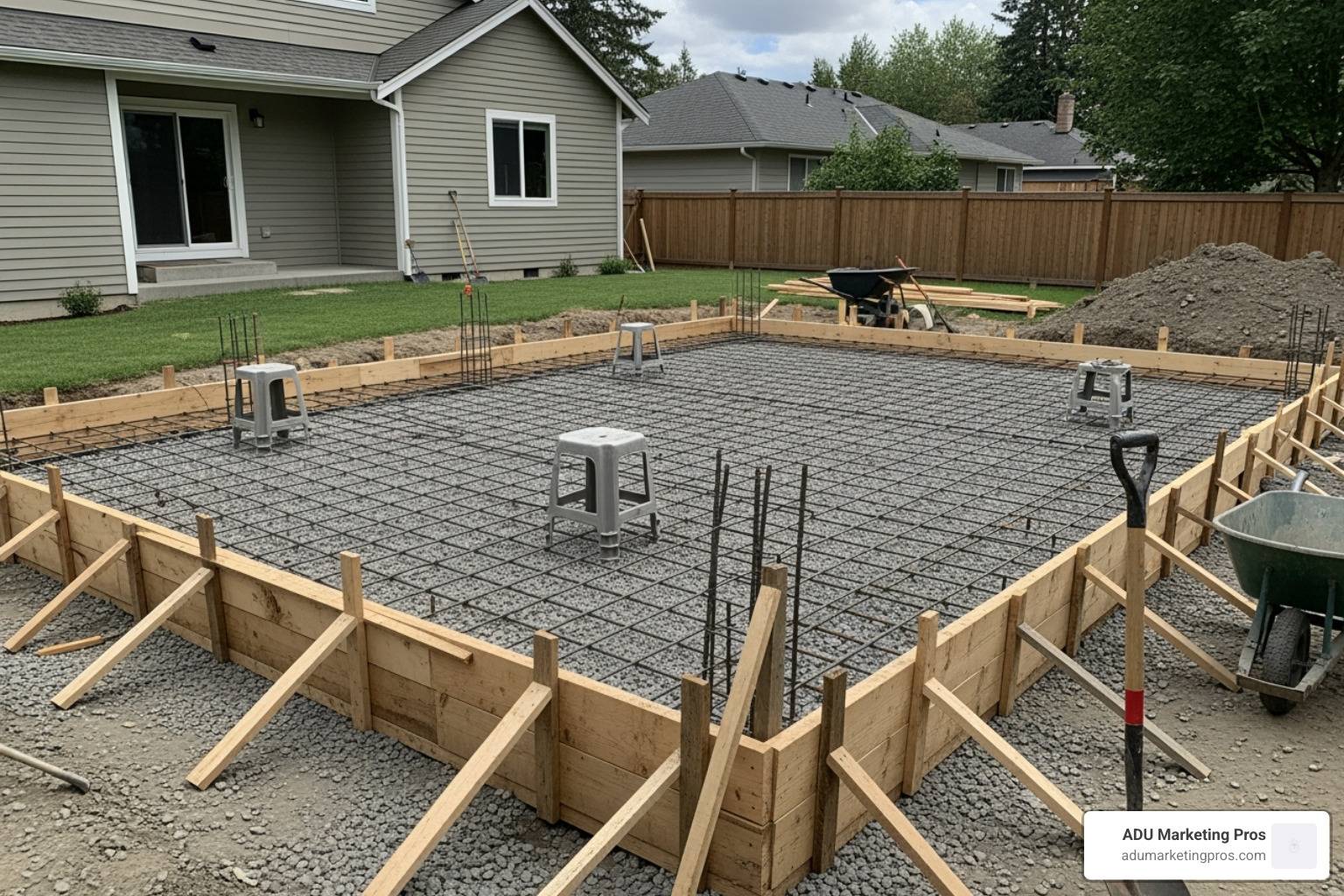
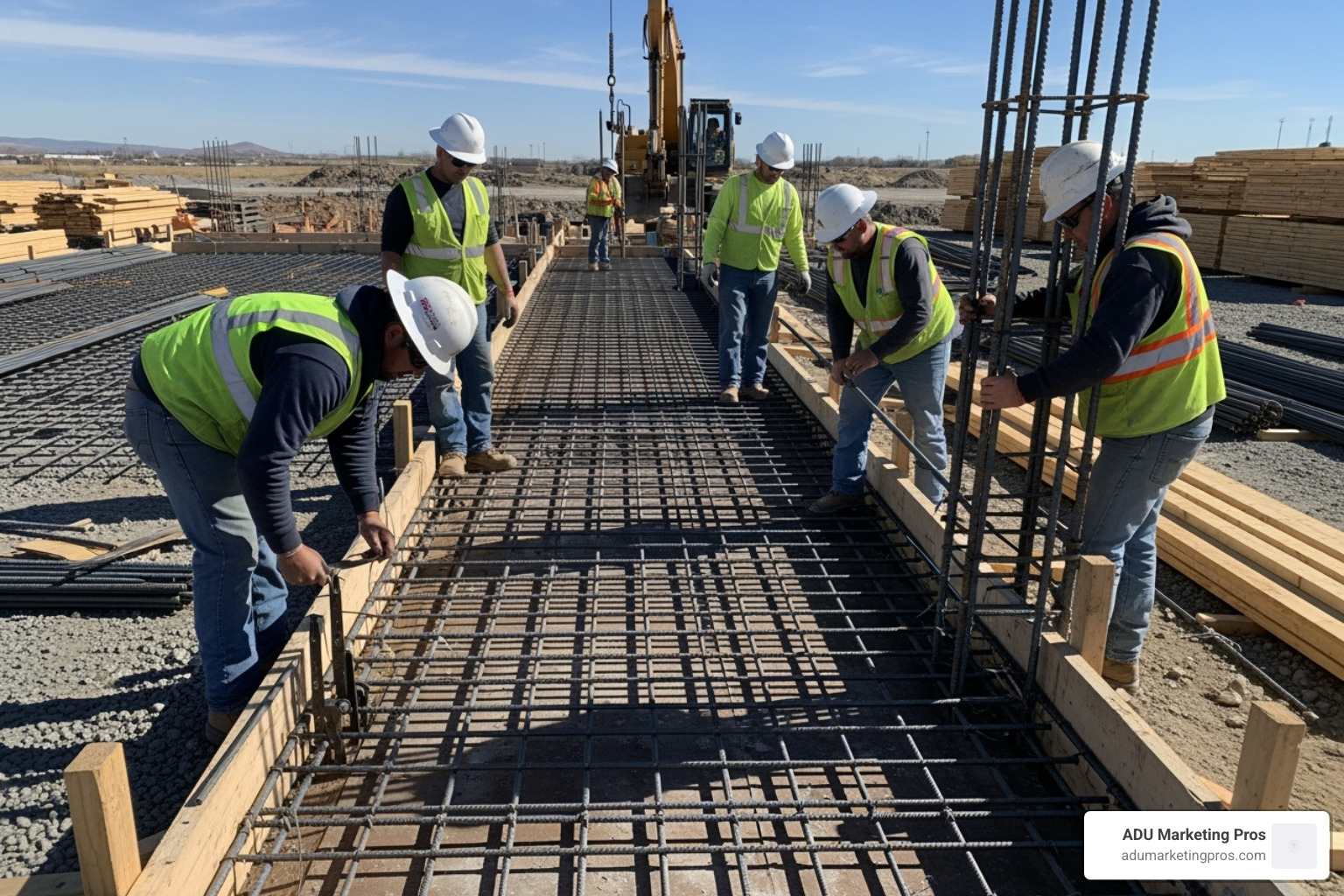
This is where the foundation takes physical form. First, crews build wooden or metal formwork to create a precise mold for the concrete. Then, a grid of steel reinforcement bars (rebar) is meticulously placed and tied together according to the engineer’s specifications. This rebar provides the tensile strength that concrete lacks, allowing the foundation to resist forces that would otherwise crack it. Any under-slab plumbing or electrical conduits are installed at this stage. A thick plastic vapor barrier is laid down to block moisture from wicking up from the soil.
At this point, everything stops for the pre-pour inspection. A city or county building inspector must visit the site to verify that the forms, rebar placement, footing depth, and utility rough-ins all meet the approved plans and code. If anything is incorrect, it must be fixed and re-inspected. Once the inspection passes, the ready-mix concrete is ordered. It is poured, carefully vibrated to remove air pockets, and expertly finished. The concrete then begins to cure—a chemical hardening process that gains strength over time. Proper curing is vital and may require keeping the concrete moist for several days. After the concrete has reached sufficient strength (typically verified by testing), a final foundation inspection may be performed. Once this passes, framing can begin.
The Importance of a Structural Warranty
After investing a significant amount of money in a new foundation for ADU, a structural warranty provides essential protection and peace of mind. This warranty specifically covers defects in materials or workmanship for major structural components, with the foundation being the most critical. It protects you from the immense cost of repairing significant issues like differential settling, major cracking, or heaving that could compromise the structural integrity of your entire ADU.
Reputable ADU contractors and design-build firms typically offer a comprehensive structural warranty of at least 10 years, which is the industry standard in California. A shorter term can be a red flag about the builder’s confidence in their work. This warranty ensures your investment is protected long after the construction is complete. For ADU builders looking to highlight their commitment to quality, ADU Marketing Pros can help showcase your expertise and robust warranty offerings to attract discerning homeowners who value long-term security.
Frequently Asked Questions about the Foundation for an ADU
Planning an ADU brings up many questions, especially concerning the foundation, which is a complex and costly part of the project. Here are detailed answers to some of the most common concerns we hear from homeowners.
What is the best foundation for an ADU?
There is no single “best” foundation for ADU projects. The optimal choice is entirely dependent on a professional analysis of your specific site conditions, budget, and local building codes.
- Slab-on-grade foundations are the most common and cost-effective choice for properties that are flat, have stable, well-draining soil, and are not in a flood zone.
- Raised foundations are generally the superior and often more practical option for sloped lots, sites with expansive soil, areas with poor drainage, or for homeowners who want easier access to utilities for future maintenance and repairs.
Ultimately, the decision should not be made based on cost alone. You must consult with an experienced ADU builder and a structural engineer. They will use a geotechnical report to determine the safest and most durable solution for your property.
How deep does an ADU foundation need to be?
Foundation depth is not a one-size-fits-all number; it is determined by the structural engineer based on soil type, climate, local codes, and the weight of the ADU. In many parts of California, a standard concrete slab foundation must have its footings extend a minimum of 12 to 18 inches below the undisturbed native soil.
However, the footings—the parts of the foundation that bear the structural load—often must extend 24 inches deep or more to reach stable, load-bearing soil or to get below the frost line in colder climates. On sloped sites, footings on the downhill side may need to be significantly deeper (these are called stepped footings). A geotechnical soil report is the document that provides the specific data your engineer needs to calculate and specify the correct footing depth for every part of your foundation.
Can I build an ADU on an existing concrete slab?
This is a common question, but the answer is almost always no. An existing patio slab or old garage floor was not designed or engineered to support the weight and structural loads of a habitable dwelling. To be used, it would need to meet all current building codes, which is highly unlikely.
A structural engineer would need to perform a thorough evaluation, which might include core drilling to check:
- Thickness and Strength: Is the slab thick enough (typically 4-6 inches) and does the concrete meet strength requirements (e.g., 2500 PSI)?
- Reinforcement: Does it contain an adequate amount of steel rebar for structural integrity?
- Footings: Does the slab have proper perimeter and interior footings that extend to the required depth? (Most patio slabs do not.)
- Vapor Barrier: Is there a moisture barrier underneath to prevent water from wicking into the structure?
In over 99% of cases, the existing slab will fail this evaluation. It is almost always safer, faster, and more cost-effective in the long run to demolish the old slab and pour a new, fully engineered foundation for ADU construction that is guaranteed to pass inspection and support your home safely for decades.
What are the most common foundation mistakes to avoid?
- Skipping the Soil Report: Trying to save a few thousand dollars by not getting a geotechnical report is the biggest mistake. It’s required by most jurisdictions and is the only way to design a foundation correctly.
- Hiring a Low-Bid Contractor: Choosing an inexperienced contractor based on price alone often leads to cut corners, failed inspections, and costly rework. Verify licenses, insurance, and ADU-specific experience.
- Underestimating Site Prep Costs: The cost of grading, drainage, and dealing with unexpected soil issues can be substantial. Not having a healthy contingency fund can derail your project.
- Improper Drainage: Failing to design a system to move water away from the foundation is a primary cause of future foundation failure, moisture intrusion, and mold.
Conclusion: Building Your ADU on Solid Ground
Your foundation for ADU construction is the most critical decision you will make in your building journey. It dictates the safety, durability, and long-term value of your entire investment. As we’ve detailed, the right choice is not a one-size-fits-all answer but a careful, calculated balance of your site’s unique geology, your project’s budget, and strict local building codes. A slab-on-grade foundation may be the simple, cost-effective solution for a flat lot with perfect soil, but a sloped property or one with expansive clay will almost certainly require a more complex and robust raised or engineered foundation.
The most important takeaway is that this is not a DIY decision or a place to cut corners. The consequences of a faulty foundation are too severe. Working with a team of experienced professionals—a geotechnical engineer, a structural engineer, and a qualified ADU contractor—is absolutely essential. They are your partners in navigating California’s unique challenges, from seismic forces to problematic soils. Their expertise is what transforms a simple plot of land into a solid, reliable base for a structure that will safely serve your family and enhance your property for generations to come.
For ADU builders and architects ready to connect with homeowners who understand and value this level of professional expertise, ADU Marketing Pros can help. We specialize in digital marketing strategies that showcase your firm’s commitment to quality and attract qualified, educated leads in California’s competitive ADU market. To learn how we help top ADU businesses grow, explore strategies for marketing ADU garage conversions and see how we can elevate your brand.