
Why a Garage Conversion Apartment is the Smart Investment You’ve Been Overlooking
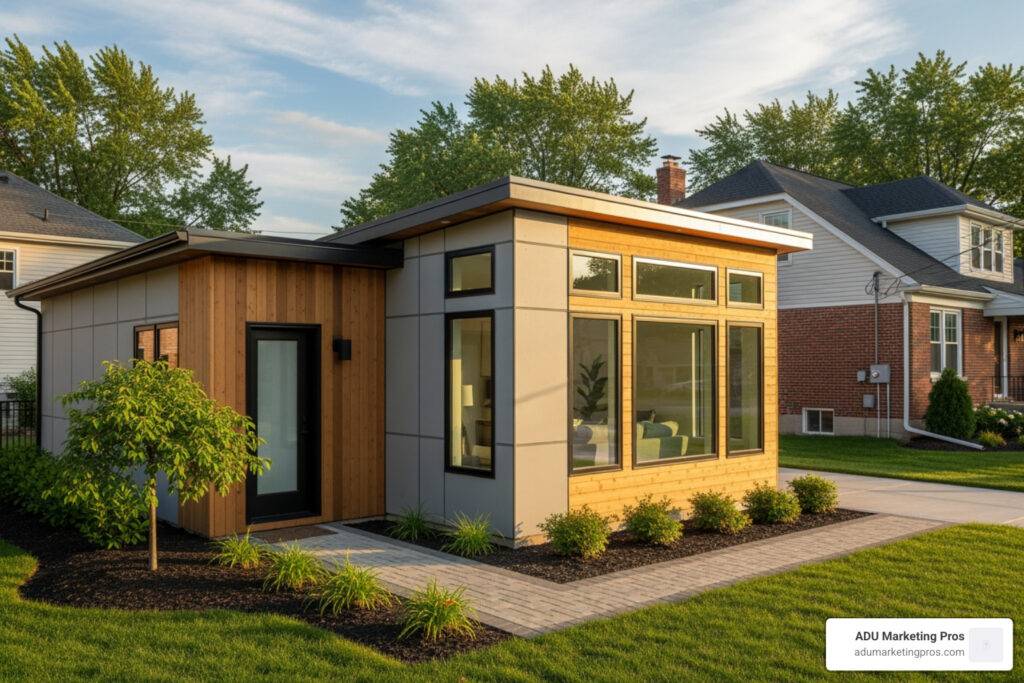
In cities and suburbs across the country, a valuable asset lies dormant on millions of properties, often filled with little more than dust, old boxes, and forgotten hobbies. This hidden gem is the humble garage. A garage conversion apartment is a transformative project that reimagines this underutilized space, converting it into a fully functional, independent living unit. Also known as an Accessory Dwelling Unit (ADU) or granny flat, this type of project is rapidly becoming one of the most strategic real estate investments a homeowner can make.
More than just adding a spare room, a garage conversion creates a separate home on your property, complete with its own kitchen, bathroom, and entrance. This unlocks a powerful combination of benefits, offering a direct response to pressing modern challenges. It can provide a steady stream of rental income to combat rising living costs, create affordable housing for family members in expensive markets, and add significant, tangible value to your property. With the average American garage measuring around 400 square feet, you already have the footprint for a spacious studio or a cozy one-bedroom apartment waiting to be realized.
These projects offer a sustainable and intelligent solution to the ongoing housing crisis by increasing density without expanding a property’s physical footprint. However, a successful conversion is a significant undertaking. It requires careful navigation of local building codes, securing the right permits, and managing utility upgrades. Costs can range widely, typically from $60,000 to over $220,000, depending on location and scope. Understanding the full process, from initial design to final inspection, is the key to transforming a cluttered storage space into a valuable, income-generating, and life-enhancing asset.
Why Convert Your Garage? The Top Benefits of a Garage Apartment
If your garage has become a glorified storage unit for items you rarely use, you’re overlooking a powerful financial and personal opportunity. Converting that space into a living unit is a strategic move that can transform your financial future, strengthen family bonds, and solve real-world housing challenges. The reasons extend far beyond simple decluttering; it’s about unlocking the full potential of your property.
Compelling Financial Gains
The financial case for a garage conversion is multifaceted and robust. First, it creates an immediate and significant boost in your property’s market value by adding permitted, finished square footage. Second, and perhaps more powerfully, it creates a new income stream. A typical garage conversion apartment can generate $600-$800+ in monthly rental cash flow, and in high-demand urban areas, this figure can easily double or triple. This income can be used to pay down your primary mortgage, cover the project’s financing, or simply provide a substantial boost to your monthly budget. Over the long term, the returns are staggering. A $130,000 conversion can represent a $1.5 million asset over 30 years when factoring in rental income and property appreciation, offering a return on investment that few other home improvements can match. You can learn more about maximizing this on our page about ADU Return on Investment.
A Solution for Multi-Generational Living
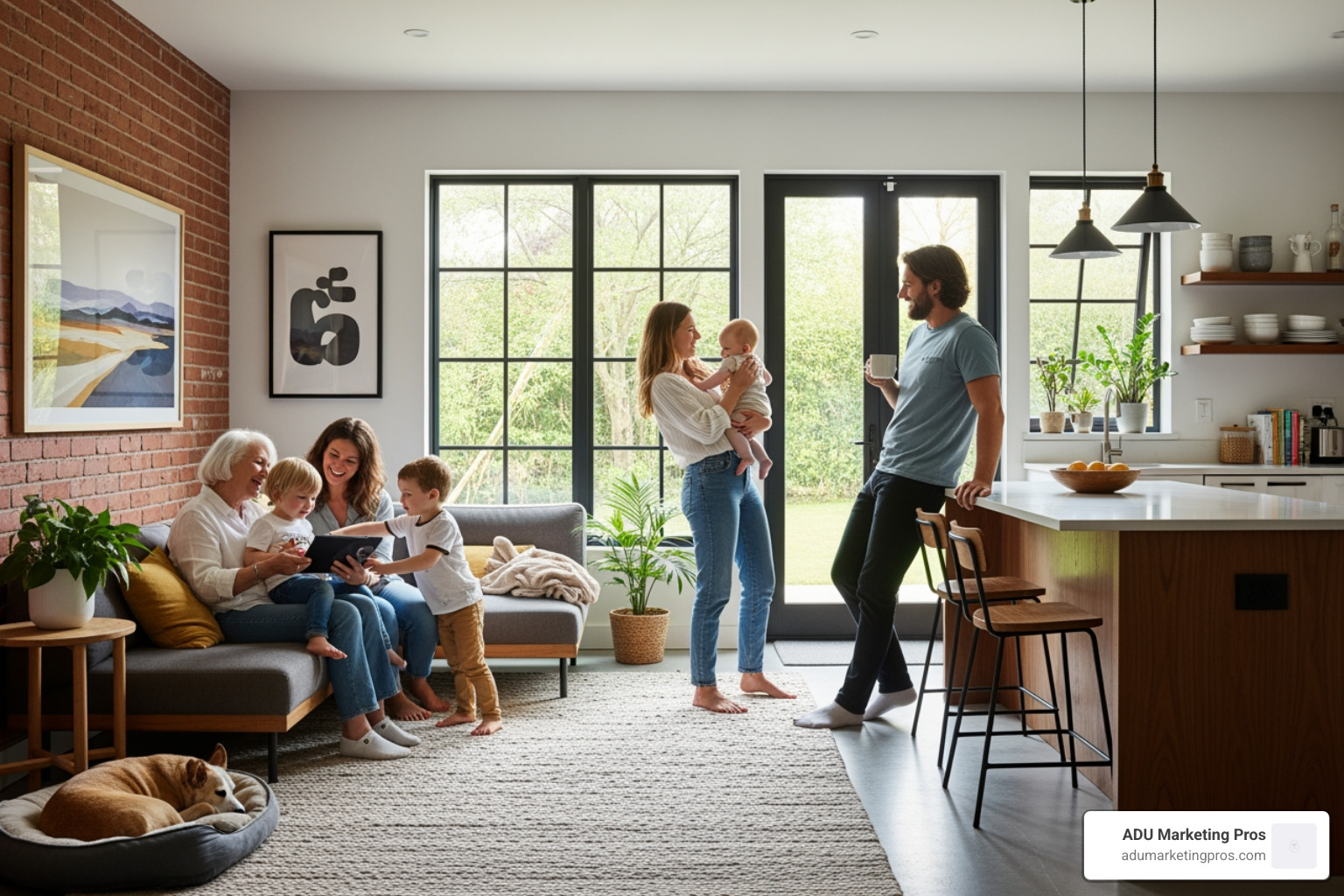
Beyond pure finances, garage conversions provide elegant solutions for family housing needs. They are the perfect vehicle for multi-generational living, allowing aging parents to live independently while remaining close for support and connection. This offers a far more personal, dignified, and cost-effective alternative to assisted living facilities, which average $125 per day in California, or nursing homes that can exceed $9,000 per month in Los Angeles. The proximity fosters peace of mind for everyone, keeping families together without sacrificing privacy. Similarly, these units provide a private, affordable space for adult children saving for their own homes, giving them a launchpad for financial independence without the pressure of a high-cost rental market.
Smart and Sustainable Space Utilization
Converting your garage is also an act of smart, sustainable development. A landmark UCLA study revealed that 75% of garages in Los Angeles were too full of clutter to park a car. Instead of letting this valuable, pre-existing structure go to waste, a conversion puts it to its highest and best use. This is an environmentally friendly approach to adding housing, as it utilizes an existing foundation and frame, reducing the need for new materials and land. By transforming a dusty, underused space into a modern, energy-efficient apartment, you are not only improving your property but also contributing a needed housing unit to your community.
Unmatched Flexibility for the Future
One of the most underrated benefits of a garage conversion is its inherent flexibility. The use of the space can adapt as your life changes. Today, it might be a high-income rental unit. In five years, it could become a home for your aging parents. Ten years from now, it might serve as a home office, a creative studio, a private gym, or a guest suite for visiting family and friends. This adaptability makes a garage conversion a future-proof investment, ensuring the space will continue to serve your needs and provide value for decades to come.
The Ultimate Guide to the Garage Conversion Process
Changing your garage into a legal, habitable apartment is a structured journey that, with proper planning and the right professional team, is entirely manageable. The entire project, from the first sketch to a move-in-ready unit, can be broken down into three distinct phases. Understanding this roadmap is the first step toward a successful and stress-free conversion.
Phase 1: Feasibility, Planning, and Design (2-4 Months)
This foundational phase is where your project’s success is determined. It’s about due diligence and creating a comprehensive plan. A crucial first step is a structural assessment; your garage’s foundation and framing were designed to shelter cars, not people, and will likely need reinforcement. The concrete floor, which typically slopes for drainage, must be leveled and properly moisture-proofed. Whether your garage is attached or detached will heavily influence utility connections, overall cost, and privacy considerations. During this phase, you will assemble your professional team. This typically includes an architect or designer specializing in ADUs and a structural engineer. In a complex market like Los Angeles, hiring specialized ADU Architects in Los Angeles can be invaluable. They will develop the comprehensive ADU Building Plans that serve as the blueprint for every subsequent step, from permitting to construction. A realistic timeline for a full conversion is five to ten months, with this initial planning stage being the most critical for staying on schedule and budget.
Phase 2: Navigating Permits and Legal Requirements (1-3 Months)
This phase is non-negotiable for a safe and legal project. A garage conversion apartment is a new dwelling and must meet the same strict safety and habitability standards as a primary home. This includes codes for insulation, energy efficiency (like California’s Title 24), fire safety, electrical, plumbing, and ventilation. While states like California have passed laws to streamline ADU approval, local jurisdictions in cities like San Jose or San Diego still have their own specific rules and review processes. Understanding your local ADU Zoning Laws is essential. The ADU Permit Process involves submitting your detailed architectural and structural plans to the local building department for review and approval. Attempting an unpermitted conversion is a massive mistake that creates huge liability, makes the property difficult to insure or sell, and can result in orders to tear out the work. For a compliant project, follow a comprehensive planning guide for garage conversions. Fortunately, parking rules have been relaxed in many areas; if your property is near public transit, you likely won’t need to replace the parking space. Always verify your local ADU Parking Requirements with your city’s planning department.
Phase 3: Construction and Key Changes (3-6 Months)
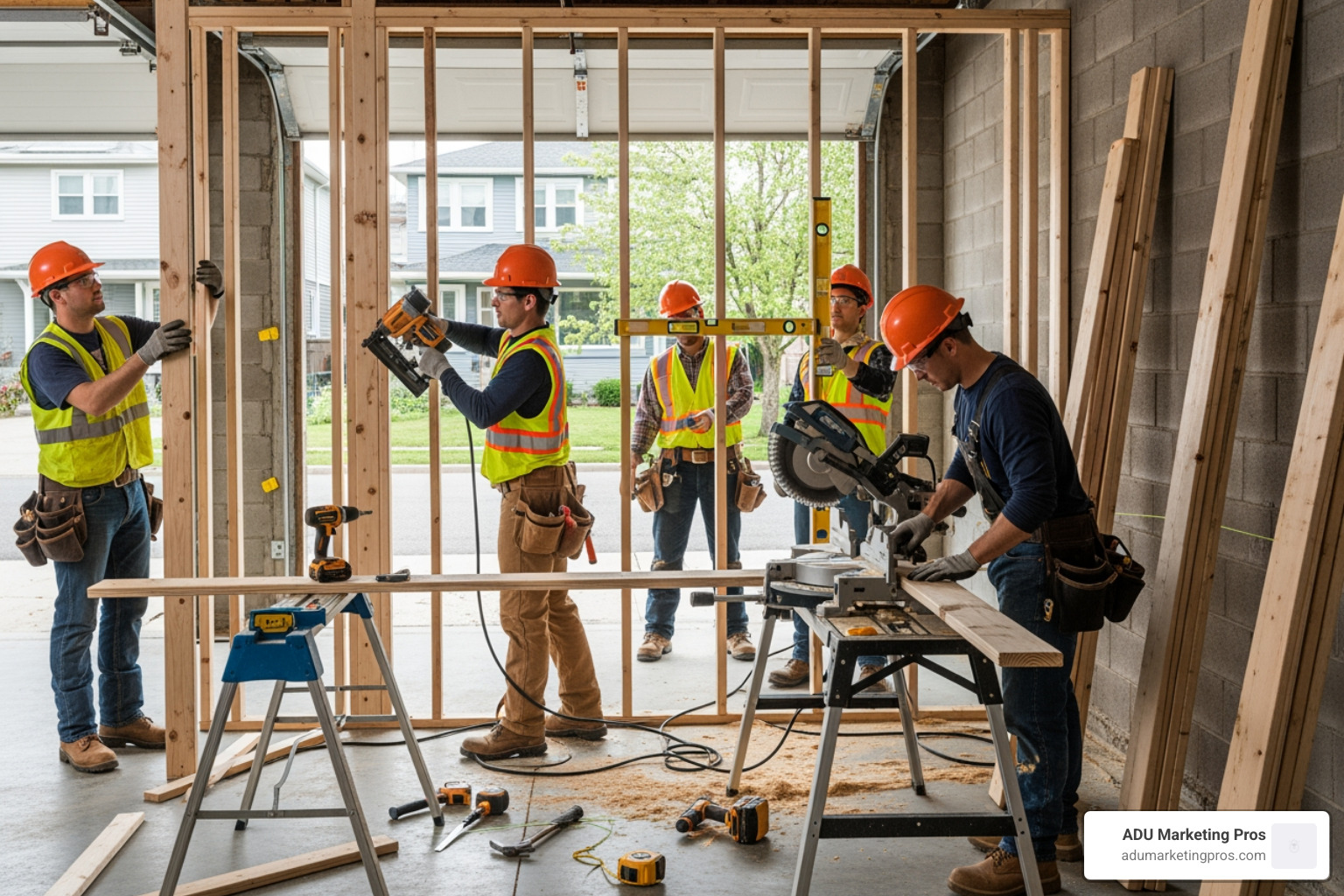
With approved permits in hand, the physical transformation begins. The construction process typically follows a clear sequence:
- Demolition and Site Prep: Removing old drywall, clearing the space, and saw-cutting the concrete slab for new plumbing trenches.
- Foundation Work: Pouring a new, level concrete slab or a ‘floating floor’ system over the existing one, including underslab plumbing and vapor barriers.
- Framing and Structural Changes: Building new interior walls to define the layout (bedroom, bathroom, etc.), reinforcing the ceiling structure, and framing new window and door openings.
- MEP Rough-In: This is when licensed plumbers, electricians, and HVAC technicians run all the new pipes, wires, and ducts through the open walls.
- Insulation and Drywall: High-quality insulation is installed in walls and ceilings to meet energy codes and provide sound dampening. Fire-rated drywall is often required on walls shared with the main house. The walls are then closed up with drywall, taped, and textured.
- Exterior Work: The large garage door is removed and replaced with a standard exterior wall, windows, and the main entry door. Siding, roofing, and paint are completed.
- Interior Finishes: This is the final stage where the space starts to look like a home. Flooring, cabinets, countertops, tile, and paint are all installed.
- Finals and Fixtures: Plumbing fixtures (sinks, toilet, shower), light fixtures, outlets, appliances, and the HVAC system (like a ductless mini-split) are installed. The project concludes with a final inspection from the city to ensure all work was done to code, after which you receive a Certificate of Occupancy.
Budgeting for Your Garage Conversion: Costs and Financing
Understanding the full financial scope of a garage conversion is critical to ensuring the project is a sound investment rather than a source of stress. A detailed, realistic budget will prevent costly surprises and guide your decision-making process from start to finish. While it’s a significant upfront investment, the long-term returns often make it one of the most profitable home improvement projects you can undertake.
Understanding the Cost of a Garage Conversion Apartment
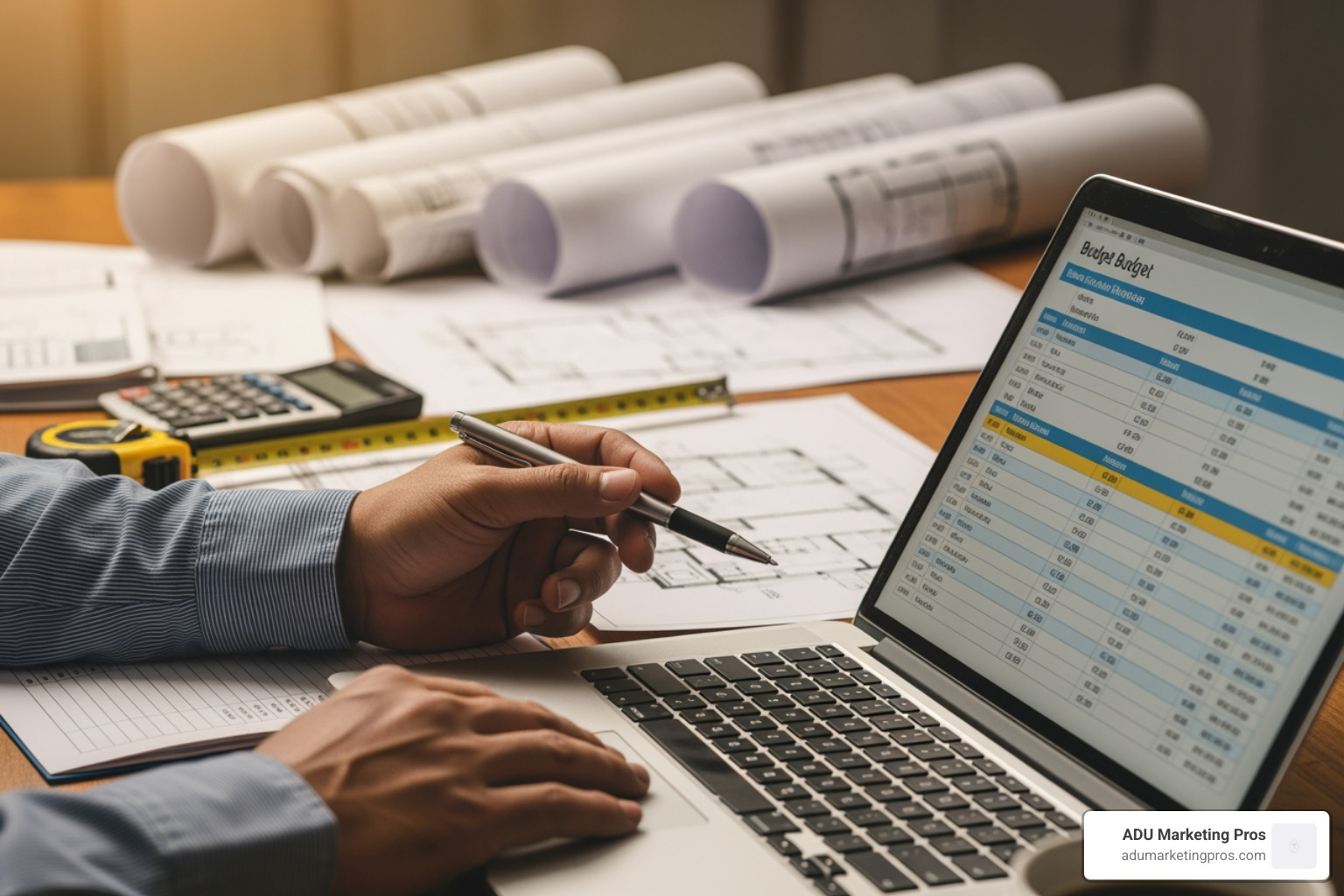
For a legal, fully permitted, and professionally built garage conversion apartment in major California markets, homeowners should expect to invest between $60,000 and $220,000. A simple studio conversion in a lower-cost area might fall on the lower end of that spectrum, while a high-end, one-bedroom conversion in the San Francisco Bay Area will often land in the $140,000 to $220,000 range. These costs are typically broken into two main categories:
- Soft Costs ($14,000 – $28,000+): These are the pre-construction expenses required to plan the project. This includes architectural and engineering design fees, soil reports, energy calculations (Title 24), and city permit and impact fees.
- Hard Costs ($110,000 – $200,000+): This represents the bulk of the budget and covers all physical construction. This includes labor, materials, foundation work, framing, plumbing, electrical, HVAC, insulation, windows, doors, roofing, and all interior and exterior finishes. Appliances may or may not be included in a contractor’s bid, so be sure to clarify.
Your final price tag depends heavily on your location, the existing condition of your garage, the scope of work, and the quality of finishes you select. While some DIY work on finishes can save money, critical systems like electrical, plumbing, and structural work require licensed professionals to ensure safety and code compliance. For a custom estimate, our Garage Conversion Cost Calculator can provide a helpful starting point.
How to Finance Your Project
Few homeowners pay for a full conversion entirely out of pocket. Fortunately, there are several excellent financing options available to make the project feasible:
- Cash-Out Refinancing: This involves replacing your current mortgage with a new, larger one. You take the difference between the new loan amount and your old mortgage balance in cash, which you can then use to fund the conversion. This is often a good option when interest rates are low.
- Home Equity Loan or Line of Credit (HELOC): If you have significant equity in your home, you can borrow against it. A home equity loan provides a lump-sum payment with a fixed interest rate. A HELOC works more like a credit card, allowing you to draw funds as needed up to a certain limit, typically with a variable interest rate.
- Construction Loans: These are short-term loans specifically designed for building projects. The lender releases funds in stages (or “draws”) as construction milestones are completed and inspected. Once the project is finished, this loan is often refinanced into a conventional mortgage.
- State and Local Programs: To combat the housing shortage, many governments offer incentives. California’s Accessory Dwelling Unit (ADU) Grant Program, for example, provides grants to lower-income homeowners to help cover pre-construction costs. Explore our guide to ADU Financing Options to find the right fit for your financial situation.
Designing a Functional and Stylish Garage Conversion Apartment
Thoughtful design is what elevates a garage conversion from a simple box to a comfortable, desirable, and highly functional home. A well-designed garage conversion apartment maximizes every square inch, creating a living space that feels bright, open, and stylish. You have a blank canvas to work with, and smart choices in layout, materials, and fixtures will make all the difference. For visual ideas, browsing galleries of completed projects like these Design Photos can provide excellent inspiration.
Smart Layouts for Your Garage Conversion Apartment
With a limited footprint of roughly 200 sq. ft. for a single-car garage and 400 sq. ft. for a two-car garage, the layout is everything. For smaller spaces, an open-concept studio layout is almost always the best choice. This design eliminates interior walls to create a sense of spaciousness. You can use area rugs, furniture placement, or partial screen dividers to visually define the living, sleeping, and kitchen zones. For larger two-car garages, a one-bedroom plan is achievable and offers greater privacy, which is highly attractive to renters. In either case, consider space-saving features like pocket doors or barn doors, which don’t require swing clearance. Many clever ideas can be found in 400 Square Foot ADU Plans. To make the space truly livable, incorporate multi-functional furniture like a Murphy bed that folds into a cabinet, a coffee table that rises to become a dining table, and storage ottomans. Maximizing natural light with large windows, skylights, or glass doors is also crucial to making a small space feel welcoming and expansive.
Essential Utilities and Amenities
To be classified as a legal dwelling unit, your apartment must include several key amenities. A fully functional kitchen is required, which must include a sink with hot and cold water, a cooking appliance (like a stove or cooktop), a refrigerator, and counter space. Our ADU Kitchen Design page has great ideas for compact yet beautiful kitchens. A complete bathroom with a toilet, sink, and a shower or tub is also mandatory. For climate control, a ductless mini-split system is the most popular and efficient option, providing both heating and cooling without requiring bulky ductwork. While not always legally required, in-unit laundry (even a compact combo unit) is a highly desirable feature that significantly increases rental value and tenant satisfaction. Finally, a private entrance is essential for independence and privacy, making the unit feel like a true, separate home. These features are all part of modern ADU Design Trends.
Attached vs. Detached Garage Conversions
Your garage’s location relative to your main house will significantly impact the project’s cost, privacy, and complexity.
-
Attached Garages:
- Pros: Utility connections are generally easier and cheaper, as you can often tie directly into the main house’s existing plumbing, electrical, and sewer lines. The shared wall can reduce some framing and siding costs.
- Cons: Noise transfer is a major concern and requires significant investment in soundproofing insulation and double layers of drywall. Fire separation is a strict code requirement, mandating specific types of drywall and sealing. Privacy can be more limited for both the main house residents and the ADU occupant.
-
Detached Garages:
- Pros: They offer superior privacy and independence, which is a huge selling point for renters and creates a true sense of separation. This often translates to higher rental income. They also allow for the creation of a private outdoor space, like a small patio or garden, for the tenant.
- Cons: The primary drawback is cost. Running new utility lines across the yard in a trench is a major expense, especially if it involves breaking up concrete or navigating complex landscaping. A separate foundation and four exterior walls mean higher material costs.
Frequently Asked Questions about Garage Apartments
Embarking on a garage conversion project brings up many questions for homeowners. The process involves a mix of construction, legal, and financial considerations. Here are direct, detailed answers to some of the most common inquiries we receive about building a garage conversion apartment.
Do I need to replace the parking space I’m converting?
In most cases, probably not. Recognizing the need for more housing, California state law has significantly relaxed parking requirements for ADUs. You are generally exempt from replacing the parking spot if your property is located within a half-mile of public transit (like a bus stop or train station) or if you are in a designated historic district. In other cases, many cities allow the existing driveway or tandem parking (one car behind another) to satisfy the requirement. However, rules can still vary by city, from Palo Alto to Mountain View, so it is absolutely critical to confirm your local ADU Parking Requirements with your municipal planning department before finalizing your plans.
How long does a garage conversion take?
The entire process for a garage conversion apartment, from the initial design meeting to receiving the keys, typically takes five to ten months. This timeline can be broken down into two main stages:
- Design & Permitting (2-4 months): This pre-construction phase is often longer than people expect. It involves creating detailed architectural plans, getting structural engineering calculations, and submitting the entire package to your local building department for plan check. The back-and-forth with the city to get the plans approved can take several months.
- Construction (3-6 months): Once the permit is issued, the physical work can begin. The duration depends on the complexity of the project, contractor availability, and potential supply chain issues. A simple studio conversion might be on the faster end, while a more complex one-bedroom unit with significant structural changes will take longer. Unforeseen issues, like discovering a cracked foundation, can also affect the timeline, so building in a small buffer is wise.
Can I do a garage conversion myself (DIY)?
A hybrid approach is the most realistic and safest path for most homeowners. You can achieve significant cost savings by handling certain finishing work yourself. This could include painting, installing laminate or LVP flooring, assembling kitchen cabinets, tiling a backsplash, or doing the final landscaping. However, critical systems must be handled by licensed professionals. This is non-negotiable for all electrical, plumbing, structural (framing, foundation), and HVAC work. Using licensed tradespeople ensures the project is safe, compliant with building codes, and properly insured. Attempting to DIY this critical work can lead to failed inspections, dangerous living conditions, and major problems when you eventually try to sell your home.
Will my property taxes go up after a garage conversion?
Yes, you should expect your property taxes to increase. However, it’s not as dramatic as many fear. The county assessor will not reassess the value of your entire property. Instead, they will perform a “blended assessment.” This means your existing home and land will continue to be assessed based on their original purchase price (with standard annual increases, per Prop 13 in California), while only the value of the new construction (the garage conversion) is added to your tax bill at its current market value. The increase is typically manageable and is far outweighed by the rental income or value the ADU provides.
Conclusion
Your underused garage holds immense potential, waiting to be unlocked. A garage conversion apartment is far more than a simple home improvement project—it’s a sophisticated, strategic investment that provides powerful financial returns, offers compassionate solutions to modern housing challenges, and dramatically increases the utility of your property.
By transforming this often-neglected space, you can generate a steady stream of passive rental income, significantly boost your property’s overall value, and provide flexible, independent housing for family members, whether it’s aging parents or adult children. The journey from a cluttered storage area to a beautiful, legal dwelling requires careful planning, a budget built on realistic expectations, and the guidance of experienced professionals to navigate local regulations and complex construction. However, the rewards—both financial and personal—are substantial and lasting.
Homeowners across California and beyond are proving every day that the investment is well worth the effort, paying dividends for decades to come. At ADU Marketing Pros, we specialize in connecting homeowners with the vetted, expert builders and architects who bring these transformative projects to life. If you’re ready to explore the hidden value in your garage, our complete guide to ADU Garage Conversions provides the tools, insights, and professional connections you need to begin your journey toward a successful and profitable project.