
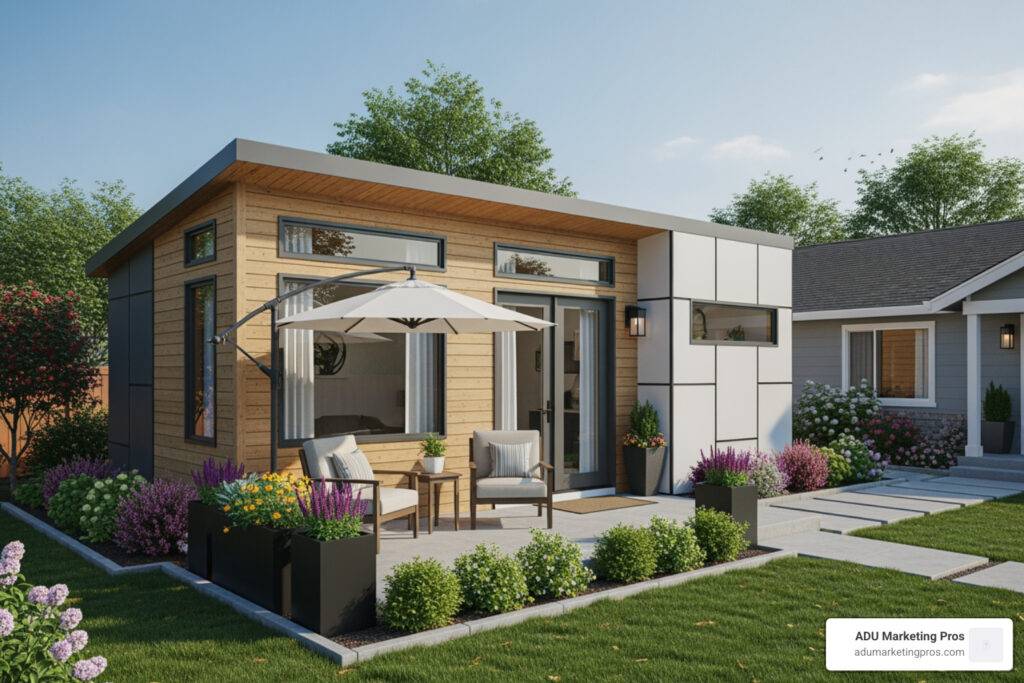
The Rise of the Backyard Cottage: An Introduction
A prefab mother in law suite is a factory-built accessory dwelling unit (ADU) designed to house family members on your property. These self-contained living spaces offer a faster, more affordable alternative to traditional construction while providing privacy, independence, and the ability to keep loved ones close.
Quick Overview: What You Need to Know
- What it is: A self-contained living space built in a factory and installed on your property, also called a granny flat, in-law apartment, or backyard cottage
- Typical cost: $90,000–$400,000+ depending on size (300–800+ sq. ft.) and customization
- Build time: 3–6 months total, with factory construction in weeks and installation often in 1–3 days
- Key benefits: Faster construction, controlled quality, cost predictability, 60% energy savings, and property value increase up to 35%
- Common uses: Housing aging parents, adult children, generating rental income ($1,500–$2,500/month), or creating flexible guest space
The numbers tell a compelling story. Over 64 million Americans lived in multigenerational households as of 2018, and that figure jumped to over 51 million between 2007 and 2020—a 10% rise driven by economic shifts, cultural changes, and an aging population. According to USA Today, this trend shows no signs of slowing down.
For many families, the question isn’t whether to bring generations together, but how to do it in a way that respects everyone’s need for privacy and independence.
Traditional home additions are expensive, disruptive, and time-consuming. Converting a garage or basement often means sacrificing essential space. Building a detached structure from scratch can drag on for over a year, with costs spiraling as weather delays and material shortages pile up.
Prefabricated construction changes the equation.
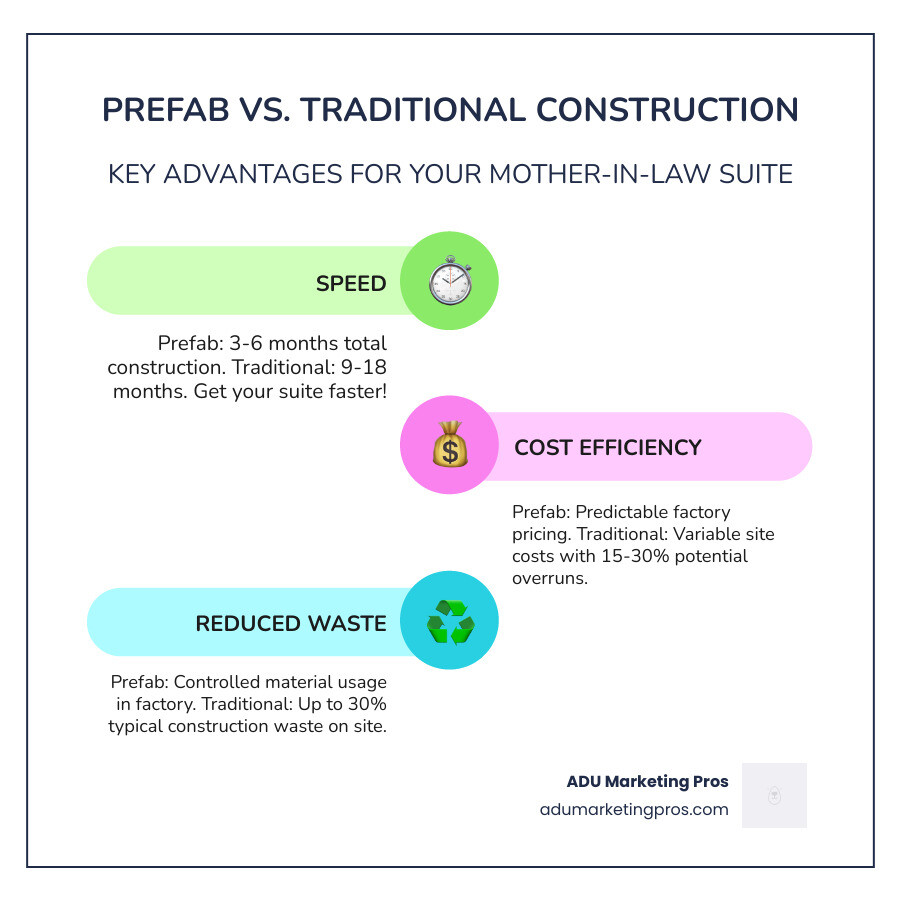
By building your mother-in-law suite in a controlled factory environment, you get faster timelines, predictable costs, and superior quality control. The unit arrives at your property largely complete, ready for installation in days rather than months. Site disruption is minimal. Weather delays are rare. And you’re not left wondering when—or if—the project will finally wrap up.
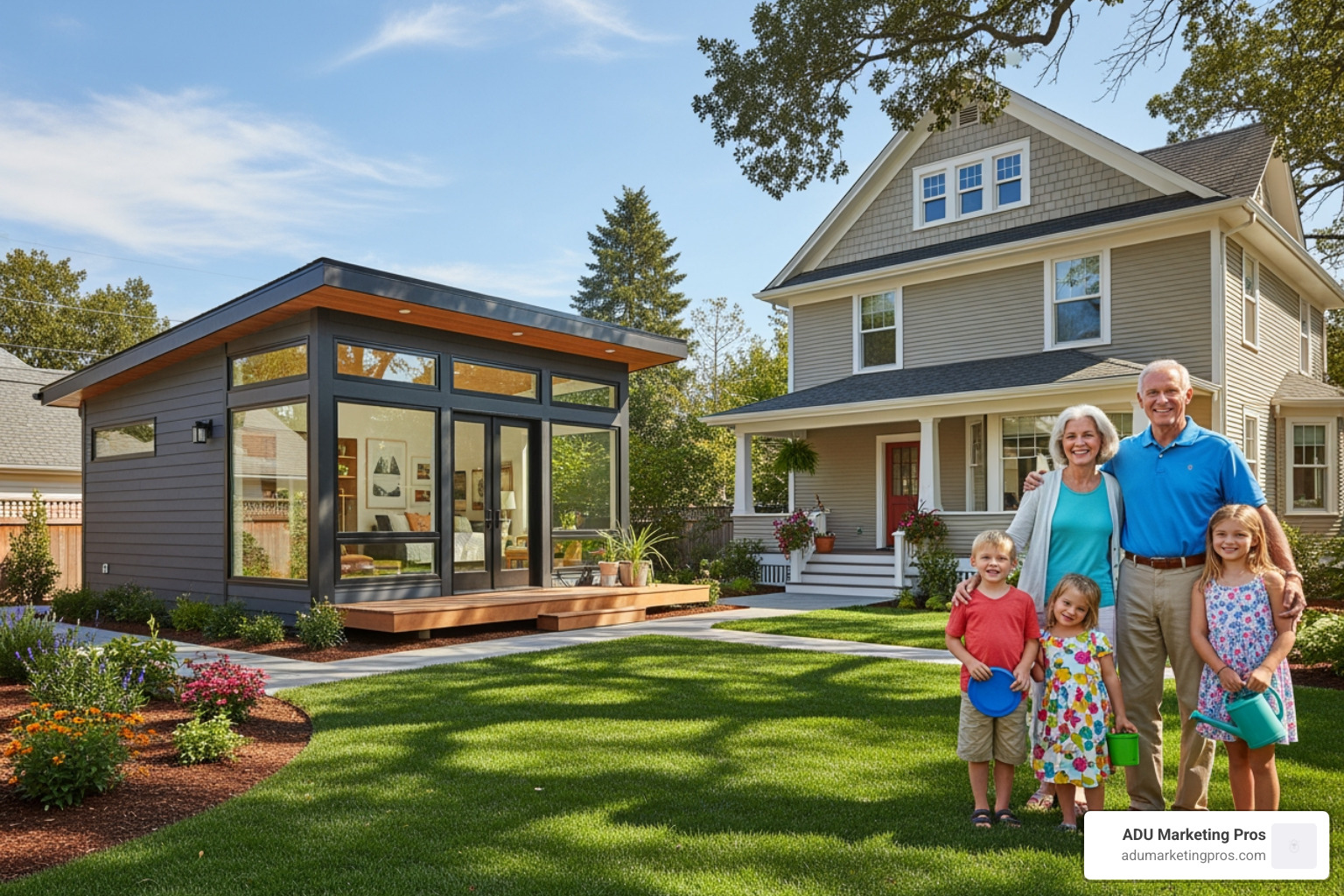
Beyond the practical benefits, these units represent a smart financial move. Homes with ADUs can sell for up to 35% more than comparable properties without them. If your family situation changes, the suite can generate rental income. And for many families, housing aging parents in a backyard cottage costs far less than assisted living facilities while keeping loved ones close for daily visits and support.
Whether you’re planning ahead for aging parents, accommodating an adult child, or simply adding flexible living space to your property, a prefab mother in law suite offers a proven solution that balances family proximity with personal independence.
What Exactly is a Prefab Mother-in-Law Suite?
A prefab mother in law suite is essentially a factory-built Accessory Dwelling Unit (ADU) designed to provide a self-contained living space on your property, separate from your main home. Freddie Mac defines an ADU as “a smaller, independent residential structure on the same lot as a single-family home.” To be officially classified as an ADU, it typically needs a kitchen, bathroom, and separate entrance.
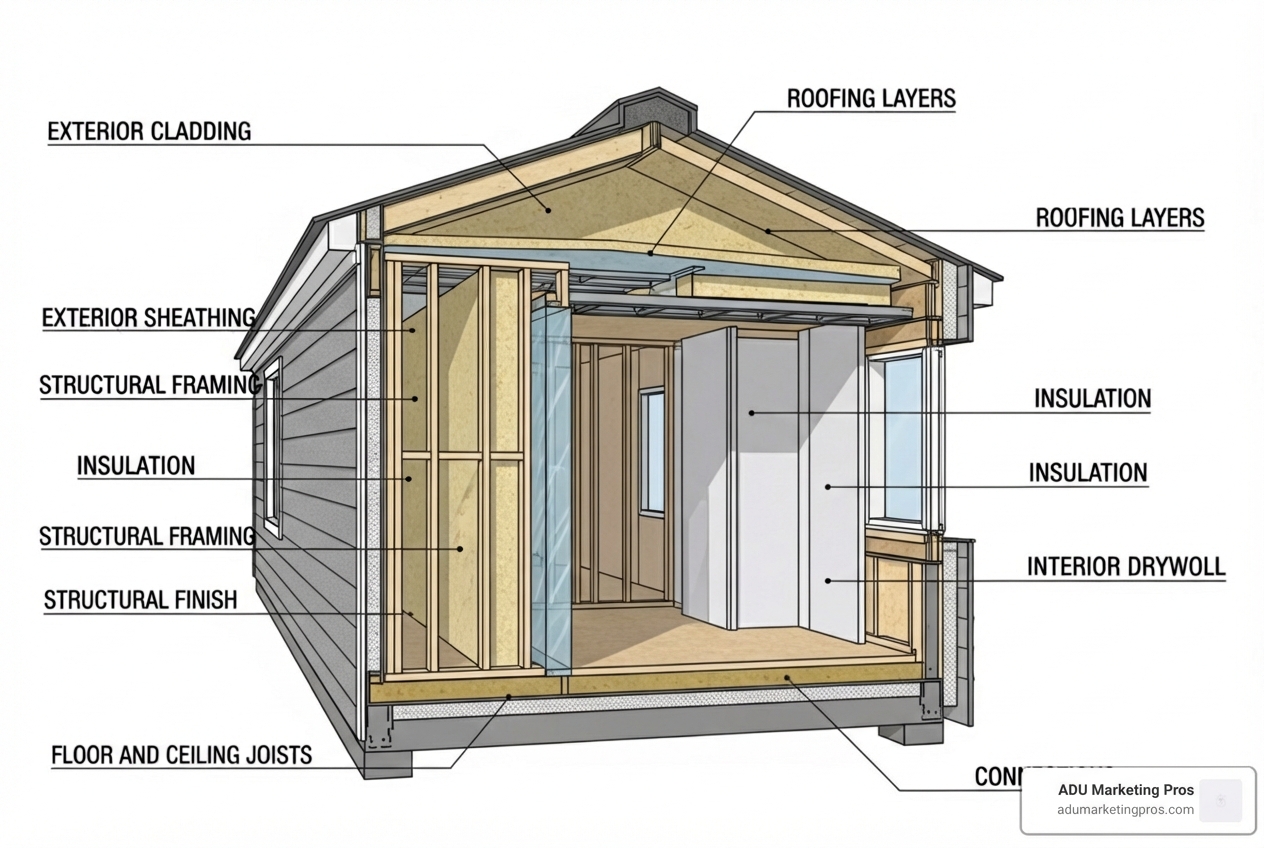
The “prefab” part means that a significant portion of the construction takes place off-site in a factory setting. These units can be modular (built in complete sections or modules) or panelized (built as pre-cut and pre-assembled panels). This off-site construction leads to increased efficiency, quality control, and often a faster overall timeline compared to traditional stick-built construction.
Common Names and What They Mean
The term “prefab mother in law suite” is just one of many names for these versatile structures. You might also hear them referred to as:
- Granny Flat: This term often implies a smaller, self-contained unit primarily intended for an elderly family member, allowing them to age in place with dignity and proximity to family. Learn about Granny Flats in California and their growing popularity in our state.
- In-law Apartment: Similar to a granny flat, but perhaps with a broader implication for any adult family member, such as a college graduate or a relative needing temporary housing.
- Backyard Cottage: This emphasizes the detached nature and often a more aesthetically pleasing, standalone structure in the backyard.
- Secondary Suite: A legal term often used in zoning and housing regulations to describe an additional dwelling unit on a property.
- Casita: A Spanish term meaning “little house,” often used in the Southwestern U.S. to refer to a small guest house.
- Garden Cottage: Highlights the integration of the unit into the landscape or garden area.
Regardless of the name, the core concept remains the same: a functional, independent living space that offers privacy and convenience. For more on ADU vs. Tiny House differences, explore our guide.
Attached vs. Detached vs. Conversion
When considering a prefab mother in law suite, it’s helpful to understand the different types of ADUs you can build:
- Detached ADUs: These are standalone structures completely separate from the main house, typically located in the backyard. They offer the most privacy and can be ideal for a prefab mother in law suite as they arrive mostly complete and are installed on a prepared foundation. Explore Detached ADU Plans to see what options are available.
- Attached Additions: These units are physically connected to the main house, sharing a wall or roof. While still providing independent living, they offer less privacy than detached units and involve more extensive construction impacting the existing home.
- Garage Conversions: Changing an existing garage into a living space is a popular option in California. This can be a cost-effective way to create an ADU, as the structure is already in place. However, it requires adding essential features like electricity, running water, heating, and insulation. The average cost to convert a garage into an ADU is between $20,000 and $60,000, but can be higher depending on the scope.
- Basement Suites: If your property has a basement, converting it into an in-law suite can provide a spacious and private living area. This often requires ensuring proper egress, ventilation, and waterproofing, as well as adding a kitchen and bathroom.
For prefab construction, detached units are often the most straightforward, as they minimize integration with the existing home.
The Prefab Advantage: Why Choose Factory-Built for Your In-Law Suite?
Choosing a prefab approach for your mother in law suite offers a multitude of benefits that traditional construction simply can’t match. We often tell our clients that it’s about building smarter, not harder.
Speed and Efficiency: From Factory to Foundation
One of the most compelling advantages of a prefab unit is the speed. While site preparation, permits, and utility hookups can still take time, the actual construction of the dwelling happens in a controlled factory environment. This means:
- Faster Construction: Once your panels arrive at the build site, our house kits can be under roof in as little as 1-3 days. Even with site work, the entire installation process for a prefab mother in law suite can be completed in 8-12 weeks from permit approval, with the overall project taking 3-6 months. This is significantly quicker than the 9-18 months often seen with traditional builds.
- Minimal Weather Delays: Factory construction is immune to rain, wind, or extreme temperatures, preventing costly delays and keeping your project on schedule.
- Streamlined Process: The parallel nature of site work and factory construction means your project progresses much faster. See ADU Construction Regulations for California-specific timelines.
Financial Benefits: Boosting Property Value and Generating Income
A prefab mother in law suite isn’t just a place for family; it’s a savvy financial investment for your property in California.
- Increased Property Value: Homes with ADUs can be priced up to 35% higher than those without. This significant boost to your property value makes an ADU a wise long-term investment. Separate guest houses are a popular option for adding an in-law suite to your property, and they notably add value.
- Rental Income Potential: If family needs change, or if you simply want to maximize your investment, your prefab mother in law suite can be rented out. Depending on the area and size, you could generate substantial rental income. While specific California numbers vary, a general range of $1,500–$2,500/month is often cited for secondary suites. To understand the full financial picture, dive into our ADU Return on Investment guide.
- Aging-in-Place Cost Savings: For families caring for aging parents, a backyard ADU can provide a cost-effective alternative to expensive assisted living facilities, allowing loved ones to maintain independence while staying close to family support.
Superior Quality and Sustainability
The factory setting allows for a level of precision and quality control that’s difficult to achieve on a traditional construction site.
- Controlled Environment: Components are built to exact specifications, minimizing errors and waste. This translates to a higher quality, more durable structure.
- Reduced Material Waste: Factory processes are optimized to use materials efficiently, leading to less waste and a more sustainable build.
- Energy Efficiency: Many prefab units are designed with advanced insulation and construction techniques that lead to significant energy savings. Our highly-insulated homes consume a fraction of energy compared to traditional stick-frame ADUs, saving about 60% on heating and cooling. This not only reduces utility bills but also contributes to a smaller carbon footprint. Learn more about Eco-Friendly ADU designs.
Decoding the Costs: Budgeting for Your Prefab Mother-in-Law Suite
Understanding the costs associated with a prefab mother in law suite is crucial for planning your project in California. While prefab construction offers cost predictability, the final price tag is influenced by several factors, including size, customization, site conditions, and your specific location within areas like Los Angeles, San Diego, or the Bay Area.
Typical Costs of a prefab mother in law suite
The cost of a prefab mother in law suite can vary widely based on its size and the level of finishes. While we don’t use general Ontario figures, we can look at some examples and averages relevant to the US market and California.
- Small units (300-500 sq. ft.): These compact units, like the Rebecca Guest House at 390 square feet starting at $62,900 (though this is a specific model from a specific builder, it gives a ballpark for a basic unit), can range significantly. For a fully installed prefab mother in law suite, costs can start higher, often in the $100,000 – $200,000+ range in California, depending on site work and finishes.
- Medium units (500-800 sq. ft.): As units get larger, so do the costs. These typically fall into the $200,000 – $350,000+ range for a complete project in California.
- Large units (800+ sq. ft.): For more expansive units, expect costs to potentially exceed $350,000 – $500,000+ in our service areas.
These figures are broad estimates for a complete project, including everything from the unit itself to site preparation and utility connections. Always remember that the base model price from a manufacturer is just one component of the total project cost. For a detailed breakdown, consult our ADU Construction Cost guide.
What Influences the Final Price Tag?
Many elements contribute to the final cost of your prefab mother in law suite:
- Site Preparation: This includes grading, excavation, and potentially demolishing existing structures. Complex terrain or existing infrastructure can increase these costs.
- Foundation Type: The type of foundation required (e.g., slab, crawl space, raised foundation) will impact costs.
- Utility Hookups: Connecting your ADU to water, sewer, electricity, and gas can be a significant expense, especially if the main house’s utilities need to be upgraded or extended a long distance.
- Permit Fees: In California, obtaining permits for an ADU is a multi-step process, and fees vary by city and county (e.g., Los Angeles, San Jose, San Diego). These fees cover planning, building, and impact fees.
- Delivery and Installation: The logistics of transporting the prefab unit and craning it onto the foundation can add a substantial amount to the budget, especially for larger units or challenging site access.
- Finishes and Upgrades: While base models offer standard finishes, customizing with premium flooring, countertops, appliances, smart home technology, or specific exterior siding will increase the price. Customization can add 10-30% to the base price of a prefab secondary suite.
For a deeper dive into these factors, refer to our ADU Cost Per Square Foot analysis.
Financing Your Project: Loans and Incentives
Don’t let the upfront costs deter you. Several financing options are available for building a prefab mother in law suite in California.
- Construction Loans: These are short-term loans designed to cover the cost of building, converting into a permanent mortgage once construction is complete.
- Home Equity Loans or HELOCs: You can leverage the equity in your primary home to finance your ADU project.
- Cash-Out Refinance: Refinancing your existing mortgage for a larger amount allows you to take out the difference in cash.
- Government Programs & Municipal Grants: While specific programs vary, some municipalities and state programs offer incentives or grants to encourage ADU development, especially for affordable housing. We recommend checking local programs in your area, such as San Jose, Los Angeles, or San Diego, for any available rebates or assistance.
Explore your ADU Financing Options to find the best solution for your needs, and learn more about Construction Loans for ADUs.
From Blueprint to Backyard: The Building Process
Building a prefab mother in law suite might seem daunting, but we’ve streamlined the process into clear, manageable steps. Our goal is to make your journey from an idea to a fully functional backyard cottage as smooth as possible.
Step 1: Design and Customization
This is where your vision truly begins to take shape.
- Choosing a Floor Plan: Many prefab manufacturers offer a range of pre-designed floor plans, from studio layouts to multi-bedroom units. You can select one that best fits your needs and the available space on your property. Browse our Studio ADU Floor Plans for inspiration.
- Customization Options: Even with prefab, customization is key. You can typically choose exterior siding materials, window and door styles, roofing, and a wide array of interior finishes, including flooring, cabinetry, countertops, and fixtures. This allows you to match the aesthetic of your main home or create a unique look for your prefab mother in law suite. Stay ahead with the latest ADU Design Trends.
Step 2: Navigating Permits and Regulations
This is often considered the most complex part of any ADU project, but we’re here to guide you through California’s specific requirements.
- Zoning Laws: Your local city or county (e.g., Los Angeles, San Jose, San Diego, Palo Alto) will have specific zoning laws governing where an ADU can be built on your property, including setbacks (distance from property lines), height limits, and sometimes parking requirements. Understanding ADU Zoning Laws is your first critical step.
- Building Codes: All ADUs must comply with California Building Codes to ensure safety and structural integrity.
- Permit Application: You’ll need to submit detailed plans to your local planning department for review and approval. This can involve multiple rounds of feedback and revisions. The ADU Permit Process explained offers a comprehensive overview.
Step 3: The Building Process for a prefab mother in law suite
Once permits are secured, the physical construction begins.
- Site Assessment & Preparation: We’ll conduct a thorough site assessment to confirm suitability. This involves preparing the land, including grading, excavation, and pouring the foundation. Utility trenching to connect to water, sewer, and electrical lines will also be completed during this phase.
- Factory Construction: While site work is underway, your prefab mother in law suite is being built in a controlled factory environment. This parallel process significantly speeds up the project timeline.
- Transportation Logistics: Once complete, the unit is carefully transported to your property.
- Crane Installation: A specialized crane lifts and places the prefab unit onto its prepared foundation. This dramatic step often takes just a single day!
- Final Hookups and Finishing Touches: After placement, local contractors connect the utilities, complete any remaining exterior finishing, and add interior touches to ensure your prefab mother in law suite is move-in ready.
Designing Your Perfect Suite: Key Features and Amenities
Designing your prefab mother in law suite is an exciting opportunity to create a space that is both functional and comfortable. We focus on layouts that maximize every square foot, ensuring independence and ease of living.
Must-Have Features for Comfort and Independence
When planning your prefab mother in law suite, consider these essential elements:
- Full Kitchen vs. Kitchenette: For true independence, a full kitchen with a stove, oven, refrigerator, and ample counter space is ideal. However, a well-equipped kitchenette with a microwave, mini-fridge, and sink can suffice for lighter cooking needs. Explore our ADU Kitchen Designs for inspiration.
- Accessible Bathroom: A private bathroom is non-negotiable. Prioritize a walk-in shower with a low or no threshold, and consider space for grab bars.
- Private Bedroom: A designated bedroom offers privacy and comfort. Ensure it can comfortably fit a bed and some personal furnishings.
- Ample Storage: Smart storage solutions are vital in smaller spaces. Think built-in shelving, wall cabinets, and under-bed storage to keep the living area clutter-free.
Designing for Accessibility and Aging-in-Place
If your prefab mother in law suite is for aging parents or family members with mobility challenges, incorporating universal design principles is paramount.
- Single-Level Design: Eliminating stairs is the simplest way to ensure accessibility.
- Wide Doorways and Hallways: Aim for doorways at least 36 inches wide and hallways 42 inches wide to accommodate wheelchairs or walkers.
- No-Threshold Entry: Ensure smooth transitions at all entry points to prevent tripping hazards.
- Lever-Style Handles: These are easier to operate than traditional doorknobs for those with limited grip strength.
- Non-Slip Flooring: Choose flooring materials that provide good traction, especially in bathrooms and kitchens.
- Grab Bars: Install grab bars in showers and next to toilets for added safety.
- Lower Countertops and Light Switches: Consider adjustable-height countertops and lower light switches for easier reach.
For more comprehensive guidance, explore our resources on ADUs for Aging Parents.
Smart Tech and Energy-Efficient Upgrades
Modern prefab mother in law suites can integrate technology for convenience, safety, and efficiency.
- Smart Thermostats: Allow for remote temperature control and energy optimization.
- LED Lighting: Energy-efficient and long-lasting, LED lighting reduces utility costs and maintenance.
- High-Efficiency Windows: Double-pane E-glass vinyl windows significantly improve insulation, reducing heating and cooling needs.
- Solar Panel Readiness: Designing your unit to be solar-ready allows for future installation of solar panels, further reducing energy bills and environmental impact.
- Smart Appliances and Security: Consider smart door locks, voice-activated assistants, and other smart home devices to improve comfort and security.
Discover more about Energy Efficient ADU options to make your suite both comfortable and cost-effective.
Frequently Asked Questions about Prefab In-Law Suites
We understand you likely have many questions about adding a prefab mother in law suite to your property. Here are some of the most common inquiries we receive:
How long does it take to build a prefab mother-in-law suite?
Prefab construction significantly cuts down timelines. While site prep and permitting can take a few months, the unit itself is built in a factory in weeks. From permit approval to move-in, the process can take as little as 3-6 months, compared to 9-18 months for a traditional build. The factory fabrication happens concurrently with site preparation, meaning your unit can be under roof in as little as 1-3 days once it arrives on site.
Can I customize my prefab in-law suite?
Absolutely. Most prefab companies offer a wide range of customization options. You can typically choose from various floor plans, exterior siding materials, window and door styles, interior finishes, cabinetry, and fixtures to match your primary home and personal taste. The beauty of prefab is that while the core structure is built off-site, the aesthetic and functional details can be custom to your preferences, making each unit unique. Explore Custom ADU Blueprints to see the possibilities.
Do I need a permit for a prefab mother-in-law suite?
Yes. A prefab mother in law suite, or any ADU, is a legal dwelling and requires building permits from your local municipality. This ensures the structure is safe, meets all building codes, and is legally recognized, which is crucial for insurance, financing, and property value. In California, ADU regulations are generally favorable, but specific requirements can vary by city and county (e.g., Los Angeles, San Diego, San Jose). Always check with your local planning department before starting any project. Learn about ADU Permits in California for more detailed information.
Conclusion: Your Path to a Smarter Housing Solution
The decision to add a prefab mother in law suite to your property is an investment in your family’s future and your home’s value. With the undeniable trend towards multigenerational living and the increasing demand for flexible housing solutions, these factory-built units offer a smart, efficient, and high-quality path forward.
We’ve seen how prefabricated construction delivers on speed, cost predictability, and superior quality, all while minimizing disruption to your life. We’ve explored the significant financial upsides, from boosting property value by up to 35% to generating valuable rental income if your needs evolve. Moreover, the ability to design a space custom for accessibility and energy efficiency means creating a comfortable, sustainable home for your loved ones.
By understanding the process, costs, and benefits, you can confidently decide if a prefab mother in law suite is the right addition for your family and property. Whether you’re in Los Angeles, San Diego, the Bay Area, San Jose, or any of our service locations in California, we’re here to help you steer the journey. Explore your options for a Prefab Granny Flat in California today!