Why Guest House Floor Plans Are the Foundation of Your ADU Project
Guest house floor plans are the essential blueprint for your Accessory Dwelling Unit (ADU) project. These detailed drawings serve as the starting point for creating a secondary home on your property, with styles ranging from compact 300-square-foot studios to expansive 1,200-square-foot multi-bedroom homes. Choosing the right plan is the single most important decision you’ll make, as it dictates functionality, budget, and the ultimate success of your investment.
Quick Overview: Guest House Plan Types
- Studio/Tiny (Under 500 sq ft) – Ideal for single occupants, a dedicated home office, or minimalist living.
- 1-Bedroom (500-900 sq ft) – The most popular option, offering a perfect balance of living space and affordability.
- Multi-Bedroom (900-1,200+ sq ft) – Perfect for small families, housing multiple tenants, or maximizing rental income.
- Garage Apartments & Conversions – Built above or within an existing garage to maximize property use without sacrificing yard space.
A guest house is a self-contained living unit located on the same lot as a primary residence. To qualify as a true dwelling, it must include its own separate entrance, a kitchen or kitchenette, a full bathroom, and dedicated sleeping/living areas. This functional separation provides occupants with complete independence while offering you, the homeowner, an incredibly flexible living space. This space can seamlessly adapt to your evolving needs—whether it’s housing aging parents, giving an adult child a start, generating substantial rental income, or creating the ultimate home office, gym, or creative studio.
In recent years, guest houses have surged in popularity, particularly in markets like California where progressive ADU regulations have unlocked new housing opportunities on existing residential lots. With a typical maximum size of 1,200 square feet in most California cities, every square foot matters, making the selection of an efficient and well-designed floor plan absolutely critical.
The financial benefits are compelling and multifaceted. Renting out a guest house can generate a consistent income stream to offset mortgage payments, cover property taxes, or build wealth. Beyond rental income, the structure adds permanent, appraisable value to your property. For families, it enables multi-generational living, a model that keeps loved ones close while preserving the privacy and autonomy of each household. The primary challenge lies in navigating the hundreds of available plans to find the one that perfectly aligns with your personal needs, long-term goals, budget, and complex local building codes.

The Spectrum of Guest House Floor Plans
When you begin exploring guest house floor plans, you’ll discover a diverse and exciting world of architectural possibilities, from cozy backyard cottages to sleek, multi-story modern homes. This sheer variety ensures that no matter your property constraints, budget, or intended use, there is a plan that can be adapted to fit your vision.

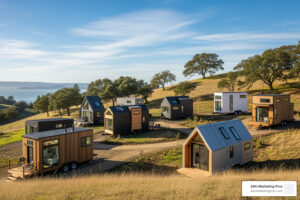
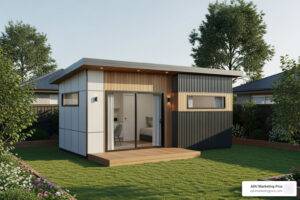
Most guest houses are legally classified as Accessory Dwelling Units (ADUs). They can be detached (a completely separate backyard building), attached (sharing a wall with the primary residence), or even converted from existing space like a garage or basement. Architectural styles are equally varied, ranging from traditional Craftsman and Farmhouse designs that complement older homes to bold, contemporary structures that make a statement. This allows you to either match the aesthetic of your main house for a cohesive look or create a distinct and separate identity for the guest house.
Studio & Tiny Home Plans (Under 500 sq. ft.)
For homeowners prioritizing efficiency, affordability, and a minimal footprint, studio and tiny home guest house floor plans are an outstanding choice. These compact designs masterfully utilize open-concept living, where the bedroom, living area, and kitchenette flow into one another to create a sense of spaciousness. Smart design is paramount, often incorporating multi-functional furniture like Murphy beds, drop-leaf tables, and extensive built-in storage. For example, “The Great Escape Plan” (357 sq. ft.) is a masterclass in minimalist design, fitting one bedroom, one bath, and clever storage into a tiny footprint. The Whiteside Cottage (430 sq. ft.) offers a bit more breathing room while remaining highly efficient. These smaller plans are significantly cost-effective to build, heat, and maintain, making them perfect for single occupants, a quiet home office, a creative studio, or a profitable short-term rental.
Classic 1-Bedroom Plans (500 – 900 sq. ft.)
The 1-bedroom guest house floor plan is the undisputed champion of the ADU world, hitting the perfect sweet spot between affordability, comfort, and functionality. Unlike studios, these plans provide a separate bedroom with a door, offering essential privacy that is crucial for long-term tenants or live-in family members. They also typically feature a full kitchen and a dedicated living area, making them feel like a true, self-sufficient home. The Bluebird Cottage (619 sq. ft.) showcases a beautifully balanced layout, while the Backyard Retreat (891 sq. ft.) provides a more generous living experience. One particularly noteworthy example is Plan 95146RW: One-bed Craftsman Guest House Plan with Vaulted Living Room. At 744 sq. ft., its vaulted ceilings in the main living area create an airy, expansive atmosphere that belies its modest footprint, making it an ideal choice for long-term guests or as a premium rental unit that will attract high-quality tenants. Explore more popular layouts in collections like 1 Bedroom Guest House Plans.
Multi-Bedroom Plans (900 – 1,200+ sq. ft.)
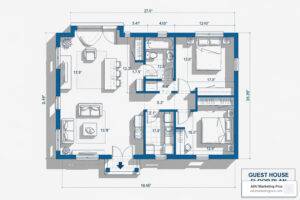
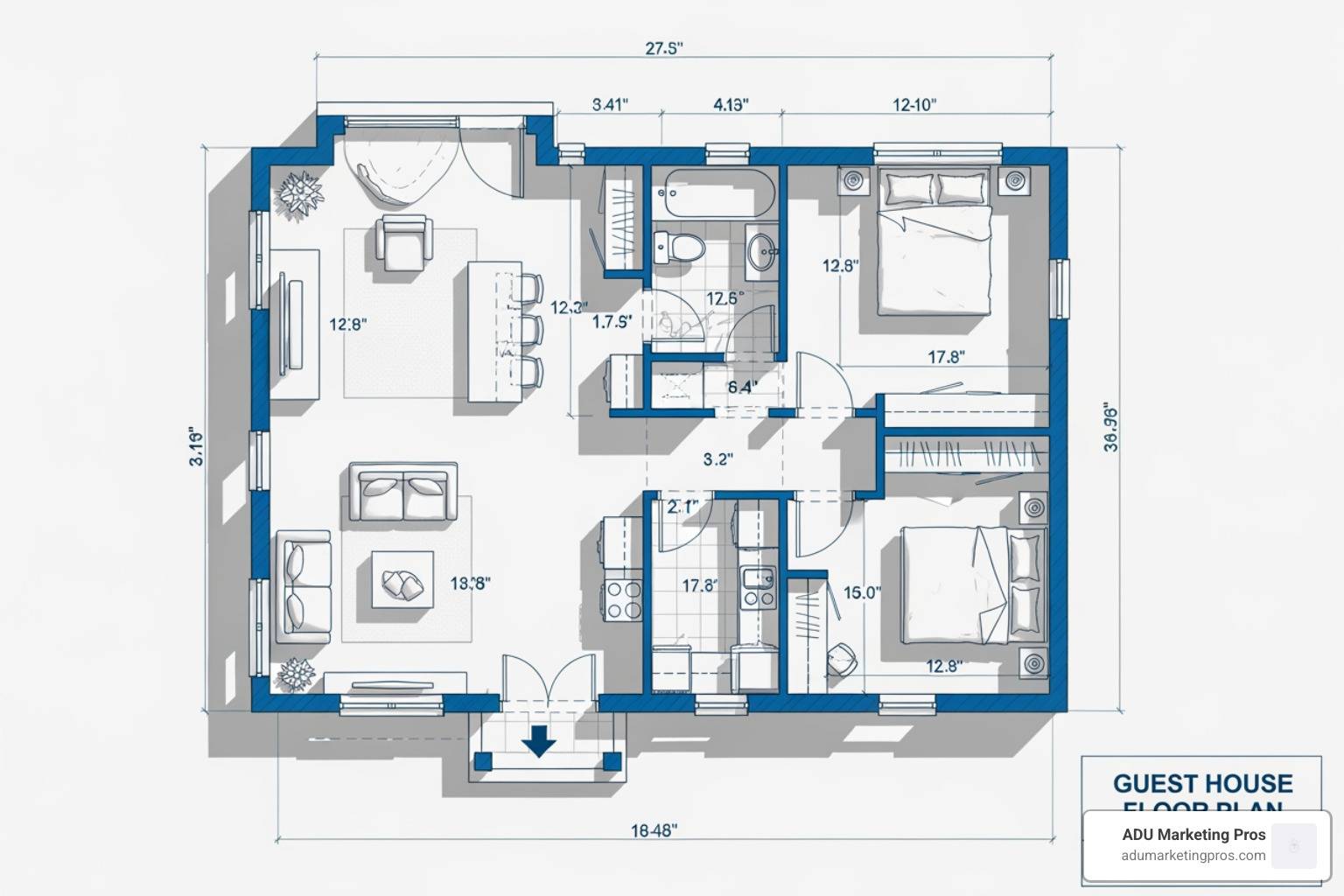
When your goal is to accommodate a family or maximize rental income, multi-bedroom guest house floor plans provide the necessary space and privacy. These larger designs are the ultimate solution for multi-generational living, often including two or more bedrooms and sometimes a second bathroom. In California, where most municipalities cap ADU size at 1,200 square feet, fitting multiple rooms requires exceptionally smart and efficient design. The 4 Bedroom Guest House Plans – 1,200 Sq Ft Rectangular Design is a brilliant example of this, ingeniously fitting four bedrooms and two full baths into just 1,155 sq. ft. This type of layout is a game-changer for an extended family needing separate rooms or an investor looking to generate high rental income by renting to multiple tenants.
Garage Apartment & Conversion Plans
Garage apartment guest house floor plans are an innovative solution for properties with limited yard space. These plans involve building a new living unit above your existing garage, preserving your valuable outdoor area for gardens, patios, or play. Plan 9383, for instance, places a spacious 1,544-square-foot apartment over a three-car garage, offering excellent privacy from the main house. This approach is often more cost-effective than building a new detached unit from the ground up, as it utilizes the existing foundation and structure. A separate entrance, typically via an external staircase, allows occupants to come and go without disturbing the main household. This vertical approach is becoming increasingly popular in dense urban areas. For more inspiration on building up, see these 2 Story ADU Floor Plans for Accessory Dwelling Units.
Key Features to Consider When Choosing Your Plan
Selecting the right guest house floor plan goes far beyond simply counting bedrooms and bathrooms. The nuanced details of the layout and design will ultimately determine the unit’s daily functionality, long-term comfort, and overall value. A thoughtfully designed guest house should feel like a complete home, no matter its size, with every square foot meticulously planned to serve a purpose.

Essential features for your guest house floor plans
- Layout and Flow: An open-concept design, which seamlessly blends the kitchen, living, and dining areas, is the most effective strategy for making compact plans feel spacious and airy. Plan 69638AM, for example, uses a “huge great room so you never feel cramped.” This approach encourages social interaction and flexibility. Conversely, more traditional layouts with distinct, separate rooms offer greater privacy and sound separation, which can be a significant advantage for multi-generational living or roommate situations.
- Kitchen Size and Functionality: The kitchen is the heart of the home, and its design should match the unit’s intended use. A simple kitchenette with a mini-fridge, microwave, and small sink may suffice for occasional guests or a home office. For a long-term rental or family member, a full kitchen with a four-burner stove, oven, full-sized refrigerator, and dishwasher is essential. A well-designed U-shaped or L-shaped kitchen layout can maximize counter space and storage efficiency even in a small footprint.
- Bathroom Design and Accessibility: A cramped, poorly designed bathroom can be a daily frustration. Prioritize plans with adequate space, especially around the toilet and vanity. Walk-in showers with a low or zero curb are generally more practical and accessible than tub-shower combos. A window, even a small one, can make a huge difference, bringing in natural light and ventilation to make the space feel larger and more pleasant.
- Creative Storage Solutions: In any space under 1,200 square feet, smart storage is not a luxury—it’s a necessity. Look for plans that incorporate clever storage solutions beyond basic closets. This can include built-in shelving, pantries, under-stair nooks, window seats with hidden storage, and even toe-kick drawers under kitchen cabinets. Effective storage is the key to keeping a small home organized and clutter-free.
- Natural Light and Views: Abundant natural light is one of the most powerful tools for making a compact space feel open, airy, and welcoming. Prioritize plans with large windows, glass-paneled French doors, and skylights. Vaulted ceilings, like those in the popular Plan 95146RW, amplify this effect by creating vertical volume and drawing the eye upward, making the entire room feel more expansive.
- Indoor-Outdoor Connection: A seamless flow between indoor and outdoor spaces can dramatically increase the usable living area of a small guest house. A covered patio, deck, or porch effectively becomes an outdoor living room, especially in California’s mild climate. Features like large sliding glass doors or bifold doors can erase the boundary between inside and out, making a small home feel much more expansive and connected to its surroundings.
Square Footage and Dimensions
In California, where most municipalities cap ADU size at 1,200 square feet, every inch must be used wisely. Guest house floor plans typically fall into distinct size categories that align with different uses.
Matching your plan to your lot size is a critical, non-negotiable step. Before you fall in love with a plan, you must understand your local jurisdiction’s rules for setback requirements (the minimum distance the structure must be from property lines), lot coverage limits (the maximum percentage of your lot that can be covered by buildings), and any required parking. A 1,000-square-foot plan is useless if it doesn’t fit on your lot while respecting these legal constraints.
Ceiling height is a powerful design tool for creating a sense of space. Upgrading from standard 8-foot ceilings to 9-foot, 10-foot, or even vaulted ceilings can transform a modest floor plan, making it feel significantly larger and more luxurious without adding to the footprint.
| Guest House Type | Typical Square Footage | Common Uses |
|---|---|---|
| Studio / Tiny | 300 – 500 sq ft | Single occupant, home office, short-term rental |
| 1-Bedroom | 500 – 900 sq ft | Individual, couple, longer-term guest, rental |
| 2-Bedroom+ | 900 – 1,200+ sq ft | Small family, multi-generational living, rental |
Accessibility and Universal Design
Incorporating accessibility features and universal design principles from the outset is one of the smartest decisions you can make. This approach future-proofs your investment, ensuring the guest house is safe, comfortable, and functional for anyone, regardless of age or mobility. Key features to look for include:
- No-step entry: A flat, seamless threshold at the entrance eliminates a major barrier for wheelchairs, walkers, strollers, and even moving furniture.
- Wider doorways (36 inches): This is essential for wheelchair access and has the added benefit of making the entire space feel more open and less constricted.
- Walk-in or roll-in showers: These are far safer and more convenient than high-sided tubs. They can easily be outfitted with built-in benches and grab bars.
- Main-level living: For any plan, ensuring all essential living spaces (kitchen, full bathroom, and at least one bedroom) are on the ground floor is critical for aging-in-place.
These features provide the long-term flexibility that makes guest house floor plans so valuable, allowing the space to adapt from a home for a college student to a safe residence for an aging parent without requiring costly and disruptive future renovations.
Beyond the Blueprint: Customization and Building Essentials
Once you’ve selected a guest house floor plan that aligns with your vision, the journey shifts from paper to practice. This next phase involves personalizing the design to your exact tastes, navigating the complex legal landscape of permits and regulations, and developing a realistic understanding of the total project cost.

Customizing Your Guest House Floor Plans
Think of a pre-designed guest house floor plan as a professionally developed starting point, not a rigid final product. Most plans can be modified to better suit your needs. Common structural modifications include moving non-load-bearing walls, adding or resizing windows for better light, incorporating vaulted ceilings to create volume, or adding a covered porch to enhance outdoor living. Most plan providers offer modification services, allowing you to get a price quote for your desired changes before you commit.
Beyond structural changes, the true character of your guest house will come from your finish selections. This is where you can infuse your personal style. Consider the durability and maintenance of materials, especially for a rental unit. Luxury vinyl plank (LVP) flooring, for example, offers the look of hardwood with superior water resistance and durability. Quartz countertops provide a high-end look with less maintenance than natural stone. Smart customizations also include upgrading to energy-efficient windows, adding extra insulation, and installing a modern, high-efficiency HVAC system (like a mini-split). These choices may add to the upfront cost but will significantly reduce long-term utility bills, a key consideration in California. For more valuable insights, Guest House Floor Plans: Everything You Need to Know – Acton ADU offers a great overview.
Permits, Regulations, and Zoning
This is the most challenging phase of any ADU project and where local expertise is absolutely essential. Building a guest house requires navigating a maze of municipal codes that can vary dramatically, even between adjacent cities like San Jose, Menlo Park, and Palo Alto. Key regulations you must investigate for your specific property include:
- Setbacks: The required minimum distance from your structure to the front, side, and rear property lines.
- Height Restrictions: The maximum allowed height of the structure, which is crucial for two-story designs or plans with high-pitched roofs.
- Parking Requirements: While state laws have relaxed parking rules, some cities may still require an additional parking space for the ADU unless you meet specific exemptions.
- Lot Coverage: The total percentage of your lot that can be covered by all buildings, including the main house, garage, and the new ADU.
Stock floor plans provide the architectural drawings, but they do not include the site-specific documents required to obtain a building permit. These documents must be created by local professionals and typically include a Site Plan (showing the ADU’s placement on your property), structural engineering calculations and stamps, and Title 24 energy calculations (for California). The PDF on Guest House Regulations from East Palo Alto illustrates the level of detail in these rules, highlighting why professional guidance is non-negotiable.
Understanding the Cost Implications
The cost of building a guest house varies dramatically based on size, location, design complexity, and the quality of your finishes. A guest house floor plan purchase is just the first, small fraction of the total project budget.
While cost per square foot is a commonly used metric, it can be highly misleading. This figure often only refers to hard construction costs and may exclude many other significant expenses. A comprehensive budget must account for:
- Pre-Construction Costs: Plan purchase, modification fees, permit fees, engineering fees, soil reports, and survey costs.
- Site Work: Grading, excavation, trenching for utilities, and foundation work.
- Hard Costs: All materials and labor for the structure itself—framing, roofing, plumbing, electrical, HVAC, insulation, and drywall.
- Finishing Costs: The most variable part of the budget, including flooring, cabinets, countertops, appliances, light fixtures, and paint. Kitchen and bathroom expenses are consistently the most costly part of any build.
- External Costs: Utility connection fees (which can be thousands of dollars), landscaping, driveways, and fencing.
Financing options for ADUs have expanded significantly. Homeowners often use a home equity line of credit (HELOC), a cash-out refinance of their primary mortgage, or specialized construction or renovation loans. Many plan providers also offer a Cost-to-Build Report, which provides a localized estimate based on your specific plan and zip code. This is an invaluable tool for creating a realistic budget from the very beginning.
The Versatile Value of a Guest House
A well-designed guest house is far more than just extra space—it’s a dynamic, flexible asset that adapts to your family’s changing needs while providing significant financial returns. For homeowners across California, from the suburbs of Los Angeles to the tech hubs of Silicon Valley, building a guest house with the right guest house floor plans is one of the most practical and powerful solutions to modern living challenges.

A Solution for Multi-Generational Living
Often called a “granny pod” or in-law suite, a detached guest house is an ideal solution for multi-generational families seeking both closeness and independence. It allows you to care for aging parents, providing them with a safe, accessible, and completely independent home just steps away. This proximity offers invaluable peace of mind without sacrificing anyone’s privacy or autonomy. For the older generation, it means retaining their independence and staying in a familiar neighborhood. For the homeowner, it can mean help with childcare and a stronger family bond. Similarly, a guest house offers adult children a viable path to independence in California’s notoriously challenging housing market. It gives them their own private space to build a life while saving for their own home, keeping the family unit close and financially supported.
An Opportunity for Rental Income
The financial case for building a guest house is where it truly shines as a strategic investment. A long-term tenant in your guest house can provide a steady, reliable income stream that can significantly offset, or even completely cover, your monthly mortgage payment. In competitive California rental markets, a private, well-maintained detached guest house with modern amenities commands premium rental rates.
Alternatively, the short-term rental market (e.g., Airbnb, VRBO) offers another compelling, though more hands-on, option. In tourist-friendly areas or near business centers, a short-term rental can generate substantially higher monthly income than a long-term lease. However, this path requires active management, including handling bookings, communication, and cleaning between guests. It’s also crucial to research and comply with local city and county ordinances regarding short-term rentals, which can be restrictive. Regardless of the strategy, the income generated can pay for the construction costs within a few years, turning your backyard into a powerful financial asset.
Boosting Property Value and Appeal
Even if you never rent it out, a guest house is a smart financial move that significantly boosts your property’s value and market appeal. You are adding permitted, functional square footage, which is one of the most impactful ways to increase your home’s appraisal value. This added space offers the kind of flexibility that modern homebuyers crave. In a post-2020 world, a separate structure that can serve as a dedicated home office, a private gym, an art studio, or a classroom is a massive selling point. When it’s time to sell, properties with permitted ADUs stand out from the competition, attract a wider pool of buyers, and often sell faster and for a premium price. A well-designed guest house that architecturally complements your main home also improves overall curb appeal, signaling a high-quality, versatile property to any potential buyer.
Frequently Asked Questions about Guest House Floor Plans
Here are answers to some of the most common questions we receive from California homeowners who are considering adding a guest house to their property.
How do guest houses differ from in-law suites?
The key distinction lies in the structure’s relationship to the main home. A guest house is typically a detached, standalone structure (a type of Detached ADU or DADU). It has its own kitchen, bathroom, and private entrance, offering complete independence. An in-law suite is usually attached to or located within the primary home (an Attached ADU or AADU), such as a converted basement or an addition. While both serve similar purposes, the detached nature of a guest house provides maximum privacy, which is a major benefit for both long-term rental tenants and multi-generational living arrangements.
What is the typical cost to build a guest house?
This is the most common question, and the answer is always: it depends. Costs vary widely based on your location (e.g., construction labor in the Bay Area is more expensive than in the Central Valley), the size of the unit, the complexity of the design, and the level of your finishes. As a rule, bathrooms and kitchens are the most expensive components per square foot due to the concentration of plumbing, electrical work, fixtures, and appliances. A detached guest house is generally more expensive to build than converting existing space, but it often yields greater returns in property value and rental income due to its superior privacy.
Can any small house plan be used as a guest house?
While technically possible, it’s strongly discouraged. Plans designed specifically as guest house floor plans or ADUs are already optimized for smaller footprints and pre-engineered to comply with the unique regulations governing ADUs in California cities like Los Angeles and San Jose. A standard small house plan may not meet local codes for maximum size (often capped at 1,200 sq. ft.), height restrictions, or energy efficiency standards (Title 24). Starting with an ADU-specific plan and consulting with an ADU expert is the safest and most efficient path to avoiding costly redesigns and delays during the permitting process.
How long does it take to build a guest house from start to finish?
Building a guest house is a multi-phase process, and construction is only one part of it. A realistic timeline is typically 9 to 18 months, broken down as follows:
- Phase 1: Design & Planning (1-3 months): Selecting and modifying your floor plan, and assembling your team of professionals.
- Phase 2: Permitting (3-6+ months): Your architect or designer will create the full construction documents and submit them to your local building department. This is often the longest and most unpredictable phase.
- Phase 3: Construction (5-9 months): The actual build, from foundation to final finishes.
What are the biggest “hidden costs” in an ADU project?
Several costs often surprise first-time builders. The most significant is often utility connection fees. Tapping into city sewer, water, and electrical grids can cost anywhere from $5,000 to $25,000 or more, depending on your municipality and the distance from the main lines. Other potential hidden costs include extensive site preparation if your lot is sloped or has poor soil, and any required structural upgrades to an existing garage if you’re building an apartment above it.
Conclusion: Building Your Vision
You’ve explored the wide spectrum of guest house floor plans, from efficient studios to family-sized multi-bedroom units. You’ve learned about the critical design features that create comfort and functionality, and the practical realities of customizing a plan, navigating local regulations, and understanding the true costs. A well-chosen guest house is undeniably one of the smartest, most versatile investments you can make in your California property. It’s a solution that can boost your property value, generate significant rental income, and provide flexible, adaptive space for your family’s changing needs for generations to come.
However, choosing the right plan is just the beginning of the journey. Bringing that vision to life requires a team of skilled professionals who possess a deep understanding of California’s complex and ever-changing ADU regulations, as well as the specific building codes in your local area, whether it’s San Jose, San Francisco, or Los Angeles.
That’s where ADU Marketing Pros comes in. We specialize in connecting homeowners like you with top-tier, vetted ADU architects, designers, and builders. These are the professionals who can take your chosen floor plan and transform it into a beautiful, compliant, and high-quality guest house. We understand the unique challenges of ADU construction in California and can connect you with experts who have a proven track record of success in your community.
Your dream guest house is within reach. The right plan, combined with the right team, is the key to unlocking the full potential of your property.
Ready to take the next step? Find expert ADU architects and builders for your project and start building the flexible, valuable space your property deserves.
For more inspiration, connect with us on Instagram, Facebook, and Pinterest.