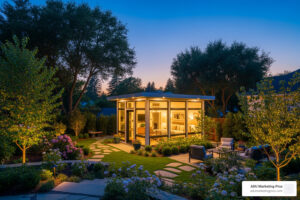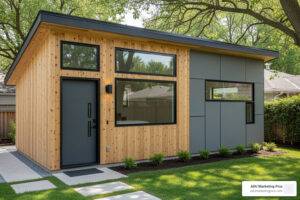
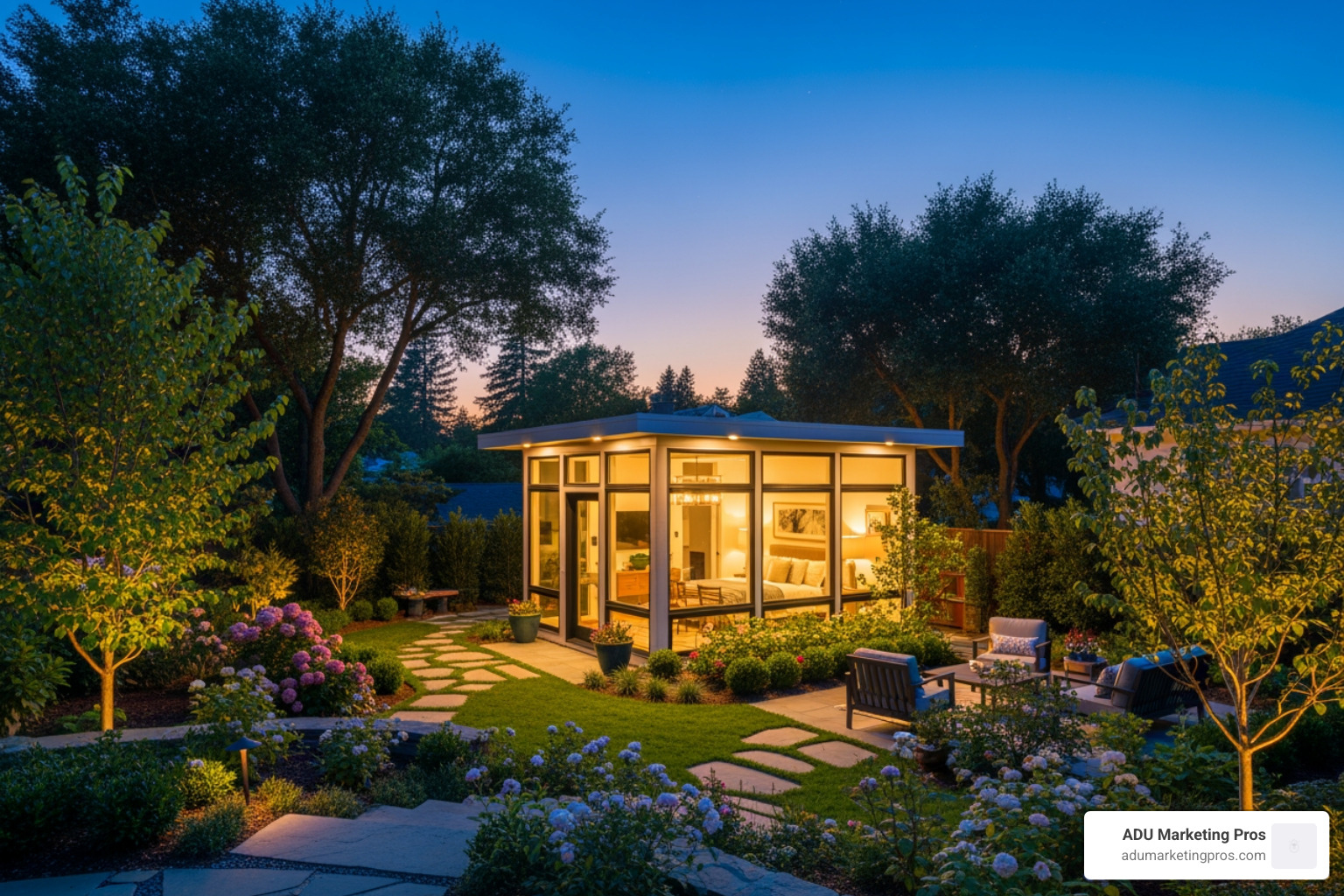
The Rise of the Backyard Retreat
A guest house studio is a standalone or attached accessory dwelling unit (ADU) designed to provide flexible, independent living space on your property. Also known as a granny flat, in-law suite, or backyard cottage, it typically includes sleeping quarters, a bathroom, and often a kitchenette—transforming unused yard space into a functional, valuable home.
Quick Answer: What is a Guest House Studio?
- Definition: A self-contained living space, either attached or detached from the main home, typically ranging from 150 to 1,200 square feet.
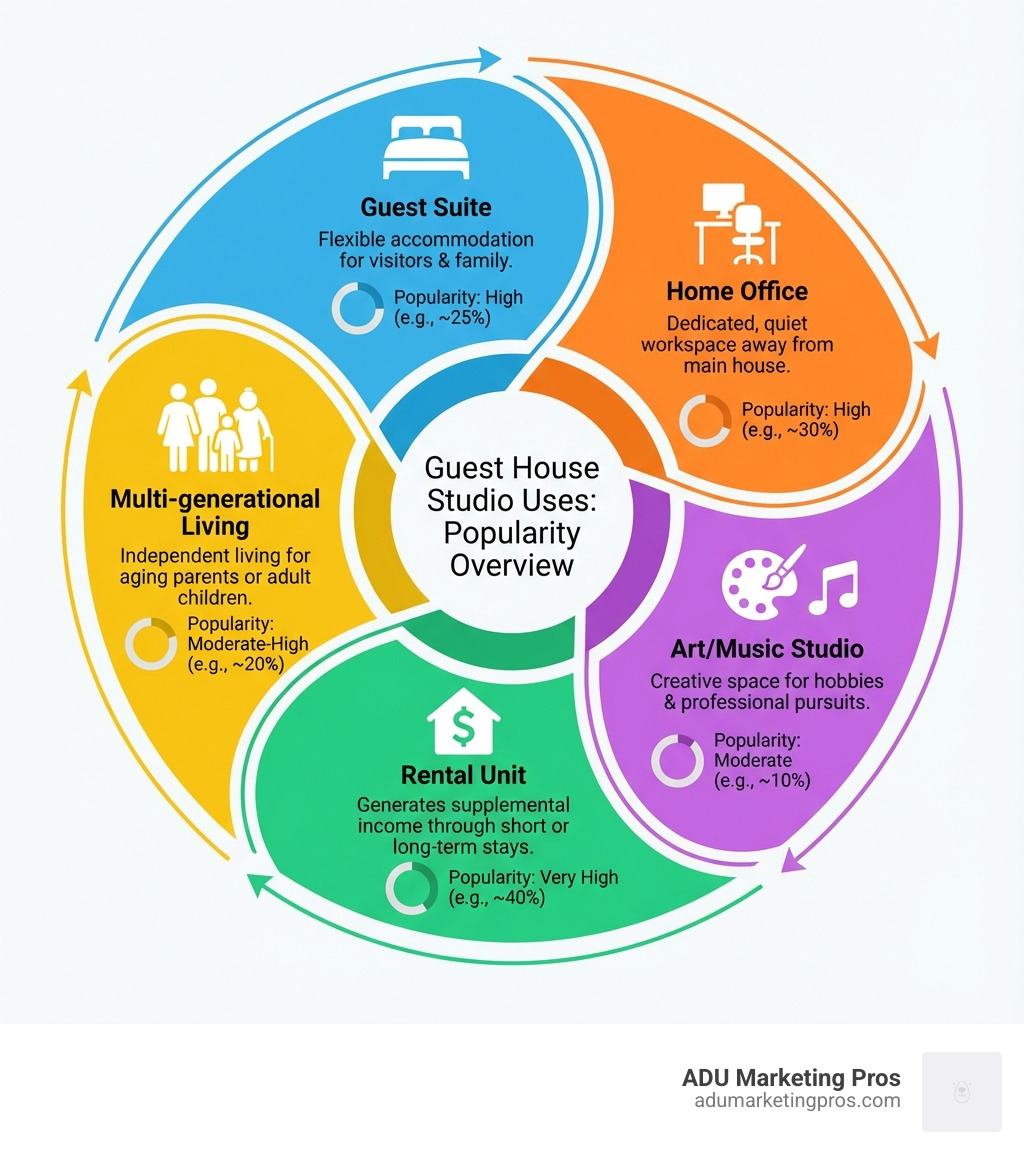
- Common Uses: Private guest suite, dedicated home office, art/music studio, long-term rental unit, multi-generational living for aging parents or adult children.
- Types: Fully custom-built ADUs, converted garages or sheds, and prefabricated modular/panelized units.
- Cost Range: $15,000 for a basic conversion to over $180,000 for a high-end custom build, depending on size, type, and finishes.
- Property Value Impact: Can increase home value by a significant 20-35%, according to comprehensive industry data.
The backyard guest house studio has evolved from a simple storage shed or basic guest room into a sophisticated, multi-faceted housing solution. For California homeowners, the convergence of several powerful trends has made the ADU an almost irresistible proposition. The ongoing housing affordability crisis, coupled with the post-pandemic normalization of remote work, has created unprecedented demand for flexible living spaces. These compact dwellings solve multiple challenges at once—they provide privacy for visiting family, create a dedicated workspace away from household distractions, generate substantial rental income to offset mortgages, and offer aging parents a way to maintain independence while staying close to family support.
The numbers tell a compelling story. Building a 600-square-foot guest house costs roughly $60,000 to $120,000, an investment comparable to a major kitchen renovation. Yet unlike a new countertop, your guest house studio can generate $1,500 to $3,000 per month in rental income in competitive California markets like Los Angeles or the Bay Area. That’s a return on investment that few home improvements can match, often paying for itself in a matter of years.
Whether you’re an ADU construction firm looking to educate potential clients or a homeowner exploring your options, understanding the landscape of guest house studios is your first step. The market has expanded dramatically. You can now choose from quick-turnaround modular units starting around $70,000, budget-friendly garage conversions from $6,000 to $27,000, or fully custom designs that rival the main house in quality and finish.
For California property owners, recent regulatory changes have made ADUs more accessible than ever. Landmark state laws have been enacted to limit restrictive local ordinances, streamline the permitting process, and reduce or eliminate prohibitive fees. Cities like Los Angeles, San Diego, and San Francisco have seen thousands of ADU permits issued annually. This isn’t a fleeting trend—it’s a fundamental shift in how we think about residential property, urban density, and creative housing solutions.
The guest house studio addresses real, human needs. Teri F., a Habitat for Humanity homeowner, went from homelessness to stability through access to affordable housing. Families like Luz and Joseph L. dream of providing their three children with more than a shared bedroom in a cramped apartment. Your guest house studio can serve your own family’s needs today while adapting to future changes—a home office becomes a teenage retreat, then a rental unit, then housing for aging parents.
In the sections ahead, we’ll break down the types of guest house studios available, decode the real costs beyond the sticker price, navigate the permitting maze, and explore design options that maximize both function and property value. You’ll learn timelines, financing strategies, and the features that separate a basic structure from a comfortable, livable, and profitable space.
Types of Guest House Studios: Finding Your Perfect Fit
When considering a guest house studio for your property in the San Francisco Bay Area, Los Angeles, or San Diego, you’ll find a variety of approaches, each with its own distinct advantages, timeline, and cost structure. We specialize in helping you navigate these options, ensuring that whatever you choose, it’s designed, permitted, and managed by experts to meet your specific goals.
Custom-Built Guest Houses: Custom to Your Vision
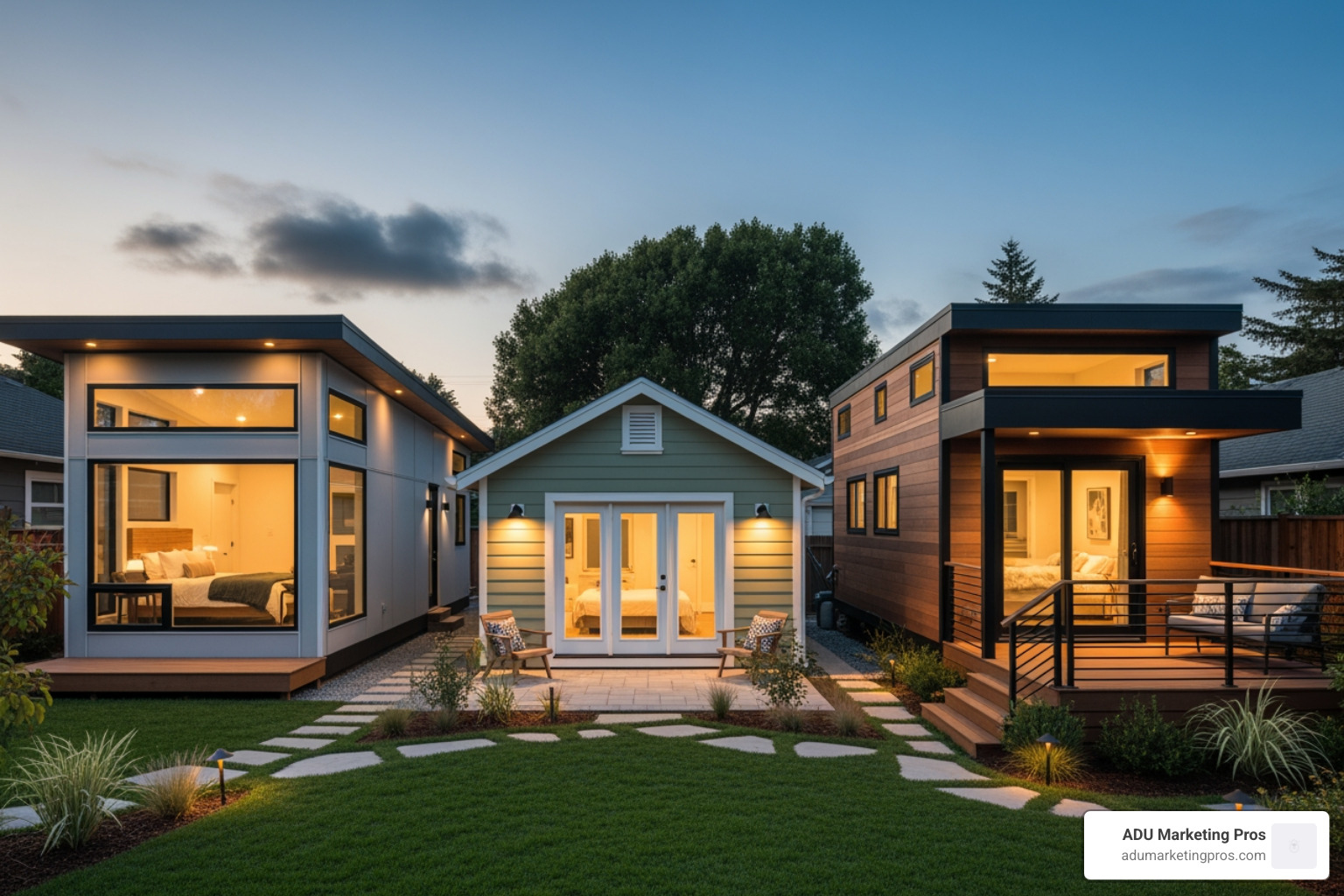
For those who dream of a truly unique guest house studio that perfectly complements their existing home and personal style, a custom-built ADU is the ultimate choice. This route offers unparalleled architectural freedom, allowing you to work with architects and designers to create a structure that is site-specific to your California property. You can select premium finishes, incorporate unique features like vaulted ceilings or custom built-ins, and ensure every detail aligns with your vision. The collaborative design process ensures the final product is a true extension of your home. While this option typically involves a longer timeline and a higher investment, the result is a one-of-a-kind space that adds significant, lasting value and aesthetic appeal.
Explore the possibilities of bespoke design by reviewing our guide on Custom ADU Blueprints & Design.
Converting Existing Structures: Smart, Sustainable, and Cost-Effective
One of the most budget-friendly and sustainable ways to create a guest house studio is by converting an existing, underutilized structure. Imagine transforming that dusty garage, backyard workshop, or even a sturdy shed into a vibrant new living space. This approach is often faster and less disruptive than new construction, as the main shell is already in place. Remodeling costs for converting an existing garage or shed typically range from $6,000 to $27,000, with the national average around $16,448. This makes it a very attractive option for homeowners looking to maximize their property’s potential without a massive upfront investment. However, a thorough assessment of the existing structure is critical. We’ll need to check for:
- Foundation Integrity: Is the existing slab cracked or uneven?
- Structural Soundness: Are the walls and roof framing up to code?
- Utility Access: How easily can we run new plumbing, sewer, and electrical lines?
- Moisture and Pest Issues: Is there any evidence of water damage, mold, or termites?
Learn more about making the most of your existing space with our insights on Garage Conversion to ADU.
Modular & Panelized Studios: Efficiency Meets Style
If speed, cost predictability, and modern aesthetics are high on your list, then modular and panelized guest house studio solutions are an excellent choice. These units are factory-built with precision engineering in a controlled environment, often using sustainable materials like FSC certified lumber and recycled metal, ensuring high quality and energy efficiency. This process minimizes on-site construction time and waste. They are then delivered to your site in flat-packed kits or pre-assembled modules and rapidly assembled, drastically reducing neighborhood disruption.
Companies like Studio Shed offer a range of options, with their Signature Series single rooms starting around $13,592 for an 80-square-foot basic structure. An insulated 160-square-foot single room might cost about $23,000, while a larger 240-square-foot dwelling with a bathroom and kitchen could be at least $70,000, depending on finishes. Kanga Room Systems also offers shell kits starting from $15,555 for their smallest 80-196 square foot Kwik Rooms. These solutions offer predictable costs and timelines, making budgeting much simpler. Plus, many come with manufacturer warranties, giving you added peace of mind.
Find the efficiency and style of modern prefabricated solutions through our guide on Modern Prefab Granny Flats.
Decoding the Costs: Budgeting for Your Project
Understanding the full financial investment required for a guest house studio is crucial for any California homeowner. The total cost can vary widely, influenced by key factors such as the size of the unit, the quality of materials, regional labor expenses, necessary permits, and the complexity of site preparation. A project in a high-cost area like San Jose will naturally differ from one in a more suburban location.
We help our clients thoroughly evaluate these elements to ensure a clear financial roadmap. For a more detailed look at how costs are calculated, check out our resources on ADU Cost Per Square Foot and Accessory Dwelling Unit Costs.
Cost Breakdown by Type
Let’s break down the typical cost ranges you might encounter for different types of guest house studios in our service areas like Los Angeles, San Jose, and San Diego:
- Custom-Built ADUs: Building a custom, on-site guest house studio is generally the most expensive option, but it offers the greatest flexibility. The national average to build a new home is $100 to $200 per square foot, but in California, it’s more realistic to budget $300-$500+ per square foot. For a 600-square-foot, one-bedroom guest apartment, this means costs would start around $180,000 and can easily climb higher depending on design complexity and premium finishes. A smaller 240-square-foot dwelling with a bathroom and kitchen could be at least $70,000.
- Garage Conversions: As mentioned, converting an existing garage or shed is often the most budget-friendly path. Remodeling costs for these projects typically range from $6,000 to $27,000. For a one-bedroom guest house with a window, ceiling, flooring, heating, cooling, insulation, and furniture, you might expect to pay $10,000 to $15,000. Adding a bathroom would add at least $3,000, with plumbing potentially adding up to $1,800 more. If you’re aiming for a living room, kitchen, and bath, the cost could be $15,000 to $30,000.
- Modular/Panelized Studios: Prefabricated options provide a balance of cost-efficiency and quality. While some basic shell kits can start as low as $15,555 for an 80-square-foot unit from Kanga Room Systems, these prices often don’t include site preparation, foundation, utility hookups, or interior finishes. A more complete, insulated 160-square-foot single room might cost about $23,000, and a 240-square-foot unit with a bathroom and kitchen could be at least $70,000. Studio Shed’s larger 1 Bed/1 Bath (24×24) units start at $139,950, and 2 Bed/2 Bath (24×36) units start at $179,950, reflecting comprehensive, ready-to-assemble solutions.
It’s important to also factor in soft costs and site-specific expenses that can significantly impact your budget. These include:
- Permit and Impact Fees: Plan check, building permit, and potential school or park impact fees can add thousands.
- Design and Engineering: Fees for architects, structural engineers, and soil reports.
- Utility Connections: Trenching and connecting water, sewer, gas, and electricity can cost $5,000 to $20,000+ depending on distance and complexity.
- Landscaping and Hardscaping: Costs for pathways, patios, fencing, and plants to integrate the ADU into your yard.
For a deeper dive into the specific costs associated with prefabricated ADUs in our region, refer to our guide on Prefab ADU California Cost.
Financing Your Project
Building a guest house studio is a significant investment, but several financing options can make it achievable. We often see clients use construction loans, home equity loans (HELOCs), or cash-out refinances. A cash-out refinance replaces your current mortgage with a new, larger one, giving you the difference in cash. This can be ideal if interest rates are low. A Home Equity Line of Credit (HELOC) acts like a credit card secured by your home’s equity, allowing you to draw funds as needed, which is great for managing construction phases. Beyond traditional lending, various ADU-specific grants and incentives are available, particularly in California, designed to encourage the development of accessory dwelling units to address housing shortages. We can guide you through the process of identifying the best financing options custom to your situation.
Explore the various avenues for funding your ADU project with our detailed articles on ADU Financing Options and ADU Funding Grants.
The Building Journey: From Concept to Completion
Embarking on the journey to build a guest house studio is an exciting endeavor. It’s a multi-stage process that, when managed effectively by a professional team, culminates in a beautiful and functional addition to your property. We break down the project into clear, manageable phases: design, permitting, construction, and final installation, ensuring you’re informed and confident at every turn.
Understanding each step is key to a smooth experience. For a comprehensive overview, visit our page on the ADU Building Process.
Site Preparation and Foundation
Before any structure can rise, the ground beneath it must be perfectly prepared. This phase involves a thorough site assessment, which may include a geotechnical (soil) report, followed by grading and leveling the land to ensure a stable base. Crucially, utility hookups for water, sewer, and electricity must be planned and installed. This often involves trenching from the main house or the street, which can be a significant cost factor depending on the distance and any obstacles like concrete driveways or mature trees.
The type of foundation required depends on the size, weight, and design of your guest house studio. A small garden shed might sit on concrete blocks, but any habitable dwelling, especially anything larger than 160 square feet, needs a permanent, engineered foundation. Common options include:
- Concrete Slab-on-Grade: This involves pouring a solid, reinforced concrete slab directly onto the prepared ground. It’s a popular choice for its durability, stability, and relatively lower cost, typically ranging from $5 to $10 per square foot. The average cost for a 600-square-foot concrete foundation is around $3,900.
- Pier-and-Beam (Raised) Foundation: This method uses concrete piers or posts that extend into the ground, with beams laid across them to support the structure. It can be more expensive, costing about $7 to $14 per square foot, but is often necessary for sloped lots, areas with expansive soil, or for homeowners who prefer a crawl space for utility access. For a 600-square-foot cottage, a raised foundation will cost at least $4,200.
A proper foundation is non-negotiable for the longevity, safety, and code compliance of your ADU. Dive deeper into foundation types and costs at HomeAdvisor’s foundation cost guide. Additionally, understanding all structural requirements is vital, which you can find on our ADU Building Requirements page.
Navigating Permits and Regulations for a Guest House Studio
This is often the most intimidating phase for homeowners, but with our expertise, it doesn’t have to be. Building a guest house studio in California involves navigating a web of local zoning laws, state building codes, and a specific multi-step permit process. While California has passed progressive ADU regulations to streamline construction, local jurisdictions in areas like San Jose, Palo Alto, and Los Angeles still have their own specific requirements and review processes.
A complete permit application package typically includes:
- Site Plan: Shows the entire property, including the main house, the proposed ADU, setbacks, and utility connections.
- Architectural Plans: Detailed floor plans, elevations, and cross-sections of the new unit.
- Structural Engineering: Calculations and plans that prove the building’s stability and safety.
- Title 24 Report: Energy compliance calculations required in California.
Key considerations include zoning laws (dictating setbacks and height), building codes (ensuring safety from framing to electrical), and size restrictions. Experts recommend building a guest house with the largest allowable square footage for an ADU, or at least 500 square feet, to get the most bang for your buck. Our page on ADU Size Restrictions clarifies these limits. We understand the intricacies of obtaining ADU Permits California and stay up-to-date with the latest California ADU Regulations to ensure your project is fully compliant from day one.
Typical Project Timelines
The timeline for completing a guest house studio can vary based on its type, complexity, and the efficiency of the local building department:
- Design Phase: For custom builds, this can take 1 to 3 months as we refine your vision and create detailed blueprints.
- Permitting: This is often the longest and most unpredictable phase, ranging from 2 to 6 months, depending on the jurisdiction’s workload and the completeness of your application.
- Site Preparation & Foundation: Once permits are in hand, this phase typically takes 2 to 4 weeks.
- Construction/Assembly: This is where the physical structure comes to life. Modular units can be assembled in as little as 1 to 2 weeks, while a traditional stick-built custom home can take 3 to 6 months.
- Finishing: Adding interior details, paint, fixtures, and final touches usually requires another 3 to 6 weeks.
These timelines are estimates, and unforeseen circumstances like weather, material delays, or inspection scheduling can sometimes extend the duration.
Designing Your Dream Guest House Studio
Once the structural elements are planned, the real fun begins: designing the interior and exterior of your guest house studio to make it both beautiful and highly functional. This is where you infuse your personal style and create a space that feels like a true retreat. We provide comprehensive design guidance, focusing on space-saving solutions, multi-functional furniture, and material selections that maximize every square foot.
For a wealth of inspiration, browse our collection of ADU Design Ideas California.
Interior Customization and Finishes
The interior of your guest house studio should feel welcoming, uncluttered, and thoughtfully designed. You have a vast array of choices when it comes to finishes:
- Flooring: Options range from durable and waterproof luxury vinyl plank (LVP) to the warmth of engineered hardwood, the sleekness of polished concrete, or classic tile. Consistent flooring throughout can make the space feel larger.
- Wall Finishes: Light and neutral paint colors are your best friend in a small space, creating an airy feel. Consider an accent wall with bold wallpaper, reclaimed wood paneling, or a vibrant color to add personality without overwhelming the room.
- Lighting: A layered lighting plan is crucial. Combine recessed ambient lighting for general illumination, task lighting under kitchen cabinets or over a desk, and accent lighting like a stylish pendant or sconces to create warmth and functionality.
- Cabinetry and Countertops: In a compact kitchen or bathroom, smart storage is key. Consider floor-to-ceiling cabinetry, pull-out pantries, and durable, attractive countertops like quartz or solid surface for a sleek, modern look.
- Appliances: For kitchenettes, compact yet efficient appliances are essential. Think 24” full-height refrigerators, 2-burner induction cooktops, convection microwaves, and 18” dishwashers to save space without sacrificing function.
Get inspired by our tips for creating stunning small spaces on our ADU Interior Design Ideas page and find practical solutions for cooking areas with ADU Kitchen Ideas.
Essential Features for a Functional Guest House Studio
To ensure your guest house studio is truly livable and comfortable for you, your guests, or a tenant, certain features are non-negotiable:
- Kitchenette: Even a small one with a sink, mini-fridge, and microwave can make a huge difference. For a rental, a more robust setup with a cooktop is highly recommended.
- Full Bathroom: A full bathroom with a shower, toilet, and vanity is standard. Smart layouts, like a corner shower or a wall-mounted toilet, are critical to maximize space. Proper ventilation is a must to control moisture.
- Insulation and HVAC: High-quality insulation is vital for energy efficiency and comfort in California’s varied climates. An insulated 160-square-foot single room costs about $23,000, and insulating a 500-square-foot area typically costs $150 to $700, plus an additional $200 to $500 for labor. A ductless mini-split system is the most popular choice, providing efficient, zoned heating and cooling.
- Windows and Doors: Double-pane, low-e windows and a quality exterior door not only improve aesthetics but also contribute significantly to insulation and soundproofing. Large windows or a glass sliding door can make a small space feel much bigger and brighter by connecting it to the outdoors.
Prioritizing energy efficiency is smart for your wallet and the environment. Learn more at Energy Efficient ADU.
Exterior and Landscaping Ideas
The exterior of your guest house studio should harmonize with your main home and the surrounding environment, creating a cohesive property aesthetic.
- Siding and Roofing: Fiber cement siding (like Hardie board), standing-seam metal roofing, or natural cedar wood siding are popular, durable options that can be chosen to match or complement your main residence.
- Decks and Patios: Adding a small deck, porch, or paver patio is one of the best ways to extend the living space outdoors, creating a designated area for seating and relaxation. This is especially valuable in California’s beautiful weather.
- Walkways and Privacy Screening: A thoughtful pathway of pavers or gravel clearly defines the entrance to the ADU. Strategic landscaping, modern horizontal fencing, or a trellis with climbing vines can provide essential privacy from the main house.
- Drought-Tolerant Landscaping: In California, embracing drought-tolerant plants like succulents, lavender, and ornamental grasses is not only environmentally responsible but also reduces water usage and maintenance. Mixing greenery with colorful flowers and varying heights creates visual interest and curb appeal.
For inspiration on how to make the outside as appealing as the inside, explore our ADU Exterior Design and ADU Backyard Ideas pages.
Frequently Asked Questions about Guest House Studios
We often hear similar questions from homeowners in San Jose, Los Angeles, and other California cities considering a guest house studio. Here are some of the most common ones, with clear, straightforward answers.
How big can a guest house studio be?
The size of your guest house studio is primarily dictated by California state laws and local zoning ordinances. Generally, detached ADUs can be up to 1,200 square feet. However, many local jurisdictions have their own rules. For example, a city might limit the ADU to 50% of the main house’s square footage. State law does guarantee that you can build an ADU of at least 800 square feet, regardless of local limits, as long as it meets height and setback requirements. To maximize your return on investment, especially for rentals, experts often recommend building a guest house studio of at least 500 square feet.
We recommend checking our ADU Size Restrictions page for the latest information relevant to California. Designing a smart, efficient layout can make even a smaller space feel expansive.
Can I rent out my guest house studio?
Absolutely! One of the most compelling advantages of building a guest house studio in California is its potential for rental income. Whether you’re considering short-term rentals through platforms like Airbnb in popular areas like Studio City, Los Angeles, or long-term leases, an ADU can be a significant income generator. Rental income can range from $1,500 to $3,000 per month in many California markets, helping to offset your mortgage or construction costs.
However, it’s crucial to understand local regulations regarding rental properties. Some cities have restrictions on short-term rentals (less than 30 days). State law prohibits owner-occupancy requirements for ADUs permitted until 2025, making it easier to rent them out. We can help you navigate these rules. Dive into the financial benefits on our ADU Rental Income page.
Does a guest house studio add value to my property?
Yes, a well-designed and legally permitted guest house studio can significantly increase your property’s value. Industry data suggests it can boost home value by 20-35%. Appraisers are increasingly recognizing ADUs as a valuable asset, not just for the potential rental income but also for the added flexibility they offer. It improves the market appeal of your home by offering a solution for multi-generational living, a home office, or guest space, which is highly sought after in today’s housing market. It’s an investment that pays dividends in both financial gain and lifestyle enrichment.
For more on how an ADU impacts your home’s worth, read our article on ADU Return on Investment.
What are the property tax implications of building a guest house studio?
This is a great question. Adding an ADU will trigger a reassessment of your property taxes, but it’s not as scary as it sounds. Your entire property is not reassessed at its new, higher market value. Instead, your existing home and lot retain their original assessed value (under Prop 13). Only the value of the new construction (the ADU itself) is added to your tax bill. This is called a “blended assessment.” For example, if the construction of your guest house studio adds $150,000 in value, your annual property taxes would increase by approximately 1-1.25% of that amount, or about $1,500-$1,875 per year. This is often easily offset by the rental income the unit generates.
Do I need a separate utility meter for my ADU?
This depends on local utility company rules and your preference. In many cases, you are not required to have separate meters for electricity, water, and gas; you can tie into the main house’s utilities. This is often the cheaper option upfront. However, if you plan to have a long-term renter, installing separate submeters or full utility meters can make billing much simpler. It allows you to charge the tenant for their exact usage rather than estimating a flat fee. While it adds to the initial construction cost, it can prevent disputes and is often preferred by tenants.
Conclusion: Your Partner in Building Your Backyard Dream
The guest house studio is far more than just a spare room; it’s a versatile, powerful asset that enhances your property’s value, provides flexible living solutions, and future-proofs your home for whatever life brings. Whether you envision a private retreat for guests, a quiet and dedicated home office, an income-generating rental unit to build wealth, or a comfortable, accessible space for multi-generational living, the possibilities are vast and the benefits are tangible.
From the initial spark of an idea to the final, joyful walkthrough, the journey of creating a backyard home is a significant undertaking. We understand that navigating the complexities of design, financing, permitting, and construction can seem daunting. That’s where our expertise comes in. We serve as your trusted partner, offering expert guidance every step of the way. We connect you with vetted builders, talented designers, and knowledgeable consultants who specialize in creating high-quality, compliant ADUs across California, from the bustling streets of Los Angeles to the serene neighborhoods of Palo Alto and the vibrant communities of San Diego.
Ready to transform your backyard from empty space into a valuable, functional, and beautiful home? We invite you to explore our diverse range of studio ADU floor plans and discover how a guest house studio can improve your life and your property.
For additional authoritative resources on ADUs in California, we recommend visiting the California Department of Housing and Community Development – ADU Resources.