
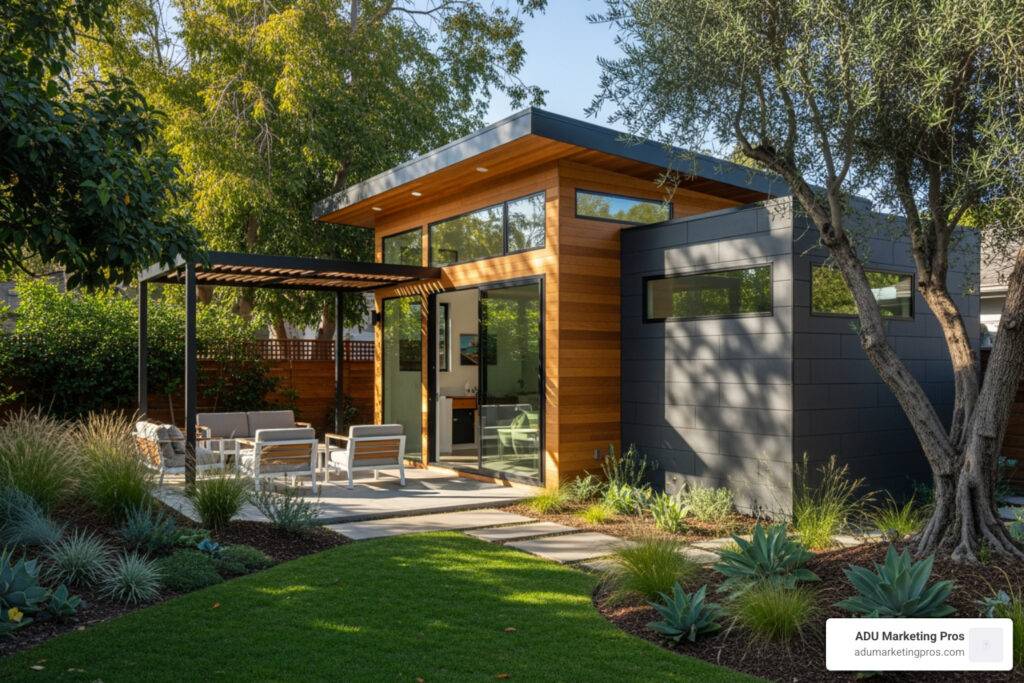
Introduction: The Hidden World of Unpermitted ADUs in Los Angeles
Illegal accessory dwelling unit Los Angeles County structures are surprisingly common. Thousands of homeowners have unpermitted ADUs—converted garages, backyard cottages, or additions built without proper permits. While these units provide housing, they come with serious risks.
Quick Answer: What You Need to Know About Illegal ADUs in LA County
- What it is: A separate living space built or converted without required city permits and inspections.
- Main risks: Daily fines, forced demolition, inability to sell, insurance denial, and major safety hazards.
- Solution: The Unpermitted Dwelling Unit (UDU) Ordinance (No. 184,907) offers a path to legalization for qualifying units.
- Key requirements: The unit must meet life safety conditions, and the owner may need to provide affordable housing.
- Involved departments: Department of Building and Safety (LADBS), Housing and Community Investment Department (LAHD), and City Planning.
Los Angeles faces a severe housing crisis, and in response, many property owners created “granny flats” for family or rental income. Some were built correctly, but many were not.
The good news is that you can legalize most unpermitted ADUs. The City of Los Angeles created the UDU Ordinance in 2017 to help homeowners bring illegal units into compliance. This guide explains the process, from understanding the risks to getting your Certificate of Occupancy.
Legalizing your ADU protects your investment, ensures tenant safety, and provides peace of mind. According to the Los Angeles Department of Building and Safety, the process involves multiple departments, but it transforms a liability into a legitimate asset that increases property value and provides stable income.
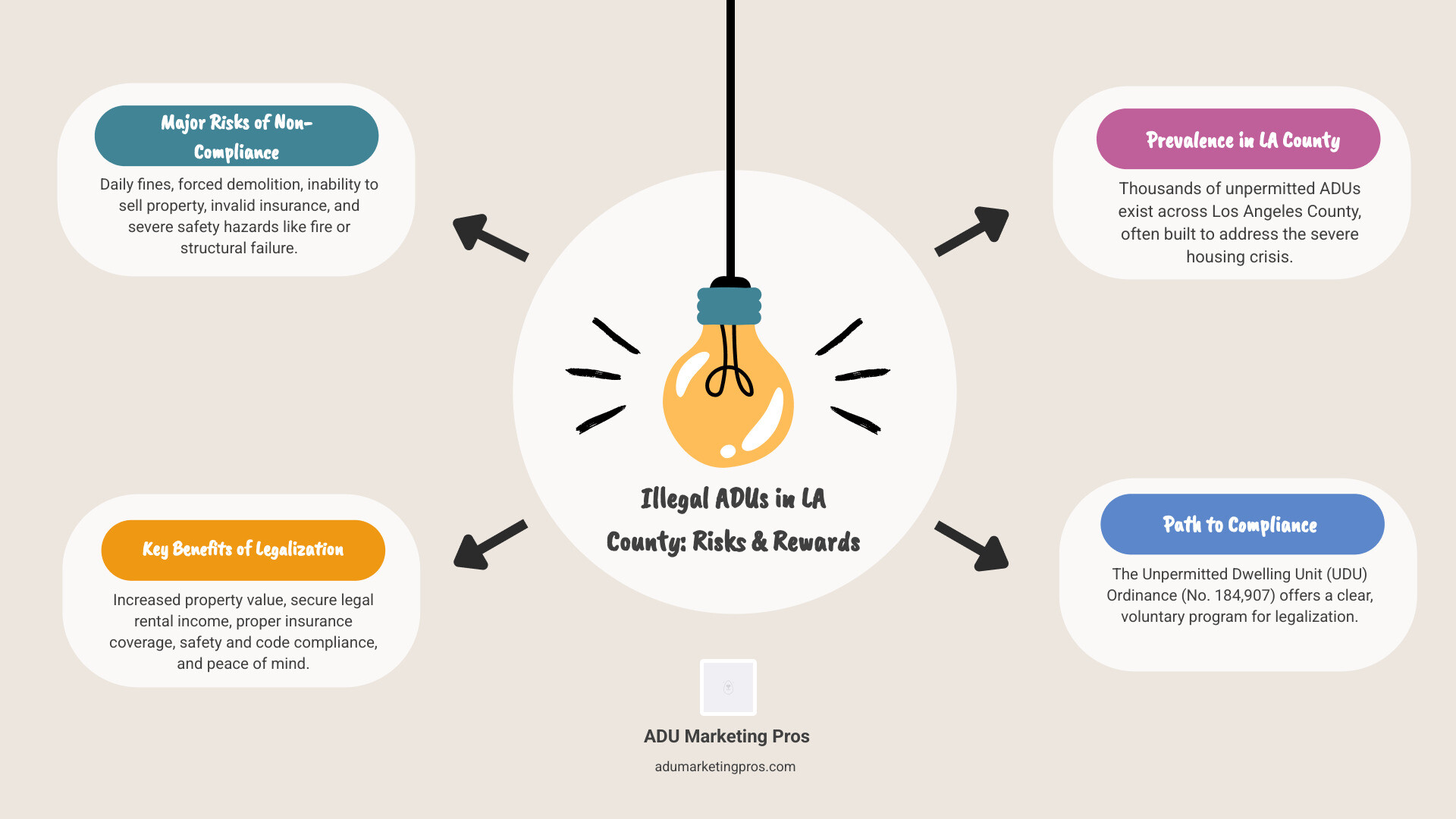
The High Stakes of Non-Compliance: Risks vs. Rewards of Legalization
Owning an illegal accessory dwelling unit Los Angeles County property is a high-stakes gamble. While it may provide extra income or housing for a relative, an unpermitted unit exposes you to severe financial and safety risks. The consequences of non-compliance are far more serious than most homeowners realize.
Understanding the Risks of an Illegal Accessory Dwelling Unit Los Angeles County
Once the city finds your illegal unit, often through a neighbor’s complaint, a series of costly consequences begins.
- Code Enforcement and Fines: The Los Angeles Department of Building and Safety (LADBS) can issue citations with daily fines that accumulate rapidly, often reaching tens of thousands of dollars.
- Demolition Orders: In severe cases, the city can force you to demolish the structure at your own expense, resulting in a total loss of your investment plus removal costs.
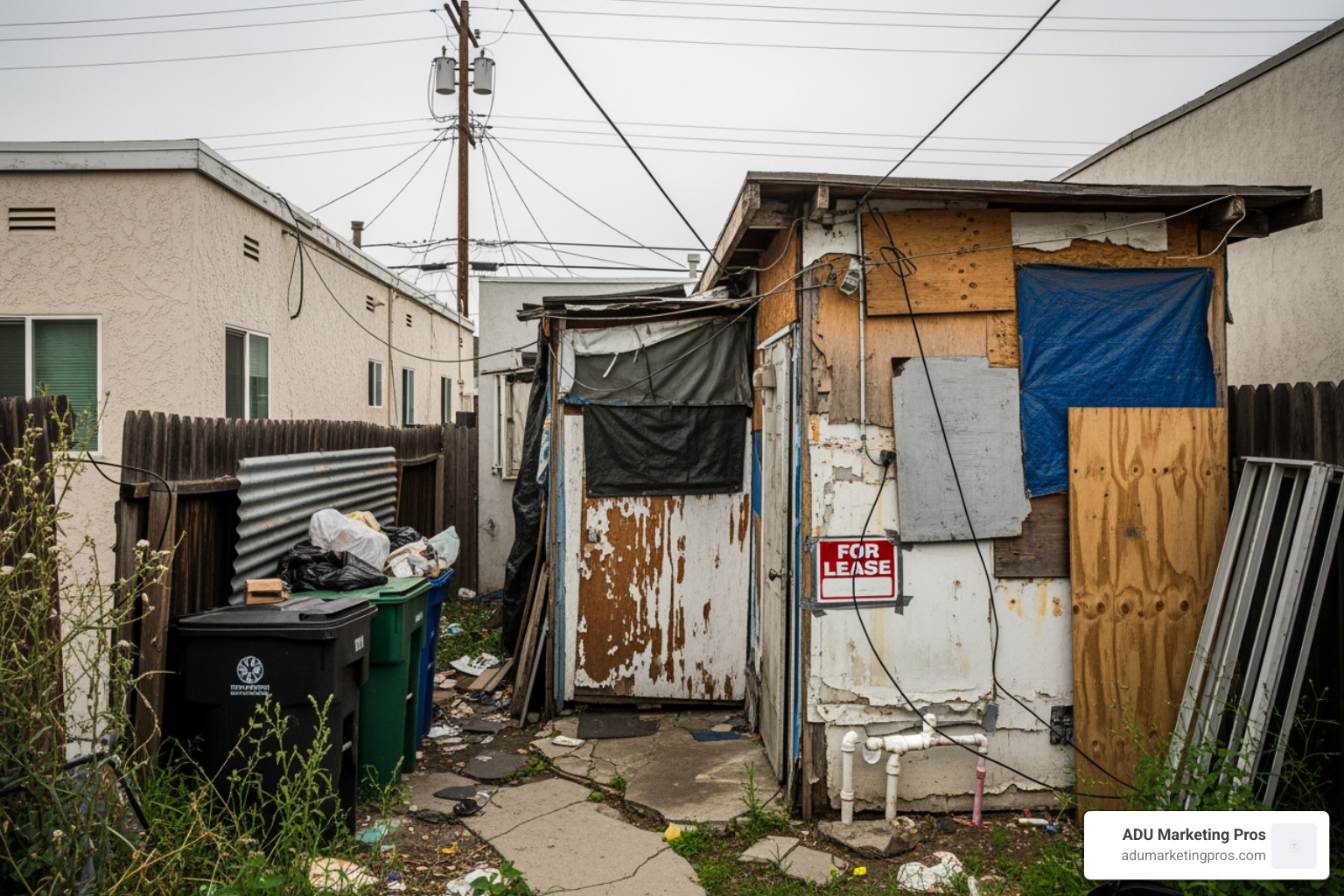
- Safety Hazards: Unpermitted units often have dangerous conditions like faulty wiring (fire risk), structural instability (collapse risk), and poor ventilation. These put lives in danger.
- Insurance Denial: Standard homeowner’s insurance will not cover unpermitted structures. If a fire or injury occurs, you are personally liable for all damages, medical bills, and legal fees, which could lead to financial ruin.
- Inability to Sell or Refinance: Lenders typically refuse to finance properties with illegal structures, making it nearly impossible to sell or refinance. You’d have to legalize the unit, demolish it, or find a cash buyer willing to assume the risk at a drastically reduced price.
- Tenant Lawsuits: Tenants in an illegal unit can sue for unsafe living conditions, withhold rent, or even seek a refund for all rent paid during their tenancy.
The Primary Benefits of a Legal ADU
Legalizing your ADU transforms it from a liability into a valuable asset.
The most significant benefits include increased property value and the ability to generate secure rental income without fear of legal repercussions. A permitted ADU is a recognized asset that appraisers include in your home’s valuation. This makes it easier to sell your home, refinance, or secure other loans. You can learn more about maximizing your ADU Rental Income and the potential ADU Return on Investment.
Beyond the financial gains, legalization provides priceless peace of mind. Knowing your unit is safe, insured, and compliant eliminates the constant stress of potential fines or lawsuits. It also offers housing flexibility for family members and contributes a safe, legal unit to LA County’s housing supply.
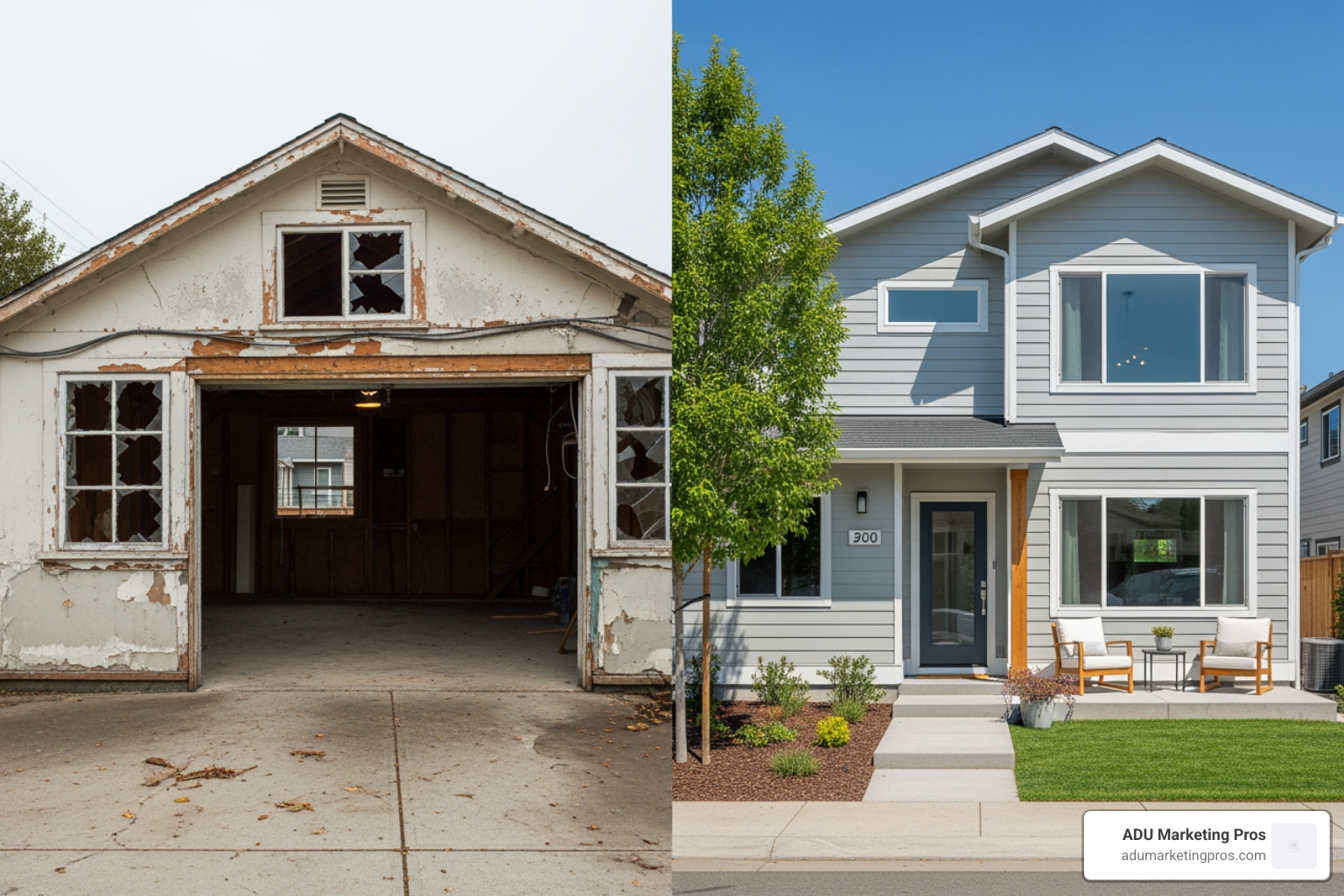
The Legalization Process for an Illegal Accessory Dwelling Unit Los Angeles County
If you own an illegal accessory dwelling unit Los Angeles County, there is a path to compliance. The City of Los Angeles created the Unpermitted Dwelling Unit (UDU) Ordinance (No. 184,907) in 2017 as a voluntary program to help homeowners legalize qualifying units. The goal is to bring these structures out of the shadows and add them to the legal housing market.
This process involves coordination between several city agencies: City Planning for initial intake and zoning, the Department of Building and Safety (LADBS) for plan checks and inspections, and the Housing and Community Investment Department (LAHD) to manage affordability requirements. Some jurisdictions may also offer ADU amnesty programs that can reduce fees or penalties, so it’s always worth checking for current local incentives.
Step-by-Step Guide to Legalizing Your Illegal Accessory Dwelling Unit Los Angeles County
The legalization journey in the City of Los Angeles generally follows a six-step process. This framework provides a solid roadmap, though specifics may vary by location within LA County.
Step 1: Pre-Screening & Intake
Your journey starts with City Planning to determine if your unit is eligible for the UDU program. They will assess when the unit was built and if it can realistically meet life safety standards.
Step 2: Submit Plans to LADBS
You must hire a professional to create detailed architectural and engineering plans. These blueprints must show how the existing unit will be modified to meet all current building, electrical, plumbing, and safety codes.
Step 3: Plan Check & Clearances
LADBS will carefully review your plans for compliance with all regulations. This stage often involves several rounds of feedback and revisions. Patience is key, as each revision brings you closer to approval. Understanding the general ADU Permit Process can help set realistic expectations.
Step 4: Covenant & Affordability Agreement
Unique to the City of LA’s UDU Ordinance, this step requires you to sign a Land Use Covenant with LAHD. In exchange for legalization, you must agree to rent at least one unit on your property at an affordable rate, a commitment that is recorded against your property title.
Step 5: Building Permits & Inspections
With approved plans, you’ll obtain building permits and begin construction. LADBS inspectors will visit the site at key stages to verify that all work—from foundation to electrical—is done correctly and safely. These inspections are non-negotiable and ensure the unit is habitable.
Step 6: Certificate of Occupancy (CO)
After passing all final inspections, you will receive a Certificate of Occupancy. This document is your official proof that the ADU is legal, safe, and compliant. Without a CO, you cannot legally rent the unit or have it recognized as a separate dwelling when selling your property.
For official guidance, refer to the LA County Planning’s Accessory Dwelling Unit resources.
Navigating LA’s Web of ADU Regulations
Understanding the rules for your illegal accessory dwelling unit Los Angeles County is crucial for a successful legalization project. Regulations from the state, county, and city all intersect, but the basics are straightforward.
First, it’s important to know the difference between an Accessory Dwelling Unit (ADU) and a Junior Accessory Dwelling Unit (JADU).
- An ADU is a complete, independent living space with its own kitchen and bathroom. It can be a detached backyard cottage, an addition, or a converted garage, and can be up to 1,200 square feet or larger in some cases.
- A JADU is smaller (up to 500 sq. ft.), created within the existing footprint of the main house. It requires an exterior entrance and an efficiency kitchen (small sink, cooking appliance, mini-fridge) and may share a bathroom with the main home. The property owner must reside in either the main house or the JADU.
The type of unit impacts the legalization requirements. Additionally, properties in the City of Los Angeles with a primary dwelling built before October 1, 1978, may be subject to the Rent Stabilization Ordinance (RSO) and Just Cause Ordinance (JCO). These ordinances regulate rent increases and evictions, and whether your new ADU falls under them depends on factors like its construction date and whether it’s attached or detached. Both come with annual registration fees.
One of the most significant recent changes in state law involves parking. In most cases, no additional parking is required for ADUs, especially if the property is near public transit or the ADU is a conversion of an existing structure like a garage. This change has removed a major barrier for many homeowners. For a detailed breakdown, see our guide on ADU Parking Requirements.
ADU regulations are constantly evolving. For example, the ADU Ordinance Amendment approved in October 2024 (effective August 2025) is LA County’s latest effort to align with state law and streamline approvals. Before starting, always verify your property’s specific zoning rules, including setback requirements and height limits, using tools like the city’s ZIMAS portal. For the most authoritative information on statewide rules, consult California’s official ADU Handbook.
Finding Help: Funding and Professional Assistance
Legalizing an illegal accessory dwelling unit Los Angeles County is a complex project, but you don’t have to do it alone. A strong support system of professionals and financial programs is available to guide you.
For those in the City of Los Angeles, the first point of contact for the Unpermitted Dwelling Unit (UDU) program is Los Angeles City Planning. You can visit their Development Services Center or email them at planning.priorityhousing@lacity.org. You’ll also work closely with the Department of Building and Safety (LADBS) for permits and inspections and the Housing and Community Investment Department (LAHD) for affordability covenants.

Why Hire a Professional?
Hiring an architect or designer specializing in ADU legalization is a smart investment. These professionals bring deep expertise in local and state building codes, which helps avoid costly mistakes. They streamline the permit process by preparing accurate, complete plans that city departments can approve faster, often cutting months off your timeline. A good architect also optimizes your ADU’s layout for maximum value and functionality. Our network of specialized ADU Architects Los Angeles understands the unique challenges of legalization projects.
To further simplify the process, LA County offers standard ADU plan options. These pre-approved plans have already been vetted for compliance, which can significantly reduce design time and plan-check delays.
Funding and Grant Programs
Several programs exist to help with the costs of legalization. The CalHFA ADU Grant Program is a key resource, offering up to $40,000 to reimburse homeowners for pre-development costs like architectural plans and permit fees. You can learn more and apply at the CalHFA ADU Grant Program website.
Many local jurisdictions also offer their own financing, such as construction loans or smaller grants. For a comprehensive overview of financial assistance, check out our detailed guide on ADU Funding Grants. With the right team and funding, you can successfully steer the legalization process.
Frequently Asked Questions about Illegal ADUs in LA County
Navigating the legalization of an illegal accessory dwelling unit Los Angeles County brings up many questions. Here are concise answers to the most common concerns.
What are the biggest consequences of not legalizing my ADU?
The risks are severe and can be financially devastating. The primary consequences include:
- Daily Fines: The Los Angeles Department of Building and Safety (LADBS) can impose fines that accumulate daily, quickly reaching tens of thousands of dollars.
- Forced Demolition: The city has the authority to order you to tear down the unpermitted structure at your own expense.
- Insurance Denial: Your homeowner’s insurance policy will likely not cover any damages, fires, or injuries related to the illegal unit, leaving you personally liable for all costs.
- Inability to Sell or Refinance: Lenders will not finance a property with an unpermitted structure, making it extremely difficult to sell or refinance your home.
- Lawsuits: Tenants living in an illegal unit can sue for unsafe conditions or seek refunds for rent paid.
Can any unpermitted ADU be legalized through the UDU program?
No, not all units qualify. Eligibility for the City of LA’s Unpermitted Dwelling Unit (UDU) program depends on several factors. The unit must have been constructed before a specific date and must be able to meet current life safety standards. This includes having proper emergency exits (egress), smoke detectors, and safe electrical and plumbing systems. A key requirement of the program is signing an affordability covenant with the Housing and Community Investment Department (LAHD), agreeing to rent at least one unit at an affordable rate. It is essential to consult with LADBS or a qualified professional to assess your unit’s eligibility.
How long does the legalization process typically take?
The timeline varies widely, ranging from several months to over a year. The duration depends on three main factors:
- Condition of the Unit: A well-built unit needing minor fixes will be faster to legalize than one with major structural, electrical, or plumbing issues.
- Complexity of Corrections: The more work needed to bring the unit up to code, the longer the plan check and construction phases will take.
- City Department Backlogs: The responsiveness of LADBS and other departments can impact your timeline.
Hiring an experienced architect or designer who is familiar with the local process can significantly speed things up by ensuring plans are correct from the start and navigating the bureaucracy efficiently.
Conclusion: Bring Your ADU Out of the Shadows
Living with an illegal accessory dwelling unit Los Angeles County property carries a heavy burden of risk and uncertainty. While the legalization process requires effort, the rewards—safety, financial security, and peace of mind—are immeasurable. Legalizing your ADU transforms a liability into a valuable, compliant asset that protects your family and your investment.
The path forward is clear. The City of Los Angeles and LA County have established programs like the UDU Ordinance to help homeowners succeed. The process involves working with departments like LADBS, LAHD, and City Planning, but you are not expected to steer it alone.
Professional guidance from an architect or designer specializing in ADU legalization is your greatest advantage. They have the expertise to manage the complexities of building codes, plan submissions, and inspections, guiding you to a successful outcome with a final Certificate of Occupancy.
For ADU builders, architects, and designers, the demand for legalization services is immense. If you want to connect with homeowners who need your expertise, strategic marketing is essential. ADU Marketing Pros helps firms like yours stand out and attract qualified leads in a competitive market. Learn more about our ADU Marketing services and find how we can help you grow.
Don’t let your unpermitted ADU remain in the shadows. Take the first step today to bring it into the light as a safe, legal, and valuable part of your property.