
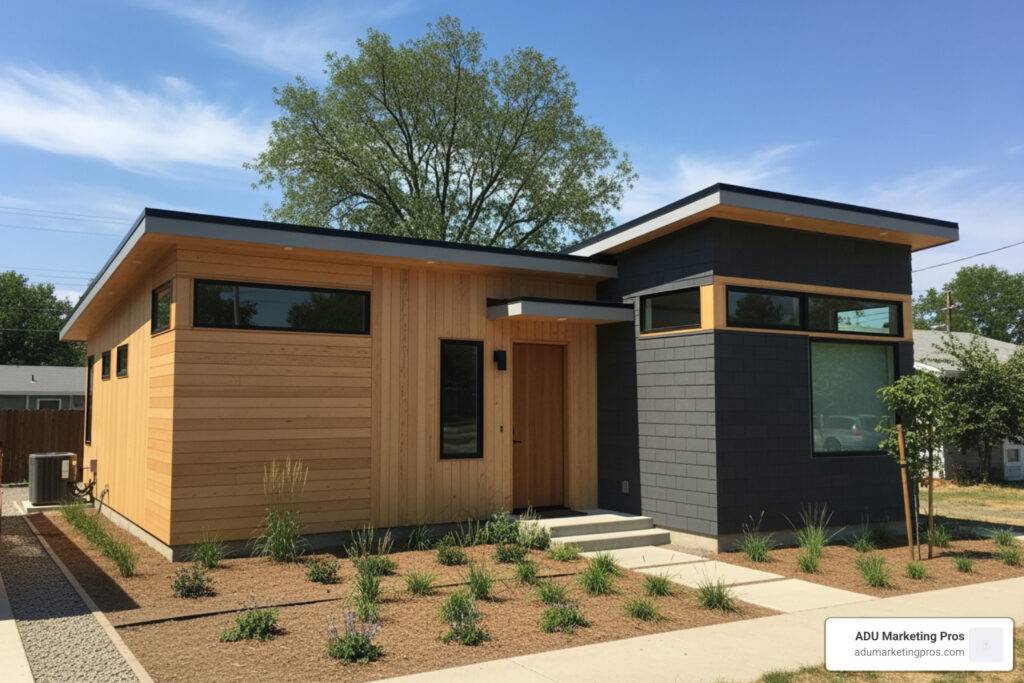
The Rise of Affordable Prefabricated Housing
With the cost of a traditional new home soaring to unprecedented heights, many prospective buyers are finding the dream of homeownership slipping out of reach. A perfect storm of rising material costs, skilled labor shortages, and intense demand for land has pushed the median price of a site-built home beyond the budget of millions. In this challenging landscape, a modern solution to an old problem is gaining significant traction: inexpensive prefab homes. These factory-built houses offer a compelling, innovative, and surprisingly stylish alternative for budget-conscious buyers and those looking for smart, sustainable housing solutions.
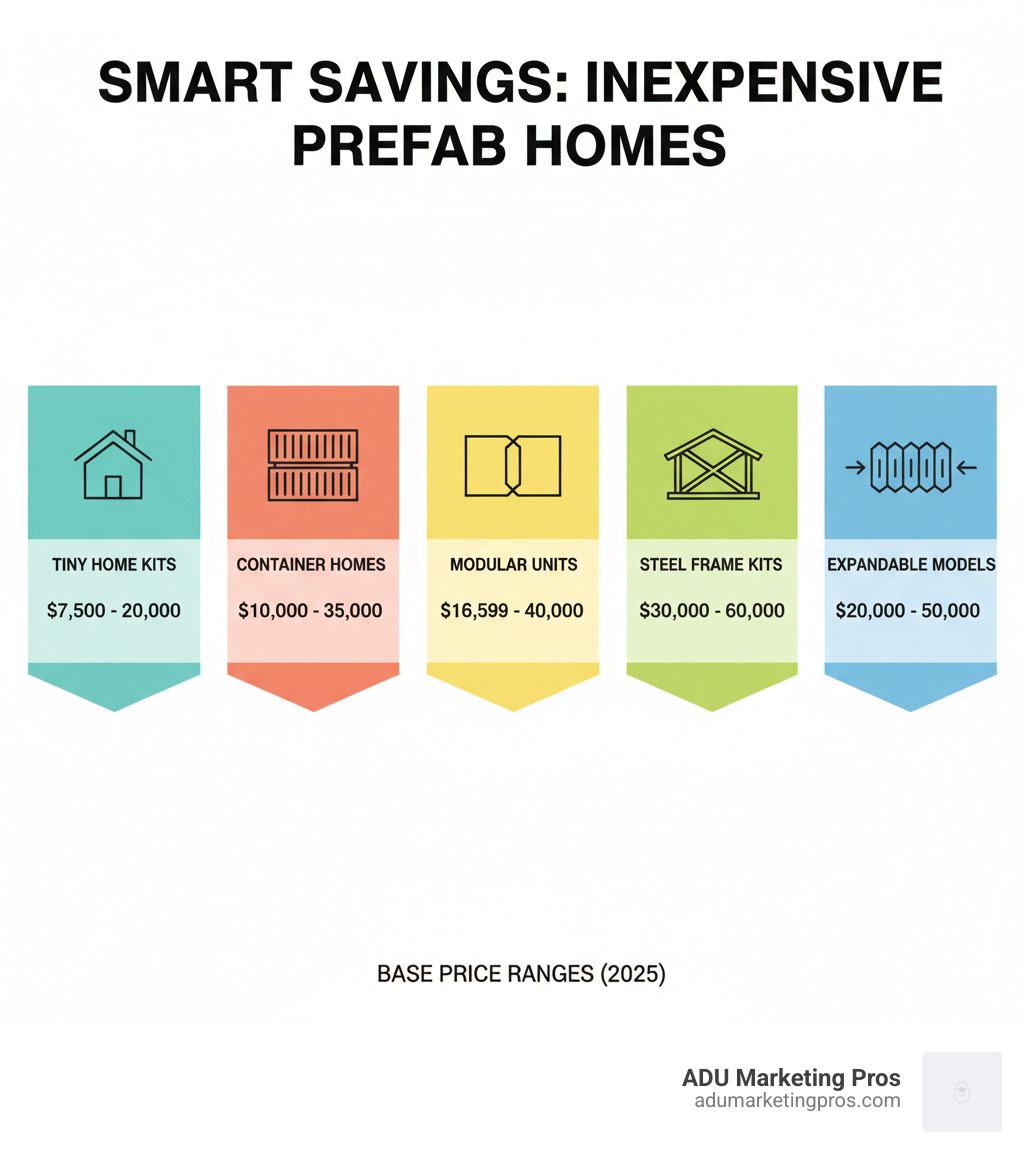
While the concept isn’t new—Sears, Roebuck and Co. sold over 70,000 mail-order kit homes between 1908 and 1940—today’s prefabricated industry is a world away from its predecessors. Leveraging advanced technology, precision engineering, and streamlined logistics, modern prefab construction delivers high-quality homes faster and more affordably than ever before. If you’re looking for a quick snapshot of what an inexpensive prefab costs, here are typical base prices for different types, which we will explore in detail later:
- Basic Tiny Prefabs: $7,500 – $20,000 (Shell kits for the dedicated DIYer)
- Container-Based Homes: $10,000 – $35,000 (Single container shells offering an industrial-chic starting point)
- Small Modular Units: $16,599 – $40,000 (Compact, factory-finished modules ideal for ADUs)
- Expandable Prefab Models: $20,000 – $50,000 (Clever designs that can grow with your needs)
- Steel Frame Kits: $30,000 – $60,000 (Durable, pest-resistant frames for open-plan living)
- Refurbished Mobile Homes: As low as $5,000 – $60,000 (An ultra-low-cost option, but with significant caveats)
- Panelized Cabin Kits: $20,000 – $70,000 (Wall and roof panels that assemble into a weather-tight shell)
Prefabricated homes are built in sections (modules) or as component panels in a climate-controlled factory, then transported to your land for final assembly. This manufacturing process is a game-changer. It dramatically cuts material waste, protects the build from weather delays, and ensures a higher level of quality control and precision. The result is a construction timeline that is often 30-50% faster than traditional methods, allowing you to move in sooner and for significantly less money.
An inexpensive prefab is about more than just a low sticker price; it represents a paradigm shift in residential construction toward efficiency, sustainability, and accessibility. Whether you need a tiny home for your backyard, a modern Accessory Dwelling Unit (ADU) to generate rental income, or a compact and stylish primary residence, this guide will explore the real costs, diverse styles, tangible benefits, and potential challenges of the prefab revolution.
The True Cost of an Inexpensive Prefab Home: Beyond the Sticker Price
The advertised base price of an inexpensive prefab home is an exciting entry point, but it’s crucial to understand that it’s only one piece of the financial puzzle. The sticker price typically covers the factory-built structure itself, but not the extensive list of “soft costs” and site-specific work required to transform it into a livable, legal home on your property. A common rule of thumb is to budget an additional 30-50% of the kit price for these expenses, though this can climb higher depending on your land’s condition and location. A $30,000 prefab kit could easily have an all-in cost of $45,000 to $60,000 by the time you’re ready to move in.
Here’s a more detailed breakdown of the essential costs you’ll need to budget for beyond the factory price:
- Land Acquisition: If you don’t already own land, this will likely be your single biggest expense. Costs vary dramatically by location, from under $20,000 in a remote rural area to over $200,000 for a small buildable lot in a desirable suburb like those in the San Francisco Bay Area or Los Angeles County. Due diligence is critical here to ensure the land is zoned for your intended use.
- Site Preparation ($1,000 – $5,000+): Raw land is rarely ready for a home. This budget covers clearing trees and vegetation, grading the land to ensure proper drainage, and excavating for the foundation and utility trenches. Costs escalate quickly for heavily wooded, rocky, or steeply sloped lots that require extensive earthwork or retaining walls.
- Foundation ($5,000 – $15,000+): Every home needs a solid foundation, and this is almost never included in a kit’s base price. Options include a concrete slab-on-grade (most common and cost-effective), a crawl space (which allows for under-floor access to utilities), or a full basement. The choice depends on your climate, soil type, and budget.
- Delivery Fees ($2,000 – $5,000): The cost to transport the home’s modules or panels from the factory to your site is a significant logistical expense. It depends on the distance, the size and number of modules, and whether special permits or pilot cars are required for oversized loads.
- Utility Hookups ($3,000 – $10,000+): Connecting to public utilities is essential. This includes tapping into municipal water and sewer lines and running electrical service to your home. If your land is rural, these costs can skyrocket. You may need to budget for drilling a well ($5,000-$15,000) and installing a complete septic system ($8,000-$20,000+).
- Permits & Inspections ($500 – $2,000): Before any work begins, you’ll need building permits from your local municipality. This involves submitting architectural plans and engineering reports for approval. The fees cover the administrative review and the subsequent on-site inspections at various stages of construction (foundation, framing, electrical, plumbing, final).
Let’s update our hypothetical budget for a $30,000 inexpensive prefab kit with a more comprehensive view:
| Cost Item | Estimated Range | Hypothetical Cost |
|---|---|---|
| Prefab Home Base Price | $30,000 | $30,000 |
| Delivery Fees | $2,000 – $5,000 | $3,500 |
| Foundation (Concrete Slab) | $5,000 – $15,000 | $10,000 |
| Site Preparation | $1,000 – $5,000 | $2,500 |
| Utility Hookups (Municipal) | $3,000 – $10,000 | $6,500 |
| Permits & Inspections | $500 – $2,000 | $1,000 |
| Interior/Exterior Finishes (if not included) | $2,000 – $10,000+ | $5,000 |
| Contingency Fund (10%) | $5,850 | $5,850 |
| Estimated Total Cost | $49,350 – $84,850 | $64,350 |
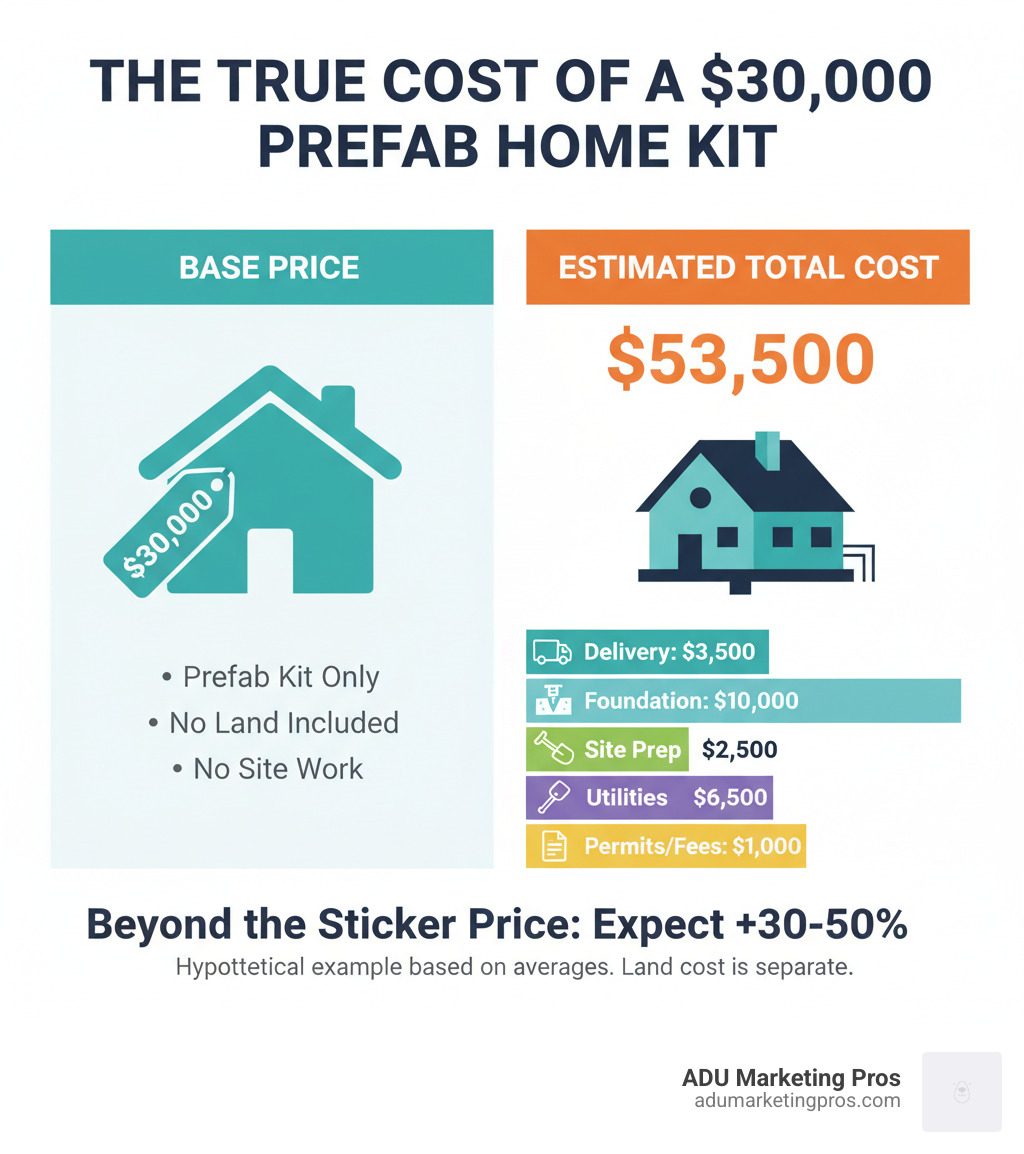
As you can see, the total project cost can easily be more than double the initial sticker price. This isn’t meant to discourage you—even at $64,350, it’s a fraction of a traditional home’s cost. The key to success is exhaustive research and planning. An inexpensive prefab home is an excellent value proposition, but only when you budget for the complete picture from day one.
A Roundup of Inexpensive Prefab Home Styles
The world of inexpensive prefab homes is surprisingly diverse, with styles and construction methods to suit different budgets, aesthetics, and DIY capabilities. Whether you’re dreaming of a minimalist backyard retreat in San Jose, a rustic cabin in the mountains, or a compact primary residence, there’s a prefab option that fits your vision.
Tiny Home & Cabin Kits: The Ultimate DIY Project
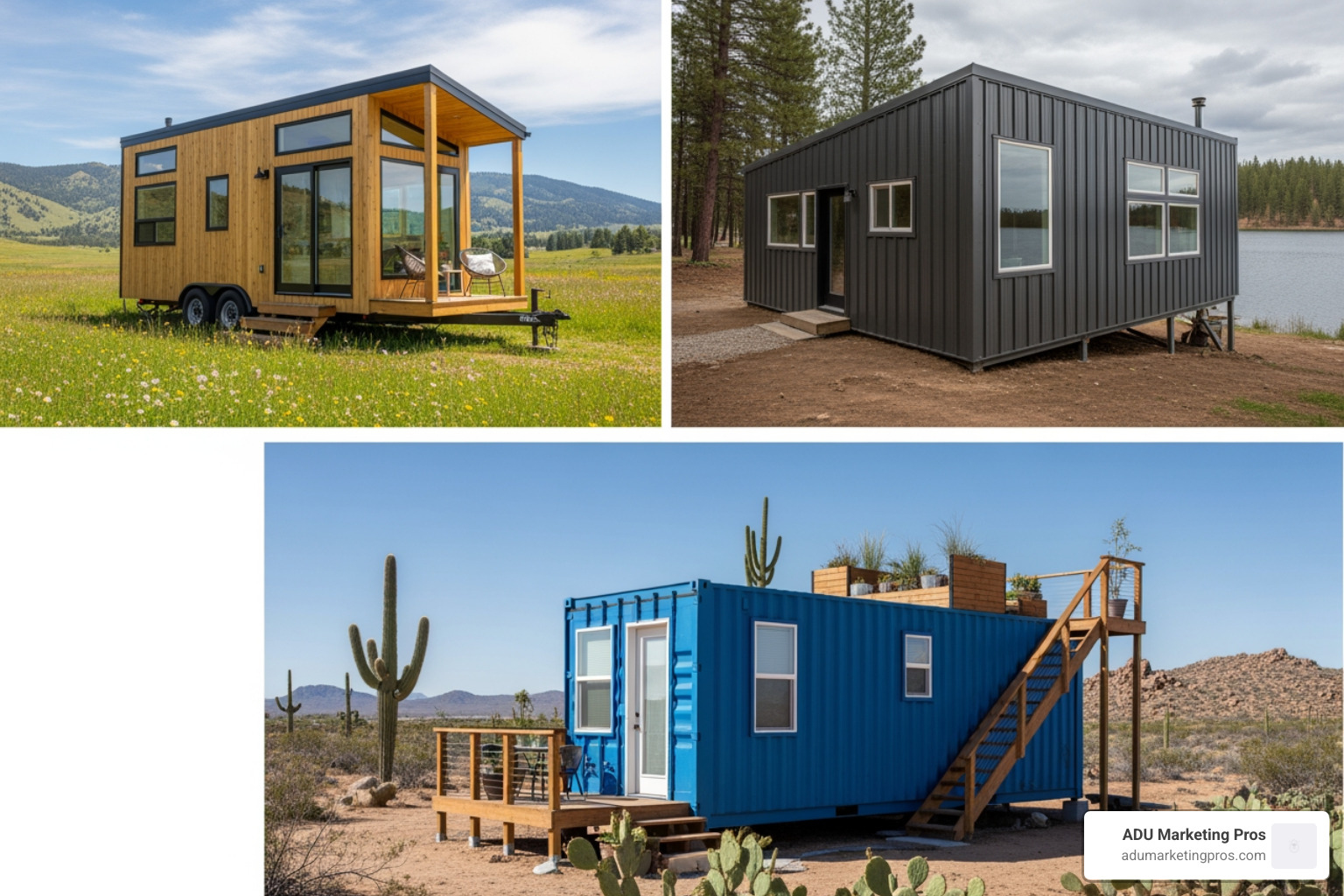
For the most affordable entry point into homeownership, tiny home and cabin kits are an excellent choice. Basic structural shells can start around $8,000, with more complete packages ranging from $15,000 to $20,000. These kits represent a spectrum of completion. The most basic provide just the framing and sheathing, requiring significant DIY skills in carpentry, roofing, plumbing, and electrical work. More inclusive kits may include windows, doors, and interior wall panels. They are perfectly suited for Accessory Dwelling Units (ADUs), which are increasingly popular in California cities where creative housing solutions are in high demand. However, navigating zoning for tiny homes can be complex, so it’s crucial to check local regulations. For more on ADU options, see our guide to modern prefab granny flats.
Steel Frame & Metal House Kits: Durability on a Budget
For a robust, long-lasting, and low-maintenance structure, steel frame and metal house kits are a fantastic inexpensive prefab option. Ranging from $30,000 to $60,000, these kits provide a pre-engineered tubular steel or I-beam framing system that is significantly stronger than wood. This makes them highly resistant to termites, mold, rot, and fire, which can lead to lower insurance premiums. The strength of steel also allows for large, clear-span interior spaces without the need for load-bearing walls, giving you ultimate freedom in designing your floor plan. The popular “barndominium” style is a direct result of this flexibility. While assembling the frame itself can be a DIY-friendly process with bolted connections, finishing the interior and exterior will require standard construction knowledge.
Shipping Container Homes: Industrial Chic on a Budget
Shipping container homes offer a unique, eco-friendly, and highly durable path to an inexpensive prefab dwelling. By upcycling decommissioned steel containers, they provide a distinctive industrial aesthetic that is both modern and rugged. Basic DIY single-container homes can be framed out for $15,000-$30,000, while professionally converted or multi-container designs will cost more. Containers are incredibly strong (designed to be stacked nine-high on ships), but they present unique challenges. Cutting openings for windows and doors requires structural reinforcement. The metal shell necessitates high-performance insulation (typically closed-cell spray foam) to prevent condensation and create a comfortable living space. Furthermore, you must ensure the container’s history is known to avoid residual chemicals, and navigating local building codes that may not have provisions for container construction can be difficult.
Small Modular & Panelized Units: Quality Control Meets Speed
Modular and panelized homes are at the heart of modern prefab efficiency, offering a balance of speed, quality, and affordability. It’s important to understand the distinction:
- Modular homes are built as complete, three-dimensional volumetric sections in a factory—including wiring, plumbing, and interior finishes—and then transported to the site and craned into place. Small, efficient units can range from $16,599 to $40,000 for the base module.
- Panelized homes are made from factory-built 2D panels (walls, floors, and roof trusses) that are shipped flat to the site and erected to form a weather-tight shell. Kits for smaller homes start around $20,000.
Both methods offer superior quality control compared to site-built homes, as construction occurs in a climate-controlled environment using precise jigs and tools. The National Association of Home Builders (NAHB) notes that modular projects can be finished in about three months from start to finish. This factory-based approach also drastically reduces material waste to as little as 2%, a stark contrast to the 20-25% waste common on traditional job sites, as highlighted by the U.S. Environmental Protection Agency (EPA) in its overview of construction and demolition materials. This precision and efficiency make them an ideal choice for ADUs. Learn more in our guide on modular granny flats in California.
Weighing the Pros and Cons of Your Inexpensive Prefab Investment
Choosing an inexpensive prefab home is a major financial decision with a unique set of significant advantages and potential challenges. A clear-eyed understanding of both sides of the equation will empower you to make the best choice for your budget, timeline, and lifestyle.
The Major Advantages of Choosing an Inexpensive Prefab
- Significant Cost Savings: This is the primary driver for most buyers. By optimizing labor, reducing material waste, and leveraging economies of scale, prefab manufacturers can deliver a home for 10-25% less than a comparable site-built house. Even after factoring in all site costs, the final price tag makes homeownership far more accessible.
- Faster Construction Timelines: The prefab process is a model of efficiency. While your foundation is being poured and site utilities are being connected (a process that takes 1-2 months), your home is simultaneously being built in the factory. This parallel workflow eliminates the weather delays that plague traditional construction. As the NAHB estimates on build time show, a modular project can be completed in as little as three to four months, compared to nine months or more for a site-built home.
- Superior Sustainability and Quality: Factory construction is inherently more sustainable. Material waste is minimized, and excess can be recycled more easily. The controlled environment also leads to higher-quality construction. Components are built with precision jigs, resulting in tighter seals, better insulation, and improved energy efficiency. Because modules must withstand the rigors of transportation, they are often engineered with more structural integrity than their site-built counterparts.
Potential Challenges and How to Steer Them
While prefabs offer great value, it’s crucial to be prepared for potential hurdles. Proactive planning is key to a smooth project.
- Financing Complexities: Some traditional lenders are unfamiliar with the payment structure for prefabs, which can complicate financing. They may be hesitant to release funds for a home that isn’t yet on the property. The solution is to seek out lenders specializing in prefab or to secure a construction-to-permanent loan early in the process.
- Customization Limitations: While manufacturers offer a wide array of floor plans, finishes, and fixtures, they cannot match the infinite customization of a ground-up architectural design. This standardization is the source of their efficiency and cost savings. An inexpensive prefab kit may feel restrictive if you have highly specific or unconventional design ideas.
- Resale Value Perceptions: This is a critical distinction. Modern, high-quality modular homes permanently affixed to a foundation are considered “real property” and appreciate in value just like site-built homes, especially in high-demand areas like California. However, older or non-permanent manufactured homes (often called mobile homes) are treated as “chattel” or personal property and may not appreciate at the same rate.
- Zoning and Permit Hurdles: Navigating local building codes and zoning regulations can be complex. Each city and county has its own rules regarding minimum square footage, aesthetic requirements, and setbacks. Non-traditional structures like container homes can face extra scrutiny. The best strategy is to work with a local architect, contractor, or prefab dealer who has experience with your specific municipality.
- Logistical and Land Challenges: Your property must be accessible for large delivery trucks and potentially a crane. Narrow roads, low-hanging power lines, weak bridges, or tight turns can make delivery prohibitively expensive or impossible. A thorough site assessment before you purchase a home or land is non-negotiable.
Navigating the Practicalities: From Land Purchase to Move-In Day
Before you fall in love with a specific inexpensive prefab home model, you need to handle two crucial preliminary steps: securing a suitable piece of land and arranging your financing. These foundational elements will dictate your entire project’s budget, timeline, and ultimate success.
Securing Land and Understanding Local Regulations
Finding the right spot for your home is more than just liking the view; it requires rigorous due diligence. Before you purchase land, you must confirm it is buildable and free of restrictions that could derail your project. This is especially critical in states like California, where cities like San Jose and Los Angeles have specific, evolving rules for primary homes and Accessory Dwelling Units (ADUs).
Create a land-buying checklist:
- Zoning & Code Verification: Contact the local planning department. Is the land zoned for residential use? Are prefab homes permitted? What are the rules for ADUs? Are there minimum square footage requirements or aesthetic covenants?
- Utility Access Assessment: How far is the property from municipal water, sewer, and electrical lines? The cost to extend these services can be thousands or even tens of thousands of dollars. If the land requires a well and septic system, you’ll need to perform a percolation (“perc”) test to ensure the soil can support a septic field.
- Site Assessment: Evaluate the topography. Is the land sloped, requiring expensive grading or a stepped foundation? A geotechnical engineer can perform a soil test to check for stability. For more on these costs, see our guide on prefab ADU California cost.
- Access & Logistics: Can a large delivery truck and crane safely access the build site? Look for narrow roads, tight corners, low bridges, and overhanging power lines that could prevent delivery.
- Title Search: Ensure the property has a clear title, free of liens or easements that could restrict where you can build.
Financing Your Inexpensive Prefab Home
Financing a prefab home can differ from a traditional mortgage, but a growing number of options are available as these homes become more mainstream.
- Construction-to-Permanent Loans: This is the most common and ideal option for modular homes on a permanent foundation. This single loan covers the costs of the land, the prefab unit, and the site work. It operates as a short-term construction loan with a series of “draws” to pay the factory and contractors, then converts to a standard mortgage once the home is complete and you receive a certificate of occupancy.
- Manufacturer Financing: Some larger prefab companies offer their own in-house financing or have partnerships with preferred lenders who are experts in their product. This can be a convenient, streamlined option, but always compare their rates with outside lenders.
- Personal Loans or HELOCs: For very low-cost kits or ADUs, a homeowner might use an unsecured personal loan or a Home Equity Line of Credit (HELOC) on their primary residence. These are often faster to secure but may come with higher interest rates or variable rates.
- Chattel Loans: These loans are used for manufactured homes that are not permanently affixed to land and are considered personal property (like an RV or vehicle). They typically have shorter terms and higher interest rates than traditional mortgages and should generally be avoided if long-term appreciation is a goal.
Regardless of the loan type, lenders will want to see a strong financial profile, including a good credit score, a low debt-to-income ratio, and a solid down payment.
Frequently Asked Questions about Inexpensive Prefab Homes
Here are detailed answers to some of the most common questions that arise when considering an investment in an inexpensive prefab home.
What is a realistic total budget for an inexpensive prefab home?
A reliable method is the “30-50% rule”: plan to spend an additional 30% to 50% of the home’s sticker price on all other costs. For a $40,000 modular unit, your realistic final cost could be between $52,000 and $60,000, and potentially more in high-cost areas or on difficult land. This extra budget must cover a comprehensive list of essential expenses:
- Land acquisition (if not already owned)
- Permits, engineering reports, and inspection fees
- Site preparation (grading, excavation, tree removal)
- Foundation (slab, crawl space, or basement)
- Delivery fees (transport, crane rental)
- Utility connections (water, sewer/septic, electricity, gas)
- Assembly/finish-out labor (if not turnkey)
- Additional materials (decks, stairs, gutters)
- Landscaping and driveway
- A 10-15% contingency fund for unexpected overruns
Always get detailed, itemized quotes from local contractors for each phase of your project to build an accurate, location-specific budget before you commit.
How much DIY work is involved with prefab kits?
The level of DIY involvement varies dramatically across a wide spectrum. It’s crucial to be honest about your skills, time, and budget.
- Turnkey: The manufacturer or a partner contractor handles everything from permits to final finishes. You simply get the keys at the end. This is the most expensive option but requires the least work from you.
- Owner as General Contractor: You manage the project, hiring and scheduling subcontractors for the foundation, assembly, plumbing, and electrical work. This can save 10-20% but requires significant organization and project management skills.
- Owner/Builder: You act as the general contractor and also perform some of the physical labor yourself, such as painting, flooring, or landscaping. This offers greater savings but requires both management skills and trade skills.
- Shell Kits: Common for tiny homes and metal buildings, these provide only the exterior structure. You are responsible for the entire interior finish-out: framing, insulation, plumbing, electrical, drywall, etc. This requires advanced skills but offers the most potential for cost savings. For more on managing these projects, see our guide on prefab ADU California cost.
Are inexpensive prefab homes a good long-term investment?
Yes, a modern inexpensive prefab home can be an excellent long-term investment, but its future value hinges on key factors. It’s vital to distinguish them from older mobile homes. Today’s modular and panelized homes are built to the same (or higher) building codes as site-built homes. When placed on a permanent foundation, they are legally classified as “real property” and appreciate in value similarly to traditional real estate.
Key factors for a good investment include:
- Type of Home: A modular home on a permanent foundation will appreciate. A manufactured home on a chassis (a chattel property) may not.
- Quality of Construction: Choosing a reputable manufacturer with durable materials and solid engineering ensures longevity and value.
- Permanent Foundation: This is the single most important factor for classifying the home as real estate and securing a traditional mortgage.
- Desirable Location: As with any real estate, location is paramount. A well-built prefab in a great neighborhood will always hold its value.
In a market like California, a well-built prefab ADU can significantly boost your property’s market value and generate substantial rental income, offering an excellent return on investment. Learn more about the market in our prefab ADU Los Angeles guide.
Are prefab homes durable and safe?
Absolutely. Prefabricated homes are engineered to be exceptionally durable, often exceeding the structural requirements of site-built homes. Because modules must withstand the stresses of being transported by truck and lifted by a crane, they are built with extra structural reinforcement. They are designed and constructed to meet the same local, state, and national building codes (like the International Residential Code) as any traditional home, and they undergo rigorous third-party inspections at the factory and on-site to ensure compliance. This means they are just as safe and resilient in the face of high winds, heavy snow loads, and seismic activity.
Conclusion: Is an Inexpensive Prefab Home Right for You?
An inexpensive prefab home offers a compelling and modern path to homeownership, defined by significant cost savings, accelerated construction timelines, and superior sustainability. It stands as a powerful answer to the affordability crisis plaguing the traditional housing market. However, the journey is not without its complexities. Success requires diligent planning, a comprehensive budget that accounts for all “soft costs,” and a proactive approach to navigating financing and local zoning regulations.
The right choice ultimately depends on your personal circumstances. A prefab home could be the perfect fit if you are:
- A budget-conscious first-time buyer looking for an accessible entry into the market.
- A homeowner seeking to add an ADU for rental income or multi-generational living.
- A downsizer wanting a smaller, efficient, and low-maintenance home.
- A hands-on individual with the skills and desire to take on a DIY kit to maximize savings.
Conversely, you might want to reconsider if you:
- Desire a completely unique, custom-designed home with no compromises.
- Own a piece of land with severe access limitations for delivery.
- Are uncomfortable managing a multi-stage construction project.
In high-demand states like California, prefab homes, especially in the form of Accessory Dwelling Units (ADUs), are not just a trend; they are a vital part of the solution to the housing shortage. For homeowners, they represent a savvy financial and lifestyle decision. For construction, architecture, and real estate firms, they represent a booming and durable market segment.
If you are an industry professional looking to capitalize on this explosive growth, connecting with qualified, project-ready clients is key. ADU Marketing Pros specializes in digital marketing strategies that generate high-quality leads for firms in the dynamic prefab and ADU space. Find out how to market your prefab ADU projects in Los Angeles and build your business at the forefront of this housing revolution.