

Why Securing the Right Land Is Your First Big Step
Tiny house land is the foundation of your downsizing dream. Without the right spot, even the most beautiful tiny home can’t become your reality. The tiny house movement promises financial freedom and sustainable living, but it comes with a unique challenge: where do you legally and practically place your tiny house?
Unlike traditional homes, tiny houses face problems with zoning laws that often don’t account for homes under 400 square feet and building codes that vary wildly between municipalities. Finding affordable land that permits a tiny home as a primary residence can be the trickiest part of the journey.
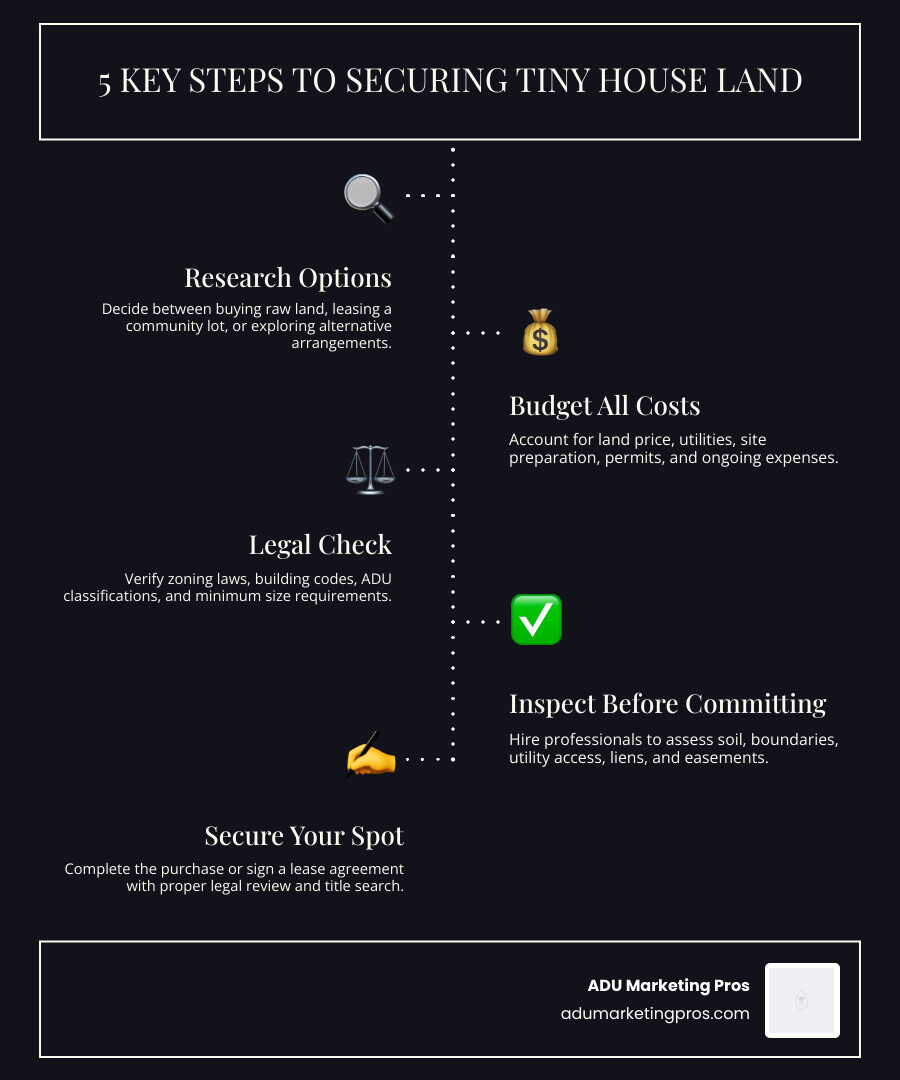
Quick Guide to Finding Tiny House Land:
- Research Options: Decide between buying raw land, leasing a community lot, or exploring alternative arrangements.
- Check Legal Requirements: Verify zoning laws, building codes, and permit requirements in your target area.
- Budget for All Costs: Account for land price, utilities, site prep, and ongoing expenses.
- Inspect Before Committing: Hire professionals to assess soil, boundaries, and utility access.
- Secure Your Spot: Complete the purchase or lease with a proper legal review.
The good news is that you have options. From purchasing raw acreage to renting a spot in an established tiny house community, this guide walks you through every path to securing your ideal tiny house land. Understanding your options is the first step toward making your tiny living dream a reality.
Decoding Your Land Options: Buying vs. Leasing
Your journey to finding the perfect tiny house land begins with a fundamental decision: do you buy or lease? Each path offers distinct advantages and disadvantages that align with different long-term goals and financial situations.
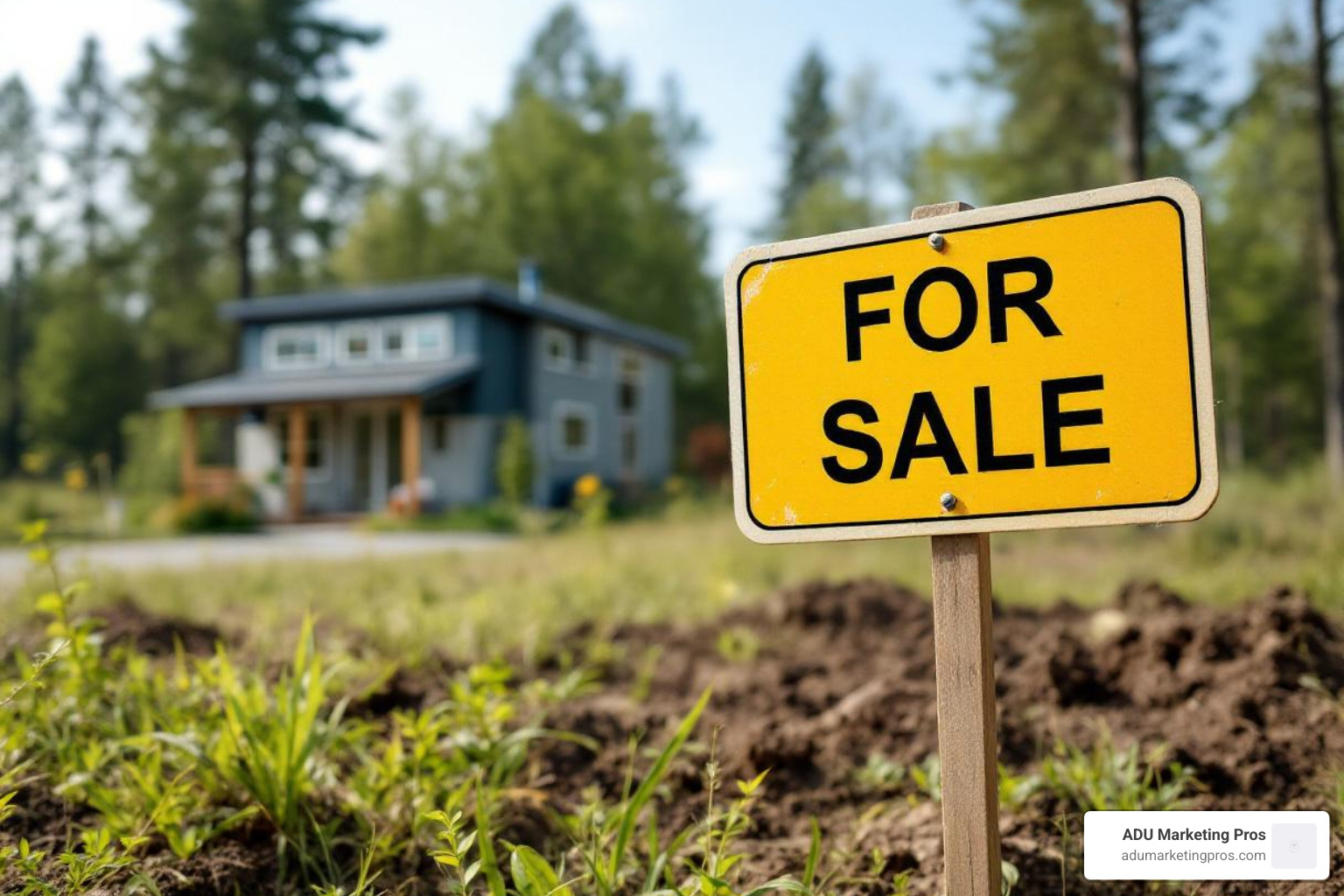
Land for tiny homes generally falls into a few categories:
- Raw land: Undeveloped land, often rural, that lacks utilities or road access. It offers the most freedom but requires the most development work.
- Suburban lots: Smaller residential plots in established communities. They usually have utility hookups but are subject to strict zoning and HOA rules.
- Rural acreage: Larger than raw land, offering more privacy for off-grid systems. Zoning can be less restrictive but requires careful investigation.
- Infill lots: Vacant parcels in developed areas, often ideal for Accessory Dwelling Units (ADUs) but typically expensive and tightly regulated.
Key Considerations for Buying Tiny House Land
Purchasing tiny house land means you own the property, which provides control and long-term investment potential. When you buy, you build equity, which is a substantial asset in high-value real estate markets like California. In areas such as Los Angeles County or the San Francisco Bay Area, land values can appreciate considerably.
The primary benefit of buying is complete control over your property and long-term stability with no landlord or expiring lease. However, buying involves higher upfront costs, including the purchase price, closing costs, permitting fees, and utility installation. You are also responsible for ongoing property taxes. For those seeking permanence and a tangible asset, buying is an excellent long-term strategy. For more insights, explore our guide on Land for Sale in Southern California for Tiny Houses.
Leasing Land: A Flexible Alternative
Leasing tiny house land offers lower entry costs and greater flexibility. Instead of a large down payment, you pay monthly rent, making tiny living more accessible. Leasing often means joining a tiny house community or RV park, which may offer shared amenities and a sense of camaraderie. Utility hookups are often included in the monthly fee, simplifying your setup.
Monthly rental costs for tiny home lots can vary from around $450 to over $1,200, depending on location and amenities. For instance, in California, lots in Fallbrook can be around $900/month, while communities in the Sierra Foothills might charge $800 to $1,200/month. The main downside is a lack of permanence and control, as you are subject to the lease terms and the landowner’s decisions. However, for those who value flexibility and a lower financial barrier to entry, leasing is a fantastic option.
| Feature | Buying Land | Leasing Land |
|---|---|---|
| Upfront Cost | High (purchase price, down payment, closing costs) | Low (security deposit, first month’s rent) |
| Monthly Cost | Mortgage payments, property taxes, insurance | Rent, sometimes includes utilities |
| Control | Full control over development and long-term use | Limited control, subject to landlord/community rules |
| Investment | Builds equity, potential for appreciation | No equity building |
| Flexibility | Less flexible, tied to one location | Highly flexible, easier to move |
| Responsibility | Full responsibility for maintenance and taxes | Landlord/community often handles maintenance |
| Permanence | Permanent ownership, long-term stability | Limited by lease term, potential for relocation |
The Legal Labyrinth: How to Steer Zoning, Codes, and Permits
Navigating the legal landscape is often the most challenging part of securing tiny house land. Zoning laws, building codes, and local ordinances are the gatekeepers of your dream, and ignoring them can lead to costly consequences, especially in highly regulated areas like California.
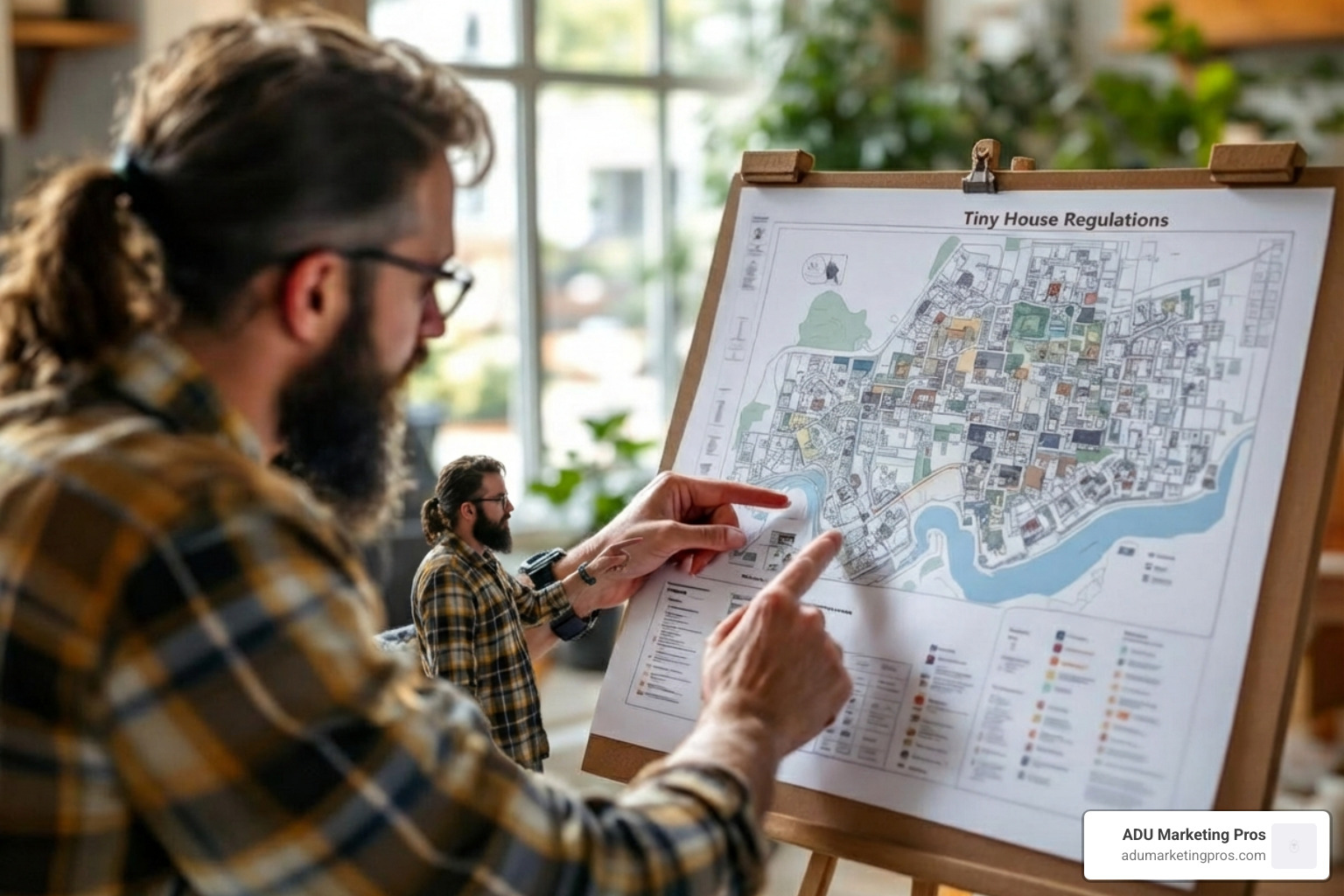
Before falling in love with a plot of land, you must perform due diligence to verify that your tiny house is permitted.
Understanding Zoning and Land Use Regulations
Zoning laws dictate how land can be used. For tiny homes, you need to know if a plot is zoned for residential use and what types of structures are allowed.
- Residential Zoning: Often includes minimum square footage requirements that can exclude tiny homes. However, many municipalities now classify tiny homes as Accessory Dwelling Units (ADUs), which are secondary units on a residential lot. California has been a leader in easing ADU regulations, making this a viable path in Los Angeles, San Diego, and the San Francisco Bay Area.
- Agricultural Zoning: May allow for homes that support farming, but you can’t assume any tiny home is permitted without justification.
- The “Unrestricted Land” Myth: Truly “unrestricted” land is rare. Most rural areas have some form of land use regulations. Always verify with the local planning department.
In California, understanding the ADU framework is crucial. Cities like San Jose and Sunnyvale have acceptd ADUs, opening doors for tiny homes. Learn more in our guide on Places in Southern California That Allow Tiny Houses.
Building Codes and Tiny Home Classification
Building codes dictate your home’s safety and structure. The classification of your tiny home determines which codes apply:
- Tiny House on Wheels (THOW): Often classified as an RV if built to RVIA standards. This allows them in RV parks but typically not as permanent dwellings on residential land unless a local ordinance permits it.
- Tiny House on Foundation (THOF): Built as a permanent dwelling subject to local residential building codes, just like a traditional home. These must meet all requirements for foundations, plumbing, and electrical systems. While Ontario’s code sets a minimum of 188 sq ft, California’s codes for permanent dwellings will have their own specific requirements. For an example of official guidance, you can Download our guide on what to look for when building or buying a tiny home for your property. (Note: This is an Ontario, Canada resource; always seek local California guidance.)
Local codes are the ultimate authority. Engaging with local architects who specialize in small spaces can help you steer these complexities. You can find professionals on our list of Architects in Southern California Who Design Tiny Houses.
Budgeting and Financing Your Tiny House Land
The dream of a tiny home often includes affordability, but the cost of tiny house land and its development can add up quickly. Proper budgeting and understanding your financing options are essential to avoid financial surprises.
Estimating the Full Cost of Land
The total cost of land goes far beyond the sticker price. Be sure to budget for:
- Purchase Price: Varies wildly based on location, size, and development status. A small parcel in a desirable California area like Los Angeles County can be substantial.
- Closing Costs: Typically 2-5% of the purchase price for appraisals, title searches, and legal fees.
- Permitting Fees: Costs for building, septic, well, and electrical permits from the local municipality.
- Utility Connection Costs: A significant expense if you need to bring power, water, and sewer services to your site. This can involve trenching, installing a septic system or well, and connecting to the grid.
- Site Preparation: Costs for clearing land, grading, and laying a foundation or pad.
- Property Taxes: Ongoing annual expenses that vary by county and assessed value.
Financing Options for Your Land Purchase
Financing raw land for a tiny house can be challenging, as traditional mortgages often aren’t available for vacant land. Here are some alternatives:
- Land Loans: Specialized loans from banks and credit unions for undeveloped land. They typically require higher down payments (20-50%) and have higher interest rates.
- Seller Financing: The landowner acts as the lender, offering a loan with agreed-upon terms. This can be more flexible but requires careful negotiation.
- Personal Loans: An option for less expensive parcels, but they usually have higher interest rates and shorter repayment periods.
- Home Equity Loans or Lines of Credit (HELOC): If you own another property, you can leverage its equity to finance your land purchase, often at more favorable rates.
We recommend exploring all options and comparing terms carefully. A realistic budget should account for a larger down payment and potentially higher interest rates when purchasing tiny house land.
From Dirt to Dream: Site Prep, Utilities, and Due Diligence
Once you’ve steerd the legal and financial problems, the practical work of preparing your tiny house land begins. This stage transforms a raw piece of property into a habitable space and depends on two critical elements: essential utilities and thorough due diligence.
Essential Utilities and Infrastructure
The availability and cost of utilities will heavily influence your budget and lifestyle. Key considerations include:
- Water Access: Will you connect to a municipal supply or drill a well? A well is a significant upfront expense but offers long-term independence, a common choice in rural parts of San Diego County.
- Sewage and Septic: Connecting to a sewer line is easiest but often unavailable in rural areas. A septic system is a common alternative, though composting toilets offer an off-grid solution that reduces water use (local waste disposal regulations still apply).
- Electricity: Will you connect to the grid or live off-grid with solar power? Grid connection can be costly, while a solar setup offers energy independence after the initial investment.
- Internet and Cell Service: Verify coverage at your prospective site, as reliable service is often essential but not guaranteed in remote areas.
- Road Access: Ensure the property has safe, year-round road access for daily use, deliveries, and emergency services.
The Importance of Site Inspection and Closing
A thorough site inspection is non-negotiable before finalizing a land purchase. This process uncovers hidden issues that could affect your project.
- Hire a Land Surveyor: To accurately define property lines and identify any easements or encroachments.
- Conduct Soil Testing: A soil engineer can assess the ground’s stability for a foundation or septic system.
- Check for Liens or Easements: A title search reveals any outstanding debts or legal rights others have over the property.
- Work with a Real Estate Agent: A local agent specializing in land can be an invaluable resource for navigating the market and negotiations.
- Get a Legal Review: Always have a real estate attorney review all purchase agreements and closing documents to protect your interests, especially in complex California real estate transactions.
Finding Your Place: Communities and Alternative Spots
The search for tiny house land doesn’t always lead to a standalone plot. Many people are drawn to the community aspect of tiny living, opting for dedicated villages or unconventional arrangements. These options are especially viable in California, where land is pricey and regulations are complex.
Exploring Dedicated Tiny Home Communities
Tiny home communities offer a ready-made solution for parking your tiny house, complete with a social network and shared amenities. These communities often provide:
- Community Benefits: A built-in social network with shared values and organized events.
- Shared Amenities: Common facilities like laundry, gardens, kitchens, and recreational areas.
- Simplified Utilities: Lots often come with full hookups for water, electricity, and sewer.
Lot rental costs vary, but in California, we’ve seen prices from $700 to $1,200 per month in places like Fallbrook, the Sierra Foothills, and Upper Lake, typically including some utilities. You can find communities on platforms like tinyhomebuilders.com. Many of these communities also work with builders who understand tiny home construction. You can connect with reputable professionals through our guide to Tiny House Builders in Southern California.
Common community amenities include:
- Full utility hookups
- Laundry facilities
- Communal kitchens or clubhouses
- Gardens and green spaces
- Recreational areas (fire pits, dog parks)
- Wi-Fi access
Unconventional and ‘Stealth’ Methods for Finding Land
For those seeking more affordable or flexible options, unconventional methods can work, though they often carry higher risks.
- Renting a Backyard: A popular option in suburban areas where ADU regulations are favorable. This is particularly relevant in cities like San Jose.
- Work-Trade Arrangements: Some landowners, especially on farms or homesteads, may offer a spot in exchange for labor.
- Social Media Connections: Facebook groups and online forums are great for networking with private landowners.
These “stealth” methods often lack legal security. If your home isn’t permitted or compliant with zoning, you could face fines or eviction. This path requires a clear understanding of the potential consequences.
Frequently Asked Questions about Tiny House Land
Finding the right tiny house land can be confusing. Here are answers to some common questions.
What is the minimum legal size for a tiny home?
There is no universal standard; the minimum legal size varies by location and classification. For example, Ontario’s Building Code sets a minimum of 188 sq ft for permanent dwellings, but municipalities in California have their own rules. If your tiny home is classified as an Accessory Dwelling Unit (ADU) or placed in an RV park, different standards apply. California’s progressive ADU laws allow for smaller units, but you must check with your local planning department in cities like Los Angeles or San Diego for specific size requirements.
Can I put a tiny house on any rural land I buy?
Not necessarily. The idea that rural land is unrestricted is a common misconception. Most land, even in rural areas, is subject to zoning and land use regulations. Before purchasing any rural tiny house land, verify with the local county planning department. They can inform you about zoning, minimum lot sizes, and whether tiny homes are permitted as primary residences or ADUs. Assuming land is unrestricted without confirmation can lead to costly problems.
How much does it cost to rent a lot for a tiny house?
The cost to rent a lot varies widely based on location, lot size, and included amenities. Rental costs can range from $350 to over $1,200 per month. In California, for example, we’ve seen:
- A lot in Fallbrook for around $900/month.
- Lots in a Sierra Foothills community from $800 to $1,200/month.
- Lots in an Upper Lake RV park from $700 to $1,100/month.
These prices often include utility hookups and access to community amenities. Always confirm what is included in the monthly rent to understand the total cost.
Conclusion
The journey to finding your ideal tiny house land is an adventure that requires careful planning, research, and patience. We’ve explored buying versus leasing, steerd the legal labyrinth of zoning and codes, and highlighted the importance of budgeting and site inspection.
The dream of tiny living is achievable when grounded in the reality of regulations and logistics. By empowering yourself with knowledge of the specific requirements in your desired California location—whether it’s Los Angeles, San Diego, the San Francisco Bay Area, or San Jose—you can confidently find your perfect spot.
For those in California navigating the regulations for small homes and ADUs, connecting with experienced professionals is key. ADU Marketing Pros helps homeowners connect with top-tier San Francisco Tiny House Builders and designers who can turn your vision into a permitted reality.
Ready to take the next step? Explore our comprehensive guide on places in Southern California that allow tiny houses to start your journey.