
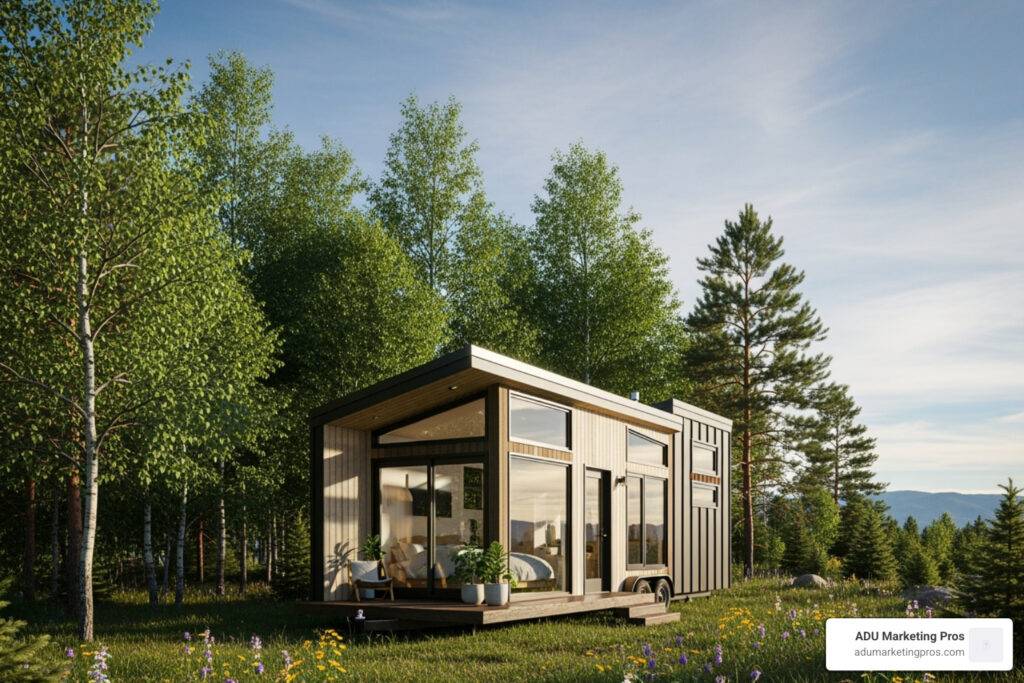
Why Homeowners Are Searching for Little Houses for Sale Near Me
The search for little houses for sale near me is no longer a niche curiosity; it’s a mainstream movement surging in popularity as millions of people re-evaluate their relationship with debt, consumerism, and the very definition of home. This groundswell is a direct response to a housing market that has become increasingly unattainable, pushing individuals and families to seek creative, affordable paths to homeownership and a simpler, more intentional lifestyle. Here’s a quick guide to get you started on this transformative journey.
Quick Answer: Where to Find Little Houses Near You
- Prefab Tiny Homes: Major online retailers like Amazon and dedicated manufacturers offer a huge variety of models, from basic kits to fully-equipped expandable homes, with prices ranging from $7,499 to $52,999.
- Tiny Houses on Wheels (THOWs): Specialized platforms like Tiny House Listings are the go-to resource for mobile dwellings, featuring everything from DIY shells to luxury custom builds ($5,000-$85,000+).
- Accessory Dwelling Units (ADUs): The best route for a permanent backyard home is to work with local builders who understand regional zoning codes and can manage the project from design to completion.
- Real Estate Listings: Use filters on Zillow or Realtor.com to search for existing small homes, often listed as cottages or bungalows, by setting a maximum square footage of 600-800 sq ft.
- Tiny House Communities: A growing number of dedicated communities offer land leases and a supportive environment for tiny living; search for them in your state or region.
The numbers paint a stark picture: with the average single-family home price in major metropolitan areas soaring past $770,000 and interest rates adding hundreds of thousands more to the final cost, traditional homeownership is simply out of reach for a large segment of the population. In stark contrast, prefab tiny homes starting at just a few thousand dollars present a viable, debt-free alternative.
But this movement is about far more than just saving money. It represents a profound shift toward financial freedom, allowing owners to escape the 30-year mortgage trap and redirect their income toward travel, savings, or early retirement. It’s also a commitment to a smaller environmental footprint, drastically reducing energy consumption and waste. Finally, it’s an embrace of minimalism and an escape from the burden of maintaining a large, expensive property. As one homeowner shared, “It took longer because the home we purchased was under rehab but it was worth the wait because we got a GREAT house.”
For architecture and construction firms, this burgeoning market presents a significant and durable opportunity. Prospective homeowners are not just buying a product; they are navigating a complex new landscape and need expert guidance on everything from local zoning laws and land acquisition to choosing between prefab kits, mobile homes, and permanent ADUs. Firms that can provide this comprehensive support will become leaders in a housing revolution that is here to stay.
The Rise of the Tiny House: More Than Just a Trend
The tiny house movement reflects a fundamental shift in how people perceive home, wealth, and success. When you type little houses for sale near me into a search bar, you are joining a massive and growing chorus of individuals who have concluded that the traditional, high-debt path to homeownership no longer aligns with their life goals.
While single-family home prices have climbed another 7% in many regions over the past year alone, the tiny home market has matured, becoming more accessible, sophisticated, and diverse. Prefabricated models can start as low as $7,499, transforming the dream of ownership from a distant fantasy into an immediate reality for many. This isn’t just a trend; it’s a practical solution to a widespread economic challenge.
Financial freedom is arguably the most powerful driver of the movement. Imagine a life without a 30-year mortgage payment dictating your career choices and spending habits. Choosing a Small House isn’t just about buying a home—it’s about buying back your time, your autonomy, and your future. The savings are dramatic and multifaceted. Beyond the initial purchase price, owners enjoy drastically lower utility bills (often 50-70% less), reduced property taxes, minimal maintenance costs, and cheaper insurance. One owner in a high-cost-of-living area reported saving over $2,000 monthly compared to her previous apartment rental, money she now uses for travel and investments.
Environmental consciousness also plays a pivotal role. A smaller footprint is literal in the tiny house world. Less space to heat and cool translates directly to lower energy consumption and a reduced carbon footprint. The movement champions sustainability, and many tiny homeowners enthusiastically adopt green technologies. It’s common to see homes outfitted with solar panel arrays for off-grid power, advanced rainwater collection and filtration systems for water independence, and composting toilets that eliminate the need for traditional septic systems and conserve water.
Perhaps the most profound benefit, however, is the embrace of simplicity. The process of downsizing forces a person to shed excess possessions and critically evaluate what is truly important. This intentionality is liberating. Less time spent cleaning, maintaining, and organizing a large space means more time for hobbies, relationships, and personal growth. This minimalist ethos extends beyond physical objects to how one spends their time and energy, fostering a more mindful and fulfilling existence.
As traditional homes become increasingly unaffordable, people are actively seeking intelligent alternatives to decades of debt. The tiny house movement has evolved from a quirky social experiment into a viable, mainstream housing option, now supported by specialized financing, evolving building codes, and growing community acceptance. It represents a powerful reimagining of the American Dream—one that is intentional, sustainable, and financially astute.
Types of Little Houses for Sale Near Me: A Roundup
When you begin your search for little houses for sale near me, you’ll quickly discover a diverse and innovative world of options, from mobile dwellings that promise ultimate freedom to permanent backyard cottages that offer a sound financial investment. Understanding the distinct characteristics, pros, and cons of each type is the first step in finding the perfect match for your lifestyle, budget, and long-term goals.
Prefab & Kit Homes: Your Home in a Box
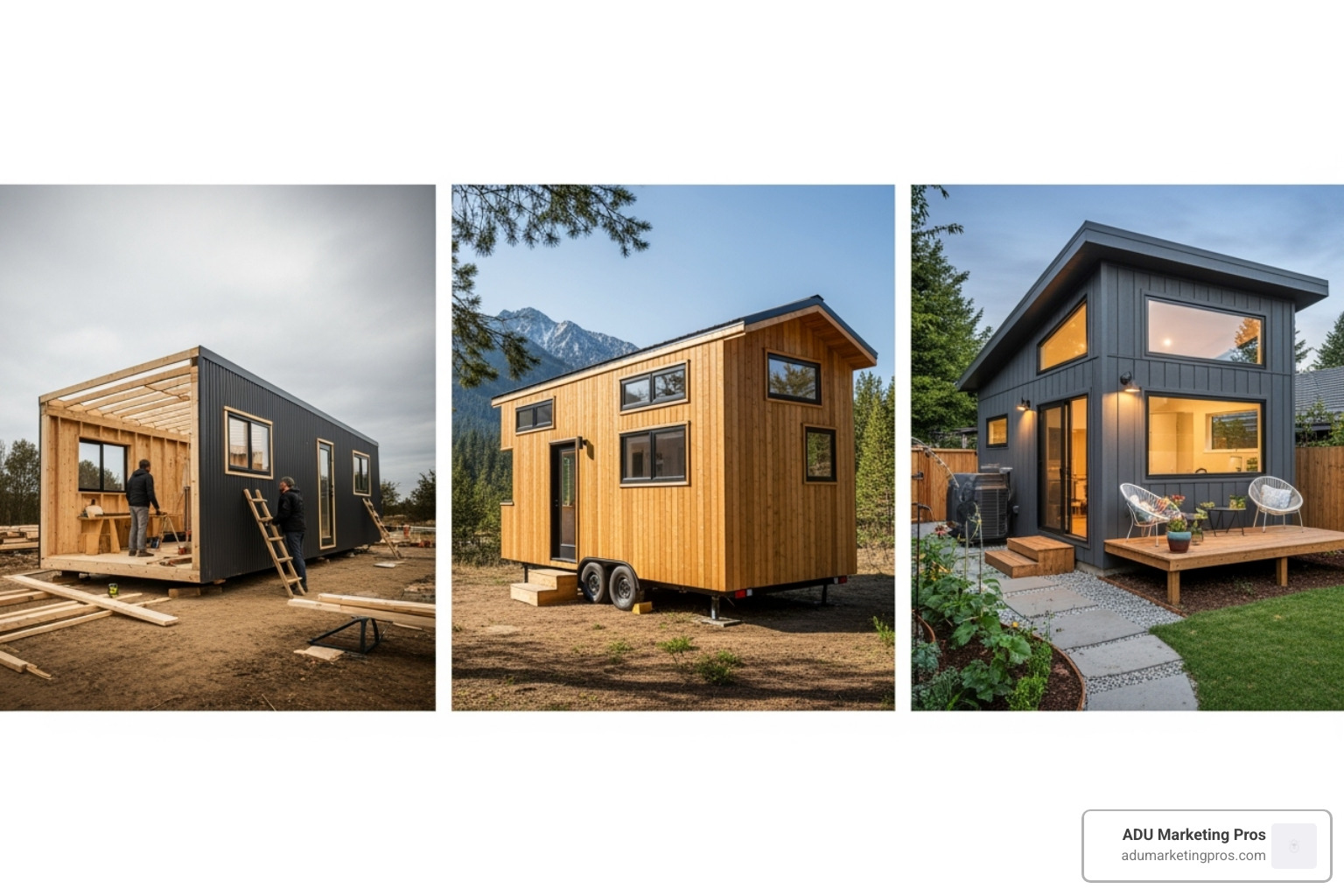
Prefabricated and kit homes are constructed in a climate-controlled factory setting and then transported to your property for final assembly. This manufacturing process offers superior quality control, minimizes construction waste, and dramatically reduces the potential for weather-related delays. The market has exploded in recent years, with Amazon alone listing over 1,000 tiny homes. These range from simple sheds to sophisticated expandable container houses featuring robust steel frame construction, pre-installed plumbing, and electrical systems. The price range of $7,000 to $55,000 makes these homes incredibly accessible, though this typically excludes the cost of the foundation, delivery, and utility hookups. Many designs prioritize sustainability, making them excellent Eco-Friendly Small Homes. The quick assembly timeline is a major selling point, with many basic structures ready for use in just a few days, a stark contrast to the months-long process of traditional construction. To see what’s available in a specific market, you can Find Amazing New and Used Tiny Homes in Colorado and other regions.
Tiny Houses on Wheels (THOWs): The Ultimate Freedom
For those who crave adventure and flexibility, Tiny Houses on Wheels (THOWs) offer the unparalleled freedom to relocate whenever and wherever you desire. Built on custom trailers, these mobile homes empower you to chase career opportunities, explore the country, or simply change your scenery without changing your address. This inherent mobility also provides a strategic advantage in navigating restrictive local zoning laws. In many jurisdictions, THOWs are classified as RVs (Recreational Vehicles) rather than permanent dwellings, allowing them to be parked in RV parks, designated tiny home communities, or on private land where local ordinances permit. However, it’s crucial to research RV park rules and local regulations thoroughly, as many have restrictions on the age, appearance, and long-term occupancy of vehicles. The market is vast, offering everything from DIY shells starting around $5,000 for the handy builder to fully-equipped, luxury models exceeding $85,000. For insurance, financing, and legal recognition, NOAH certification is often essential. This third-party inspection ensures the home meets rigorous safety and construction standards for electrical, plumbing, and structural integrity. For those in California, connecting with experienced Tiny House Builders California can help you navigate the state’s unique requirements.
Small Houses on Foundations & ADUs
Permanent structures built on traditional foundations offer the greatest long-term stability, a straightforward connection to municipal utilities (water, sewer, electricity), and access to more favorable financing options. These homes feel less like a vehicle and more like a conventional house, just on a smaller scale. Backyard homes, particularly Accessory Dwelling Units (ADUs), have become an incredibly popular solution to housing shortages in urban and suburban areas. An ADU is a self-contained living space built on the same lot as a primary single-family home. For homeowners with extra yard space, building an ADU is a brilliant financial strategy. A well-designed, legally permitted ADU can significantly boost your property value and generate a substantial stream of rental income, often enough to cover the property’s entire mortgage. The permanence of foundation-based homes also allows for complete custom builds, enabling you to work with an architect to design a space that perfectly suits your needs and aesthetic, from the floor plan to the finishing materials. In high-cost areas, ADUs provide much-needed housing for renters and offer multi-generational living options for families. Working with experienced Architects in Southern California Who Design Tiny Houses ensures your project not only meets all complex local codes but also becomes a beautiful and functional addition to your property.
Key Factors to Consider Before You Buy
Before you get swept away by the beautiful designs and appealing price tags of little houses for sale near me, it’s imperative to ground your dream in practical reality. The success of your tiny living journey hinges on careful planning and due diligence. Buying the structure is often the easiest part; figuring out where you can legally place it, how to pay for it, and how to connect essential utilities requires thorough research and a clear understanding of the challenges involved.
Navigating Zoning Laws for little houses for sale near me
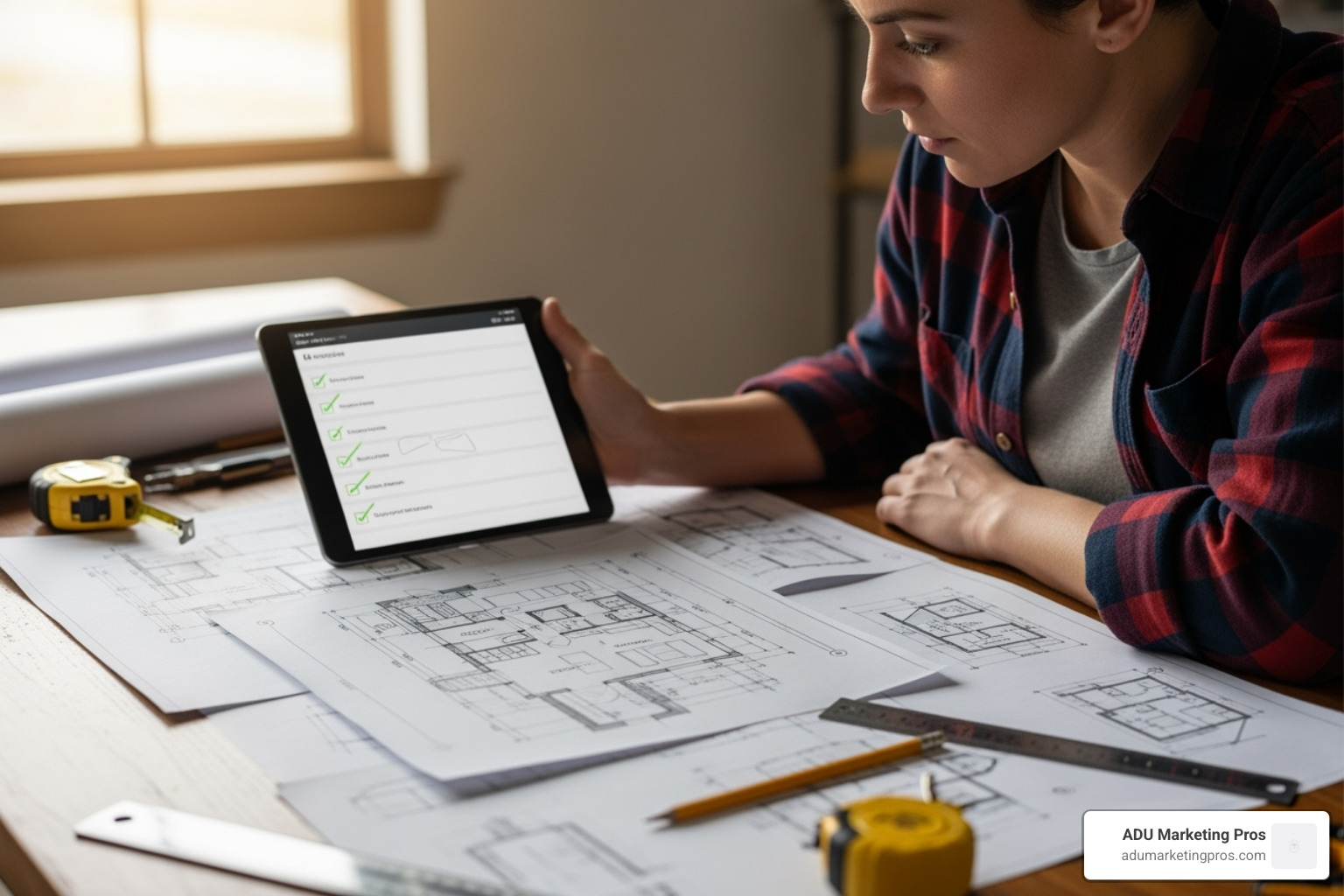
Zoning laws and building codes are, without a doubt, the biggest hurdle for aspiring tiny homeowners. These local regulations are created at the city or county level and dictate everything from minimum habitable square footage and foundation requirements to where a structure can be placed on a property (setbacks). A tiny house that is perfectly legal in one town might be strictly prohibited just a few miles away.
For THOWs, the primary challenge is their legal classification. If a municipality defines them as RVs, they are often restricted from being used as full-time, permanent residences outside of designated RV parks or mobile home communities. Some progressive cities are creating new zoning overlays for “movable tiny houses,” but this is not yet the norm. For permanent structures, you must comply with the International Residential Code (IRC), which often includes a minimum square footage for a primary dwelling. However, many cities have enthusiastically adopted ADU ordinances, which provide specific, often more lenient, rules for building a second, smaller home on a residential lot. Understanding the specific regulations in Places in Southern California That Allow Tiny Houses can save you months of frustration. Your first and most important step is to call your local planning and zoning department. Ask them directly about rules for ADUs, minimum square footage requirements, and regulations for parking an RV or THOW on private property. Get their answers in writing if possible.
Finding Land for Your Little House
Once you have a clear picture of the local laws, you need a legal place to put your home. For THOW owners, options include leasing a long-term spot in an RV park (which offers utility hookups but often lacks aesthetic appeal), joining a dedicated tiny house community (which provides a great social fabric but can have long waiting lists), or parking on private land owned by a friend or family member (which requires careful navigation of local rules about long-term “camping”).
For foundation-based homes and ADUs, the process involves either purchasing a vacant lot or utilizing property you already own. If you’re buying land, your due diligence is critical. You must investigate zoning, ensure there is legal and physical access to the property (road access), and confirm that utilities are available at the street or that the land is suitable for a well and septic system (requiring a percolation or “perc” test). We help firms identify viable parcels of Land for Sale in Southern California for Tiny Houses that meet these complex legal and practical requirements. For existing homeowners, their own backyard is often the perfect, most cost-effective location for an ADU, leveraging existing infrastructure and maximizing the value of their current property.
Financing Your Tiny Dream
Financing a tiny house is not the same as getting a traditional 30-year mortgage. Because THOWs are not considered “real property” (they are not permanently affixed to land), they don’t qualify for conventional home loans. Instead, buyers typically use RV loans, unsecured personal loans, or financing offered directly by the builder. RV loans often have better interest rates than personal loans but may require the THOW to be RVIA-certified. Both options usually involve shorter repayment terms (5-15 years) and higher interest rates than a mortgage.
Financing is more straightforward for small homes on permanent foundations and ADUs. If you are an existing homeowner building an ADU, popular options include a home equity loan, a home equity line of credit (HELOC), or a cash-out refinance of your current mortgage. If you are buying land and building a new small house, you will likely need a construction loan, which is a short-term loan that covers the building costs and is later converted into a traditional mortgage upon completion. Regardless of the path you choose, lenders will require a strong credit score, a low debt-to-income ratio, and a stable source of income. It is highly recommended to speak with multiple lenders, including local credit unions and specialized tiny house lenders, to compare terms and find the best financial product for your situation.
How to Find Your Perfect Little House
The exciting search for little houses for sale near me has become more accessible and efficient than ever before, thanks to a powerful combination of specialized online resources and the indispensable expertise of local professionals. A successful search involves leveraging both digital tools for broad discovery and human connection for nuanced, location-specific guidance.
Using Online Marketplaces to find little houses for sale near me
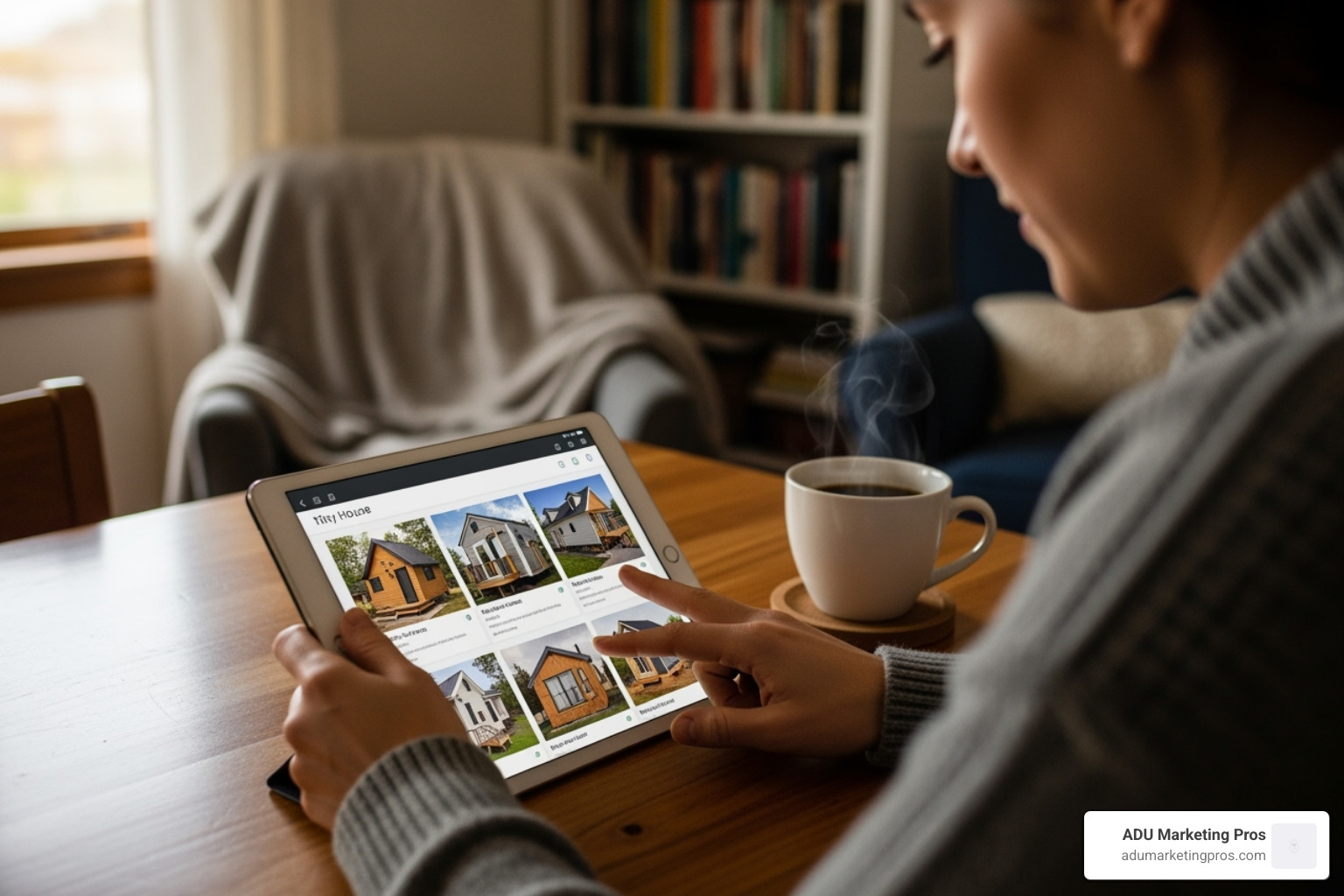
The internet has fundamentally transformed the tiny home search. Specialized websites like Tiny House Listings, Tiny Home Builders, and Trovit serve as dedicated marketplaces, allowing you to filter thousands of listings by location, price, size, and type (THOW, foundation, shell, etc.). For example, a quick search for “tiny house Wisconsin” on Trovit can yield over 1,400 diverse listings, from rustic cabins to modern mobile homes.
Don’t neglect the power of general real estate websites like Zillow, Redfin, and Realtor.com. The key is to use smart search filters. Set your maximum square footage to 600 or 800 sq ft and use keywords like “cottage,” “cabin,” “guest house,” “in-law suite,” or “ADU” to uncover hidden gems. Even the retail giant Amazon has become a surprising marketplace for this niche, with over 1,000 prefab tiny home kits available for purchase. For a seamless search experience on the go, Download the Tiny House Listings Mobile App to browse thousands of new and used homes from your phone. Finally, platforms like Craigslist and Houzeo can be valuable for finding for-sale-by-owner (FSBO) homes and undeveloped land opportunities that may not appear on the major listing services.
Connecting with Local Builders
While online browsing is excellent for inspiration and market research, partnering with a local builder is invaluable, especially if you are planning a custom home or an ADU. A reputable local builder offers a wealth of knowledge that no website can replicate. They have an intimate understanding of your area’s specific building codes, climate considerations (e.g., snow load, seismic activity, humidity), and permitting processes. Their established relationships with local inspectors, suppliers, and subcontractors can save you an immense amount of time, money, and stress.
Customization is the other primary advantage of working with a builder. They can help you create a home that is a true reflection of your vision and lifestyle, whether that means designing a layout that maximizes natural light, incorporating specific materials, or building a dedicated space for a home office or art studio. For those in the competitive Bay Area market, connecting with professional San Francisco Tiny House Builders is essential to ensure your project complies with the city’s notoriously complex regulations and that you can create a Tiny House San Francisco style home that fits the unique local aesthetic. Similarly, exploring a directory of Tiny House Builders California connects you with vetted professionals who understand the diverse legal and environmental landscapes across the state. When vetting a builder, always ask for references, visit their completed projects in person, verify their license and insurance, and request a detailed contract. Finding a trustworthy, communicative partner is just as important as their technical skill.
Frequently Asked Questions about Little Houses
Embarking on the tiny living journey naturally brings up a host of practical and financial questions. As more people explore this alternative housing model, a common set of inquiries emerges. Here are detailed, straightforward answers to the most frequent questions we receive from prospective homeowners.
How much does a tiny house actually cost?
The cost of a tiny house varies dramatically based on its type, size, level of finish, and the amount of labor you’re willing to contribute. It’s crucial to understand the full scope of expenses beyond the sticker price.
- DIY Build: For those with significant construction skills and time, a basic tiny house can be built for $10,000-$30,000. This budget primarily covers materials like the trailer, lumber, insulation, windows, and roofing. It assumes you are providing all the labor for free.
- Prefab & Kit Homes: These factory-built options typically range from $7,499 for a basic shell to $52,999 for a more complete unit. This price generally does not include the cost of a foundation, delivery, on-site assembly, or utility connections, which can add another $5,000-$20,000.
- Professionally Built THOW: A turn-key Tiny House on Wheels from a reputable builder will typically cost between $40,000 and $100,000. High-end, custom luxury models with premium materials and off-grid systems can easily exceed $150,000.
- Foundation Homes & ADUs: As permanent structures subject to full building codes, these are the most expensive option, generally ranging from $100,000 to $300,000+. The final cost is heavily influenced by location, site preparation costs, size, and the quality of interior finishes.
Remember to budget for “hidden costs” like building permits, land purchase/preparation, utility hookup fees, transportation, and sales tax. Even a high-end tiny house, however, costs a fraction of a conventional home, which is why the search for little houses for sale near me continues to grow.
Are tiny houses a good investment?
This question requires a nuanced answer, as it depends entirely on the type of tiny house and your definition of “investment.”
- Tiny Houses on Wheels (THOWs) are legally considered personal property, much like an RV or a car. As such, they typically depreciate in value over time. Their primary return on investment is not financial appreciation but rather a lifestyle return: immense savings on living expenses, freedom from debt, and geographic mobility. The money saved on rent or a mortgage can be redirected into other investments that do appreciate, like stocks or retirement funds.
- Small houses on foundations and ADUs, on the other hand, are real property and are generally an excellent financial investment. A legally permitted ADU can significantly increase your property’s overall value. In many hot real estate markets, an ADU can add far more in value than it cost to build. Furthermore, it can generate substantial and consistent rental income, providing a powerful passive income stream and boosting your property’s appeal to future buyers.
Ultimately, the right choice depends on whether you prioritize financial returns and equity building (ADU/foundation home) or lifestyle flexibility and cost savings (THOW).
Can you live in a tiny house year-round?
Absolutely. Thousands of people live comfortably in tiny houses through all four seasons, from the freezing winters of Alaska to the scorching summers of Arizona. However, year-round comfort is not automatic; it requires thoughtful design and proper construction tailored to your specific climate.
- Insulation: This is non-negotiable. High-quality, continuous insulation in the walls, floor, and ceiling is the single most important factor for energy efficiency and comfort. Closed-cell spray foam is a popular choice for its high R-value per inch and its ability to act as a vapor barrier, but rigid foam board and natural wool are also excellent options.
- Utilities: You must have a robust plan for utilities. This can mean a standard connection to municipal water, sewer, and electrical grids (for foundation homes and some THOWs) or investing in off-grid systems. A well-designed solar power system with battery storage can provide reliable electricity, while composting toilets and rainwater harvesting systems can handle water and waste needs.
- Construction Quality: Durability is key. Your home must be built to withstand the elements. This means using high-performance, double- or triple-pane windows to minimize heat transfer, durable roofing materials that can handle snow or high winds, and proper air sealing to prevent drafts.
- Climate-Specific Considerations: Your design must actively account for your local climate. In cold regions, this might mean installing a reliable heat source like a mini-split heat pump or a small wood stove and designing a roof with a steep pitch to shed snow. In hot, humid climates, good ventilation, an efficient air conditioner, and an awning to provide shade are essential.
Conclusion: Is a Little House Right for You?
The search for little houses for sale near me is more than just a property hunt; it’s often the first step toward a fundamentally different way of life—one that prioritizes financial well-being, personal freedom, and intentional living over sheer square footage.
Throughout this guide, we’ve seen that the tiny living movement offers a compelling array of benefits, from the profound financial freedom of a mortgage-free life to the intentional lifestyle that comes from simplifying one’s surroundings. Whether you find yourself drawn to the unparalleled mobility of a THOW, the plug-and-play convenience of a prefab kit, or the powerful investment potential of an ADU, there is a small-footprint solution that can be tailored to your unique vision and circumstances.
However, this path is not without its practical challenges. As we’ve detailed, successfully navigating the complex maze of zoning laws, the logistical puzzle of finding land, and the unconventional process of securing financing requires significant patience, diligent research, and a proactive mindset. If you are someone who values financial flexibility over excess space, who is prepared to do the necessary homework, and who is ready to embrace a life of greater simplicity and purpose, then a tiny house could very well be your perfect fit.
For construction and architecture firms looking to serve this expanding market, the key is to move beyond simply selling a structure. Success lies in becoming a trusted guide. ADU Marketing Pros specializes in helping builders effectively market their tiny home and ADU projects, positioning them as the go-to experts who can connect with homeowners, understand their vision, and expertly guide them through every step of the process.
If you’re ready to stop dreaming and start planning, the next step is to connect with the right professionals who can turn your small home aspirations into a tangible reality. Learn more about finding the right Tiny House Builders in California and discover how expert guidance can make your big dream of living small come true.