
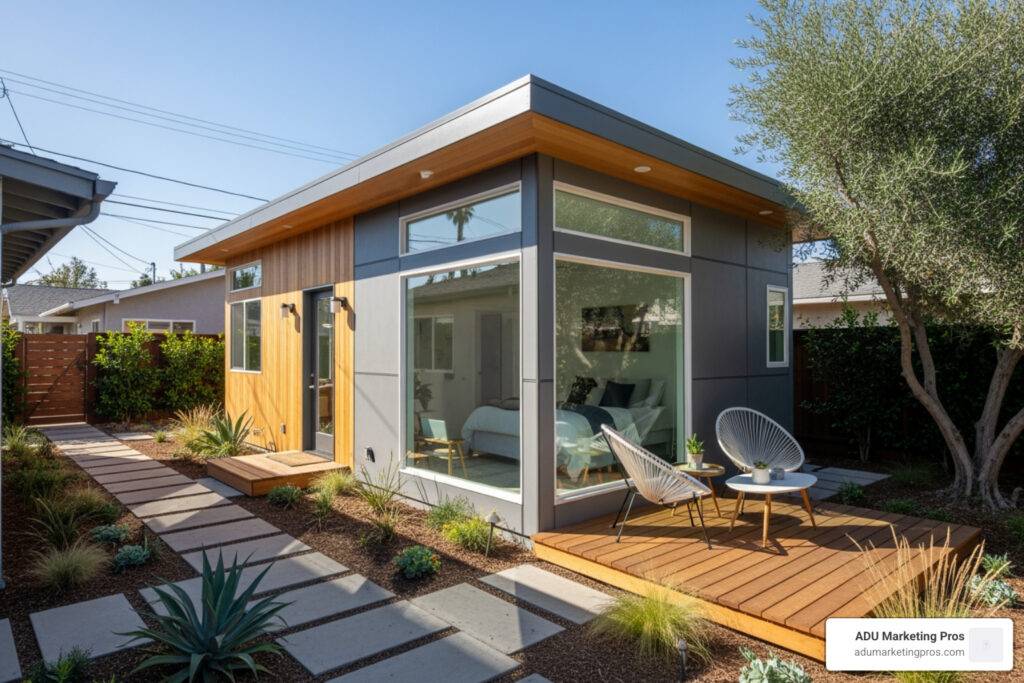
Why the Los Angeles Accessory Dwelling Unit Ordinance Matters
The los angeles accessory dwelling unit ordinance (Ordinance 186,481) went into effect on December 19, 2019, fundamentally changing how homeowners can add housing to their properties. This ordinance added LAMC Section 12.22A.33 to the city code, creating clear, objective rules for building Accessory Dwelling Units (ADUs), Junior ADUs (JADUs), and Movable Tiny Houses (MTHs).
Key Facts About the LA ADU Ordinance:
- Effective Date: December 19, 2019
- What It Does: Streamlines the permitting process for Accessory Dwelling Units
- Maximum Size: Up to 1,200 sq ft for detached ADUs
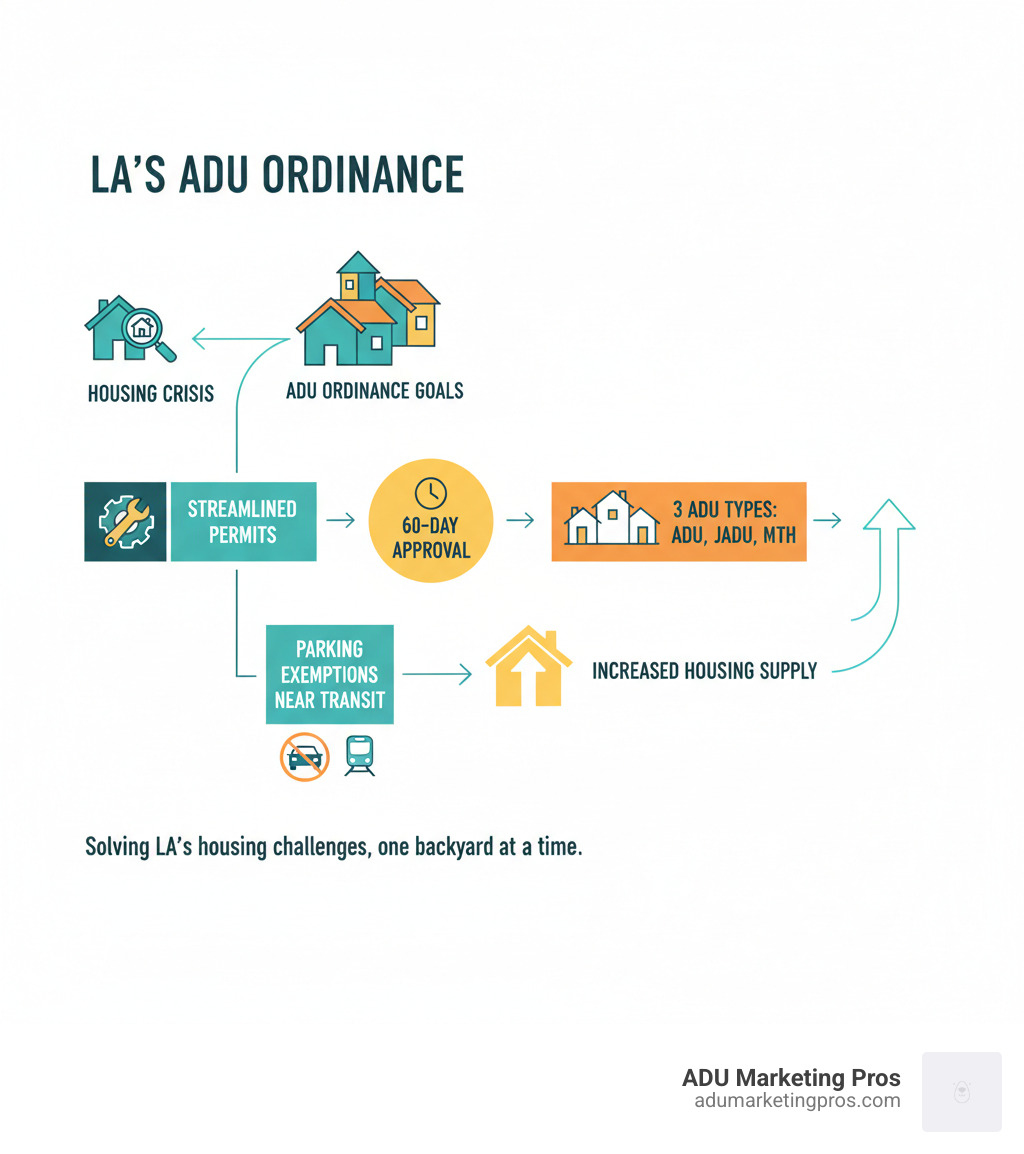
- Parking: Not required if within a half-mile of public transit
- Timeline: City must approve or deny complete applications within 60 days
- Types Allowed: Standard ADUs, Junior ADUs (JADUs), and Movable Tiny Houses (MTHs)
- Solar Requirement: New detached ADUs must have solar panels
- Fire Sprinklers: Only required if the main house requires them
In response to a severe housing crisis marked by soaring rents and a critical shortage of available homes, Los Angeles adopted this ordinance to boost the supply of affordable housing. It gives homeowners new options for multi-generational living, rental income, or simply more space. The ordinance made the ADU approval process ministerial, meaning if your plans meet the objective standards laid out in the code, the city must approve them. This eliminates subjective reviews, public hearings, and discretionary decisions by planning commissions that previously created uncertainty and long delays for homeowners.
This change provides a clear, predictable roadmap for adding housing, replacing a previously complex and often prohibitive system. The new rules align with state laws encouraging ADU construction, though the California Department of Housing and Community Development (HCD) has noted some areas where the LA ordinance could better comply with state requirements, highlighting the evolving nature of ADU regulations.
Decoding the Los Angeles Accessory Dwelling Unit Ordinance
The los angeles accessory dwelling unit ordinance (Ordinance 186,481) established clear, objective rules for building secondary living spaces on residential properties. A key feature is the ministerial review process, which requires the city to approve any project that meets the code’s standards within 60 days of receiving a complete application. This streamlined approach offers homeowners predictability and fairness, providing a clear path for adding housing.
What is an Accessory Dwelling Unit (ADU)?
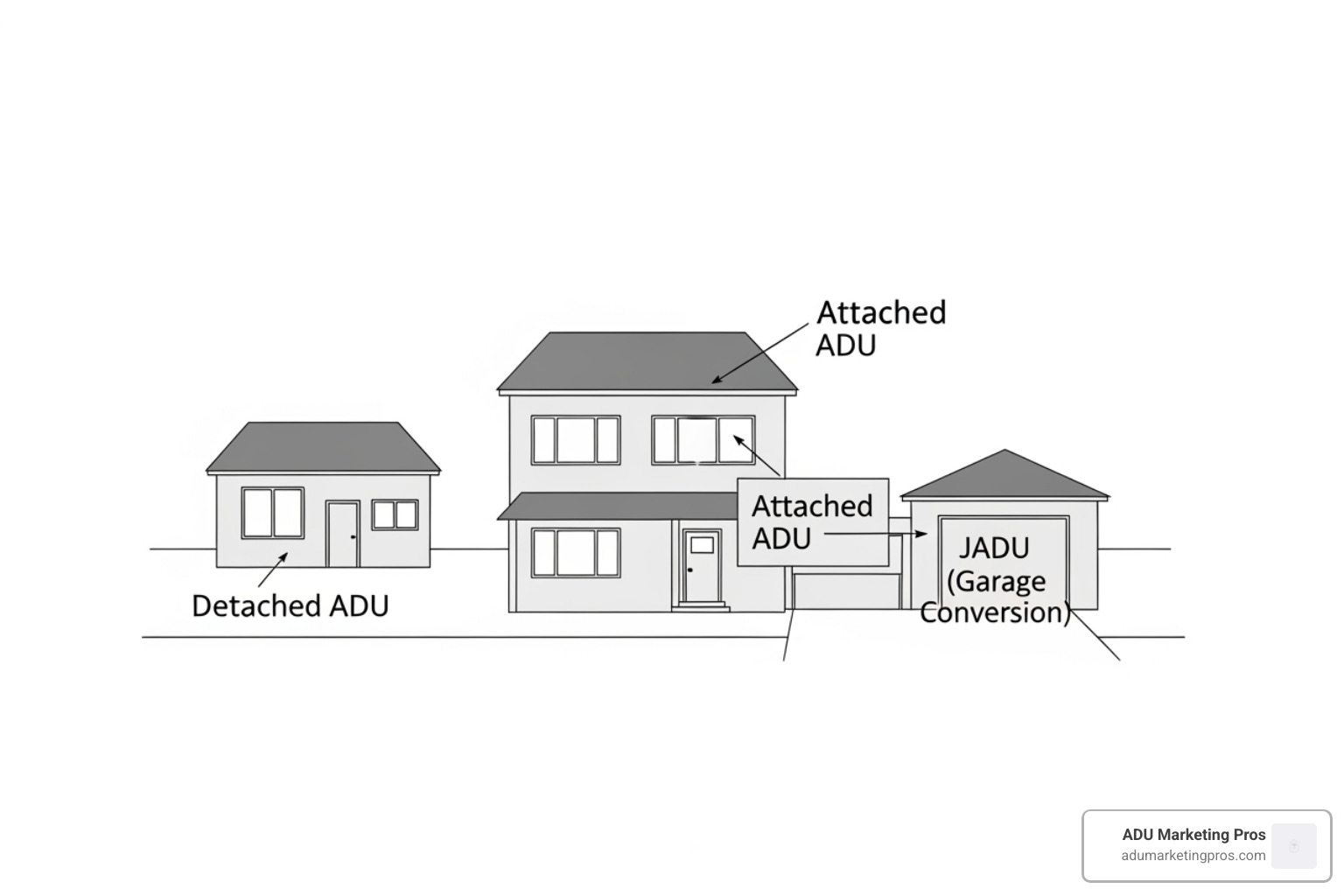
An Accessory Dwelling Unit (ADU) is a complete, self-contained home on the same lot as a primary residence. It must include a kitchen, bathroom, and living/sleeping space, providing all the essentials for independent living. An attached ADU is built as an addition to the main house, often sharing a wall, while a detached ADU is a separate structure, such as a backyard cottage, a unit built above a garage, or a converted garage. ADUs can only be built on properties with an existing or proposed primary residence. For more details, see our guide on Accessory Dwelling Unit Los Angeles.
The Different Types of ADUs: ADU, JADU, and MTH
The ordinance covers three distinct types of units:
- Standard ADU: A separate living space with full amenities, either attached to or detached from the main house. They offer the most flexibility in size and design, making them ideal for rental units or independent family living.
- Junior Accessory Dwelling Unit (JADU): A unit up to 500 square feet created within the existing walls of a single-family home, such as a converted bedroom or attached garage. It must have its own separate entrance and an efficiency kitchen, which includes a sink, cooking appliance, and counter space. It can, however, share a bathroom with the main house, making it a more integrated and cost-effective option.
- Movable Tiny House (MTH): A tiny house on wheels that is permitted as a detached ADU if it meets specific criteria. This option offers flexibility and a unique housing solution, but it must be placed on a foundation and connected to utilities. Learn more about the differences in our article on ADU vs Tiny House.
Specific Requirements for Movable Tiny Houses (MTHs)
Movable Tiny Houses are an innovative part of the ordinance but have strict rules to ensure safety and habitability:
- Size: Must be between 150 and 430 square feet.
- Registration: Must be licensed and registered with the California DMV but cannot move under its own power.
- Safety Standards: Must meet either ANSI 119.5 (for park trailers) or NFPA 1192 (for recreational vehicles) standards, with certification from an approved third-party agency. These standards ensure the unit meets basic health and safety requirements for construction, plumbing, and electrical systems. The California Department of Housing and Community Development provides a list of approved 3rd party Design Approval Agencies (DAA).
- Utilities: Must be connected to permanent utilities (water, sewer, and electricity) just like any other ADU, ensuring it functions as a permanent residence.
Key Development Standards and Requirements
The los angeles accessory dwelling unit ordinance established objective development standards, meaning if your project meets the rules, the city must approve it. This straightforward approach removes guesswork and subjective reviews. The ordinance also eliminated previous barriers like minimum lot size, lot coverage, and floor area ratio (FAR) restrictions for building one ADU, making the process accessible to more properties. For a full overview, see our guide on ADU Building Requirements.
Size, Height, and Setback Rules Under the Los Angeles Accessory Dwelling Unit Ordinance
- Detached ADUs: Can be up to 1,200 square feet, allowing for a comfortable one to three-bedroom unit.
- Attached ADUs: Limited to 50% of the primary dwelling’s floor area. However, the city must permit at least an 800-square-foot attached ADU, regardless of the main home’s size.
- Junior ADUs (JADUs): Capped at 500 square feet and must be within the existing single-family home.
- Height: Detached ADUs are generally limited to 16 feet and two stories. However, state law allows for greater height in certain situations. For example, an ADU built above a garage can go up to the height of the garage, and new ADUs within a half-mile of a major transit stop may be allowed up to 18 feet. Some local overlays may have specific restrictions, so always verify with the planning department.
- Setbacks: Newly constructed detached ADUs require only 4-foot side and rear yard setbacks, a significant reduction from previous requirements. If you convert an existing, legally permitted structure (like a garage), no new setbacks are triggered, even if it’s on the property line. This flexibility makes building on smaller or irregularly shaped lots much more feasible. For more on maximizing space, read How Big Can an ADU Be in California?.
Parking Rules and Exemptions
Parking requirements are now much more sensible. While one parking space is generally required per ADU, it can be located in a yard or in tandem (one car behind another). Critically, you are not required to replace parking spaces if you convert a garage or carport into an ADU.
Your ADU is exempt from all parking requirements if it is:
- Within a half-mile walking distance of a public transit stop (bus or rail).
- Within one block of a designated car-share location.
- Part of the primary residence or an existing accessory structure (i.e., a conversion).
- Located in a historic district.
These exemptions cover a vast majority of properties in Los Angeles, making ADUs accessible to far more homeowners. For specifics, visit our ADU Parking Requirements page.
Fire Sprinklers, Solar Panels, and Utilities
- Fire Sprinklers: Not required for an ADU if the primary residence does not have them. Building an ADU will not trigger a requirement to add sprinklers to your existing home, which was a major cost barrier in the past.
- Solar Panels: Mandatory for all newly constructed, detached ADUs, aligning with California’s green energy goals. This requirement does not apply to conversions or JADUs. Learn more in our Eco-Friendly ADU guide.
- Utilities: The ADU must have connections for water, sewer, and electricity. State law prohibits local agencies from charging excessive connection fees for ADUs under 750 square feet. Separate meters are not always required, but your electrical panel will likely need an upgrade to handle the additional load, a cost to factor into your budget.
Restrictions in Fire Hazard and Hillside Areas
Public safety is a priority in Very High Fire Hazard Severity Zones (VHFHSZ) and Hillside Areas. Generally, ADUs are not permitted on lots located in both a VHFHSZ and a Hillside Area as defined by the city’s zoning maps. However, exceptions may be granted if the project includes specific fire-hardening measures, such as using non-combustible siding, installing fire-rated windows, ensuring clear brush clearance, and guaranteeing emergency vehicle access. The California Department of Housing and Community Development (HCD) has indicated that such blanket prohibitions may be overly restrictive, so this remains an evolving area of regulation that requires careful consultation with LADBS.
The Building Process: From Plans to Permits
Navigating the ADU building process is more straightforward than ever. Under the los angeles accessory dwelling unit ordinance, the permitting process is ministerial, meaning plans that meet objective criteria are approved without discretionary review. The Los Angeles Department of Building and Safety (LADBS) must act on complete ADU applications within 60 days. For a step-by-step walkthrough, our guide on the ADU Permit Process California has you covered.

The ADU Approved Standard Plans Program
To fast-track your project, consider the ADU Approved Standard Plans Program. This program, available on the LADBS website, offers a gallery of pre-approved designs from various architects that have already been reviewed for code compliance. Using a standard plan can significantly reduce plan check time from months to weeks, saving you time and money on architectural fees. While the core design is set, you can often customize finishes. You will still need a design professional to create a site-specific plan showing the foundation, utility connections, and how the ADU is placed on your property. Explore options in our Pre-Approved ADU Plans Los Angeles resource.
Understanding ADU Costs and Financing
Building an ADU is a significant investment, but the returns in property value and rental income are often substantial.
-
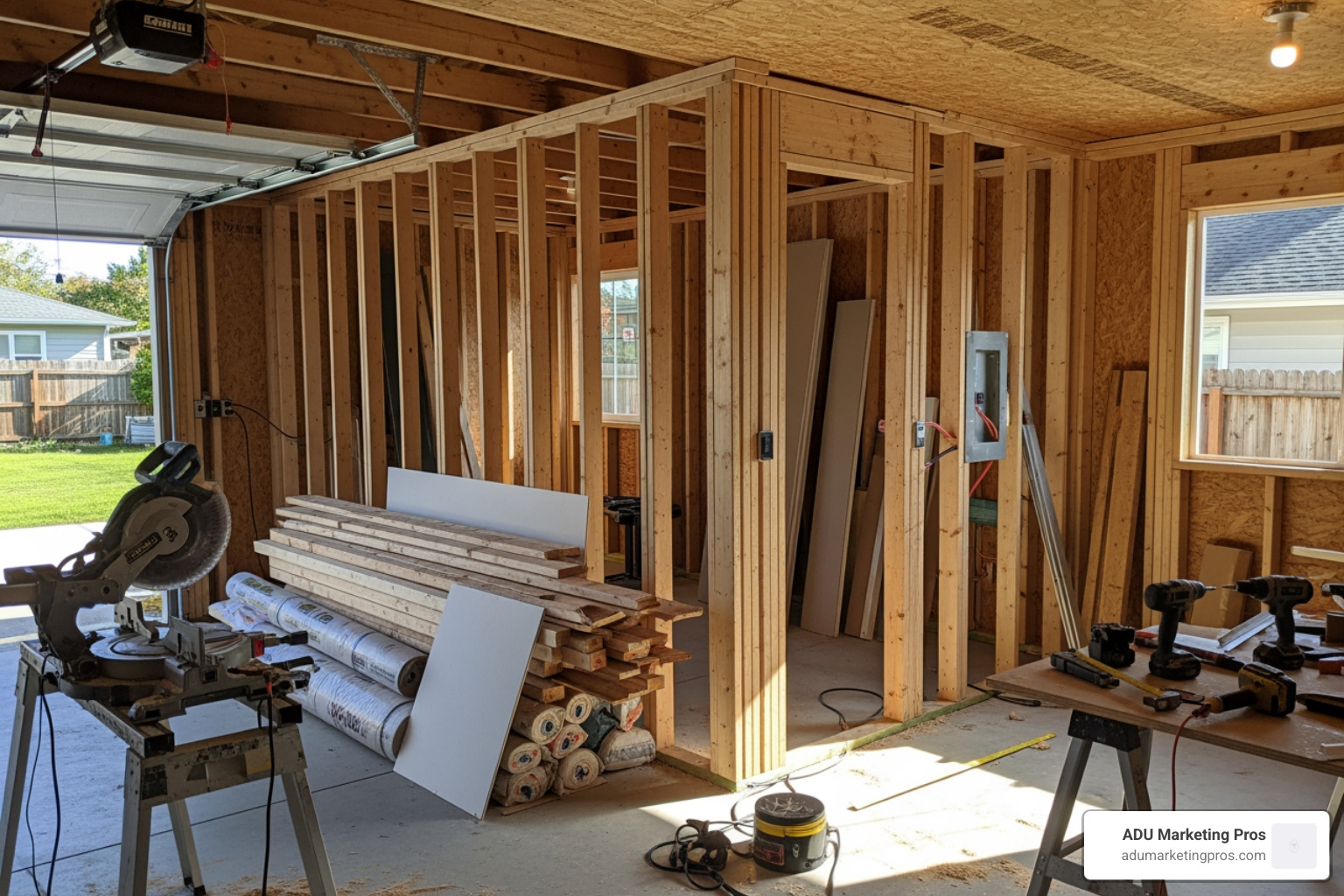
Typical Costs: Garage conversions are the most budget-friendly option, typically costing $100,000 to $150,000. New detached or attached ADUs range from $180,000 to $400,000+, or about $300 to $500 per square foot. Costs are broken into soft costs (design, engineering, permits, fees) and hard costs (labor, materials, site work, finishes). Site conditions like a sloped lot or difficult utility connections can significantly increase the price. Our Los Angeles ADU Cost guide offers a detailed breakdown.
-
Financing Options: You can fund your project with personal savings, a Home Equity Line of Credit (HELOC), a cash-out refinance, a construction loan, or a home renovation loan like the FHA 203(k). Specialized lenders also offer products based on the property’s post-renovation value, which can be a great option if you have limited equity. Compare your choices with our ADU Financing Options guide.
How to Select the Right ADU Contractor
Choosing the right contractor is the most critical decision you’ll make. A reliable, experienced contractor ensures a smooth process, while the wrong one can lead to delays, budget overruns, and legal headaches.
- Vet Thoroughly: Look for a licensed General Contractor with specific, verifiable experience building ADUs in Los Angeles. Ask to see a portfolio of completed ADU projects, not just general renovations.
- Verify License and Insurance: Check their license on the Contractors State License Board website. Ensure it’s active, in good standing, and that they carry both Workers’ Compensation and comprehensive general liability insurance. Ask for a copy of their insurance certificate.
- Check References: Don’t just look at testimonials. Speak with at least three past clients about their experience with quality, communication, budget adherence, and timeliness. Ask if they would hire the contractor again.
- Demand a Detailed Contract: Your contract should be a fixed-price agreement that clearly outlines all costs, a detailed scope of work, a payment schedule tied to milestones, specific materials and finishes, and a project timeline. Get any changes in writing via a formal change order. Avoid contractors who push for large upfront payments.
Our ADU Builder Los Angeles resource can help you connect with qualified professionals.
Legal Implications: Rent Control, Tenant Rights, and Housing Impact
The los angeles accessory dwelling unit ordinance was created to address the city’s housing crisis by increasing housing availability. For homeowners, ADUs offer a path to generating ADU Rental Income, but becoming a landlord in Los Angeles means navigating a complex web of tenant protection laws. Understanding how these rules interact with your ADU is crucial to avoid legal pitfalls.
How the Los Angeles Accessory Dwelling Unit Ordinance Interacts with RSO
The Rent Stabilization Ordinance (RSO) applies to most rental units built on or before October 1, 1978, limiting annual rent increases and providing strong eviction protections. Adding an ADU to a property with an existing RSO rental unit brings the entire parcel under the jurisdiction of the Los Angeles Housing Code.
Whether your new ADU falls under RSO depends on how it’s built:
- Newly Constructed ADUs: A new, detached or attached ADU receives its own Certificate of Occupancy and is generally exempt from RSO’s rent control provisions, even if the main house is covered. However, it will be subject to the city’s Just Cause Ordinance (JCO).
- Conversions of Habitable Space: If you convert part of a pre-1978 home’s existing living area into an ADU, both the main house and the new ADU may fall under RSO, as no new housing unit was truly created.
- Conversions of Non-Habitable Space: Converting a garage or other non-habitable space on a pre-1978 property creates an ADU that is subject to the Just Cause Ordinance (JCO), which provides eviction protections but not rent control.
Implications for Rent Control and Tenant Protections
Adding an ADU to an RSO-covered property comes with specific responsibilities. For example, if construction requires you to temporarily or permanently remove a service like parking or laundry from an existing tenant, you must provide a corresponding rent reduction to compensate for the loss of that housing service.
Key legal points to remember:
- Owner-Occupancy: State law effective through 2024 prohibits cities from requiring owner-occupancy for newly created ADUs on single-family lots, giving owners more rental flexibility. However, this provision is set to expire, and owner-occupancy is still generally required for properties with a JADU.
- Separate Sale Prohibited: You cannot sell your ADU or JADU separately from the primary residence as if it were a condominium. They are legally tied to the main property. The city’s Ordinance 187,764 provides more detail on rare exceptions related to affordable housing programs.
- Registration Fees: Properties with rental units under RSO or JCO jurisdiction are subject to annual registration fees payable to the Los Angeles Housing Department (LAHD).
- Short-Term Rentals: ADUs covered by RSO cannot be used for short-term rentals (less than 30 days) on platforms like Airbnb. Newly constructed ADUs not under RSO may be eligible, but must comply with the city’s Home-Sharing Ordinance.
Frequently Asked Questions about the LA ADU Ordinance
Here are answers to some of the most common questions about the los angeles accessory dwelling unit ordinance.
Can I build both an ADU and a JADU on my property?
Yes, you can. California law allows most single-family properties to have both a standard ADU (up to 1,200 sq. ft.) and a Junior ADU (up to 500 sq. ft. within the primary home), as long as the project meets all development standards. This allows for significant flexibility, such as creating a detached rental unit in the backyard and an attached suite for a family member within the main home. This is a powerful tool for maximizing your property’s housing potential.
How long does it take to get an ADU permit in Los Angeles?
The ordinance requires the city to approve or deny a completed ADU application within 60 days. This clock starts once your application is deemed “complete” by the planning department, which means all initial documents and plans have been submitted correctly. To avoid delays, it is critical to work with an experienced designer or architect who understands LADBS requirements. Using the city’s Approved Standard Plans Program can further speed up the process, as the core designs are already vetted for code compliance.
Can my Homeowners Association (HOA) stop me from building an ADU?
No, an HOA cannot outright prohibit you from building an ADU. Under California law, HOAs cannot unreasonably block the construction of an ADU or JADU on a single-family property. However, they can enforce reasonable, objective design and aesthetic standards (e.g., paint color, roofing material) to ensure the new unit is consistent with the community’s look and feel. You will likely need to submit your plans for HOA review and approval in addition to your city permit application.
How will an ADU affect my property taxes?
Building an ADU will trigger a reassessment of your property’s value for tax purposes, but it will not cause your entire property to be reassessed at current market value. Instead, the county assessor will use a “blended assessment.” Your existing home will retain its original assessed value under Prop 13. Only the value of the newly constructed ADU will be added to your tax bill. For example, if your home is assessed at $300,000 and you add an ADU that cost $200,000 to build, your new assessed value will be approximately $500,000, not the full market value of the entire property, which might be over $1 million.
Conclusion
The los angeles accessory dwelling unit ordinance has transformed the landscape for homeowners, making it more feasible than ever to add valuable living space to your property. It’s about more than just square footage—it’s about creating solutions for your family, your finances, and the city’s housing needs.
We’ve explored the streamlined 60-day permitting timeline, the diverse housing options from detached cottages to JADUs, and the ministerial approval process that provides a clear, predictable path forward. For your family, an ADU can mean keeping loved ones close. For your finances, it can mean significant rental income. For Los Angeles, every new ADU is a step toward easing the housing crisis.
While there are complexities like rent control and zoning rules, the path to building your backyard oasis is clearer and more accessible than ever. The ordinance was designed to remove barriers, not create them.
ADUs represent one of the most exciting opportunities for Los Angeles homeowners today. Whether you envision housing for family, generating passive income, or creating a dedicated workspace, the framework is in place to support your goals.
If you’re ready to take the next step, explore Your Guide to Los Angeles ADU Regulations: What You Need to Know. This comprehensive resource will walk you through everything from planning to final inspection. Let’s build a more connected Los Angeles together—one thoughtfully designed ADU at a time.