Why Permit-Ready ADU Plans Santa Cruz Are Your Fast Track to Housing Solutions
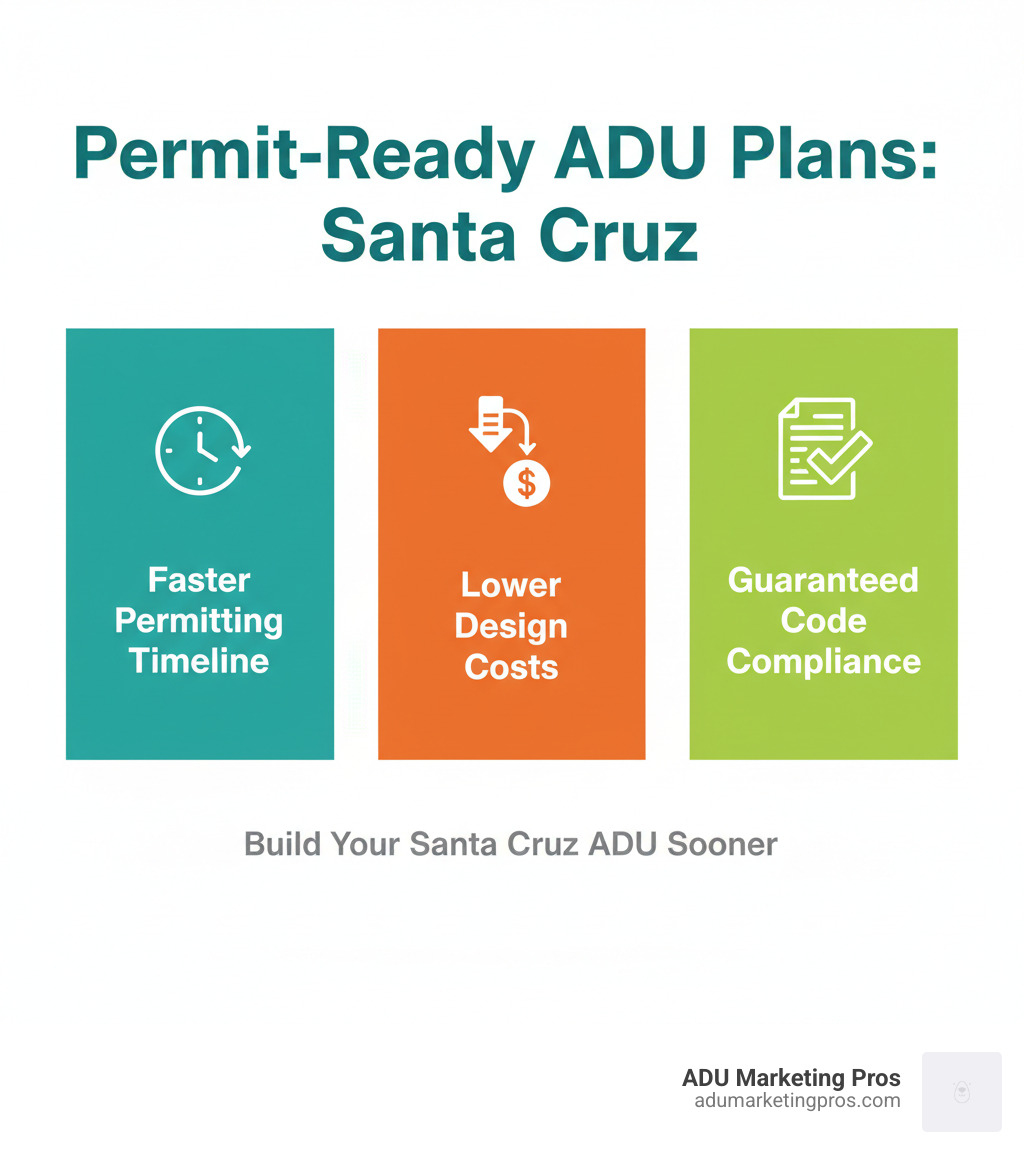
Permit-ready ADU plans Santa Cruz offer a powerful, streamlined path for homeowners and developers to build Accessory Dwelling Units (ADUs) without the notorious delays and high costs of a custom design process. In response to a severe housing shortage and soaring rental prices, the County of Santa Cruz has developed a forward-thinking program that provides free, pre-designed, and pre-approved ADU plans. Available in three distinct sizes and three architectural styles, these plans empower you to begin construction significantly faster while saving an estimated $10,000 to $15,000 on initial architectural and engineering fees.
Santa Cruz County, like much of California, is grappling with a critical housing deficit. With rental demand dramatically exceeding supply, the market has become prohibitively expensive for many. Studio apartments command average rents of $2,000 per month, while one-bedroom units often fetch $2,900 or more. ADUs present a tangible, ground-level solution, allowing homeowners to generate substantial rental income, provide affordable housing for family members, or simply contribute to the community’s housing stock. This program is a direct answer to state-level mandates encouraging ADU development, making it easier than ever for property owners to become part of the solution.
Here’s a more detailed look at what you need to know about Santa Cruz’s permit-ready ADU plans:
- Three Versatile Plan Sizes: Choose from a 425 sq. ft. unit (perfect for a studio or compact 1-bedroom), a 637 sq. ft. 1-bedroom layout, or a spacious 998 sq. ft. 2-bedroom home. Each is designed for efficiency and livability.
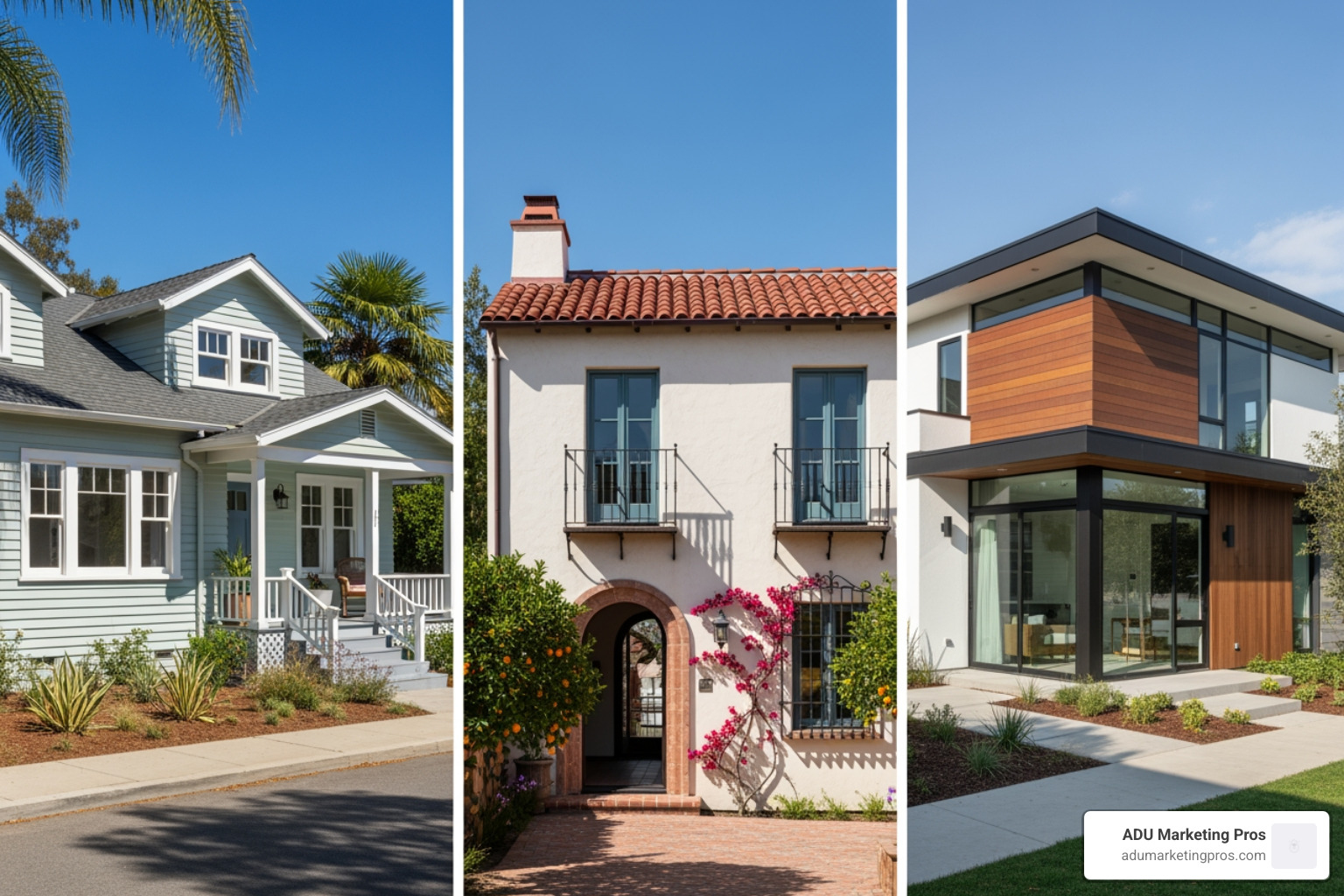
- Three Distinct Exterior Styles: Match your property’s aesthetic with a choice of Classic Bungalow, Coastal Mediterranean, or Sleek Modern designs.
- Estimated Permit & Impact Fees: Fees vary by size. Expect around $5,000 for the smallest unit, $6,000 for the mid-size, and upwards of $20,000 for the largest plan, which triggers additional public service impact fees.
- Strictly No Modifications: To maintain their pre-approved, fast-track status, the plans must be used exactly as-is. Any alteration, no matter how small, voids the pre-approval and requires a full custom review.
- Site-Specific Work is Still Required: While the building plans are complete, you are responsible for providing documents specific to your property. This includes a detailed site plan, a vicinity map, stormwater management information, and other documents proving your lot can support the new structure.
- Free and Accessible Downloads: The complete plan sets are available for free download directly from the Santa Cruz County Planning Department.
The county’s pre-designed ADU program is engineered to dismantle the primary barriers—time, cost, and complexity—that typically hinder ADU construction. Instead of engaging an architect and spending months on custom plans and revisions, you can select a ready-to-permit design that has already been rigorously reviewed for building code compliance. The county’s ambitious goal is to make the process so efficient that a qualifying homeowner can “walk out in 30 minutes” with an approved permit. While this ideal scenario depends on a perfectly prepared application, it highlights the program’s commitment to speed and simplicity. For ADU construction firms and architects in the Santa Cruz market, mastering this program is no longer optional; it’s essential for serving clients efficiently and staying competitive in a rapidly expanding market.
Understanding Santa Cruz’s Pre-Designed ADU Program: Designs, Costs, and Benefits
Santa Cruz County is proactively tackling its housing crisis with an exceptionally practical solution: a library of free, pre-designed ADU plans. This innovative program is meticulously crafted to alleviate the common homeowner concerns of prohibitive costs, overwhelming complexity, and bureaucratic paperwork that often accompany ADU projects. By providing professionally designed, pre-approved plans at no charge, the county effectively eliminates the expensive and time-consuming architectural design phase—one of the single biggest barriers to new construction.
Unlike custom ADU designs, which can involve months of back-and-forth with an architect and planner, permit-ready ADU plans Santa Cruz allow you to transition almost directly to the permitting and construction phases. These plans have already been vetted by county officials for compliance with the California Building Code, ensuring a faster, more predictable, and smoother timeline from start to finish.
The Benefits of Choosing Pre-Approved Plans
The advantages of leveraging the county’s pre-approved plans are substantial and multifaceted, directly impacting your budget, timeline, and stress level.
- Major Cost Savings: The most immediate benefit is financial. You instantly save between $10,000 and $15,000 in typical fees for architectural drawings, structural engineering, and Title 24 energy calculations. This is money that can be immediately reallocated to higher-quality finishes, better appliances, landscaping, or simply held as a contingency fund.
- Dramatically Faster Permitting: Pre-approved plans are the key to unlocking a streamlined permitting process. A custom plan can languish in departmental review for months, undergoing multiple rounds of corrections and resubmittals. Since these designs are already reviewed for structural and code compliance, you bypass that entire ordeal. The county’s goal of a 30-minute permit approval for qualifying projects, while ambitious, underscores the potential for radical time savings. The main review shifts from the structure itself to how it fits on your specific property.
- Reduced Complexity and Risk: For homeowners who aren’t construction experts, the design process can be intimidating. Working with a pre-approved design eliminates the guesswork and uncertainty. You can proceed with confidence, knowing the plan is compliant and buildable. This certainty significantly minimizes the risk of unforeseen design-related delays and budget overruns, which are common in custom projects.
Available Sizes, Layouts, and Exterior Styles
The county offers a thoughtful variety of three plan sizes and three architectural styles, ensuring flexibility to suit different property constraints, budget levels, and aesthetic preferences.
Plan Sizes:
- Plan 1 (425 sq. ft.): A highly efficient studio or one-bedroom, one-bathroom layout complemented by a 76 sq. ft. porch. This compact design is ideal for generating strong rental income with minimal construction costs and a small footprint, making it perfect for smaller backyards.
- Plan 2 (637 sq. ft.): A comfortable and well-proportioned one-bedroom, one-bathroom layout featuring an 85 sq. ft. porch. This is a popular mid-range option that offers a great balance of living space and construction cost, appealing to a wide range of potential renters or family members.
- Plan 3 (998 sq. ft.): A spacious two-bedroom, one-bathroom home with a 62 sq. ft. porch. This larger unit is suitable for a small family, a couple needing a dedicated home office, or as a high-income rental property.
Exterior Styles:
- Classic Bungalow: Features timeless Craftsman-inspired details like exposed rafters, shingle siding, and a welcoming porch. This style integrates beautifully into many of Santa Cruz’s established neighborhoods.
- Coastal Mediterranean: Evokes a relaxed, coastal feel with its stucco finishes, tile roof accents, and arched elements. It’s a perfect match for properties looking to embrace the classic California coastal aesthetic.
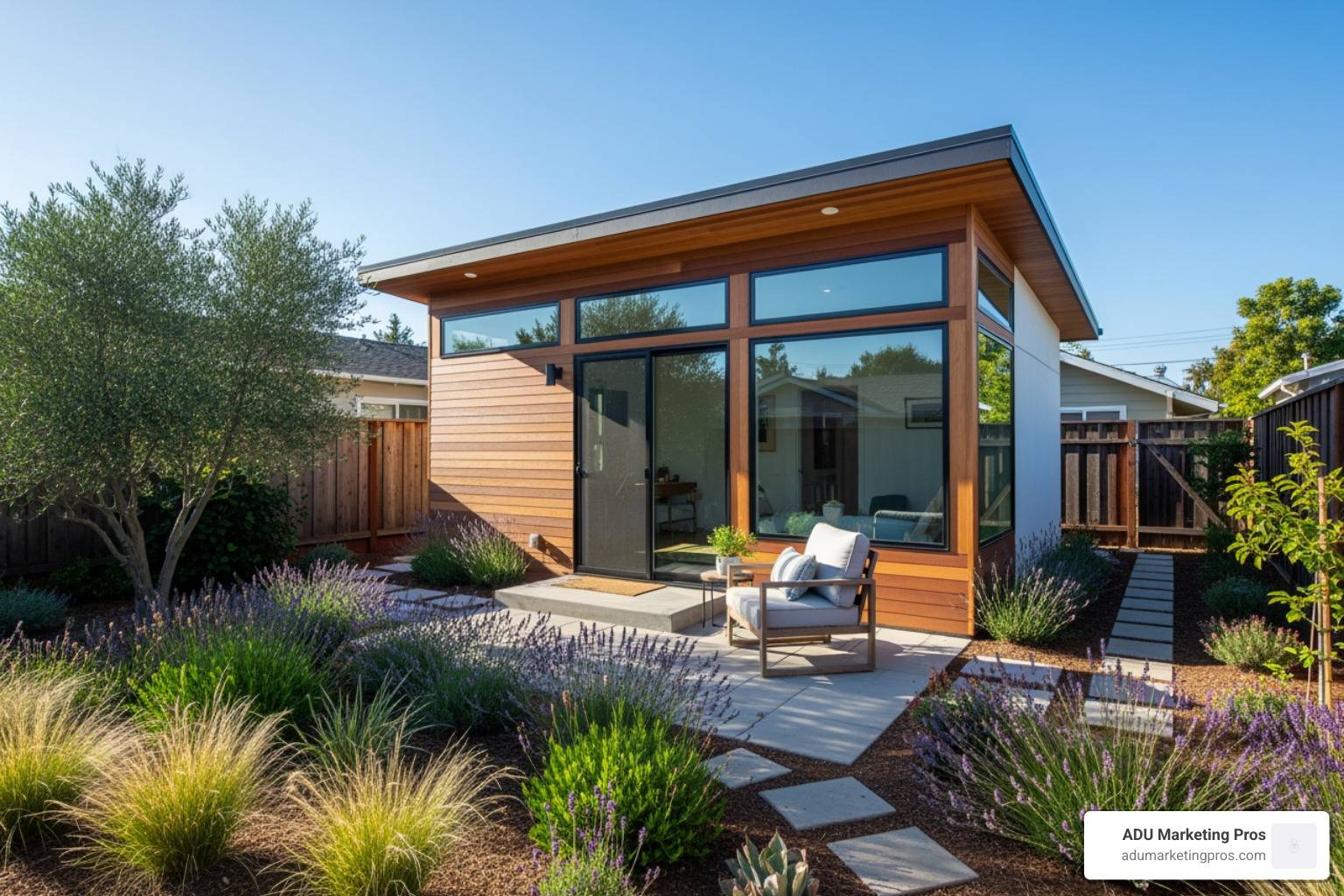
- Sleek Modern: Offers a contemporary look with clean lines, simple geometric forms, large windows, and a minimalist material palette. This style provides an updated, sophisticated appeal.
This variety allows you to select a design that not only meets your functional needs but also complements the architectural character of your main home. You can view the county’s pre-designed plans for detailed floor plans and elevations.
Comparing Costs: Pre-Approved vs. Custom and Construction Types
Understanding the full financial picture is crucial. Construction costs in the Santa Cruz area vary significantly based on the type of ADU and the level of finish.
- Garage Conversions: Typically the most affordable option, ranging from $150,000 to $300,000, as you are leveraging an existing foundation and structure.
- Stand-Alone Custom ADUs: These projects offer complete design freedom but come at a premium, with costs ranging from $300,000 to $700,000 or more, reflecting the expense of full customization, new engineering, and a longer design/build process.
Building with permit-ready ADU plans Santa Cruz provides a compelling middle ground. While the hard construction costs are comparable to a new custom build, you completely eliminate the initial $10,000-$15,000 in design fees.
- Plan 1 (425 sq. ft.): Estimated total build cost of $250,000 – $300,000, plus approximately $5,000 in permit fees.
- Plan 2 (637 sq. ft.): Estimated total build cost of $350,000 – $450,000, plus approximately $6,000 in permit fees.
- Plan 3 (998 sq. ft.): Estimated total build cost of $550,000 – $700,000+, plus approximately $20,000 or more in permit and impact fees.
It’s important to note that permit fees are unavoidable, as they cover the county’s essential review of your site-specific conditions. In addition to county fees, you should budget for fees paid directly to the local School District and Fire Department. The largest plan (998 sq. ft.) also triggers impact fees, which are levied on new construction to help fund public infrastructure and services like parks and roads. This investment can yield significant returns. With studio apartments in Santa Cruz averaging $2,000/month and one-bedrooms around $2,900/month, an ADU can generate powerful cash flow and substantially increase your long-term property value. The California Department of Housing and Community Development offers a wealth of additional resources on ADU regulations and benefits statewide.
Your Step-by-Step Guide to Using Permit-Ready ADU Plans in Santa Cruz
Building an ADU using the County of Santa Cruz’s permit-ready ADU plans Santa Cruz is a structured and manageable process, especially with the resources the county provides, like the ePlan Review system and dedicated staff. Following this detailed roadmap will help you navigate the journey smoothly and successfully add valuable housing to your property.
Step 1: Confirm Eligibility and Complete Site Due Diligence
Before you fall in love with a design, you must perform crucial due diligence to ensure your property is suitable for an ADU. This foundational work is the single most important step to prevent costly surprises and delays down the road.
- Check Zoning and Setbacks: A setback is the required distance between your structure and your property lines. Start with the county’s ADU Eligibility Tool for a preliminary check. Then, you must confirm the specific zoning requirements and setbacks for your parcel with Zoning staff. We strongly recommend you schedule an appointment with county staff to have an expert review your property’s specifics.
- Review Environmental Constraints: Your property might be subject to environmental protections, such as riparian corridors (protected areas along streams), sensitive habitats, or coastal bluff erosion zones. Environmental Planning staff must review your site plan to confirm any building restrictions. This could affect the placement or even the feasibility of your ADU.
- Assess Soil and Geotechnical Conditions: For any new foundation, the county needs to know the ground is stable. You will generally need a soils report from a licensed geotechnical engineer. However, you may qualify for a Soils Report Waiver, which can save you thousands of dollars and several weeks. Email the County Engineer with your parcel number to check your eligibility. If you are granted the waiver, you must include the signed Appendix A: Project Information & Threshold Determination form in your application.
- Verify Wastewater System Capacity: If your property uses a septic system (Onsite Wastewater Treatment System or OWTS), you must confirm with Environmental Health staff that it has the capacity to support an additional dwelling. An upgrade may be required. You will need to submit the Environmental Health Clearance Building form for their review.
- Secure Water Service Confirmation: Contact your local water provider and request a “Will Serve” letter. This official document confirms that the utility can and will provide water service to the new ADU.
- Understand Coastal Zone Rules: If your property is in the Coastal Zone, don’t panic. Most ADUs are exempt from needing a separate, discretionary Coastal Permit. However, you must still verify the specific rules for your property by contacting Zoning staff.
Step 2: Download Your Plans and Prepare a Complete Application
Once your property’s eligibility is confirmed, you can move on to selecting your plan and assembling your application package.
- Select and Download Plans: Go to the Santa Cruz County Planning Department website to choose your preferred plan size and exterior style. Download the full set of drawings.
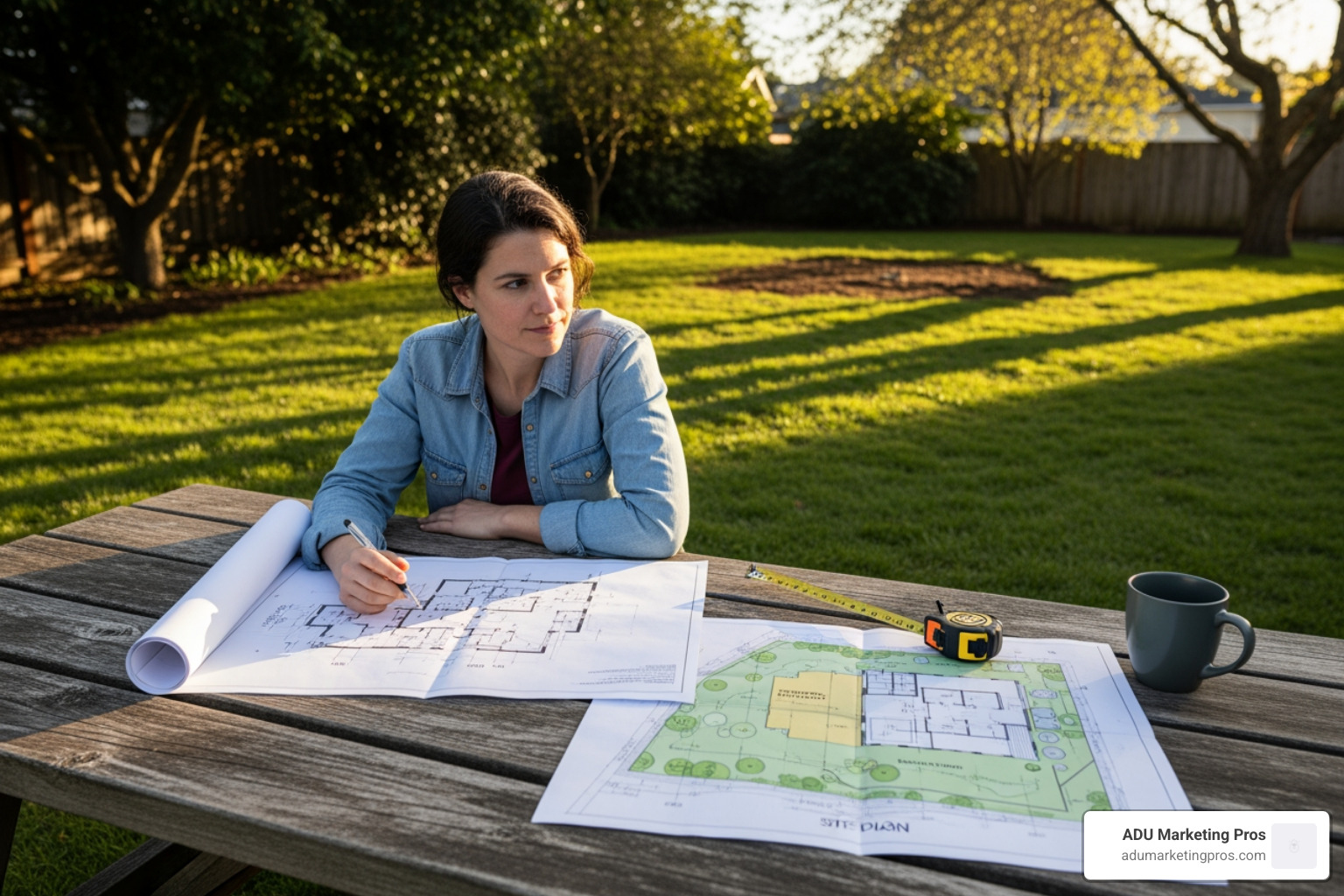
- Prepare Critical Site-Specific Documents: This is your primary responsibility. You must create a comprehensive site plan drawn to scale. It must show the ADU’s location, property lines, all existing structures, driveways, easements, utility connection points (water, sewer/septic, electric), and topographical lines if your lot is sloped. You will also need a vicinity map showing your property’s location in the neighborhood, plus stormwater management information detailing how you will handle roof runoff.
- Gather All Required Forms: Your application package is a collection of documents. It must include the ePlan Checklist, the main Building Permit Application, your Will Serve letter, and any required environmental, soils, or septic clearance forms you obtained in Step 1.
- Strategize with Deferred Submittals: To accelerate your main building permit, the county allows certain elements to be submitted later as “deferred submittals.” These typically include the Photovoltaic (PV) solar system plans and fire sprinkler plans. This strategy allows you to get your permit moving forward while those specialized designs are being finalized by licensed contractors.
Step 3: Submit, Manage the Review, and Build
You are now ready to formally submit your application through the county’s efficient online portal.
- Submit Online: Upload your complete, organized application package to the county’s online ePlan Review system. If you need assistance with the upload process, you can schedule an appointment with Building staff via their Appointment Self-Scheduler.
- Pay Fees and Await Review: After a successful submittal, you will be prompted to pay the initial intake fees. Your application will then be routed concurrently to all relevant departments (Zoning, Environmental, Building, Public Works, etc.) for a detailed review of your site-specific documents.
- Respond to Comments Promptly: It is common for departments to issue comments or request clarifications. Respond to these requests quickly and completely to keep your application moving through the system.
- Receive Permit and Begin Construction: Once all departments have given their approval, you will pay the final permit fees and receive your official building permit. You can now begin construction!
- Manage Inspections: Throughout the construction process, you or your contractor are responsible for scheduling a series of mandatory inspections at key milestones (e.g., foundation, rough framing, plumbing/electrical, insulation, and final). Each inspection must be passed before you can proceed to the next phase.
- Obtain Certificate of Occupancy: After your project passes the final inspection, the county will issue a Certificate of Occupancy. This is the final document that declares your ADU is safe and legal to be lived in. Congratulations!
Key Rules and Regulations for Your Santa Cruz ADU
Navigating the rules that govern your ADU project is just as critical as choosing the right design. The regulations in Santa Cruz County, which are a blend of local ordinances and state laws, are designed to ensure that ADUs are safe, compatible with existing neighborhoods, and genuinely contribute to the long-term housing supply.
Can You Modify the Permit-Ready ADU Plans Santa Cruz?
The answer to this common question is a clear and firm no. The primary benefit of using the permit-ready ADU plans Santa Cruz is the expedited, streamlined permitting process. This benefit is entirely dependent on the plans being pre-approved. Any modification—whether it’s moving a window, changing a room’s dimensions, or altering the roofline—voids that pre-approved status. Your project would instantly be reclassified as a custom design, subjecting it to the standard, much longer review process and requiring a full set of new architectural and engineering plans.
The only potential exception relates to the foundation. If your mandatory soils report determines that your specific site conditions require a specialized foundation (e.g., piers instead of a standard slab), you cannot design it yourself. You must contract with RRM Design Group, the architectural firm that created the original plans, to engineer a site-specific foundation design. This ensures the integrity of the overall structural plan. This custom foundation plan will require additional review and cost, but it preserves the pre-approved status of the rest of the structure. For any other desired changes, you would need to engage RRM Design Group or another architect for a fully custom plan, thereby forfeiting all the time and cost savings of the pre-designed program.
ADU Occupancy, Rentals, and Unit Limits
County and state regulations are very specific about how ADUs can be used, with a strong emphasis on creating more long-term housing.
- No Short-Term Rentals: ADUs in Santa Cruz County cannot be rented for periods shorter than 30 days. This explicitly prohibits their use as vacation rentals on platforms like Airbnb or VRBO. The rule is strictly enforced and is intended to ensure that new units serve as stable housing for residents, not temporary lodging for tourists.
- Unit Limits on Single-Family Lots: On a property with a single-family home, you can typically build one detached or attached ADU plus one Junior ADU (JADU). A JADU is a smaller unit, 500 sq. ft. or less, created within the existing footprint of the primary home (e.g., in a spare bedroom). This allows for a maximum of three total housing units on a single-family lot.
- Unit Limits on Multi-Family Lots: For properties with existing multi-family dwellings (e.g., a duplex or apartment building), you can build up to two detached ADUs. Additionally, you may be able to convert non-livable space (such as garages, storage rooms, or boiler rooms) into ADUs, up to 25% of the number of existing units.
Setbacks, SB 9, and Other Development Standards
These standards dictate exactly where you can and cannot build on your property.
- Setbacks: Newly constructed detached and attached ADUs generally require a minimum 4-foot setback from the side and rear property lines. This minimal setback is a state-mandated allowance to make ADUs feasible on more lots. Front-yard setbacks are typically determined by the zoning district. Setbacks for ADUs created by converting an existing legal structure (like a garage) can often be zero, meaning you can build right up to the property line if the existing structure is already there.
- Senate Bill 9 (SB 9): This powerful state law, separate from standard ADU law, may allow you to split a single-family lot into two separate parcels and build up to two units (a primary residence and an ADU, or a duplex) on each new parcel. In theory, this could create up to four units on a lot that originally had one. However, SB 9 projects are complex and subject to numerous qualifications and local requirements. They are not eligible for the pre-designed ADU plans and represent a much more involved development process. You can learn more about its applicability from resources like the UC Berkeley Terner Center’s guide to SB 9.
- Environmental Constraints: As mentioned in the eligibility step, your project must respect all environmental protections. Environmental Planning staff will scrutinize your site plan to ensure the proposed ADU location does not encroach on riparian buffers, sensitive wildlife habitats, or other protected areas. This is a non-negotiable aspect of the review process and can significantly influence the final placement of your unit.
Frequently Asked Questions
Here are detailed answers to some of the most common questions homeowners have about using the permit-ready ADU plans Santa Cruz.
Is a soils report always required for a pre-designed ADU?
Not always, but it is the default requirement for any new structure with a new foundation. A soils report, prepared by a geotechnical engineer, analyzes the stability of your ground and informs the foundation design. However, your property might be eligible for a Soils Report Waiver, which can save you $2,000-$5,000 and several weeks of time. To find out if you qualify, you must email the County Engineer with your Assessor’s Parcel Number (APN). They will review geological maps and other data for your location. If a waiver is not possible, you must obtain a soils report. If that report indicates your site requires a specialized foundation, be aware that custom foundation plans are not included in the free plan set. You will need to contract with the original architecture firm (RRM Design Group) to create them, which will incur additional design fees and require a separate review by the county.
Do I need a Coastal Permit for my ADU in the Coastal Zone?
Most likely, you will not need a separate, discretionary Coastal Permit. Under state law, most ADUs located within the Coastal Zone are excluded or statutorily exempted from this requirement to encourage their development. In the rare case that a Coastal Permit is needed for your specific project, it is typically processed concurrently with your building permit, so it does not add a separate, lengthy process. However, coastal regulations are inherently complex and can involve factors like public viewshed protection. It is always essential to confirm your property’s specific requirements with the County’s Zoning staff during your initial due diligence phase.
Why do I still pay thousands in permit fees if the plans are free and pre-approved?
This is an excellent and very logical question. The architectural plans are indeed free, saving you the design cost. However, the permit fees cover the essential and unavoidable work of the county staff to review how those standard plans will be implemented on your unique property. Every lot is different. County departments must perform a site-specific review to ensure public safety, environmental protection, and regulatory compliance. Here’s a breakdown of what the fees cover:
- Zoning Staff verify that the ADU’s placement on your site plan meets all setback, height, and lot coverage requirements.
- Environmental Planning Staff check for protected habitats, riparian corridors, or other constraints.
- Environmental Health Staff review your application to ensure your septic and water systems can support the new unit.
- Public Works Staff review grading, drainage, and stormwater management.
- The Building Department ensures the standard plan is being applied correctly to your site and manages the inspection process.
These reviews are critical safeguards for you and the community. The good news is that for the two smaller ADU plans (425 and 637 sq. ft.), the county waives most of its own plan review fees, significantly lowering your total cost while still providing the necessary professional oversight.
What is a realistic timeline for the entire ADU process?
While the pre-approved plans dramatically speed up the design and permitting phase, it’s still a major construction project. A realistic timeline can be broken into three parts:
- Due Diligence & Application Prep (1-3 months): This includes confirming eligibility, getting a soils report (if needed), securing a “Will Serve” letter, and preparing your site plan.
- Permit Review (1-4 months): Even with pre-approved plans, the site-specific review takes time. A perfect application might get through in a month, but if corrections are needed, it can take longer.
- Construction (6-12 months): The actual build time depends on your contractor’s availability, supply chains, weather, and the complexity of your site. A 9-month average is a reasonable expectation.
What are the common ways to finance an ADU?
Since construction costs can run into the hundreds of thousands of dollars, most homeowners need financing. The most common options include:
- Cash-Out Refinance: Refinancing your existing mortgage for a higher amount and taking the difference in cash to pay for the ADU.
- Home Equity Line of Credit (HELOC): A revolving line of credit based on the equity in your home. You can draw funds as needed during construction.
- Construction Loan: A short-term loan specifically for building projects. The bank releases funds in stages as construction milestones are met. This often converts to a traditional mortgage upon completion.
Conclusion
Building an ADU in Santa Cruz is more than just a construction project—it’s a powerful investment in your future and a meaningful contribution to the community’s well-being. Whether your goal is to generate significant rental income, provide a safe and comfortable home for family members, or simply maximize the potential of your property, the permit-ready ADU plans Santa Cruz program offers a practical, accessible, and streamlined path forward.
The County of Santa Cruz deserves credit for creating this genuinely helpful pre-designed ADU program. It directly addresses the biggest hurdles homeowners face. Instead of spending months and a small fortune navigating the complex world of custom architectural design, you can select from three well-conceived plans and three attractive exterior styles, all available for free. The $10,000 to $15,000 you save on upfront design and engineering fees is substantial, and the time saved in the permitting process can be even more valuable. You begin your project with the confidence that the core design has already cleared the major hurdles of building code compliance.
Of course, building an ADU still demands diligence. Careful attention must be paid to your specific property’s characteristics. Site-specific reviews, soil conditions, utility connections, and environmental considerations all require proper evaluation and documentation. But with this program, the heaviest lifting of the design and structural engineering phase has already been done for you. This is a game-changing advantage in a process that can otherwise feel daunting and overwhelming.
For ADU construction firms and architects serving the Santa Cruz area, this program represents both a massive opportunity and a fundamental shift in how projects can be delivered. Homeowner awareness of these pre-designed options is growing, and the ability to work effectively within this framework is a key competitive differentiator. The demand for ADUs will only continue to grow as more people recognize the compelling financial returns and the positive community impact of adding housing units. With studio apartments renting for around $2,000 per month and one-bedrooms averaging $2,900, the economics of building an ADU are undeniable for many property owners.
At ADU Marketing Pros, we specialize in helping ADU builders and architects thrive in this evolving market. We work with firms who want to connect with motivated homeowners and build a sustainable pipeline of high-quality projects. Our specialized marketing approach helps you stand out by showcasing your expertise, reliability, and value—not just competing on price. We understand the unique challenges of marketing ADU services because it’s the only thing we do.
If you’re an ADU professional ready to move beyond chasing leads and start attracting qualified clients, we can help. Explore how to build your ADU project pipeline and discover the strategies that can transform your business growth. The ADU revolution in Santa Cruz and across California is accelerating, and the firms that position themselves as expert guides today will be the leaders of tomorrow.