
Why Relocatable ADUs Are Changing Modern Housing
Across the United States, a perfect storm of rising property values, stagnant wages, and housing shortages has put immense pressure on families. The dream of homeownership feels increasingly distant for many, while others struggle to adapt their existing homes to meet new needs, like caring for aging parents or accommodating remote work. In this challenging landscape, a new and powerful solution is gaining traction: Relocatable Accessory Dwelling Units (ADUs).
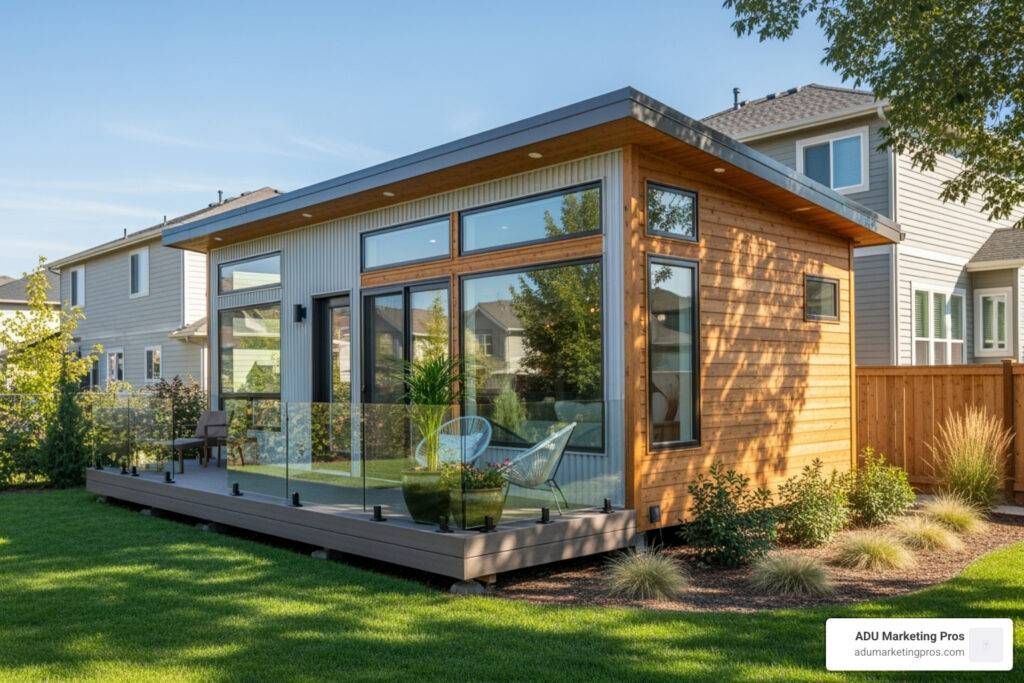
These are not the mobile homes of the past. A relocatable ADU, often called a granny flat or backyard cottage, is a self-contained, prefabricated living space built to rigorous standards in an off-site factory. It is then transported to your property and installed on a permanent foundation. Unlike traditional ADUs constructed piece by piece on-site, these modern housing solutions offer a compelling alternative that directly addresses the pain points of conventional construction.
Key advantages include:
- Unmatched Speed: Installation can take just a few days, a stark contrast to the many months required for a traditional build.
- Inherent Flexibility: The unit is an asset that can be moved to a new property if your life circumstances change, offering unparalleled freedom.
- Significant Cost-Effectiveness: The efficiencies of factory construction reduce labor costs, minimize material waste, and lead to more predictable pricing.
- Minimal Disruption: With up to 90% of the construction happening off-site, your home life and neighborhood remain peaceful.
As housing affordability continues to challenge families, relocatable ADUs have emerged as a practical, innovative, and high-quality solution. While traditional construction involves a lengthy and invasive process of foundation work, framing, and finishing—often taking 6-12 months and causing significant disruption—relocatable ADUs flip the model. Built in a controlled factory environment, they arrive nearly complete and ready for quick installation, offering a modern answer to timeless housing needs.
The Appeal of Flexibility: Key Benefits and Use Cases
Relocatable ADUs are more than just extra space; they are a strategic, adaptable investment that evolves with your life. Their core appeal lies in their ability to meet your changing needs, whether you’re housing a family member, generating rental income, or creating a professional home office.
Why Choose a Relocatable Solution?
The primary advantage is right in the name: relocatability. Unlike a permanent structure that is irrevocably tied to your land, you are investing in a high-value, portable asset. Imagine you need to move for a new job in five years. With a traditional addition, you can only hope to recoup the cost through a higher sale price. With a relocatable ADU, you have options: take the ADU with you to your new home, or sell it separately to another buyer. This provides a level of financial control and asset liquidity that traditional construction simply can’t match.
Factory construction delivers significant and predictable cost savings. Manufacturers purchase materials in bulk at a discount and utilize an assembly-line process that maximizes efficiency. This controlled environment eliminates costly weather delays and reduces material waste by up to 50% compared to on-site builds. Furthermore, labor costs are lower and more predictable, and there is virtually no risk of material theft from the job site. These efficiencies translate directly into a more affordable and transparent final price for the homeowner.
Speed is another game-changing benefit. The site preparation (grading, foundation, utilities) happens concurrently while your ADU is being built in the factory. This parallel workflow slashes the overall project timeline. While a traditional ADU can leave your backyard a construction zone for 6-12 months, a relocatable unit can be installed and ready for occupancy within a week or two of its delivery. This process also ensures minimal disruption. There are no months of daily noise, dust, and a parade of contractors through your property.
Finally, building in a controlled factory environment leads to superior quality control. Each component is built using precise jigs and tools, and every stage of construction is inspected to meet stringent standards. The structure is built from the inside out, protected from the elements, resulting in a tighter, more durable, and more energy-efficient building envelope.
Opening Up Your Property’s Potential
A relocatable ADU unlocks numerous possibilities for your property, allowing you to maximize its utility and value.
- Multi-generational living is one of the most popular uses. It allows aging parents or adult children to live independently yet remain close for support and connection. This preserves privacy for everyone while fostering family bonds.

-
Rental income from a secondary dwelling can create a powerful financial stream, helping to offset mortgage payments, build savings, or fund other life goals. In high-demand areas, a well-designed ADU can also significantly increase your property’s overall market value.
-
Dedicated workspaces have become essential in the era of remote and hybrid work. A separate ADU provides a professional, quiet environment that is physically detached from the main house, promoting focus and a healthy work-life balance.
-
Guest accommodation is elevated from a spare room to a private retreat. Visitors can enjoy their own space with a kitchen and bathroom, making their stay more comfortable and independent.
The versatility of these structures means your investment grows with you. Today’s home office can become tomorrow’s rental unit or a future home for a family member, making relocatable ADUs one of the smartest and most adaptable property improvements available. For more on the benefits of this building method, see resources from leaders in modular construction and sustainability.
Types, Designs, and Customization Options
Relocatable ADUs come in a surprising variety of styles, sizes, and construction methods, ensuring there’s a solution to fit your aesthetic, budget, and property constraints. The era of one-size-fits-all prefabs is long gone.
Exploring the Types of Relocatable ADUs
Understanding the main construction types will help you make an informed decision:
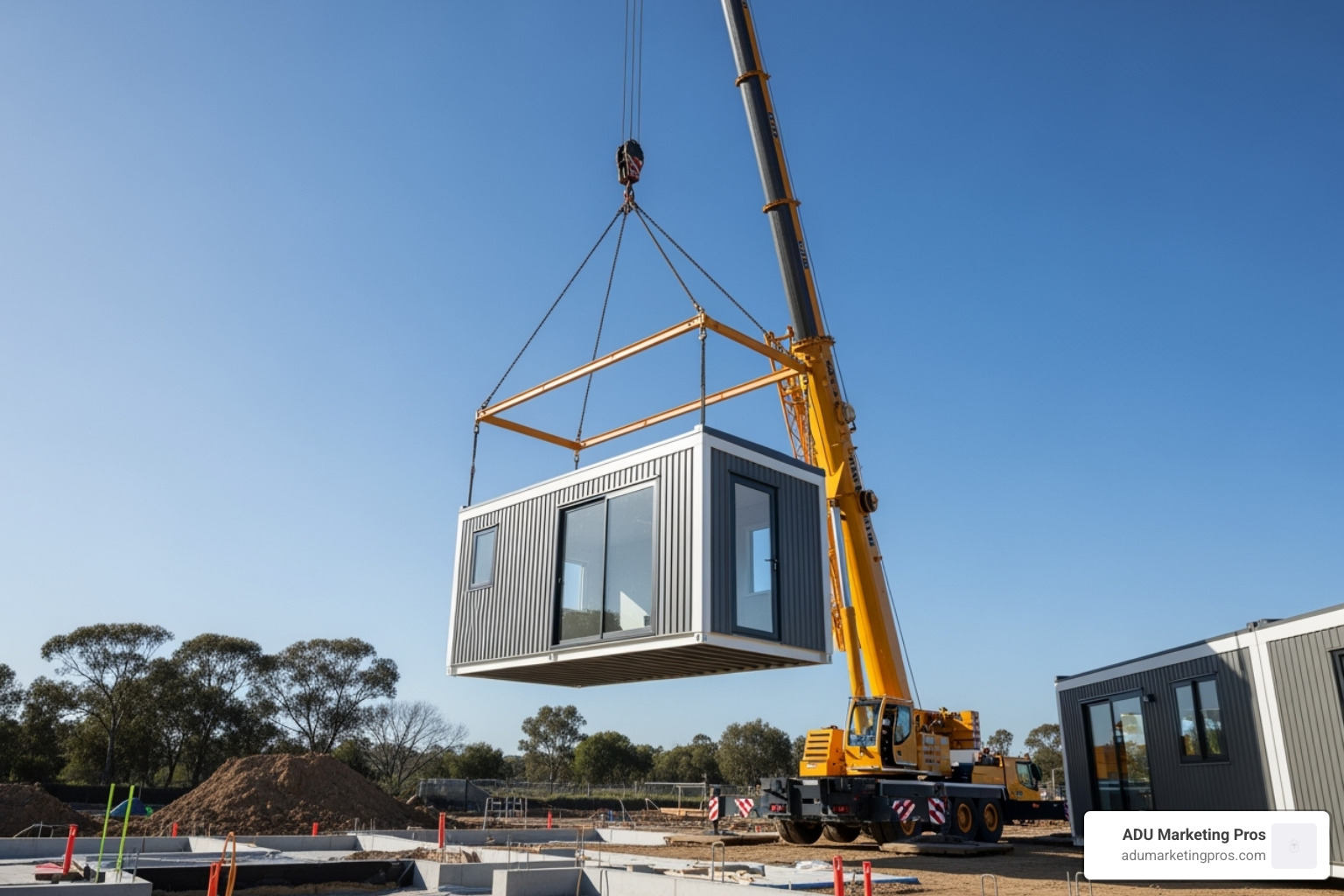
- Modular ADUs: These are the most common type for permanent backyard homes. They are built in one or more large, three-dimensional sections (modules) in a factory. The modules are then transported to your site, craned into place on a permanent foundation, and seamed together. This method allows for complex, multi-room designs and a high-quality finish that is indistinguishable from a traditional site-built home.
- Shipping Container Homes: Built from repurposed steel shipping containers, these ADUs offer incredible durability, a unique industrial aesthetic, and are structurally self-supporting. They are an excellent choice for sites with challenging soil conditions but may require significant added insulation to be energy-efficient and are limited by the container’s fixed width (usually 8 feet).
- Panelized or Flat-Pack Kits: These arrive as a set of pre-cut and numbered components (walls, roof panels, flooring) for on-site assembly. While often more budget-friendly and easier to transport to remote or hard-to-access locations, they require significantly more on-site labor and construction time than a modular unit.
- Expandable and Foldable Homes: An innovative niche, these homes are engineered to be transported in a highly compact form and then unfold or expand on-site, often in just a day. They are ideal for temporary housing needs or sites with extremely difficult access, but may offer less design flexibility and insulation than modular options.
- Tiny Homes on Wheels (THOWs): Built on a towable chassis, THOWs are legally classified as recreational vehicles (RVs), not real estate. This can sometimes simplify the initial setup as they may not require a building permit. However, using a THOW for long-term, permanent habitation is subject to strict local zoning and health department regulations that are different and often more restrictive than those for permanent ADUs.
| Type | Pros | Cons |
|---|---|---|
| Modular | High quality, indistinguishable from site-built; great design flexibility; very fast installation. | Requires clear crane access; transport can be costly; heaviest option. |
| Shipping Container | Extremely durable and weather-resistant; unique modern look; structurally robust. | Narrow interior width; requires expert modification and heavy insulation. |
| Flat-Pack | Lower initial cost; easier to transport to remote or tight sites. | Requires extensive on-site assembly and labor; longer on-site disruption. |
| Foldable/Expandable | Extremely fast deployment; most compact for transport and difficult access. | More complex mechanical parts; may have fewer customization options; potentially less insulation. |
| THOWs | Highly portable; may bypass some building permits for temporary use. | Size and weight limitations; often classified as RVs, restricting permanent use; financing can be difficult. |
Designing Your Perfect Space
Prefabrication does not mean sacrificing personality. Modern manufacturers offer extensive customization to create a space that is uniquely yours.
Start with floor plans, which typically range from compact studios (~300 sq. ft.) to spacious one- or two-bedroom units (~1,000 sq. ft.). Most companies offer a library of standard layouts that can be modified to suit your needs, such as moving a wall, adding a window, or creating a built-in desk.
Exterior cladding options are vast, including natural wood siding, sleek metal panels, fiber cement, or stucco, allowing the ADU to either blend seamlessly with your main home or provide a stylish contrast.
Inside, you have control over every finish. You can select flooring, cabinetry, countertops, and fixtures to match your personal style and budget. For family members with mobility challenges, accessibility features like zero-threshold showers, wider doorways, grab bars, and ramps can be integrated into the design from the very beginning.
Energy efficiency and sustainability are key areas for customization. Upgrades can include triple-glazed windows, enhanced insulation packages for colder climates, solar panel arrays for off-grid or net-zero living, and rainwater harvesting systems. The prefabricated building process itself is inherently more sustainable, as factory settings minimize material waste and reduce the environmental impact of construction traffic, a topic explored in depth by the Modular Building Institute.
The Practicalities: Site Prep, Installation, and Costs
While a relocatable ADU arrives nearly finished, a successful project hinges on meticulous planning and thorough site preparation. Understanding the practical steps and the complete cost breakdown will ensure your project proceeds smoothly, on time, and on budget.
Preparing Your Site for Arrival
Before your ADU can be delivered, your property must be ready to receive it. This phase is just as important as the construction of the unit itself.
- Site Accessibility: The first step is a logistical assessment. Can a large delivery truck and a crane access the final placement spot? Obstacles like narrow gates, low-hanging power lines, or mature trees can significantly complicate or even prevent delivery. Most manufacturers will conduct a site visit to confirm feasibility.
- Ground Preparation: The building site must be cleared of any vegetation or debris and then graded to be perfectly level. An uneven site can compromise the foundation and lead to long-term structural issues like sticking doors or cracks in the drywall. In some cases, a geotechnical report from an engineer may be required to analyze the soil and ensure it can support the structure’s weight.
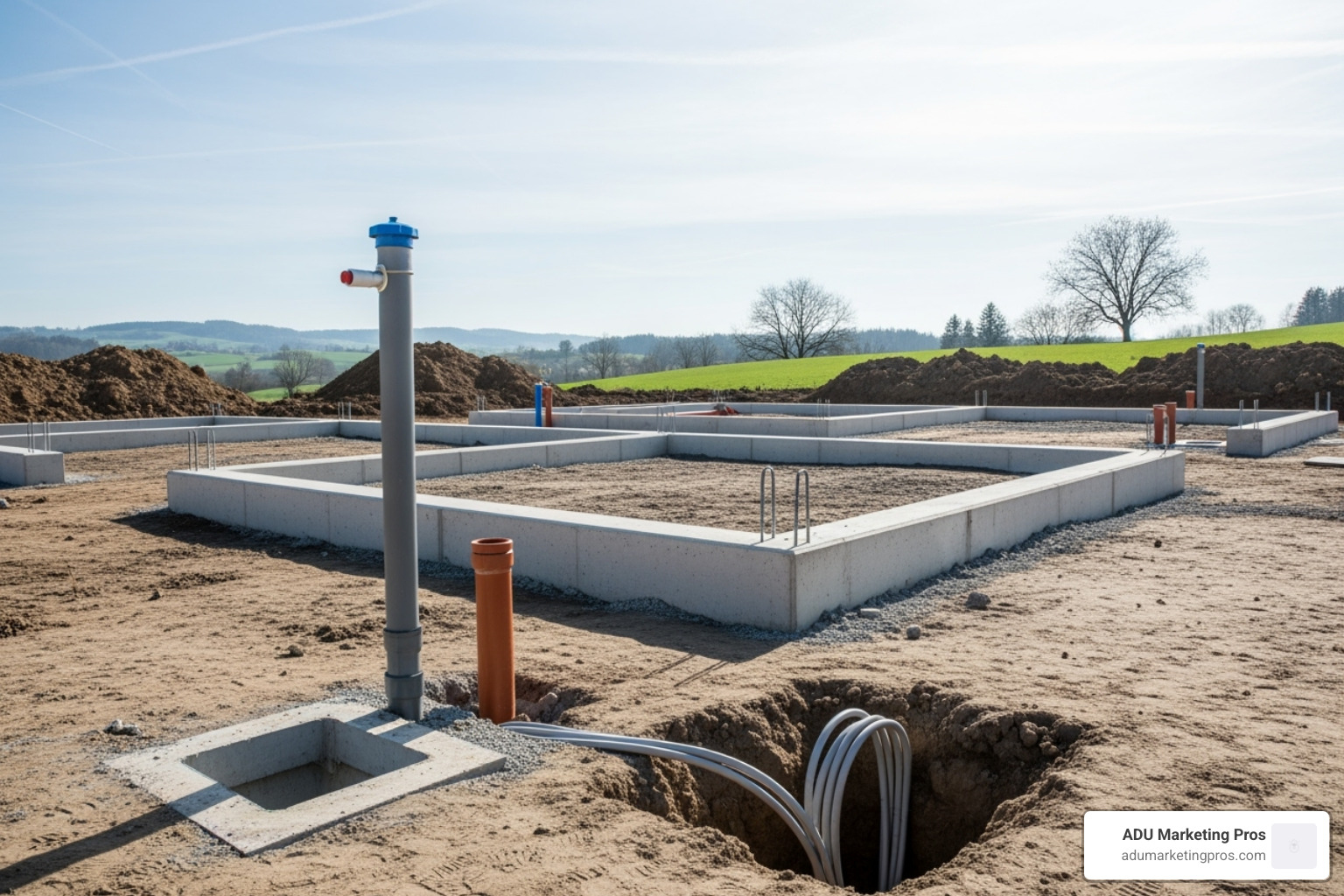
- Foundations: Your ADU needs a permanent foundation to rest on. The type will depend on your soil conditions, local building codes, and budget. Common options include a monolithic concrete slab, poured concrete perimeter footings, or a raised system of concrete piers. For sloped sites or areas with sensitive soil, screw piles (helical piers) are an excellent, low-impact alternative.
- Utility Connections: This is a critical and often underestimated part of the process. You will need to hire licensed plumbers and electricians to run trenches and install water, sewer (or septic), and electrical lines from your main house or the street to the ADU’s location. Planning this work early is essential to avoid delays and costly surprises.
Understanding the Full Cost of a Relocatable ADU
Relocatable ADUs are generally more affordable than site-built homes, but the advertised base price is only one component of the total investment. A realistic budget must account for both the unit and the site-specific work.
- Base Unit Price: The cost of the factory-built structure itself, typically including standard interior and exterior finishes.
- Delivery Fees: Transporting a large prefabricated unit is a specialized task. Costs can range from a few thousand to over ten thousand dollars, depending on the distance from the factory and the complexity of the route.
- Crane Hire: If a crane is needed to lift the unit over your house or other obstacles, this can add $2,000 to $10,000+ to the budget, depending on the crane size and time required.
- Site Preparation & Foundation: Costs for excavation, grading, and foundation work vary widely based on your property’s slope and soil, typically ranging from $10,000 to $30,000+.
- Utility Connections: The cost to hire plumbers and electricians to connect services can range from $5,000 to over $25,000, depending on the distance to the main lines and the complexity of the hookups.
- Permits and Fees: Local city or county fees for planning reviews, building permits, and impact fees are an unavoidable cost that can total several thousand dollars.
- Finishing Touches: Don’t forget to budget for landscaping, decks, pathways, and fencing to fully integrate the ADU with your property and make it feel like home.
Financing options are becoming more accessible and include personal loans, construction-to-permanent loans, or tapping into your home’s equity through a HELOC or cash-out refinance. Consulting a financial advisor and your ADU manufacturer can help you identify the best path for your situation. A thorough, line-item budget is the key to a successful and stress-free project.
Navigating the Rules: Permits and Regulations for Relocatable ADUs
Understanding and navigating the local rules for Accessory Dwelling Units (ADUs) is the most critical step in your project. While the term “relocatable” suggests simplicity and portability, these structures are permanent dwellings when installed and are therefore subject to the same local planning and building regulations as any other home.
The Approval Process Explained
In the United States, any habitable structure requires official approval from the local government, which is typically your city or county planning and building department. This process exists to ensure the building is safe for occupants, meets energy efficiency standards, and is sited appropriately on your property according to zoning laws.
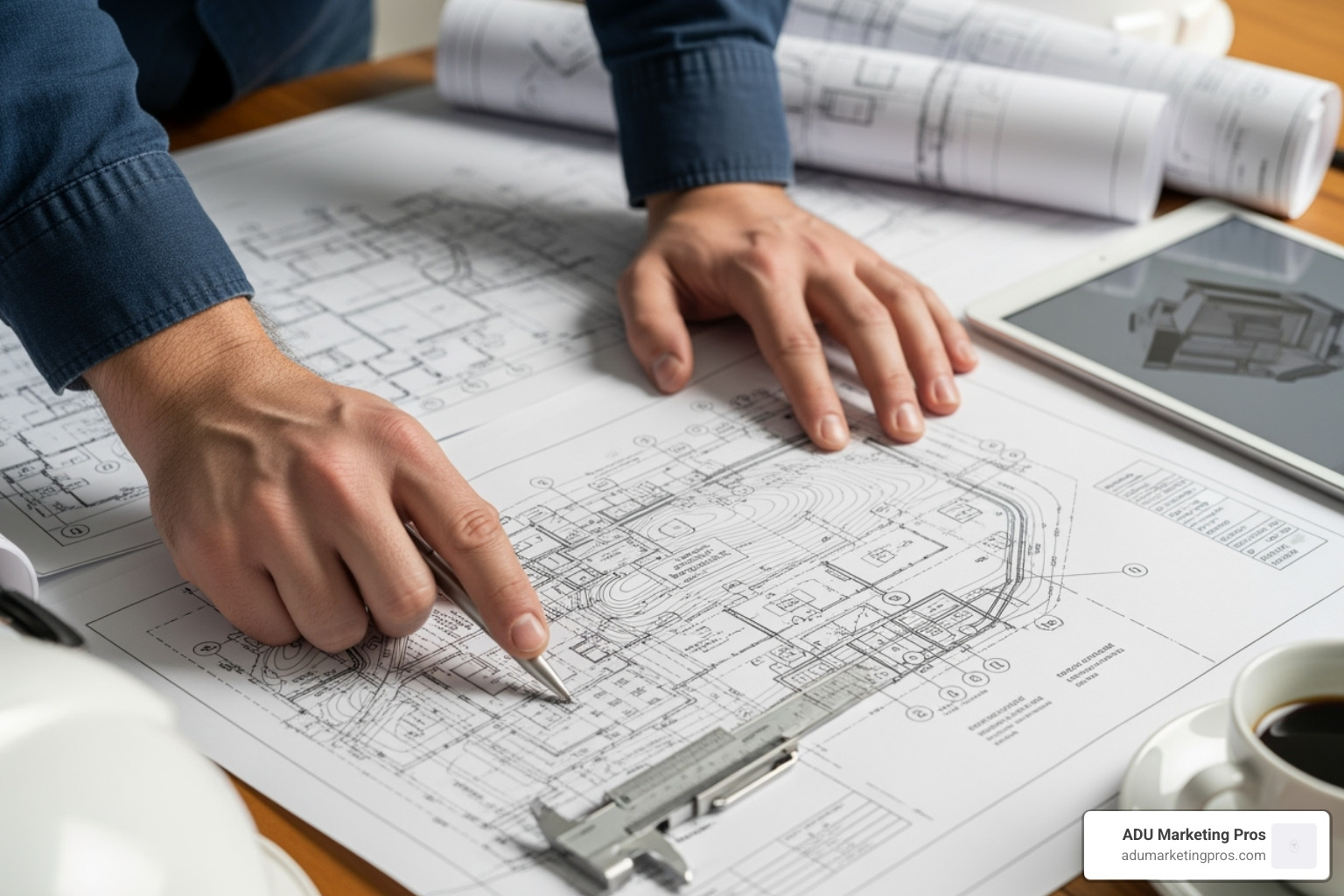
Even though your ADU is built in a factory, it must comply with the same state and local building codes as a traditional site-built home. Reputable manufacturers have their factories and plans certified to build to these codes (such as the International Residential Code or state-specific versions). Your local building department will still need to review these plans and inspect the on-site work, including the foundation and utility connections.
Your project must also meet local zoning requirements. These rules dictate where the ADU can be placed on your property (setbacks from property lines), the maximum allowable size and height, and parking requirements. Fortunately, many states have passed laws to streamline ADU approval, limiting the ability of local governments to deny projects that meet the criteria and mandating clear timelines for approval.
Our strongest recommendation is to contact your local planning department before you even start shopping for an ADU. They are the ultimate authority and can provide a checklist of the specific requirements for your property, helping you avoid costly mistakes and delays.
A Look at US Regulations
Regulations for ADUs vary significantly across the country, but states like California, Oregon, and Washington have led the way with progressive legislation designed to encourage their construction as a solution to the housing crisis. Professional organizations also provide excellent resources; the American Planning Association offers a comprehensive overview of ADU regulations and best practices.
In California, a prefabricated or modular ADU is treated as a permanent dwelling and must be installed on a permanent foundation. It is subject to the same rules as any other ADU, with state law superseding local ordinances that might be overly restrictive. For detailed official information, the California Department of Housing and Community Development (HCD) provides an invaluable resource on state laws and guidelines.
It is critical to distinguish a permanent, state-licensed modular ADU from a Tiny Home on Wheels (THOW). A THOW is legally considered a recreational vehicle (RV) and is governed by DMV and transportation codes, not building codes. While some progressive jurisdictions are creating new ordinances to allow THOWs as long-term residences, they generally cannot be used as permanent ADUs unless they are certified as a modular home, placed on a permanent foundation, and permitted as a permanent dwelling.
The bottom line is clear: never assume “relocatable” or “prefabricated” means “permit-free.” Performing due diligence with your local planning and building departments is the first and most important step in any successful ADU project.
Long-Term Ownership: Maintenance, Value, and Choosing a Builder
Your journey with a relocatable ADU continues long after the installation crew leaves. Making smart choices about your builder, understanding long-term maintenance, and planning your financial strategy will ensure your investment remains a valuable and functional asset for years to come.
Selecting the Right Partner
The manufacturer you choose is the single most critical factor in the quality, longevity, and ultimate success of your ADU project. Look beyond the glossy brochures and base price to find a truly reputable partner.
- Track Record and Experience: How long have they been building prefabricated homes? Do they specialize in ADUs? Review their portfolio and, if possible, visit a display model or a past client’s home to assess the build quality firsthand.
- Client Reviews and Testimonials: Search for independent reviews online. Testimonials provide invaluable insight into the builder’s communication, project management, timeliness, and after-sales support.
- Transparency and Process: A good manufacturer will be transparent about their entire process, from design and permitting to delivery and installation. Do they assist with the permit process? Is their pricing all-inclusive or full of potential add-ons?
- Credentials and Warranty: Ensure the builder is licensed and that their units are certified by a state or third-party agency to meet all relevant building codes. A comprehensive structural warranty (often 10 years or more) demonstrates confidence in their product and protects your investment.
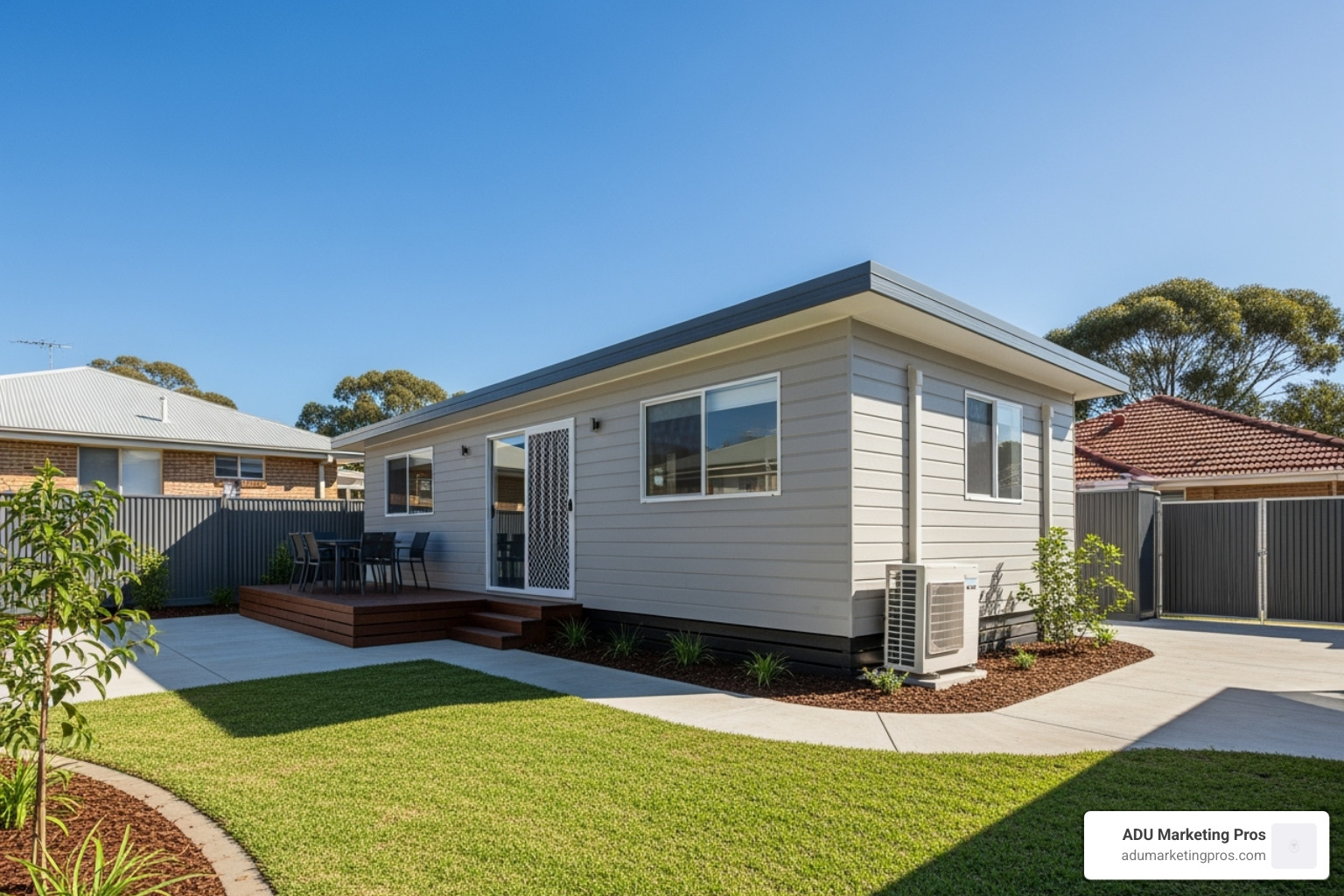
Future-Proofing Your Investment
A relocatable ADU is a dynamic asset that can adapt to your future needs. Understanding how to maintain it and leverage its unique financial characteristics is key.
Maintenance on these modern units is typically straightforward and often less demanding than on an older, larger home. The use of new, durable, low-maintenance materials reduces upkeep. Regular preventative checks of plumbing fixtures, HVAC filters, roof seals, and the exterior will keep your unit in top condition. Because they are built in a factory, access to systems for repairs can often be simpler than in a site-built home.
Insurance and Taxes: Your ADU will need to be insured. This is typically handled by adding a rider or endorsement to your existing homeowner’s policy to cover the new structure. Once the ADU is permitted and installed, your property will be reassessed for tax purposes. The value of the ADU will be added to your property’s assessed value, resulting in an increase in your annual property taxes.
The resale value proposition is unique. When you sell your property, a well-maintained ADU is a major selling point for buyers seeking rental income, a guest house, or a multi-generational living setup. But unlike a traditional addition, you also retain the option to sell the unit separately and have it moved, decoupling your investment from a single piece of land. This provides an exit strategy that is simply not possible with site-built construction.
From a sustainability perspective, prefabricated construction is inherently greener. The factory process dramatically reduces material waste, and the controlled environment ensures a tighter building envelope, leading to lower energy consumption for heating and cooling over the life of the home.
By choosing the right builder and properly maintaining your ADU, you are making a smart, flexible, and sustainable investment. For ADU construction firms looking to connect with homeowners, ADU Marketing Pros offers specialized strategies to highlight your expertise in this competitive market.
Frequently Asked Questions about Relocatable ADUs
Exploring a new type of housing solution naturally brings up many questions. Here are detailed answers to some of the most common inquiries we receive about relocatable ADUs.
How long does it take to install a relocatable ADU?
This is where relocatable ADUs have a major advantage over traditional construction. The total timeline can be broken into two concurrent phases:
- Off-Site Factory Construction (4-6 months): This phase begins after you finalize your design and sign a contract. The manufacturer builds your ADU in their factory. This timeline can vary based on the manufacturer’s backlog and your design’s complexity. During this entire period, your property remains completely undisturbed.
- On-Site Preparation (1-3 months): While the factory builds your unit, work begins at your property. This includes site clearing, grading, foundation work, and trenching for utilities. This phase is highly dependent on contractor availability and the permitting process.
Once the completed unit arrives, the on-site installation is remarkably fast. The ADU is craned into place on its foundation, a process that often takes less than a day. The final step is connecting the unit to the prepared water, sewer, and electrical lines, and completing any minor seam work or touch-ups. From delivery to move-in ready, the final on-site process can often be completed in just one to three weeks, a fraction of the 6-12 months of continuous on-site disruption required for a traditional build.
Can I move my ADU to a new property?
Yes, this is the defining feature and a primary benefit of a relocatable ADU. While it is a significant undertaking that requires professional assistance, the process is straightforward. A specialized crew will disconnect the utilities, prepare the unit for transport, and use a crane to lift it from its foundation onto a specialized transport vehicle. After you prepare the new site with a suitable foundation and utility hookups, the unit is delivered and reinstalled.
The cost to move an ADU can be substantial, often ranging from $15,000 to $40,000 or more, depending on the distance, unit size, and crane requirements. However, this cost is often far less than the value of the ADU itself. This portability provides incredible flexibility. If you move, you can take your high-value asset with you. If your family’s needs change, you can sell the unit to another homeowner. This adaptability makes a relocatable ADU a versatile asset that isn’t permanently tied to one piece of land.
Do I always need a permit for a relocatable ADU?
Yes, in almost all circumstances, a permit is required. This is the most critical point for potential buyers to understand. Any structure intended for human habitation, whether it’s built on-site or in a factory, must be legally approved and permitted by your local city or county. This ensures the ADU is safe, structurally sound, and meets all relevant building, energy, and zoning codes.
Here’s the key distinction:
- A Relocatable ADU (or modular ADU) intended as a permanent secondary dwelling must be installed on a permanent foundation and is permitted as real property. It must meet the same building codes as a site-built home. The term “relocatable” refers to the ability to move it later, not the ability to bypass initial regulations.
- A Tiny Home on Wheels (THOW) is legally classified as an RV. While a THOW may not require a building permit for its construction (it’s governed by RV standards), using it as a full-time residence is often restricted by local health and zoning ordinances. Placing a THOW on your property to serve as a permanent dwelling almost always requires you to remove the wheels, place it on a permanent foundation, and have it permitted as a standard ADU, which it may not be built for.
Always consult your local planning department before you purchase a unit. They are the definitive source for the rules in your area and can save you from significant fines, legal headaches, and the potential order to remove an unpermitted structure.
Conclusion
Relocatable ADUs represent a significant and intelligent evolution in how we approach adding living space to our properties. In an era defined by housing shortages and a need for greater adaptability, they offer a powerful combination of speed, predictable costs, quality control, and long-term flexibility that traditional construction struggles to match. By moving the complex construction process into a controlled factory setting, relocatable ADUs minimize the lengthy disruption to homeowners’ lives and deliver a superior product in a fraction of the time.
Whether your goal is to support your family with multi-generational living, generate a steady stream of rental income, or create a dedicated and professional workspace, these innovative homes provide a practical and highly efficient path forward. The unique ability to move the dwelling to a new property or sell it as a separate asset provides a level of financial security and freedom that is truly game-changing in today’s dynamic real estate market.
While navigating local permits and planning the site logistics requires careful attention and due diligence, the overwhelming benefits are clear. The future of residential housing is adaptable, sustainable, and efficient—and relocatable ADUs embody all three of these principles. They are not just a trend; they are a durable solution to modern housing challenges.
For ADU construction and architecture firms, this rapidly growing market presents a massive opportunity. Homeowners are actively seeking these solutions but need trusted, experienced experts to guide them through the process. This is where specialized marketing becomes essential. ADU Marketing Pros helps construction firms stand out from the competition by showcasing their expertise, building trust, and connecting them with qualified clients who value quality craftsmanship and a seamless customer experience.
Ready to grow your ADU business and become a leader in this expanding market? Learn more about marketing for modern prefab granny flats and find out how we help firms like yours thrive.