
Understanding San Jose ADU Parking: The Rules That Matter
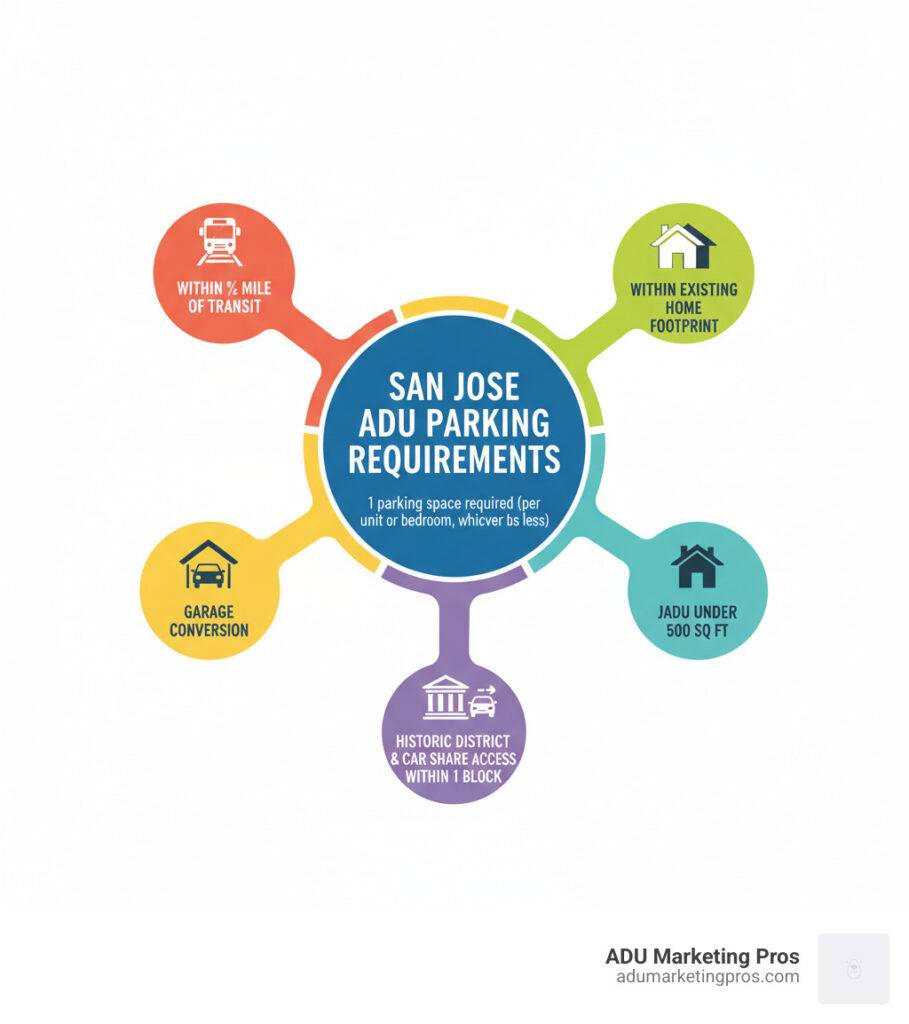
San Jose ADU parking requirements are simpler than most homeowners expect. Here’s what you need to know right now:
Quick Answer: Do You Need Parking for Your San Jose ADU?
- Standard Rule: 1 parking space per unit OR per bedroom (whichever is less)
- No Parking Required If:
- Your property is within ½ mile of public transit (bus stop, Light Rail, Caltrain)
- You’re converting an existing garage or carport into an ADU
- Your ADU is entirely within your existing home’s interior space
- Your property is in an architecturally/historically significant district
- On-street parking permits are required but not offered to ADU occupants
- A car share vehicle is located within one block
- JADUs (Junior ADUs): Never require parking
- Tandem parking on driveways: Counts toward the requirement
If you’re planning an ADU in San Jose, parking rules can feel like a maze of regulations and exceptions. The good news? Most ADU projects in San Jose actually qualify for parking exemptions—meaning you may not need to provide any additional parking spaces at all.
The confusion comes from the fact that San Jose’s ADU parking rules are shaped by both California state law and local ordinances. These regulations have changed significantly since 2018, when new state legislation made it much easier to build ADUs without adding parking. Whether you’re converting your garage, building a new detached unit, or creating a small JADU within your home, the parking requirements vary based on your ADU type, location, and proximity to transit.
This guide breaks down exactly what San Jose requires for ADU parking, when you can skip parking entirely, and how to verify your property’s specific situation. We’ll cover everything from the basic one-space rule to the key exemptions that apply to most San Jose properties.
The General Rule: What San Jose Typically Requires for ADU Parking
Let’s start with the baseline. Before we dive into all the ways you might skip parking requirements entirely, it’s helpful to understand what San Jose would typically ask for if none of those exemptions applied to your property.
The general San Jose ADU parking requirement is refreshingly straightforward: one parking space per unit or per bedroom, whichever is less. This rule comes from California state law and is designed to be reasonable, not burdensome.
Here’s what that means in practice: If you’re building a studio ADU, you need one parking space. Building a one-bedroom ADU? Still just one space. Planning a two-bedroom ADU? You still only need one space, because “one per unit” is less than “two per bedroom.” The city takes the lower number, which makes the math pretty simple for most homeowners.
Standard Parking Space Mandate
When San Jose says “one parking space,” they’re talking about an off-street parking solution—a dedicated spot on your property rather than relying on street parking. The goal is to ensure new ADUs don’t add pressure to already tight neighborhood parking situations.
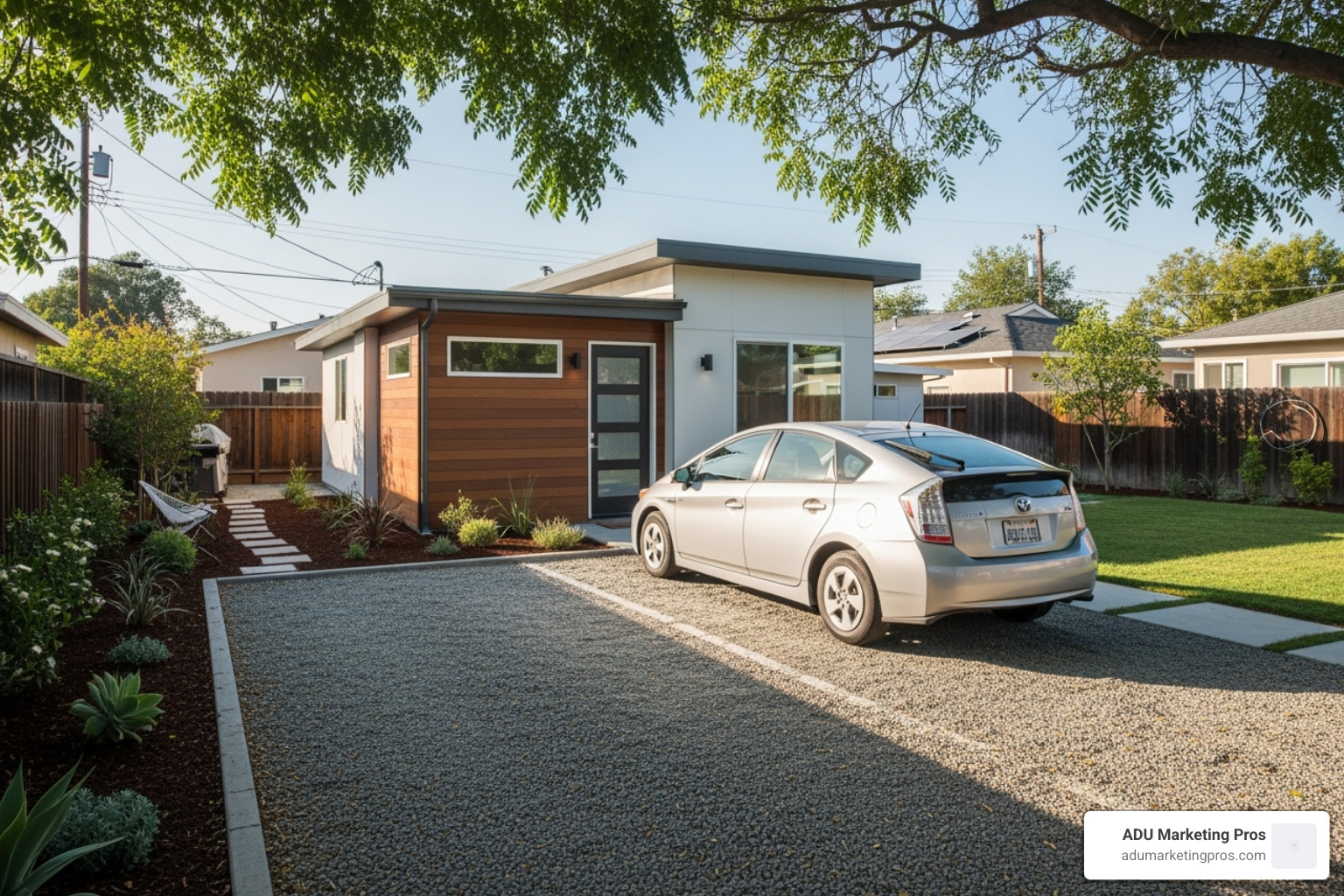
This required space needs to be on a paved surface. It doesn’t need to be elaborate or expensive, just functional. A simple concrete or asphalt pad works perfectly fine. You’re not expected to build a fancy garage or carport; an open-air parking spot meets the requirement completely.
The “whichever is less” rule is actually a win for homeowners. It came from recent state legislation specifically designed to encourage ADU development. Before these changes, parking requirements were often much more restrictive and made ADU projects unnecessarily complicated.
Flexible Parking Solutions
Here’s where things get even better. San Jose offers some remarkably practical ways to meet the parking requirement without major construction or expense.
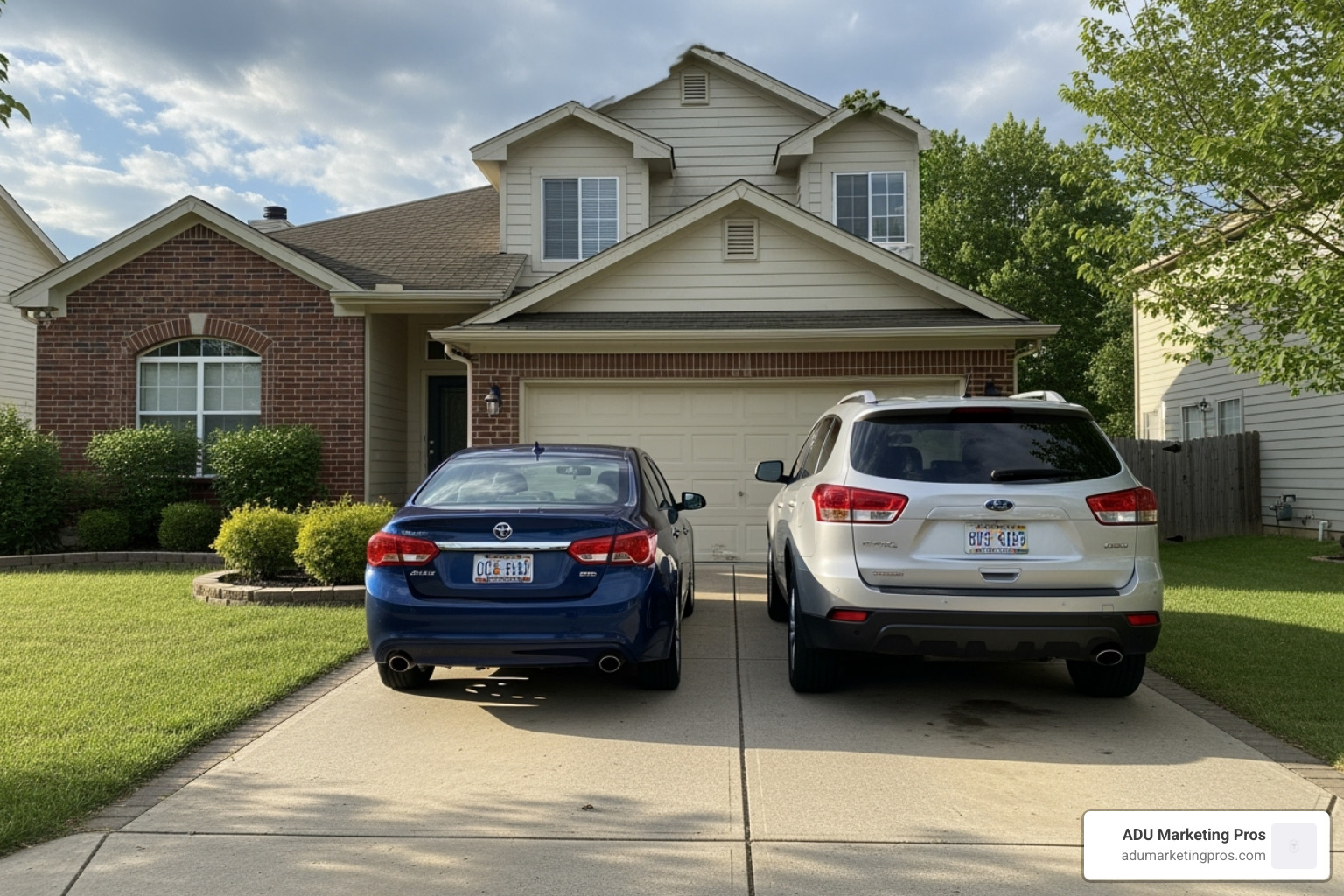
Tandem parking is your friend. If you have a driveway where one car can park behind another, that counts as two parking spaces. For many homeowners, this means your existing driveway already provides everything you need for both your primary home and your new ADU. No need to pour new concrete, tear up your yard, or lose precious outdoor space.
You can also place required parking spaces in setback areas—those portions of your property that typically need to stay clear of structures. This flexibility helps you make the most of your lot without sacrificing your backyard or garden space. The city understands that urban lots are tight, and they’ve built in practical solutions.
Another piece of good news: covered parking isn’t required. An open spot on your driveway works just as well as a space under a roof. This saves both money and construction complexity.
And here’s something that often surprises homeowners: guest parking is not required for ADUs. You only need to provide parking for the ADU occupant, not for their visitors. This keeps the requirements focused and manageable.
The bottom line? If you have a standard driveway, you probably already have the parking you need. The city has designed these rules to work with typical San Jose properties, not against them.
The Big Exemptions: When You Don’t Need Any ADU Parking
This is where things get really exciting for San Jose homeowners! While understanding the general parking rule is important, here’s the truth: a surprisingly large number of ADU projects in San Jose actually qualify for exemptions that eliminate parking requirements entirely. Yes, you read that right—no additional parking needed at all.
These parking waivers aren’t just bureaucratic loopholes. They’re deliberate policy decisions by both California and San Jose to make it easier for homeowners to add much-needed housing. Understanding these exemptions can save you thousands of dollars in construction costs, preserve your yard space, and dramatically simplify your permit process. Let’s explore when you can skip the parking headache altogether.
Proximity to Public Transit
The transit proximity exemption is perhaps the most straightforward way to avoid San Jose ADU parking requirements, and it applies to more properties than you might think.
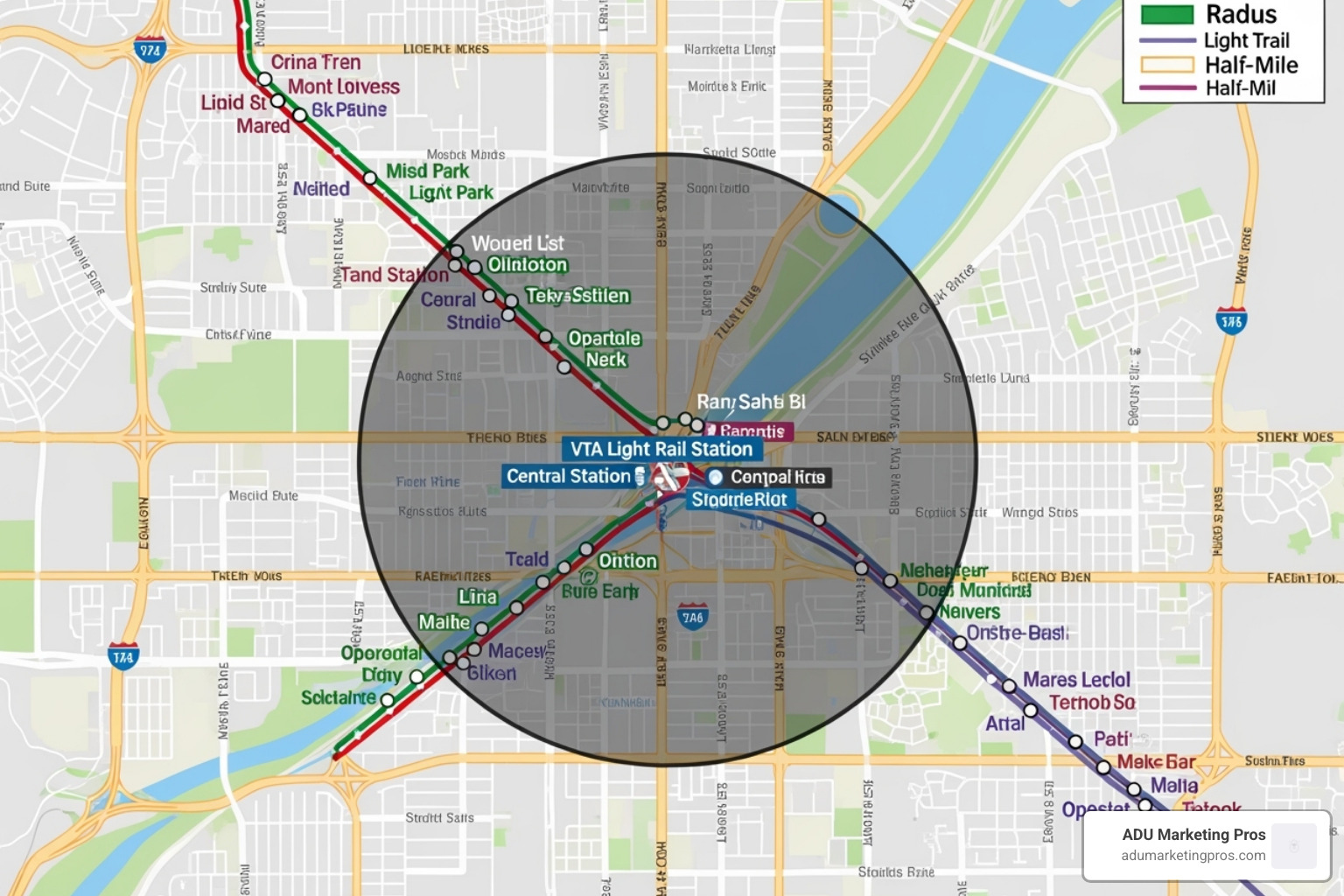
If your property sits within a half-mile walking distance of public transit, you’re completely exempt from providing any ADU parking. This includes proximity to VTA bus stops, Light Rail stations, Caltrain stations, and other major transit corridors throughout the city. Given San Jose’s extensive public transit network, this exemption covers a significant portion of the city’s residential areas.
The key phrase here is “walking distance.” This doesn’t mean drawing a half-mile circle on a map—it means the actual distance someone would walk along sidewalks and streets to reach the transit stop. The city recognizes that residents living near transit options are more likely to rely on public transportation, bikes, or ride-sharing instead of owning personal vehicles. It’s smart urban planning that supports both housing development and environmental sustainability.
To verify if your property qualifies, you’ll want to use a mapping tool to measure the actual walking route to the nearest qualifying transit stop. Many homeowners are pleasantly surprised to find they’re within this magic half-mile radius, especially in neighborhoods along the Light Rail lines or near major bus corridors.
Garage and Carport Conversions
Here’s the exemption that’s changed the game for countless San Jose homeowners: if you’re converting an existing garage, carport, or covered parking structure into an ADU, state law says you don’t need to provide any replacement parking. Period.
This is huge. Before state legislation like AB 68 changed the rules, converting your garage meant you’d have to somehow replace those parking spaces elsewhere on your property. For many homeowners on smaller lots, this requirement alone made garage conversions impossible or prohibitively expensive. You’d be tearing up your yard to build a parking pad just so you could convert a structure that was already there.
Now, that dusty garage full of boxes and rarely-used sporting equipment can become a beautiful, income-generating living space without worrying about where to park your cars. You’re maximizing existing structures rather than consuming more of your property. This exemption has sparked a wave of garage conversions across San Jose, and for good reason—it’s often the most cost-effective way to add an ADU while preserving your outdoor space.
Other Key Exemptions
Beyond transit proximity and garage conversions, several other scenarios can free you from parking requirements entirely.
If your property is located in an architecturally and historically significant historic district, your ADU is generally exempt from parking requirements. This exemption helps preserve the unique character of these neighborhoods while still allowing homeowners to add thoughtful housing. You can find more details about these and other exemptions in the Official California ADU Information from the state’s Department of Housing and Community Development.
An ADU created entirely within your existing home’s footprint also typically skips the parking requirement. This applies when you’re converting interior space in your primary residence or an existing accessory structure—not adding square footage, just reimagining what’s already there.
In neighborhoods where on-street parking permits are required but specifically not offered to ADU occupants, the ADU is exempt from parking requirements. This prevents the frustrating scenario where the city mandates parking but then prohibits the most obvious solution.
Finally, if a car share vehicle (like those offered by car-sharing services) is located within one block of your property, your ADU may qualify for an exemption. This forward-thinking provision encourages shared mobility solutions and reduces the need for every household to own multiple vehicles.
These exemptions collectively mean that the majority of ADU projects in San Jose can move forward without the added expense and complexity of creating new parking spaces. It’s a reflection of both the city’s and state’s serious commitment to encouraging ADU development as a practical solution to California’s housing shortage. For many homeowners, these exemptions transform an ADU from a complicated, expensive project into an achievable reality.
How Your ADU Type Affects San Jose ADU Parking Rules
The type of ADU you’re planning makes a real difference when it comes to parking requirements in San Jose. A brand-new backyard cottage has different rules than a converted bedroom inside your house. Understanding these distinctions will save you time and help you plan more effectively from the start.
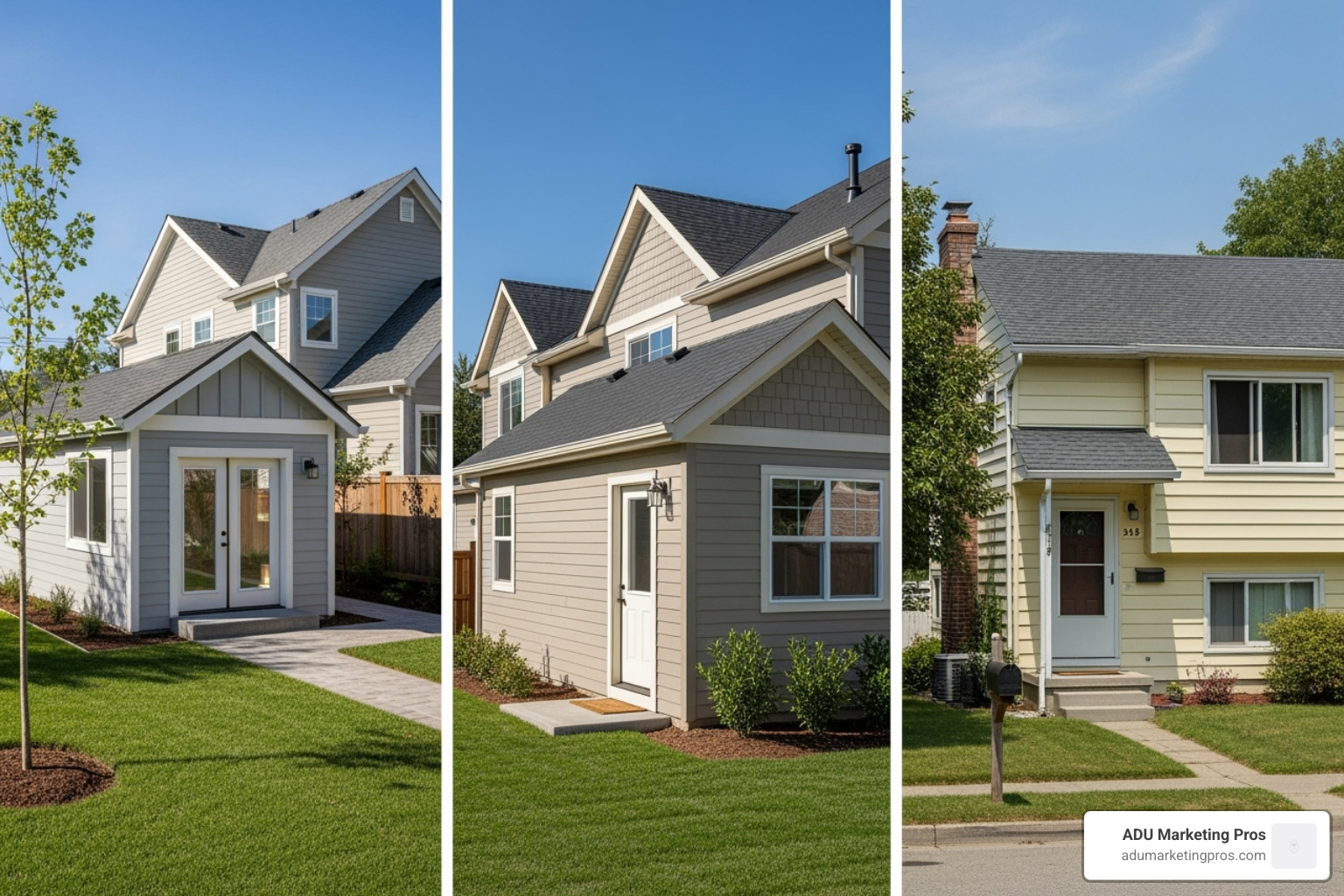
The size, location, and whether you’re building new or converting existing space all factor into what the city requires. Let’s break down how each ADU type affects your San Jose ADU parking situation.
Detached & Attached ADU Parking
When you’re building a completely new detached ADU in your backyard or adding an attached ADU as an extension to your primary home, the standard parking rule typically kicks in. You’ll need to provide one parking space per unit or per bedroom, whichever is less. This applies to any ADU that involves new construction rather than converting something that already exists.
But here’s where it gets interesting. Even though these are new construction projects, they’re still fully eligible for all those exemptions we talked about earlier. If your shiny new detached ADU sits within a half-mile of a VTA bus stop, you won’t need to provide parking at all. The same goes if you’re in a historic district or if any other exemption applies to your property.
The key takeaway? New construction doesn’t automatically mean you need parking. The exemptions can override the general rule, regardless of whether you’re building from scratch or not. Many homeowners assume that building a brand-new ADU means they’ll definitely need to add parking, but that’s often not the case in San Jose.
The JADU Exception: A Pass on San Jose ADU Parking
Junior Accessory Dwelling Units get special treatment when it comes to parking, and it’s wonderfully simple: JADUs never require parking. Not sometimes, not with exemptions—never.
A JADU is a smaller unit, limited to 500 square feet or less, that must be created entirely within the existing footprint of your primary residence. Think of converting a spare bedroom with its own entrance, or carving out a studio space from a larger room. Because JADUs are contained within your home and are compact by design, the state decided they shouldn’t face any parking requirements whatsoever.
This makes JADUs an incredibly attractive option for homeowners who want to add income potential or housing for a family member without dealing with parking logistics. You’re working within space you already have, and you don’t need to worry about where anyone will park. For complete details on San Jose’s specific JADU rules, including the exact size limits and configuration requirements, check out the San Jose JADU Ordinance Details.
Special Considerations for Multi-Family Properties
ADUs aren’t just for single-family homes. If you own a duplex, triplex, or apartment building in San Jose, you have some interesting options too, with their own parking considerations.
Multi-family properties can convert existing non-livable space like storage rooms, boiler rooms, or laundry facilities into ADUs. San Jose allows you to add attached ADUs equivalent to up to 25% of your existing units. So if you own an eight-unit building, you could potentially create two ADUs through conversions. On top of that, you’re also allowed to build up to two detached ADUs on the property.
The parking rules for these multi-family ADUs generally follow the same exemption framework we’ve covered. Converting non-livable space within the existing building typically means no additional parking is required. If your property is near transit, that exemption applies here too. This approach recognizes that urban multi-family properties often have different parking dynamics than suburban single-family homes, and it makes adding density more practical without requiring massive parking expansions that might not even be physically possible on a built-out urban lot.
Staying Current and Getting Official Answers
Here’s the thing about city regulations: they can change, and the last thing you want is to base your entire ADU plan on outdated information. When it comes to San Jose ADU parking, the stakes are too high to rely on what you read in a neighborhood Facebook group or what your cousin’s friend said they did three years ago. The good news? The City of San Jose has actually made it pretty straightforward to get accurate, official answers.
We’ve worked with enough homeowners to know that navigating bureaucracy can feel intimidating. But think of it this way: a few minutes spent checking the official sources now can save you weeks of delays and thousands of dollars in redesigns later. The city wants your ADU project to succeed, and they’ve created some genuinely helpful resources to guide you through the process.
Official City of San Jose Resources
The City of San Jose has put together some surprisingly useful tools for ADU homeowners. These aren’t buried in legalese or hidden behind complicated government websites—they’re actually designed to help regular people figure out what they need to do.
Start with the ADU Universal Checklist, which the city calls Bulletin #210. This isn’t just a vague overview—it’s a comprehensive document that walks you through everything your ADU project needs to address. It covers property qualifications, development standards, fire safety requirements, and yes, parking rules specific to your situation. Think of it as your roadmap through the entire process. You can find it on the city’s website, and it’s worth printing out and keeping handy as you plan your project.
The SJPermits.org portal is your digital home base for all things permits. This is where you’ll submit your plans electronically, track your application status, and find all the necessary forms. The interface is actually pretty intuitive—far better than what you might expect from a government website. You can upload documents, communicate with plan reviewers, and see exactly where your application stands in the review process.
One resource that often surprises homeowners is the ADU Ally program. This is essentially a dedicated team of city staff who are there specifically to help with ADU questions. They can provide feedback on your project concept before you invest in full architectural plans, clarify confusing regulations, and help you understand whether your property qualifies for parking exemptions. It’s like having an insider who actually wants to help you succeed. You can reach them through the city’s main ADU webpage.
For the most comprehensive overview and direct access to all current regulations, bookmark this page: View All San Jose ADU Regulations. The city updates this regularly as state laws change and local ordinances evolve. It’s your single best source for accurate, current information about San Jose ADU parking and every other aspect of the permitting process.
Verifying Your Property’s Status
Understanding the general rules is one thing. Applying them to your specific property is where things get real. Your address might have unique characteristics that affect whether you need parking for your ADU, and it’s crucial to check these before you fall in love with a particular design.
Start by checking your property’s zoning district. While most residential properties in San Jose allow ADUs, your specific zone might have particular requirements or restrictions. The zoning also helps determine setback requirements, which can affect where you might place a parking space if one is needed.
Next, investigate whether your property sits in any special designation areas. Flood zones and geohazard zones can restrict development and might impact where you can build or park. If your home is listed on the City’s Historic Resources Inventory or sits within an architecturally significant district, that’s actually good news for parking—it’s an exemption! However, it does mean you’ll face additional design review to ensure your ADU fits the neighborhood’s character.
Don’t forget to check for easements on your property. These are legal rights that utility companies or other entities might have to access portions of your lot. An easement might restrict where you can build or where a parking space can go, even if you technically have room for one.
The City of San Jose provides online mapping tools where you can enter your address and see most of these designations right away. It’s not perfect—sometimes you’ll need to call the Planning Division to confirm details—but it gives you a solid starting point. Combine these mapping tools with the ADU Universal Checklist, and you’ll have a pretty clear picture of what applies to your property.
If you’re still uncertain after checking online resources, don’t hesitate to reach out to the ADU Ally program or schedule a consultation with the Planning Division. A quick conversation can clarify whether your property qualifies for transit proximity exemptions, whether that old garage can be converted without replacement parking, and what documentation you’ll need to prove your exemption status. These conversations happen every day, and the staff have heard every question before.
The bottom line? Do your homework with official sources. Your property is unique, and taking the time to verify its specific status will make your entire ADU journey smoother. It’s the difference between confidently submitting plans you know will be approved and crossing your fingers hoping you got the parking requirements right.
Conclusion
So, where does all this leave you? If you’ve made it this far, you now know more about San Jose ADU parking than most people planning to build one! And here’s the beautiful truth we’ve uncovered together: the rules are actually designed to help you, not hinder you.
Let’s bring it all home. Yes, there’s technically a baseline requirement of one parking space per unit or per bedroom (whichever is less). But the reality on the ground? Most ADU projects in San Jose qualify for at least one exemption. If you’re converting that old garage that’s been collecting boxes and forgotten bicycles, you’re golden—no replacement parking needed. Live within a half-mile walk of a VTA bus stop, Light Rail station, or Caltrain? You’re covered. Planning a cozy JADU within your existing home? Parking isn’t even on the table.
These exemptions aren’t bureaucratic loopholes; they’re intentional policy decisions. San Jose and California recognize that we need more housing, and that parking requirements have historically been one of the biggest barriers to creating it. The city has acceptd this progressive approach, and it shows in how accessible ADU development has become.
The most important takeaway? Don’t guess. Don’t rely solely on what your neighbor told you or what you read in a forum three years ago. Always verify your specific property’s situation with the City of San Jose’s official resources. Check out their ADU regulations page, download the Universal Checklist, and use those online mapping tools to see if you’re near transit or in a historic district. The ADU Ally program exists specifically to answer your questions—use it!
For professionals in the ADU construction and architecture world, this knowledge is your competitive edge. When you can confidently guide a homeowner through the parking maze, explaining exactly why their garage conversion won’t need replacement spaces or how their proximity to transit saves them thousands in site work, you’re not just a contractor—you’re a trusted advisor. That’s the kind of expertise that wins projects and builds lasting client relationships.
At ADU Marketing Pros, we help firms like yours communicate this expertise to the homeowners who need it most. We understand that in San Jose’s competitive ADU market, standing out means demonstrating deep knowledge of these exact regulations and showing clients you can steer them smoothly. If you’re curious about how other parking requirements might affect your projects across California, learn more about ADU parking requirements on our site.
Building an ADU in San Jose is more achievable than ever, and parking doesn’t have to be the roadblock you feared. With the right information and the right team, you’ll be adding valuable housing to your property—and maybe even wondering why you didn’t do it sooner.