
Why Single Garage Conversions Are California’s Smartest Home Investment
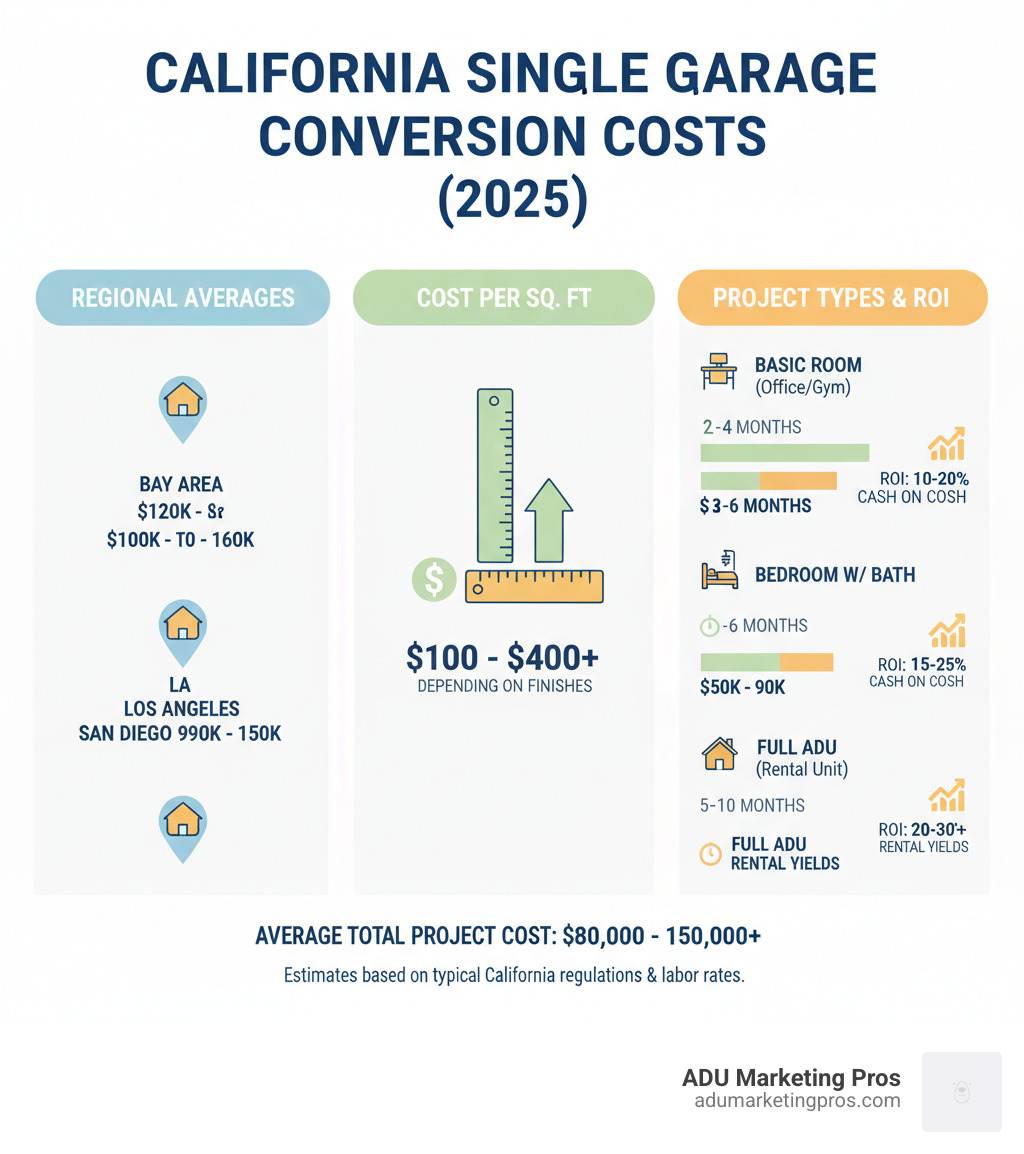
How much does a single garage conversion cost in California? The price can range from as little as $20,000 for a simple, non-habitable space to over $150,000 for a full-fledged Accessory Dwelling Unit (ADU). Most homeowners find their projects land somewhere between $80,000 and $120,000 for a high-quality, fully permitted living space.
Quick Cost Breakdown:
- Basic Conversion (Office/Gym): $20,000-$45,000
- Bedroom with Bathroom: $50,000-$90,000
- Full ADU Rental Unit: $80,000-$150,000+
- Cost Per Square Foot: $100-$400+
In the face of California’s relentless housing crisis and soaring property values, homeowners are seeking creative and cost-effective solutions. State-level legislation has actively encouraged the development of ADUs, recognizing them as a key strategy to increase housing density. This favorable legal landscape makes converting an underutilized single-car garage one of the most financially savvy home improvements a Californian can undertake. These projects consistently offer a superior return on investment (ROI) compared to ground-up additions, as they leverage an existing structure to minimize costs.
A typical single garage, measuring between 240 and 400 square feet, provides the perfect canvas for a variety of uses, from a dedicated home office to a private guest suite or a revenue-generating rental unit. While California’s stringent building codes—particularly concerning seismic safety, energy efficiency (Title 24), and fire safety—do elevate costs compared to other states, they also guarantee that your conversion is a safe, durable, and highly valuable asset. Your final budget will be a function of your project’s complexity, the existing condition of your garage, your specific location within the state, and the quality of materials you select.
How Much Does a Single Garage Conversion Cost in California?
When California homeowners ask, “how much does a single garage conversion cost,” the answer is a spectrum influenced by ambition, location, and quality. A project can start at $20,000 for a basic home office and climb beyond $150,000 for a luxury ADU. The most common range for a fully permitted, high-quality conversion is between $80,000 and $120,000. These figures are notably higher than the national average, a direct result of California’s rigorous building standards for seismic retrofitting, Title 24 energy efficiency mandates, and significantly higher labor and material costs in its major metropolitan areas.
Regional costs vary significantly across the Golden State, driven by local labor markets, demand, and municipal fees. A full ADU conversion in the hyper-competitive Bay Area (e.g., San Jose, Palo Alto, Oakland) can easily command $120,000 to $180,000. In Los Angeles County, where demand is also intense, projects typically range from $100,000 to $160,000. Meanwhile, San Diego and surrounding areas are often slightly more budget-friendly, with comprehensive conversions costing between $90,000 and $150,000.
Cost Per Square Foot Breakdown
Budgeting by the square foot provides a more granular view of potential expenses. For a typical 240-400 sq ft single garage, the level of finish is the primary determinant of the per-square-foot cost.
- Basic Finishes ($100-$200/sq ft): This tier covers the essentials for a functional, non-ADU space. It includes basic R-13/R-19 insulation, standard drywall, builder-grade LVP or carpet flooring, and minimal electrical work (a few new outlets and lights). This is ideal for a home office, gym, or playroom.
- Mid-Range Finishes ($200-$300/sq ft): This is the sweet spot for most homeowners, especially for guest suites. It includes upgraded spray foam or high-density batt insulation, improved soundproofing, higher-quality flooring, a more robust electrical subpanel, and better fixtures. This level accommodates the addition of a bathroom with standard finishes.
- High-End Finishes ($300-$400+/sq ft): This premium tier is for luxury ADUs. It features custom cabinetry, quartz or granite countertops, hardwood or premium tile flooring, top-of-the-line appliances, designer lighting and plumbing fixtures, and extensive utility upgrades for a truly independent and high-end rental unit or in-law suite.
Attached vs. Detached Single Garage Cost Differences
The location of your garage relative to your main house is a major cost factor. An attached garage is almost always less expensive to convert. It shares at least one wall and often a foundation and roofline with the main residence, which simplifies structural work and weatherproofing. More importantly, its proximity drastically reduces the cost of running electrical, water, and sewer lines.
In contrast, a detached garage conversion is frequently 30-50% more expensive. The separation requires creating a completely independent, weatherproofed, and serviced structure. Key additional costs include:
- Utility Trenching: A significant expense, often costing $2,500-$6,000+, to dig trenches from the main house to the garage for water, sewer, and electrical lines.
- Foundation Upgrades: Detached garage slabs may be in poorer condition or require more extensive work to meet residential standards.
- Full Exterior Finishing: All four walls and the roof need to be properly insulated, weatherproofed, and finished with siding and roofing material, unlike an attached garage which shares some of these elements.
- Separate HVAC System: While common for all conversions, it’s non-negotiable for a detached unit, adding to the overall cost. For more on specific requirements, see our guide on ADU Building Requirements.
Key Factors Influencing Your Conversion Budget
To accurately forecast your project’s cost, you must understand the primary drivers behind the final price tag. The ultimate answer to how much does a single garage conversion cost is determined by a combination of project scope, the garage’s existing condition, your geographic location, the quality of materials, and prevailing labor rates.
The Scope of Your Project: From Simple Room to Full ADU
Your intended use for the space is the single most significant factor influencing the budget. The more it needs to function like a home, the more it will cost.
- Basic Room Conversion ($20,000–$45,000): This is the most straightforward conversion, perfect for a home office, gym, or art studio. The work primarily involves insulating walls and ceiling, installing drywall and flooring, upgrading electrical circuits for outlets and lighting, and adding a climate control system like a mini-split. Because there is no plumbing, the permit process is simpler and costs are kept to a minimum.
- Full Living Space or ADU ($80,000–$150,000+): The moment you add a bathroom or a kitchen, the project’s complexity and cost escalate dramatically. The space is now classified as a habitable living unit or a full-fledged Accessory Dwelling Unit (ADU). This triggers a host of additional requirements, including extensive plumbing for water supply and sewer drainage, dedicated kitchen ventilation, egress windows for bedrooms, and adherence to all residential building codes. While this path is significantly more expensive, it also unlocks the highest potential for return on investment through rental income or a substantial increase in property value. Learn more about the process in our guide on Garage Conversion to ADU.
The Existing Garage’s Size and Condition
The current state of your garage is a major variable that can hide significant costs. A thorough inspection is critical before budgeting. Look for:
- Foundation and Slab Issues: Garage floors are almost always sloped to allow for drainage and must be leveled to create a proper living space. This can cost anywhere from $300 for a simple self-leveling compound application to over $5,400 for a new concrete overlay. More serious issues like major cracks or foundation settling will require costly engineering and repair.
- Structural Integrity: Is the framing adequate? Many garage walls and roof structures were not built to support a finished living space and may need reinforcement with new studs, joists, or shear walls to meet seismic and load-bearing codes.
- Utility Systems: The single electrical circuit in a typical garage is insufficient for a living space. A full upgrade, including a new subpanel, is almost always necessary. Existing plumbing is usually non-existent.
- Hazardous Materials: Garages built before the 1980s may contain asbestos in drywall, insulation, or flooring, as well as lead-based paint. Professional abatement is required by law and can add several thousand dollars to your budget.
- Water Damage and Pests: Check for signs of leaks, mold, or termite damage, which must be fully remediated before any new construction begins.
How Much Does a Single Garage Conversion Cost Based on Finishes?
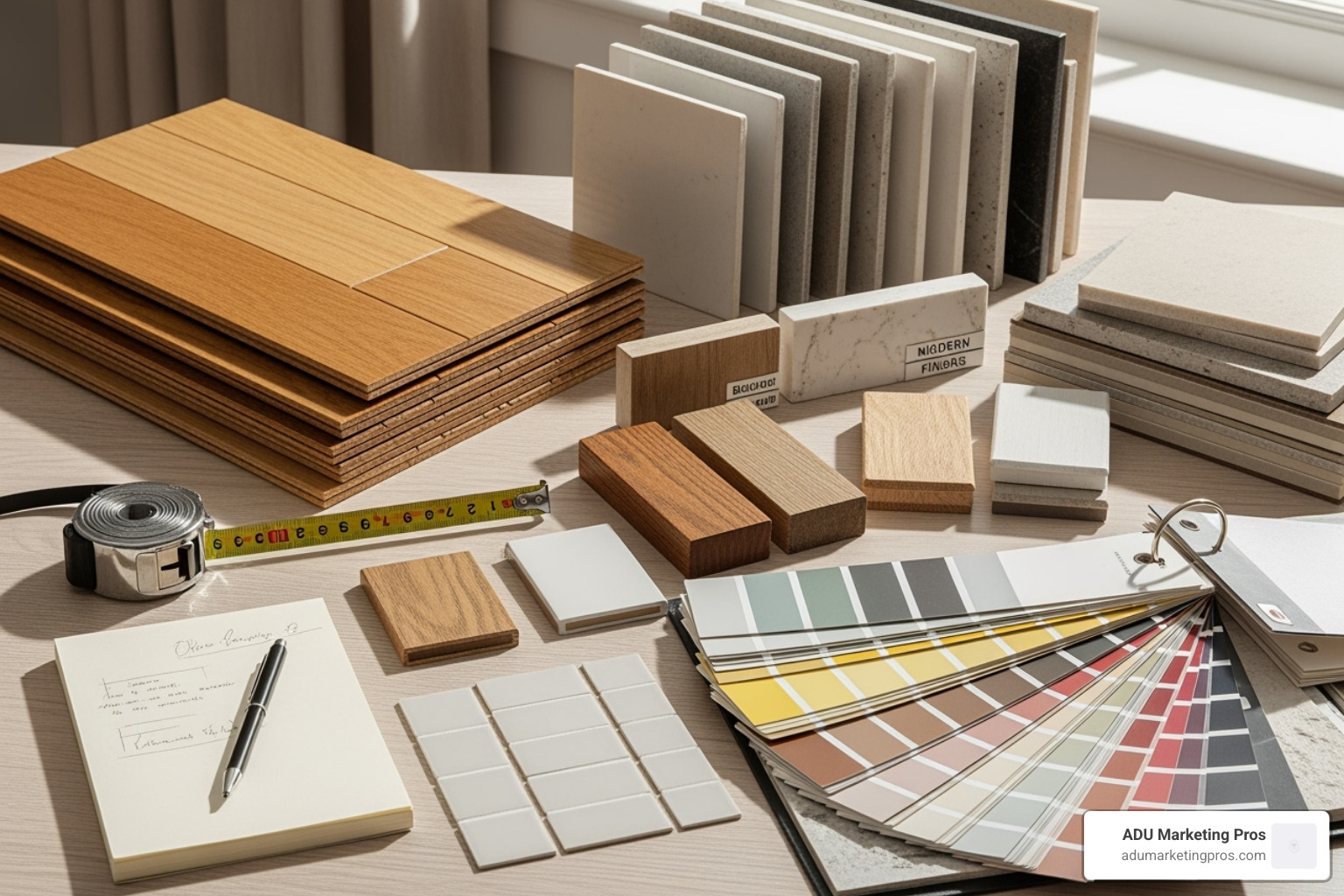
Your aesthetic choices and material selections have a direct and substantial impact on the final cost. Every surface and fixture is an opportunity to save or splurge.
- Flooring: Luxury Vinyl Plank (LVP) and laminate are popular, cost-effective choices ($3-$7/sq ft installed). Engineered hardwood offers a premium look for a higher price ($8-$15/sq ft), while polished concrete or high-end tile can vary widely.
- Kitchen & Bathroom: This is where budgets can quickly expand. Prefabricated cabinets from stores like IKEA and standard fixtures keep costs manageable. Opting for custom cabinetry, stone countertops (quartz, granite), and designer fixtures can easily add $10,000-$20,000 or more to the project.
- Windows & Doors: Replacing the garage door with a framed wall is a necessity. The cost for this, including a new window, typically runs $3,000-$7,000. Upgrading other windows to energy-efficient, double-pane models is crucial for comfort and Title 24 compliance, with costs varying by size, style, and material (vinyl, wood, aluminum).
A Detailed Breakdown of Single Garage Conversion Costs
Your total investment is a composite of several distinct categories: soft costs (planning and permits), hard costs (construction and materials), and utility costs. A clear understanding of these components is essential to demystify how much a single garage conversion costs. As a rule of thumb, expect soft costs to represent 15-25% of your total project budget. For a deeper dive, see our guide on ADU Construction Cost.
Design, Engineering, and Permit Fees
These preliminary “soft costs” are non-negotiable for creating a legal, safe, and well-planned conversion. Rushing this phase often leads to costly mistakes later.
- Architect, Designer, or Draftsperson Fees: Expect to pay $5,000 to $10,000 for a full set of architectural plans. These drawings are required for permits and serve as the blueprint for your contractor.
- Structural Engineering: A structural engineer may be needed to assess the foundation and framing, and to design any necessary reinforcements to meet seismic codes. This can cost an additional $1,000 to $3,000.
- Title 24 Energy Report: This report is mandatory in California and demonstrates that your conversion meets state energy efficiency standards for insulation, windows, and HVAC. This typically costs $300 to $600.
- Permit Fees: Municipal fees vary widely by city but are a significant expense. In California, plan to spend $3,000 to $10,000 for plan review, building permits, and inspections. These fees ensure your project is built to code and officially recognized as legal living space. Learn more about ADU Permit Cost California.
Construction and Materials
This category, known as “hard costs,” forms the bulk of your budget and covers all physical labor and materials.
- Foundation & Slab Work: Leveling the sloped garage floor is a must. This can range from $300 to $5,400, depending on whether you use a self-leveling compound or pour a new concrete overlay. This is also the time to add underslab insulation and vapor barriers.
- Framing & Insulation: Building new interior walls, reinforcing existing ones, and potentially altering the roof structure can cost $1,000–$5,000. Proper insulation is critical for comfort and Title 24 compliance; expect to pay $1–$3+ per square foot depending on the type (batt, spray foam).
- Garage Door Replacement: Removing the old garage door and framing a new, insulated wall with a window and/or entry door is a key step. Budget $3,000 to $7,000 for this transformation.
- Finishing: This includes drywall installation and finishing ($2-$4/sq ft), interior and exterior painting ($3,000-$6,000), and installing baseboards and trim.
Utility Upgrades: Electrical, Plumbing, and HVAC
These systems are what transform a storage space into a habitable one.
- Electrical: A garage’s existing wiring is never sufficient. A full rewire, new subpanel, and installation of outlets, switches, and lighting fixtures typically costs $2,000 to $5,000. If you’re adding a full kitchen with 220v appliances, this cost can be higher.
- Plumbing: This is a major expense, especially if one isn’t already present. Adding a bathroom or kitchen can cost $3,000 to $10,000+. The price is heavily influenced by the distance to the main sewer and water lines, as extensive trenching can add thousands to the bill.
- HVAC: A ductless mini-split system is the most popular and efficient solution for heating and cooling a converted garage. A single-zone unit costs $1,500–$4,000 installed and provides independent climate control for the new space.
Popular Single Garage Conversion Ideas and Their Costs
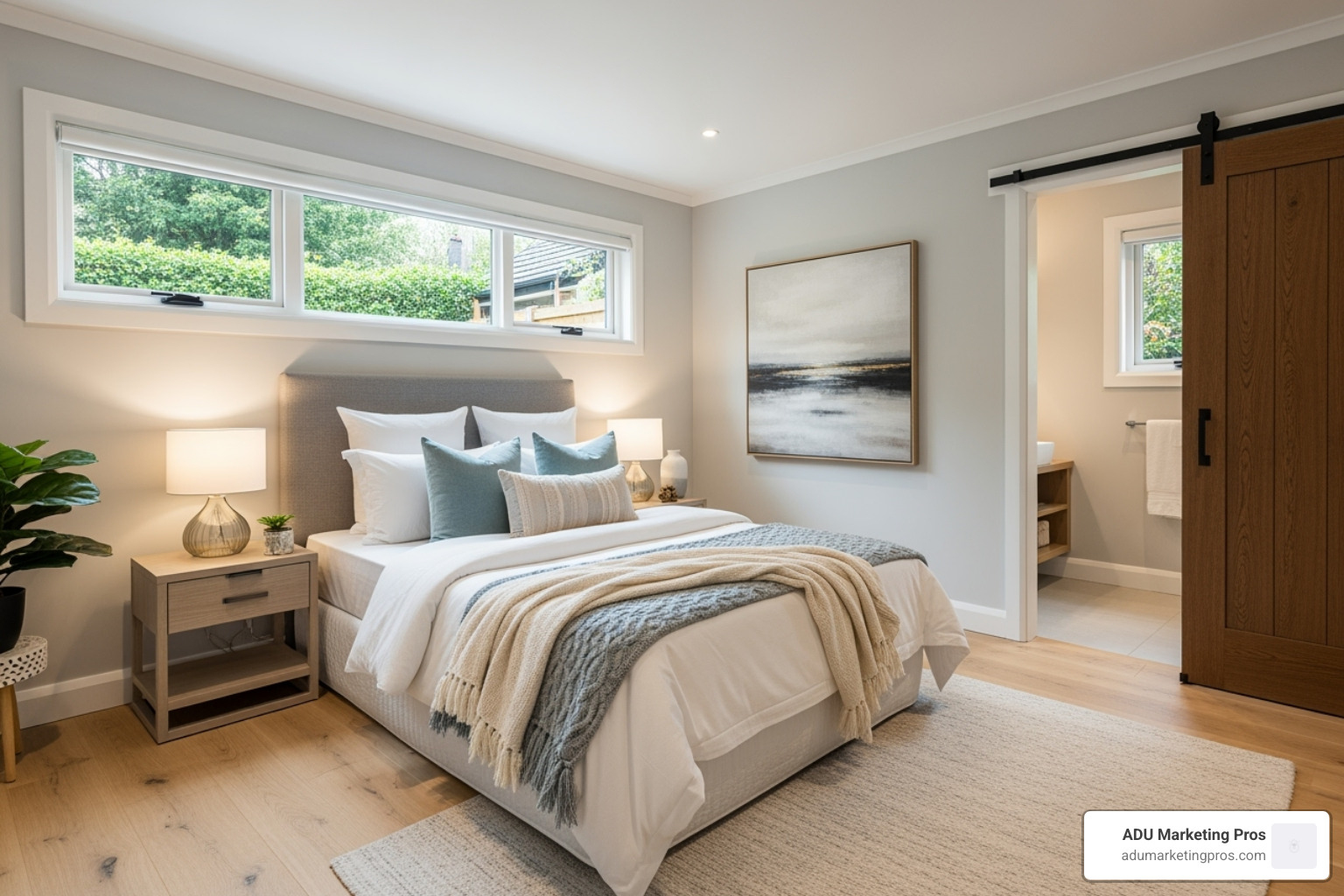
A single garage, though modest in size, offers incredible versatility. The path you choose will define your budget and the value you add to your home. Here are the most popular conversion ideas and their typical cost ranges in California.
-
Home Office or Gym ($20,000–$45,000): This is the most accessible and budget-friendly conversion. Since it doesn’t require a kitchen or bathroom, you avoid the high costs and complexities of plumbing. The budget focuses on creating a comfortable and functional environment: high-quality insulation for temperature control and soundproofing, upgraded electrical systems with plenty of outlets for equipment, new flooring (e.g., durable LVP for an office, rubber flooring for a gym), and an efficient HVAC system like a mini-split. Good lighting and a new window for natural light are also key components.
-
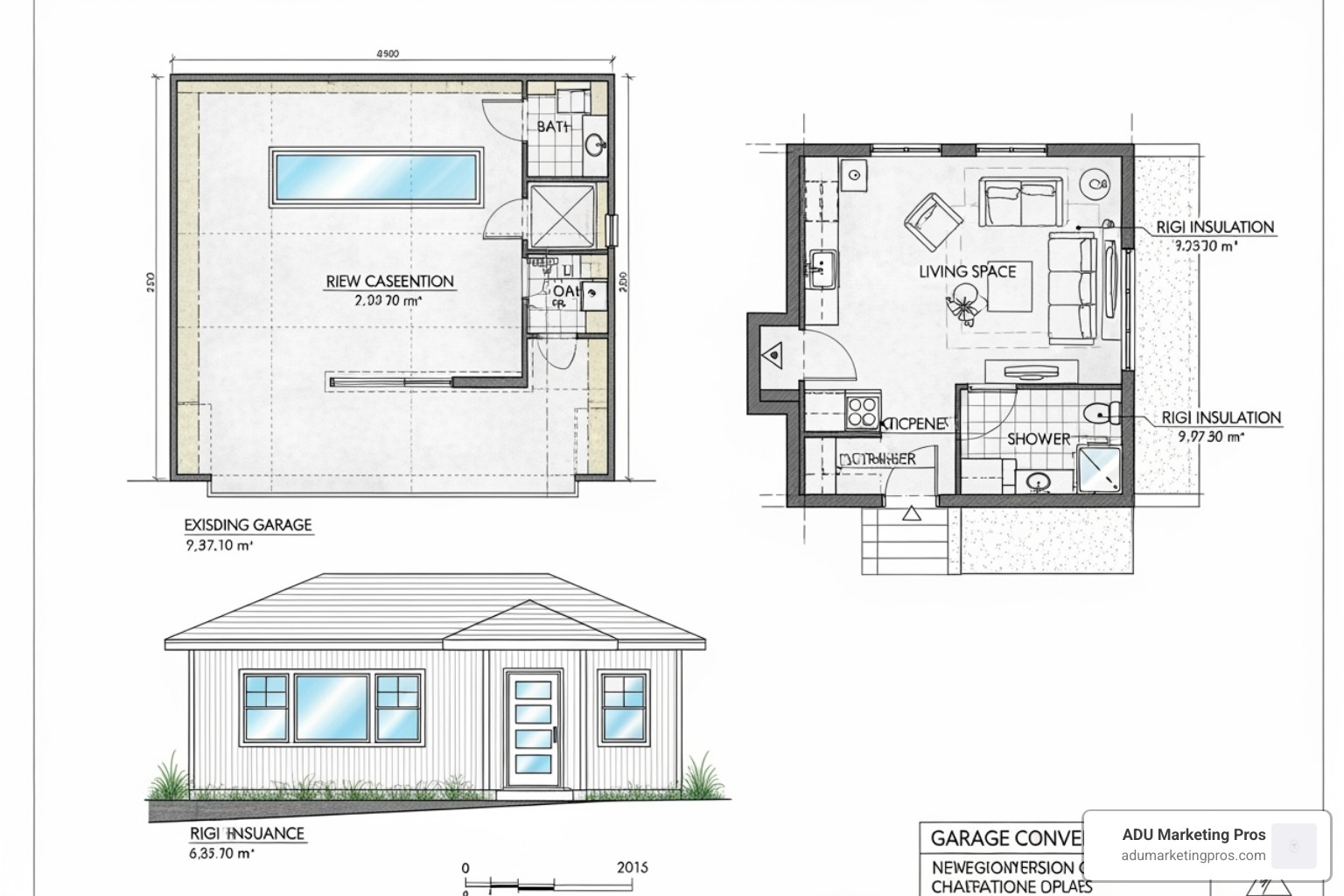
Guest Bedroom with Bathroom ($50,000–$90,000): This mid-range project adds significant utility and value, creating a private space for family or visitors. This conversion includes all the elements of a basic room, plus several crucial additions. The primary cost driver is the new bathroom, which involves extensive plumbing for a toilet, sink, and shower, as well as waterproofing and tile work. This project also legally requires an egress window (a window large enough to serve as an emergency exit) and usually a closet to be classified as a bedroom, adding to framing and finishing costs.
-
Full ADU Rental Unit ($80,000–$150,000+): The ultimate garage transformation, a full ADU creates a self-contained apartment complete with a kitchen, bathroom, living area, and a separate entrance. This is the most complex and expensive option, as it must meet all the building codes of a new residence. The budget must account for a full kitchen build-out (cabinets, countertops, sink, appliances, and ventilation), extensive plumbing and electrical work, and often a separate utility meter. While the upfront investment is highest, a legal ADU offers the greatest ROI through consistent monthly rental income or by providing a multi-generational living solution. For more on ADU costs, see our guide on the Cost to Build ADU.
Maximizing Your Investment: ROI and Cost-Saving Tips
A single garage conversion is more than just an addition of space; it’s a strategic financial investment. It adds valuable, conditioned square footage, creates the potential for significant rental income, and provides flexible living space for evolving family needs. The return on investment (ROI) for a permitted garage conversion in California is exceptionally high, often recouping over 80% of its cost at resale and providing immediate cash flow if rented.
| Feature | Garage Conversion (ADU) | Traditional Home Addition |
|---|---|---|
| Average Cost | Lower ($80k – $150k) | Higher ($150k – $300k+) |
| Timeline | Shorter (4-6 months) | Longer (8-12+ months) |
| Structural Impact | Minimal (uses existing footprint) | Major (new foundation, roof) |
| ROI | High (80%+, plus rental income) | Moderate (50-70%) |
Does Converting a Single Garage Add Value in California?
Absolutely. In California’s competitive housing market, every square foot of legal, permitted living space adds substantial value. A professionally executed garage conversion is appraised similarly to other living areas in your home. State-level ADU legislation, which you can review on the California Department of Housing and Community Development website, has been specifically designed to encourage these projects by streamlining permits and removing prohibitive requirements. While you do sacrifice a covered parking spot, the appraised value of a new bedroom, bathroom, and living area—or a full rental unit—almost always far outweighs the value of a parking space.
How to Save Money on Your Conversion Project
While a quality conversion requires significant investment, smart planning can help you manage costs without compromising the final product.
- Retain the Existing Layout: The simplest way to save is to work within the garage’s existing four walls. Avoid moving load-bearing walls or making complex structural changes that require extensive engineering and labor.
- Be a Smart Project Manager (Not a DIY Plumber): While you should always leave structural, electrical, and plumbing work to licensed professionals, you can save thousands by handling tasks like demolition, painting, installing laminate flooring, landscaping, and final cleanup yourself.
- Choose Cost-Effective Materials with High-End Looks: You don’t need Italian marble to create a beautiful space. Opt for mid-range finishes that mimic high-end materials, such as LVP flooring instead of hardwood, prefabricated cabinets instead of custom, and cultured marble or quartz for countertops.
- Get Multiple, Detailed Bids: Never go with the first contractor you talk to. Obtain at least three to five detailed, itemized estimates from vetted, licensed contractors. This allows you to compare not just the final price, but the scope of work and material quality included.
- Explore Smart Financing Options: Don’t drain your savings. Look into home equity loans or lines of credit (HELOCs), which use your home’s equity to provide often lower-interest funds for home improvements. Cash-out refinancing is another option. The Consumer Financial Protection Bureau offers reliable information on how these financial products work.
- Keep Plumbing Centralized: If adding a kitchen and bathroom, design the layout so they are close to each other or back-to-back. This minimizes the length of expensive plumbing runs. Position them along the wall closest to your home’s existing main water and sewer lines to reduce trenching costs.
Frequently Asked Questions about Single Garage Conversions
Here are detailed answers to the most common questions homeowners have about converting a single garage in California.
How much does a single garage conversion cost to become a legal living space?
To convert a garage into a fully legal, habitable living space (like a guest suite or ADU) in California, you should budget between $80,000 and $150,000. This comprehensive range accounts for all necessary expenses, including architectural plans, engineering, city permits, substantial utility upgrades (electrical, plumbing, HVAC), and all the finishes required to meet residential building codes. The final cost will fluctuate based on your location, the scope of the project (e.g., adding a kitchen), and the quality of your chosen materials.
Do I need a permit for a single garage conversion in California?
Yes, a permit is absolutely, 100% required to convert a garage into any form of habitable living space. This is not an optional step. The permitting process ensures that the conversion complies with all state and local building codes for structural integrity, fire safety (egress), electrical systems, plumbing, and energy efficiency, as outlined by the California Department of Housing and Community Development. Attempting an unpermitted conversion can lead to severe consequences, including hefty fines, orders to tear out the work, and major problems with insurance and selling your home in the future.
How long does a typical single garage conversion take?
The entire process, from initial idea to final inspection, typically takes 4 to 6 months. This timeline can be broken down into three main phases:
- Design & Engineering (1–2 months): Creating architectural plans and getting any necessary engineering reports.
- Permit Review (2–3 months): Submitting your plans to the city’s building department and waiting for approval. This is often the longest and most unpredictable phase.
- Construction (2–3 months): The physical build-out of the space once the permit is issued.
Can I convert my garage into an accessory dwelling unit (ADU)?
Absolutely. Garage conversions are one of the most popular and cost-effective methods for creating a legal ADU in California. As long as your project is designed and built to meet all residential building codes for a dwelling—including having a kitchen, bathroom, proper ceiling height, ventilation, and emergency exits—it can be permitted as an independent rental unit, providing a new stream of income.
Will converting my garage increase my property taxes?
Yes, but not on your entire property. When you complete a permitted garage conversion, the county assessor will reassess your property’s value. However, under California’s Proposition 13, they will not reassess the value of your existing home. Instead, they will establish a new base value for the newly added construction only. This means your property taxes will increase, but the increase will be based only on the value of the conversion itself, not a new valuation of your entire lot and home.
Do I need to replace the parking space I’m converting?
Generally, no. Thanks to recent state-level ADU laws, most jurisdictions in California can no longer require you to replace the parking spaces you eliminate when converting a garage into an ADU, especially if your property is located within a half-mile of public transit. This has been a game-changing rule that makes conversions much more feasible for many homeowners. Always check with your local city planning department to confirm the specific rule for your address.
Do I need an architect for a single garage conversion?
Yes, you will need a qualified design professional. While it doesn’t strictly have to be a licensed architect, you must have professional, code-compliant plans created by an architect, a building designer, or a design-build contractor to submit for permits. These professionals create the detailed blueprints that ensure your project is safe, functional, and meets all legal requirements, which is essential for avoiding costly structural or compliance issues during construction.
Start Planning Your Solo Garage Makeover
A single garage conversion is a powerful investment that unlocks your property’s hidden potential, adding significant value, flexibility, and possible income to your California home. We’ve explored the critical question of how much a single garage conversion costs, with the understanding that a basic room can start around $20,000, while a full, income-generating ADU can reach $150,000 or more.
With meticulous planning and a clear budget, your cluttered and underused garage can be transformed into a tranquil home office, a private guest suite for family, or a high-demand rental unit that helps pay your mortgage. The process involves navigating permits and adhering to California’s strict building codes, but the reward is a safe, legal, and immensely valuable addition to your property. Partnering with experienced and vetted professionals is the most important step you can take to ensure a smooth and successful project from start to finish.
At ADU Marketing Pros, we specialize in connecting homeowners across California—from the tech hubs of San Jose and the San Francisco Bay Area to the sprawling neighborhoods of Los Angeles and the coastal communities of San Diego—with top-tier professionals who excel at garage conversions. Our network of contractors, designers, and architects can provide the expertise needed to guide you from the initial design concept to the final city inspection.