
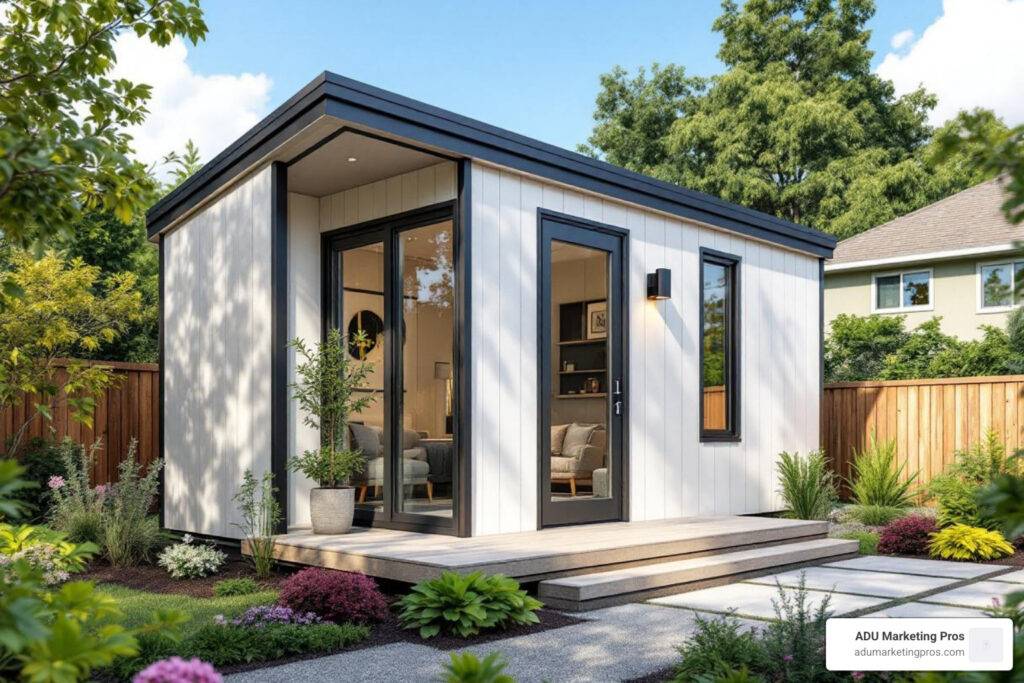
Why Understanding Pre-built ADU Cost Is Your First Step to Success
Pre-built ADU cost is one of the most searched questions by homeowners exploring accessory dwelling units—and for good reason. The price can vary dramatically, from as little as $50,000 for a basic shell to well over $400,000 for a fully finished, turnkey unit with site work included.
Quick Answer: What Does a Pre-built ADU Actually Cost?
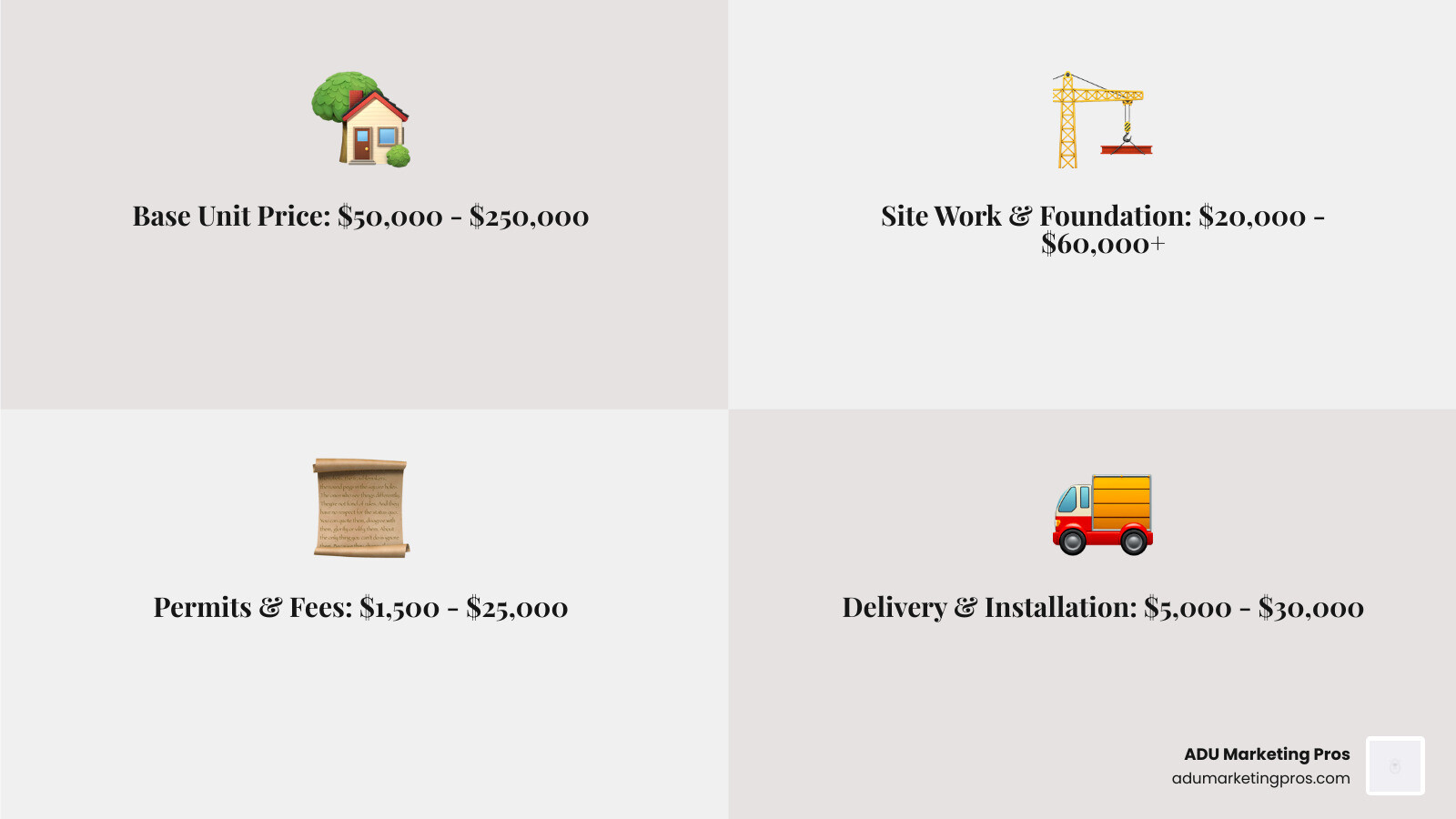
- Base Unit Price: $50,000 – $250,000 (depending on size and finishes)
- Site Work & Foundation: $20,000 – $60,000+
- Permits & Fees: $1,500 – $25,000 (varies by location)
- Delivery & Installation: $5,000 – $30,000
- Total All-In Cost: $100,000 – $400,000+ (most projects fall between $200,000 – $300,000)
If you’re a decision-maker at an ADU firm, you already know that cost transparency is critical. Your clients—homeowners weighing whether to invest in a backyard ADU—need clear, honest breakdowns. They’re not just buying a structure; they’re making a significant financial commitment that impacts their property value, rental income potential, and long-term financial planning.
The challenge? Most prefab ADU companies advertise a sticker price that seems affordable. But the reality is far more complex. That $75,000 unit you see online? It doesn’t include foundation work, utility hookups, permits, delivery, or site preparation. By the time all costs are factored in, the total can easily double or triple.
This guide is designed to give you—and your clients—the full picture. We’ll break down every cost component, from the base price to the often-overlooked “hidden” expenses. We’ll compare prefab ADUs to traditional site-built construction, explore financing options at a high level, and help you understand the long-term value of this investment.
According to research from sources such as the California Department of Housing and Community Development and industry cost surveys, base prefab prices may be $50,000 – $100,000, but after site work and hookups, the total can reach $200,000 – $300,000 in many California markets. Understanding this gap is essential for setting realistic expectations and avoiding budget surprises.
Whether you’re helping a client plan their first ADU or refining your firm’s marketing messaging, this comprehensive breakdown will equip you with the data and insights you need to educate, guide, and close more projects with confidence.
Pre-built ADU cost vocabulary:
- granny flat
- 600 sq ft prefab home
- pod houses for sale
- For broader background on ADUs as a housing solution, you can also review the HUD Accessory Dwelling Units resource page, which summarizes national trends and policy context.
The Complete Guide to Your Pre-built ADU Cost
When we talk about the pre-built ADU cost, we’re diving into more than just the price tag of the unit itself. It’s about understanding the “all-in” project cost, encompassing everything from the initial purchase to the final landscaping. For homeowners in California, particularly in areas like Los Angeles, San Diego, and the Bay Area, grasping these nuances is key to a successful project and a realistic budget.
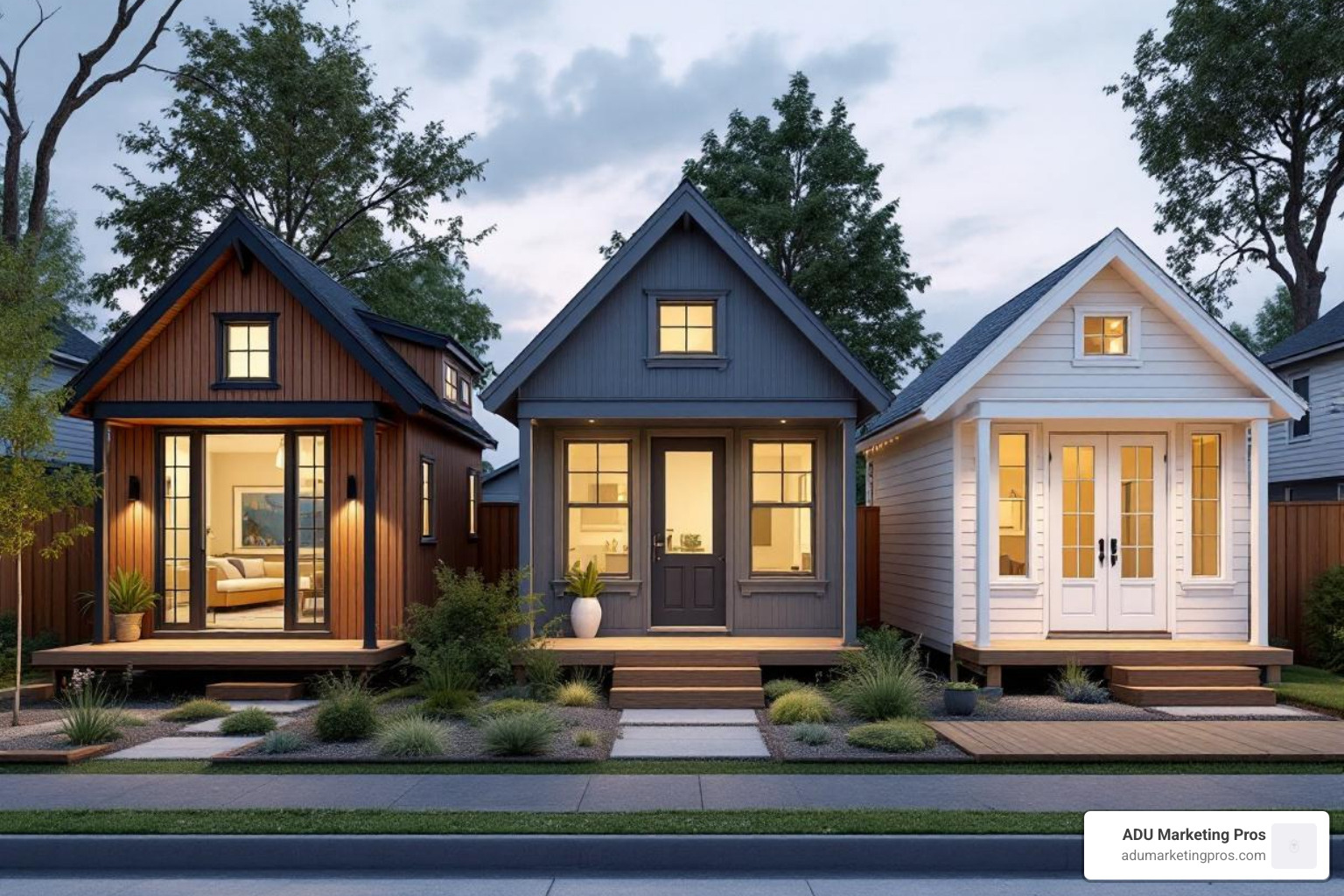
The average cost range for a prefab ADU can be quite broad. While some basic units might start around $50,000, the total investment, including site work, permits, and installation, typically falls between $100,000 and $400,000. Many projects, especially those with mid-range finishes, tend to land in the $200,000 to $300,000 bracket. This total figure is often referred to as a “turnkey solution” cost, implying a ready-to-use unit.
It’s crucial to distinguish between the base price of the prefab unit (often called the “soft cost” of the unit itself) and the “hard costs” associated with site-specific work. These hard costs are where many homeowners encounter surprises, as they can significantly inflate the initial sticker price. For a deeper dive into how square footage impacts pricing, explore our guide on ADU Cost Per Square Foot.
The Average Cost Range for a Prefab ADU
Let’s get down to the numbers. As we’ve seen, the initial purchase price of a prefab ADU can be as low as $50,000 for a basic model or shell kit. Companies like Studio Shed, for instance, offer shell kits starting around $140 per square foot, with their Summit Series product and permit plans beginning at approximately $40,000. Other manufacturers, such as AbleNook, Kanga Room Systems, Kountry Containers, Buhaus, Kithaus, and Meka Modular, offer units ranging from $56,700 for a 196-square-foot unit to $96,000 for a 160-square-foot unit (excluding shipping). Autonomous WorkPods even offer entry-level solutions starting as low as $17,400 for smaller, specialized units.
However, these figures represent only a fraction of the total pre-built ADU cost. Once we factor in everything from foundation to utility hookups, the overall project cost for a prefab ADU in California commonly ranges from $100,000 to $400,000. Specific examples from Abodu, a California-based provider, show average prices including upgrades (but excluding permit fees and taxes) ranging from $265,500 for a 340 sqft studio to $498,500 for a 540 sqft 1-bedroom unit.
The geographic variation within California also plays a significant role. Costs can differ between the busy urban centers of Los Angeles, the coastal communities of San Diego, and the tech hubs of the San Francisco Bay Area, San Jose, Palo Alto, and Menlo Park. For a more detailed look at regional pricing, check out our insights on Prefab ADU California Cost.
Budget vs. Mid-Range vs. Luxury: Understanding the Tiers
Just like buying a car, prefab ADUs come in different price tiers, offering options for various budgets and tastes.
-
Budget Builds: These are your entry-level options, often starting around $150,000 – $200,000 for units in the 300-450 square foot range. They typically feature standard finishes—think vinyl siding, laminate countertops, and basic fixtures. The focus here is on functionality and affordability, providing essential living space without excessive frills. A good example might be a small studio or a one-bedroom unit with a compact kitchen.
-
Mid-Range Builds: Stepping up, these ADUs usually cost between $250,000 – $300,000 and offer 450-600 square feet of space. Here, you’ll find upgraded materials like better flooring, more stylish cabinetry, and potentially more efficient windows. Layouts might be more flexible, offering a better balance between comfort and cost. These are popular choices for homeowners looking for a solid investment with appealing aesthetics.
-
Luxury Builds: For those seeking the ultimate backyard retreat, luxury prefab ADUs can start from $350,000 and easily exceed $500,000, especially for larger units between 600-1200 square feet. These units boast high-end finishes such as quartz countertops, hardwood floors, designer fixtures, and smart home technology. Custom features, spacious layouts, and advanced energy-efficient systems are common. These luxury options often become long-term residences or premium rental properties, significantly adding to the property’s value. To inspire your high-end visions, explore some Modern ADU Floor Plans.
Key Factors That Drive Your Final Price Tag
Understanding the base pre-built ADU cost is just the beginning. Several key factors can significantly influence the final price tag of your ADU project. These aren’t just minor adjustments; they can add tens of thousands of dollars to your budget.
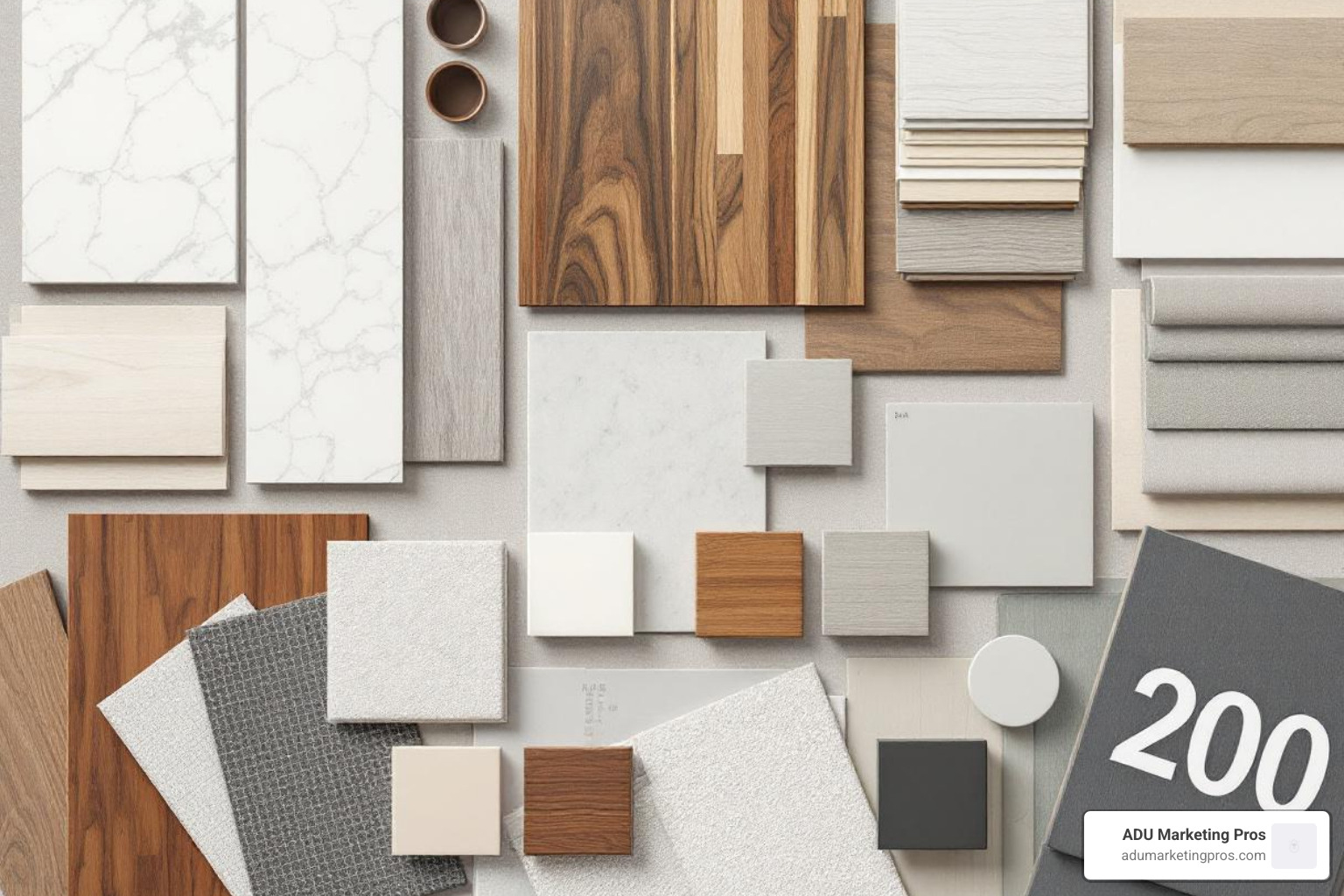
From the size of the unit to the choice of materials and the level of customization, each decision has a ripple effect on your overall investment. Staying informed about these cost drivers can help you make smarter choices and avoid unexpected expenses. For more inspiration on how design choices impact cost and aesthetics, check out the latest ADU Design Trends.
Size and Layout: How Square Footage Impacts Your Budget
It might seem obvious, but the larger your ADU, the more it will generally cost. More square footage means more materials, more labor, and often more complex structural requirements. A small studio ADU will naturally be less expensive than a two-bedroom unit with a sprawling open-concept living area.
- Footprint: A 400-square-foot ADU will have a different cost profile than a 1200-square-foot ADU. The maximum allowable ADU Square Footage in California generally caps at 1,200 square feet for detached units, providing plenty of room for variation.
- Number of Bedrooms: Each additional bedroom typically requires more partitioning, plumbing (for an additional bathroom), and overall space, driving up costs.
- Open-Concept vs. Partitioned: While open-concept designs can sometimes reduce framing costs, they might require more extensive HVAC or specialized structural elements depending on the span. More partitioned layouts mean more walls, doors, and potentially more complex electrical and plumbing runs.
- Consider exploring different options like 400 Square Foot ADU Plans or even larger layouts up to 1200 Sq Ft ADU to see how your ideal size fits your budget.
Materials and Finishes: From Standard to High-End
This is where your personal style really shines, and also where your budget can take a significant hit (or gain a significant saving!). The choices for interior and exterior finishes are vast, and their cost implications are substantial.
- Interior Selections: From flooring to countertops, cabinetry, and even light fixtures, your interior choices can add a hefty sum. “Basic vinyl flooring and laminate counters cost far less than hardwood and quartz,” research shows. In fact, interior selections alone can add $50,000 to $100,000 to your final price tag.
- Flooring: Laminate or vinyl planks are budget-friendly, while engineered hardwood or tile will be pricier.
- Countertops: Laminate is economical, solid surface is mid-range, and natural stone like granite or quartz pushes into the luxury tier.
- Cabinetry: Stock cabinets are affordable, semi-custom offer more style, and fully custom cabinets are a significant investment.
- Windows: Standard double-pane windows are common, but high-efficiency, triple-pane, or oversized architectural windows will increase costs.
- Siding: Vinyl or basic stucco are cost-effective, while cedar, fiber cement, or premium metal siding will be more expensive.
- For ideas that balance aesthetics and budget, check out our ADU Interior Design Ideas.
Customization and Upgrades
While prefab ADUs offer standardized designs for efficiency, most manufacturers allow for some degree of customization and offer various upgrades.
- Architectural Details: Unique rooflines, custom window placements, or specialized exterior cladding can lift the look but also the price.
- Smart Home Technology: Integrating smart lighting, thermostats, security systems, or automated blinds adds convenience but also cost.
- Solar Panels: A fantastic long-term investment for energy savings, solar panel installation will increase upfront costs. Some prefab units, like Autonomous WorkPod Solar models, offer integrated solar options starting around $28,000. This aligns with the push for Eco-Friendly ADU solutions.
- High-Efficiency Appliances: Energy Star-rated appliances can save on utility bills over time but usually come with a higher initial price.
- Accessibility Features: Ramps, wider doorways, grab bars, or roll-in showers are crucial for multi-generational living or aging parents but require specific design and material considerations.
Beyond the Sticker Price: Uncovering the “Hidden” Costs
The advertised price of a prefab unit is rarely the final price you’ll pay. We call these the “hidden” costs, but they’re not really hidden—just often overlooked or underestimated by homeowners. These site-specific expenses are absolutely essential for a functional and compliant ADU. Ignoring them would be like buying a car without factoring in gas, insurance, or registration. To get a comprehensive estimate, an ADU Cost Calculator can be a valuable tool.
Site Preparation and Foundation
Before your beautiful prefab unit even arrives, your backyard needs to be ready. This is a critical phase, and costs can vary widely depending on your property.
- Excavation and Grading: Your site needs to be level and properly sloped for drainage. If your property has a significant grade or requires extensive earthmoving, costs will climb.
- Soil Conditions: Rocky soil, unstable ground, or the presence of contaminants can necessitate specialized (and more expensive) excavation or soil remediation.
- Sloped Terrain: It’s not uncommon for challenging site conditions—such as sloped terrain, the need for tree removal, rocky soil, or drainage problems—to raise excavation and foundation costs by $5,000 to $20,000 or more.
- Tree Removal: If mature trees need to be removed to make way for the ADU, this adds to the expense.
- Foundation Type: Most prefab ADUs require a permanent foundation. This could be a concrete slab, a raised foundation with footings, or concrete piers. The choice depends on local soil conditions, seismic requirements, and the ADU’s design. Mesocore’s Alp 320, for example, includes foundation in its $85,500 estimate.
This groundwork is fundamental to any Backyard ADU Construction.
Delivery, Shipping, and Crane Fees
Unlike site-built ADUs, prefab units are constructed off-site and then transported. This transportation comes with its own set of costs.
- Transportation Costs: The further your property is from the manufacturing facility, the higher the shipping fees. These can be substantial, especially for larger units.
- Modular Unit Delivery: The unit often arrives in one or more sections on specialized trucks.
- Crane Expenses: For modular units, a crane is almost always required to lift the sections from the truck and set them precisely onto the prepared foundation. This can be a significant expense, especially if site access is challenging or a larger crane is needed. Abodu specifically notes that craning beyond 100 feet is typically not included in its base price.
- Site Accessibility: If your backyard is difficult to access for large trucks and cranes (e.g., narrow driveways, overhead power lines, tight corners), this can increase logistical complexity and associated costs.
Utility Connections
Your ADU needs to be connected to essential utilities, just like your main home. This process can be straightforward or complex, depending on your existing infrastructure and the distance from the main house.
- Water Lines: Connecting to your existing water supply.
- Sewer or Septic: Tying into the municipal sewer system or installing/connecting to a septic system.
- Electrical Panel Upgrades: Often, your main electrical panel will need an upgrade to handle the additional load of an ADU. This can be a major expense, potentially requiring trenching for new lines.
- Gas Lines: If your ADU includes gas appliances (cooktop, water heater), a new gas line will be needed.
- Trenching Costs: Running new utility lines (water, sewer, electric, gas, internet) from the main house to the ADU requires digging trenches. Abodu notes that utility trenching beyond 50 feet is typically an additional cost.
- Hookup Fees: Local utility providers often charge connection fees.
These connections are critical elements of ADU Building Requirements.
Permits, Fees, and Navigating Local Regulations
This is often one of the most unpredictable and frustrating aspects of an ADU project, but it’s non-negotiable.
- Permitting Process: Obtaining the necessary permits from your local city or county planning department is mandatory. This involves submitting plans, undergoing reviews, and passing inspections.
- Building Permits: These are required for the construction itself, ensuring the ADU meets all safety and structural codes.
- Impact Fees: Many jurisdictions in California charge impact fees to offset the increased demand on public services (schools, parks, roads) created by new construction. These can vary significantly. Abodu estimates average permit fees and taxes at around $17,000 in their service areas, but you should verify numbers with your local jurisdiction.
- Zoning Laws: Each city (like Los Angeles, San Diego, San Jose, Palo Alto) has specific zoning laws that dictate where an ADU can be placed, its size, height, and setbacks. California’s state laws have streamlined the process for building ADUs on single-family zoned lots, but local nuances still apply. It’s crucial to check the specific zoning bylaws for your city—for example, San Jose publishes detailed ADU standards on its official planning site.
For a detailed understanding of these costs, refer to our guide on ADU Permit Cost California and review the state-level summary from the California Department of Housing and Community Development to understand the broader regulatory framework. Alongside local planning and building department resources, these will give you the most current, authoritative picture of what to expect.
Prefab vs. Site-Built: A Cost and Timeline Comparison
When considering an ADU, one of the biggest decisions is whether to go with a prefab (pre-built) unit or a traditional site-built (or “stick-built”) structure. Both have their merits, but they differ significantly in pre-built ADU cost, timeline, and overall process. Prefab ADUs leverage factory efficiencies and economies of scale, while site-built ADUs offer maximum customization. Understanding these differences is key to choosing the right path for your project.
Here’s a high-level comparison of the two construction methods:
| Feature | Prefab ADUs | Site-Built ADUs |
|---|---|---|
| Average Timeline | 6-9 months (design, permits, build, install) | 9-18+ months (design, permits, full on-site build) |
| Cost Per Square Foot | Often lower for the base unit due to factory efficiencies. All-in costs can be comparable. | Can vary widely based on contractor, materials, and complexity. |
| Quality Control | High and consistent, as units are built in a controlled factory environment with rigorous inspections. | Variable; highly dependent on the skill and reliability of the on-site crew and subcontractors. |
| Design Flexibility | More limited. Based on pre-designed models with some customization options for finishes and layouts. | Nearly unlimited. Can be fully customized to match the main home or a unique architectural vision. |
| Site Disruption | Minimal. Most work is off-site. On-site work (foundation, installation) is condensed into a few weeks. | Significant. Months of on-site noise, dust, and construction traffic in your backyard. |
While the final cost to build an ADU can sometimes be similar between the two methods, the predictability, speed, and reduced hassle of the prefab process are major advantages for many homeowners.