
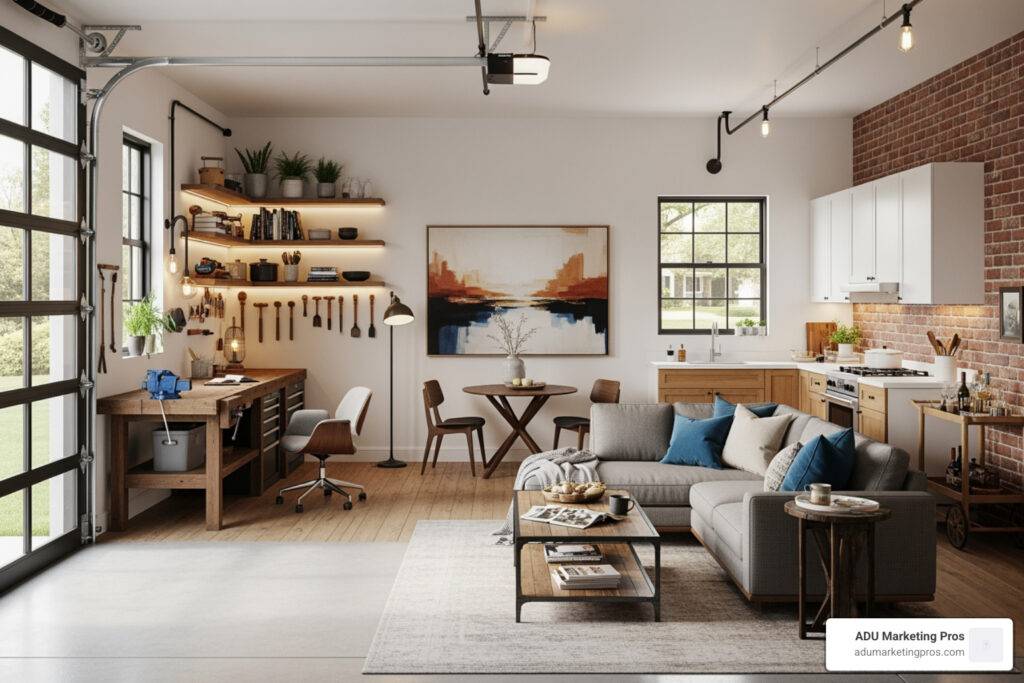
Why Understanding Garage Conversion Costs Matters for Your Home Investment
The cost to convert a garage typically ranges from $9,659 to $51,659 nationally, with most homeowners spending $16,000 to $25,000 for a quality, legally permitted conversion. In an era of remote work, multi-generational living, and rising housing prices, converting your garage is one of the smartest and most cost-effective ways to add valuable square footage without the expense and disruption of a full-scale home addition. Whether you dream of a quiet home office, a profitable rental ADU, or an extra bedroom for a growing family, your garage provides a valuable head start on construction.
Quick Cost Overview:
- Basic conversion (home office, gym): $4,000–$12,000
- Mid-range conversion (bedroom, living room): $12,000–$25,000
- High-end conversion (full ADU with kitchen/bath): $25,000–$52,000+
- Average cost per square foot: $40 (ranging from $25 to $75+)
- Typical timeline: 4–14 weeks (including permits and construction)
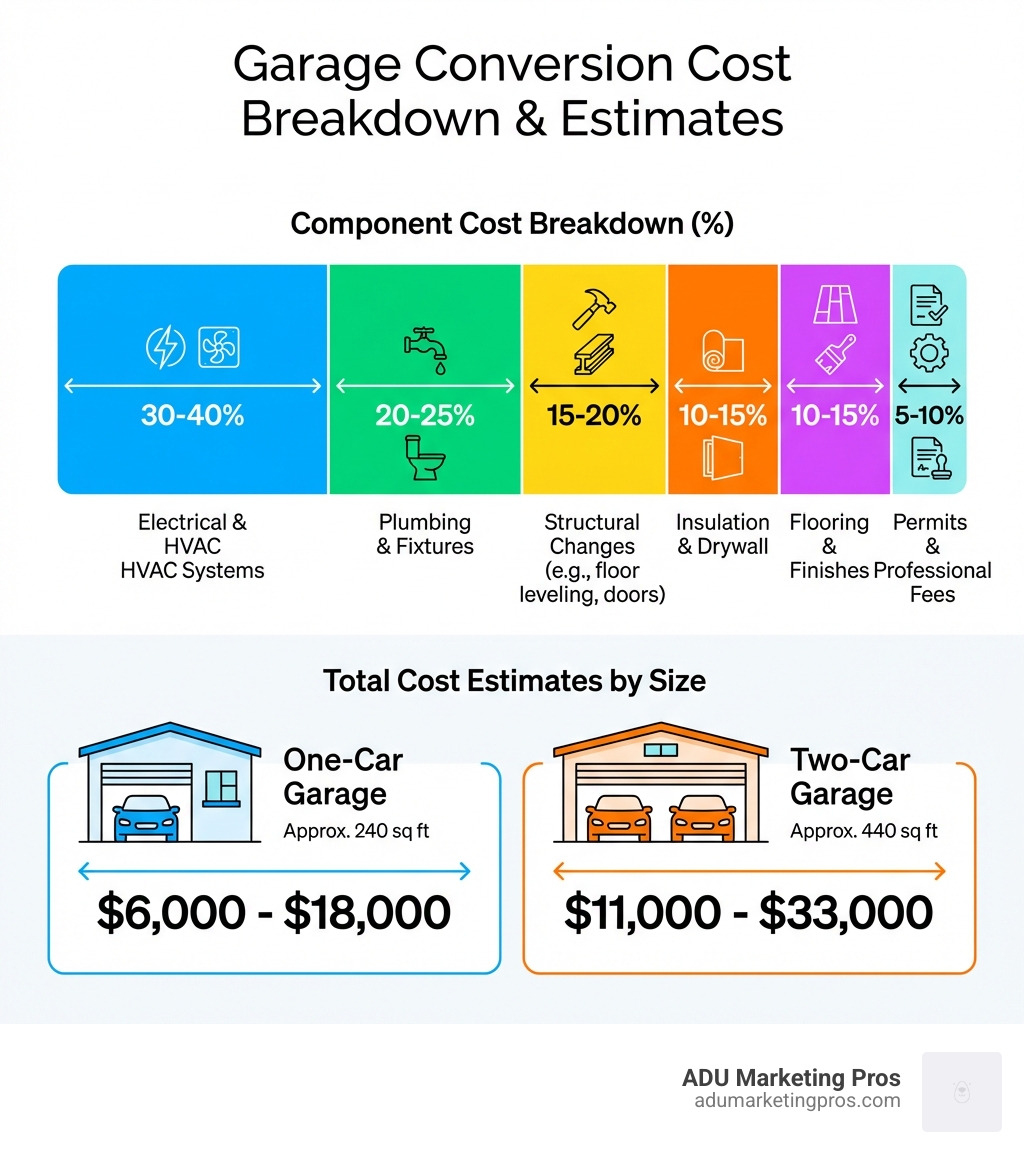
While the foundation, walls, and roof are already in place, turning a concrete box designed for cars into a comfortable, code-compliant living space is more complex than it seems. Understanding where your money goes is the key to a successful project that adds real value to your home. Major expenses often include significant electrical upgrades to meet residential code, extensive plumbing for a new bathroom or kitchen, and crucial structural changes like leveling the sloped concrete floor and adding proper egress.
What This Guide Will Cover
This comprehensive guide will break down every potential expense, from architectural plans to the final coat of paint. We’ll explore how different project types dramatically affect the budget, show you where you can realistically save money, and explain why a basic home office costs a fraction of a full Accessory Dwelling Unit (ADU). We’ll provide the insights you need to plan a realistic budget, hire the right professionals, and turn your garage conversion dream into a functional and valuable reality.
Basic Cost to convert garage glossary:
Understanding the Average Cost to Convert a Garage
There is no single, universal answer for the cost to convert a garage, as final prices depend heavily on the project’s scope, your choice of finishes, and your geographic location. While the national average hovers around $16,665, projects can range from a modest $6,000 for a simple, DIY-heavy conversion to well over $50,000 for a high-end Accessory Dwelling Unit (ADU). In high-cost-of-living areas like Los Angeles, San Diego, and the San Francisco Bay Area, you should expect figures to be on the higher end of every range.
On average, you can expect to spend about $40 per square foot. A basic conversion with simple finishes might be as low as $25 per square foot, while a luxurious, custom-designed space with high-end materials can easily push costs to $75 or more per square foot.
- A one-car garage (approx. 200-240 sq. ft.) conversion typically costs between $6,000 and $18,000.
- A two-car garage (approx. 400-480 sq. ft.) conversion generally costs between $11,000 and $33,000.
- A three-car garage (approx. 600+ sq. ft.) conversion can range from $16,500 to $45,000+, offering enough space for a multi-room apartment.
To give you a clearer picture of where your project might fall, we’ve broken down conversions into three common tiers:
| Conversion Tier | Cost Range (National Average) | Typical Features | Project Types |
|---|---|---|---|
| Basic | $4,000–$12,000 | Minimal structural changes, basic finishes (e.g., vinyl flooring, standard lighting), no new plumbing. | Home office, gym, hobby room, playroom. |
| Mid-Range | $12,000–$25,000 | Full insulation and drywall, upgraded electrical, dedicated HVAC, possibly a half-bath, egress window. | Bedroom, living room, entertainment space. |
| High-End | $25,000–$52,000+ | Full kitchen and bath, significant structural and utility upgrades, separate entrance, premium finishes. | Full ADU, studio apartment, in-law suite. |
Key Factors Influencing the Total Cost
Several core elements will dictate your final budget. Understanding them is the first step to creating an accurate estimate.
- Garage Size and Type: The larger the garage, the more materials and labor are required. A three-car garage will cost more than a one-car garage, but the cost per square foot may decrease slightly due to economies of scale. Detached garages can also incur higher costs for utility trenching to connect water, sewer, and electrical lines, compared to attached garages.
- Existing Condition: A garage with a heavily cracked or unlevel foundation, significant water damage, pest infestations, or outdated and unsafe wiring will be far more expensive to convert than one that is structurally sound and well-maintained. A thorough initial inspection is critical.
- Quality of Materials: Your choice of flooring, fixtures, cabinetry, countertops, and windows will significantly impact the bottom line. Opting for luxury vinyl tile over basic laminate, quartz countertops over Formica, or custom-built-ins over freestanding furniture will increase costs at every stage.
- Labor Rates: Labor is a substantial portion of the budget and varies widely by region. Experienced, licensed, and insured contractors in competitive markets like California command higher rates but can prevent costly mistakes, code violations, and project delays.
- Geographic Location: This is a major, non-negotiable factor. Costs in major metropolitan areas, particularly in California, are consistently higher than national averages due to intense demand and a higher cost of doing business.
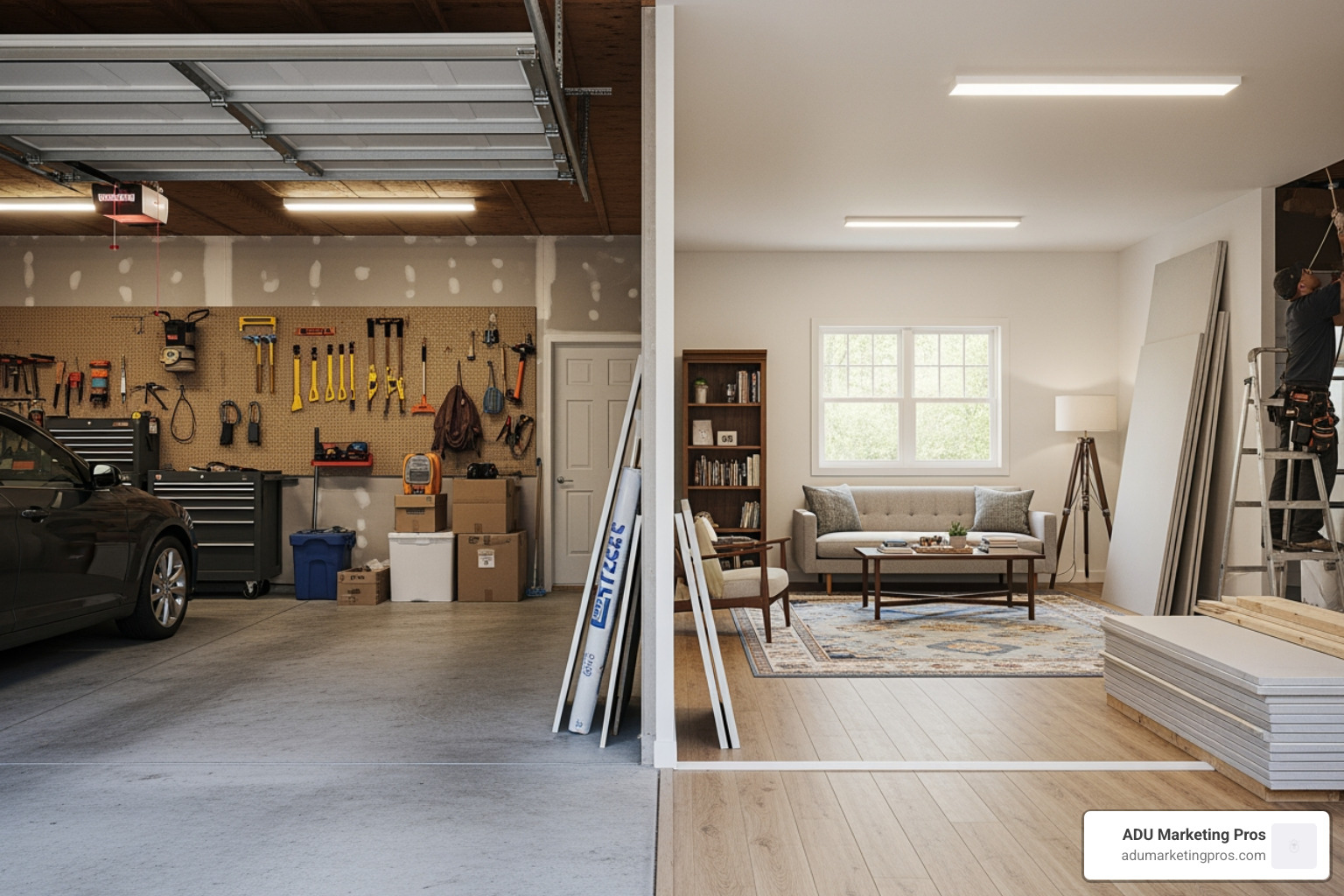
How Location Impacts Your Budget
Where you live dramatically affects your cost to convert a garage. In California, particularly in high-demand markets like Los Angeles, San Diego, and the Bay Area (including San Jose, Sunnyvale, and Palo Alto), costs are consistently at the high end of national averages, and often exceed them. For example, a mid-range conversion that costs $20,000 in a midwestern city could easily cost $30,000-$35,000 in Southern California. This is due to a combination of factors:
- Higher Material and Labor Costs: A booming construction market and high cost of living drive up prices for everything from lumber and drywall to the wages of skilled tradespeople like electricians and plumbers.
- Strict Permitting and Regulations: While California’s state-level ADU laws are progressive, navigating local city and county rules, design review boards, and fee schedules adds complexity and cost to the project.
- Urban vs. Rural Pricing: Converting a garage in a dense urban center like San Francisco will likely cost more than in a less populated, rural area due to logistical challenges (parking, material delivery), higher insurance requirements, and greater contractor overhead.
Garage Conversion Costs by Project Type
The intended use of your converted garage is the single biggest driver of the final cost to convert garage. A simple home office has vastly different requirements—and a correspondingly different price tag—than a full Accessory Dwelling Unit (ADU) designed for independent living.
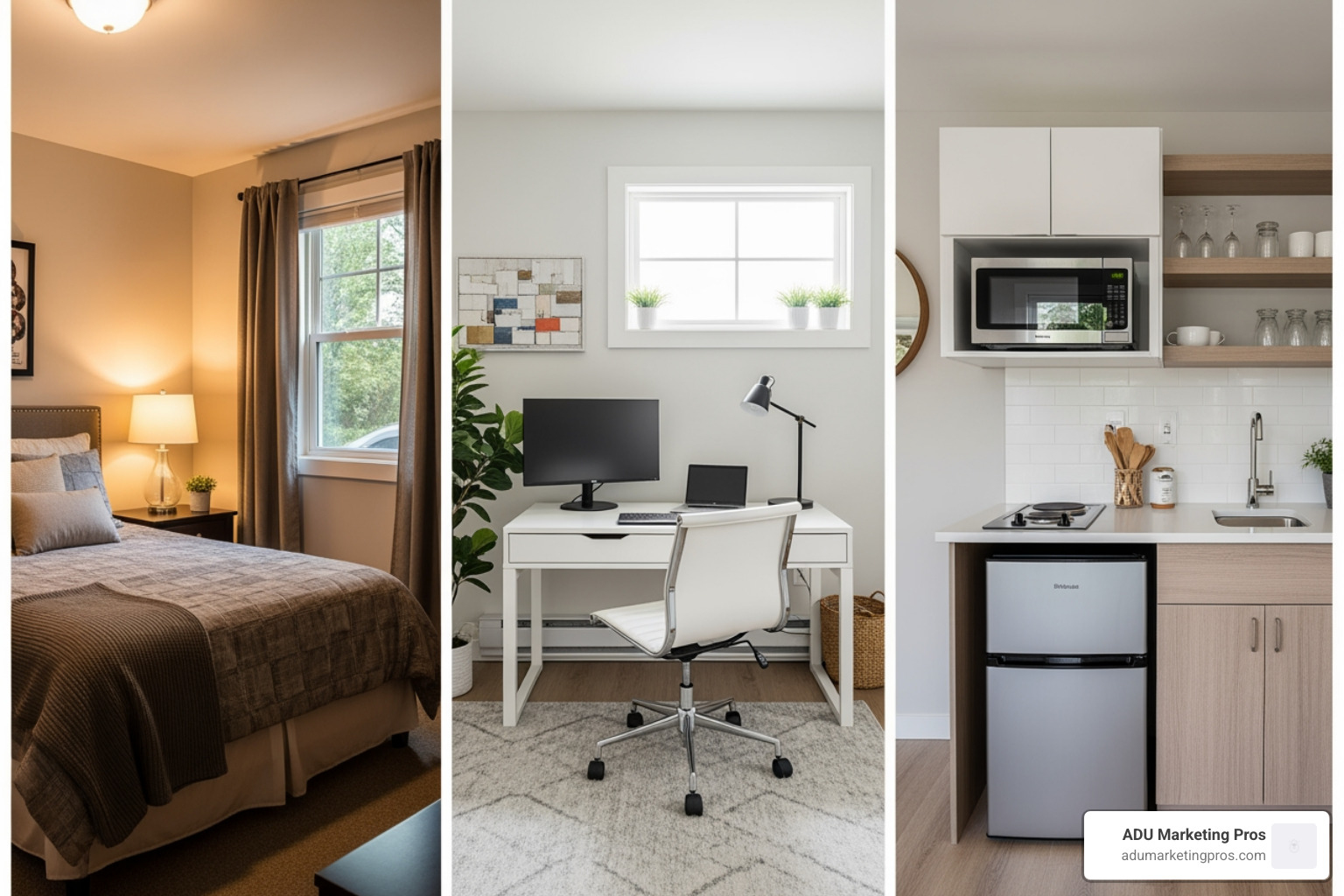
Home Office or Home Gym
- Average Cost Range: $5,000 to $15,900
These conversions are the most budget-friendly because they rarely require new plumbing and have simpler finish requirements. Key costs include adding sufficient electrical outlets and dedicated circuits for equipment, installing bright, layered lighting ($615–$4,021), and putting in durable flooring like luxury vinyl tile, rubber, or commercial-grade carpet. You’ll also need to ensure proper ventilation with a new window or exhaust fan and add insulation for temperature control, but the overall scope remains limited.
Bedroom or Living Room
- Average Cost Range: $10,400 to $25,000+
Creating a habitable living space that is safe, comfortable, and legal requires more extensive work. For safety and code compliance, any new bedroom must have an egress window (a window large enough to serve as an escape route in an emergency). You’ll also need to upgrade insulation to residential standards ($500–$3,570), install and finish drywall, build a closet, and integrate a reliable HVAC solution like a ductless mini-split. Adding a bathroom will significantly increase the cost, often by $3,500 to $10,000 or more, depending on the complexity of running new plumbing lines and the quality of fixtures.
Family Room or Entertainment Space
- Average Cost Range: $12,000 to $30,000
This popular mid-range option transforms the garage into a secondary living area. Costs are similar to a bedroom conversion but may include additional expenses for specific features. This can include specialized electrical work for a home theater system (in-wall speakers, projector wiring), a wet bar that requires plumbing for a small sink and ice maker, and enhanced soundproofing to avoid disturbing the rest of the house. Flooring choices might lean towards comfort, like plush carpeting, while lighting is often designed to be adjustable for different activities.
Full ADU or Studio Apartment
- Average Cost Range: $31,500 to $73,200+
This is the most complex and expensive type of conversion, but it also offers the highest potential return on investment, especially in high-rent areas of California. An ADU conversion involves building a small, independent home within your existing garage structure. This is a major construction project with significant costs:
- Kitchenette and Full Bathroom: This is the largest expense driver, requiring extensive plumbing for hot/cold water and drainage, as well as dedicated electrical circuits for appliances like a refrigerator, microwave, and cooktop. A full kitchen can add $10,000-$20,000+ to the budget.
- Separate Entrance: Creating a private entrance for a renter or family member may involve exterior modifications, adding a new door, and potentially building a small porch or walkway.
- Utility Connections: This is a substantial and often underestimated expense. It can involve trenching across your yard to connect to the main water, sewer, and electrical lines. A new electrical sub-panel is almost always necessary to handle the increased load, and in some cases, a separate utility meter may be required or desired.
- Permit Complexity: ADUs face the most stringent zoning rules, building codes, and impact fees. The planning and permitting phase is more intensive and costly than for any other conversion type. For a granular look at these costs, you can find detailed cost estimates from Homewyse.
A Detailed Breakdown of Common Garage Conversion Expenses
To truly understand the cost to convert garage, you must look beyond the total price and examine the individual components. Effective budgeting requires knowing where every dollar is likely to go. Here is a more detailed look at the common expenses you’ll encounter, from initial planning to final finishes.
Permits, Design, and Legal Fees ($500 – $2,000+)
This is your crucial first step and an investment in a smooth, legal project. Building permits are non-negotiable and can range from $300 to $2,000, with ADUs and projects in stricter municipalities falling on the higher end. For complex projects or any ADU, hiring an architect or designer is invaluable. They typically charge 5%-20% of the total project cost and create plans that maximize space, ensure code compliance, and streamline the permitting process. A structural engineer may also be needed to approve plans for removing walls or modifying the roof structure. Don’t forget to factor in potential HOA review fees if applicable.
Structural Changes ($800 – $4,000+)
Garages are not built to the same standards as living spaces. Leveling the sloped concrete floor, which is designed to drain water, is a common requirement and can cost $600–$2,000, whether you use a self-leveling compound or build a raised wood subfloor. Demolition of old fixtures, unwanted walls, and the garage door itself can average around $2,000. If your design involves removing interior walls or support posts, a structural engineer must be consulted to design new beams and supports to carry the load, adding to the cost.
Replacing the Garage Door and Installing Windows ($1,000 – $3,500+)
Removing the large garage door and framing a new wall in its place is a key part of the transformation. This typically costs around $1,000-$1,500 and often includes adding a new window or a standard entry door. Installing additional windows to bring in natural light costs about $550 each on average. Remember, any space designated as a bedroom legally requires an egress window of a specific minimum size for fire safety.
Insulation and Drywall ($1,500 – $6,000+)
To make the space comfortable and energy-efficient, you’ll need to properly insulate the walls and ceiling. Insulation costs $500 to $2,000, with options like fiberglass batts, blown-in cellulose, or high-performance spray foam (which is more expensive but provides a superior air seal). A vapor barrier is also critical to prevent moisture issues and can cost up to $3,570 to have professionally installed. Drywall installation, taping, and finishing for a standard two-car garage typically costs $1,000 to $3,000.
Electrical Work ($1,100 – $7,300+)
This is often one of the largest and most critical expenses. Garages typically have minimal wiring, so a complete overhaul by a licensed electrician is usually needed to meet residential code. This includes adding numerous outlets (at least one every 12 feet of wall), overhead lighting, and dedicated circuits for appliances. For an ADU or a conversion with a bathroom, this will also include GFCI-protected outlets. Often, the home’s main electrical panel must be upgraded (e.g., from 100 to 200 amps) or a new sub-panel installed in the garage to handle the new electrical load, which is a significant cost factor.
Plumbing for Bathrooms and Kitchens ($1,500 – $9,000+)
Adding any plumbing is a major cost driver. Running new supply (hot/cold water) and drain lines can cost $1,500 to $5,000 alone. This cost can escalate quickly if it involves breaking through the concrete slab foundation to connect to the main sewer lines. In some cases, if the garage is below the level of the main sewer line, a more expensive sewage ejector pump may be required. The cost of fixtures (toilet, sink, shower, faucet) can add another $1,500 to $5,000, depending on the quality and style you choose.
HVAC Systems (Heating and Cooling) ($300 – $5,000)
A comfortable, consistent temperature is essential for a living space. Extending your home’s existing ductwork is one option, but it can be expensive ($3,000–$5,000) and may not be feasible if your current system can’t handle the extra load. A more popular and often more energy-efficient solution is a ductless mini-split system. These cost $1,500–$4,000 to install and provide both heating and cooling directly to the new space. Cheaper options like window AC units or portable heaters ($300–$1,000) are less effective, less efficient, and often noisier for a permanent living space.
Flooring and Finishes ($2,000 – $10,000+)
The final touches are what make the converted space feel like a true part of your home. Flooring costs $1,000 to $4,000 on average for a standard garage. Common options per square foot include Vinyl ($5), Carpet ($7), Laminate ($7), Tile ($13), and Hardwood ($14). Polished concrete is another modern, durable option. Painting the walls, ceiling, and trim for a standard garage can add another $2,000 to $8,000, depending on the level of detail and quality of paint.
Managing Your Project: DIY vs. Pro, Timelines, and Savings
With a clear plan and smart decision-making, you can manage the cost to convert a garage effectively without sacrificing quality or safety. This phase is about balancing your budget, timeline, and personal skill set.
DIY vs. Hiring a Professional
While the allure of saving thousands on labor costs is strong, it’s crucial to be realistic about the complexity of a garage conversion. A poorly executed DIY job can lead to code violations, safety hazards, and expensive repairs down the line.
- Good for DIY: If you are a handy and experienced homeowner, you can likely tackle tasks such as interior demolition (removing old cabinets or drywall), painting, installing click-lock flooring, and basic landscaping. These tasks are labor-intensive but carry low risk.
- Hire a Pro: Always hire licensed and insured professionals for electrical, plumbing, structural changes (including framing and foundation work), and HVAC installation. This is not just recommended—it’s critical for safety, code compliance, and passing inspections, especially in a highly regulated state like California. Mistakes in these areas are dangerous, can void your homeowner’s insurance, and are extremely expensive to fix.
The Role of a General Contractor
For most conversions, and especially for any project involving multiple trades (plumbing, electrical, etc.) like an ADU, hiring a general contractor (GC) is a wise investment. A GC acts as the project manager, handling everything from pulling permits to hiring, scheduling, and supervising subcontractors (plumbers, electricians, etc.). They are responsible for ensuring the project stays on schedule, on budget, and passes all required inspections. Their fee, typically 10-20% of the total project cost, buys you expertise, peace of mind, and a single point of accountability, which can prevent costly errors and delays.
How to Save Money on Your Conversion
- Get Multiple, Itemized Quotes: Always get at least three detailed, itemized quotes from reputable, licensed contractors. This allows you to compare not just the bottom-line price but also the scope of work and quality of materials included.
- Use Standard Materials and Sizes: Custom-sized doors, windows, and cabinets are significantly more expensive than standard, off-the-shelf sizes. Designing your layout around standard dimensions can save thousands.
- Strategic DIY: Handle the tasks you’re genuinely skilled at, like final painting, trim work, or installing fixtures, to reduce labor costs without compromising the project’s structural integrity.
- Act as Your Own GC (with caution): If you have significant project management experience and a deep understanding of the construction process, you can act as your own GC. This is a major time commitment and carries significant risk if you are not prepared.
- Schedule for the Off-Season: Contractors may be busier and charge higher rates during peak construction season (spring and summer). You may be able to negotiate better rates during slower periods like late fall or winter.
Project Timeline: From Planning to Completion
A typical garage conversion is not a weekend project. Understanding the timeline helps you plan accordingly and manage expectations.
- Phase 1: Planning and Design (3 to 10 weeks): This includes hiring an architect/designer, finalizing plans, and getting structural engineering reports if needed.
- Phase 2: Permitting (4 to 12 weeks, or longer): Submitting plans to your local building department and waiting for approval. This can be one of the longest and most unpredictable phases.
- Phase 3: Construction (4 to 10 weeks): Once permits are approved, the physical work begins. This includes demolition, foundation work, framing, rough-ins for plumbing/electrical/HVAC, inspections, insulation, drywall, and finally, the installation of finishes like flooring, paint, and fixtures.
The Financial Return: Does a Garage Conversion Add Value?
Beyond the immediate benefit of gaining extra living space, the most critical question for any homeowner is whether the project is a sound financial decision. When it comes to garage conversions, the answer in most cases is a resounding yes, offering both immediate equity and long-term financial benefits.
A well-executed, legally permitted garage conversion adds valuable, functional living space to your property’s official record. According to Realtor.com, homeowners can expect to recoup roughly 80% of their investment upon resale. Projects that add bedrooms or, most significantly, create a full Accessory Dwelling Unit (ADU) offer the highest returns.
In high-demand, high-cost housing markets like those across California (Los Angeles, San Diego, the Bay Area), the value proposition of an ADU is even stronger. It not only increases your home’s resale value but also creates a significant new income stream. A converted garage ADU can often generate $1,500–$2,500+ per month in rental income. This cash flow can quickly offset the initial cost to convert a garage, making it a powerful long-term financial investment.
Consider this hypothetical scenario:
- Initial Investment (Mid-Range ADU in California): $45,000
- Monthly Rental Income: $2,000
- Annual Gross Income: $24,000
In this case, the project could pay for itself in less than two years (not accounting for taxes and maintenance), after which it generates pure profit while the value of your property continues to appreciate.
Financing Your Garage Conversion
Since a high-end conversion can be a significant expense, many homeowners need to explore financing options. Fortunately, because these projects add demonstrable value to your home, several good options are available:
- Home Equity Line of Credit (HELOC): A popular choice that lets you borrow against your home’s equity as needed, much like a credit card. Interest rates are typically variable.
- Cash-Out Refinance: You replace your current mortgage with a new, larger one, taking the difference in cash to fund the project. This can be a good option if you can also secure a lower interest rate on your primary mortgage.
- Home Equity Loan: You borrow a lump sum against your home’s equity and pay it back over a fixed term with a fixed interest rate.
- Construction Loan: A short-term loan specifically for funding construction projects, which may be an option if you have limited equity.
- Personal Loan: For smaller, less expensive conversions, an unsecured personal loan may be sufficient, though interest rates are typically higher than for equity-based loans.
Frequently Asked Questions about Garage Conversions
Here are answers to some of the most common questions homeowners have when considering the cost to convert a garage and the logistics of the project.
Is it cheaper to convert a garage or build an addition?
It is almost always significantly cheaper to convert a garage. A garage conversion leverages the existing foundation, structural walls, and roof, which are three of the most expensive components of new construction. By using this existing shell, you avoid the massive cost of building a new structure from the ground up. A garage conversion typically costs $10,000 to $50,000+, while even a modest home addition can easily run into six figures ($100,000+).
Do I need an architect for a garage conversion?
For a simple conversion (like a home office with no plumbing or wall removal), a skilled and experienced general contractor may be able to create the necessary plans for permitting. However, you should absolutely hire an architect or a specialized designer if your project involves:
- Significant structural changes (like removing support posts or altering the roofline).
- A complex layout, such as a full ADU with a functional kitchen and bath that requires clever space planning.
- Navigating strict local building codes and design review boards, which is common in many California cities.
An architect ensures the design is functional, safe, and fully compliant, which helps streamline the often-difficult permitting process and can save you from costly revisions later.
Will converting my garage decrease my home’s value?
In the vast majority of cases, a well-executed, legally permitted garage conversion increases home value by adding legal, conditioned living space. This is especially true in California and other areas where space is at a premium. However, the value could be negatively impacted if:
- Parking is lost in a dense urban area where dedicated, off-street parking is essential for homebuyers and highly valued.
- The conversion is of poor quality, unpermitted, or doesn’t aesthetically match the rest of the home.
- The work is not code-compliant, creating a liability for a future buyer.
For most homeowners, the value added by the new living space or the substantial rental income from an ADU far outweighs the loss of a parking bay.
How do I handle parking after converting my garage?
This is a critical consideration. Many municipalities have minimum off-street parking requirements. Before 2020, many cities required you to replace any parking spaces lost to a conversion. However, recent California state laws have relaxed these rules for ADUs, especially if the property is near public transit. You must check your local city’s specific regulations. Solutions may include creating a new parking pad on your property, widening your driveway, or, if local laws allow, relying on street parking.
Do I need to soundproof my garage conversion?
It is highly recommended. Garages, especially those attached to the main house, were not built with acoustics in mind. Soundproofing is important for two reasons: to prevent noise from the main house (or the outside) from disturbing the new living space, and to contain noise from the new space (like a home theater or music room) from disturbing the rest of the house. Soundproofing methods include using special sound-dampening drywall, adding insulation with good acoustic properties (like mineral wool), and ensuring all gaps and cracks are sealed.
What are the insurance implications of a garage conversion?
Once your garage is converted into living space, you must inform your homeowner’s insurance provider. Your policy will need to be updated to reflect the increased value of your home and the new, finished square footage. If you are creating a rental ADU, you will likely need additional landlord insurance to cover liability and protect your new asset. Failure to update your insurance can result in a denied claim in the event of a fire, flood, or other damage.
Conclusion: Bringing Your Garage Conversion to Life
Converting your garage is a uniquely powerful and financially savvy investment in your home’s future. While the cost to convert a garage can vary widely from a simple $10,000 office to a $50,000+ rental apartment, the return in both lifestyle flexibility and financial value is often unparalleled. Careful planning, realistic budgeting, and strategic decisions are the keys to transforming an underused space into a valuable, functional asset.
From navigating permits and leveling floors to installing kitchens and bathrooms, every step of the process impacts the final budget and outcome. While the temptation to DIY can be strong, the most successful projects recognize the value of professional expertise. Always hire licensed professionals for critical electrical, plumbing, and structural work to ensure the safety, longevity, and compliance of your investment, a rule that is especially true in the highly regulated California market.
With a high potential ROI, the immediate benefit of more living space, and the possibility of significant rental income, a garage conversion stands out as one of the wisest home improvement projects for many homeowners today.
At ADU Marketing Pros, we specialize in connecting homeowners with the top-tier, vetted builders and designers who can bring your vision to life. We work with the best ADU construction and architecture firms in Los Angeles, San Diego, San Jose, and across the Bay Area. Our mission is to make your garage conversion journey as smooth, predictable, and successful as possible.
Learn more about planning successful ADU garage conversions and find the right professionals to build your future space.