
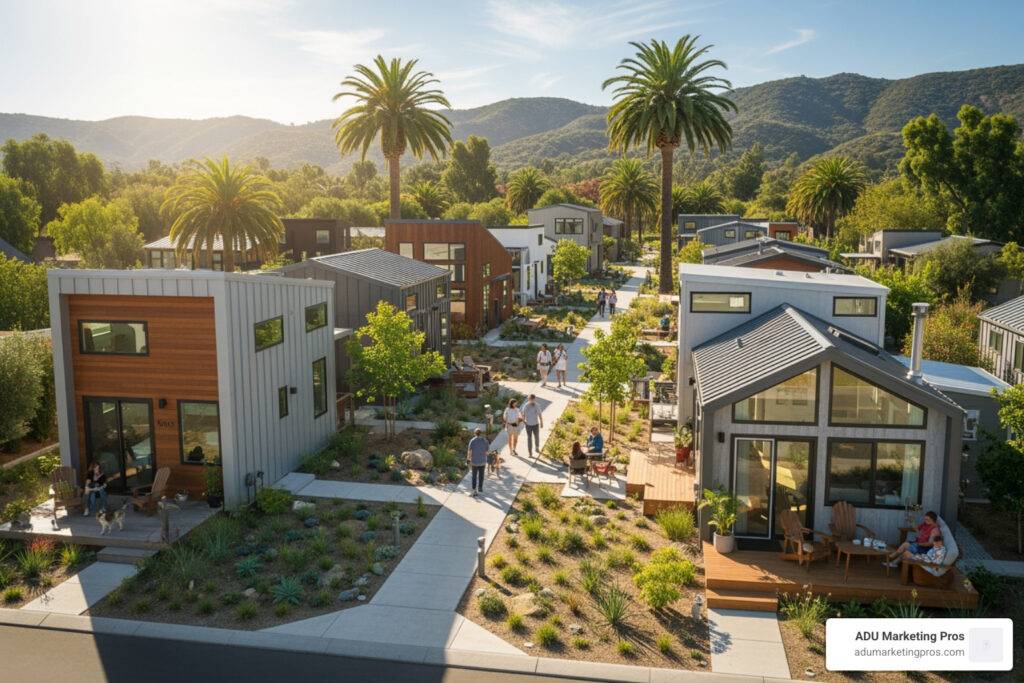
Why Tiny Home Parks Are Changing Southern California Living
Tiny home parks in Southern California are emerging as a practical solution to the region’s sky-high housing costs, while also reflecting broader shifts in how Californians think about home, work, and community.
Instead of chasing ever-larger houses and long commutes, many residents are opting for compact, efficient spaces in well-located communities. These parks offer an affordable alternative that doesn’t sacrifice lifestyle or location and often pair beautifully with the flexible, design-forward approach that ADU and small-space builders bring to the market.
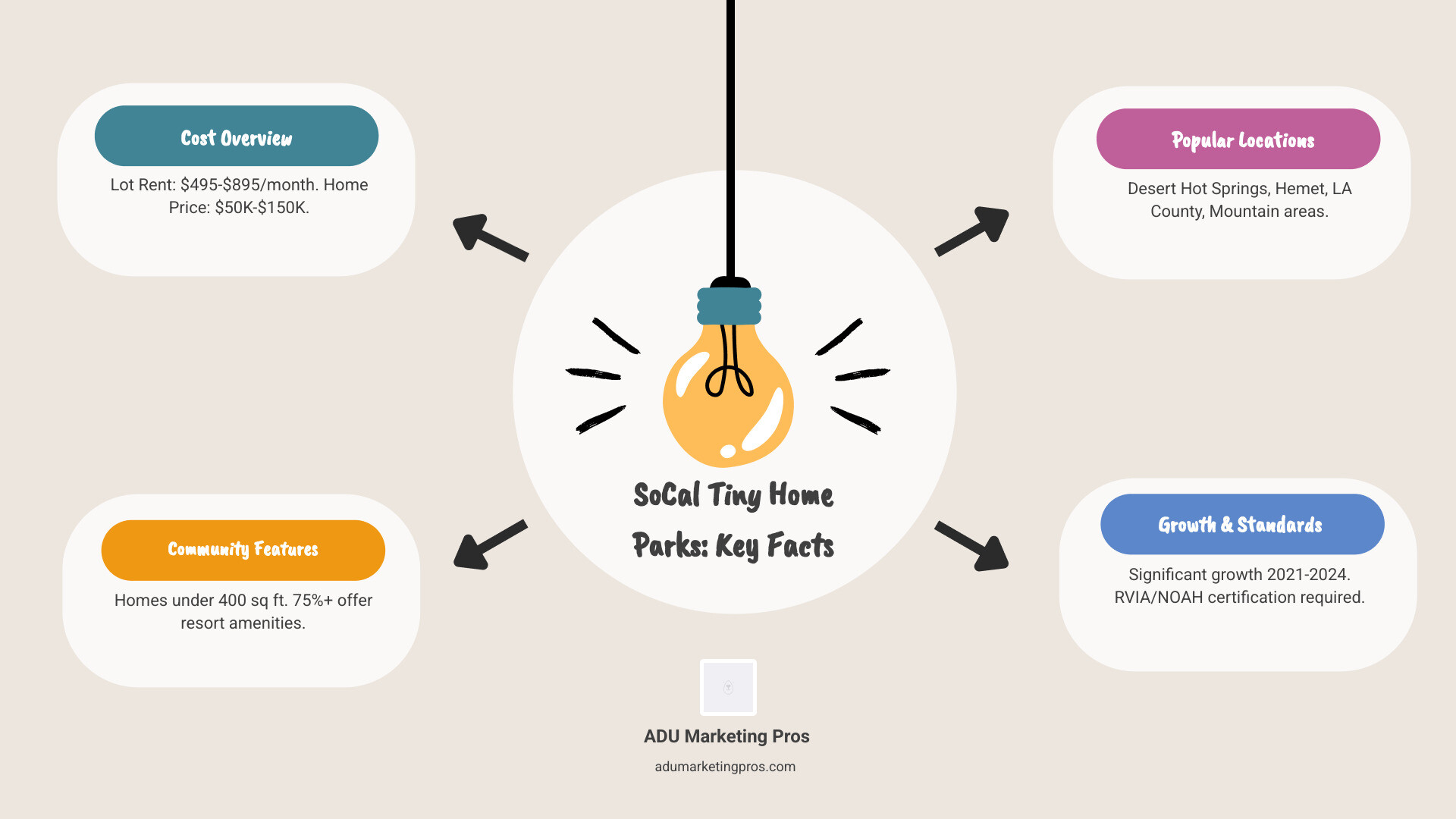
In these parks, you can expect monthly lot rents from approximately $495 to $895, with home purchase prices typically ranging from $50,000 to $150,000. Most communities accommodate homes under 400 square feet and require RVIA or similar certification. You’ll find them in diverse locations like Desert Hot Springs, Hemet, and various mountain communities, often featuring amenities like pools, clubhouses, and pet-friendly spaces.
The tiny home movement is about reimagining what home means in a region where the traditional California dream feels increasingly out of reach. Southern California’s climate is ideal for this lifestyle, allowing patios, gardens, and community areas to become natural extensions of your home year-round.
From desert landscapes to mountain retreats, tiny home parks are popping up across the Southland, some offering luxury amenities and others focusing on affordability and long-term stability. For ADU builders, designers, and allied professionals, these communities highlight how thoughtful small-space design and smart land use can create real value for residents.
Whether you’re downsizing, a first-time buyer, or simply value experiences over possessions, a tiny home community in Southern California could be your perfect fit.
Tiny home parks in southern california terms to know:
- tiny house living in southern california
- land for sale in southern california for tiny houses
- tiny home prices
The SoCal Tiny Living Landscape: What to Expect
Southern California’s diverse geography makes it a perfect backdrop for the tiny home movement. From sun-drenched deserts to serene mountains and busy urban centers, the region offers a variety of environments for those seeking a smaller footprint. Our team has seen how these communities are reshaping residential options and providing novel solutions to traditional housing challenges, often running parallel to the rise of ADUs and other small-footprint housing types across the state.
Types of Tiny Home Parks in Southern California
When exploring tiny home parks in Southern California, you’ll find several distinct types, each offering a unique experience:
- Dedicated Tiny Home Communities: Designed specifically for tiny homes, these parks feature purpose-built lots and a strong community feel. Paradise Tiny Home Community in Desert Hot Springs is a prime example.
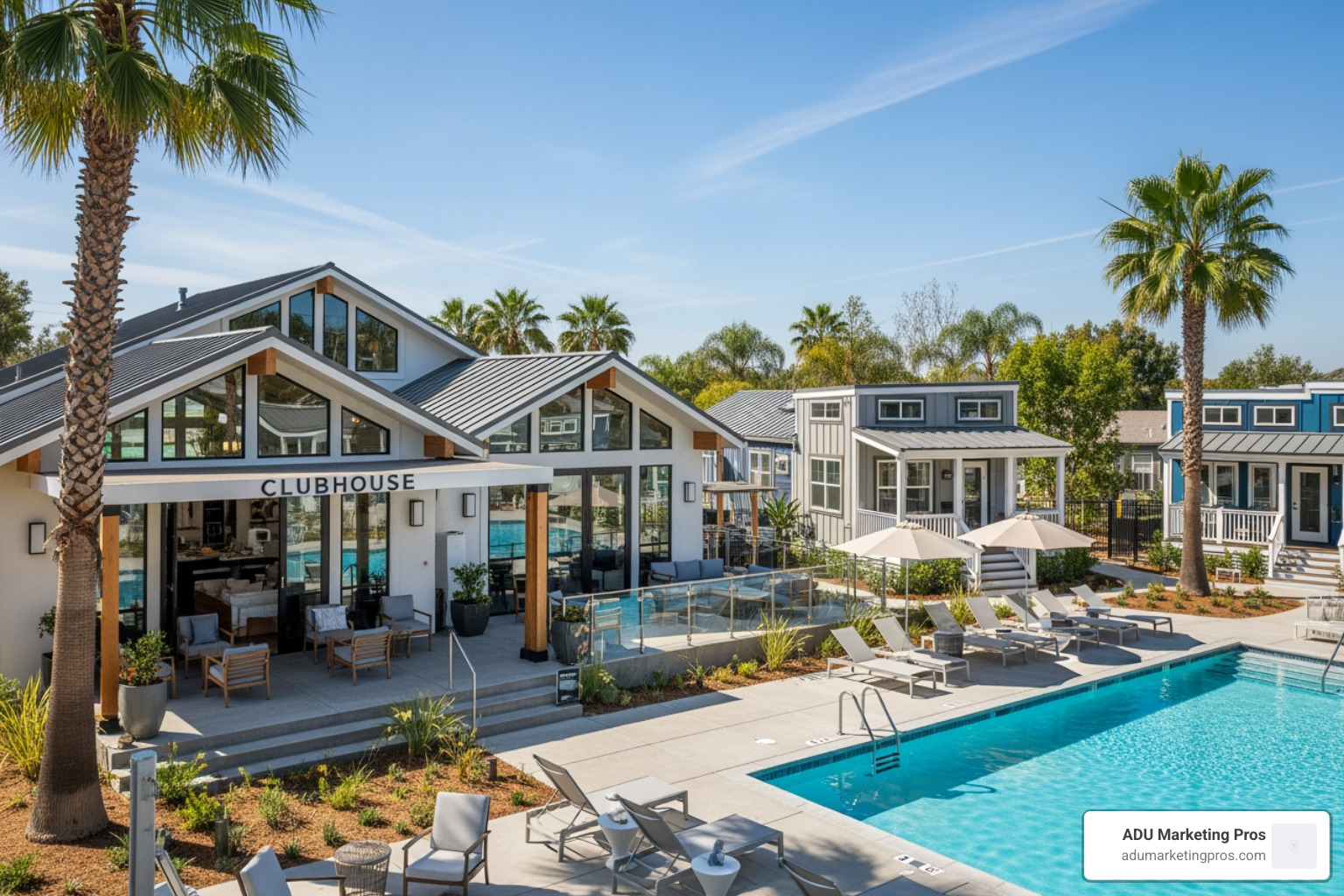
- Luxury Resorts: Some parks blend the minimalist lifestyle with high-end amenities like resort-style pools, clubhouses, and curated social events.
- RV Parks That Allow Tiny Homes: Many traditional RV parks now accommodate tiny homes on wheels (THOWs), especially those with RV certification. Parks like Casa Del Sol in Hemet offer a budget-friendly entry point into tiny living.
- Park Model RVs: These are larger units (still under 400 sq. ft.) designed for semi-permanent placement. Oakridge Mobile Home Park welcomes both tiny houses and park models for long-term residency.
- THOW-Friendly Parks: These parks cater specifically to tiny homes on wheels, providing necessary hookups. Tiny House Block on Mount Laguna is a well-known mountain retreat for mobile dwellers.
- Permanent Foundation Communities: Less common, these communities feature small, modular homes on permanent foundations, blending tiny living with traditional homeownership and sharing many characteristics with ADU-style development.
The Cost of Community: Lot Rents, Fees, and Utilities
Affordability is a primary driver for choosing tiny home parks in Southern California. While a tiny home can cost $50,000 to $150,000, ongoing costs are much lower than traditional housing.
- Lot Rent Ranges: Monthly space rent typically falls between $495 and $895+. For example, Healing Sands Mobile Home & RV Park starts at $495, while amenity-rich communities like Paradise Tiny Home Community are estimated to start from $795 to $895/month.
- Utility Costs: Most parks include water, sewer, and trash in the rent, but electricity is almost always billed separately. Clarify what’s included before signing a lease.
- Community Fees: You’ll pay a monthly “space rent” that covers your lot and access to amenities, rather than a traditional HOA fee.
Living in a park significantly reduces upfront investment compared to the average price for a tiny home with land in Southern California, which is around $313,810. For more details on costs, see our guide on More info about the cost of small homes. For broader context on housing affordability in the state, resources such as the California Housing Partnership offer useful, data-driven insights.
Amenities and Lifestyle Perks
The appeal of tiny home parks in Southern California goes beyond cost savings; it’s about lifestyle. Many communities offer an impressive array of amenities:
- Resort-Style Amenities: It’s common to find swimming pools, fitness centers, and clubhouses with activity rooms. Parks like Casa Del Sol RV Park and Paradise Tiny Home Community offer these luxuries.
- Community Spaces: Shared spaces like community gardens, fire pits, and lounges are central to park life, fostering a vibrant neighborhood atmosphere.
- Pet-Friendly Policies: Many parks, including Healing Sands and Casa Del Sol, are pet-friendly, recognizing that pets are part of the family.
- Practical Facilities: On-site laundry and reliable Wi-Fi are common conveniences that ensure residents have modern necessities.
- Outdoor Living: Southern California’s climate makes your outdoor space an extension of your home. Patios and community areas become your living and dining rooms for much of the year.
For ADU builders and designers, these parks showcase how strong placemaking, thoughtful amenities, and smart community design can dramatically increase the appeal and value of small homes.
Navigating the Rules: Zoning and Regulations for Tiny Homes
While the dream of tiny living is grand, the reality involves navigating a maze of regulations. Understanding the legal landscape for tiny home parks in Southern California is crucial for a smooth transition.
Understanding Local Zoning Laws
The legality of tiny homes in Southern California depends on their classification and local zoning ordinances.
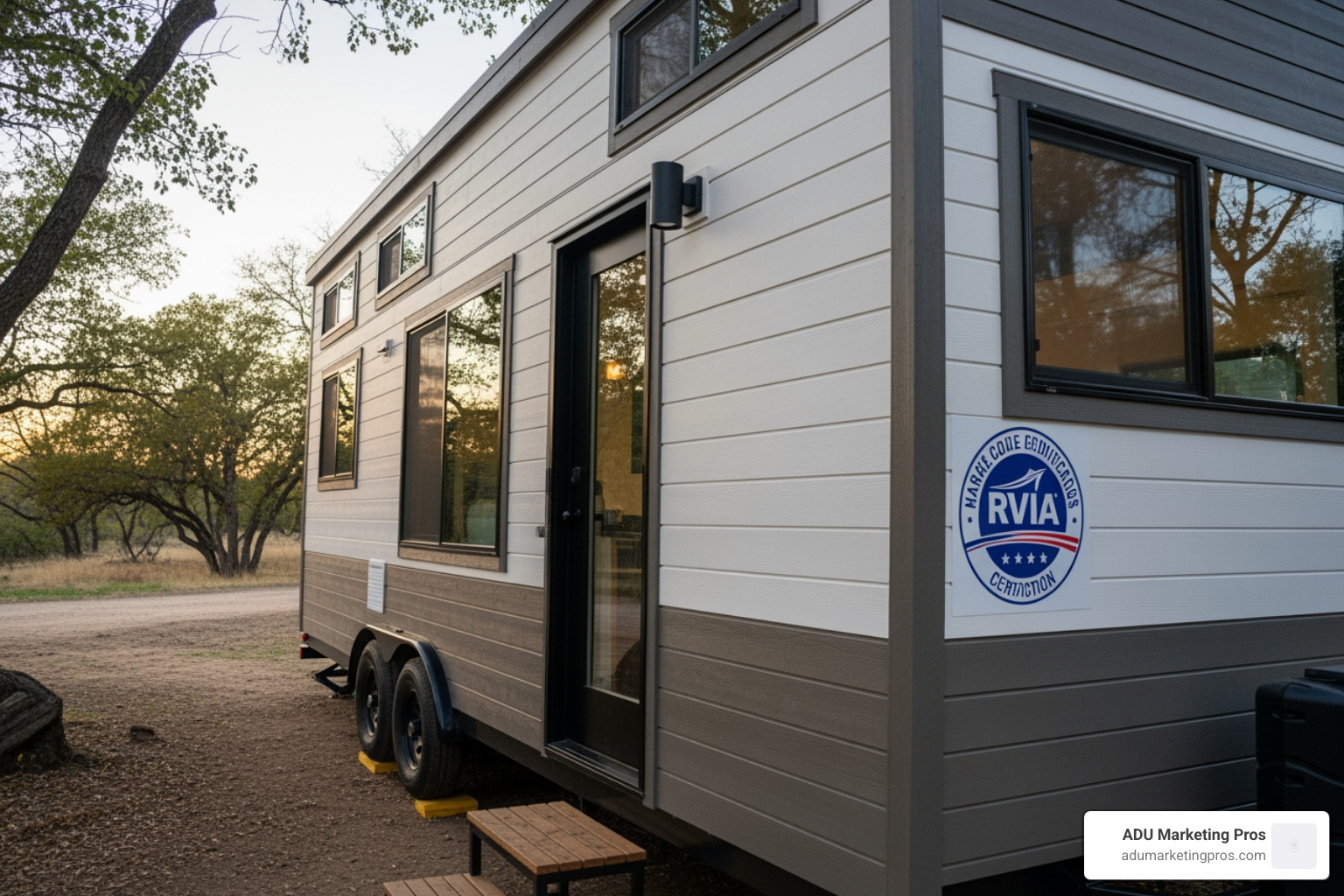
- Movable Tiny Homes and RV Certification: Most tiny homes on wheels (THOWs) are legally classified as recreational vehicles (RVs). This requires them to have certifications from bodies like the RVIA (Recreational Vehicle Industry Association) or NOAH (National Organization of Alternative Housing) to ensure they meet safety standards like ANSI 119.2.
- City-Specific Regulations: While California supports tiny homes, individual cities have significant control. For example, the Official Fresno tiny house guidelines show how municipalities outline specific requirements. In Southern California, movable tiny homes must generally be placed in designated parks or on private property as an ADU, meeting local setback rules.
- Placement: THOWs cannot be parked just anywhere. Legal placement is restricted to designated RV parks, mobile home parks, or private property under specific conditions.
Park-Specific Rules and Requirements
Each tiny home park has its own set of rules that can vary significantly.
- Home Size Limits: Most tiny home parks in Southern California limit homes to under 400 square feet to ensure consistency and comply with permits.
- Aesthetic Guidelines: Some parks, like Paradise Tiny Home Community, require incoming homes to match the community’s aesthetic to maintain a cohesive look.
- Occupancy Rules: Many parks require owner-occupancy to foster a stable, long-term community. Subleasing or short-term rentals are often restricted.
- Certification Requirements: If you bring your own tiny home, it must have RVIA, NOAH, or a similar certification to prove it meets safety and construction standards.
Our guide on places that allow tiny homes offers more insights on this topic.
The Difference Between a Tiny Home and an ADU
While both are small living spaces, their legal definitions are distinct, which is a key area of our expertise.
- Legal Definitions: An Accessory Dwelling Unit (ADU) is a permanent structure on a foundation, subject to traditional building codes. A THOW is often classified as an RV, designed for mobility and subject to different regulations.
- Zoning Implications: State law makes it easier to add ADUs to most residential properties. THOWs, however, require specific zoning for RVs or placement in designated tiny home parks in Southern California.
- Use Cases: ADUs are ideal for long-term housing for family or rental income. THOWs offer mobility and are perfect for those who prefer a park community setting.
We explore this topic in-depth in our article ADU vs. Tiny House.
A Tour of Tiny Home Parks in Southern California
Southern California offers a mosaic of tiny home living experiences. Let’s take a closer look at some of the communities you might encounter.
Resort-Style Living: Luxury and Amenities
For those who appreciate the finer things, resort-style tiny home parks in Southern California blend compact living with vacation-level comforts.
- Desert Hot Springs & Hemet: The Coachella Valley is a hotbed for these developments. Paradise Tiny Home Community in Desert Hot Springs offers upscale homes from the low $100,000s with resort-style amenities like a pool and clubhouse, featuring models from builders like BOXABL and Silver Crest. Further west, Casa Del Sol RV Park in Hemet provides a similar resort feel for all ages, accommodating tiny homes alongside RVs with amenities like a heated pool, fitness center, and clubhouse. It also offers budget-friendly rent-to-own options.
- Urban & Coastal Concepts: While still emerging, luxury tiny living is also touching urban centers. Concepts like a “Tiny House Beach Resort” in San Diego or a serene park in Los Angeles aim to provide a high-quality, amenity-rich experience without compromising on location.
Back to Nature: Rustic and Scenic Parks
If your tiny home dream involves fresh air and stunning vistas, Southern California’s scenic parks are calling.
- Mountain Settings: Tiny House Block on Mount Laguna, in San Diego County, is a standout for those seeking a tranquil, natural environment surrounded by forests and trails. Similarly, Oakridge Mobile Home Park offers a four-season mountain experience, welcoming tiny homes for permanent or semi-permanent stays. A major advantage of parks like Oakridge is the flexibility of long-term residency without required pull-out dates, which is a significant benefit for tiny homeowners.
Finding Affordable Options
Affordability is a cornerstone of the tiny home movement. Budget-friendly options can often be found in desert communities or by looking at traditional RV parks that are open to tiny homes.
- Economical Choices: Parks like Healing Sands Mobile Home & RV Park in Desert Hot Springs offer monthly site rents starting as low as $495. Many RV parks provide a more budget-conscious alternative to dedicated tiny home communities.
- Pathways to Ownership: Rent-to-own programs, like those at Casa Del Sol, can be a fantastic pathway to homeownership, allowing you to gradually transition from renting to owning with lower upfront costs.
The Bigger Picture: Tiny Homes and Housing Solutions
Beyond individual aspirations, tiny home parks in Southern California are playing a significant role in addressing broader societal challenges, particularly housing affordability and homelessness. As experts in innovative housing marketing, we find this aspect of the movement compelling because it aligns closely with the policy-driven growth of ADUs across California.
A Solution for Housing Affordability
Tiny homes offer a tangible path toward stable housing for more people in high-cost Southern California.
- Lower Cost of Living: Choosing a tiny home means reducing living expenses. Less space to heat, cool, and furnish translates to lower utility bills. With lot rents often far less than apartment rents, tiny living offers a dramatically lower cost of living.
- Path to Homeownership: For many, a tiny home in a park represents an achievable entry point into homeownership, allowing them to build equity instead of renting indefinitely.
- Reducing Environmental Footprint: Living tiny is inherently more sustainable. Smaller homes use fewer resources to build and maintain, reducing one’s environmental footprint. You can Explore eco-friendly small homes on our site for more information. For additional background on the environmental benefits of smaller, efficient homes, the U.S. Department of Energy provides useful guidance on high-performance residential design.
From a strategic standpoint, many of the same market forces driving interest in tiny homes are also accelerating ADU adoption: high land costs, changing household sizes, and a desire for flexible, income-producing spaces. Firms that understand both worlds are better positioned to advise clients and capture emerging demand.
Tiny Home Villages for the Unhoused
One of the most impactful applications of the tiny home concept is its role in addressing the homelessness crisis in Southern California.
- A New Model for Interim Housing: Organizations like Hope the Mission have pioneered tiny home villages as safe, stable interim housing for the unhoused in Los Angeles. These are not just shelters but supportive communities.
- Los Angeles Initiatives: Hope the Mission launched its first Tiny Home Village in L.A. in 2021 and has rapidly expanded. The Arroyo Seco Village in Highland Park is the largest in California, with 117 units. Each 64 sq. ft. home provides beds, climate control, and a locking door. Importantly, these villages allow couples and pets to stay together, offering dignity often missing from traditional shelters.
- Wrap-Around Support Services: These villages provide comprehensive support, including case management, mental health services, job training, and meals, with the goal of transitioning residents to permanent housing. This model demonstrates a scalable, community-based solution to homelessness. You can Learn about Hope the Mission’s villages to see this work in action.
For ADU and small-housing professionals, these initiatives underscore how compact, well-designed structures can be strategically deployed to meet urgent social needs when paired with thoughtful policy and services.
Your Roadmap to Joining a Tiny Home Community
Convinced that a tiny home park in Southern California is your next adventure? Here’s a roadmap for finding and securing your spot.
Finding and Vetting Potential Parks
Doing your homework is the most critical step. Don’t just pick the first park you see.
- Online Research: Start with targeted searches like “tiny home parks Southern California” or “RV parks that allow tiny homes Los Angeles.” Tiny living forums and social media groups are also valuable resources.
- Community Tours: There’s no substitute for an in-person visit. Schedule tours to assess the park’s maintenance, home spacing, and overall vibe. Does it feel like a place you could call home?
- Read the Park Rules: Request and thoroughly review the park’s rules and regulations. This document covers everything from pet policies to quiet hours and is essential to read before committing.
- Assess Management: Good management is key to a positive living experience. Look for a responsive and fair management team. Online reviews can sometimes offer insight into this.
- Location Considerations: Think about your daily life. Is the park conveniently located for your commute, family, and access to essential services?
The Application Process: What to Prepare
Once you’ve found a park you love, the application process is similar to renting an apartment, with a few unique aspects.
- Waitlists: Be prepared for waitlists, especially at popular parks. Get on them early.
- Application Forms: You’ll need to complete a detailed application, providing personal and residency history.
- Background and Credit Checks: Expect to undergo standard background and credit checks, which usually require a small fee.
- Approval Process: Park management must approve your application, and if you’re bringing your own home, its specifications as well.
- Lease Agreement: Once approved, you’ll sign a lease detailing the rent, included utilities, and move-in procedures.
Bringing Your Own vs. Buying On-Site
This is a major decision with two main paths.
- Purchasing a Park Model: Many tiny home parks in Southern California, like Paradise Tiny Home Community, sell new homes directly. This simplifies the process, as the home already meets park standards and is situated on a lot.
- Bringing a Pre-Built Home: If you already own a THOW, you may be able to bring it to a park. However, expect strict requirements. Your home must be certified, under a certain size (usually 399 sq. ft.), and its style may need to match the community’s aesthetic. Always contact the park manager to confirm specific rules and costs.
If you’re considering building or buying a home to bring to a park, our resources can help you Find Tiny House Builders in Southern California.
Frequently Asked Questions about Tiny Home Living in SoCal
We’ve covered a lot, but you might still have questions. Here are answers to some common inquiries about tiny home parks in Southern California.
How much does it cost to live in a tiny home park in Southern California?
Costs vary widely by location and amenities. Expect monthly lot rent to range from approximately $495 to $895+, with electricity often billed separately. If you’re purchasing a new tiny home within a park, prices can range from $50,000 to over $150,000. This is still significantly more affordable than the average cost of a traditional home in the region.
Are tiny homes on wheels (THOWs) legal in Southern California parks?
Yes, in many parks, THOWs are legal, but they are typically treated as recreational vehicles (RVs). This means the park must be zoned for RVs, and your home must have an RVIA (Recreational Vehicle Industry Association) or NOAH (National Organization of Alternative Housing) certification. Individual parks will also have their own rules regarding the home’s size, age, and appearance, so always check directly with management.
Can I find land to start my own tiny home community?
While appealing, this is extremely challenging in Southern California. Finding land with the correct zoning (typically for an RV or mobile home park) is difficult and expensive. The costs of developing infrastructure (roads, utilities) and navigating the complex permitting process are substantial. For most people, joining an existing, established tiny home park is a far more feasible path. If you are determined to look for land, our guide can offer some starting points, but be prepared for a long journey: Discover Land for Sale in Southern California for Tiny Houses.
Conclusion
The rise of tiny home parks in Southern California offers a compelling solution to the region’s housing challenges, blending affordability, community, and an intentional lifestyle. From luxury desert resorts to rustic mountain retreats, these communities provide a tangible path to homeownership and a lower cost of living. The SoCal climate further improves this lifestyle, making outdoor spaces a true extension of your home.
Tiny home parks also sit within a larger ecosystem of small-scale housing innovation that includes ADUs, cottage courts, and small-lot developments. For builders, architects, and developers, understanding how these models intersect is key to creating projects that resonate with modern buyers and renters.
As ADU Marketing Pros, we understand the nuances of small-scale living and its potential to transform lives, as well as the marketing challenges firms face when trying to reach the right clients. From helping you distinguish between tiny homes and ADUs to exploring the most eco-friendly options, we focus on positioning your expertise, not just your price, so you can stand out in a competitive market.
The future of housing in Southern California is diverse, and tiny home parks are a bright part of that picture. If your firm designs, builds, or consults on ADUs or other small-space solutions, there is a rapidly growing audience looking for exactly what you offer.
Ready to explore sustainable living and reach more of the homeowners who want it? Find more about eco-friendly small homes and find how specialized, data-driven marketing can help you connect your expertise with the right clients across Los Angeles, San Diego, and the greater Bay Area.