
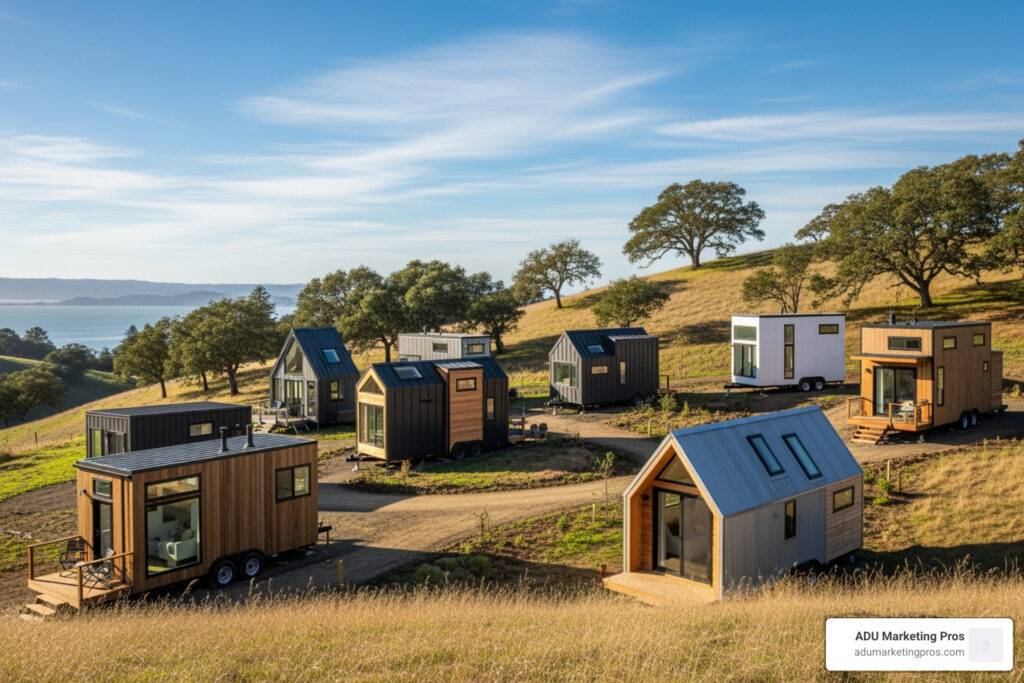
Why Tiny Homes Are Reshaping Bay Area Housing
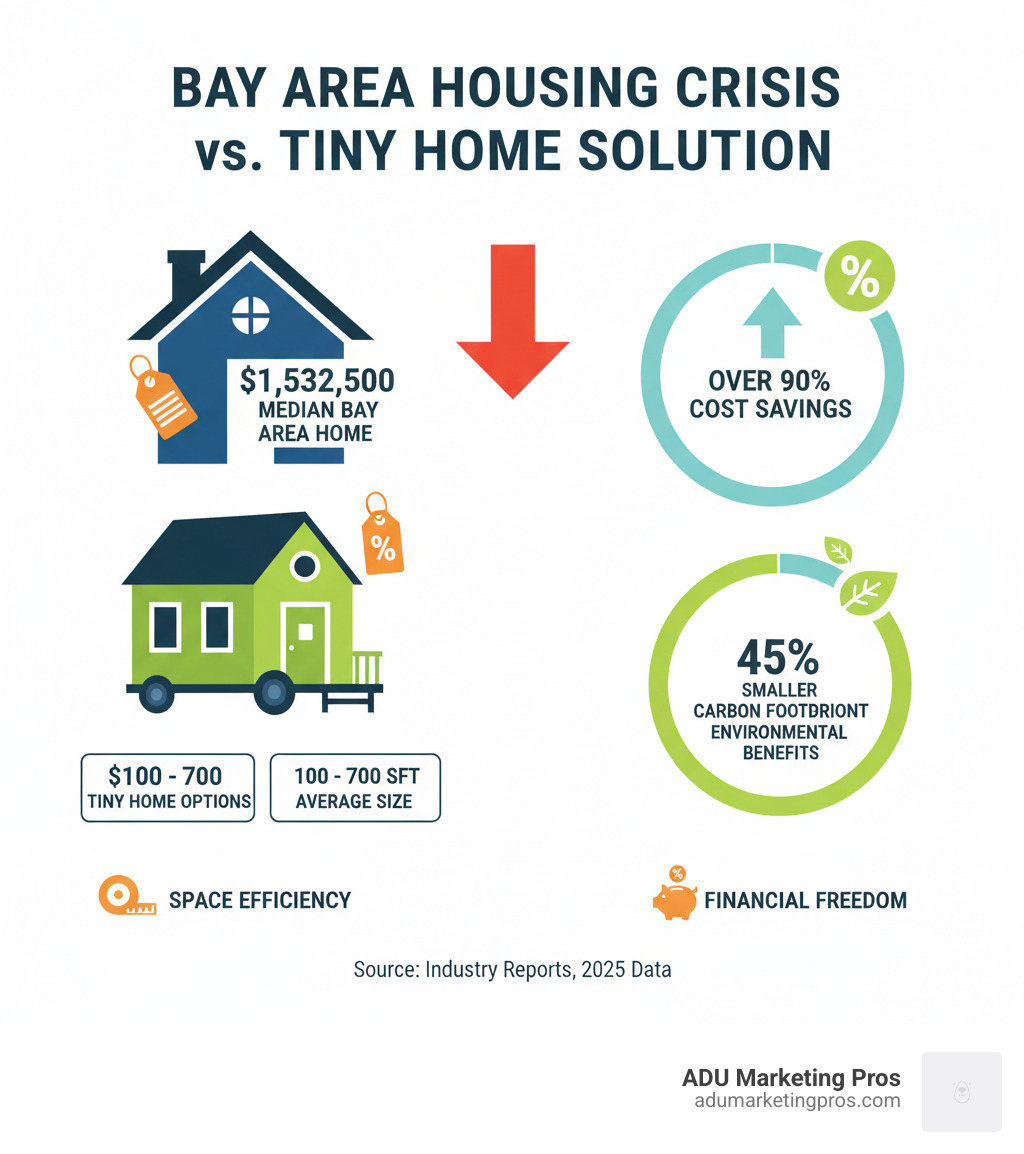
In the Bay Area, one of the nation’s most expensive housing markets, tiny homes Bay Area are emerging as a practical solution. With median home prices soaring past $1.5 million, many are embracing compact dwellings to achieve homeownership, reduce their environmental footprint, and live a simpler lifestyle.
Quick Facts About Tiny Homes in the Bay Area:
- Price Range: $10,000 to $167,600 depending on size and features
- Average Size: 100 to 700 square feet
- Land Cost: Approximately $21,962 per acre in the Bay Area
- Legal Options: Accessory Dwelling Units (ADUs), certified tiny homes on wheels (THOWs), or placement in designated communities
- Key Locations: Sonoma County, San Jose, Oakland, and Sacramento Delta region
- Communities: Park Delta Bay (first legal tiny home community in Northern California) and social housing projects like Dignity Village in Alameda
The tiny home movement offers financial freedom without forcing residents to leave the region they love. This isn’t just about affordability; it’s a shift in values toward prioritizing experiences over possessions and sustainability over consumption. Sonoma County, for example, hosts over 100 tiny dwellings and an annual small house movement exhibit.
However, the path to tiny living has obstacles, including complex zoning regulations, non-traditional financing, and the challenge of finding legal land or parking. This guide will walk you through everything you need to know about tiny home living in the Bay Area, from costs and construction to navigating the legal landscape.
The Allure of Tiny Living in a High-Cost Region
For many Bay Area residents, the financial pressure of living in an expensive region is relentless. Tiny homes Bay Area offer a genuine lifeline, providing financial breathing room and a more intentional way of life.
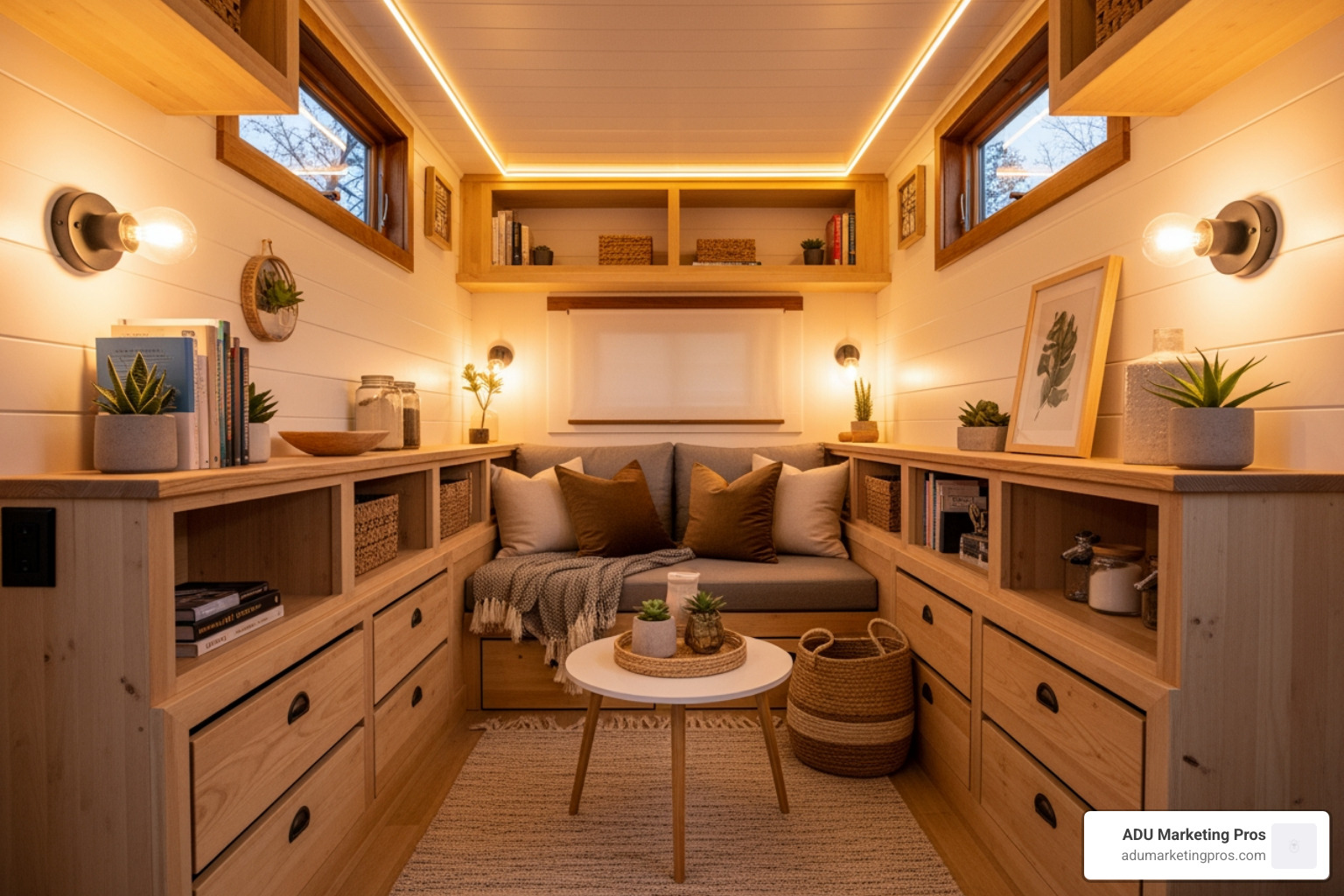
The financial advantages are significant. Downsizing can drastically reduce or eliminate mortgage payments, lower utility bills, and minimize maintenance costs. This relief goes beyond the bank account, promoting a lighter environmental footprint through less energy consumption and fewer construction materials. For those interested in green building, exploring Eco-Friendly Small Homes offers more strategies for sustainable living.
This shift often leads to a more intentional lifestyle, freeing up time and resources for travel, hobbies, and community. While tiny living requires creativity to manage space constraints, many find the trade-offs for freedom and simplicity are well worth it.
Why the Bay Area is a Hotspot for the Tiny Home Movement
The Bay Area has become a hub for the tiny home movement precisely because of its high cost of living. When conventional homeownership is out of reach for much of the population, tiny homes offer an affordable path to owning property or simply reducing housing costs. Sonoma County, in particular, has acceptd the movement, with its values of urban homesteading and green living aligning perfectly with the tiny home philosophy. Understanding the ADU vs Tiny House distinction is key, as regulations and opportunities differ significantly between permanent and mobile units.
The Social Impact of Compact Dwellings
Beyond individual benefits, tiny homes Bay Area are addressing the region’s homelessness crisis. Alameda County has pioneered the use of compact dwellings for transitional housing. The Fairmont Navigation Center in San Leandro includes 34 tiny home units, with 15 serving as medical respite care for individuals recovering from illness or injury. Similarly, Dignity Village in Alameda provides 47 private rooms for up to 61 residents, offering a dignified community with access to case management, healthcare, and employment resources. These projects show that tiny homes are versatile, cost-effective tools for tackling housing insecurity at scale.
Navigating the Costs and Sizes of Tiny Homes Bay Area
When exploring tiny homes Bay Area, the first question is usually about cost. The good news is that prices vary widely, with an option for nearly every budget.
Entry-level models, like basic shells or kits, can start as low as $10,000 to $25,000. Mid-range, move-in ready prefabs from builders like Pacifica Tiny Homes typically fall between $50,000 and $90,000. For those seeking premium materials and extensive customization, high-end builds can exceed $150,000. Size-wise, these homes generally range from a compact 100 sq ft to a more spacious 700 sq ft, with most falling in the 200-400 sq ft range.
The cost per square foot can range from $100 for a basic shell to over $500 for a luxury custom build. For more context on local construction expenses, see our guide on ADU Cost Bay Area.
What Influences the Final Price Tag?
Several factors determine the final price of a tiny home. The table below breaks down how costs differ across build types.
| Factor | DIY Shell / Kit | Prefabricated Tiny Home | Custom Built Tiny Home |
|---|---|---|---|
| Materials | Basic, often salvaged or budget-friendly | Standardized, good quality, some upgrade options | High-end, custom, eco-friendly, imported, smart tech |
| Labor | Primarily owner’s sweat equity | Factory assembly, professional installation | Skilled craftsmen, specialized trades |
| Appliances/Finishes | Basic, used, or owner-provided | Mid-range, energy-efficient | Luxury, smart appliances, custom cabinetry, designer finishes |
| Foundation/Mobility | Often on wheels (THOW), minimal foundation costs | On wheels or permanent foundation (ADU) | Permanent foundation (ADU), complex site prep |
| Permitting/Fees | Minimal for THOWs (RV registration) | Varies by local jurisdiction, easier for pre-approved ADUs | Extensive for ADUs, site-specific engineering |
| Utilities | Off-grid or basic hookups | Standard hookups, some off-grid options | Integrated smart systems, solar, advanced water recycling |
| Delivery | Self-transport or local hauler | Specialized transport, potentially long distances | Local delivery, crane placement |
Key decisions like using salvaged versus premium materials, DIY versus professional labor, and basic versus luxury appliances will significantly impact your budget. Additionally, choosing between a mobile foundation (wheels) and a permanent one (ADU) affects both initial costs and long-term legal status. Finally, don’t forget to budget for permitting and utility hookups, which can range from a few thousand dollars to over $20,000 depending on your site and jurisdiction.
Understanding the Cost of Land
Here’s the Bay Area reality check: the land can cost more than the tiny home itself. The average price for an acre of land is approximately $21,962, but suitable parcels near urban centers are scarce and command much higher prices. The average listing price for the few tiny homes sold with land is a staggering $1,532,500.
This reality pushes most buyers toward creative solutions. Leasing a spot in a tiny home community like Park Delta Bay is one option. However, the most popular solution is placing a tiny home as an Accessory Dwelling Unit (ADU) in an existing backyard. This approach bypasses the land purchase entirely and benefits from California’s ADU-friendly legislation. To see if a property qualifies, our guide on ADU Minimum Lot Size breaks down regulations for various Bay Area cities.
Types of Tiny Homes and Building Options
The world of tiny homes Bay Area is wonderfully diverse, with several styles and construction methods to fit different needs, budgets, and lifestyles.
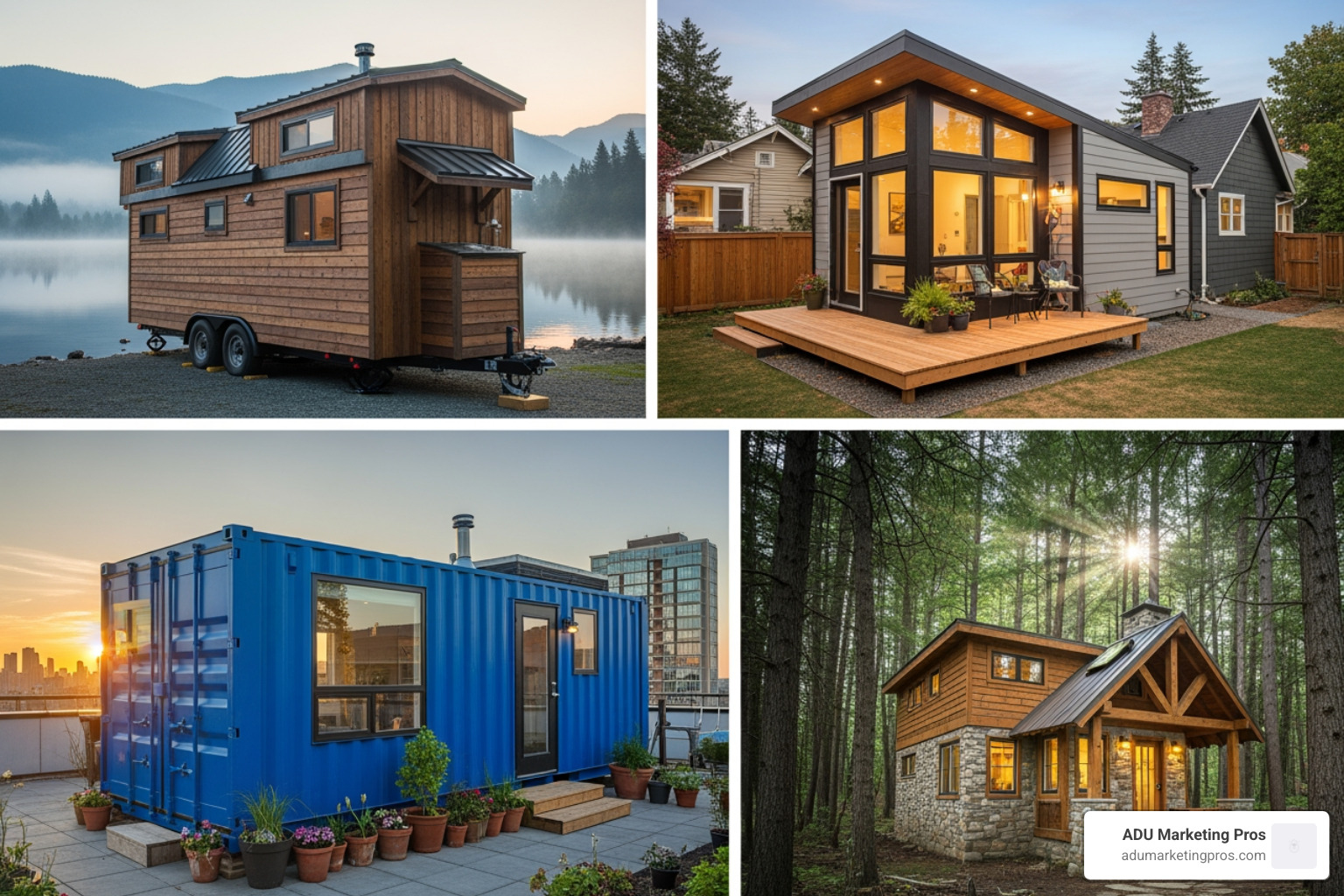
- Tiny Homes on Wheels (THOWs) offer maximum mobility and are built on trailers.
- Prefab and Modular Homes are built in a factory, ensuring a faster timeline and quality control.
- Shipping Container Homes provide a modern, durable, and eco-friendly option.
- DIY Shells and Kits appeal to hands-on builders who want to customize their space and save on labor costs.
For those exploring factory-built options, our guide on Prefab Granny Flats in California offers valuable insights into this growing market.
Tiny Homes on Wheels (THOWs) vs. Permanent Foundations (ADUs)
Understanding the legal distinction between a THOW and a tiny home on a foundation is crucial. This choice affects where you can place your home, how it’s regulated, and how it’s financed.
THOWs are typically classified as Recreational Vehicles (RVs). They require RVIA certification to be accepted in most RV parks and tiny home communities and are registered with the DMV. Their mobility is a major advantage, but finding legal, long-term parking in the Bay Area can be challenging.
Tiny Homes on Permanent Foundations are usually built as Accessory Dwelling Units (ADUs). They are considered real estate, must comply with local building codes, and require permits. While they lack mobility, ADUs increase property value, provide a stable housing solution, and are often easier to finance. This is the most popular route in the Bay Area, as it transforms backyard space into legal, permanent housing. These units must meet all ADU Building Requirements, including setback and height rules.
Finding Reputable Builders and Manufacturers
Choosing the right builder is critical to a successful project. The Bay Area has several excellent builders who understand California’s unique regulatory landscape.
When evaluating builders, prioritize those with experience in California. A strong portfolio, customization options, and turnkey services that cover design through setup are key indicators of a reputable professional. While many national manufacturers ship to the area, local builders like Pacifica Tiny Homes, known for their popular Bay Cottage and Tiny Victorian models, offer deep knowledge of regional codes and climate considerations.
Turnkey services are often worth the investment, as the builder handles everything from design and permitting to delivery and installation. For a comprehensive directory of vetted professionals, our guide on ADU Builders Bay Area is an excellent resource. Many ADU builders have expanded their expertise to include tiny homes, bringing the same quality standards to both project types.
The Legal Landscape: Zoning, Regulations, and Communities
Navigating the legal maze for tiny homes Bay Area can feel overwhelming, but understanding the rules is essential. Regulations vary dramatically from one city to another—what’s legal in San Jose may not be in Oakland or Sonoma County. Due diligence is not optional.
Fortunately, California’s state-level reforms, especially regarding ADU laws, have opened doors for compact living by streamlining the permitting process. However, local jurisdictions still hold significant authority, so contacting your local planning department is a critical first step.
Key Legal Considerations for tiny homes Bay Area
How your tiny home is classified—as an RV, mobile home, or ADU—determines the rules it must follow.
- Tiny Homes on Wheels (THOWs) are often classified as RVs. They typically require RVIA certification for safety and construction standards, which is a prerequisite for entry into many RV parks and tiny home communities. However, many cities restrict full-time residency in RVs.
- Accessory Dwelling Units (ADUs) represent the most direct path to permanent tiny living. A tiny home built on a permanent foundation is considered real estate and must comply with local building codes, including setbacks, height limits, and parking requirements. California’s progressive laws have made ADUs increasingly viable across the Bay Area. Our guide to California ADU Regulations covers these essentials.
Many jurisdictions now reference Appendix Q of the International Residential Code, which provides building standards for tiny homes, though local adoption varies. For advocacy and additional resources, the American Tiny House Association is an invaluable guide for prospective homeowners.
Tiny Home Communities and Parking Solutions
So, where can you legally place a tiny home in the Bay Area? Several legitimate options exist.
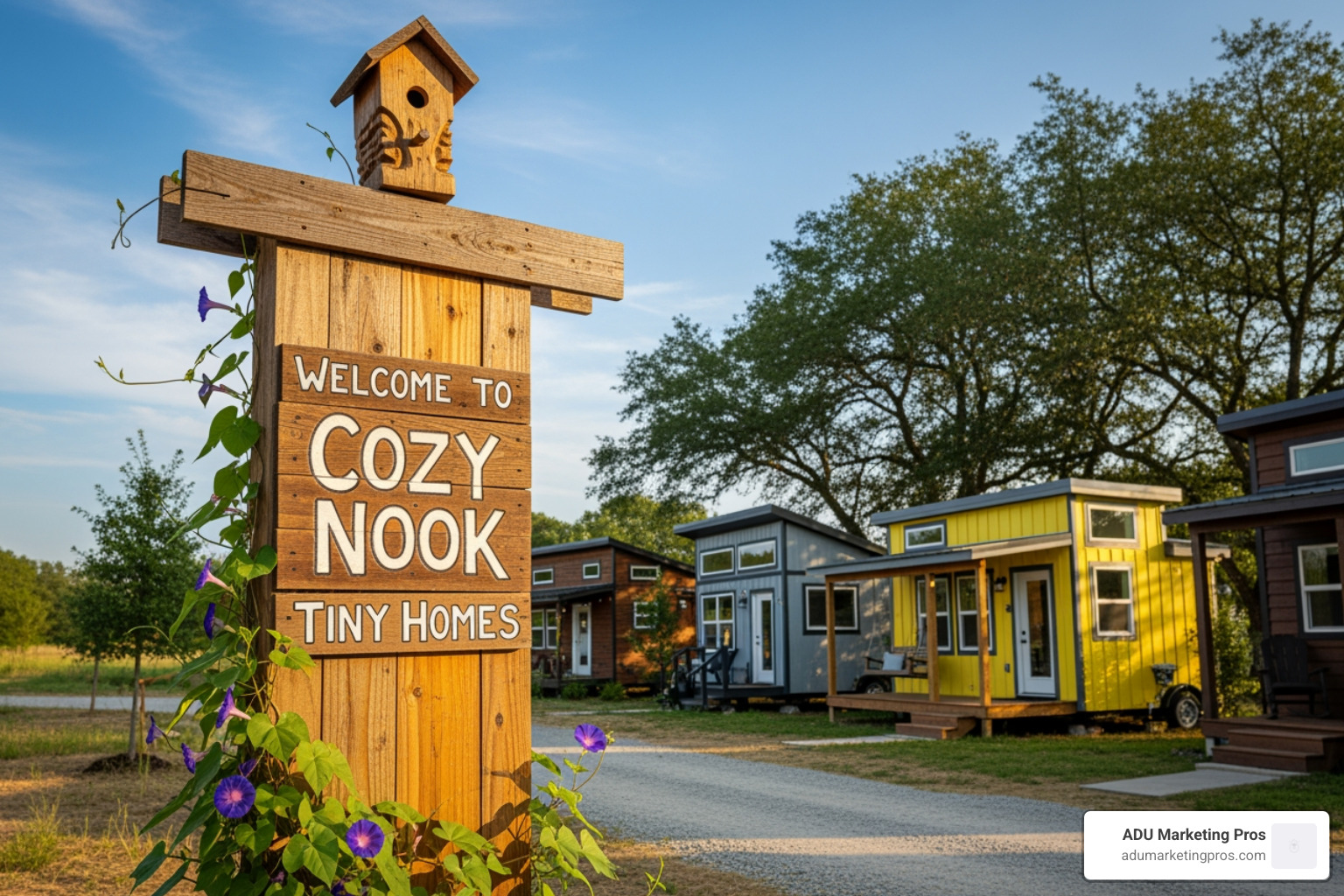
- Tiny Home Communities: Park Delta Bay, located in the Sacramento Delta region, is Northern California’s first legal tiny home community, welcoming RVIA-certified THOWs for year-round residency.
- RV Parks: Many traditional RV parks accept certified THOWs, though some may have restrictions on long-term stays.
- Backyard Placement (ADU): This is the most popular solution. Placing a tiny home on a permanent foundation in a backyard provides a stable, legal housing option that can add value to the property.
- Rural Land: Purchasing land in less-developed areas of counties like Sonoma can offer more flexible zoning, but you must still verify regulations and utility access.
Beyond individual housing, tiny homes are also serving community needs. Projects like the Fairmont Navigation Center in San Leandro and Dignity Village in Alameda use compact dwellings to provide dignified transitional housing and support services for those experiencing homelessness.
Financing and Acquiring Your Bay Area Tiny Home
Financing a tiny homes Bay Area project differs from a traditional mortgage, but several solid pathways exist.
For certified Tiny Homes on Wheels (THOWs), RV loans are a straightforward option offered by many credit unions and banks. Chattel mortgages, which are loans for movable property, are another possibility for factory-built homes not permanently attached to land. Personal loans are also an option, though they often come with higher interest rates. If you’re building a tiny home as a permanent ADU, you can explore construction loans or a cash-out refinance on an existing mortgage. A good credit score is crucial for securing favorable terms with any of these options. For a deeper dive into funding strategies, our guide to ADU Financing Options offers valuable insights.
The Process: From Dream to Reality
Bringing your tiny home vision to life follows a clear, step-by-step process.
- Budget and Financing: Realistically assess what you can afford, including the home, site prep, and utility hookups. Secure your financing first.
- Find Your Spot: Decide if you’re going mobile with a THOW or building a permanent ADU. This choice dictates your next steps, especially in the challenging Bay Area land market.
- Choose Your Type and Builder: Select a home type (THOW, prefab, etc.) and research builders with proven experience in California. Their local knowledge is invaluable.
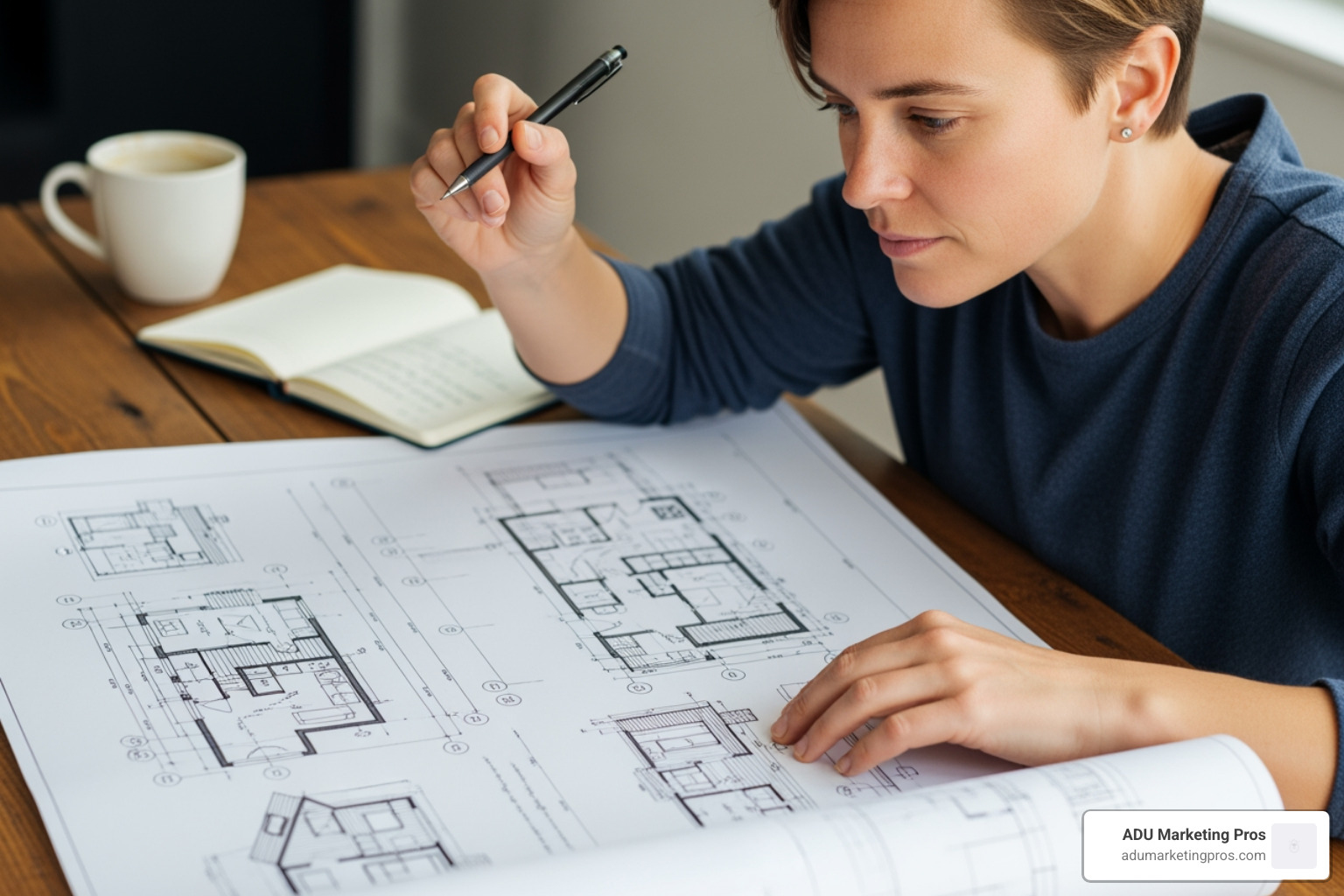
- Design and Build: Work with your builder on the layout, materials, and features. This phase includes creating architectural plans for ADUs.
- Permitting and Inspections: This is a critical, non-negotiable step. ADUs require building permits and inspections, while THOWs need DMV registration and RVIA certification.
- Delivery and Setup: The final step where your home is transported and installed on-site, turning months of planning into reality. Our detailed guide to the ADU Building Process walks through each phase.
Finding Land for tiny homes Bay Area
Securing land is often the biggest hurdle for a tiny homes Bay Area project. With the high cost of purchasing land outright, most people turn to more creative solutions.
The most transformative strategy is utilizing existing property. Building a tiny home as an ADU in a backyard bypasses the need to buy new land. This approach is strongly supported by California’s pro-ADU laws and creates a win-win for homeowners seeking rental income and individuals needing affordable housing. Other options include connecting with landowners for backyard leasing or searching for smaller, more affordable parcels in rural areas. For city-specific guidance on what’s possible, resources like our guide to San Jose ADU Plans can help clarify local opportunities.
Conclusion
The tiny homes Bay Area movement is more than a trend; it’s a powerful response to the region’s housing crisis. From financial freedom and sustainability to innovative solutions for homelessness, compact dwellings offer a viable path forward. While navigating costs, legalities, and land acquisition requires careful planning, the benefits are reshaping how Northern Californians think about home. California’s evolving ADU laws are making it easier than ever to add a permanent tiny home to a property, brightening the future for compact living.
For construction and architecture firms aiming to lead in this growing market, targeted marketing is essential. At ADU Marketing Pros, we specialize in connecting builders with homeowners actively seeking tiny home and ADU solutions. Based in San Jose, we understand the local market and help our clients stand out. To see the experts making these projects happen, explore our guide to Tiny House Builders in California.